Search the catalogue
Type a name: scientific, common, or one a species used to go by. Or narrow the catalogue with the filters.
Filters1
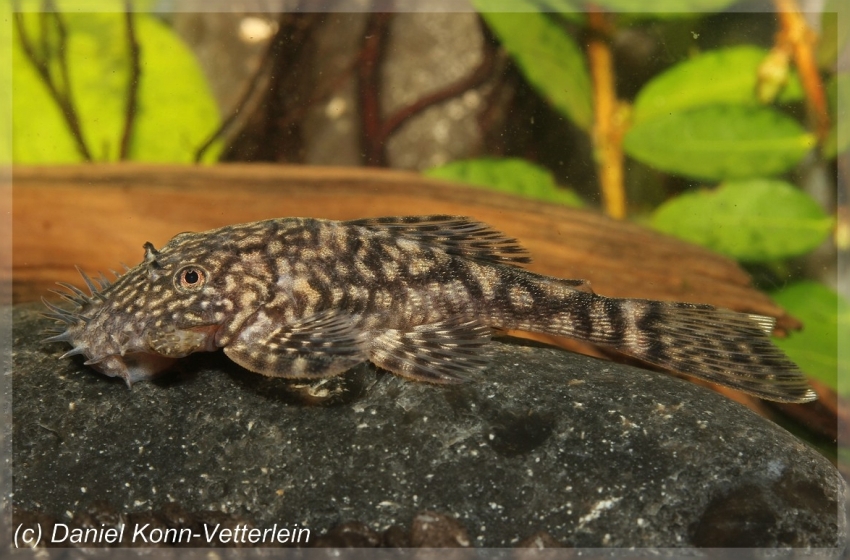
Ancistrus claroLDA 008
Knaack, 1999
Max length70mm SL2.8in SLTank60 × 30cm24 × 12inTemp23–28°C73–82°FpH6.0–7.5This species is sometimes confused with unidentified fishes such as A. sp. 'L352'. It can be told apart from closely-related congeners by possession of relatively long maxillary barbels which are free from the lower lip, and a colour pattern consisting of small spots on the head and vermiform lines on the body in males, and small spots all over the head and body in females.
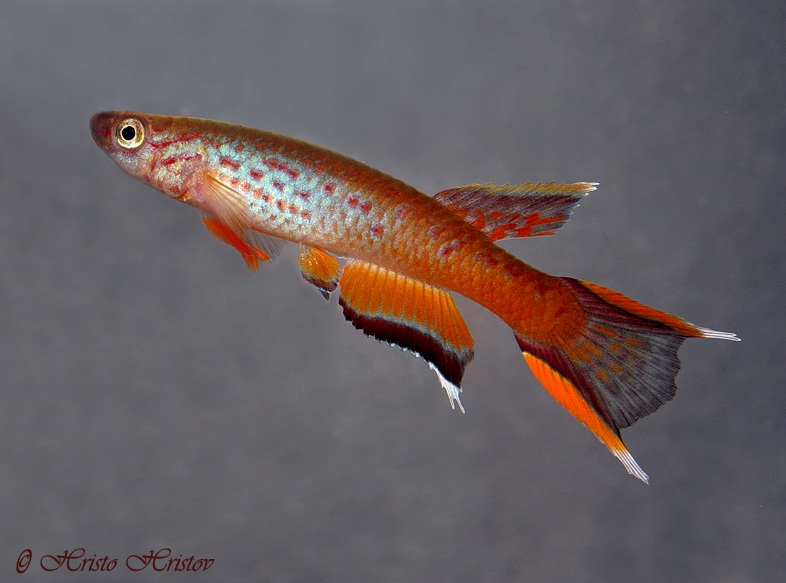
Aphyosemion australeGolden Lyretail
Rachow, 1921
Max length60mm SL2.4in SLTank45 × 25cm18 × 10inTemp21–32°C70–90°FpH5.5–7.0Also known by the vernacular names You might also see it for sale as 'golden lyretail' or 'lyretail panchax, A. australe was among the first killifishes to become popular in the hobby and still a favourite today. There exist a number of wild forms which tend to be labelled with place and year of collection in order to preserve bloodlines and avoid hybridisation, as well as several ornamental strans including 'orange', 'gold', 'chocolate', and 'albino'.
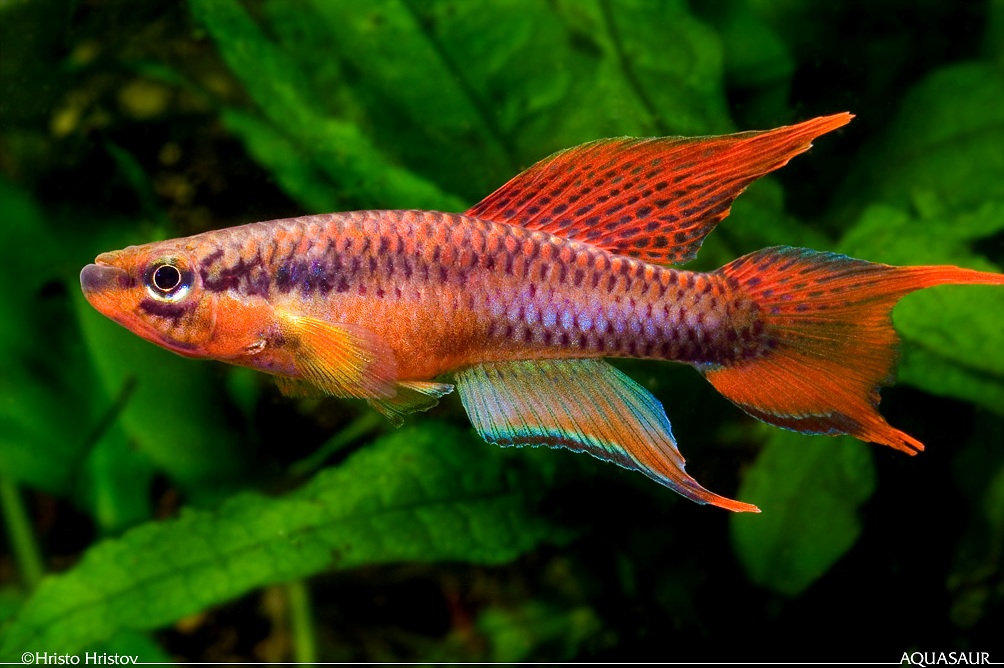
Aphyosemion bitaeniatumTwo-Striped Lyretail
Ahl, 1924
Max length45mm SL1.8in SLTanknot recordedTemp24–30°C75–86°FpH5.0–6.5This species is widely-distributed in lowland, coastal regions of Togo, Benin and Nigeria as far as the Cross River delta, and occurs at some inland localities along the lower Niger River. Populations in Cameroon, Equatorial Guinea and Gabon are now considered to represent other species.
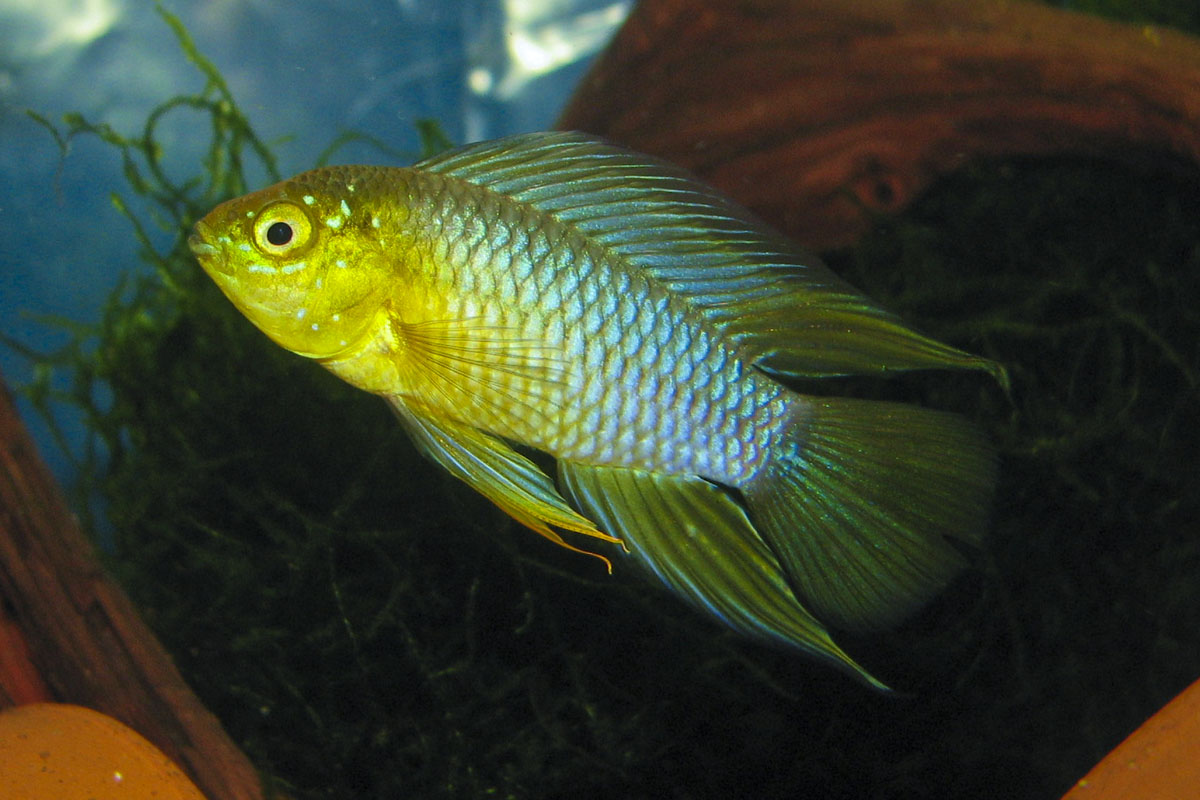
Apistogramma borelliiBorelli's Dwarf Cichlid
Regan, 1906
Max length♂ 65 · ♀ 50mm SL♂ 2.6 · ♀ 2.0in SLTank45 × 30cm18 × 12inTemp20–26°C68–79°FpH5.0–8.0Numerous ornamental forms of this species have been selectively-bred for the aquarium trade. It has also been assigned the 'A' number A234 under the DATZ system with possibly conspecific, related forms similarly numbered A103, A104, and A105 depending on locality.
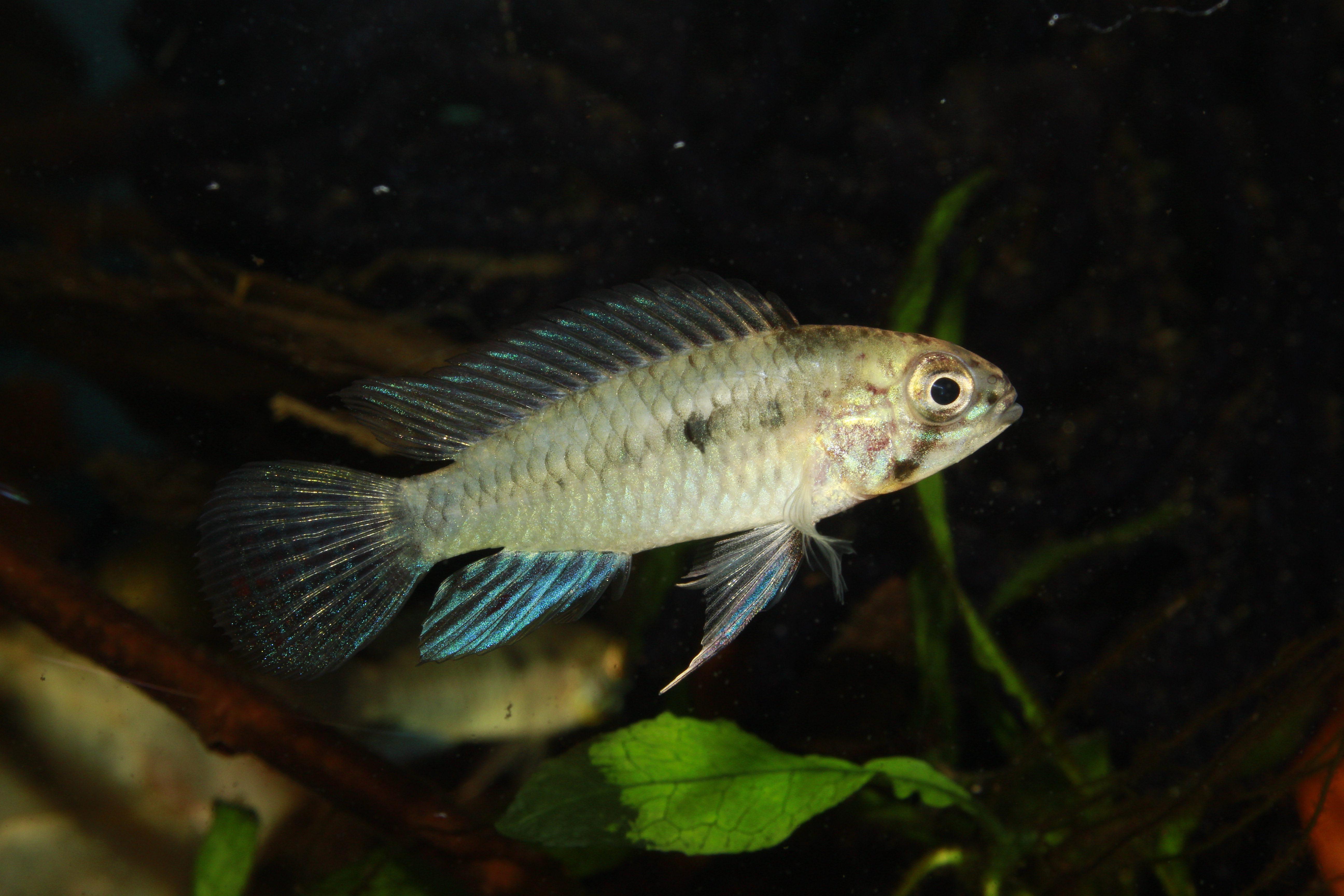
Apistogramma commbraeA93
Regan, 1906
Max length♂ 50 · ♀ 30mm SL♂ 2.0 · ♀ 1.2in SLTank60 × 30cm24 × 12inTemp15–27°C59–81°FpH6.0–7.4Apistogramma commbrae and other members of the commbrae complex can be distinguished from congeners by the conspicuous double caudal peduncle spot. This species may also be polymorphic, with some males exhibiting red and blue markings on the cheeks and a yellow gular region.
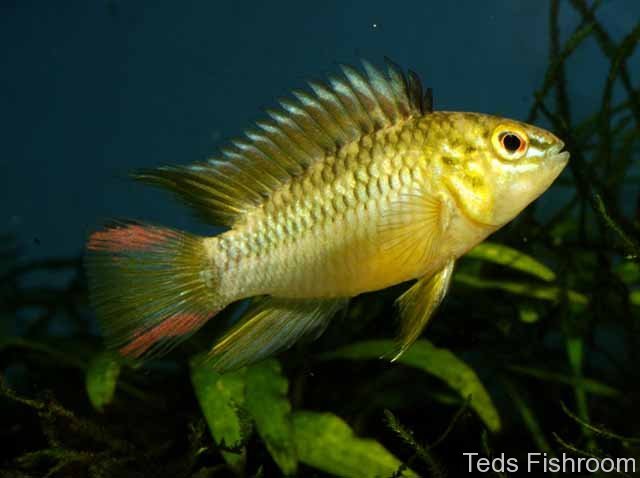
Apistogramma hoignei
Meinken, 1965
Max length60mm SL2.4in SLTank45 × 30cm18 × 12inTemp23–29°C73–84°FpH5.0–7.0The genus Apistogramma is among the most speciose of South American cichlid genera with around 70 species valid at present but many more awaiting description. In addition many species exist in two or more geographical colour forms which may or may not turn out to be distinct in the future. Hobbyists tend to label these with collection data if available in order to avoid mixing them and the potential of hybridisation. Member species have also been organised into a series of species lineages, sublineages, complexes and groups by authors in order to better separate them.
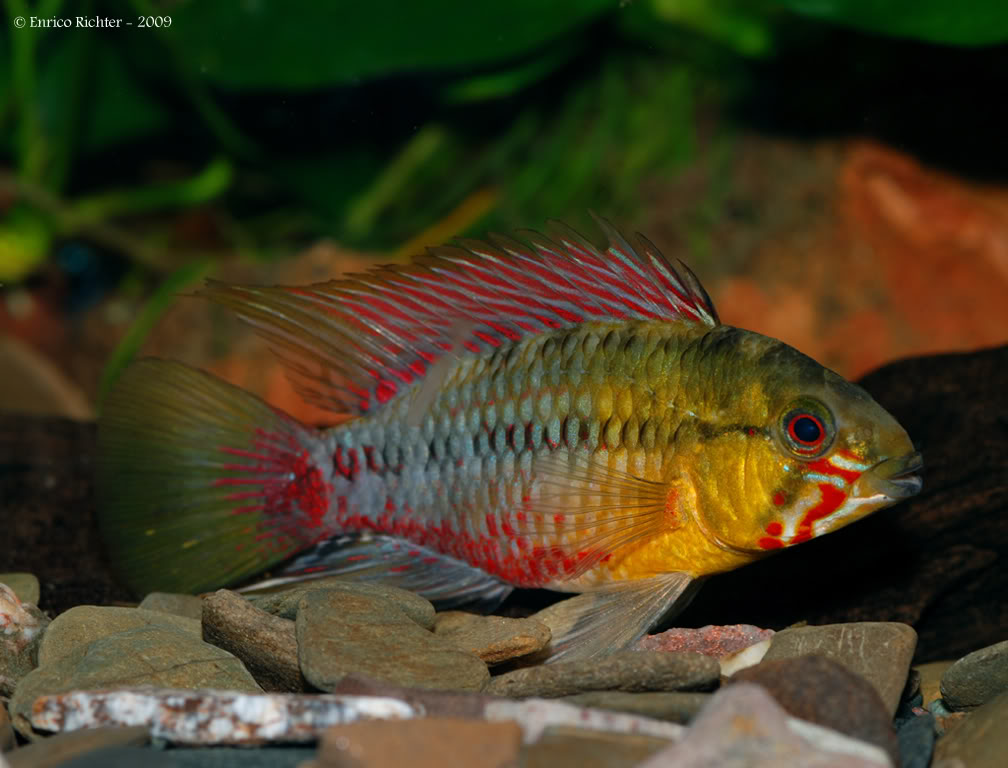
Apistogramma hongsloi
Kullander, 1979
Max length60mm SL2.4in SLTank45 × 30cm18 × 12inTemp23–29°C73–84°FpH5.5–7.0The genus Apistogramma is among the most speciose of South American cichlid genera with around 70 species valid at present but many more awaiting description. In addition many species exist in two or more geographical colour forms which may or may not turn out to be distinct in the future. Hobbyists tend to label these with collection data if available in order to avoid mixing them and the potential of hybridisation.
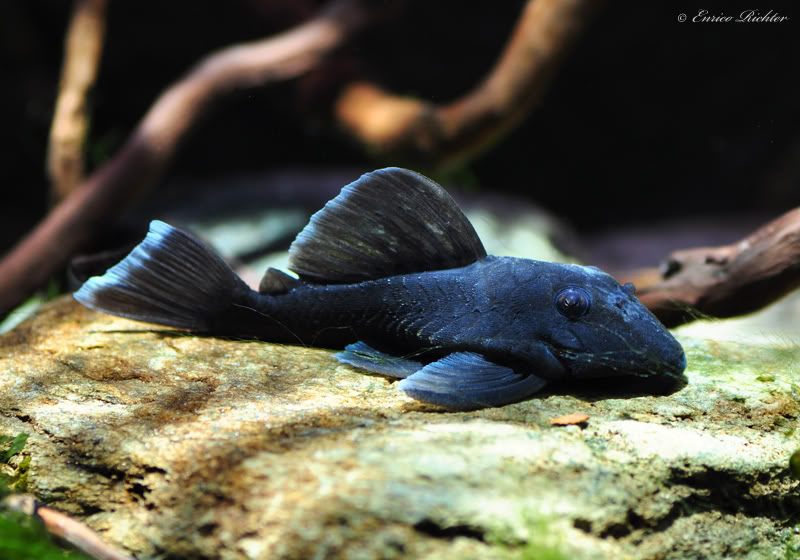
Baryancistrus begginiL239
Lujan, Arce & Armbruster, 2009
Max length81mm SL3.2in SLTank80 × 30cm31 × 12inTemp26–30°C79–86°FpH5.5–7.5Prior to description this species was traded under the DATZ code L239. It can be distinguished from other species in the genus and other hypostomines (see below for definition of this grouping) by its uniformly black to brownish body and fin colouration with a turquoise to bluish sheen, and the acutely bent shape of midventral body plates 3-5 which form a distinctive keel running along the body, above the pectoral fins...
Bunocephalus coracoideusBanjo Catfish
authority not recorded
Max length150mm SL6in SLTank60 × 38cm24 × 15inTemp20–27°C68–81°FpH5.8–7.8Bunocephalus is the largest genus within the Aspredinidae family and there are several undescribed species. B. coracoideus is the most common member seen in dealers' tanks. Its native name "Guitarrita" translates as "little guitar" and refers to the shape of the fish when viewed from above. Despite the regularity with which it is seen for sale, it isn't really a good catfish for the general community tank because it's a largely inactive, secretive species, ...
Carinotetraodon travancoricusDwarf Puffer
authority not recorded
Max length25mm SL1.0in SLTanknot recordedTemp22–28°C72–82°FpH6.8–8.0C. travancoricus is probably the smallest species of puffer, and is certainly one of the more diminutive fish regularly found in the trade. It's cute looks, amusing personality and fascinating swimming action make it a justifiably popular import, although it's all-too-often sold without the correct information needed for its long-term health and care. It's also known as the Malabar puffer, in reference to the area of southern India that contains much of the species' natural r...
Centromochlus perugiaeOil Catfish
authority not recorded
Max length60mm SL2.4in SLTank45 × 30cm18 × 12inTemp24–30°C75–86°FpH4.9–8.0A very cute little catfish, that unfortunately is rarely kept in ideal conditions. When it is maintained properly, it's a joy to watch as it feeds from close to the water surface, swimming frantically in the flow. It was reclassified, and placed in the genus Centromochlus in 1998.
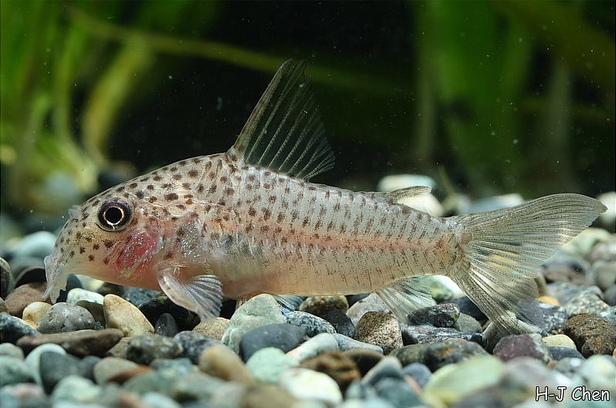
Corydoras albolineatusC056
Knaack, 2004
Max length50mm SL2.0in SLTanknot recordedTemp22–32°C72–90°FpH6.0–7.5In the upper Iténez it most commonly inhabits riparian zones with sandy substrates or edges of sand banks, although it's also been collected in smaller streams and residual flood waters. It typically forms large aggregations of up to several thousand individuals and at the confluence of the ríos Paraguá and Iténez occurs sympatrically with the congener C. paragua.
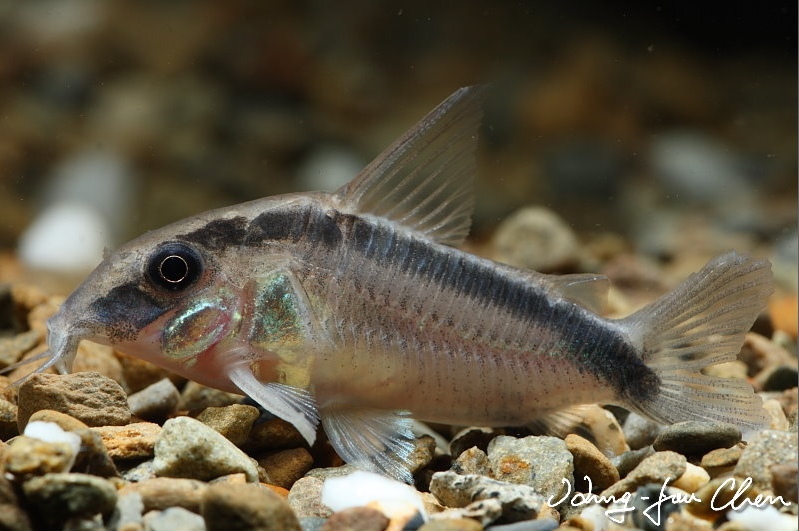
Corydoras arcuatusSkunk Cory; C020
Elwin, 1938
Max length55mm SL2.2in SLTanknot recordedTemp20–28°C68–82°FpH5.0–7.5This species is among the more popular Corydoras in the aquarium hobby and is widely available. It may also be referred to as 'arched cory'. There exist a number of similar-looking congeners, particularly C. urucu (Britto et al., 2009), described from the rio Urucu in Coari municipality, Amazonas state, Brazil, and C. narcissus from the rio Purus. The latter appears to have also been traded as C. sp. 'super arcuatus longnose' while a larg...
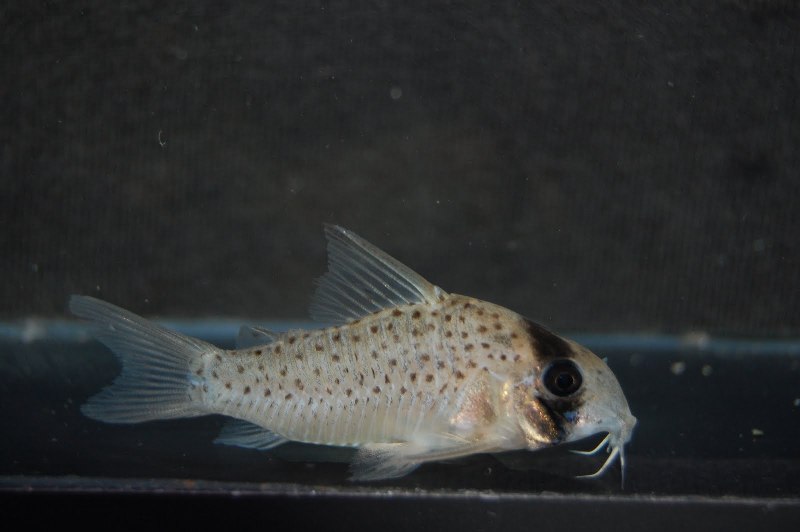
Corydoras atropersonatusFairy Cory
Weitzman & Nijssen, 1970
Max length50mm SL2.0in SLTanknot recordedTemp21–27°C70–81°FpH5.0–7.0This species is sometimes confused any of several similar-looking fishes such as C. sychri or C. sp. C097. While the former is a more elongate fish with a longer snout and quite easy to identify, C097 resembles C. atropersonatus more closely, despite being traded as C. sychri 'longnose'. Its snout is longer than that of C. atropersonatus but shorter than that of C. sychri, and the dark spots on the body tend to be more well-defined and spaced out than in the other two.
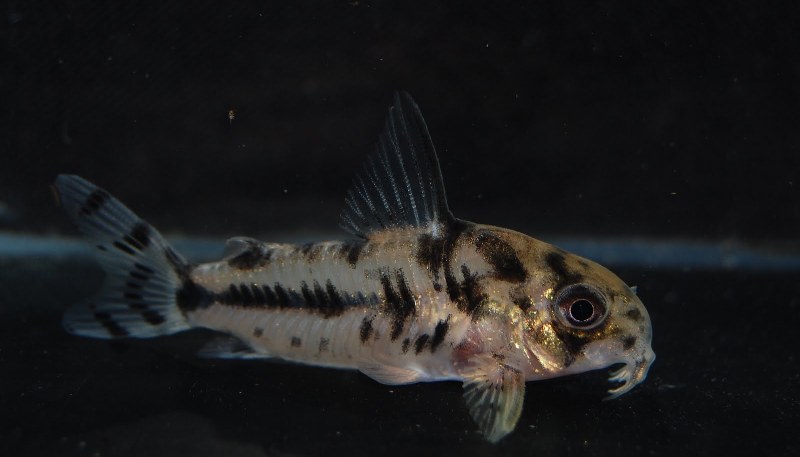
Corydoras boesemaniBoeseman's Catfish
Nijssen & Isbrücker, 1967
Max length45mm SL1.8in SLTanknot recordedTemp21–28°C70–82°FpH5.5–7.5This species appears endemic to and abundant within the upper Suriname River system, Suriname. Type locality is given as 'little tributaries of Gran Rio between Ligolio and Awaradam Falls', this corresponding to a section of the Suriname River, which is known as 'Gran Río' in parts of its upper basin, upstream of Brokopondo reservoir and not...
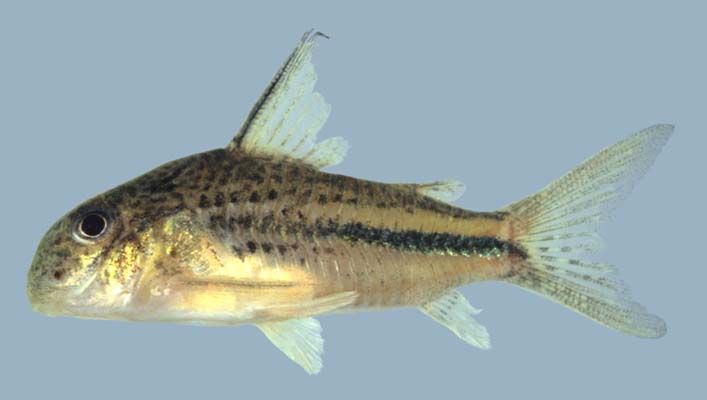
Corydoras bondiBlackstripe Cory
Gosline, 1940
Max length50mm SL2.0in SLTanknot recordedTemp20–26°C68–79°FpH6.0–7.5Type locality is 'Río Yuruari, 3 kilometers east of El Callao, 7°18'N, 61°50'W, Bolivar, Venezuela', and this species is also known from the Rupununi River drianage in Guyana and the Courantyne/Corantijn system in Suriname. The Yuruari, an affluent of the Río Cuyuni, an...
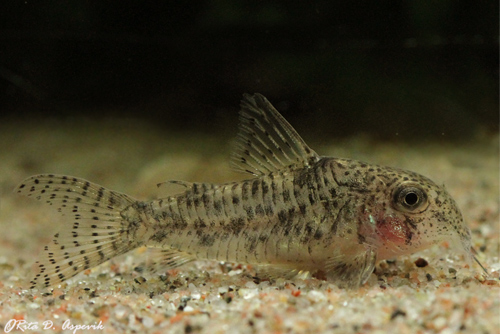
Corydoras cochuiBarredtail Cory
Myers & Weitzman, 1954
Max length35mm SL1.4in SLTanknot recordedTemp20–28°C68–82°FpH6.0–7.5This small species can be told apart from the similar-looking congener C. habrosus by possession of 4-5 (vs. 2-3) dark markings along the side of the body.
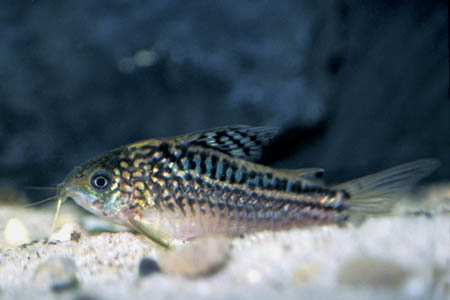
Corydoras elegansElegant Cory
Steindachner, 1876
Max length55mm SL2.2in SLTanknot recordedTemp20–26°C68–79°FpH6.0–7.5This species is popular in the aquarium hobby and unlike the majority of congeners tends to spend a fair amount of time away from the substrate, often forming groups in midwater. It has been placed in the unofficial 'C. elegans group', which contains a number of species exhibiting similarities in morphology and colour pattern, some of which remain unidentified in scientific terms.
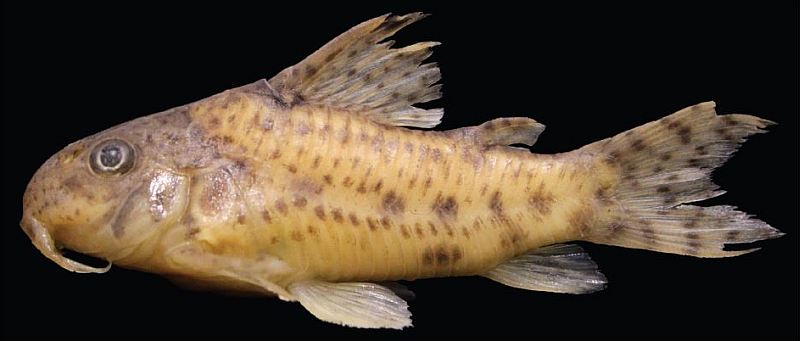
Corydoras flaveolus
Ihering, 1911
Max length50mm SL2.0in SLTanknot recordedTemp20–25°C68–77°FpH6.0–7.5This species is exceptionally rare in the aquarium hobby. Among congeners it is most similar to C. lacrimostigmata but can be distinguished by...
Gambusia affinisWestern Mosquitofish
authority not recorded
Max length40mm SL1.6in SLTanknot recordedTemp18–27°C64–81°FpH6.0–8.0For many years G. affinis was thought to be the same species as the Eastern Mosquitofish, G. holbrooki, but has since been given distinct species status. They can be distinguished by several means. In G. holbrooki the leading ray of the males' gonopodium has a serrated edge, theusually has 7 rays and males also generally have a higher degree of dark spotting on the body than G. affinis males. Male G. affinis also lack the serrated leading ray of the gonopodium and this species usually has o...