Results for “assemblage”
Type a name: scientific, common, or one a species used to go by. Or narrow the catalogue with the filters.
Filters
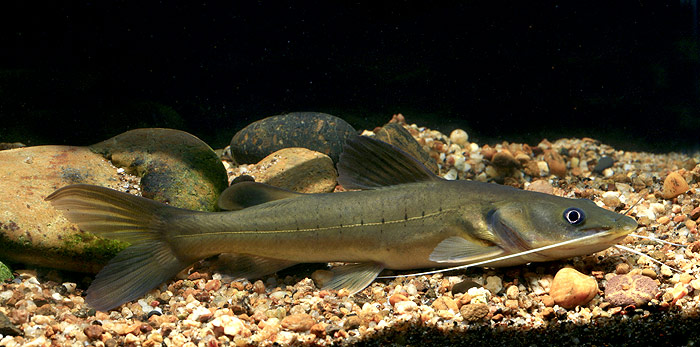
Hemibagrus peguensis
Boulenger, 1894
Max length286mm SL11in SLTanknot recordedTempnot recordedpHnot recordedMembers of this assemblage can be told apart from other congeners by possession of 44–46 vertebrae, an adipose-fin with a relatively short base (< 20 % SL), a colour pattern comprising either distinct black spots arranged in vertical columns or irregular black vertical lines running along the flanks, and normally a reddish or orangish caudal-fin in life.
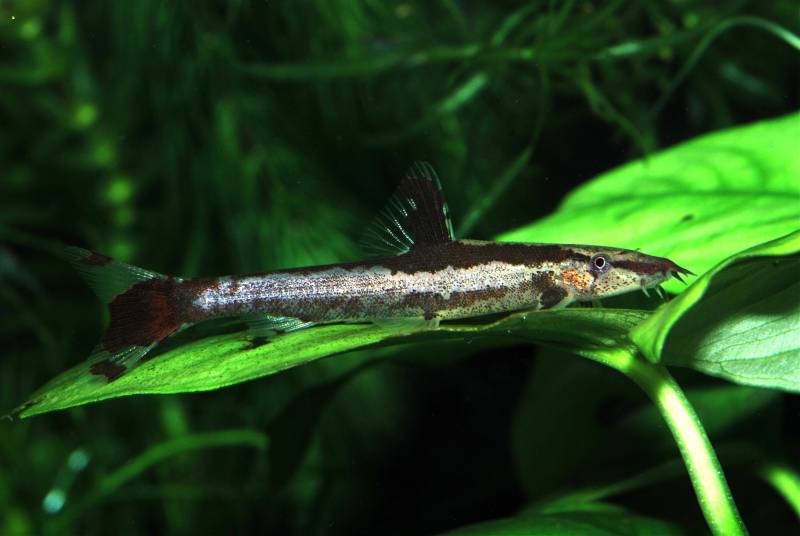
Homaloptera bilineata
Blyth, 1860
Max length100mm SL3.9in SLTank120 × 30cm48 × 12inTemp20–25.5°C68–78°FpH6.0–7.5This rarely-traded species is a member of the H. ocellata 'group' of closely-related congeners, an assemblage which currently comprises H. ocellata, H. bilineata, H. confuzona, H. orthogoniata, H. ogilviei and H. parclitella. Following Tan and Ng (2005) these share possession of a colour pattern with reddish tints and dark brown head markings, elongate head, slightly compressed body, 61-77 lateral line scales and dorsal-fin origin placed in advance of pelvic-fin origin.
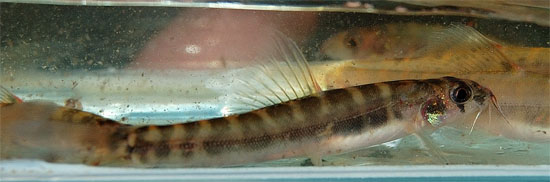
Nemacheilus spiniferus
Kottelat, 1984
Max length55mm SL2.2in SLTank60 × 30cm24 × 12inTemp23–26°C73–79°FpH5.0–7.0It's a member of the N. selangoricus group of species within the genus, an assemblage first recognised by Hadiaty and Kottelat (2009) and characterised by possession of two rows of horizontally-arran...
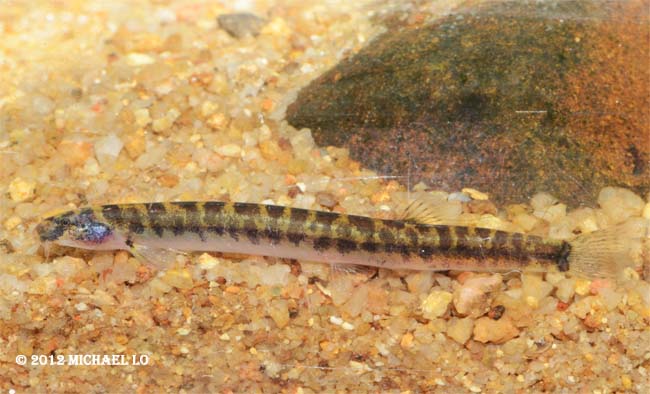
Pangio shelfordii
Popta, 1903
Max length80mm SL3.1in SLTank60 × 30cm24 × 12inTemp21–26°C70–79°FpH4.0–7.0Patterning is highly variable depending both within and between populations and the species may comprise an assemblage containing a number of taxa (Kottelat and Lim, 1993; Tan and Kottelat, 2009). For example, those from Singapore and Johor possessing intricate mottling on the dorsal surface while individuals from Terengganu have a series of saddle-like markings either alternating or connecting with the midlateral markings.
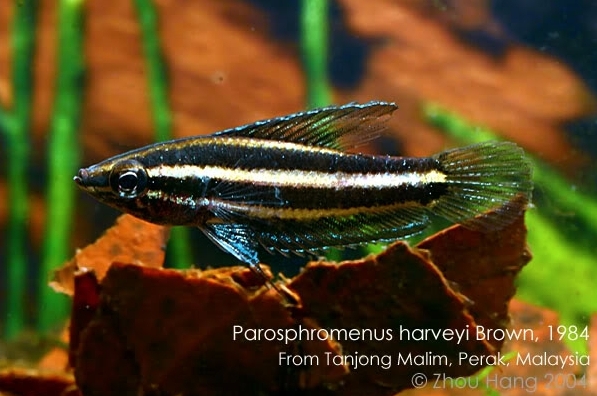
Parosphromenus harveyi
Brown, 1987
Max length35mm SL1.4in SLTank40 × 20cm16 × 8inTemp22–28°C72–82°FpH3.0–6.5Parosphromenus spp. have been grouped arbitrarily based on courtship behaviour in males which adopt a 'head-down', 'head-up', or 'horizontal' position depending on species. P. harveyi belongs to the former, most abundant, assemblage in which the male assumes a near-vertical position with the head lowermost and fins splayed during nuptial displays.
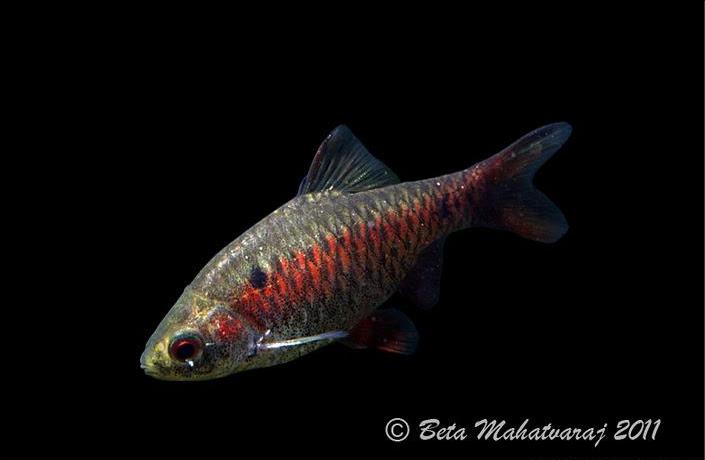
Pethia manipurensis
Menon, Rema Devi & Vishwanath, 2000
Max length62mm SL2.4in SLTank80 × 30cm31 × 12inTemp18–25°C64–77°FpH5.5–7.5Within this assemblage P. manipurensis is most similar to 'P.' meingangbii and P. padamya by virtue of the fact that males in all three possess orange-red pigmentation on the flanks and caudal-fin. It can be told apart most easily by the fact it possesses a relatively small, spot-like humeral marking, vs. a vertically-elongated, relatively large humeral marking in both the other species.
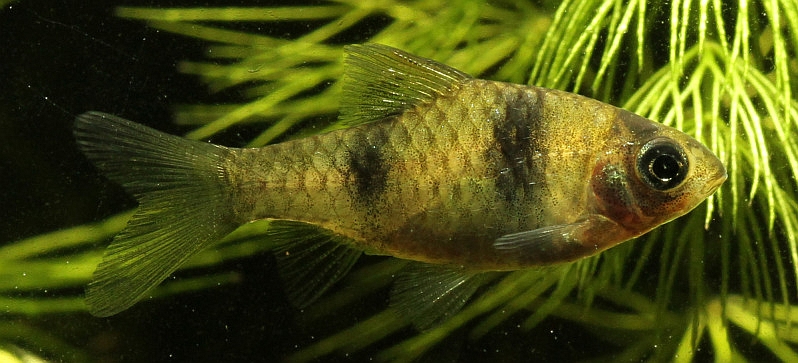
Pethia sp. 'Myanmar'
authority not recorded
Max length55mm SL2.2in SLTank75 × 30cm30 × 12inTemp18–24°C64–75°FpH6.0–7.5This fish has been widely misidentified and sold as the congener P. tiantian and its vernacular name of 'Burmese bumble-bee barb' but actually appears to be an undescribed member of the genus Pethia. This assemblage was erected by Pethiy...
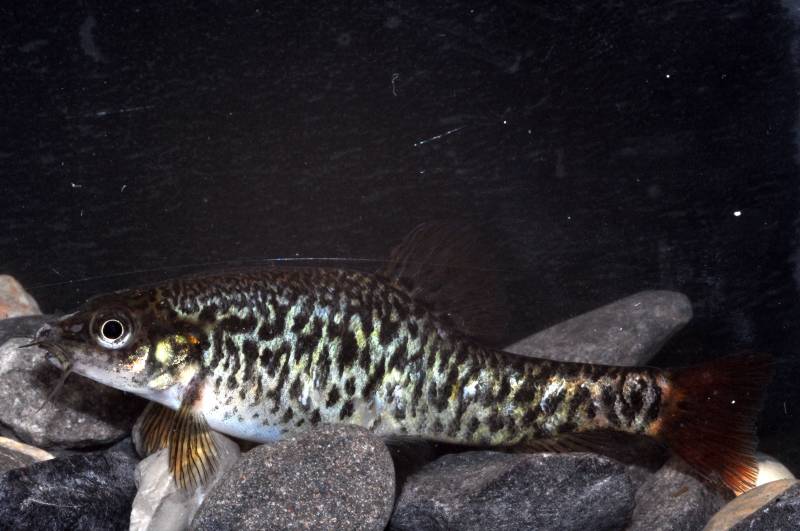
Petruichthys brevisInle Loach
Boulenger, 1893
Max length60mm SL2.4in SLTank90 × 30cm36 × 12inTemp18–24°C64–75°FpH6.0–8.0This species is sometimes traded as 'Lake Inle red-tailed loach' and was formerly included in the genus Yunnanilus, a diverse assemblage of which the majority of members are endemic to the Yunnan plateau in Yunnan province, southern China.
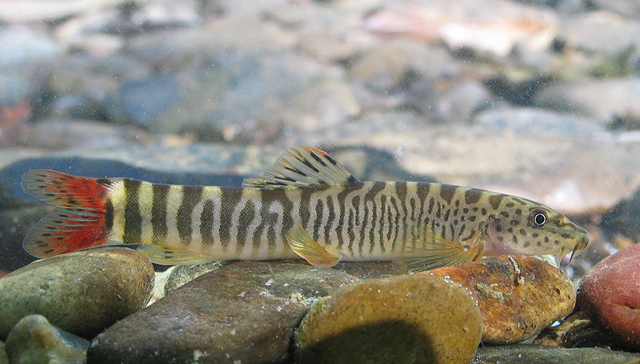
Schistura vinciguerrae
Hora, 1935
Max length75mm SL3.0in SLTank90 × 30cm36 × 12inTemp20–26°C68–79°FpH6.0–7.5This species is traded on a fairly regular basis and is similar in appearance to some congeners, most notably S. bella, S. mahnerti, S. multifasciata, S. poculi, S. reticulata, S. longa, S. conirostris and S. udomritthiruji. This assemblage has been referred to as the Schistura multifasciata 'group', and members share a...