Results for “barb”
Type a name: scientific, common, or one a species used to go by. Or narrow the catalogue with the filters.
Filters
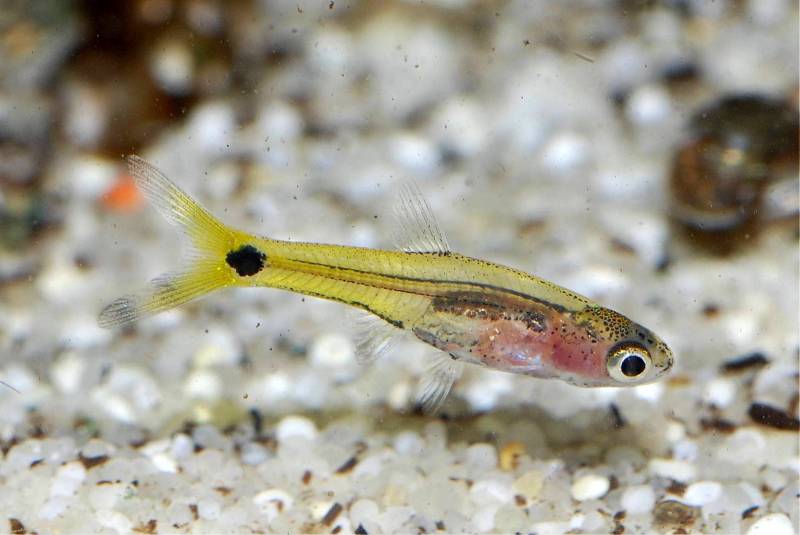
Barboides gracilis
Brüning, 1929
Max length18mm SL0.7in SLTank45 × 20cm18 × 8inTemp21–26°C70–79°FpH6.0–7.0This species is still very rare in the hobby although it has built up something of a following among enthusiasts of planted 'nano' aquaria and you may see it on sale under the trade names of 'dwarf amber/ember barb'. Its small adult size evolved via a process known as miniaturisation characterised by sexually mature adults with a significantly reduced size of less than 20mm SL. Among bony fishes cyprinids are one of the few groups in which this phenomenon occurs repeated...
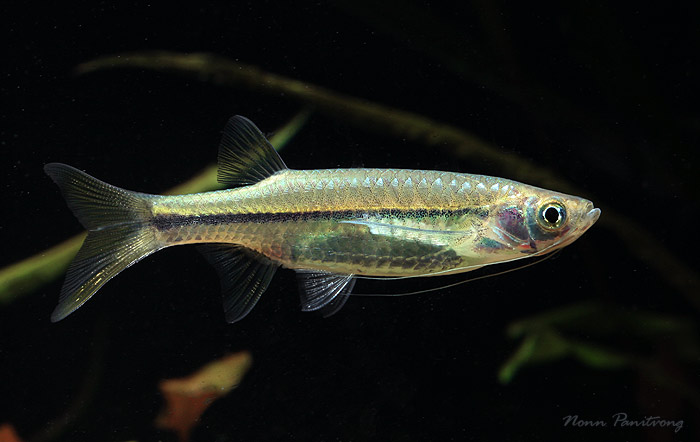
Esomus metallicusStriped Flying Barb
Ahl, 1923
Matched on the common name Striped Flying Barb
Max length75mm SL3.0in SLTank120 × 30cm48 × 12inTemp20–26°C68–79°FpH6.0–7.0There currently exist a dozen described Esomus spp. alhough few are seen in the aquarium trade and none are especially popular. Most are commonplace in their native countries and also quite plainly-patterned so generally overlooked by collectors. Their most common use in some areas is actually as a feeder fish in the aquaculture of larger species. They're characterised by greatly-enlarged pectoral fins and two pairs of barbels, of which the maxillary pair are extremely long and usually reach the pectoral fins.
Osteochilus hasseltiiHard-lipped Barb
authority not recorded
Matched on the common name Hard-lipped Barb
Max length320mm SL13in SLTank180 × 60cm72 × 24inTemp22–25°C72–77°FpHnot recordedThere are currently 34 described species of Osteochilus although none can be considered popular in the aquarium hobby. According to Rainboth's 'Fishes of the Cambodian Mekong' members of the genus are characterised by lack of aspine, presence of 11-18rays, large rostral and maxillary barbels, papillae on both upper and lower lips, darkened but not black median fins and the fact that the lower lip is not separated from the isthmus by a deep post-labial groove. O. hasseltii can be f...
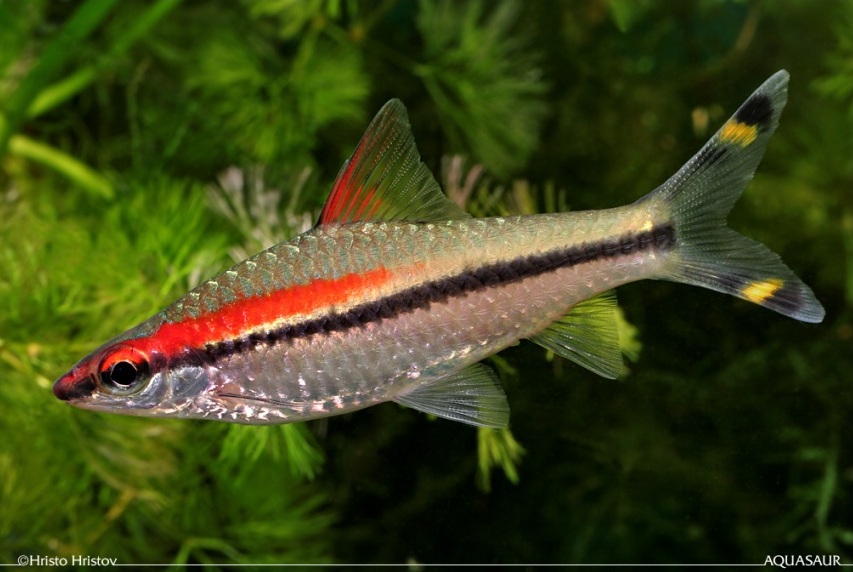
Sahyadria denisoniiRed-line Torpedo Barb
Day, 1865
Matched on Barbus denisonii, a name it was formerly known by
Max length110mm SL4in SLTank120 × 45cm48 × 18inTemp15–25°C59–77°FpH6.5–7.8This species has become an extremely popular aquarium fish since it first appeared in the ornamental trade during the late 1990s, and it has been sold under various names including 'Denison's barb', 'denisoni barb', 'Denison's flying fox', 'rose line shark', 'bleeding-eye barb', 'red flash barb', and 'Indian flasher barb'. In India it is known locally as 'Miss Kerala' and 'Chorai Kanni' ( literally 'bleeding eyes').
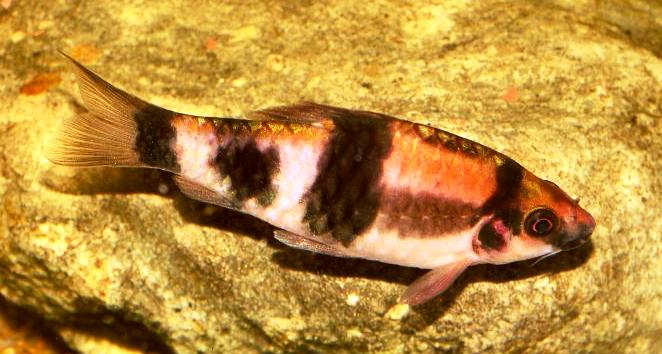
Haludaria fasciataMelon Barb
Jerdon, 1849
Matched on Barbus fasciatus, a name it was formerly known by
Max length70mm SL2.8in SLTank90 × 30cm36 × 12inTemp22–26°C72–79°FpH6.0–7.5This species is traded under various vernacular names including 'ember barb', 'banded barb' and 'black spot barb', and is perhaps among the more undervalued small cyprinids in the aquarium hobby being peaceful, relatively hardy, colourful, and of interesting behaviour. It exists in a number of colour for...
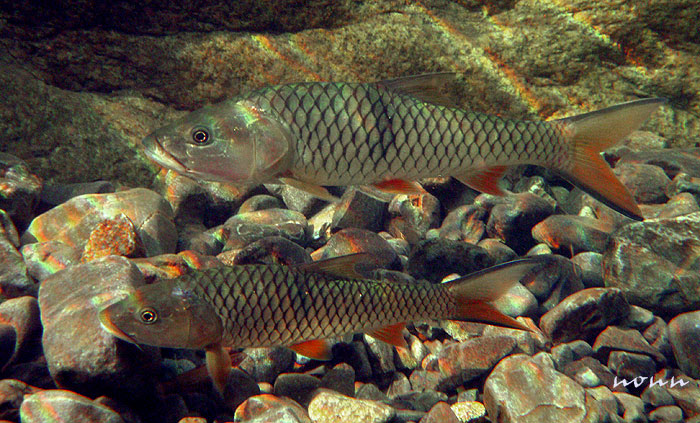
Hampala macrolepidotaHampala Barb
Kuhl & van Hasselt, 1823
Matched on Barbus hampal, a name it was formerly known by
Max length700mm SL28in SLTanknot recordedTemp20–26°C68–79°FpH5.5–8.0This species is also known by the vernacular 'jungle perch' or 'sidebar barb' and should not be considered an aquarium subject in all but the most extreme circumstances since it can grow to over 2 feet in length, weigh in excess of 5 kg and is a powerful, pelagic predator. It's also a popular sport fish with a reputation for striking hard.
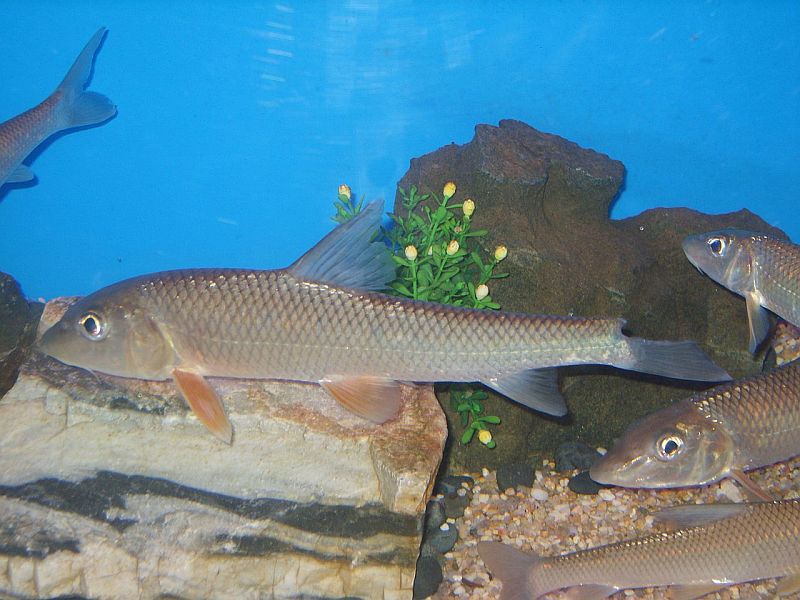
Hemibarbus labeoBarbel Steed
Pallas, 1776
Matched on Gobio barbus, a name it was formerly known by
Max length450mm SL18in SLTanknot recordedTempnot recordedpHnot recordedThis species can be distinguished from other members of the genus by the following combination of characters: absence of dark spots on body in adults; body elongate with slightly convex dorsal profile; head longer than body is deep; snout much longer than postorbital head length; lips well developed, lateral lobes of lower lip broad and thick with folds, median process small; barbel thickness shorter or equal to eye diameter; dorsal spine strong, ⅔ of HL; dorsal-fin origin closer to tip of snout than caudal-fin base base; 15+ gill rakers; 6½ branched anal-fin rays; posterior simple dorsal-fin rays ossified and spinous.
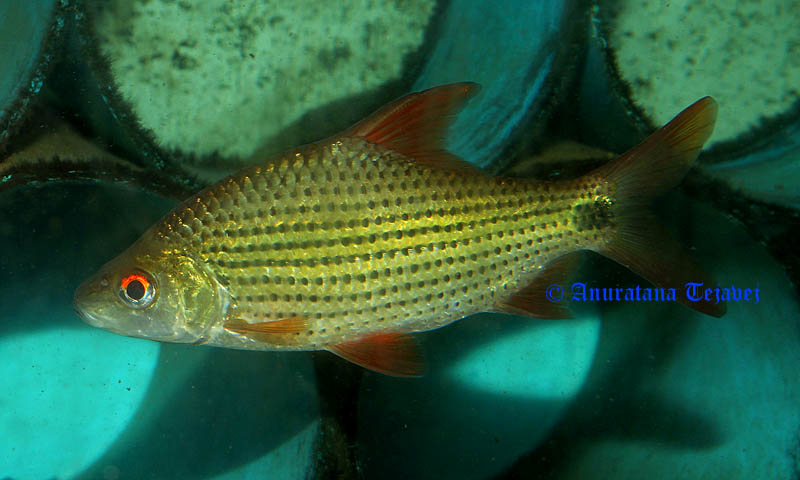
Cyclocheilichthys apogonBeardless Barb
Valenciennes, 1842
Matched on Barbus apogon, a name it was formerly known by
Max length180mm SL7in SLTank180 × 45cm72 × 18inTemp20–27°C68–81°FpH5.5–8.0In the aquarium trade this species may also be seen on sale as 'skinhead barb'. As with others in the genus little has been written regarding its captive care but it makes a peaceful and unusual addition to larger aquaria. The best way of obtaining it may be to keep an eye on shipments of wild fishes from Indochina and the Greater Sunda Islands as it's rarely imported in large numbers and most often arrives as bycatch.
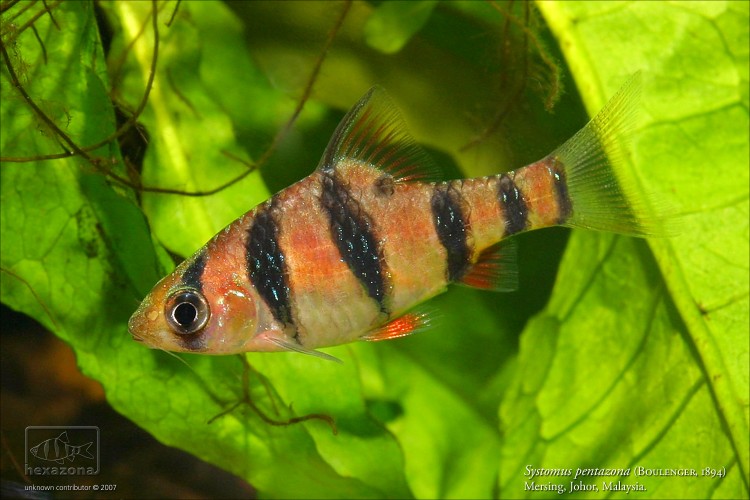
Desmopuntius pentazonaFive-banded Barb
Boulenger, 1894
Matched on Barbus pentazona, a name it was formerly known by
Max length55mm SL2.2in SLTank80 × 30cm31 × 12inTemp21–26°C70–79°FpH4.0–7.0This species is rare in the aquarium trade with the majority of fish available under the name or the vernacular 'pentazona barb' being the closely-related D. hexazona. The two are almost identical in terms of both appearance and meristics but can be separated by the fact that D. pentazona possesses a small dark marking at the posterior base of the dorsal-fin which is absent in D. hexazona.
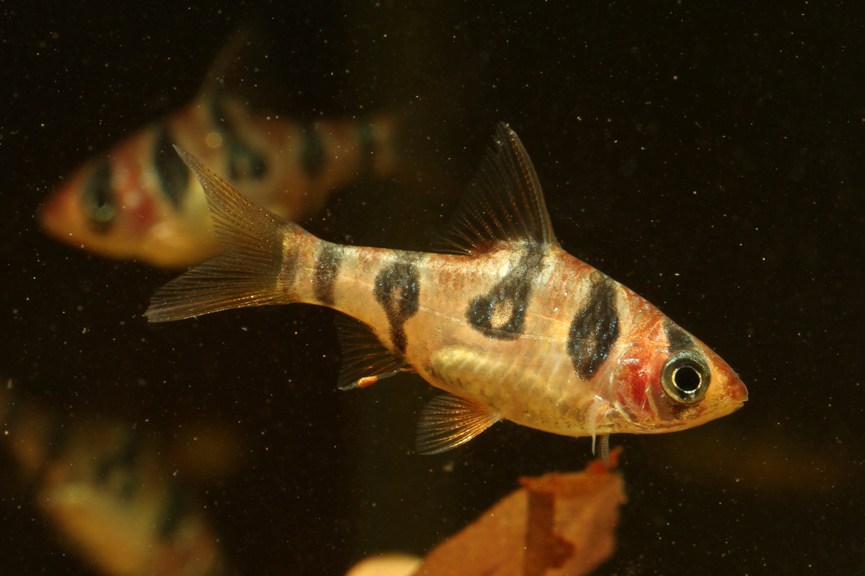
Desmopuntius rhomboocellatusSnakeskin Barb
Koumans, 1940
Matched on Barbus kahajani, a name it was formerly known by
Max length55mm SL2.2in SLTank80 × 30cm31 × 12inTemp20–28°C68–82°FpH4.0–7.0Endemic to southern Kalimantan, the Indonesian portion of Borneo where it's been recorded from several river systems including the Kapuas, Kepayang, Barito and Kahajan. Type locality is given as 'Canal along the highway from Oelin to Bandjermasin, about 15 kilometers from Bandjermasin, Borneo.' Often referred to as the 'rhomb' or 'rhombo' barb and included in a group of closely-related, similar-looking congeners which also includes...
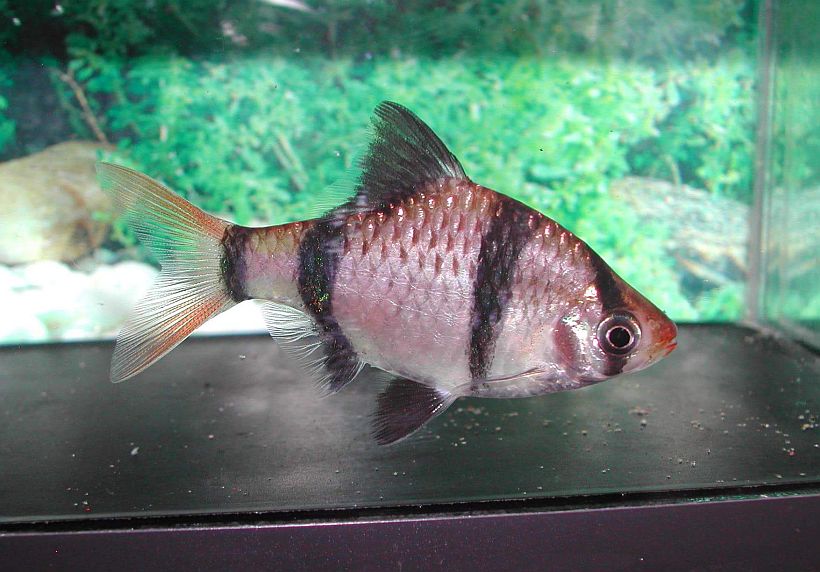
Puntigrus tetrazonaTiger Barb
Bleeker, 1855
Matched on Barbus tetrazona, a name it was formerly known by
Max length60mm SL2.4in SLTank80 × 30cm31 × 12inTemp20–26°C68–79°FpH5.0–8.0P. tetrazona is traditionally considered to be among the most ubiquitous species available in the aquarium trade. Wild examples are rarely traded, however, and there exists ongoing confusion as to the identity of the commercially-produced 'aquarium' tiger barb. A number of selectively-bred, ornamental strains are available. The albino, 'green' (aka 'moss'), and 'golden' (leucistic) variants are particularly pop...
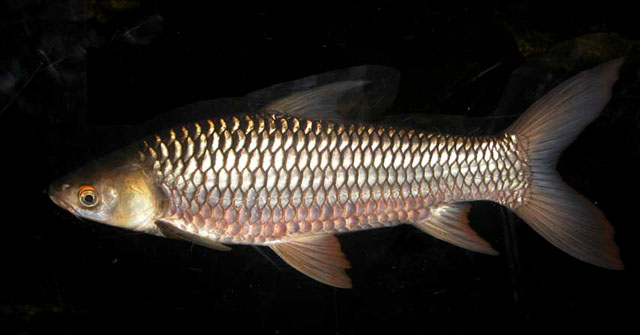
Leptobarbus hoeveniiMad Barb
Bleeker, 1851
Matched on Barbus hoevenii, a name it was formerly known by
Max length1000mm SL39in SLTanknot recordedTemp20–26°C68–79°FpH6.0–8.0Apparently native to Peninsular Malaysia plus the Greater Sunda Islands of Borneo, Sumatra, and Java. Reports of this species from the Mekong, Chao Phraya, and other rivers in Indochina refer to the congener L. rubripinna (see 'Notes'). Type locality is 'Indonesia: Borneo: Kalimantan Selatan: Banjarmasin'.
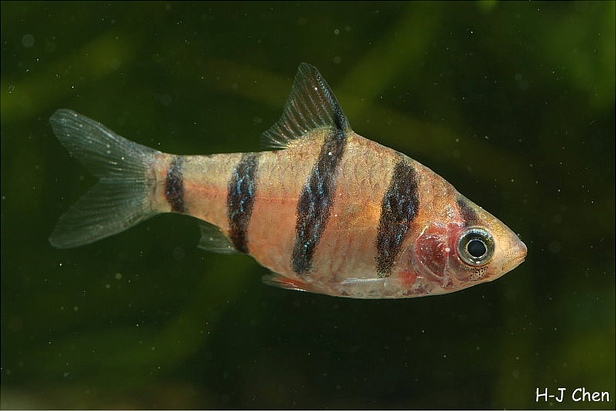
Desmopuntius hexazona'Pentazona' Barb
Weber & de Beaufort, 1912
Matched on Barbus hexazona, a name it was formerly known by
Max length55mm SL2.2in SLTank80 × 30cm31 × 12inTemp20–26°C68–79°FpH4.0–7.0Native to parts of southern Borneo, eastern Sumatra, Singapore, and the Malay Peninsula. In Singapore it's considered highly-endangered and is now restricted to the Central Catchment nature reserve. Type locality is 'Tuluk and Gunung Sahilan, Sumatra, Indonesia' which appears to correspond to localities within the Kampar River drainage of which the former is now known as Teluk Meranti and is o...
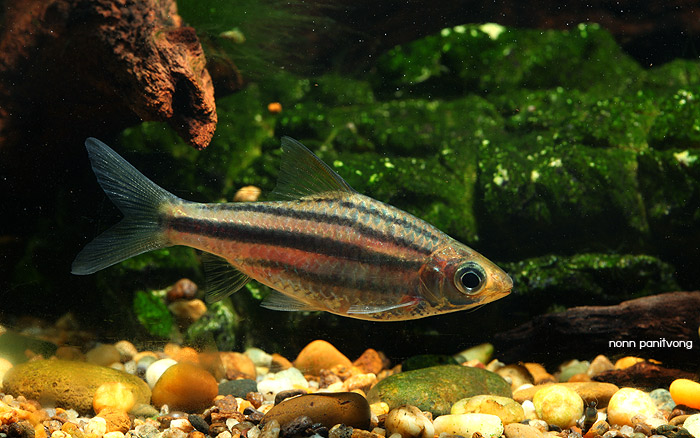
Desmopuntius johorensisStriped Barb
Duncker, 1904
Matched on Barbus tetrazona johorensis, a name it was formerly known by
Max length100mm SL3.9in SLTank120 × 45cm48 × 18inTemp20–25°C68–77°FpH5.0–7.0D. johorensis can be distinguished by the following combination of characters: 5-6 dark, lateral stripes on body in specimens larger than 40 mm; stripes immediately above and below the central stripe (stripes '+1' and '-1', respectively) located on scale rows +2 and -2, not touching dorsal and ventral midlines (except in some small specimens from Peninsular Malaysia); stripes broad, typically between 0.5-1 scale rows deep...
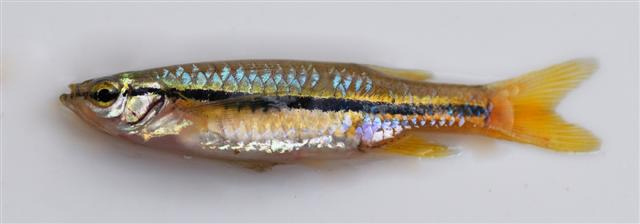
Esomus danricaFlying Barb
Hamilton, 1822
Matched on Cyprinus barbiger, a name it was formerly known by
Max length70mm SL2.8in SLTank120 × 30cm48 × 12inTemp20–26°C68–79°FpH6.0–8.0Found in various types of habitat but shows a marked preference for shallow, slow-moving and standing waters such as rice paddies and other temporally-inundated environments with dense aquatic vegetation.
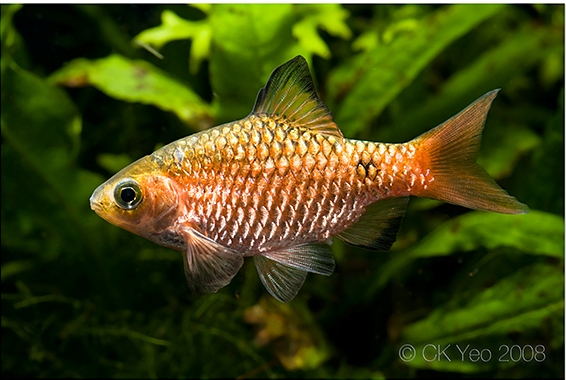
Pethia conchoniusRosy Barb
Hamilton, 1822
Matched on Barbus conchonius, a name it was formerly known by
Max length100mm SL3.9in SLTank100 × 30cm39 × 12inTemp16–24°C61–75°FpH6.0–8.0Generally considered one of the hardiest small cyprinids available in the aquarium hobby, P. conchonius is an excellent choice for the beginner. Selective breeding has produced various ornamental strains including long-finned, 'veil-tail', 'super red', 'neon', and 'golden' forms. It's also been hybridised with some congeners although the offspring of such experiments are apparently infertile. It was formerly included in th...
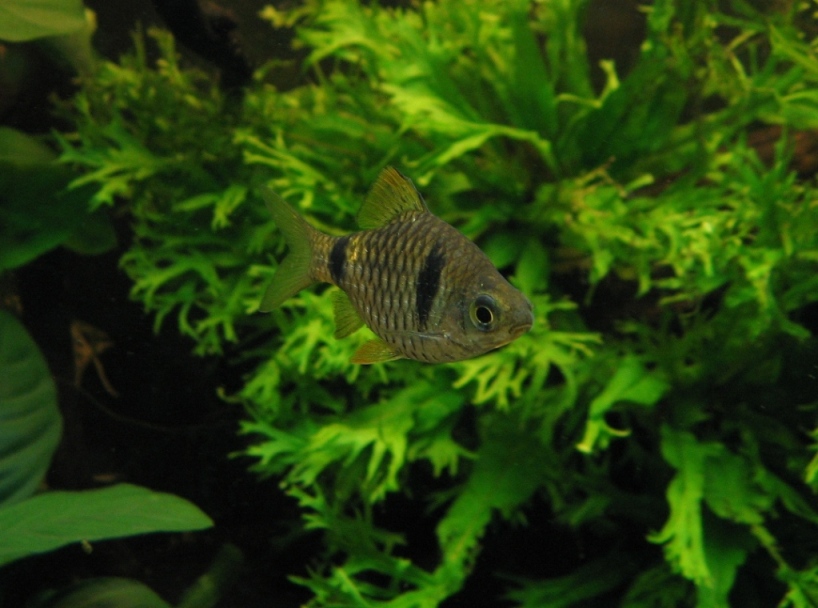
Pethia cumingiiCuming's Barb
Günther, 1868
Matched on Barbus cumingii, a name it was formerly known by
Max length41mm SL1.6in SLTank60 × 30cm24 × 12inTemp20–27°C68–81°FpH5.5–7.0For many years this species was considered to occur in two colour forms with yellow or red dorsal, anal, and pelvic fins, respectively, but the red-finned variant has now been elevated to full species status as P. reval (Meegaskumbura et al. 2008). The latter is a smaller fish with a maximum SL of 33.6 mm recorded to date. As well as the obvious differences in body size and fin colour P. cumingii can be told apart from P. reval by the following...
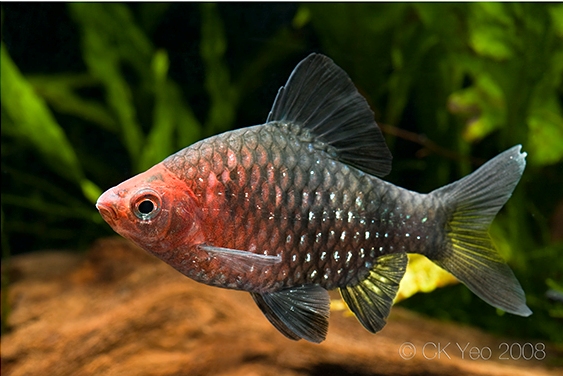
Pethia nigrofasciataBlack Ruby Barb
Günther, 1868
Matched on Barbus nigrofasciatus, a name it was formerly known by
Max length55mm SL2.2in SLTank80 × 30cm31 × 12inTemp20–27°C68–81°FpH5.5–7.5Little sun is able to penetrate the forest floor so aquatic habitats are shaded and water temperature may be relatively cool, while conductivity and hardness are generally low and pH slightly acid. Macrophytes are uncommon though there may be dense, marginal vegetation, sometimes overhanging the full width of the stream, the roots of which may penetrate the banks underwater. Typical substrates are sandy but covered by a layer of leaf litter with fallen twigs and branches.
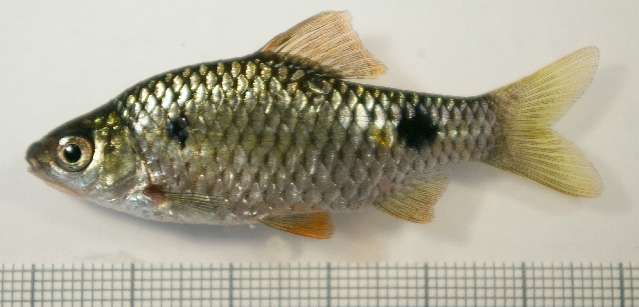
Pethia tictoTicto Barb
Hamilton, 1822
Matched on Barbus ticto, a name it was formerly known by
Max length65mm SL2.6in SLTank80 × 30cm31 × 12inTemp18–25°C64–77°FpH6.0–7.5Apparently most abundant in shallow streams and minor tributaries, sometimes at relatively high altitudes, and apparently shows a preference for substrates of mud or silt. Given the extent of its range it would seem sensible to assume that it inhabits various habitat-types which also vary in water depth, flow, and turbidity depending on the time of year.
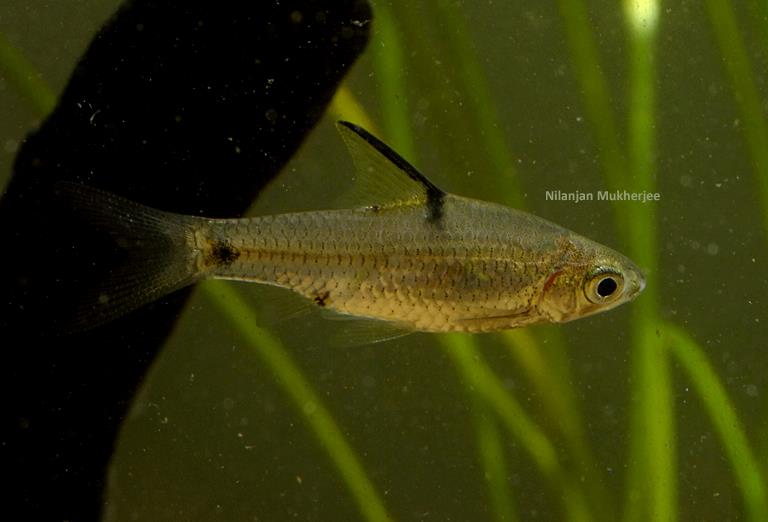
'Puntius' guganioGlass Barb
Hamilton, 1822
Matched on Barbus carletoni, a name it was formerly known by
Max length65mm SL2.6in SLTank75 × 30cm30 × 12inTemp18–26°C64–79°FpH6.0–7.5Probably a micropredator feeding on small insects, worms, crustaceans and other zooplankton in nature. In the aquarium it should accept dried foods of a suitable size but should not be fed these exclusively. Daily meals of small live and frozen fare such as Daphnia, Artemia, Moina, etc., along with good quality flakes and granules will result in the best colouration and encourage the fish to come into breeding condition.