Results for “congener”
Type a name: scientific, common, or one a species used to go by. Or narrow the catalogue with the filters.
Filters
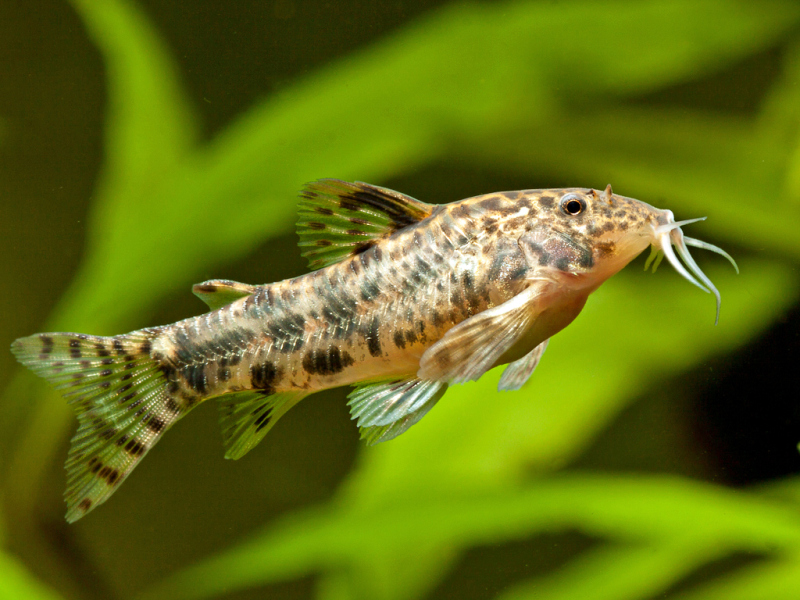
Aspidoras taurus
Lima & Britto, 2001
Max length55mm SL2.2in SLTank75 × 30cm30 × 12inTemp20–25°C68–77°FpH6.0–7.5A. taurus can be told apart from congeners by the following combination of characters: infraorbitals and preopercle covered by thick skin and not visible externally (vs. covered by thin skin and externally visible in other Aspidoras); nuchal plate reduced, covered by thick skin and not visible externally (vs. well developed, covered by thin skin and visible externally); lateral line absent posterior to two small lateral line ossicles (vs. lateral line present on at least first body plate).
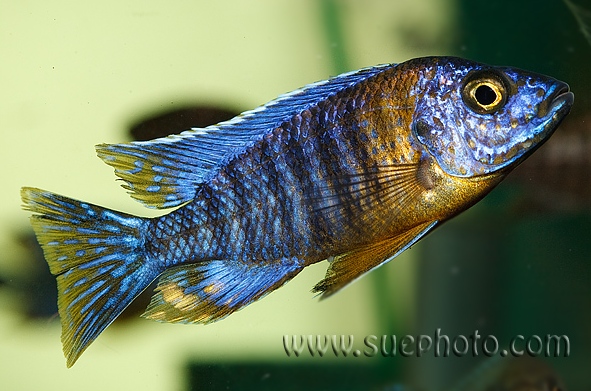
Aulonocara hansbaenschiRed Shoulder Peacock
Meyer, Riehl & Zetzsche, 1987
Max length120mm SL5in SLTank90 × 45cm36 × 18inTemp24–29°C75–84°FpH7.4–9.0Some eminent authors believe this species to be a geographical variant of the highly variable congener A. stuartgranti rather than a distinct taxon but since most popular resources continue to view it as valid we also list it here. At Masinje it has been observed to show a distinct preference for rocky caves and crevices in relatively shallow (3-6 metres deep) water. This is in contrast to most other members of the genus, which tend to forage over sand, but similar to behaviour seen in A. jacobfreibergi.
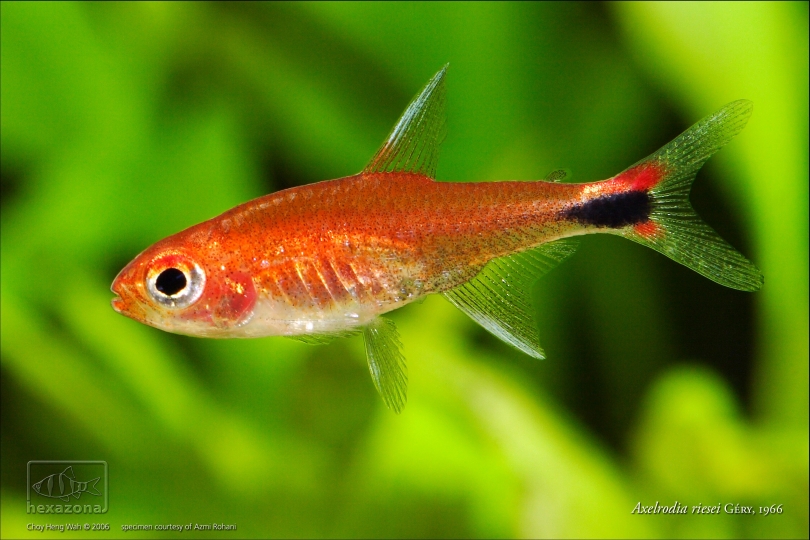
Axelrodia rieseiRuby Tetra
Géry, 1966
Max length20mm SL0.8in SLTank60 × 30cm24 × 12inTemp20–28°C68–82°FpH4.0–6.5This species is much rare in the hobby than its congener A. stigmatias, presumably a reflection of its more remote, restricted natural range. The red pigmentation on the body can vary in both extent and intensity, and apparently begins to fade when the fish have been maintained in aquaria for a period.
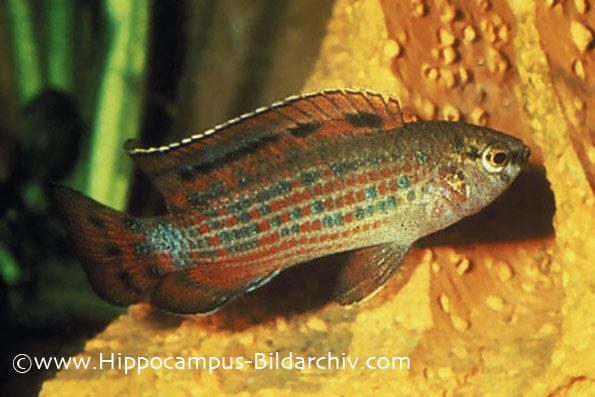
Badis ruberBurmese Badis
Schreitmüller, 1923
Max length50mm SL2.0in SLTank60 × 30cm24 × 12inTemp15–25°C59–77°FpH6.5–7.5B. ruber is among the better known Badis species in the aquarium hobby with trade names including 'Burmese badis' and 'red badis'. It was referred as Badis badis burmicanus for a number of years and will be seen labelled as such in older literature. Among congeners it is most easily confused with...
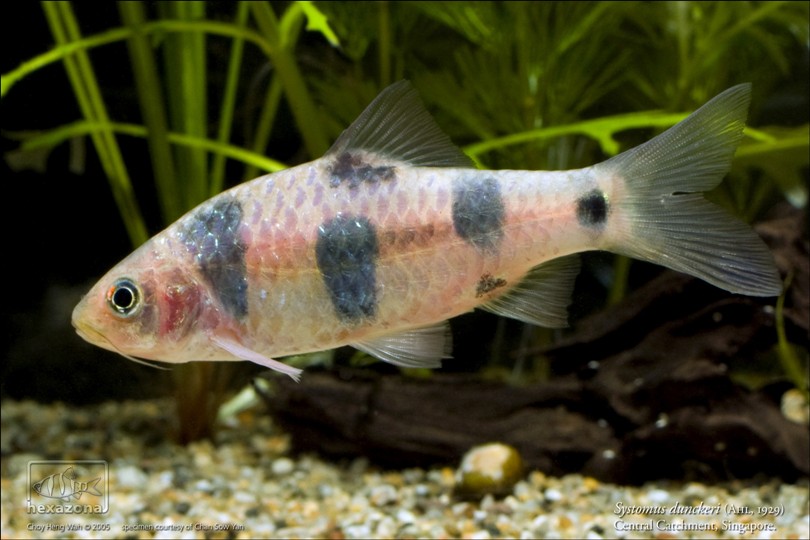
Barbodes dunckeriClown Barb
Ahl, 1929
Max length120mm SL5in SLTank120 × 45cm48 × 18inTemp18–28°C64–82°FpH6.0–7.5Although sometimes referred to by the vernacular name 'big spot barb' this species is better known in the aquarium hobby as 'clown barb'. It has been widely misidentified as the congener B. everetti, a distinct and uncommonly-traded species from Borneo and thus appears under that name in the majority of available literature. The two are quite easy to tell apart, with B. everetti an overall les...
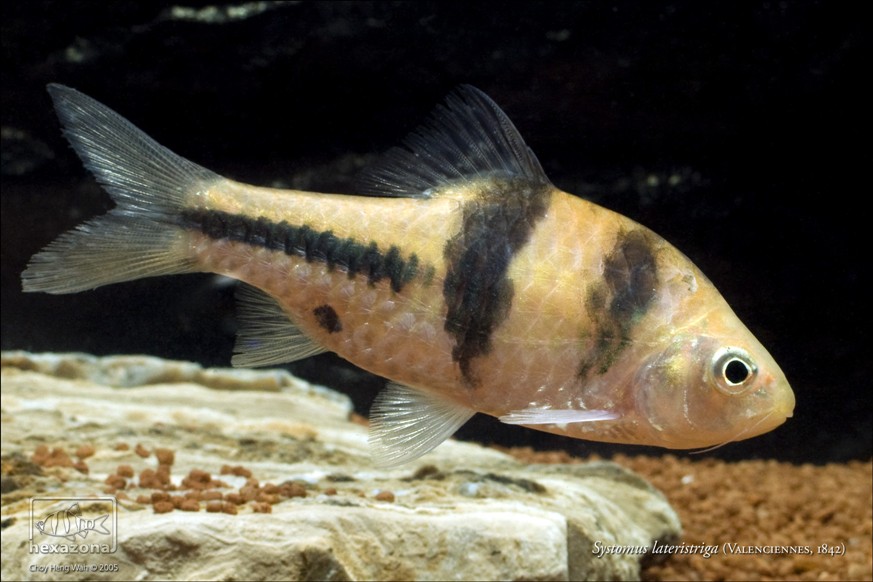
Barbodes lateristrigaSpanner Barb
Valenciennes, 1842
Max length150mm SL6in SLTank150 × 45cm60 × 18inTemp20–28°C68–82°FpH6.0–8.0This species is commonly-referred to as 'T-barb' in some countries. It's closely-affiliated with and sometimes traded as the congener B. kuchingensis but that species can be told apart by colour pattern comprising a prominent row of dark spots along the lateral line, plus a short, horizontally-orientated streak extending from the upper part of the operculum. In B. lateristriga the lateral markings usually form a solid stripe and there is no streak extending from the operculum.
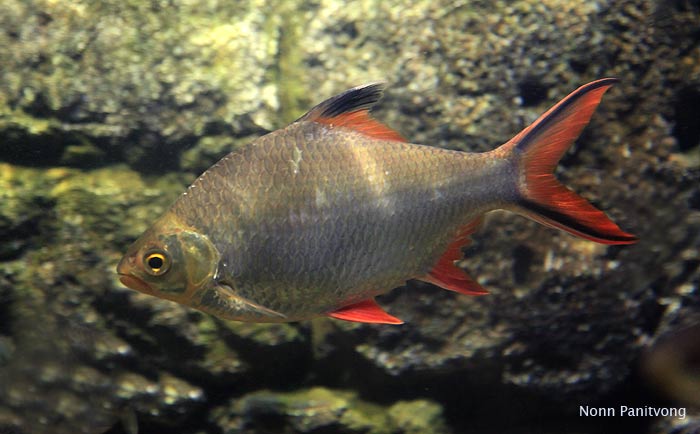
Barbonymus schwanefeldiiTinfoil barb
Bleeker, 1854
Max length355mm SL14in SLTank210 × 60cm84 × 24inTemp20–28°C68–82°FpH6.0–8.0This is one of two species traded under the vernacular name 'tinfoil barb', the other being the less well-known congener B. altus. Despite this it appears that B. altus is just as widely available as B. schwanefeldii and in many cases is seen on sale more regularly. Unfortunately both are usually offered at a small size (usually around 50 - 75 mm) with little to no information regarding the eventual size of the fish.
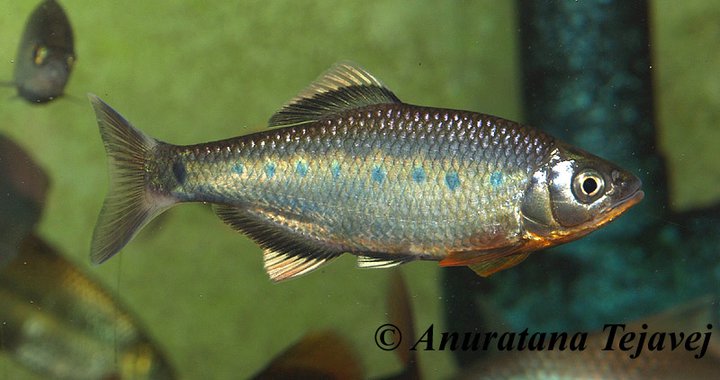
Barilius bakeri
Day, 1865
Max length130mm SL5in SLTank150 × 60cm60 × 24inTemp18–26°C64–79°FpH6.0–7.5This species is traded under several names including 'royal danio', 'blue-spotted hill trout', and 'blue-dotted mirror fish'. It can be distinguished from congeners by possessing a single row of bluish-green spots along the length of the body, white margins on the dorsal and anal fins, 37-38+1 lateral line scales, and fleshy rudi...
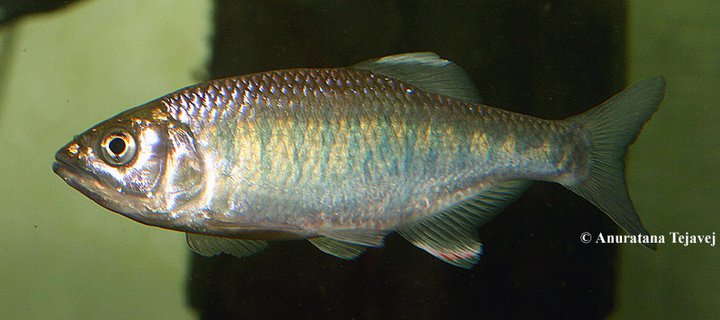
Barilius gatensisMalabar Baril
Valenciennes, 1844
Max length130mm SL5in SLTank150 × 60cm60 × 24inTemp18–26°C64–79°FpH6.0–7.5This species is traded very occasionally, sometimes under the alternative vernacular names of 'river baril, 'river carp-baril', or 'striated hill trout'. It can be told apart from congeners by the following combination of characters: 1 pair of minute rostra...
Baryancistrus chrysolomusMango Pleco
Rapp Py-Daniel, Zuanon & Ribeiro de Oliveira, 2011
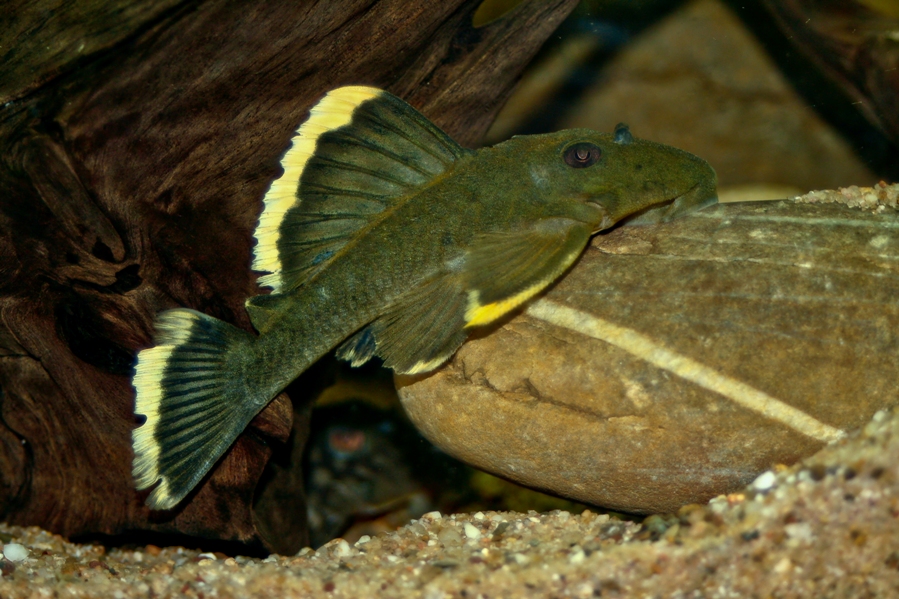
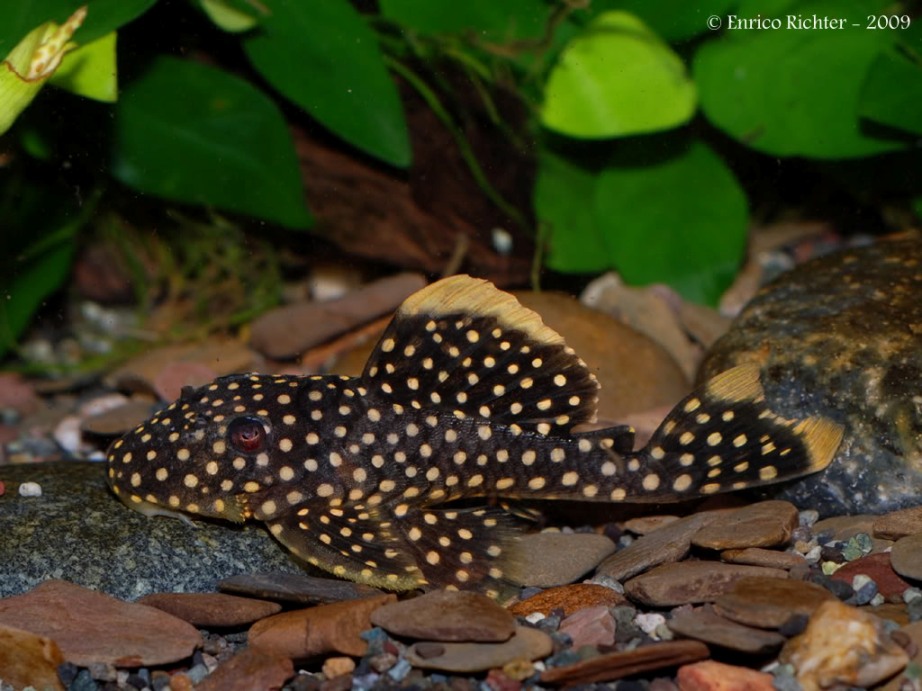
Max length219mm SL9in SLTank120 × 45cm48 × 18inTemp27–32°C81–90°FpH6.0–7.5Prior to description this species was traded under the DATZ code L047 or the alternative vernacular name 'magnum pleco'. It can be distinguished from congeners by a combination of the following characters: presence of a broad, light-coloured (usually yellowish) distal band on the dorsal and caudal fins throughout life, slightly reduced in adults. The only other member of the genus to possess such bands is B. xanthellus but in that species they are reduced to small markings at the fin tips in adults, and the body is covered in pale, normally yellowish, spots.
Baryancistrus xanthellusGold Nugget Pleco
Rapp Py-Daniel, Zuanon & Ribeiro de Oliveira, 2011
Max length224mm SL9in SLTank120 × 45cm48 × 18inTemp27–32°C81–90°FpH6.0–8.0Prior to description in 2011 this species was traded under the DATZ code numbers L018, L085, L077 and 'Das Aquarium' code LDA060, while a very similar-looking fish from the lower rio Xingu which has been assigned the code L081 may also represent a form of B. xanthellus but is not mentioned in the description paper. B. xanthellus can be distinguished from congeners by a combination of the following...
Beaufortia szechuanensis
Fang, 1930
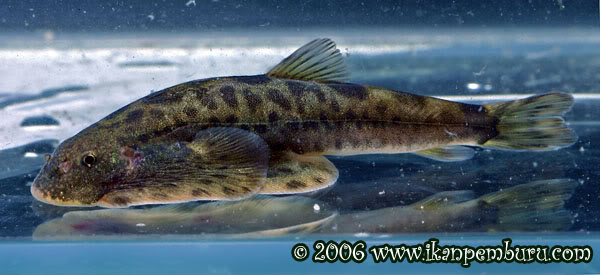
Max length69mm SL2.7in SLTank75 × 30cm30 × 12inTemp16–24°C61–75°FpH6.5–8.0At time of writing there exist 18 recognised members of the genus though only B. kweichowensis is well-known in the trade with B. szechuanensis unlikely to have been exported. According to Chen, Huang and Yang (2009) it can be distinguished from similar congeners by the following suite of characters: 1 branched and 17-20 simple pectoral-fin rays...
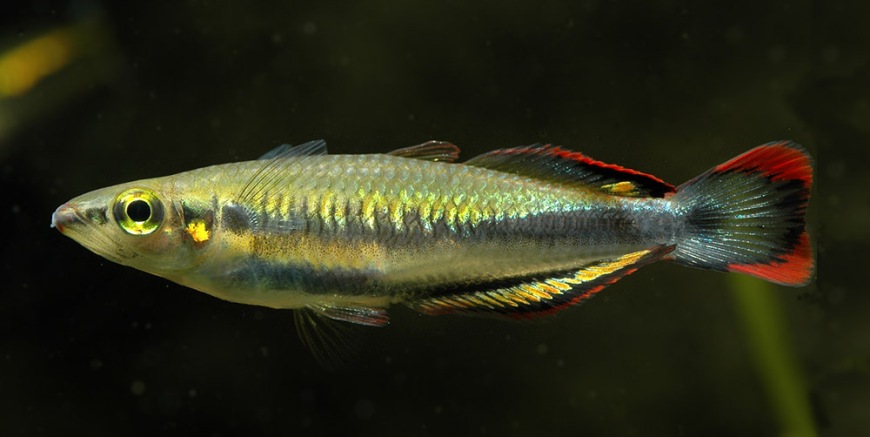
Bedotia madagascarensisMadagascan Rainbow Fish
Regan, 1903
Max length100mm SL3.9in SLTank120 × 30cm48 × 12inTemp23–32°C73–90°FpH4.5–7.5This species was first imported for the aquarium hobby during the 1950s and was for many years misidentified and traded as Bedotia geayi, a valid, but different-looking congener native to the Mananjary River system, south of the range of B. madagascarensis. In terms of external characters, the two are most easily told apart by differences in colour pattern, particularly that of the unpaired fins, and some morphometric counts.
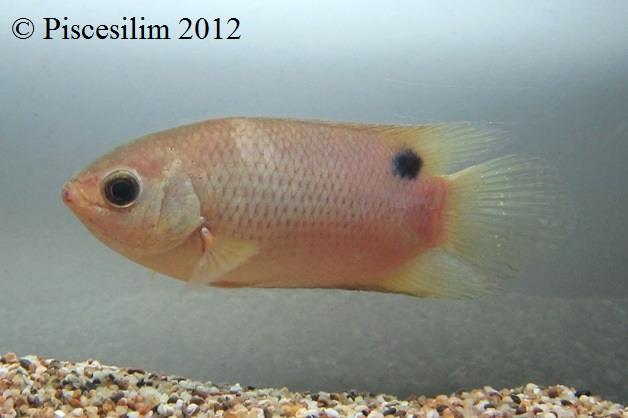
Belontia hasseltiJava Combtail
Cuvier, 1831
Max length200mm SL8in SLTank120 × 30cm48 × 12inTemp21–26°C70–79°FpH4.5–8.5This species is also referred to by the vernacular name 'Malay combtail'. In terms of external characters it differs most obviously from its only congener, B. signata by its overal brownish grey (vs. reddish) body colouration and presence of a mosaic-type patterning in the unpaired fins (vs. absence). The position of relatedness of the genus Belontia with respect to other anabantoids remains somewhat...
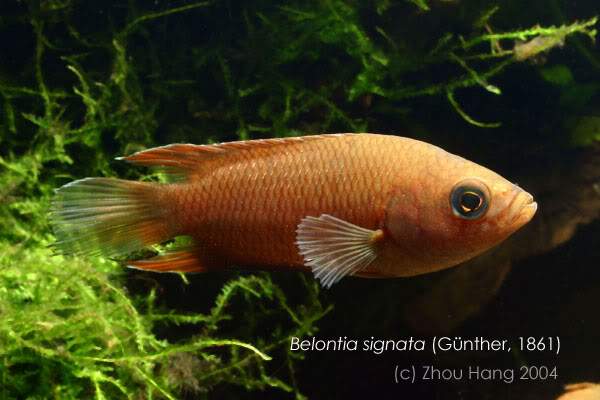
Belontia signataCeylonese Combtail
Günther, 1861
Max length120mm SL5in SLTank120 × 30cm48 × 12inTemp20–27°C68–81°FpH6.0–7.5This species is also traded/referred to by the vernacular name 'Ceylon fighting fish'. It differs from its only congener, B. hasselti, by its overall reddish (vs. brownish-grey) body colouration, and absence (vs. presence) of a mosaic-like patterning in the unpaired fins. At least three putative phenotypes have been recorded. The nominative, and commonest, mostly inhabits clear streams in rainier zones...
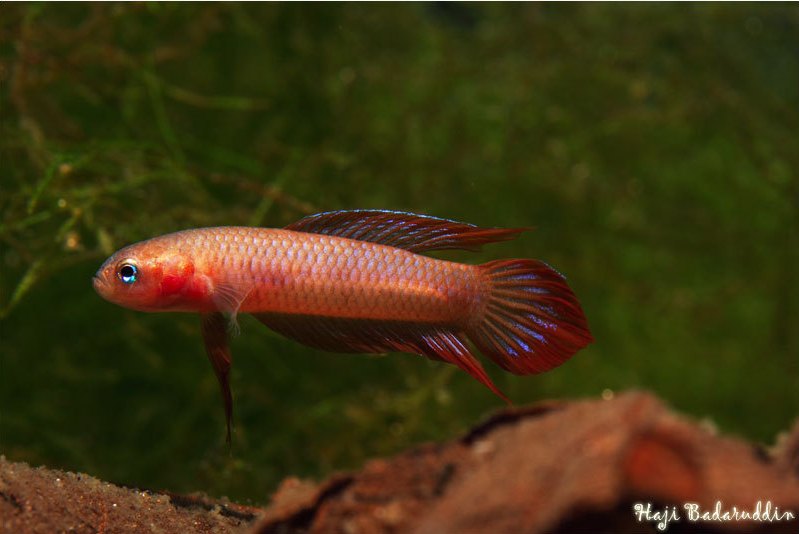
Betta burdigala
Kottelat & Ng, 1994
Max length35mm SL1.4in SLTank45 × 30cm18 × 12inTemp22–30°C72–86°FpH4.0–6.0B. burdigala is exceptionally rare in the hobby with many fishes traded or pictured as such being B. uberis or other congener. It's included in the Betta coccina group/complex of closely-related species within the genus. This assemblage mostly comprises small, red-coloured fishes with the exceptions of B. persephone and B. miniopinna which are darkish. Identifying some of the red ones correctly is not always easy as the patterning in them can be both similar and confusingly variable.
Betta dennisyongi
Tan, 2013
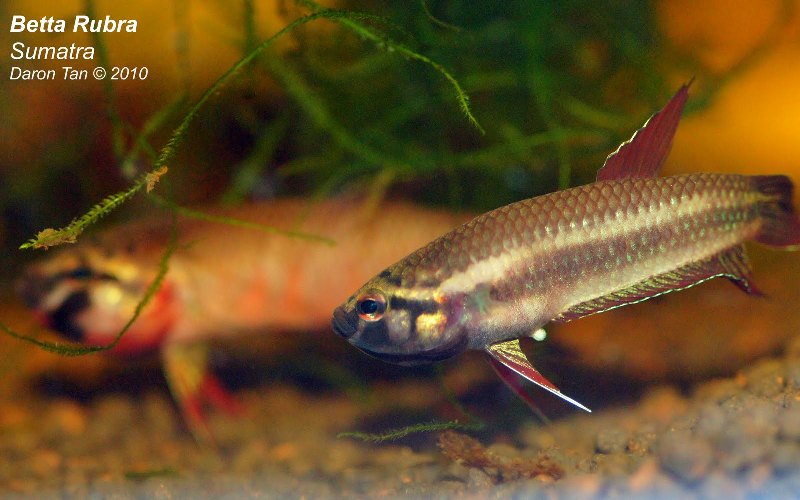
Max length36mm SL1.4in SLTank45 × 30cm18 × 12inTemp22–27°C72–81°FpH5.0–7.0This species is available in the aquarium hobby but is not traded in large numbers and may have been inadvertently hybridised with the similar-looking congener B. rubra prior to its description since they're typically exported mixed together. It's included in the B. rubra group of closely-related species within the genus, an assemblage erected by Schindler and van der Voort (2012) who...
Betta splendensSiamese Fighting Fish
Regan, 1910
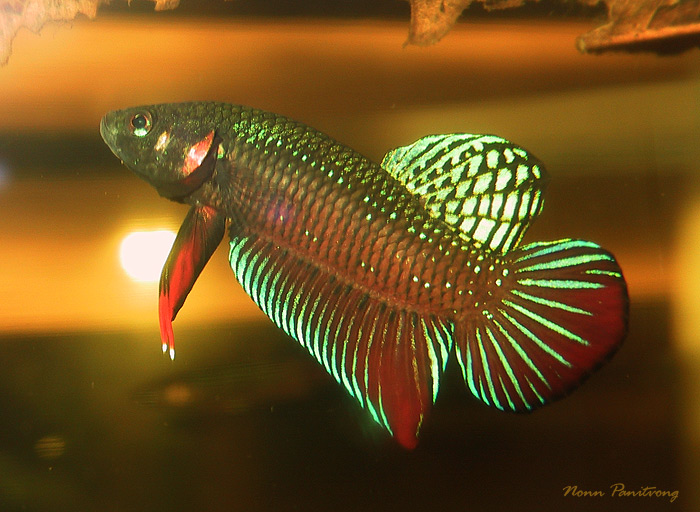
Max length70mm SL2.8in SLTank45 × 30cm18 × 12inTemp22–30°C72–86°FpH6.0–8.0This species' common name is derived from the tradition of keeping the fish in order to fight against each other in organised 'bouts' upon which participants and onlookers place wagers. It has been extensively line-bred for vigour, strength, and the ornamental trade, and hybridised with the congeners B. imbellis, B. smaragdina, and B. mahachaiensis.
Betta stigmosa
Tan & Ng, 2005
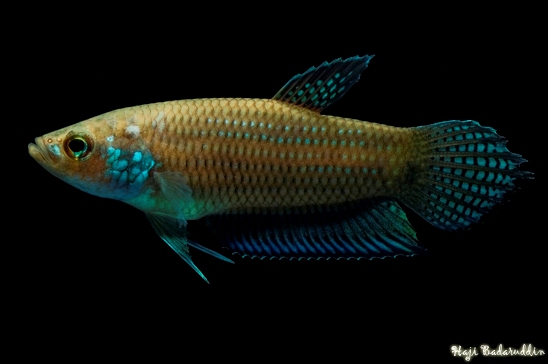
Max length50mm SL2.0in SLTank60 × 30cm24 × 12inTemp22–28°C72–82°FpH5.0–7.0Known only forest hill streams with flowing, clear water. These are typically shaded from the sun by dense riparian vegetation. The substrate is composed of rocks or gravel, fallen leaves, branches and submerged tree roots, and presumably the fish show a preference for quieter marginal zones as with related congeners. The type locality was described as a 'swampy stream' and sympatric species incl...
Biotodoma wavriniOrinoco Eartheater
Gosse, 1963
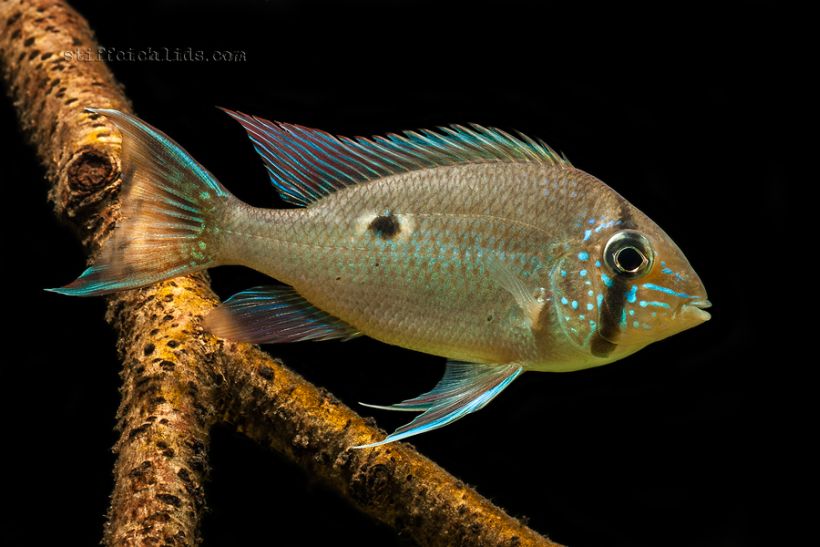
Max length100mm SL3.9in SLTank150 × 45cm60 × 18inTemp20–30°C68–86°FpH4.0–6.5Populations known in the aquarium trade include 'Cuao', 'Orinoco', 'San Antonio', and 'Sipapo Ventuari'. B. wavrini and its congener B. cupido can be separated by body shape and position of the dark blotch on the posterior portion of the flank. In B. cupido the body is relatively compact and the blotch located above the upper lateral line, whereas in B. wavrini the body is noticeably elongate and the blotch on or below the upper lateral line.