Results for “flank”
Type a name: scientific, common, or one a species used to go by. Or narrow the catalogue with the filters.
Filters
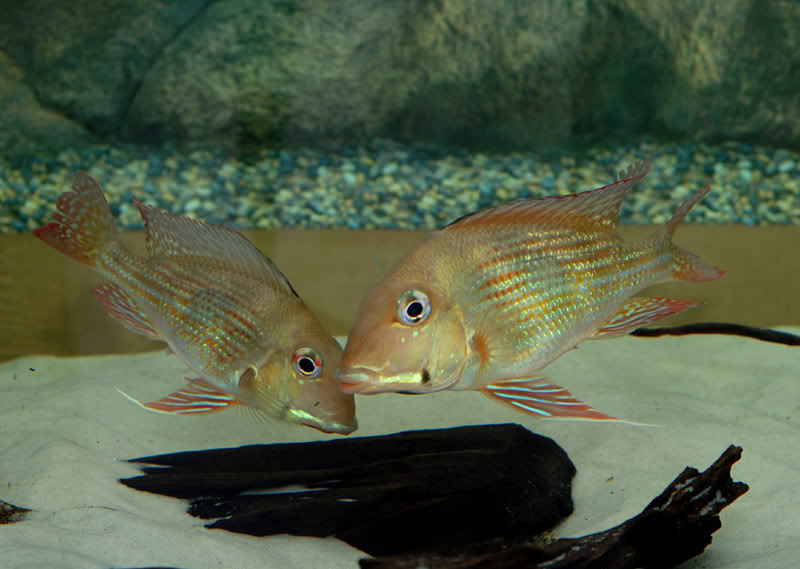
Geophagus brachybranchus
Kullander & Nijssen, 1989
Max length200mm SL8in SLTank180 × 60cm72 × 24inTemp26–30°C79–86°FpH5.0–7.0This species is generally rare in the aquarium hobby though oddly appears to be one of the commoner species in Australia where it's often referred to by the vernacular name 'black-throated eartheater'. It's a member of the nominal G. surinamensis 'group' of closely-related species within the genus and can be identified by a combination of characters including: presence of dark preopercular markings; no vertical bars on the flanks even when stressed/preserved; base of filaments on the first gill arch mostly covered by a flap of skin; exposed part of bra...
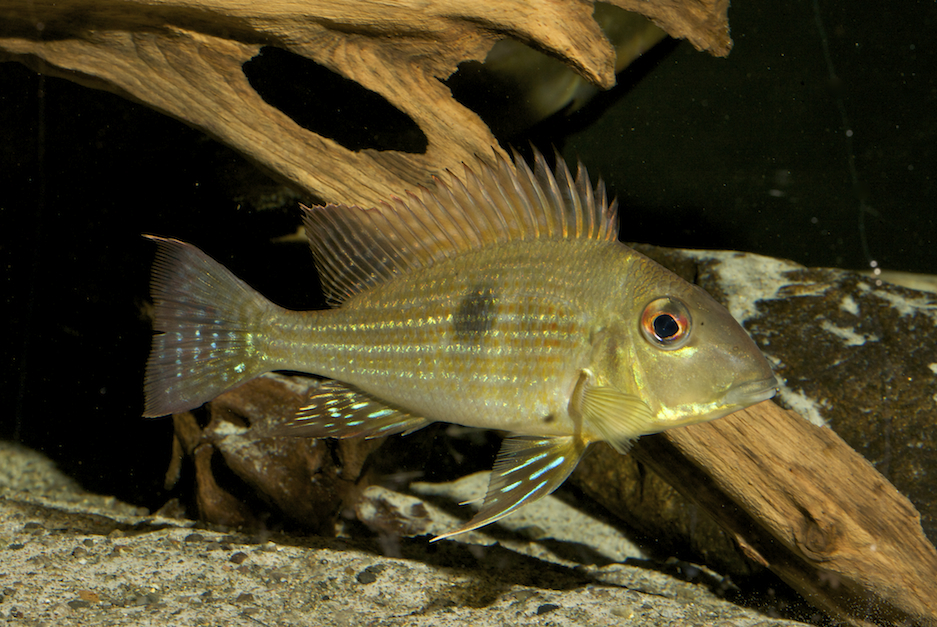
Geophagus brokopondo
Kullander & Nijssen, 1989
Max length150mm SL6in SLTank150 × 60cm60 × 24inTemp25–33°C77–91°FpH5.0–7.0This species is very rarely-traded since collections of fishes for commercial purposes aren't common in Suriname. It's a member of the nominal G. surinamensis 'group' of closely-related species within the genus and can be identified by a combination of characters including: no dark preopercular marking; six vertical/parallel bars on each flank (normally visible only when the fish are stressed, spawning or preserved); dark, squarish lateral spot positioned within the third vertical bar; sixth (posterior) bar elongate an...
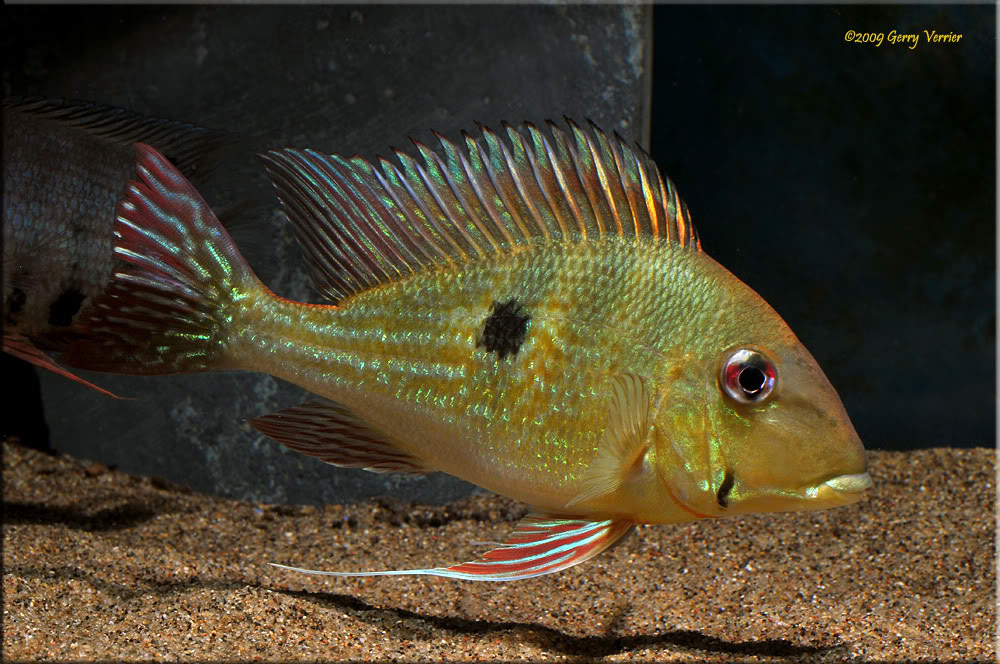
Geophagus dicrozoster
López-Fernández & Taphorn, 2004
Max length202mm SL8in SLTank180 × 60cm72 × 24inTemp26–30°C79–86°FpH4.0–7.0It's a member of the nominal G. surinamensis 'group' of closely-related species within the genus and can be identified by a combination of characters including: presence of dark preopercular markings; seven parallel vertical bars on each flank (normally visible only when the fish are stressed, spawning or preserved); vertical bars four and five meet in such a way that they form a 'Y' shape; dark lateral spot positioned within the third vertical bar; caudal fin reddish with variable pattern of iridescent blue spots and stripes.
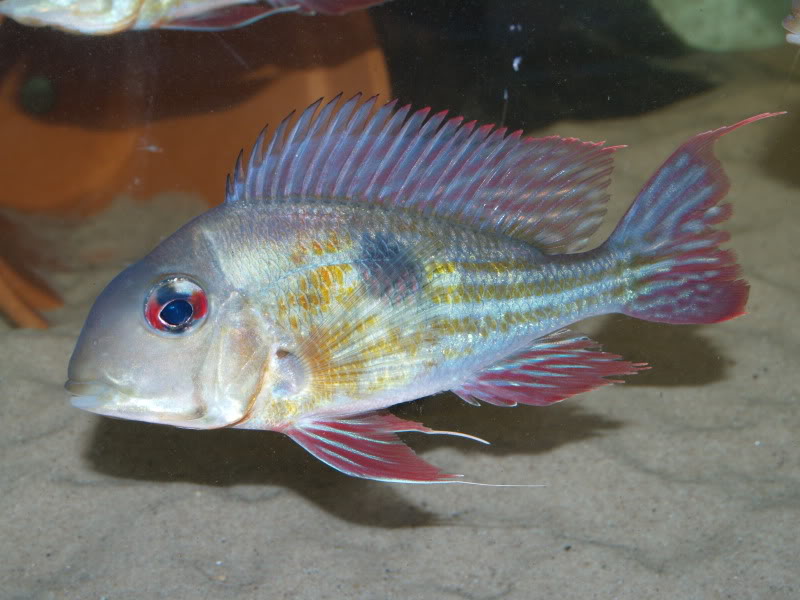
Geophagus proximus
Castelnau, 1855
Max length225mm SL9in SLTank180 × 60cm72 × 24inTemp24–32°C75–90°FpH4.0–7.0This species is rare in the hobby though it's name is often attached to shipments of other Geophagus species. It's a member of the nominal G. surinamensis 'group' of closely-related species within the genus and can be identified by a combination of characters including: possession of dark preopercular marking; no vertical bars on the flanks; relatively large, roughly oblong-shaped dark midlateral marking; caudal fin brownish with 3-5 light stripes on upper lobe and less well-defined stripes or mottled pattern of light spots with narrow dark interspaces on lower lobe.
Geophagus winemilleri
López-Fernández & Taphorn, 2004
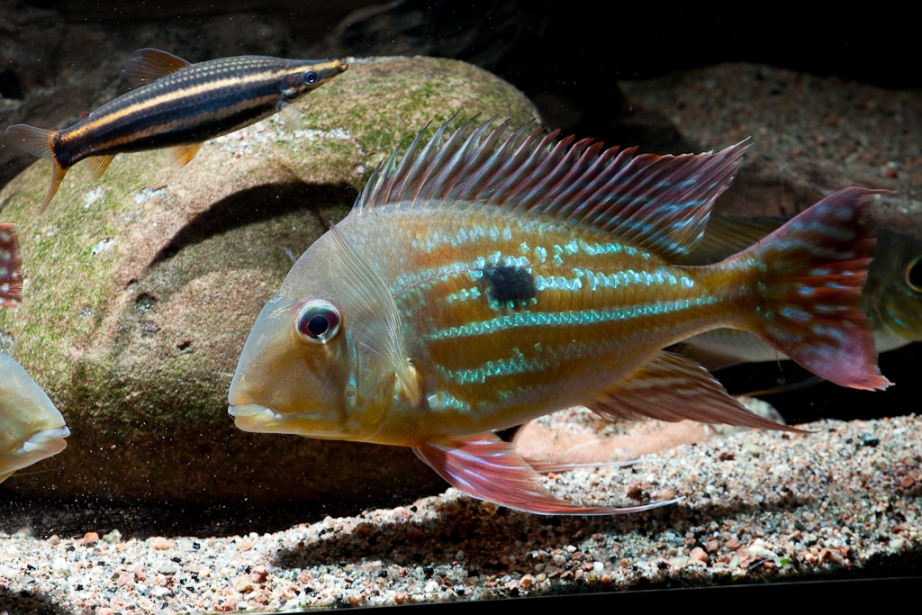
Max length200mm SL8in SLTank180 × 60cm72 × 24inTemp26–30°C79–86°FpH4.0–7.0This species is rare in the hobby although other species are sometimes sold under the name. It's a member of the nominal G. surinamensis 'group' of closely-related species within the genus and can be identified by a combination of characters including: possession of dark preopercular marking; four parallel, ventrally-inclined bars on each flank (normally visible only when the fish are stressed, spawning or preserved); dark lateral spot positioned within the second vertical bar; caudal fin red with variable pattern of large, iridescent blue to white spo...
Hampala disparSpotted Hampala Barb
Smith, 1934
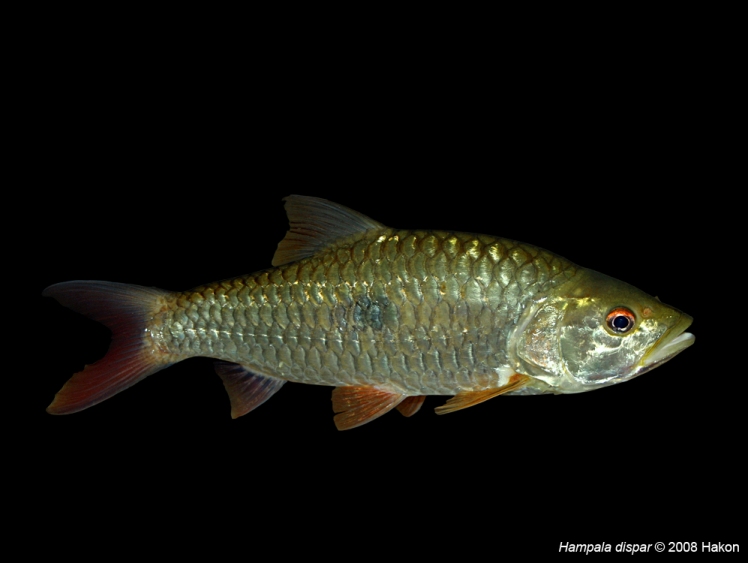
Max length350mm SL14in SLTank240 × 60cm96 × 24inTemp20–25°C68–77°FpH6.0–8.0The genus currently contains seven species of which H. macrolepidota and, to a lesser extent, H. dispar are the only ones seen with any regularity in the aquarium trade. As well as having the widest distribution H. macrolepidota is also the largest member of the group. All representatives can appear superficially similar at first glance, the exception being H. lopezi which is endemic to a single island in The Philippines and displays a unique lateral band-like marking on the flanks.
Hampala salweenensis
Doi & Taki, 1994
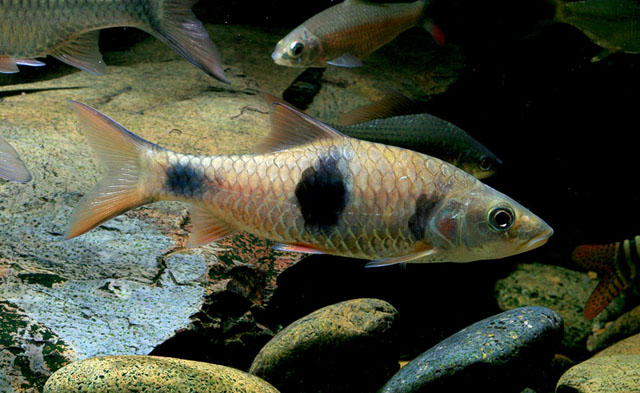
Max length201mm SL8in SLTank240 × 60cm96 × 24inTemp20–26°C68–79°FpH6.0–8.0This species is poorly-known in the aquarium hobby and may have never been maintained outside its native countries. It can be distinguished from congeners by the following combination of characters: 26-27 lateral line scales; two roundish, dark blotches on each flank, one beneath dorsal-fin origin and above the lateral line, the other on the caudal peduncle and passing thro...
Hemibagrus peguensis
Boulenger, 1894
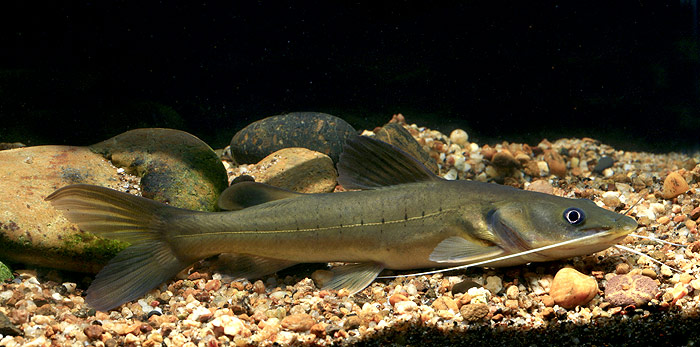
Max length286mm SL11in SLTanknot recordedTempnot recordedpHnot recordedMembers of this assemblage can be told apart from other congeners by possession of 44–46 vertebrae, an adipose-fin with a relatively short base (< 20 % SL), a colour pattern comprising either distinct black spots arranged in vertical columns or irregular black vertical lines running along the flanks, and normally a reddish or orangish caudal-fin in life.
Hemichromis bimaculatusJewel Cichlid
authority not recorded
Max length150mm SL6in SLTank120 × 30cm48 × 12inTemp22–28°C72–82°FpH6.0–7.8Not recommended for the beginner or for the general community tank, despite often being sold as such. The Jewel Cichlid is regularly seen in the trade. Recently, Hemichromis lifalili has become the more popular fish. These species can be easily distinguished as H. lifalili have only 2 black spots on the flanks whereas H. bimaculatus has 3, having an extra spot on the caudal peduncle....
Hemichromis elongatusFive Star General
authority not recorded
Max length150mm SL6in SLTanknot recordedTemp22–25°C72–77°FpH6.5–7.5A real bruiser of a cichlid, H. elongatus is not seen for sale very often, and with good reason. Pound for pound it must rank as one of the most aggressive cichlids available in the hobby. It is such an efficient predator that, in some of its native countries, it is used to control populations of Tilapia. As a result it's definitely not recommended for the inexperienced aquarist. The common name is derived from the row of 5 dark markings that run laterally along the flanks of the fish. I...
Hemichromis lifaliliBlood-Red Jewel Cichlid
authority not recorded
Max length100mm SL3.9in SLTank75 × 30cm30 × 12inTemp23–26°C73–79°FpH6.0–7.8Often confused with Hemichromis bimaculatus. These species can be easily distinguished as H. lifalili have only two black spots on the flanks whereas H. bimaculatus has three, having an extra spot on the caudal peduncle. It can also be told apart from the similar red form of H. guttatus by comparing the midlateral markings of the two. In lifalli the marking is round and is situated above the lateral line. In guttatus the marking is oval in shape and some of it extends below the lateral line. ...
Herichthys carpintisPearlscale Cichlid
authority not recorded
Max length305mm SL12in SLTank120 × 38cm48 × 15inTemp24–26°C75–79°FpH7.0The Pearlscale Cichlid is an extremely attractive fish, showing some gorgeous bluey green hues and reflective flecks on their flanks. They aren't difficult to look after or breed, but be careful when choosing tankmates. The only problem with spawning is that the male may become aggressive towards the female - it is certainly wise to have a tank divider, just in case. Look out for Pearlscale Cichlids labelled as Texas Cichlids, as it is a misleading common name that is often given to Heri...
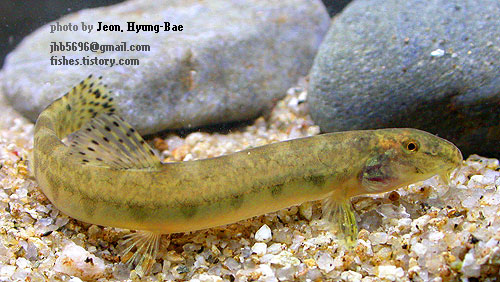
Iksookimia yongdokensis
Kim & Park, 1997
Max length160mm SL6in SLTank100 × 30cm39 × 12inTemp20–24°C68–75°FpH7.0–8.0Among them it's most similar to I. longicorpus and I. hugowolfeldi but can be distinguished by the following combination of characters: body patterning consisting of 9-13 dark vertical bars along the flanks plus a small dark spot at the base of the upper caudal-fin lobe; no black blotch or markings posterior to the operculum; reduced lamina circularis in males; interorbital width measures 14.7-17.8% o...
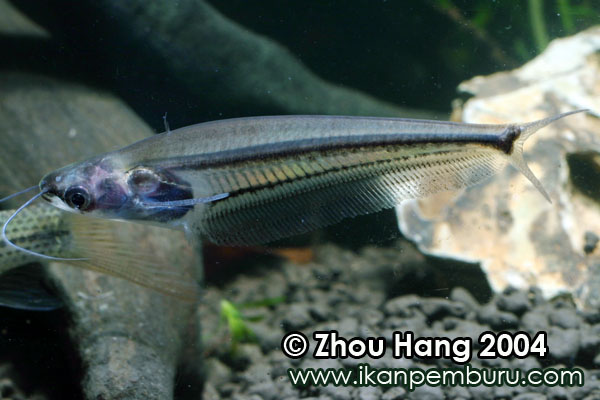
Kryptopterus palembangensis
Bleeker, 1852
Max length140mm SL6in SLTank120 × 30cm48 × 12inTemp20–28°C68–82°FpH6.0–7.5This species is almost unheard of in the aquarium trade though may occasionally be exported among shipments of wild fishes from Sumatra. It's closely-related to K. bichirris but is told apart by presence (vs. absence) of a prominent, dark lateral stripe on each flank. Kryptopterus species are found only in Southeast Asia and the genus has been consi...
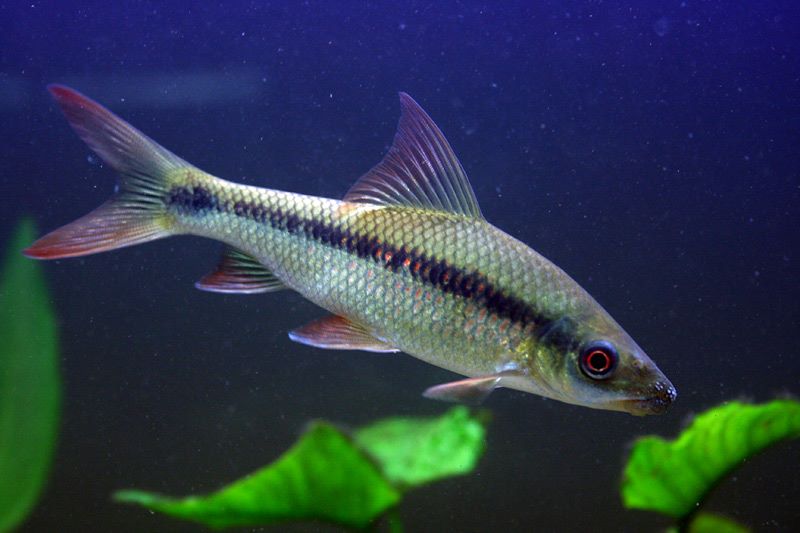
Labeo angra
Hamilton, 1822
Max length200mm SL8in SLTanknot recordedTempnot recordedpHnot recordedThis species can be identified by colour pattern comprising a brownish dorsal surface, yellowish flanks and abdomen, and a black to bluish lateral stripe extending from the eye to the caudal-fin base.
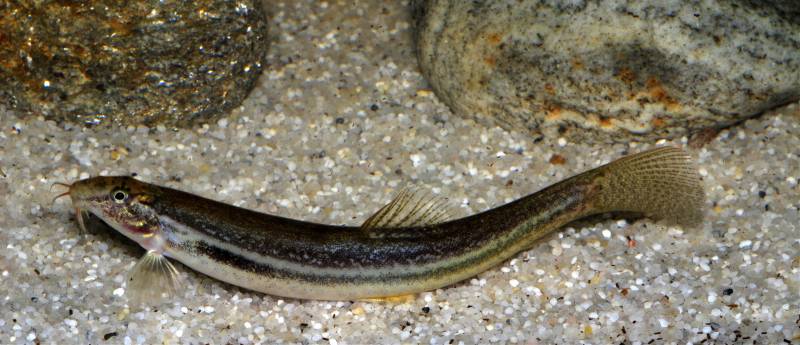
Lepidocephalichthys guntea
Hamilton, 1822
Max length150mm SL6in SLTank80 × 30cm31 × 12inTemp20–25°C68–77°FpH6.0–8.0This is one of the most frequently-traded members of the group and is an excellent choice for those new to keeping loaches. It's distinguishable from congeners by a combination of characters including: rounded/truncate caudal-fin; a scaleless patch on top of the head; relatively large adult size; flanks with spotted patterning in females and a solid...
Luciosoma pellegrinii
Popta, 1905
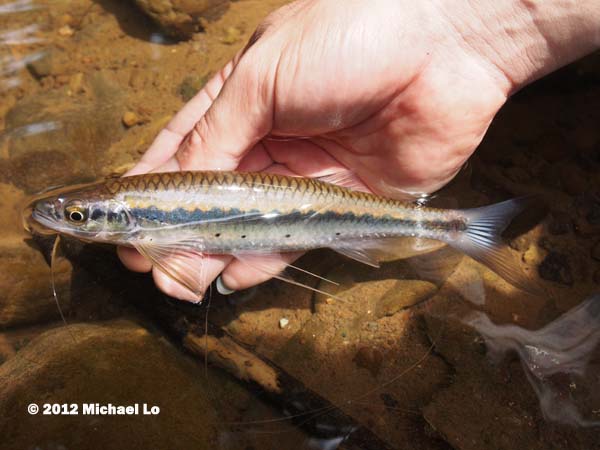
Max length170mm SL7in SLTanknot recordedTempnot recordedpHnot recordedThe five species which currently comprise Luciosoma can be distinguished by elements of colour pattern. Popta described the colour pattern of L. pellegrinii as follows: body colour olive dorsally, with dark-edged scales, yellow ventrally; a lateral series of dark spots on the flank forming a midlateral band which extends onto the opercle but not the head; 4-8 blackish-brown, distinctly-separate spots on the lateral line; fins yellow; dorsal and anal fins with a blackish-brown band; anterior half of some pectoral-fin rays blackish-brown...
Myleus schomburgkiiBlack-barred Myleus
authority not recorded
Max length120mm SL5in SLTank120 × 38cm48 × 15inTemp23–27°C73–81°FpH6.0–7.0Similar in care and appearance to its close relative, the Redhook (myloplus rubripinnis), myleus schomburgkii is easily distinguished by the black vertical bar on the flanks. It is also a smaller adult fish. Despite this, it is sometimes offered for sale marked as a Redhook. This fish is also variously referred to as the Black-ear Pacu, Disc Pacu and Disk Tetra....
Nannostomus espeiBarred Pencilfish
Meinken, 1956
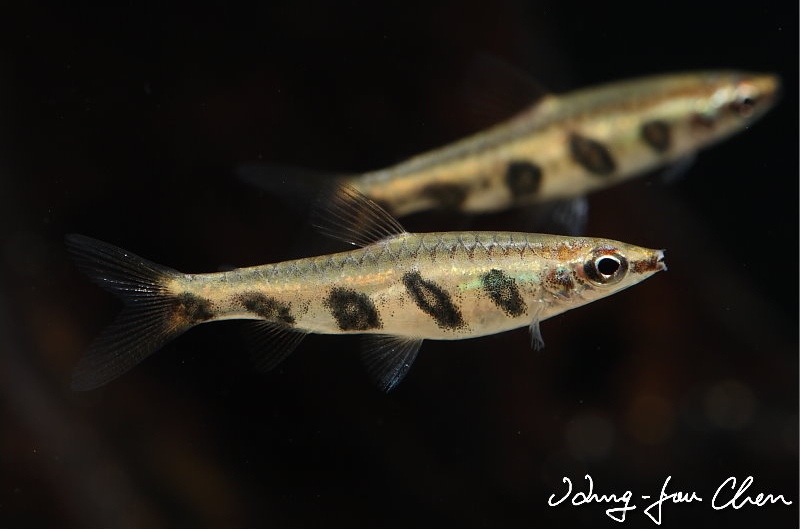
Max length30mm SL1.2in SLTank60 × 30cm24 × 12inTemp22–28°C72–82°FpH4.0–6.5This species is sometimes traded as 'Espei's', 'four-barred' or 'banded' pencilfish and is sought after in the aquarium hobby, though normally quite expensive to buy. It's most-easily identified by its unique colour pattern of 5 dark, vertically-orientated bar-like markings on each flank, this in direct contrast to the horizontal stripes seen in other congeners...
Nannostomus marginatusDwarf Pencilfish
Eigenmann, 1909
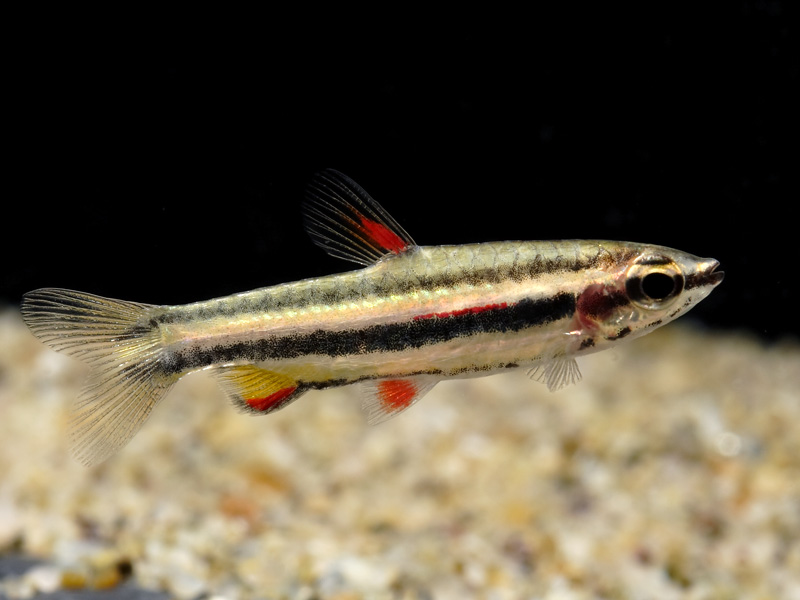
Max length25mm SL1.0in SLTank45 × 30cm18 × 12inTemp22–28°C72–82°FpH4.0–7.0There also exist a number of minor differences in colour pattern between populations. For example some Peruvian forms have yellow pigmentation on the body and fins, and those from Guyana and Suriname possess a short red stripe on vertical scale rows 6-9, above the central dark stripe on the body. Rio Negro forms have a similar red stripe but overlapping the central dark stripe and extending along most of the flank, while a form from Colombia has an elongate red stripe which is broken in two beneath the dorsal-fi...