Results for “pH”
Type a name: scientific, common, or one a species used to go by. Or narrow the catalogue with the filters.
Filters
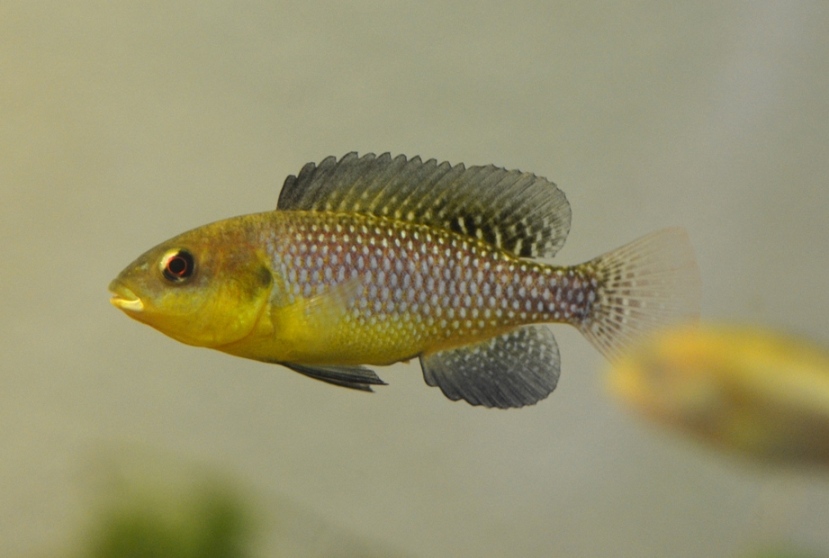
Alcolapia alcalicaSoda Cichlid
Hilgendorf, 1905
Max length115mm SL5in SLTanknot recordedTemp28–38°C82–100°FpH8.0–10.0This cichlid is a true wonder of nature. It lives in a soda lake which is full of hot, alkaline springs. The water contains a high concentration of sodium carbonate and other dissolved minerals and salts. The water conditions in the lake are typically pH 9.5-10.5, kH 7000+ and temperature 90-110°F! The water also has a sg reading of 1.2+ and is very shallow, having a maximum depth of only 2 metres. The fish can be acclimatised to more 'normal' conditions but the pH should not be al...
Alcolapia grahamiGraham's Soda Cichlid
Boulenger, 1912
Max length120mm SL5in SLTank90 × 30cm36 × 12inTempnot recordedpH8.0–10.0This species is a true wonder of nature. It lives in a soda lake which is full of hot, alkaline springs. The water contains a high concentration of sodium carbonate and other dissolved minerals and salts. The water conditions in the lake are typically pH 9.5-10.5, kH 7000+ and temperature 90-110°F! The water also has a sg reading of 1.2+ and is very shallow, having a maximum depth of only 3 metres. It can be acclimatised to more 'normal' conditions but the pH should not be allowed ...
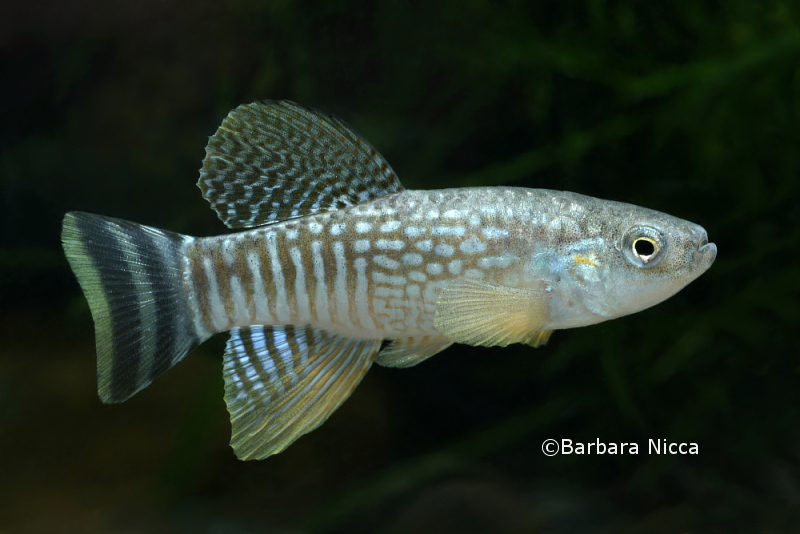
Aphaniops disparArabian Toothcarp
Rüppell, 1829
Max length80mm SL3.1in SLTank120 × 30cm48 × 12inTemp4–30°C39–86°FpH7.5–9.0A. dispar should only be considered a nominal species as demonstrated by Hrbek and Meyer (2003) who conducted an in-depth phylogenetic study covering the majority of the genus. It was found to represent a paraphyletic grouping meaning it cannot be considered to be a species following the phylogenetic species concept. A. mento, A. sirhani and especially A. ginaonis and A. richardsoni were found to be its closest surviving relatives. Hoedeman (1951) suggested that it should be moved into a separat...
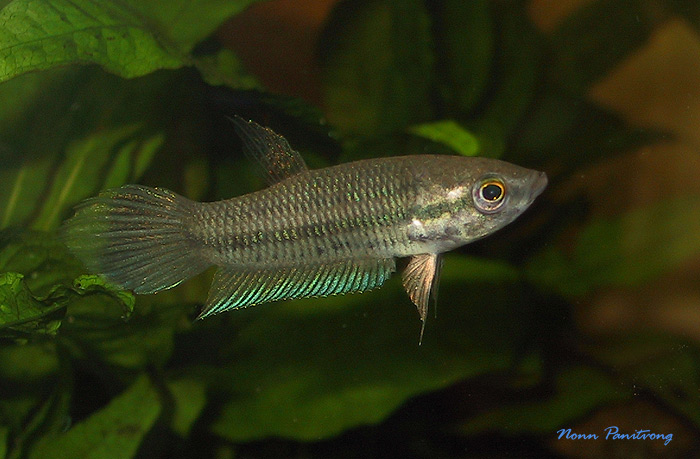
Betta pallida
Schindler & Schmidt, 2004
Max length40mm SL1.6in SLTank60 × 30cm24 × 12inTemp22–27°C72–81°FpH5.5–7.0Has been collected from a slowly-moving creek which ranged in depth from 20-50 cm. The water was clear and slightly-stained with tannins and the subtrate was covered by a layer of leaf litter. PH was 6.3, conductivity 82 µS/cm and water temperature 25.5°C. At another locality pH was 6.5, conductivity 69 µS/cm and water temperature 26.6 °C.
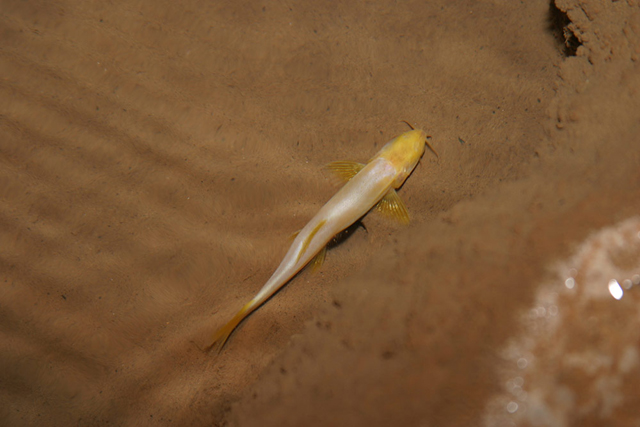
Schistura oedipus
Kottelat, 1988
Max length80mm SL3.1in SLTanknot recordedTempnot recordedpHnot recordedIt's known from five caves in total, the others being Tham Huet, Tham Ban Louk Kow Larm, Tham Nong Pha Cham, and Tham Mae Lana. Streams flowing from these caves drain into the Nam Lang and Nam Khong rivers of the Salween drainage system, and the two easternmost caves, Tham Huet and Tham Nong Pha Cham, are both tributaries of the former.
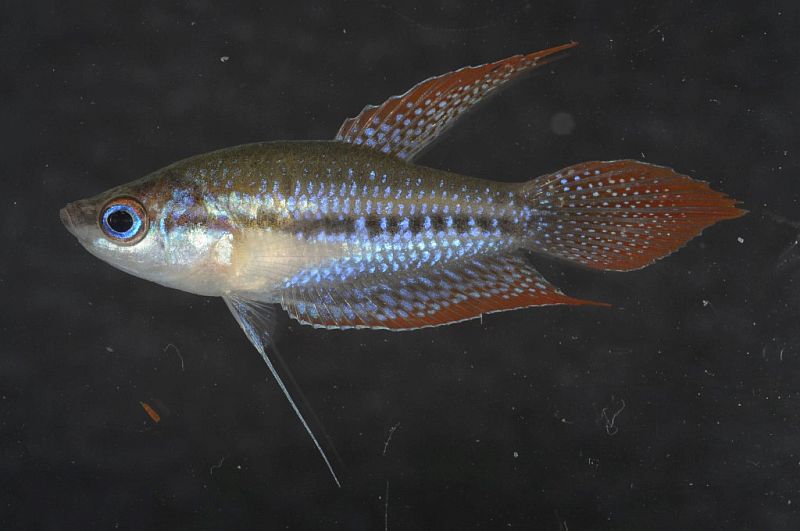
Trichopsis schalleri
Ladiges, 1962
Max length50mm SL2.0in SLTank60 × 30cm24 × 12inTemp22–28°C72–82°FpH5.0–7.5Known from the lower Mekong River basin in Laos, Thailand, Cambodia, and Vietnam, plus tributaries of the Chao Phraya watershed in central Thailand, and drainages between the Chao Phraya and Mekong in eastern Thailand. Type locality is 'Nam-Mun at Korat, 135 miles northeast of Bangkok, Thailand'.
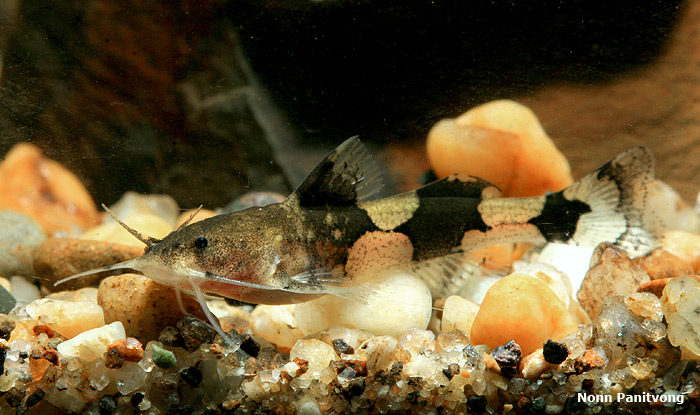
Akysis vespaOrange-Banded Stream Catfish
Ng & Kottelat, 2004
Max length31mm SL1.2in SLTank45 × 30cm18 × 12inTemp16.5–23.5°C62–74°FpH6.0–7.5This species is among the few members of the family to be exported for the aquarium hobby and we've also seen it on sale under various names such as 'orange-banded stone catfish', 'orange micro bumblebee catfish', 'Burmese orange mini bee catfish' or more simply 'wasp catfish'. Though the majority of forms are yellowish to orange in colouration there appears to exist a bright red variant which to date we've only seen in photos.
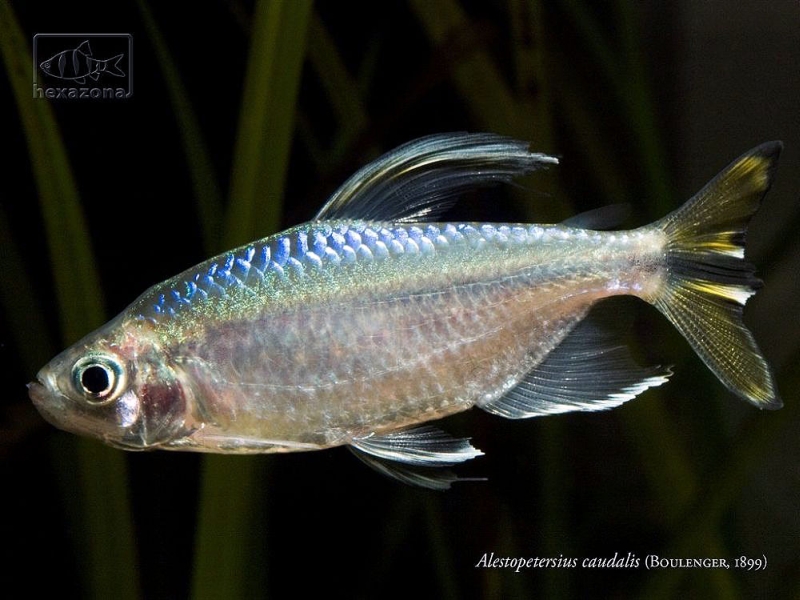
Alestopetersius caudalisYellow-Tailed Congo Tetra
Boulenger, 1899
Max length60mm SL2.4in SLTank120 × 30cm48 × 12inTemp22–26°C72–79°FpH5.0–7.5This species is also traded as 'yellow-finned', 'yellowtail' or 'blue Congo' tetra and is occasionally bred on a commercial basis, although not on a scale comparable to its better-known relative Phenacogrammus interruptus. No recent key to the genus exists but based on Géry (1977) and images in Mbimbi Mayi Munene and Stiassny (2012) it can be told apart from congeners by a combination of: extended median caudal-fin rays in adult males; absence of prominent dar...
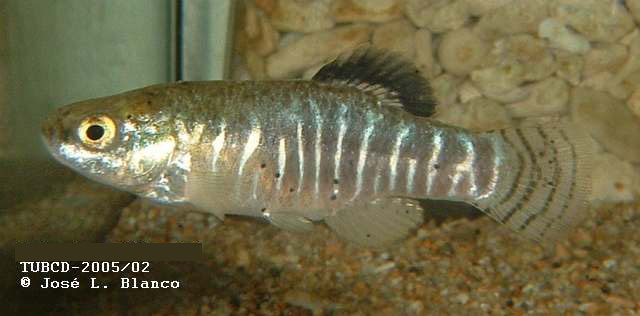
Anatolichthys villwockiSakarya Toothcarp
Hrbek & Wildekamp, 2003
Max length60mm SL2.4in SLTank120 × 30cm48 × 12inTemp2–30°C36–86°FpH6.5–8.5Prior to its description this species had been considered a form of A. anatoliae and also referred to as A. sp. aff. danfordii but collections in the early part of this century motivated new studies and resulted in its elevation to full species level. Phylogenetic analyses have shown it to represent the sister group to all other Anatolian Aphanius spp. The Anatolia region represents a centre of diversity for the genus with ten endemic species described to date. These are thought to have diverged ...
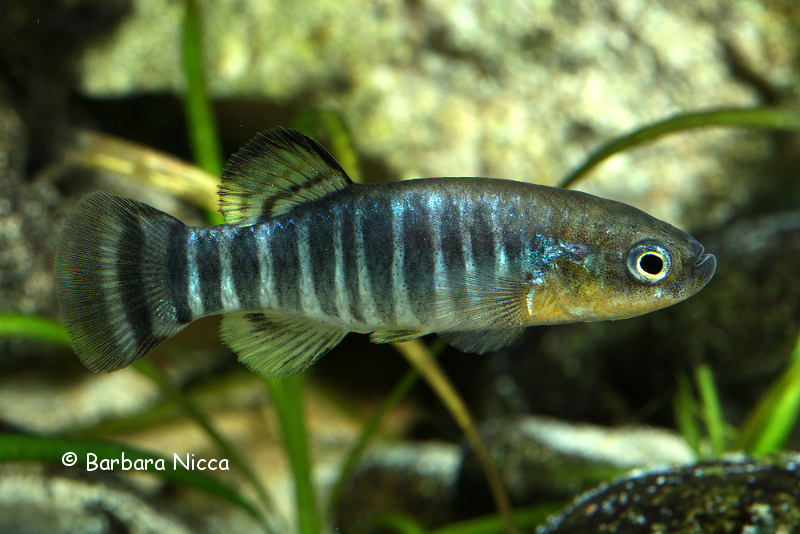
Aphaniops sirhaniAzraq Toothcarp
Villwock, Scholl & Krupp, 1983
Max length50mm SL2.0in SLTank120 × 30cm48 × 12inTemp10–35°C50–95°FpH7.0–8.5Phylogenetic studies have shown this species to be most closely related to A. dispar, A. richardsoni and A. ginaonis within the genus. It probably became isolated when the Red Sea flooded the Wadi Sirhan around 13 million years ago. You 're unlikely to find it on sale in aquatic stores although it may be available via specialist breeders or associations from time-to-time. While Aphanius spp. are certainly not as colourful as some of their relatives their interesting behaviour and continuous acti...
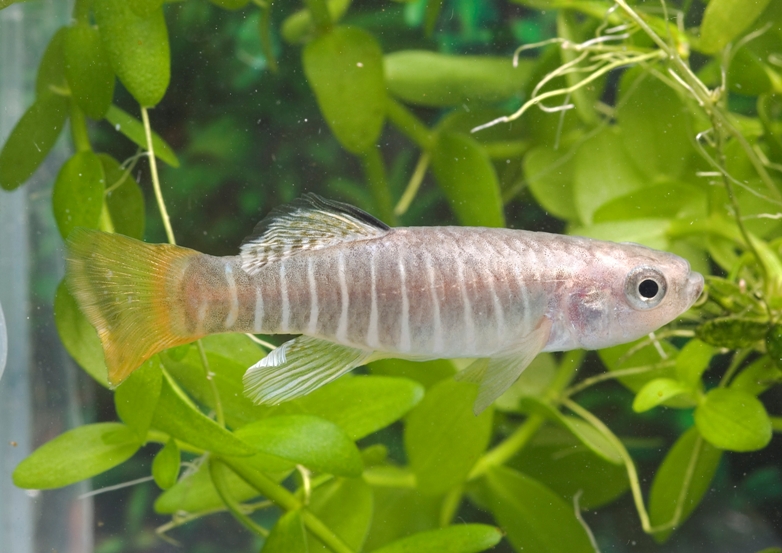
Aphanius fasciatusMediterranean Toothcarp
Valenciennes, 1821
Max length55mm SL2.2in SLTank120 × 30cm48 × 12inTemp2–30°C36–86°FpH7.5–9.0A 2003 phylogenetic study by Hrbek and Meyer showed that in genetic terms specimens of A. fasciatus collected from different localities do not vary as much as with other members of the genus. The latter tend to exist in geographically separated populations and exhibit localised differentiation. While A. fasciatus does show certain disparities in appearance depending on locality it is thought that periodic migration events have restricted the development of genetic diversity within the species to...
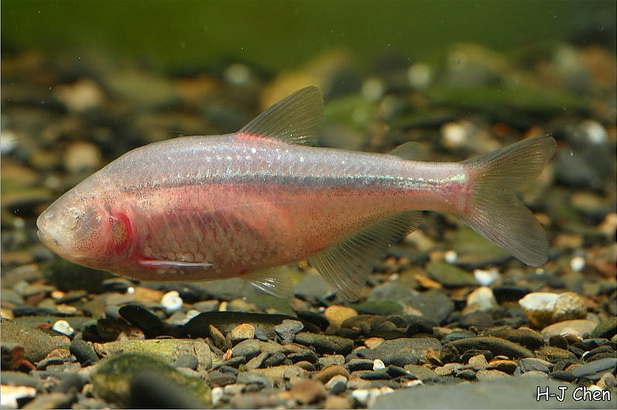
Astyanax mexicanusBlind Cave Tetra
De Filippi, 1853
Max length95mm SL3.7in SLTank80 × 30cm31 × 12inTemp20–25°C68–77°FpH6.5–8.0While the surface-dwelling form of this species is fairly unremarkable and rarely-seen in the hobby, the blind form is very popular indeed. The two may have diverged as recently as within the last 10,000 years, with the blind form losing its eyes and much of its pigment. This probably happened because the fish needed better development in other sensory areas. Losing unnecessary and energy-consuming aspects of its physiology allowed it to devote more energy to developments such as increased numbers of taste receptors on the head.
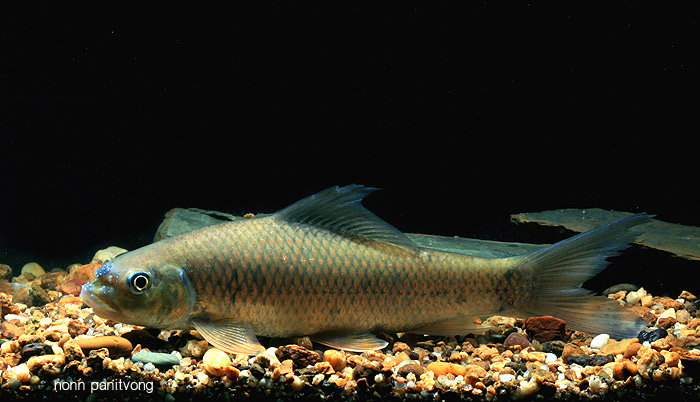
Bangana devdevi
Hora, 1936
Max length250mm SL10in SLTanknot recordedTempnot recordedpHnot recordedKnown with certainty from the Irrawaddy River system in Manipur state, India, and Myanmar, and the Salween watershed in eastern Myanmar and northwestern Thailand. Records from the Red River basin in Vietnam appear questionable. Type locality is 'Burma: Myitkyina District: Mali Hka basin: Phungin Hka;'.
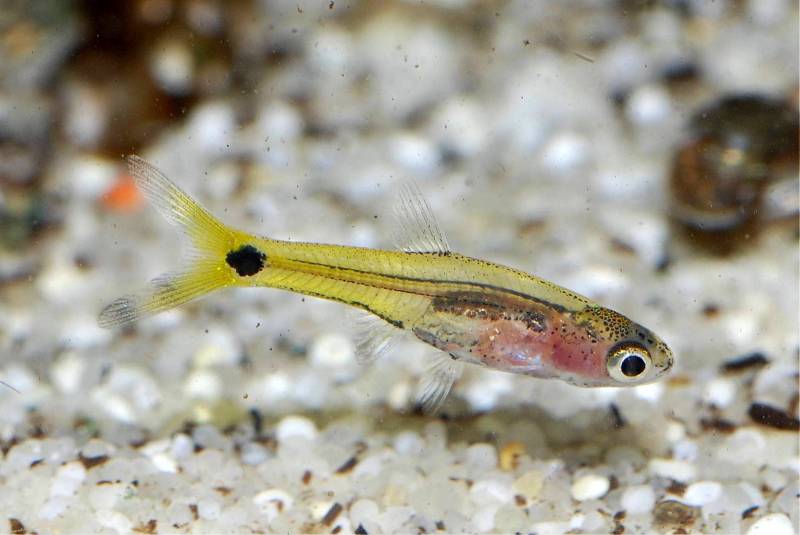
Barboides gracilis
Brüning, 1929
Max length18mm SL0.7in SLTank45 × 20cm18 × 8inTemp21–26°C70–79°FpH6.0–7.0This species is still very rare in the hobby although it has built up something of a following among enthusiasts of planted 'nano' aquaria and you may see it on sale under the trade names of 'dwarf amber/ember barb'. Its small adult size evolved via a process known as miniaturisation characterised by sexually mature adults with a significantly reduced size of less than 20mm SL. Among bony fishes cyprinids are one of the few groups in which this phenomenon occurs repeated...
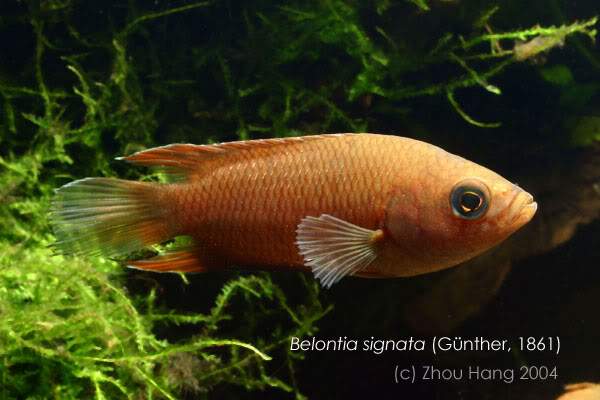
Belontia signataCeylonese Combtail
Günther, 1861
Max length120mm SL5in SLTank120 × 30cm48 × 12inTemp20–27°C68–81°FpH6.0–7.5This species is also traded/referred to by the vernacular name 'Ceylon fighting fish'. It differs from its only congener, B. hasselti, by its overall reddish (vs. brownish-grey) body colouration, and absence (vs. presence) of a mosaic-like patterning in the unpaired fins. At least three putative phenotypes have been recorded. The nominative, and commonest, mostly inhabits clear streams in rainier zones...
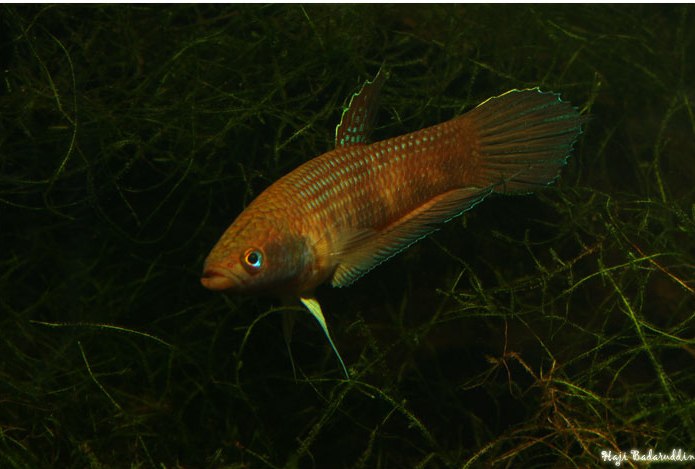
Betta cracens
Tan & Ng, 2005
Max length60mm SL2.4in SLTank80 × 30cm31 × 12inTemp22–27°C72–81°FpH5.5–6.5The type locality is a stream in a forest swamp with dense growth of Barclaya motleyi at intervals, part of which had been turned over to cultivation of rubber trees in 1997. The water depth varied between 5-80 cm, pH was 5.8 and syntopic species included 'Puntius' banksi, Rasbora einthoveni, Trigonopoma pauciperforatum, Hemirhamphodon pogonognathus, Betta pugnax, Sphaerichthys osphromenoides, Trichogaster trichopterus, Channa gachua and C. lucius.
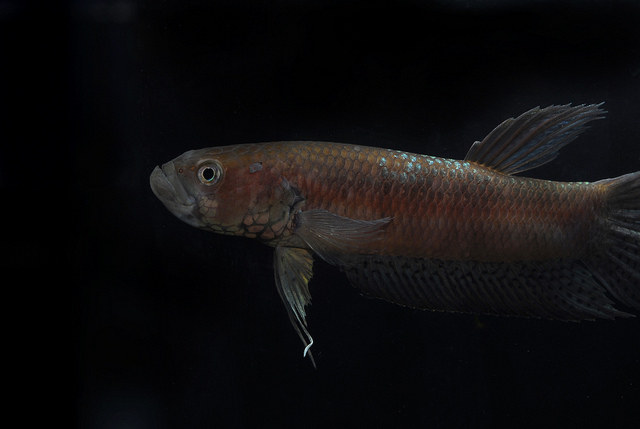
Betta gladiator
Tan & Ng, 2005
Max length90mm SL3.5in SLTank90 × 30cm36 × 12inTemp22–27°C72–81°FpH4.0–6.0Presumed endemic to the geographically-isolated Maliau basin, a roughly circular plateau enclosed by hills in Sabah state, Malaysia, Borneo. The Maliau River is part of the much larger Kinabantangan watershed, Malaysia's second longest river. The type series was collected from heath forest alongside 'Puntius' sealei and Hemibagrus cf. baramensis in acidic water with a pH of 4.2-4.8. Adult individuals were spaced around a metre apa...
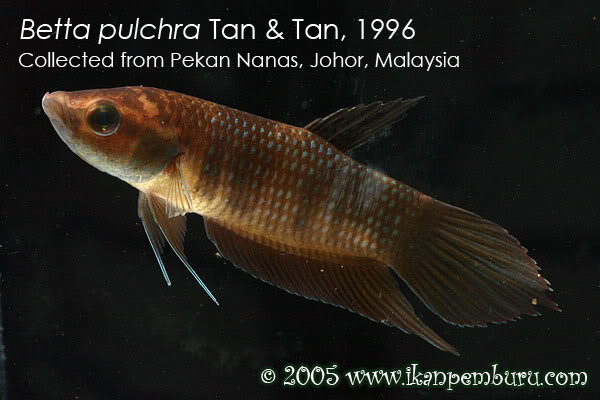
Betta pulchra
Tan & Tan, 1996
Max length60mm SL2.4in SLTank80 × 30cm31 × 12inTemp22–27°C72–81°FpH3.5–6.5Restricted to remnant blackwater habits in heavily-disturbed areas of former peat swamp forest, the original vegetation having been cleared to make space for plantations of oil pal, pineapple and rubber. It's now typically found among overhanging marginal vegetation of irrigation canals, with sympatric species including Belontia hasseltii, Betta bellica, B. imbellis, Sphaerichthys osphromenoides, Parosphromenus sp., and Trichopsis vittata. PH in its natural waters has been recorded over the range 3.9 - 4.2.
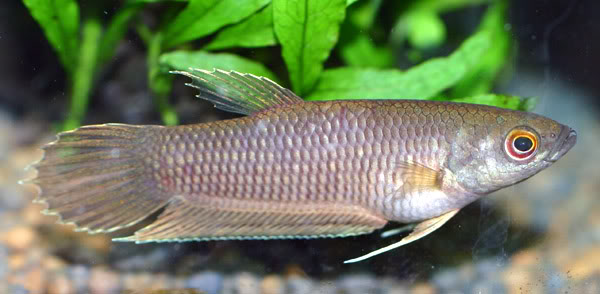
Betta spilotogena
Ng & Kottelat, 1994
Max length70mm SL2.8in SLTank80 × 30cm31 × 12inTemp22–27°C72–81°FpH4.0–6.5Inhabits freshwater swamps and associated streams, typically shaded from the sun by dense riparian vegetation. The water is normally clear or lightly stained with tannins, and the fish found in water less than a metre deep alongside related species including Betta edithae, B. miniopinna, and B. fusca. PH has been measured to range between 4.9-5.5.
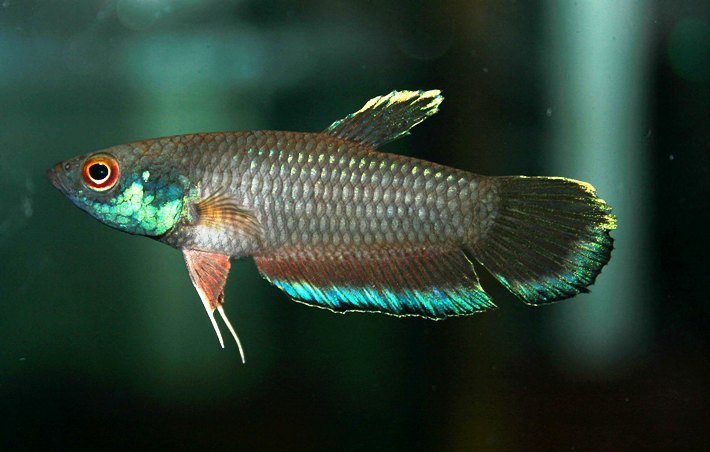
Betta taeniata
Regan, 1910
Max length55mm SL2.2in SLTank60 × 30cm24 × 12inTemp22–27°C72–81°FpH5.0–7.0At one locality close to Serian, Sarawak, the habitat comprised a swiftly-flowing, clear hill stream with a substrate of quartz gravel and variably-sized rocks. The pH was 7.0 and there was no aquatic vegetation. The stream was approximately 10 metres across at its widest point and between 5-80 cm deep. B. taeniata was found in sluggish stretches among submerged tree roots, leaf litter, or overhanging riparian vegetation.