Results for “population”
Type a name: scientific, common, or one a species used to go by. Or narrow the catalogue with the filters.
Filters
Protomelas taeniolatus
authority not recorded
Max length200mm SL8in SLTank120 × 45cm48 × 18inTemp24–28°C75–82°FpH7.6–8.8One of the more popular and readily available Protomelas species in the hobby, P. taeniolatus is very similar to P. fenestratus. Several colour forms of both these species exist. Some of the popular morphs of taeniolatus include "Red Empress", "Super Red Empress" and "Blue Fire". It is likely that some of these may be reclassified as distinct species in the future, as they attain different maximum sizes. None of these related species or morphs should be kept togethe...
Pseudotropheus socolofiPowder Blue Cichlid
authority not recorded
Max length115mm SL5in SLTank90 × 45cm36 × 18inTemp24–28°C75–82°FpH7.6–8.8This common mbuna also goes by the names "Eduard's mbuna" and "Pindani". It is one of the most popular Rift Lake cichlids in the hobby due to its striking colouration and somewhat peaceful nature (for a mbuna). Wild fish can now be quite difficult to find, as the vast majority of specimens offered for sale are tank-bred. An albino form exists in aquaria and has achieved a fair degree of popularity. A highly recommended beginner's mbuna....
Rasbosoma spilocercaDwarf Scissortail Rasbora
authority not recorded
Max length30mm SL1.2in SLTank45 × 30cm18 × 12inTemp22–26°C72–79°FpHnot recordedThis miniature look-a-like of the popular Rasbora trilineata is rarely seen in the aquatic hobby, probably as a result of its relatively plain patterning and rather delicate nature. However if a group is well looked-after they will exhibit some interesting behaviour and surprising colour. As it also makes an ideal resident of the ornamental planted aquaria that are currently so popular in the hobby we'd love to see it become more widely-available. The genus is currently monotypic and dis...
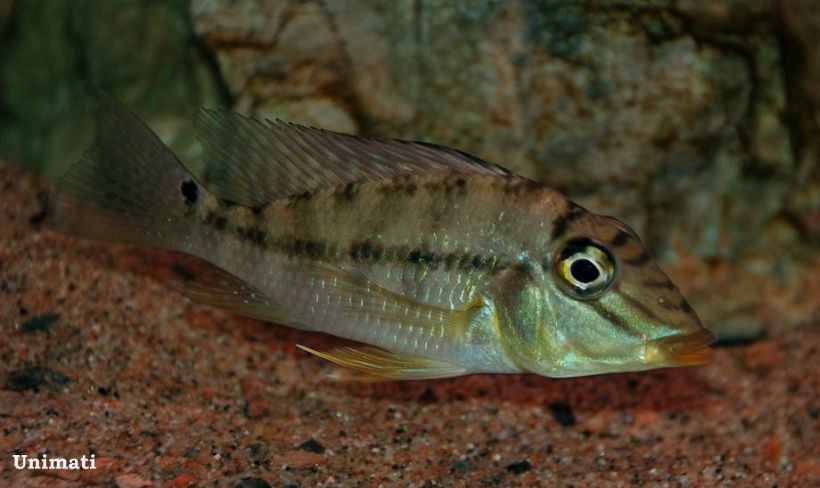
Satanoperca rhynchitis
Kullander, 2012
Max length145mm SL6in SLTank180 × 60cm72 × 24inTemp22–28°C72–82°FpHfrom 5.5Based on current knowledge, it thus remains impossible to deduce whether the group of putative species currently comprising S. jurupari, S. mapiritensis, and S. rhynchitis, plus populations from Amapá and the upper Negro/upper Orinoco region, represent distinct taxa or a single meta-population which can be referred to as S. jurupari sensu lato. Here on SF we include the named species separately, since they continue to be considered valid.
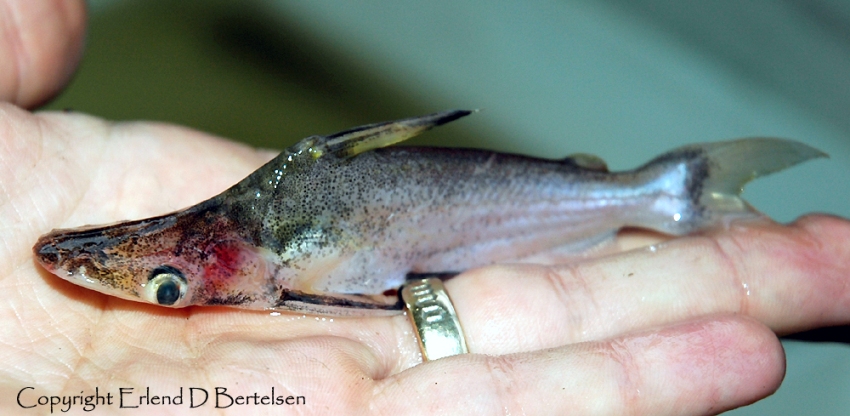
Ageneiosus ucayalensisDuck Catfish
Castelnau, 1855
Max length290mm SL11in SLTank180 × 60cm72 × 24inTemp22.5–28°C73–82°FpH5.5–7.5Apparently this species is polymorphic with body patterning varying significantly depending on locality. Individuals collected from black water habitats tend to be noticeably darker in overall colouration, for example, with this being particularly evident among populations from the Guiana Shield. The genus Ageneiosus was at one point classified in...
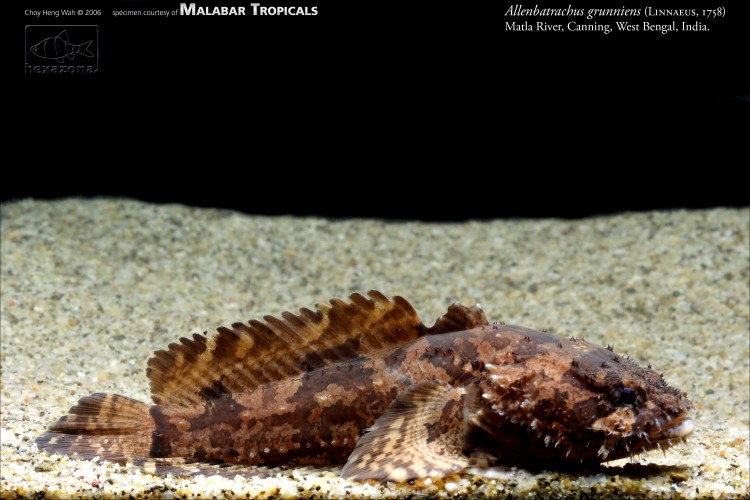
Allenbatrachus grunniensFreshwater Toadfish
Linnaeus, 1758
Max length300mm SL12in SLTanknot recordedTemp23–28°C73–82°FpH7.5–9.0This species is relatively common in the aquarium hobby but contrary to popular belief is not venomous in any way. Its dorsal and opercular spines can pierce the skin, however, meaning extreme caution is necessary when netting it or performing aquarium maintenance. The genus Allenbatrachus was erected in 1997 to accom...
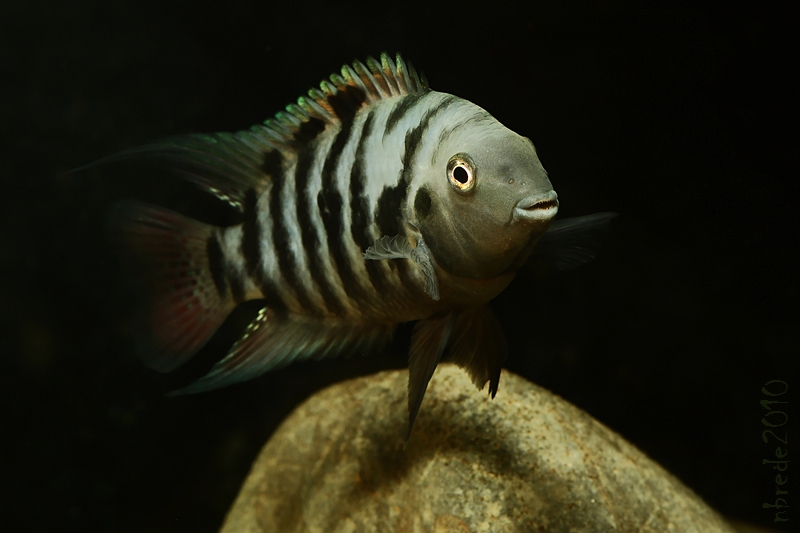
Amatitlania nigrofasciataConvict Cichlid
Günther, 1867
Max length150mm SL6in SLTanknot recordedTemp24–28°C75–82°FpH6.0–8.0A hugely popular and very adaptable species, the convict is one of the most ubiquitous fish in the hobby. It is often referred to by synonyms such as Cryptoheros nigrofasciatus and Cichlasoma nigrofasciatus. It's difficult to know how much to recommend it to the beginner, as despite its hardiness and ease of breeding, it's not really a community fish. However, if you want to breed a species and witness some amazing parental behaviour, it's an unreserved recommendation. It now exis...
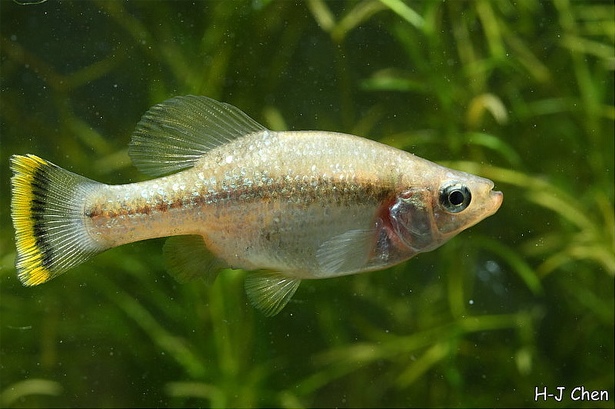
Ameca splendensButterfly Goodeid
Miller & Fitzsimons, 1971
Max length90mm SL3.5in SLTank90 × 30cm36 × 12inTemp24°C75°FpH7.0–8.0Despite often being referred to as extinct in the wild this monotypic species is still surviving at a few localities. It's not particularly scarce in the hobby with strong captive populations existing, some of which have been selectively bred to produce variations in colour and patterning. As with other goodeids, there is less of a size difference between the sexes than in many other livebearers. This is thought to be related to the relatively primitive...
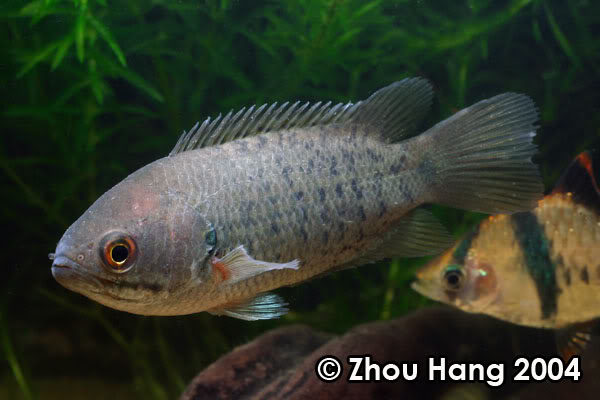
Anabas testudineusClimbing Perch
Bloch, 1792
Max length200mm SL8in SLTanknot recordedTemp15–30°C59–86°FpH5.5–8.0This species isn't especially popular in the aquarium trade but is undoubtedly interesting despite its lack of colour. In addition to its survival ability in the absence of water it's also capable of producing audible sounds though the purpose of these has not been fully-studied. Naturally-occurring xanthic and albino forms have also been recorded. There is considerable confusion as to the taxonomic status of the two species currently occupying this genus, with ichthyologists widely...
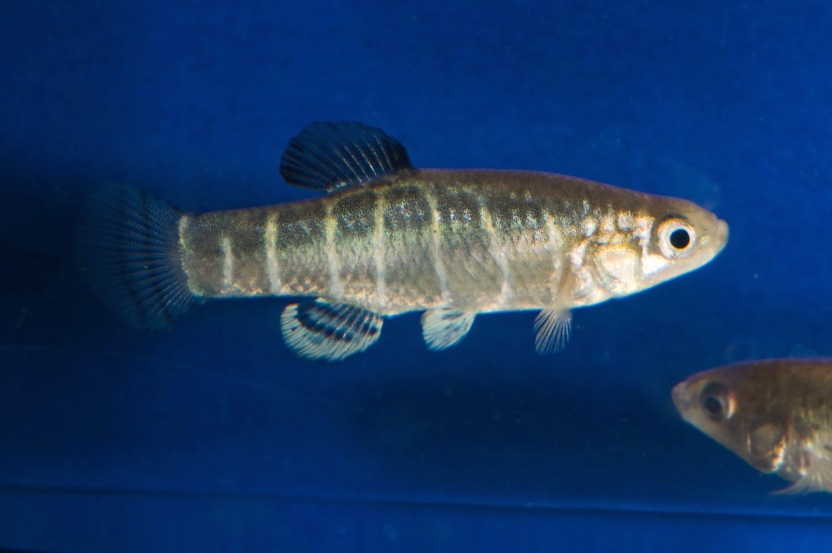
Anatolichthys danfordiiDanford's Toothcarp
Boulenger, 1890
Max length50mm SL2.0in SLTank120 × 30cm48 × 12inTemp10–30°C50–86°FpH7.0–8.5This species has something of a confused history having been previously been considered synonymous with both A. sophiae and A. fasciatus. Another species, A. chantrei is still listed as valid by some sources but is now known to be a junior synonym of A. danfordii. This became clear during a 1999 study in which the type specimens of A. danfordii were found to be indistinguishable from the Aphanius population living in the Sultan Swamps, the type locality of A. chantrei. You're unlikely t...
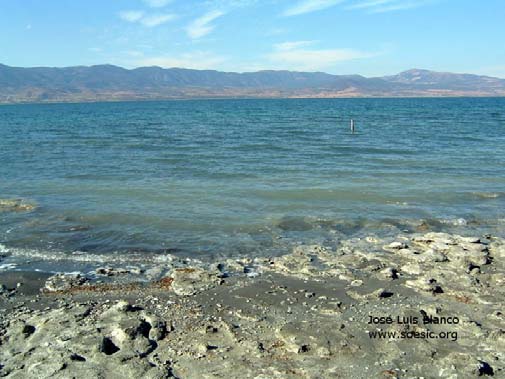
Anatolichthys sureyanusBurdur Toothcarp
Neu, 1937
Max length50mm SL2.0in SLTank120 × 30cm48 × 12inTemp5–22°C41–72°FpH8.0–10.0The elongated, slender body profile, angular lower jaw and reduced scalation exhibited by this little-known subspecies have seen it placed in the disused genera Anatolichthys and Kosswigichthys in the past. It has also been referred to, and still is in some cases, as A. transgrediens or more often A. burdurensis/burduricus. Some of these names were erected due to the differences in scalation that can be observed among the population in Lake Burdur but studies by Villwock and others revealed that...
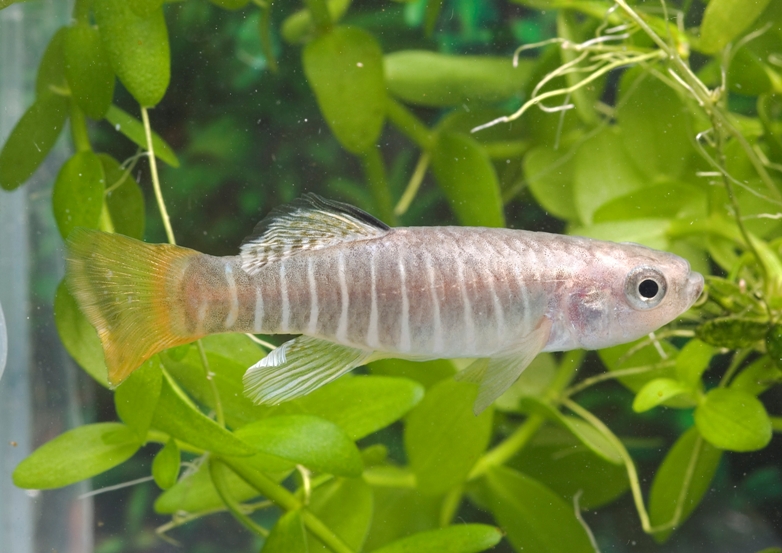
Aphanius fasciatusMediterranean Toothcarp
Valenciennes, 1821
Max length55mm SL2.2in SLTank120 × 30cm48 × 12inTemp2–30°C36–86°FpH7.5–9.0A 2003 phylogenetic study by Hrbek and Meyer showed that in genetic terms specimens of A. fasciatus collected from different localities do not vary as much as with other members of the genus. The latter tend to exist in geographically separated populations and exhibit localised differentiation. While A. fasciatus does show certain disparities in appearance depending on locality it is thought that periodic migration events have restricted the development of genetic diversity within the species to...
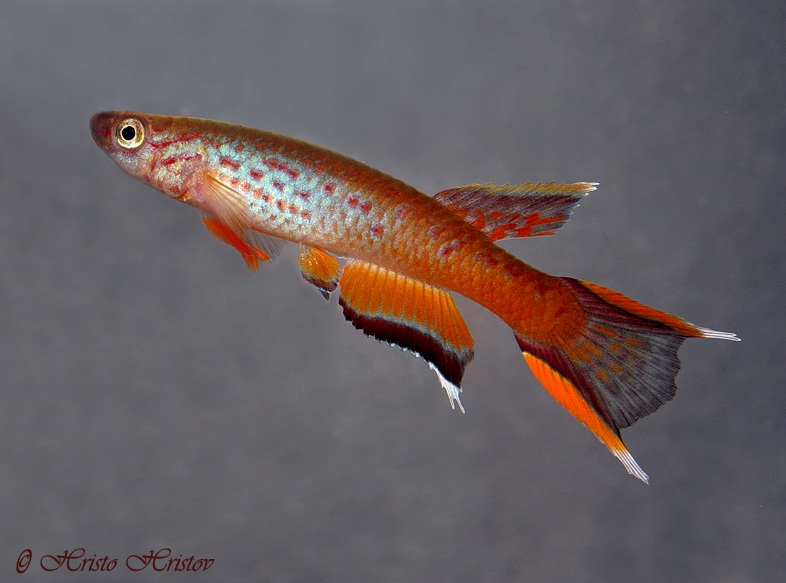
Aphyosemion australeGolden Lyretail
Rachow, 1921
Max length60mm SL2.4in SLTank45 × 25cm18 × 10inTemp21–32°C70–90°FpH5.5–7.0Also known by the vernacular names You might also see it for sale as 'golden lyretail' or 'lyretail panchax, A. australe was among the first killifishes to become popular in the hobby and still a favourite today. There exist a number of wild forms which tend to be labelled with place and year of collection in order to preserve bloodlines and avoid hybridisation, as well as several ornamental strans including 'orange', 'gold', 'chocolate', and 'albino'.
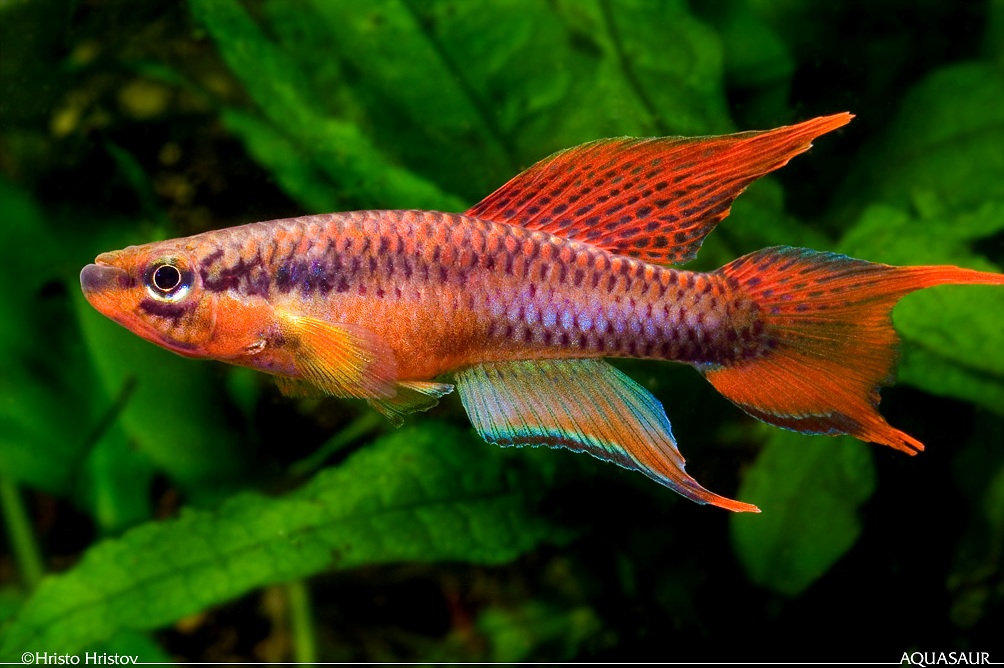
Aphyosemion bitaeniatumTwo-Striped Lyretail
Ahl, 1924
Max length45mm SL1.8in SLTanknot recordedTemp24–30°C75–86°FpH5.0–6.5This species is widely-distributed in lowland, coastal regions of Togo, Benin and Nigeria as far as the Cross River delta, and occurs at some inland localities along the lower Niger River. Populations in Cameroon, Equatorial Guinea and Gabon are now considered to represent other species.
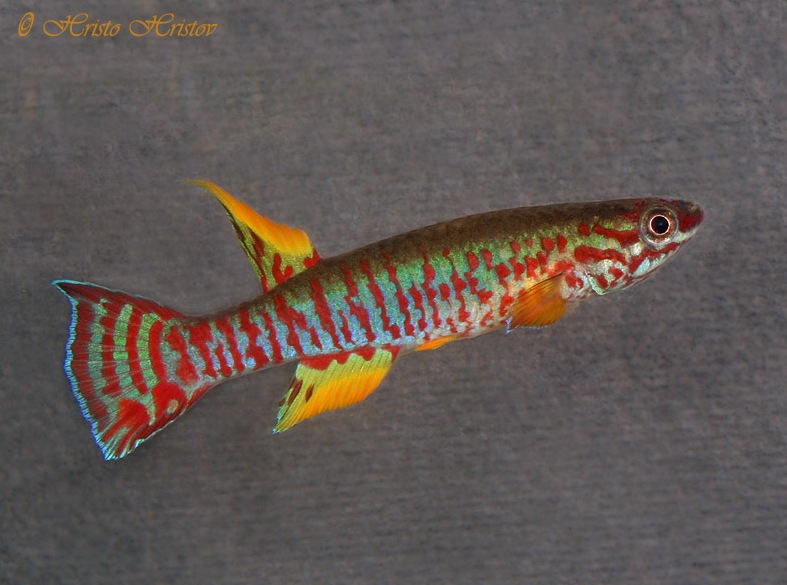
Aphyosemion bualanumBouala Lyretail
Ahl, 1924
Max length50mm SL2.0in SLTanknot recordedTempnot recordedpHnot recordedDescribed from 'Buala, Cameroon', which corresponds to modern-day Bouala in Central African Republic. It's known distribution includes parts of northern Cameroon, western Central African Republic, southeastern Chad and possibly eastern Nigeria in the upper Benue and Mayo Kébbi river systems. The specific name was mis-used to refer to various populations of the congener A. elberti prior to 1990, and we've been unable to confirm if the specimen pictured here is correctly identified or not. It is listed as 'endangered' by the IUCN.
Aphyosemion ogoenseBroken-Line Lyretail
Pellegrin, 1930
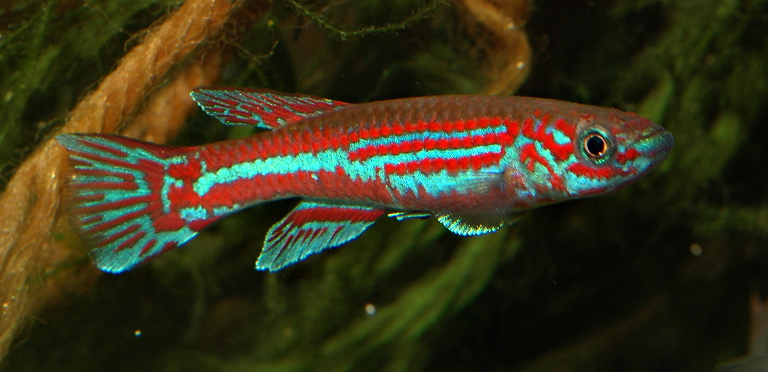
Max length50mm SL2.0in SLTank45 × 25cm18 × 10inTemp18–22°C64–72°FpH5.0–6.5This species is not an annual fish, being found in permanent bodies of water in nature. Over 20 different forms of it have been discovered at different localities and a handful have been given subspecific names. The most popular in the aquarium hobby include A. o. ottogartneri and A. o. pyrophore, both of which were initially described as separate species.
Apistogramma elizabethaeA208
Kullander, 1980
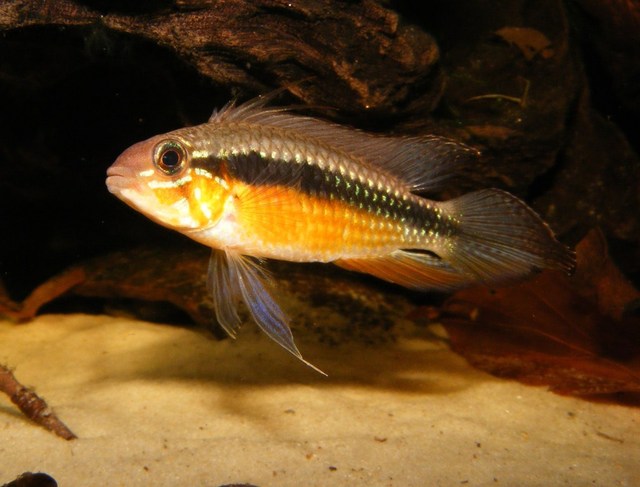
Max length50mm SL2.0in SLTank45 × 30cm18 × 12inTemp23–29°C73–84°FpH4.0–6.0The form from the rio Içana tends to have more blue markings on the head than that from the Uaupés, while a reddish population apparently collected close to the settlement of Tucana (sometimes mis-spelled 'Tucano') on the Uaupés is sometimes traded as A. elizabethae 'super red'. Apistogramma is among the most speciose of South American cichlid genera with around 70 species valid at present but many more awaiting description.
Apistogramma eremnopygeA218
Ready & Kullander, 2004
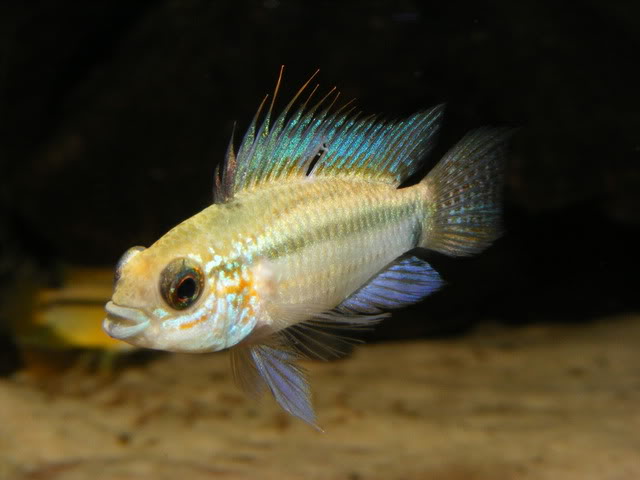
Max length♂ 70 · ♀ 50mm SL♂ 2.8 · ♀ 2.0in SLTank60 × 30cm24 × 12inTemp22–28°C72–82°FpH4.0–6.0Known only from Loreto region in northeastern (Amazonian) Peru. Type locality is 'Río Pintuyacu, 48 kilometers on road from Iquitos to Nauta, Río Itaya drainage, Province Loreto, Peru' and it's also been recorded from tributaries of the Nanay system in the same area. An additional population is known from the Río Tapiche, a tributary of the Río Ucayali located well over 150 km further south.
Apistogramma sp. 'breitbinden'A164
authority not recorded
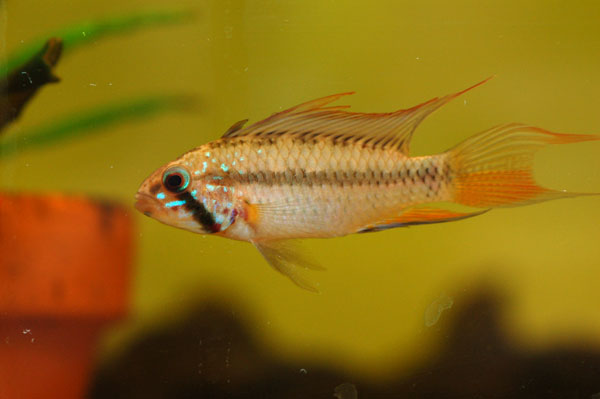
Max length♂ 70 · ♀ 50mm SL♂ 2.8 · ♀ 2.0in SLTank60 × 30cm24 × 12inTemp22–29°C72–84°FpH4.0–6.5The German term 'breitbinden' translates literally as "broad-banded" and refers to the uniformly broad suborbital stripe seen in males of this 'species' which remains undescribed despite being known in the aquarium hobby for several decades. It's often imported as bycatch among shipments of wild-collected A. iniridae. Some of the populations have also been assigned th...
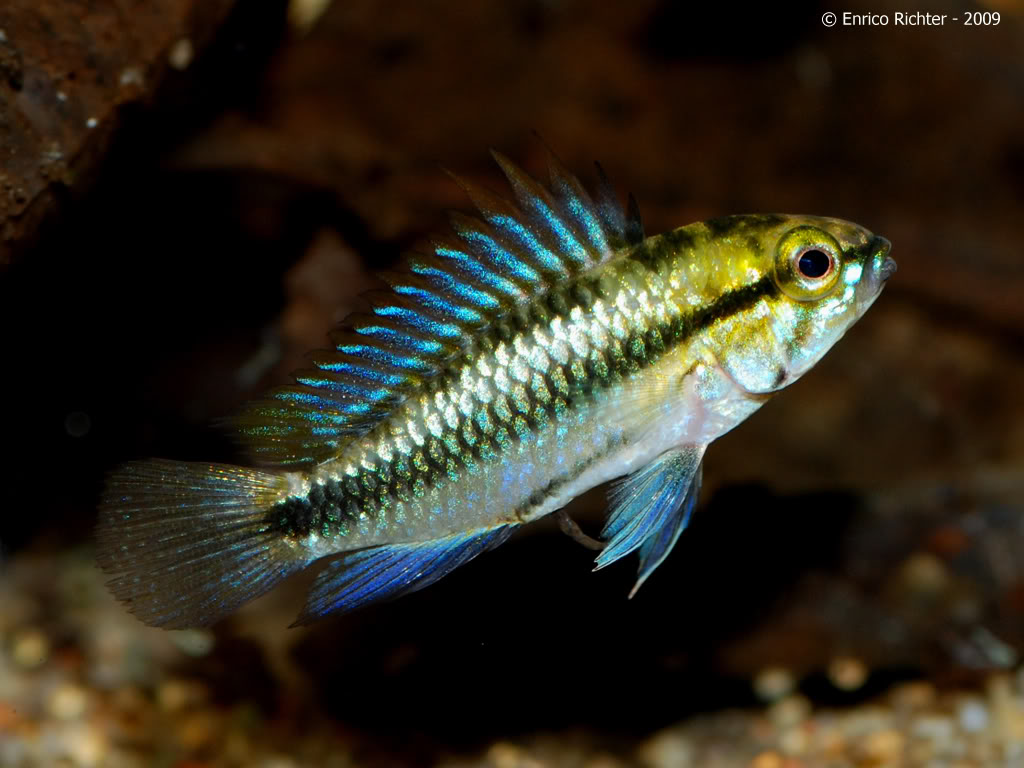
Apistogramma trifasciataThree-striped Apisto
Eigenmann & Kennedy, 1903
Max length♂ 55 · ♀ 40mm SL♂ 2.2 · ♀ 1.6in SLTank45 × 30cm18 × 12inTemp20–25°C68–77°FpH5.0–7.0This species is assigned the 'A' number A204 under the DATZ system with possibly conspecific, related forms coded A205 or A206 depending on collection locality and representing populations from Argentina and the rio Guaporé, respectively. The genus Apistogramma is among the most speciose of South American cichlid genera with around 70 species valid at present but many more awaiting description.