Results for “sex”
Type a name: scientific, common, or one a species used to go by. Or narrow the catalogue with the filters.
Filters
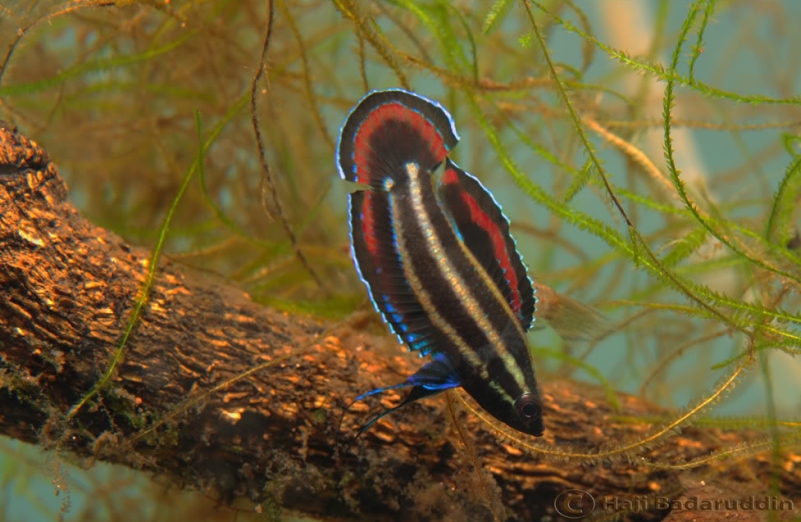
Parosphromenus tweediei
Kottelat & Ng, 2005
Max length35mm SL1.4in SLTank40 × 20cm16 × 8inTemp22–28°C72–82°FpH3.0–6.5This species has been known in the aquarium hobby since the mid-twentieth century but has almost always been identified as the congener P. deissneri and appears as such in the majority of aquarium literature. It can be told apart from congeners by the colour pattern in adult males (see 'Sexual Dimorphism') plus possession of 11-12 spinous dorsal-fin rays, 13-14 spinous anal-fin rays and 6-8 segmented anal-fin rays.
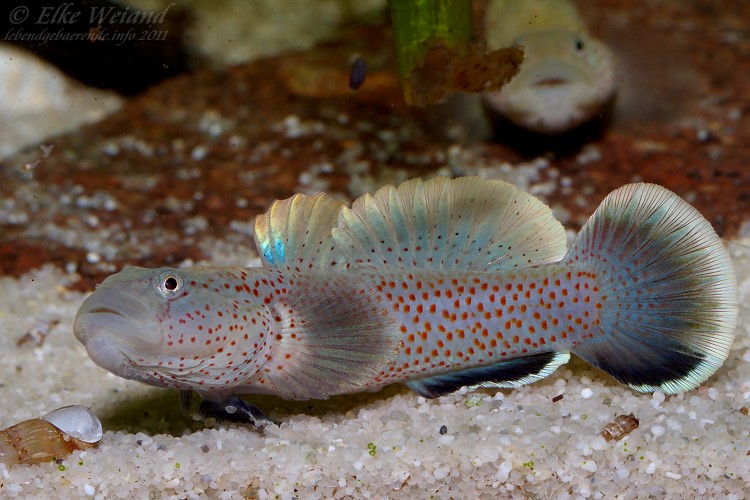
Rhinogobius rubromaculatusRed-spotted Goby
Lee & Chang, 1996
Max length55mm SL2.2in SLTank60 × 30cm24 × 12inTemp18–24°C64–75°FpH6.0–8.0This species occurs in a couple of colour forms with fish from northern and central Taiwan possessing a greyish base body colour and those from the Linbian river, southern Taiwan having a dark marking in the anterior portion of the first dorsal fin and larger, more intense red spots on the body. The latter form is also smaller in size, lays smaller eggs, does not exhibit extreme sexual dimorphism and has been refe...
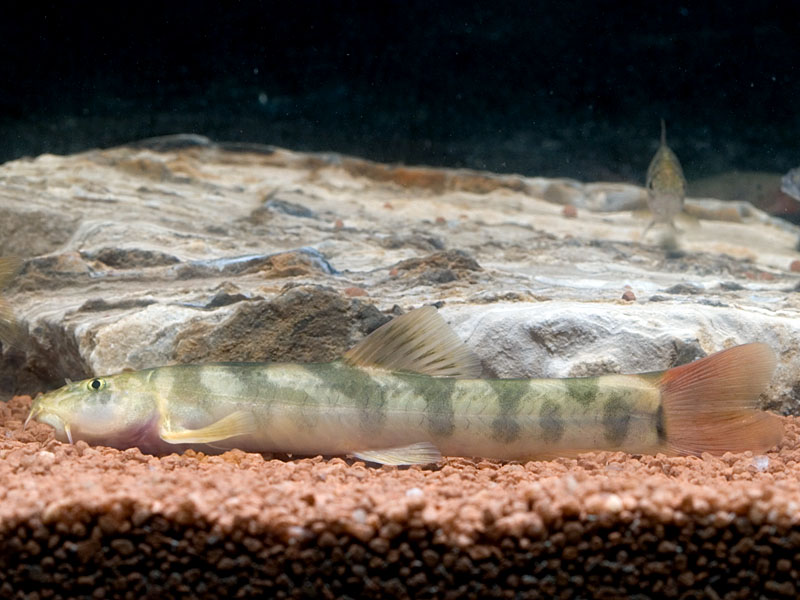
Schistura spilota
Fowler, 1934
Max length100mm SL3.9in SLTank120 × 30cm48 × 12inTemp20–26°C68–79°FpH6.0–7.5Not a commonly species in the aquarium hobby but sporadically available in shipments of wild fishes from Thailand. Following Kottelat (1990) it's a member of a group of species possessing a complete or near-complete lateral line, 8 ½ branched dorsal-fin rays, 17 branched caudal-fin rays and lacking sexual dimorphism (the latter is not strictly true - see above). Its colour pattern is quite distinctive, howe...
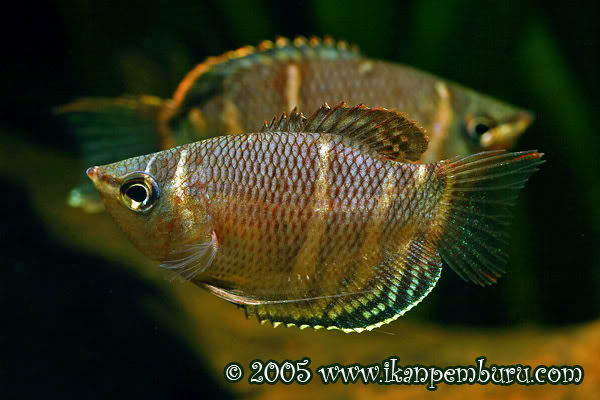
Sphaerichthys osphromenoidesChocolate Gourami
Canestrini, 1860
Max length50mm SL2.0in SLTank60 × 30cm24 × 12inTemp26–31°C79–88°FpH4.0–6.5The genus Sphaerichthys currently comprises four species with S. osphromenoides by far the best known in the hobby. It's easily distinguishable from the congeners S. vaillanti and S. acrostoma since both exhibit a notably more elongate head and body profile, reverse sexual dimorphism (i.e. females are the more colourful/strongly-patterened), and are paternal mouthbrooders.
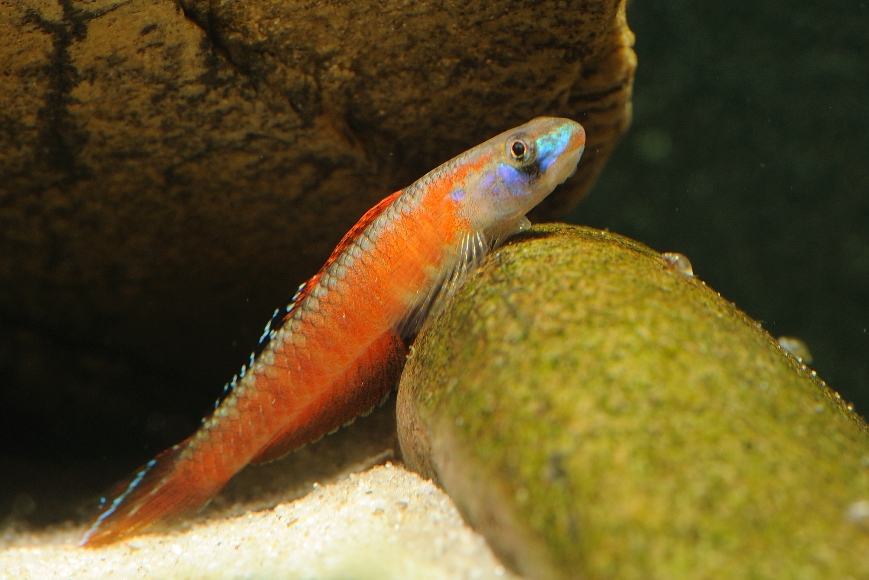
Stiphodon rutilaureus
Watson, 1996
Max length35mm SL1.4in SLTank60 × 30cm24 × 12inTemp22–28°C72–82°FpH6.5–7.5This species is not traded commercially at present and the specimen pictured above was brought back from northern Papua New Guinea by private collectors in 2008. It's diagnosable from other members in the genus by possession of 10 segmented rays in the second dorsal fin, males with filamentous spines in the firstandusually with 14 rays. Colour patterning in males is also distinctive (see 'Sexual Dimorphism'). The Gobiidae is the most speciose vert...
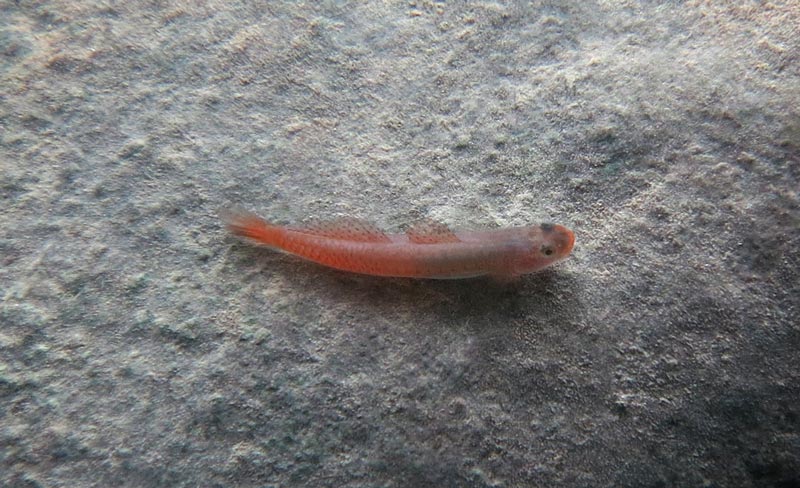
Stiphodon surrufus
Watson & Kottelat, 1995
Max length35mm SL1.4in SLTank60 × 30cm24 × 12inTemp22–28°C72–82°FpH6.5–7.5As with all members of the genus sexual dimorphism is pronounced. Males are brightly-coloured, with a reddish-orange stripe extending posteriorly from the pectoral-fin, with the posterior portion of the body entirely suffused with red. A darkish band extends from behind the eye to the edge of the opercle, and the basal third of the caudal-fin is reddish-orange.
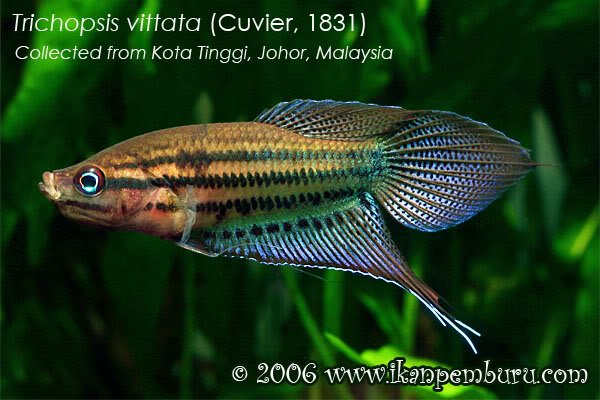
Trichopsis vittataCroaking gourami
Cuvier, in Cuvier & Valenciennes, 1831
Max length70mm SL2.8in SLTank60 × 30cm24 × 12inTemp22–28°C72–82°FpH5.0–7.5The common name is derived from the ability of genus members to produce audible sounds via a specialised pectoral mechanism which is unique within the family Osphronemidae. The structure comprises modified pectoral-fin tendons and muscles which are stretched and plucked by basal elevations of two fin rays in a similar way to guitar strings via rapid beating of the fins. The pectoral-fins beat alternately, each able to generate short or long bursts of sound. These sounds are produced by both sexes, predom...
Xiphophorus helleriiGreen Swordtail
Heckel, 1848
Max length140mm SL6in SLTank120 × 30cm48 × 12inTemp16–28°C61–82°FpH7.0–8.0Wild swordtails are a fairly basic green colur. However the vast majority of swordtails available in the hobby today are hybrids of X.helleri with X.maculatus or X.variatus. There are a huge number of selectively-bred varieties available, including wagtail, lyretail, tuxedo, albino, neon, red, green and hi-fin. Swordtails may undergo what appears to be a change in sex. In young fish this may simply be late development. However some adult females develop male characteristics which is thought ...
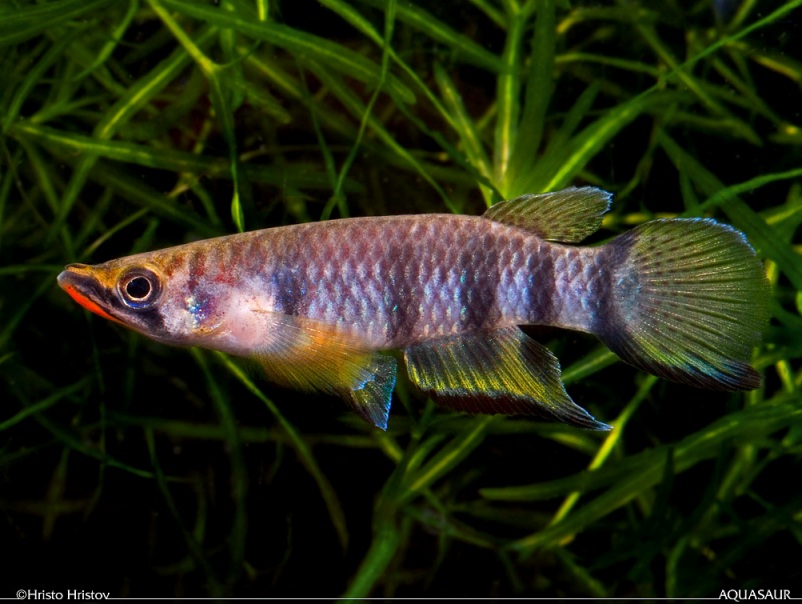
Epiplatys dagetiRed-chinned Panchax
Poll, 1953
Matched on Poecilia sexfasciata, a name it was formerly known by
Max length45mm SL1.8in SLTank60 × 30cm24 × 12inTemp20–30°C68–86°FpH5.0–7.0This species is also known as 'Daget's panchax', 'black-lipped panchax', 'orange-throated panchax' or 'firemouth killifish' and is an aquarium stalwart with the red-throated form having first been exported in 1908. It's an excellent choice for those new to killifishes or egg-laying species in general since the aquarium strain is well-established, quite hardy and easy to breed. There was some initial confusion after Belgian ich...
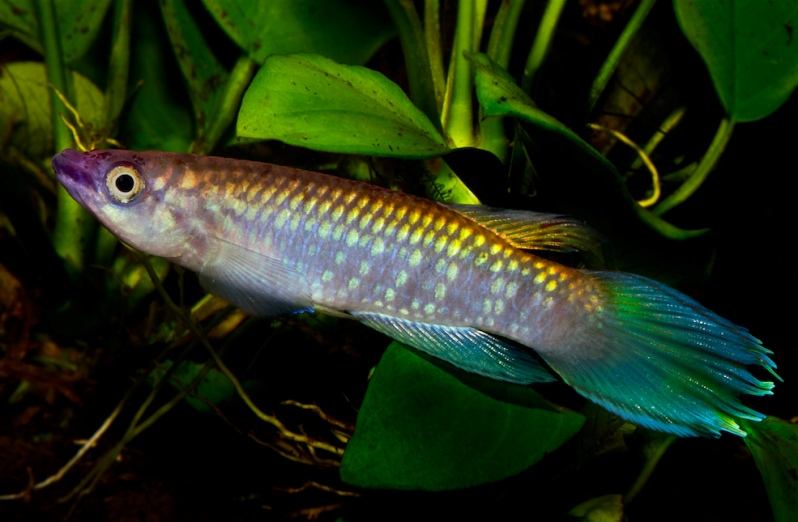
Epiplatys fasciolatusBanded Epiplatys
Günther, 1866
Matched on Epiplatys sexfasciatus leonensis, a name it was formerly known by
Max length80mm SL3.1in SLTank80 × 30cm31 × 12inTemp20–27°C68–81°FpH5.0–7.0Native to northwestern Africa with a range extending southwards from Guinea-Bissau through coastal parts of Guinea and Sierra Leone as far as western Liberia, around the city of Monrovia. Type locality was originally given as 'Sierra Leone' and 'Upper Nile' but this was later changed to 'Freetown, 8°30'N, 13°15'W, Sierra Leon', referring to the capital of Sierra Leone.
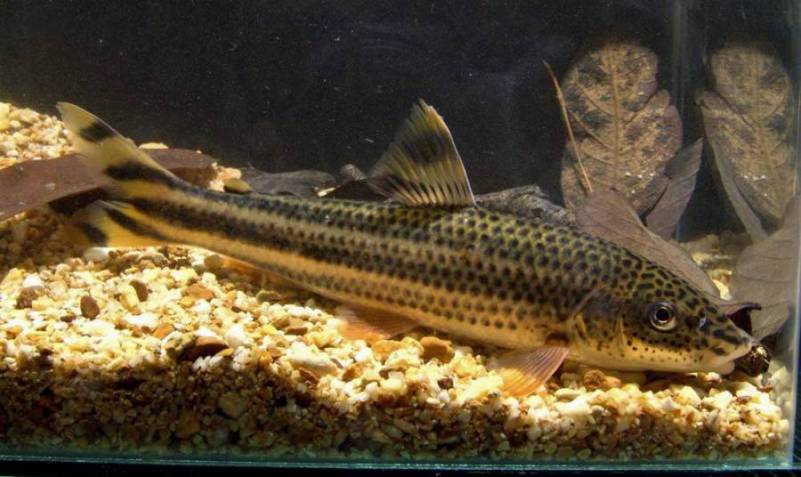
Leporellus vittatus
Valenciennes, 1850
Matched on Leporinodus sexdentatus, a name it was formerly known by
Max length300mm SL12in SLTank210 × 60cm84 × 24inTemp18–26°C64–79°FpH5.5–7.5Type locality is given simply as 'Amazon River, Brazil' and according to current thinking this species has a huge natural range encompassing the Amazon River system in Brazil and Peru plus the Paraná-Paraguay drainage in southern Brazil and Paraguay and rio São Francisco basin in southern Brazil. Specimens in our images were collected fro...