Results for “spawn”
Type a name: scientific, common, or one a species used to go by. Or narrow the catalogue with the filters.
Filters
Pseudocrenilabrus multicolorDwarf Egyptian Mouth-brooder
authority not recorded
Max length80mm SL3.1in SLTanknot recordedTemp20–26°C68–79°FpH6.5–7.2This species was one of the first cichlid species to be spawned in captivity and has been in the hobby for over a century. It is less popular than it once was but remains a good choice for the beginner as it is tolerant of a wide range of water conditions and is easily bred. There currently exist 2 subspecies, Pseudocrenilabrus multicolor multicolor and P. m. victoriae. These are quite distinct in terms of colouration and patterning and exist as separate populations in nature. Both subspecie...
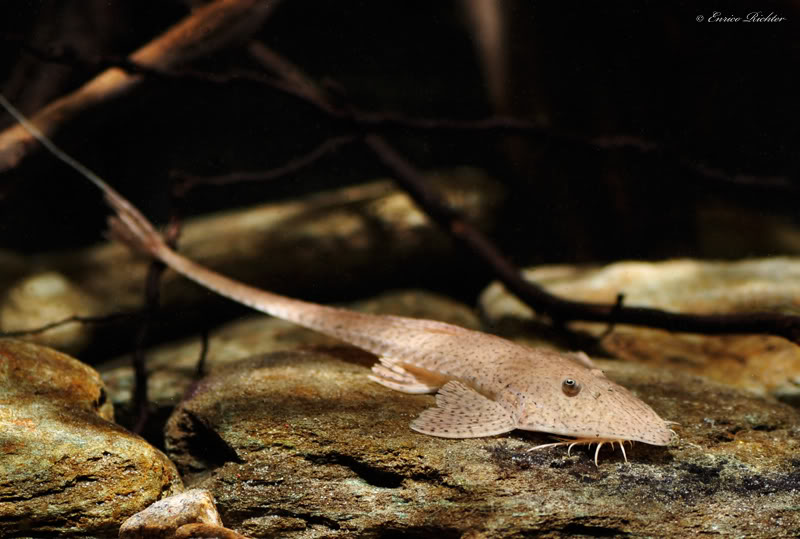
Pseudohemiodon laticepsGiant Whiptail Catfish
Regan, 1904
Max length300mm SL12in SLTank180 × 60cm72 × 24inTemp18–24°C64–75°FpH6.0–7.5A paternal 'lip brooder' which has been bred in aquaria. Post-spawning the male carries the eggs attached to his labial barbels for a period of 12-14 days after which the fry hatch with a large yolk sac attached, this being absorbed over the next 48 hours or so. During incubation the behaviour of the male i...
Pseudotropheus elongatusElongate Mbuna
authority not recorded
Max length135mm SL5in SLTank120 × 38cm48 × 15inTemp24–28°C75–82°FpH7.6–8.8Over 30 different forms of this species occur in Lake Malawi. These should not be mixed in the aquarium as they will hybridise freely. P. elongatus differs morphologically from other mbuna, being relatively slender and elongate. In nature females protect territories which contain 'gardens' of algae which they leave to breed before returning once they are holding eggs. Juvenile fish from previous spawns also inhabit the territory, protecting it when the female is away. This species i...
Pterophyllum altumAltum Angel
authority not recorded
Max length178mm SL7in SLTanknot recordedTemp28–32°C82–90°FpH4.8–6.2Altum Angels are a lot less common in the trade than their well known (arguably the best known tropical fish) relatives Pterophyllum Scalare, the common Angelfish. However, they are still available from some of the better tropical fish suppliers. They are a challenge to keep - they share all of their relatives' difficulties (susceptible to hole-in-the-head disease, very weak to nitrate buildups, extremely prone to stress-related diseases, commonly eat their own spawns etc.) and have a fe...
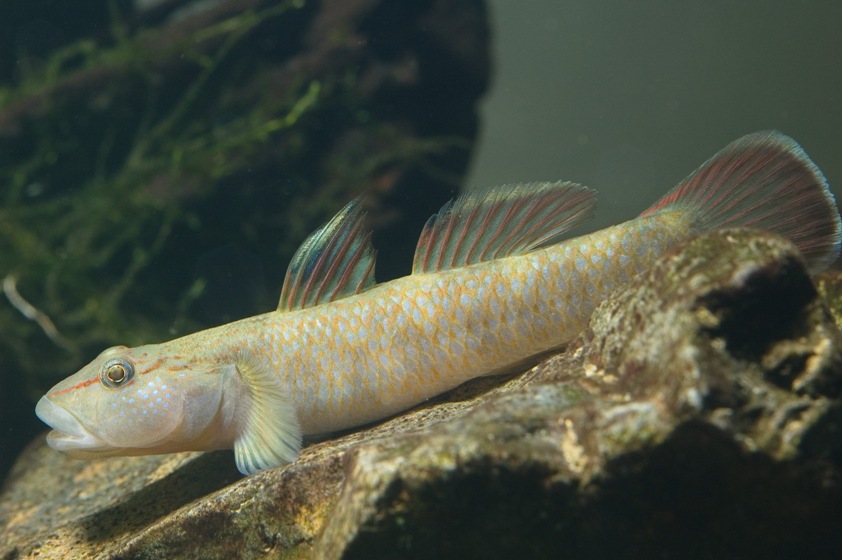
Rhinogobius sp. 'CO'
authority not recorded
Max lengthnot recordedTanknot recordedTempnot recordedpHnot recordedSome wild populations have evolved a complex amphidromous breeding strategy in which adults live and spawn in freshwater or brackish streams and the pelagic post-hatch larvae are washed downstream to the sea where the post-larval fry spend the first part of their life developing in estuarine nursery zones under brackish to full marine conditions. Once they reach a certain stage of development they begin to migrate upstream with some mov...
Sciaenochromis fryeriElectric Blue Hap
authority not recorded
Max length200mm SL8in SLTank150 × 45cm60 × 18inTemp24–28°C75–82°FpH7.6–8.8This popular species was previously imported and classified as Sciaenochromis ahli, and is still named as such in much of the available literature. Many morphs exist, although males of all these exhibit the characteristic blue colouration, differing only in fin colouration and patterning. These should not be mixed in aquaria as they will hybridise. Extra care must be taken regarding tankmates, too, as male S. fryeri have been known to spawn with females of other genera, particularly Aulonoca...
Synodontis multipunctataCuckoo Synodontis
authority not recorded
Max length150mm SL6in SLTank120 × 30cm48 × 12inTemp24–28°C75–82°FpH7.5–8.5The reason we have recommended the use of non-Tanganyikan cichlid hosts above is because a successful captive spawning using Tanganyikan cichlid species has never been recorded! This may be due to an evolutionary process that has been observed in the lake, in which many cichlid species appear to have learned to avoid S. multipunctata when breeding. This is similar to the rejection of alien eggs by the host species in brood-parasatising birds. Because no species of brood parasatising catfish occu...
Xenotilapia flavipinnisYellow Sand Cichlid
authority not recorded
Max length90mm SL3.5in SLTank75 × 30cm30 × 12inTemp23–27°C73–81°FpH8.0–9.5In nature, the pair bond formed by this species lasts only for the duration of the breeding season. However, in aquaria this bond can last much longer, with the pair remaining in their territory and defending it even when not spawning. It is thought that this is directly due to the fish being kept in the confines of the aquarium, where the territory is a permanent fixture. X. flavipinnis is very sensitive to deteriorating water conditions and regular water changes are essential to its good heal...