Results for “Furan-2”
Type a name: scientific, common, or one a species used to go by. Or narrow the catalogue with the filters.
Filters
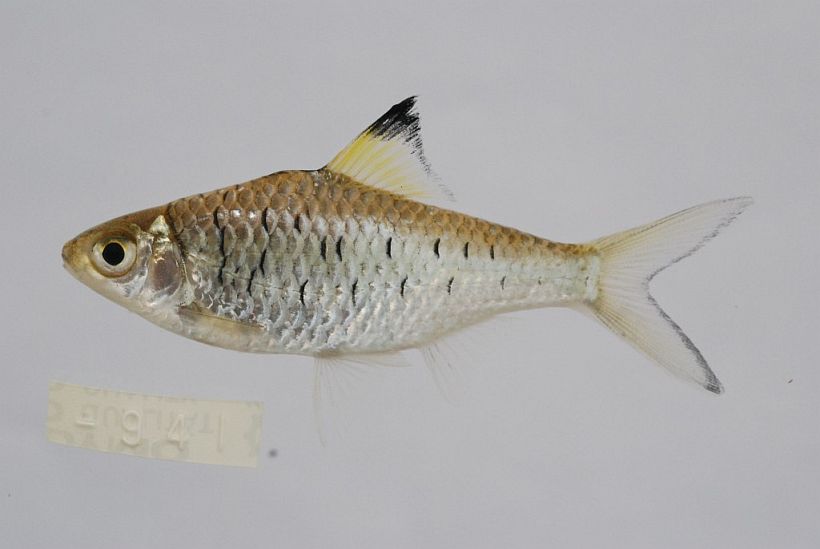
Mystacoleucus atridorsalis
Fowler, 1937
Max length80mm SL3.1in SLTanknot recordedTempnot recordedpHnot recordedThis species can be distinguished from congeners by the following combination of characters: body depth fits 2.5-2.7 times in SL; 28-31 +2-3 lateral line scales; 14-16 circumpeduncular scale rows; 5-5½ scale rows between the lateral line and dorsal-fin origin; a triangular distal blotch on the dorsal-fin; a few body scales with crescent-shaped black edges; a thin dark margin on the dorsal-fin, posterior to the distal blotch; a dark posterior margin on the caudal-fin; normally a single pair of rudimentary barbels present.
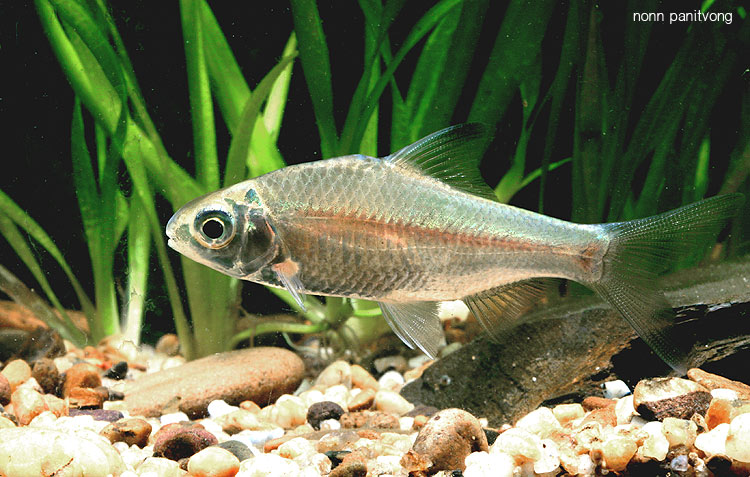
Mystacoleucus ectypus
Kottelat, 2000
Max length80mm SL3.1in SLTanknot recordedTempnot recordedpHnot recordedKnown from the middle Mekong basin in Laos and Thailand, and may be endemic to the Khorat Plateau. Records exist from the Mun and Songkhram watersheds in northeastern Thailand, and a number of Mekong tributaries in laos, including the Nam Mang and Nam Kou drainages. Type locality is 'Nam Mang downstream of Ban Thabok, between 18°22'25"N, 103°13'30"E, and about 1 kilometer upstream, Vientiane Province, Laos'.
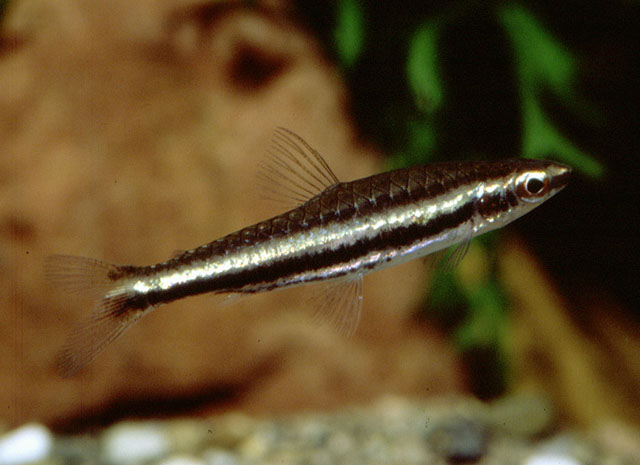
Nannostomus digrammusTwostripe Pencilfish
Fowler, 1913
Max length30mm SL1.2in SLTank45 × 30cm18 × 12inTemp22–28°C72–82°FpH5.0–7.0Native to the central Amazon basin with records existing from the Madeira, Branco, Trombetas, and Tapajós river drainages, plus the Rupununi basin in Guyana. Although an affluent of the rio Essequibo and thus not officially part of the Amazon basin, the latter is connected to the rio Takutu, a tributary of the upper rio Branco, during the annual wet season. Type locality is given by Fowler as 'Rio Madeira about 200 miles east of W. Long. 62°20', Brazil'.
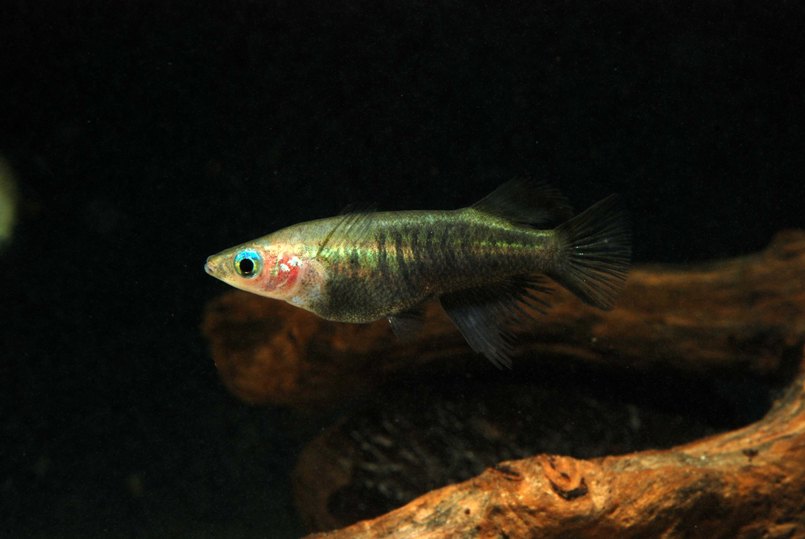
Oryzias eversi
Herder, Hadiaty & Nolte, 2012
Max length40mm SL1.6in SLTank75 × 30cm30 × 12inTemp18–24°C64–75°FpH6.0–7.5The type locality is a karst pool around 30-40 m in length, 10m in width and up to 4 m deep. It contains still, transparent water, has a single inflow and outflow, is surrounded by rainforest and in September 2010 the water temperature was 21.5°C/70.7°F. The habitat is used by locals as a bathing pool and sympatric species included a nat...
Otocinclus cocamaZebra Oto
Reis, 2004
Max length45mm SL1.8in SLTank45 × 30cm18 × 12inTemp21–25°C70–77°FpH6.0–7.5This stunning miniature Loricariid has only been available in the hobby since 2001, and was described to science in 2004. As with other otos, it can be a little delicate when first imported and should be quarantined carefully until it's settled.
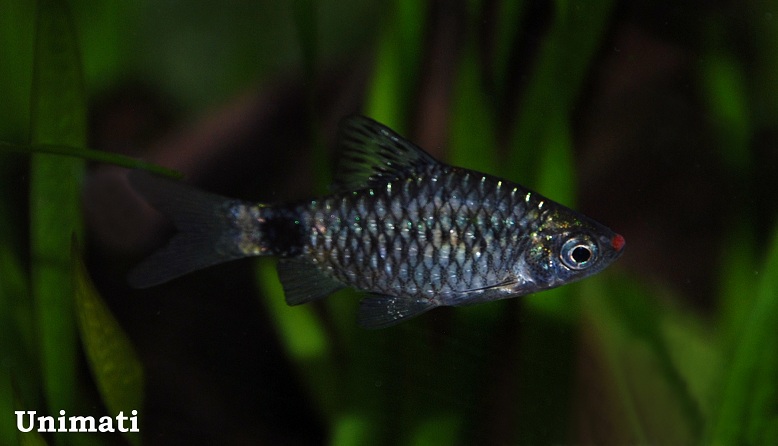
Pethia erythromycterLipstick Barb
Kullander, 2008
Max length35mm SL1.4in SLTank90 × 30cm36 × 12inTemp18–24°C64–75°FpH7.0–7.5This species first appeared in the aquarium hobby in 2006 and is sometimes traded under the name 'Tulip barb'. It was officially described by Kullander in early 2008 in a paper describing five new Puntius species from Kachin, all of which are superficially similar in possession of a dark band or blotch on the caudal peduncle. P. erythromycter can be distinguished b...
Polypterus bichir bichirNile Bichir
authority not recorded
Max length720mm SL28in SLTank180 × 60cm72 × 24inTemp22–28°C72–82°FpH6.0–8.0An incredibly hardy, nocturnal species with very poor vision, P. delhezi relies on its excellent sense of smell to locate food. This species, along with others of its genus, is one of the last surviving relatives of very ancient species. Fossils of earlier relatives have been found that date back to the Triassic Period, which occured during the early development of the dinosaurs more than 200 million years ago. They have several interesting adaptations. The swim bladder is divided into 2 par...
Polypterus delheziArmoured Bichir
authority not recorded
Max length350mm SL14in SLTank120 × 45cm48 × 18inTemp24–30°C75–86°FpH6.0–8.0An incredibly hardy, nocturnal species with very poor vision, P. delhezi relies on its excellent sense of smell to locate food. This species, along with others of its genus, is one of the last surviving relatives of very ancient species. Fossils of earlier relatives have been found that date back to the Triassic Period, which occured during the early development of the dinosaurs more than 200 million years ago. They have several interesting adaptations. The swim bladder is divided into 2 par...
Polypterus palmas palmasMarbled Bichir
authority not recorded
Max length325mm SL13in SLTank120 × 45cm48 × 18inTemp25–28°C77–82°FpH6.0–7.0An incredibly hardy, nocturnal species with very poor vision, P. delhezi relies on its excellent sense of smell to locate food. This species, along with others of its genus, is one of the last surviving relatives of very ancient species. Fossils of earlier relatives have been found that date back to the Triassic Period, which occured during the early development of the dinosaurs more than 200 million years ago. They have several interesting adaptations. The swim bladder is divided into 2 par...
Polypterus senegalus senegalusSenegal Bichir
authority not recorded
Max length500mm SL20in SLTank150 × 60cm60 × 24inTemp24–28°C75–82°FpH6.2–7.8An incredibly hardy, nocturnal species with very poor vision, P. senegalus relies on its excellent sense of smell to locate food. This species, along with others of its genus, are some of the last surviving relatives of very ancient species. Fossils of earlier relatives have been found that date back to the Triassic Period, which occured during the early development of the dinosaurs more than 200 million years ago. They have several interesting adaptations. The swim bladder is divided into 2 ...
Polypterus teugelsi
authority not recorded
Max length400mm SL16in SLTank150 × 60cm60 × 24inTemp25–28°C77–82°FpH7.0–7.5An incredibly hardy, nocturnal species with very poor vision, P. teugseli relies on its excellent sense of smell to locate food. This species along with others of its genus are some of the last surviving relatives of very ancient species. Fossils of earlier relatives have been found that date back to the Triassic Period, which occured during the early development of the dinosaurs more than 200 million years ago. They have several interesting adaptations. The swim bladder is divided into 2 parts...
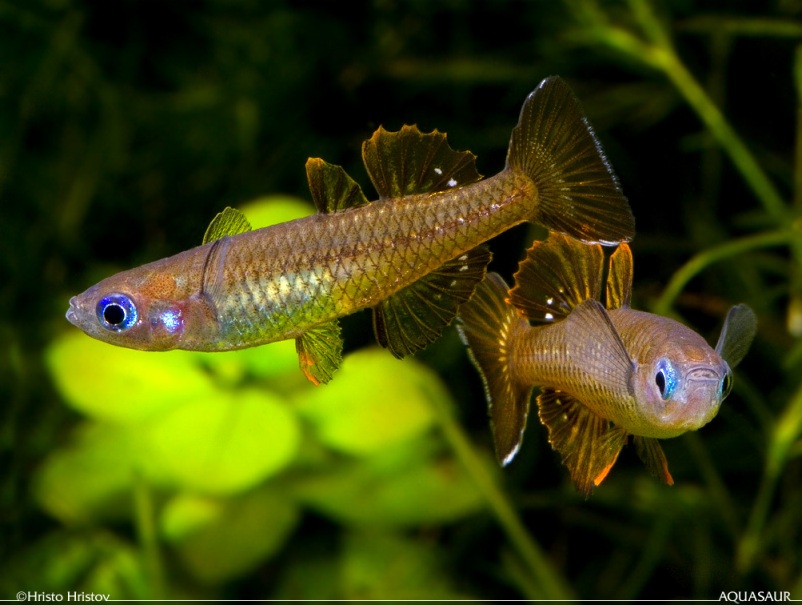
Pseudomugil tenellusDelicate Blue-eye
Taylor, 1964
Max length55mm SL2.2in SLTank75 × 30cm30 × 12inTemp25–32°C77–90°FpH5.5–7.5Euryhaline and mostly inhabits coastal floodplains where it's found in both fresh and brackish habitats, including tidal estuaries and salt marshes. It's particularly common in swamps, billabongs, and slow-moving streams where aquatic vegetation grows densely, but some populations have colonised upper sections of freshwater streams. Larger individuals may also move into main river channels. Tappin (2010) gives the following ranges of parameters based on those taken from various localities: temperature 27 - 38 °C, pH 5...
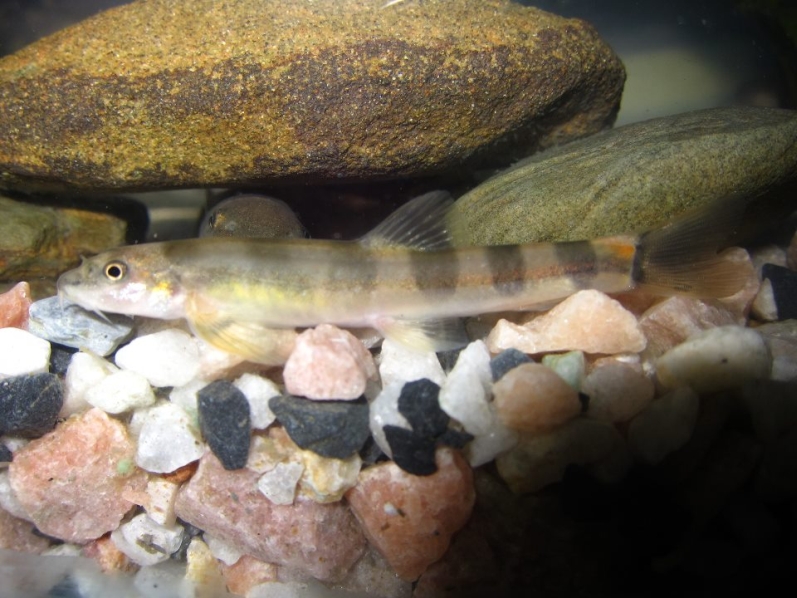
Schistura aizawlensis
Lalramliana, 2012
Max length49mm SL1.9in SLTank80 × 30cm31 × 12inTemp20–28°C68–82°FpH6.0–7.5Type locality is 'India: Mizoram: Muthi River, a tributary of Tuirial River in vicinity of Zemabawk, Aizawl, 23°44' 54" N 92°45'27" E', and to date this species is known only from the Muthi system. The Muthi is an affluent of the Tuirial River which is itself a tributary of the Barak watershed. The Barak is one of the great rivers of southern Assam and forms part of the Surma-Meghna River System.
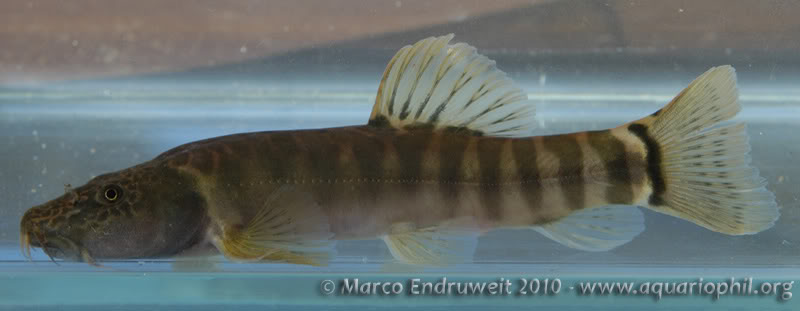
Schistura callichroma
Zhu & Wang, 1985
Max length90mm SL3.5in SLTank120 × 45cm48 × 18inTemp10–22°C50–72°FpH7.0–9.0Type locality is given as 'Babianjiang River, 24°20'N, 100°10'E, Jingdong County, Yunnan Province, China'. The Babianjiang joins the Mengyejiang River to form the Langmajiang River, a tributary of the Lixianjiang (Black River) within the Red River basin.
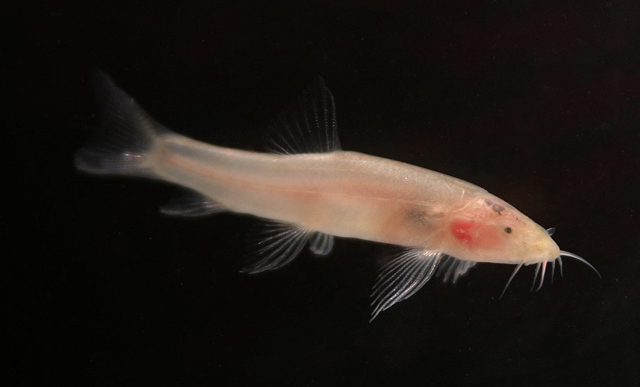
Schistura deansmarti
Vidthayanon & Kottelat, 2003
Max length105mm SL4in SLTanknot recordedTempnot recordedpHnot recordedType locality is 'Tham [=cave] Phra Sai Ngam, about 200 meters from entrance, Thung Salaeng Luang National Park, Phitsanulok Province, Thailand, 16°37'22"N, 100°39'47"E', and this species is endemic to the Tham Phra Sai Ngam cave system. Tham Phra Sai Ngam is a limestone cave system about 1.7 km long and containing a subterranean stre...
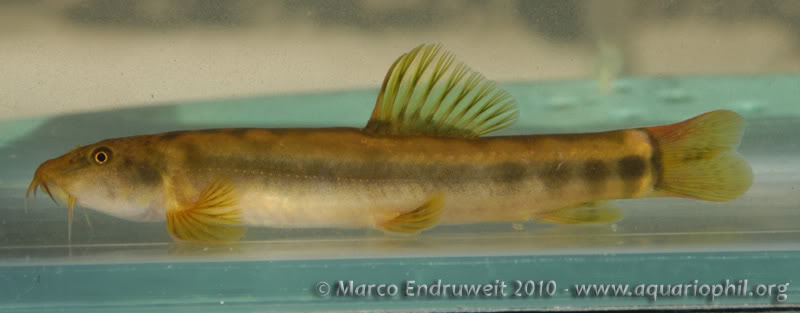
Schistura laterivittata
Zhu & Wang, 1985
Max length80mm SL3.1in SLTank120 × 30cm48 × 12inTemp10–22°C50–72°FpH7.0–9.0It's been considered a synonym of Schistura caudofurca (Mai, 1978) by the majority of recent authors following Kottelat (2001) but this appears to be a case of misidentification since the two species exhibit several notable differences based on their respective descriptions (Endruweit, 2010).
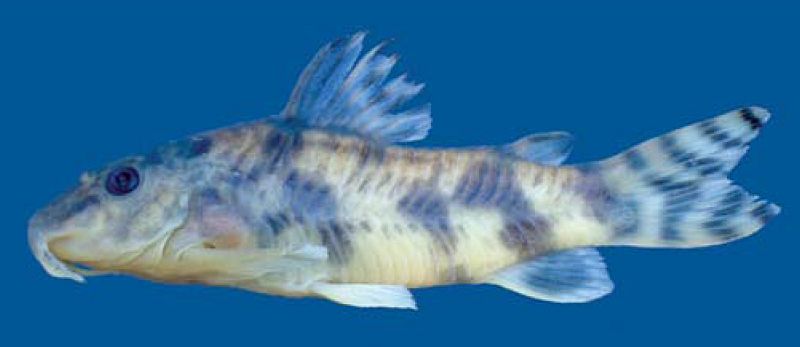
Scleromystax salmacis
Britto & Reis, 2005
Max length48mm SL1.9in SLTanknot recordedTempnot recordedpHnot recordedIt is most similar to S. macropterus, but differs in absence (vs. presence) of a black spot on the base of the median caudal-fin rays, a higher number of pectoral-fin rays (I,8,i vs. I,7,i), males with somewhat more slender bodies (25.7- 30.5% in SL [range 26.3-28.8% in type series] vs. 30.4-34.6% in SL), an...
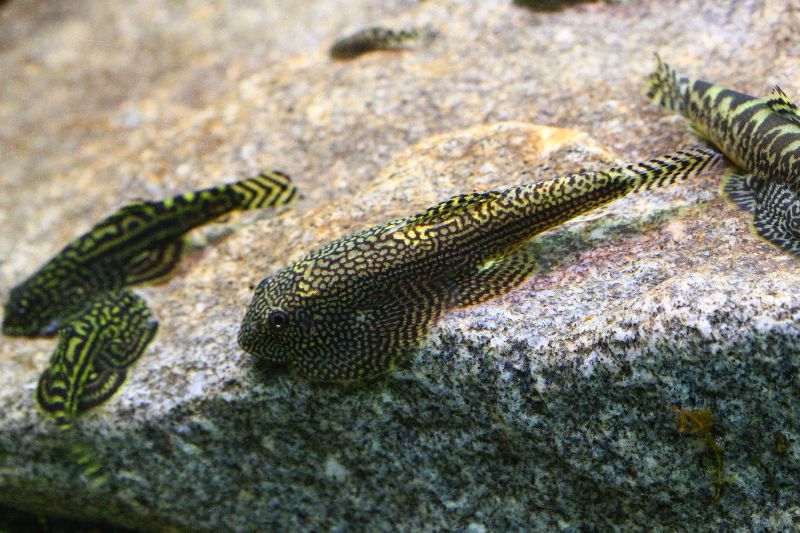
Sewellia albisuera
Freyhof, 2003
Max length70mm SL2.8in SLTank90 × 30cm36 × 12inTemp18–24°C64–75°FpH6.0–7.5It's been suggested that these two may represent the same species but this appears not to be the case. When describing S. albisuera Freyhof (2003) used a series of specimens collected in 2000 plus some larger, spotted fish which had been collected in 1999 and preserved in New York. Although he noticed differences in dorsal patterning between the two series these weren't considered sufficient to s...
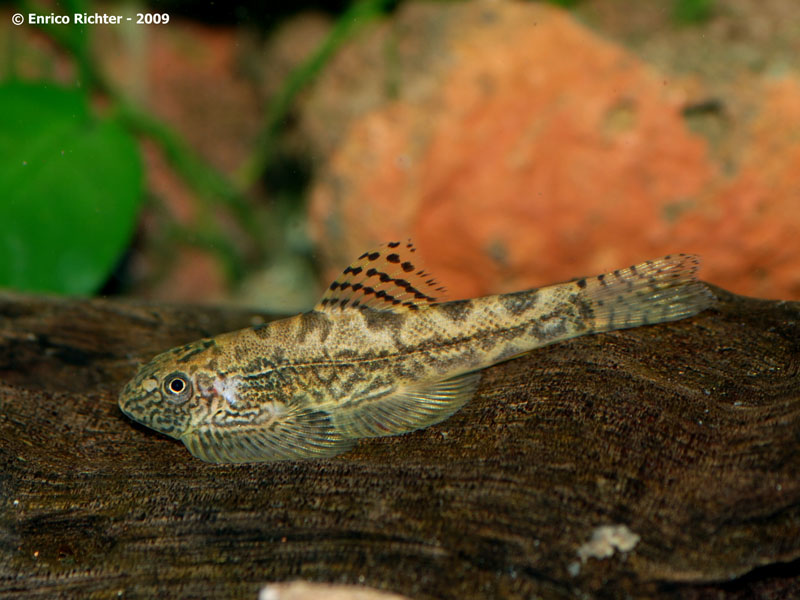
Sewellia sp. 'SEW02'
authority not recorded
Max length65mm SL2.6in SLTank75 × 30cm30 × 12inTemp18–24°C64–75°FpH6.0–7.5This species first became available in early 2009 and was initially identified as S. breviventralis (Freyhof and Serov, 2000) because there is a clear space between the pelvic and anal fins and body patterning is vaguely similar to that species, and also appears quite similar to S. elongata (Roberts, 1998) and S. sp. 'SEW03'. It does not fully match the original descriptions of either, however, and therefore remains in need of identification.
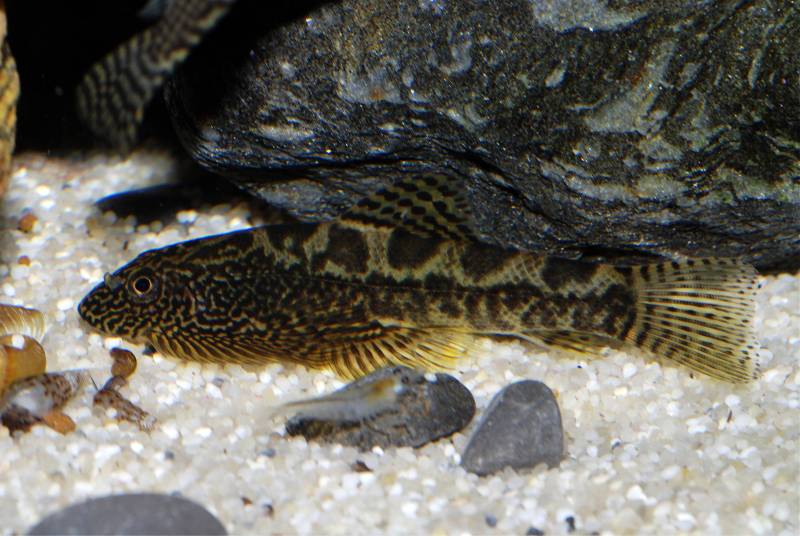
Sewellia sp. 'SEW03'
authority not recorded
Max length60mm SL2.4in SLTank75 × 30cm30 × 12inTemp20–24°C68–75°FpH6.0–7.5This fish first became available in early 2009 and was initially identified as S. breviventralis (Freyhof and Serov, 2000). However it cannot be that species because there is no discernible gap between pelvic and anal fins, which also discounts the possibility of it being S. elongata (Roberts, 1998). It therefore remains unidentified and is often imported in mixed batches with S. sp. 'SEW02', which it also resembles closely.