Results for “anterior”
Type a name: scientific, common, or one a species used to go by. Or narrow the catalogue with the filters.
Filters
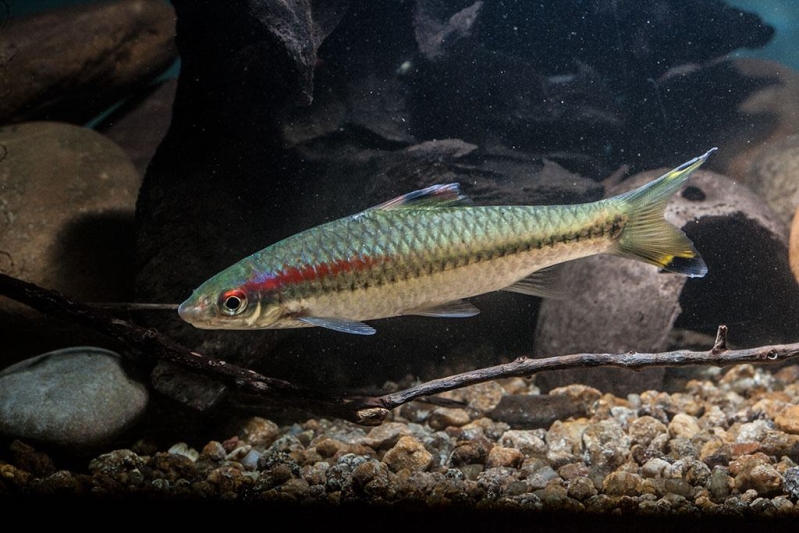
Sahyadria chalakkudiensis
Menon, Rema Devi & Thobias, 1999
Max length125mm SL5in SLTank120 × 45cm48 × 18inTemp15–25°C59–77°FpH6.5–7.5S. chalakkudiensis can be told apart from S. denisonii by possession of an inferior mouth (vs. subterminal) and presence of a black marking in the dorsal-fin (vs. absence), and the scarlet body stripe being duller and terminating beneath or anterior to the dorsal-fin origin (vs. brighter and terminating beneath the centre of the dorsal-fin).
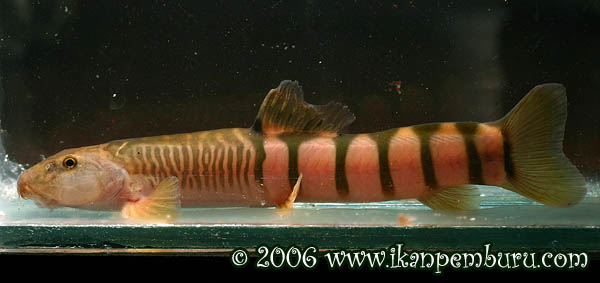
Schistura disparizona
Zhou & Kottelat, 2005
Max length96mm SL3.8in SLTank120 × 30cm48 × 12inTemp18–25°C64–77°FpH6.0–8.0Can be told apart from congeners by its colour pattern which consists of 8-11 closely-set, narrow dark bars in the anterior part of the body and 5 wider bars in the posterior part. It also possesses prominent dorsal and ventral adipose crests on the caudal peduncle and 9½ branched dorsal-fin rays.
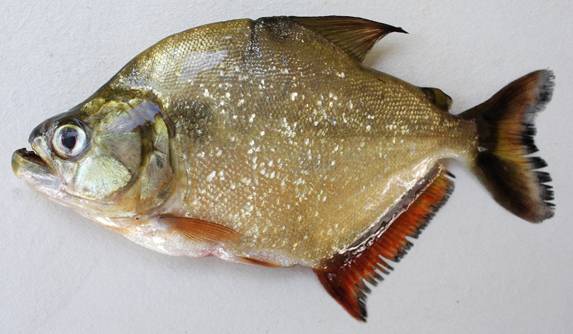
Serrasalmus brandtiiWhite Piranha
Lütken, 1875
Max length250mm SL10in SLTank150 × 60cm60 × 24inTemp20–26°C68–79°FpH5.0–8.0A number of sources state that S. brandtii can be identified by the relatively anterior position of the anal-fin origin beneath the first few dorsal-fin rays. However, images of specimens collected from the rio São Francisco, where it is the only member of the genus present, suggest that this is not always the case and this is also supported by the figure from Eigenmann (1915). No recent diagnosis of the species is available.
Serrasalmus marginatus
authority not recorded
Max length221mm SL9in SLTank120 × 38cm48 × 15inTemp22–25°C72–77°FpHnot recordedThere are currently 24 described species of Serrasalmus, many of which look superficially similar. S. marginatus has at various times been considered a synonym of S. rhombeus and S. humeralis, but is currently considered to be distinct. It's main distinguishing feature is usually given as the thick, black, v-shaped marking in the anterior portion of the caudal fin. Juveniles are said to differ from similar-looking species such as S. compressus and S. altuvei because the dark body "spot...