Results for “flank”
Type a name: scientific, common, or one a species used to go by. Or narrow the catalogue with the filters.
Filters
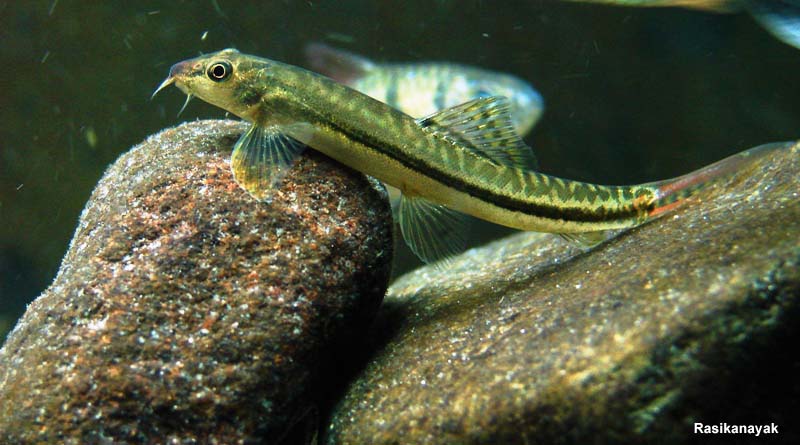
'Nemacheilus' anguilla
Annandale, 1919
Max length50mm SL2.0in SLTank60 × 30cm24 × 12inTemp20–25°C68–77°FpH6.0–7.5'N.' anguilla can be told apart from other Indian members of the genus by possessing dark flank markings which are partially or completely merged to form a lateral stripe, and an almost-complete lateral line extending to the anal-fin. Kottelat (2012) states that its generic placement requires additional study hence the genus name i...
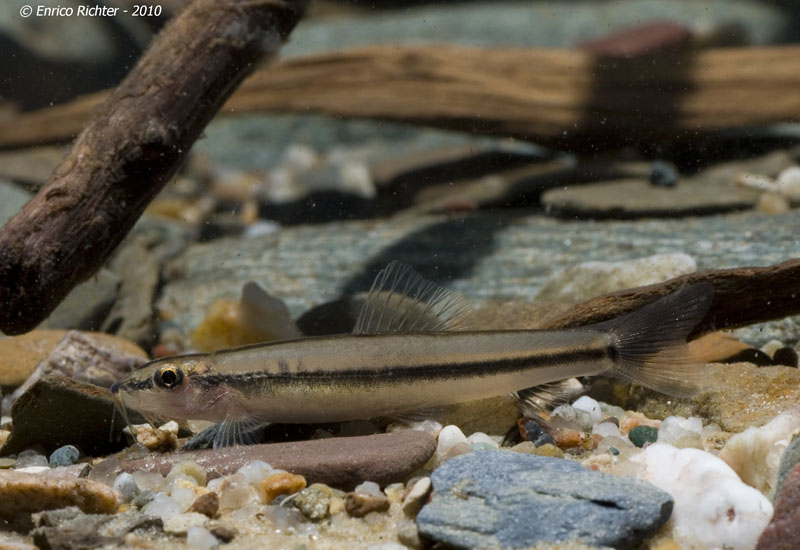
Nemacheilus binotatus
Smith, 1933
Max length45mm SL1.8in SLTank60 × 30cm24 × 12inTemp23–26°C73–79°FpH6.0–7.5N. binotatus is distinguished from similar-looking congeners such as N. longistriatus and N. ornatus by its unique body patterning consisting very simply of two dark stripes, one running along the dorsal surface and the other from the tip of the snout, through the eye and along the flank. There are usually 1-3 small, vertically-orientated spots extending above the lateral stripe between the pectoral-fin and dorsal fins. These are su...
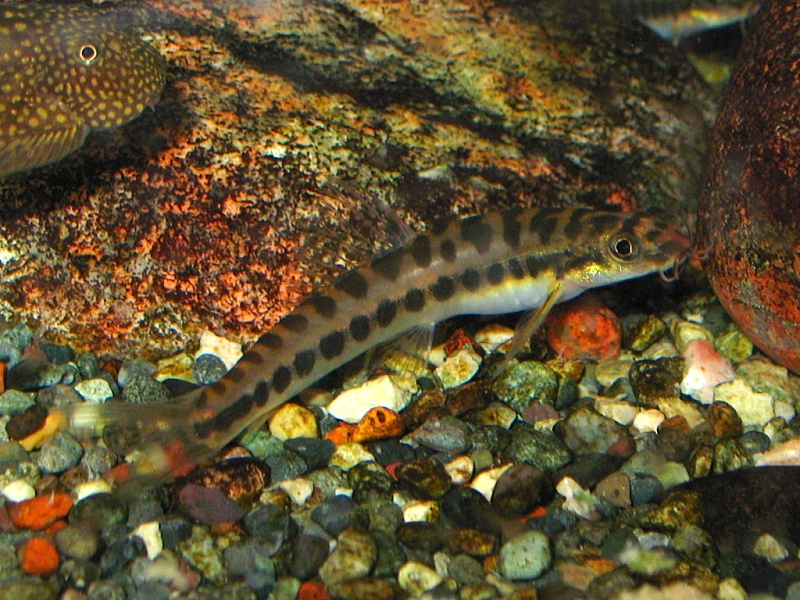
Nemacheilus masyaeArrow Loach
Smith, 1933
Max length70mm SL2.8in SLTank60 × 30cm24 × 12inTemp23–26°C73–79°FpH6.0–7.5This species was originally named Nemacheilus masyae but following ICZN rules the spelling was later corrected to N. masyai because it's named after a man. It can be distinguished from the majority of congeners by body patterning comprising 14-18 short, dark vertical bars on each flank, 12-17 saddle-like markings running along the dorsal surface, a dark spot on the caudal peduncle at the termination of the lateral line and a dark blotch in the lower half of the first few dorsal-fin rays.
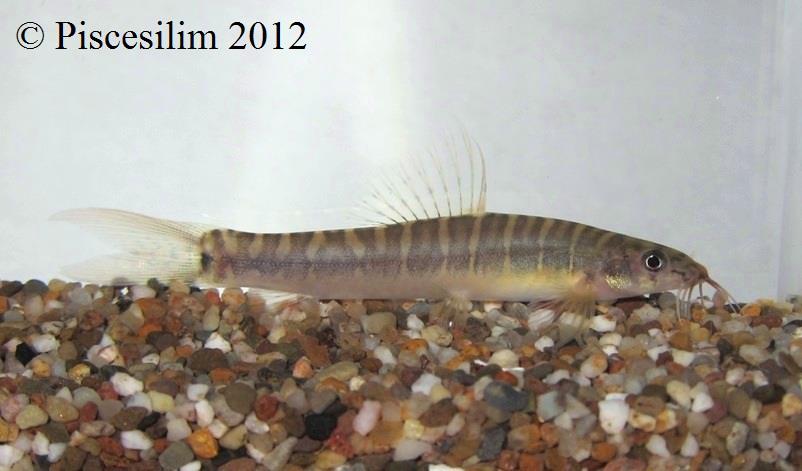
Nemacheilus selangoricus
Duncker, 1904
Max length60mm SL2.4in SLTank60 × 30cm24 × 12inTemp20–25°C68–77°FpH5.0–7.5N. selangoricus is most similar to N. spiniferus since it possesses acuminate scales above and below the lateral line on the caudal peduncle, a feature not shared with any other congener. It can however be distinguished by the following characters: presence of 8-12 very regular dark bars on flanks (vs. 10-13 irregularly-shaped bars in N. spiniferus), 3-5 times...
Neolamprologus tretocephalusFive-barred Lamprologus
authority not recorded
Max length150mm SL6in SLTank120 × 30cm48 × 12inTemp23–27°C73–81°FpH7.5–9.0It can be distinguished from the similar N. sexfasciatus by the presence of only five, rather than six, vertical bars on it's flanks. It is not recommended for the general Tanganyikan community due to it's aggressive nature, particularly when breeding....
Otopharynx lithobatesSulphur-headed Hap
authority not recorded
Max length160mm SL6in SLTank90 × 45cm36 × 18inTemp24–28°C75–82°FpH7.6–8.8O. lithobates is a true rock dweller and is hardly ever seen in open water, even in aquaria. In fact, the scientific name lithobates literally translates as "rock dweller". Breeding males of this species rank among the most stunning of Lake Malawi Haplochromine cichlids. The three characteristic spots on the flanks disappear and are masked by a stunning neon blue patterning. Almost the entireand top of the head turn a deep yellow-orange colour. The most colourful variant is the "...
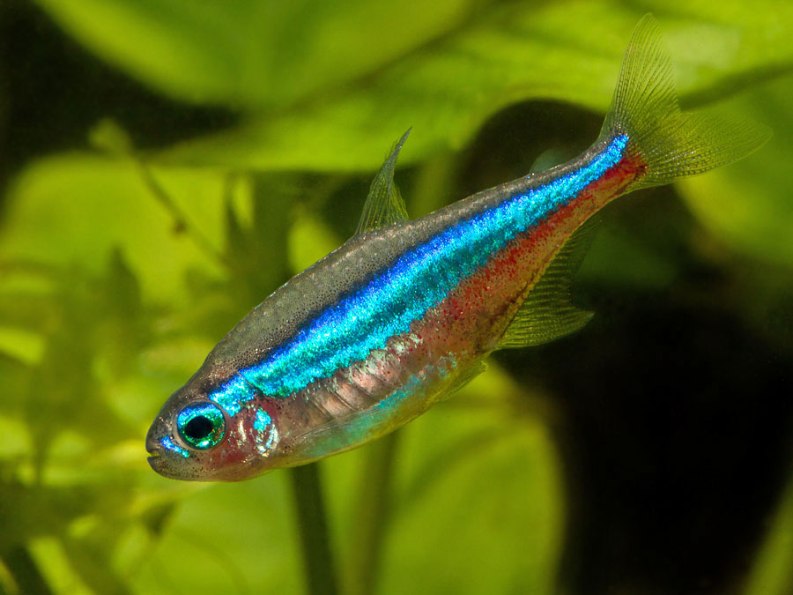
Paracheirodon simulansGreen Neon Tetra
Géry, 1963
Max length25mm SL1.0in SLTank45 × 30cm18 × 12inTemp21–35°C70–95°FpH3.0–6.5For aquarists perhaps more useful are the subtle differences in colour pattern with P. simulans differing from both P. innesi and P. axelrodi in possessing a greener (vs. bluer) lateral stripe which covers more (vs. less) of the eye/head and extends to the caudal-fin base (vs. terminating anterior to caudal-fin base), a lesser (vs. greater) amount of relatively duller (vs. brighter) red pigmentation on the flanks. The taxonomic history of all three species is complicated with earlier authors such as Géry (1960, 1977) ten...
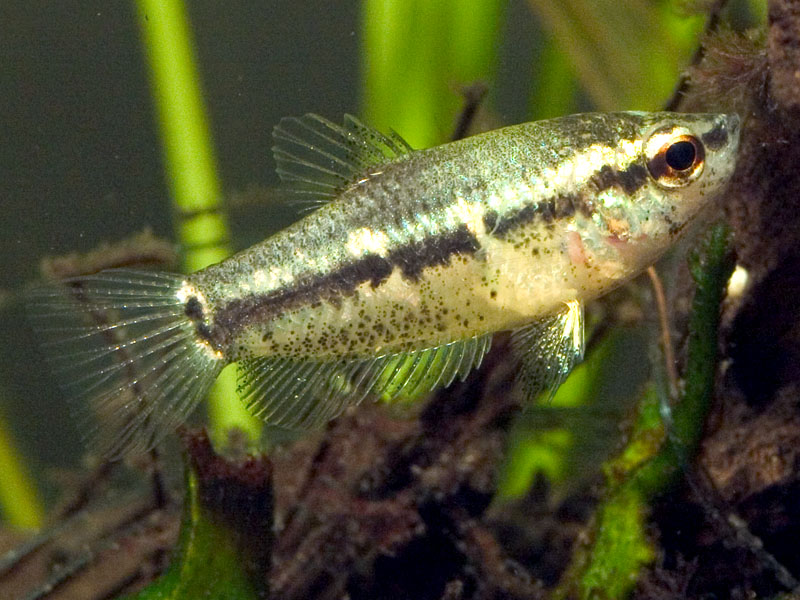
Parasphaerichthys lineatus
Britz & Kottelat, 2002
Max length19mm SL0.7in SLTank40 × 20cm16 × 8inTemp22–27°C72–81°FpH6.5–8.0This species is sometimes traded under the names 'mini chocolate gourami', 'Burmese chocolate gourami' or mislabelled as the congener P. ocellatus, these two currently comprising the only known members of the genus. P. lineatus can be told apart from P. ocellatus via the following combination of characters: smaller body size (maximum standard length 18.7 mm vs. 32.0 mm); absence of ocellus-type marking in middle of each flank (vs. presence); presence of dark, stripe (vs. abs...
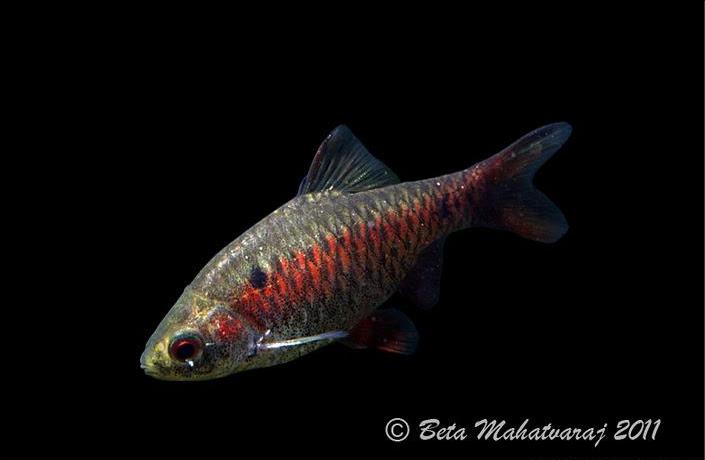
Pethia manipurensis
Menon, Rema Devi & Vishwanath, 2000
Max length62mm SL2.4in SLTank80 × 30cm31 × 12inTemp18–25°C64–77°FpH5.5–7.5Within this assemblage P. manipurensis is most similar to 'P.' meingangbii and P. padamya by virtue of the fact that males in all three possess orange-red pigmentation on the flanks and caudal-fin. It can be told apart most easily by the fact it possesses a relatively small, spot-like humeral marking, vs. a vertically-elongated, relatively large humeral marking in both the other species.
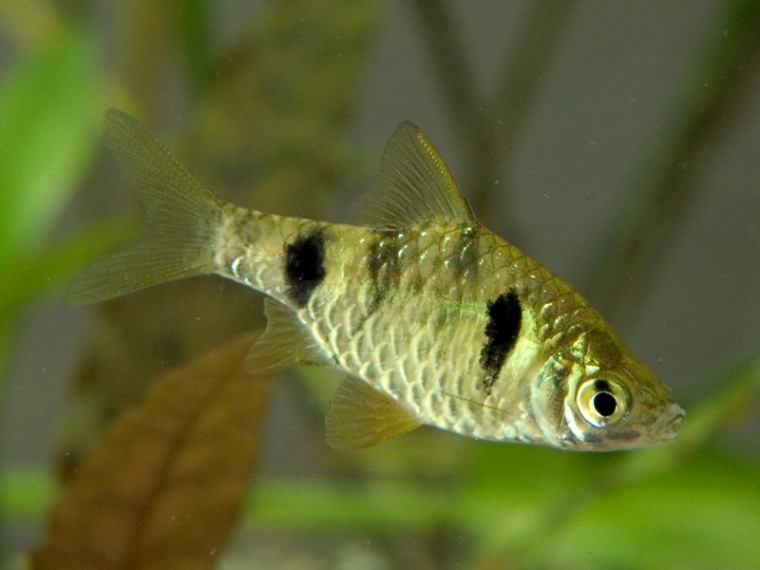
Pethia phutunioDwarf Barb
Hamilton, 1822
Max length30mm SL1.2in SLTank60 × 30cm24 × 12inTemp21–26°C70–79°FpH6.0–7.0In P. phutonio the flank markings comprise two black, vertically-orientated blotches, one posterior to the operculum and the other on the caudal peduncle, and within the P. conchonius group this patterning is shared with P. bandula, P. cumingii, P. didi, P. meingangbii, P. padamya, and P. tiantian. It can be told apart from these by the following combination of characters: smaller adult size of 25 - 30 mm vs. at least 35 - 40 mm; minute maxillary barbels; incomplete lateral line with ab...
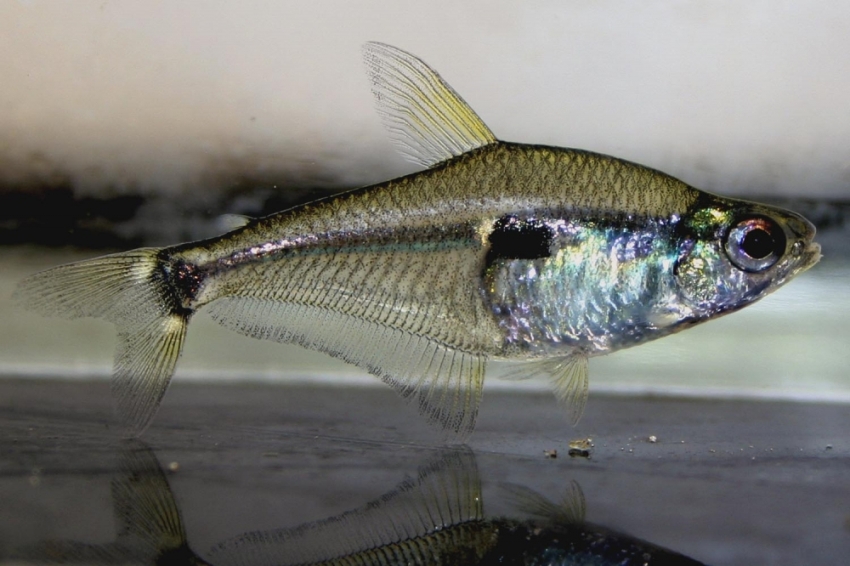
Phenacogaster tegatus
Eigenmann, 1911
Max length45mm SL1.8in SLTank60 × 30cm24 × 12inTemp20–28°C68–82°FpH6.0–7.5This species has been traded as 'six-eyed tetra' in reference to its colour pattern comprising two dark spots on each flank plus the eye. Based on the extensive review of the genus by Lucena and Malabarba (2010), in which nine new species were described, P. tegatus can be told apart from congeners by the following combination of characters: lateral line incomplete with 8-13 perforated scales; laterally elongate humera...
Rasbora elegansElegant Rasbora
authority not recorded
Max length200mm SL8in SLTank120 × 45cm48 × 18inTemp22–25°C72–77°FpHnot recordedThis species is not especially popular in the hobby and is only infrequently seen on sale. It is clearly distinguishable from similar-looking members of the genus by lacking a dark stripe along the lateral line. Instead it possesses two spot-like markings on each flank, one below theorigin and lateral line and another at the caudal peduncle. The intensity of these can vary depending on the collection locality of the fish and they can be quite faint in some forms. There is also a third, smaller m...
Rasbora kalochromaClown Rasbora
authority not recorded
Max length100mm SL3.9in SLTank120 × 45cm48 × 18inTemp23–28°C73–82°FpHnot recordedR. kalochroma exhibits variable patterning across its range according to locality with some forms possessing a line of spot-like markings connecting the two dark blotches on the flanks and others more intense body colouration. Juveniles are sometimes confused with Boraras maculatus and adults with the similarly-patterened R. elegans although the latter is easy to identify by its overall silver, as opposed to pinkish/reddish, colouration. The only congener for which it may be genuinely mistake...
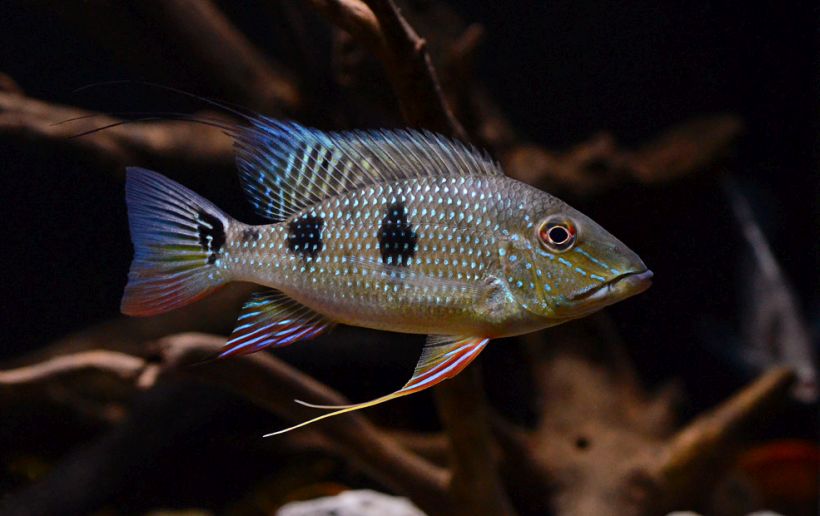
Satanoperca daemonThreespot Eartheater
Heckel, 1840
Max length250mm SL10in SLTank210 × 60cm84 × 24inTemp24–28°C75–82°FpH3.5–6.0S. daemon is relatively common in the aquarium trade but is by no means easy to maintain, with particular attention to space, diet, water quality, and chemistry required in order for it to thrive. It can be distinguished from other members of the genus by possessing two dark blotches on the flank and a prominent ocellus at the caudal-fin base. Among the named species it is most similar to...
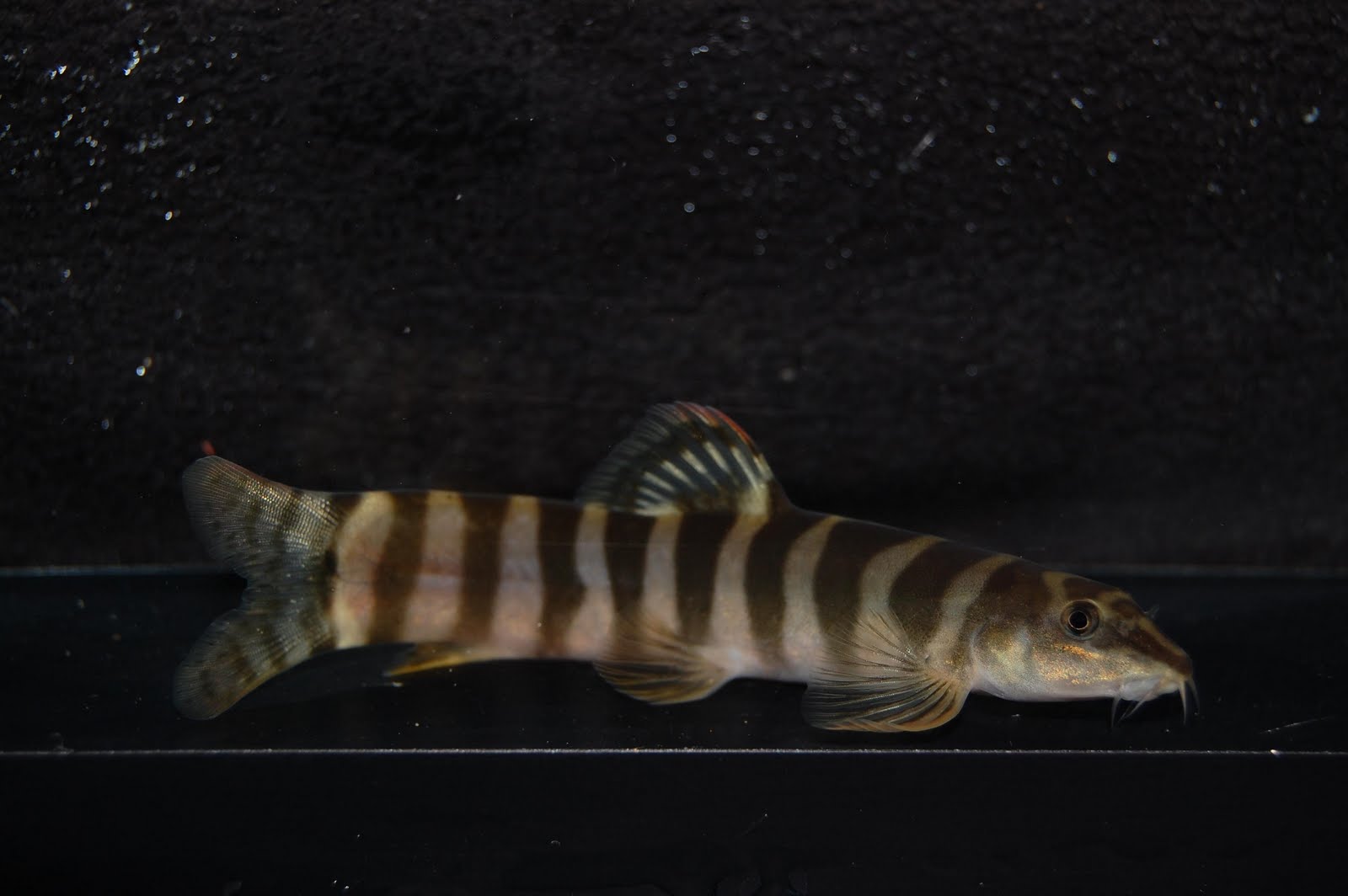
Schistura hypsiuraSuper Convict Loach
Bohlen, Ŝlechtová & Udomritthiruj, 2014
Max length73mm SL2.9in SLTank80 × 30cm31 × 12inTemp18–24°C64–75°FpH6.0–7.5It can be distinguished from congeners by the following combination of characters: caudal peduncle deep, ≥ the deepest part of the remainder of the body; no dorsal or ventral skin crests along the caudal peduncle; caudal-fin deeply forked, the outermost principal rays in the upper and lower lobes more than twice the length of the innermost: suborbital flap in males present; a well-developed suborbital groove in females; 6–8 very regular bars along the flank.
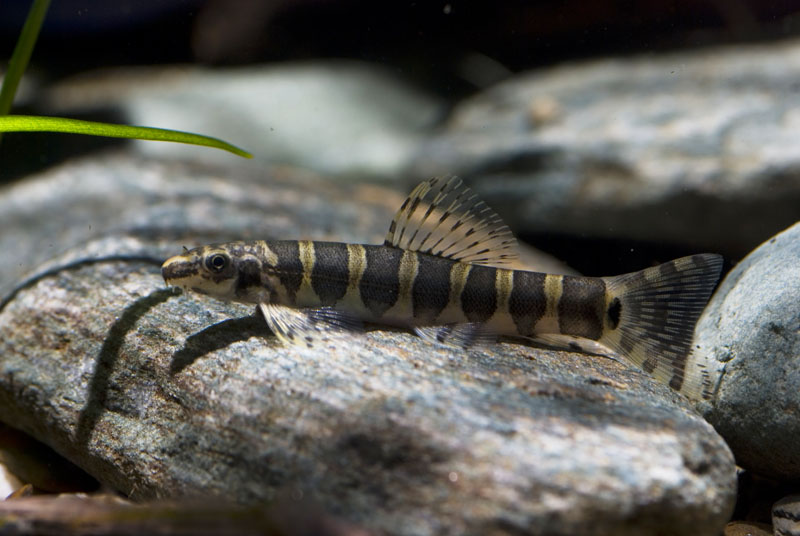
Serpenticobitis octozona
Roberts, 1997
Max length55mm SL2.2in SLTank75 × 30cm30 × 12inTemp23–26°C73–79°FpH6.0–7.0This species exhibits some interesting behaviour including a degree of social interaction plus the ability to cling to vertical or overhanging surfaces. It's sometimes sold under the name 'serpent loach'. The genus currently contains just three members all of which are known only from the Mekong basin. S. octozona is the type species and separated from the others mainly by body patterning which consists of 7-8 dark bars on each flank, these extending the full depth of the body and much wider than the pale interspaces between.
Vieja maculicaudaBlackbelt Cichlid
authority not recorded
Max length254mm SL10in SLTank120 × 38cm48 × 15inTemp22–27°C72–81°FpH6.0–8.0The Blackbelt Cichlid gets its name from two things: firstly the vertical black stripe around its flank, and secondly its toughness. Vieja maculicauda is a tough, aggressive fish and should be respected as such. Maculicauda is a relatively easy fish to keep. They are not impossible to breed, but not the easiest fish either. If you seriously intend to breed this fish, it is a wise decision to house 6 juvenile fish in a large tank (212 litres at least), and let them pair off. When a pair has be...