Results for “anal-fin”
Type a name: scientific, common, or one a species used to go by. Or narrow the catalogue with the filters.
Filters
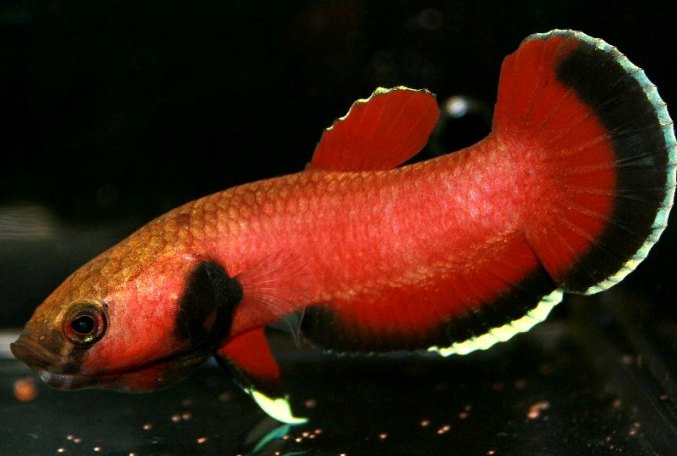
Betta channoidesSnakehead Betta
Kottelat & Ng, 1994
Max length40mm SL1.6in SLTank45 × 30cm18 × 12inTemp23–30°C73–86°FpH4.0–6.5B. channoides and B. albimarginata together comprise the Betta albimarginata group/complex of closely-related species within the genus, these differing from all other members of the genus in colour pattern and by possession of 9-12 anal-fin spines (vs. 0-4). They look very similar to one another but differ in the following characters: anal fin spines 9-11 in B. albimarginata vs. 12 in B. channoides; anal fin rays 21-23 vs. 23-25; lateral scale rows 26-27 vs. 27.5-28; trans...
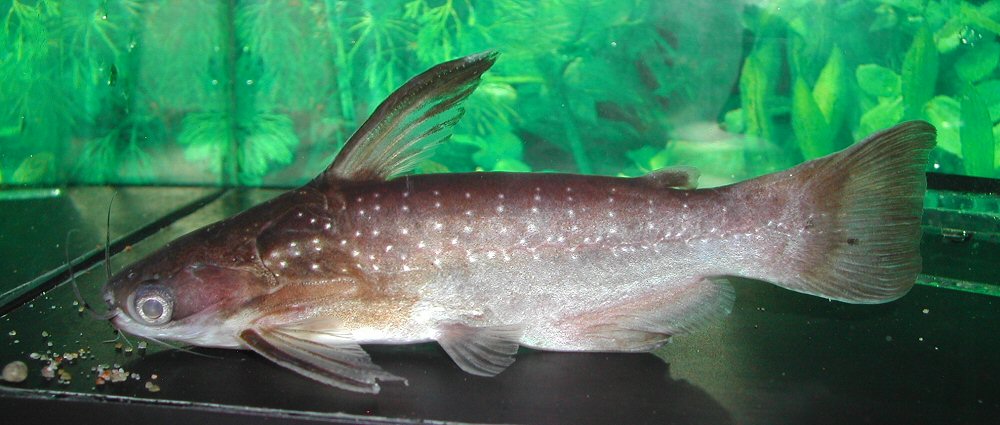
Auchenipterichthys coracoideusMidnight Catfish
Eigenmann & Allen, 1942
Max length110mm SL4in SLTank80 × 30cm31 × 12inTemp22–25°C72–77°FpH6.0–7.2This species is also known by the alternative vernacular name of 'Zamora woodcat', and is often misidentified as A. thoracatus. The latter is a valid species and very similar to A. coracoideus in that the coracoid bone is exposed ventrally and covered only by a thin layer of integument in both species. The two differ principally in the number of anal fin rays...
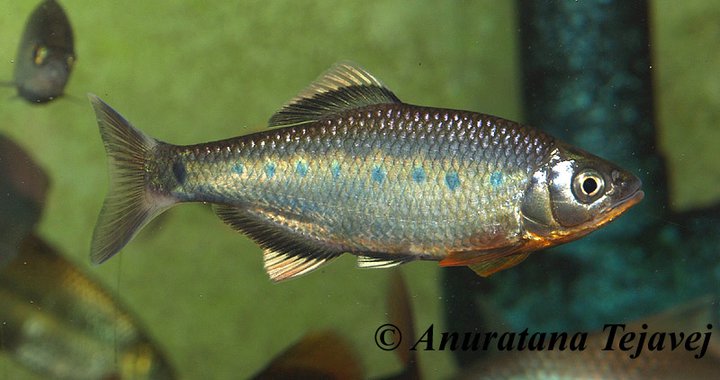
Barilius bakeri
Day, 1865
Max length130mm SL5in SLTank150 × 60cm60 × 24inTemp18–26°C64–79°FpH6.0–7.5This species is traded under several names including 'royal danio', 'blue-spotted hill trout', and 'blue-dotted mirror fish'. It can be distinguished from congeners by possessing a single row of bluish-green spots along the length of the body, white margins on the dorsal and anal fins, 37-38+1 lateral line scales, and fleshy rudi...
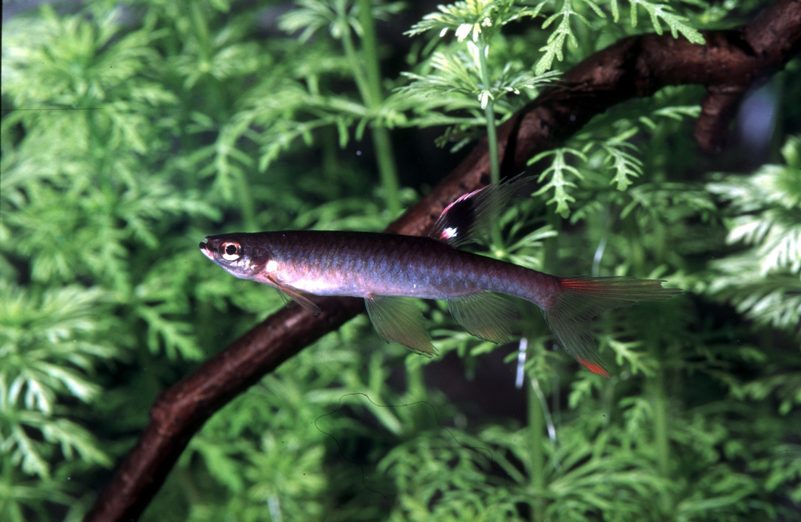
Copella carsevennensis
Regan, 1912
Max length40mm SL1.6in SLTank75 × 30cm30 × 12inTemp20–28°C68–82°FpH4.0–7.0C. carsevennensis has formerly been synonymised with C. arnoldi but was considered separate by Zarske (2011) using the following combination characters: absence (vs. presence) of a silvery-white to white patch in the centre of some of the flank scales in males, particularly in the lower half of the body; absence (vs. presence) of a horizontal dark body bar in nuptial males; absence (vs. presence) of thin black margins in the dorsal, ventral and anal fins; eggs deposited among submerged vegetation (vs. eg...
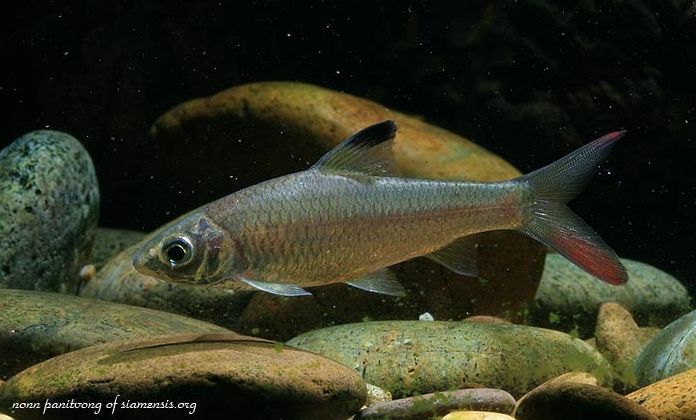
Discherodontus ashmeadi
Fowler, 1937
Max length135mm SL5in SLTank120 × 45cm48 × 18inTemp23–26°C73–79°FpH6.0–7.5D. ashmeadi is the type species and exhibits differences in dental morphology compared with other members of the genus. It can also be told apart from D. halei by the red/pink (vs. orange) colouration in the dorsal and anal fins and serrated (vs. smooth) dorsal spine. D. schroederi is also similar-looking but as it matures the prominent dark dorsal blotch fades to a thin dark distal band whereas in D. ashmeadi it is retained throughout life.
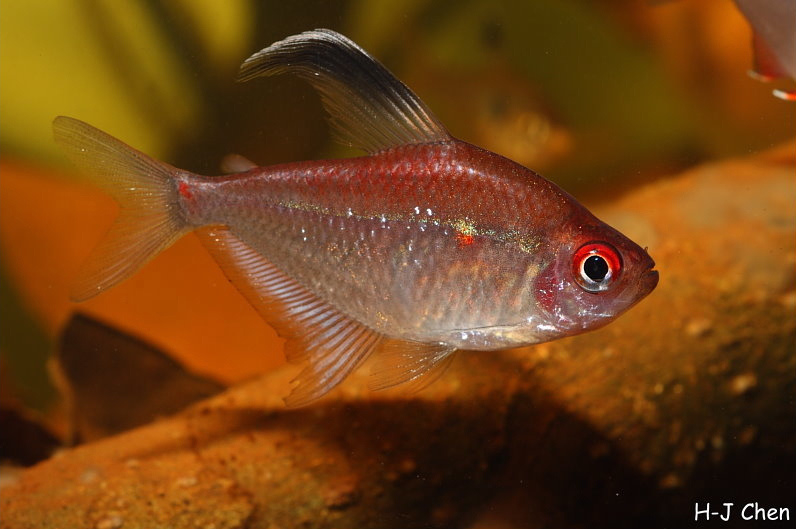
Hyphessobrycon pyrrhonotusFlame-back Bleeding Heart Tetra
Burgess, 1993
Max length45mm SL1.8in SLTank75 × 30cm30 × 12inTemp20–28°C68–82°FpH4.0–7.0This is the smallest of three similar-looking species most commonly-referred to as the 'bleeding heart' subgroup, the other two being H. erythrostigma and H. socolofi. All possess a reddish humeral spot which is not present in any other characid with other shared characters including possession of 6 -14 maxillary teeth, 7-9 scales above the lateral line, 5-7 scales below the lateral line and 26-33 anal fin rays.
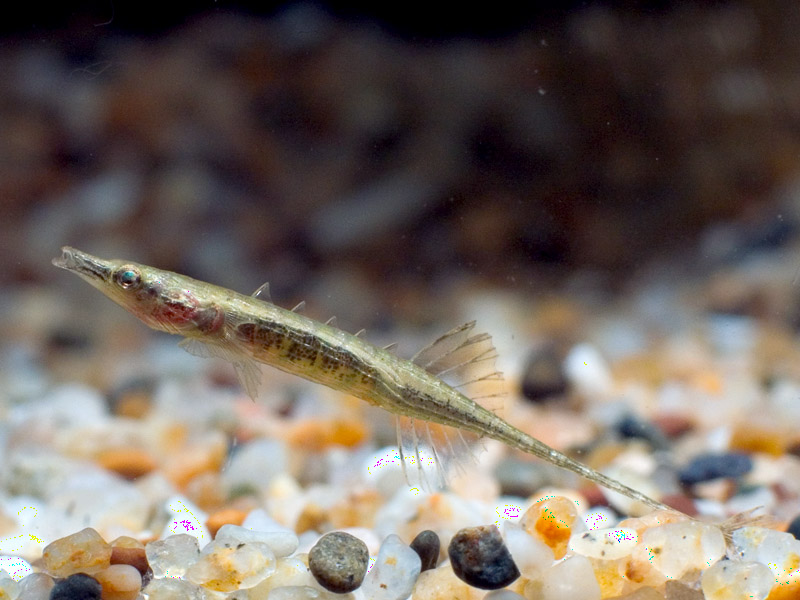
Indostomus paradoxusArmoured Stickleback
Prashad & Mukerji, 1929
Max length30mm SL1.2in SLTank40 × 20cm16 × 8inTemp22–27°C72–81°FpH6.5–7.5This species is rare in the aquarium hobby though its name is often misapplied to the closely-related I. crocodilus. It can be told apart from congeners by the following characters: dorsal and anal fins without dark markings, with a light brown bar in breeding males; ventral surface light brown; throat white, occasionally with a few brown spots; ridges of head bones weakly serrated or not serrated, depending on the bone. The family Indostomidae currently contains just a single genus with three species of which I. paradoxus is the type. It was raised alongside both family...
Julidochromis dickfeldiBrown Julie
authority not recorded
Max length80mm SL3.1in SLTank75 × 30cm30 × 12inTemp23–27°C73–81°FpH8.0–9.2Julidochromis are commonly known as "Julies" in the hobby. As with other Julies, large water changes should be avoided as this can cause mated pairs to turn on one another. There is some speculation as to whether this species has been placed in the correct genus. It has a different shape to other Julidochromis, having a pointed snout. It also exhibits different patterning, with blue edging to the dorsal and anal fins, and the horizontal stripes are very dark in colour. Furthermore i...
Neolamprologus boulengeri
authority not recorded
Max length65mm SL2.6in SLTanknot recordedTemp24–27°C75–81°FpH7.5–9.0N. boulengeri can be distinguished from the similar N. hecqui and Lamprologus kungweensis primarily by the orange border on the dorsal and anal fins, although its adult patterning is somewhat different to the other species. Unlike many other shell dwellers, it will spawn in small caves if no shells are made available....
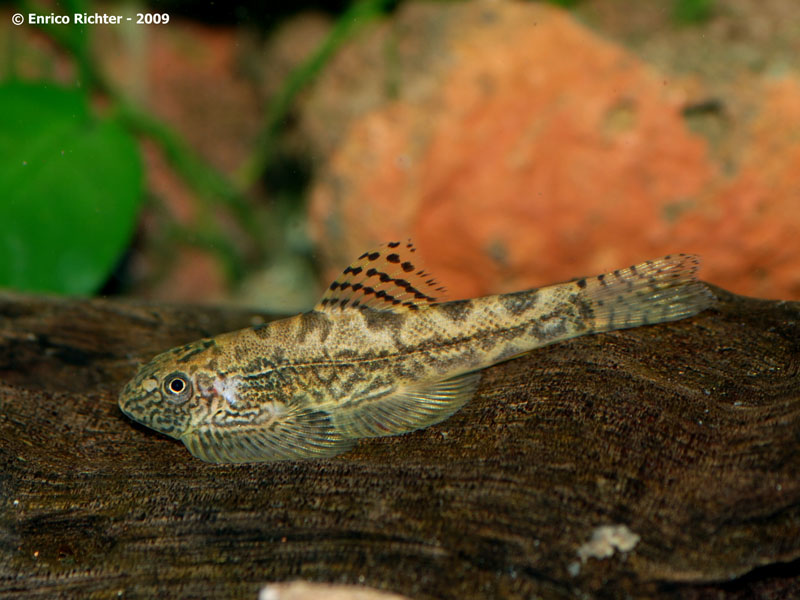
Sewellia sp. 'SEW02'
authority not recorded
Max length65mm SL2.6in SLTank75 × 30cm30 × 12inTemp18–24°C64–75°FpH6.0–7.5This species first became available in early 2009 and was initially identified as S. breviventralis (Freyhof and Serov, 2000) because there is a clear space between the pelvic and anal fins and body patterning is vaguely similar to that species, and also appears quite similar to S. elongata (Roberts, 1998) and S. sp. 'SEW03'. It does not fully match the original descriptions of either, however, and therefore remains in need of identification.
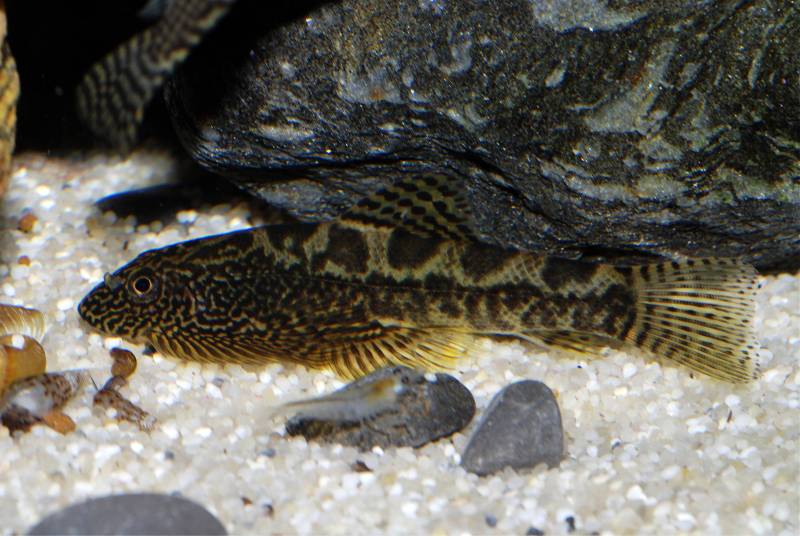
Sewellia sp. 'SEW03'
authority not recorded
Max length60mm SL2.4in SLTank75 × 30cm30 × 12inTemp20–24°C68–75°FpH6.0–7.5This fish first became available in early 2009 and was initially identified as S. breviventralis (Freyhof and Serov, 2000). However it cannot be that species because there is no discernible gap between pelvic and anal fins, which also discounts the possibility of it being S. elongata (Roberts, 1998). It therefore remains unidentified and is often imported in mixed batches with S. sp. 'SEW02', which it also resembles closely.
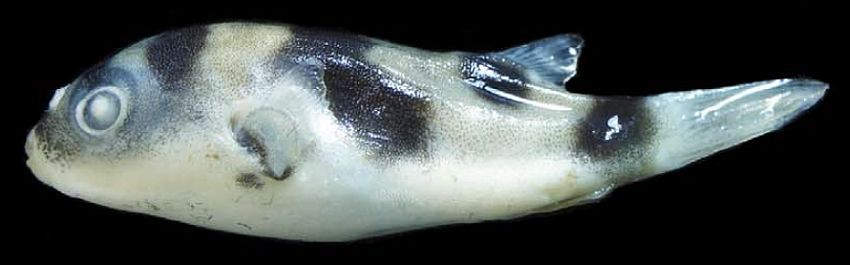
Colomesus tocantinensis
Amaral, Brito, Silva & Carvalho, 2013
Max length35mm SL1.4in SLTanknot recordedTempnot recordedpHnot recordedIt is distinguished from congeners by the following combination of characters: anal-fin with 6-7 basal pterygiophores and 9 rays (vs. 10-11 rays in C. asellus and C. psittacus; dorsal-fin with 10 bas...
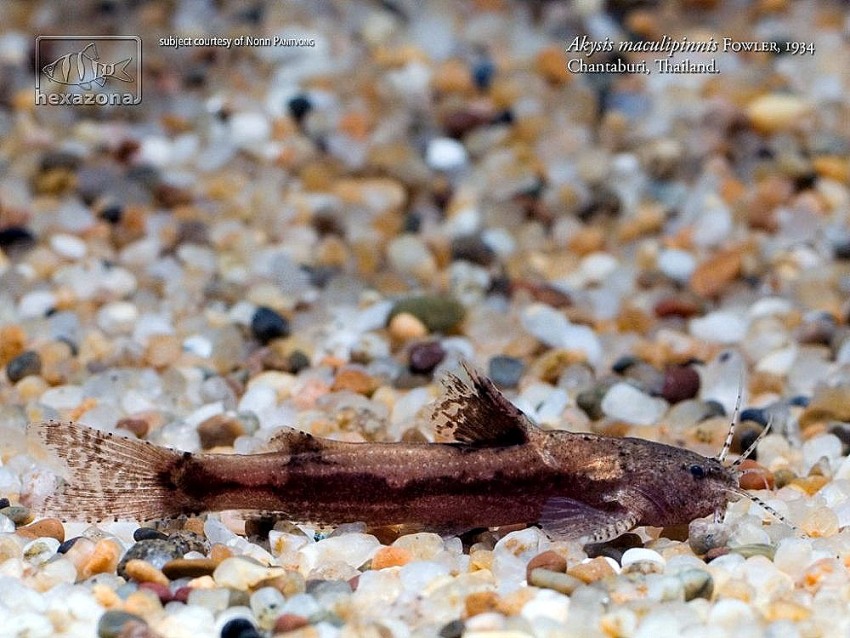
Akysis maculipinnisSpotfin Stream Catfish
Fowler, 1934
Max length35mm SL1.4in SLTank45 × 30cm18 × 12inTemp16.5–24°C62–75°FpH6.0–7.5This species has been exported for the aquarium hobby and ranks among the smaller members of the family. It can be differentiated from all other Akysis species by the following combination of characters: head length 22.0-28.6% of standard length (SL); caudal peduncle depth 8.8-10.7% of SL; anal-fin base length 15.2-19.1% of SL; eye diameter 12-16% of head length (HL); nasal barbel length 57 92% of HL; posession of 3-4 serrae on the posterior edge ofspine; body patterning mottled with indistinct ...
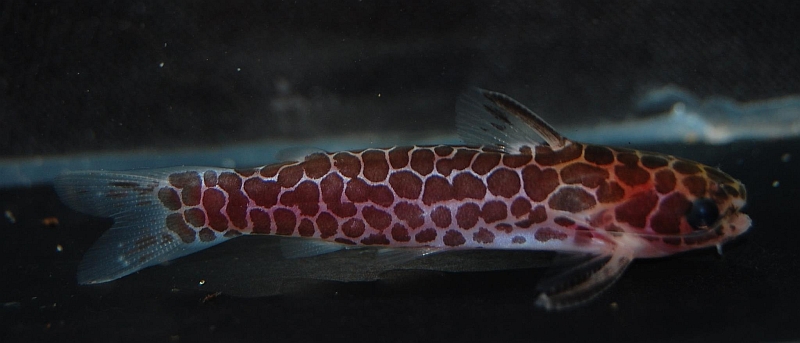
Centromochlus reticulatusReticulated Driftwood Catfish
Mees, 1974
Max length27mm SL1.1in SLTank60 × 30cm24 × 12inTemp22–28°C72–82°FpH5.0–7.5The genus Centromochlus is diagnosable by members having the proximal anal-fin radials enlarged and fused to each other at the base, forming a single ossified structure. It's sometimes included in the putative subfa...
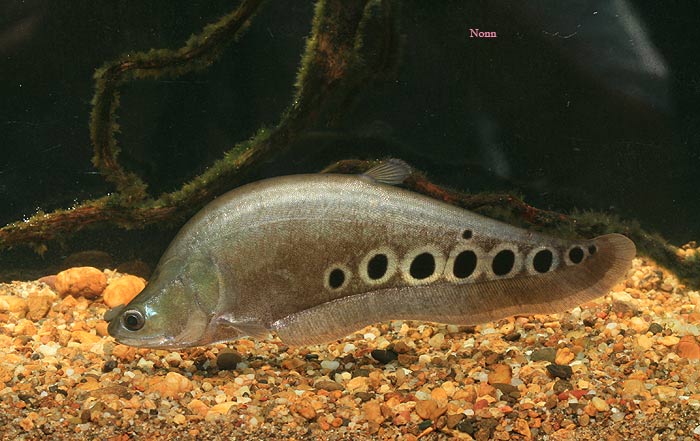
Chitala ornataClown Featherback
Gray, 1831
Max length1000mm SL39in SLTanknot recordedTemp20–28°C68–82°FpH6.0–8.0This species is also referred to as 'clown knifefish' in the aquarium trade. It arguably has no place in the ornamental hobby given its adult size and specialised requirements but remains inexplicably popular and an albino form has even been line-bred for the purpose. It can be distinguished from all congeners by presence of one or more rows of large ocellated spots above the base of the anal-fin, but...
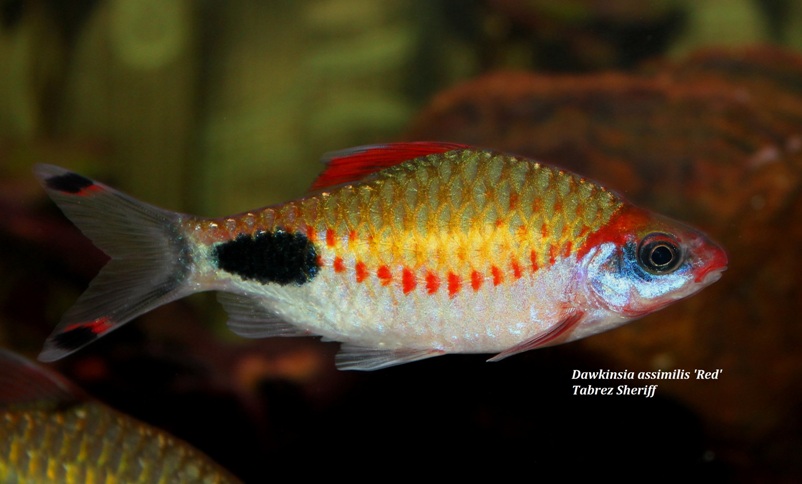
Dawkinsia assimilisMascara Barb
Jerdon, 1849
Max length120mm SL5in SLTank120 × 45cm48 × 18inTemp19–25°C66–77°FpH6.0–7.0D. assimilis has been misidentified as Puntius mahecola (Valenciennes 1844) in the past but the identity of both species was resolved by Pethioyagoda and Kottelat (2005 a, 2005b). They inspected the syntypes of P. mahecola and concluded that though valid it isn't closely related to any Dawkinsia (then the Puntius filamentosus group) but is rather a smaller, silvery fish with a single dark blotch on the caudal peduncle, located entirely posterior to the anal-fin. It's wi....
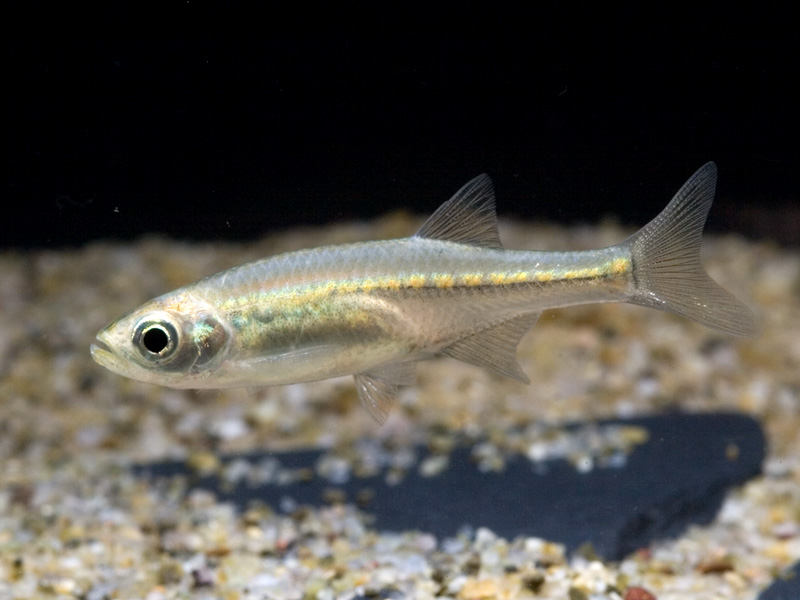
Devario sp. 'purple cypris'
authority not recorded
Max length45mm SL1.8in SLTank75 × 30cm30 × 12inTempnot recordedpHnot recordedThis unidentified species has only appeared in the aquarium trade on a handful of occasions and it has been widely misidentified as Devario jayarami (Barman, 1984). It differs from D. jayarami by possessing 9-10 lateral bars which progressively increase in size posteriorly (vs. 12-13 bars which decrease in size posteriorly), 12 anal-fin rays (vs. 15-16) and a blunter head profile with a lack of convexity behind the head (vs. head profile conical with noticeable convexity behind the head).
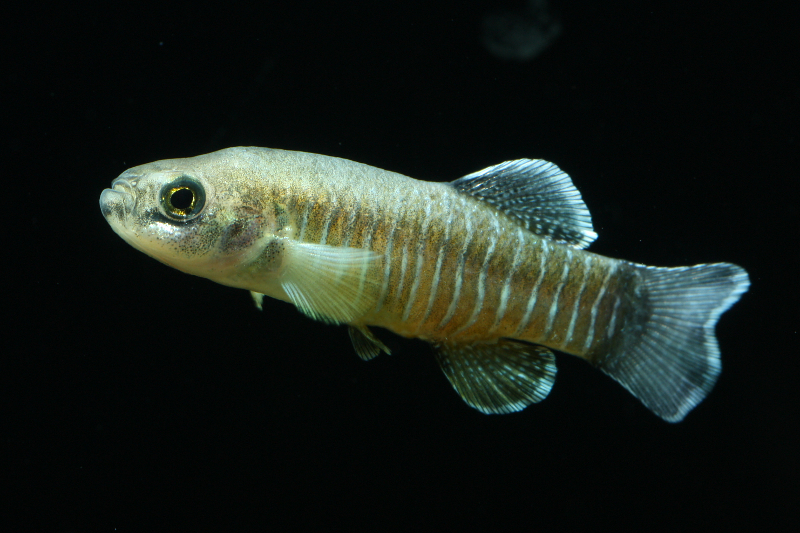
Esmaeilius arakensisArak Toothcarp
Teimori, Esmaeili, Gholami, Zarei, & Reichenbacher, 2012
Max length35mm SL1.4in SLTank120 × 30cm48 × 12inTemp8–32°C46–90°FpH7.0–8.5This species was available in the aquarium hobby for a number of years prior to publication of the official description and was generally referred to as A. sp. 'Namak' or A. sp. 'Namak River'. It can be distinguished from other members of the genus by the following combination of characters: 10–12 anal-fin rays; 28–32 lateral line scales, 10–13 caudal peduncle scales; 8–10 gill rakers; 12–19, commonly 1...
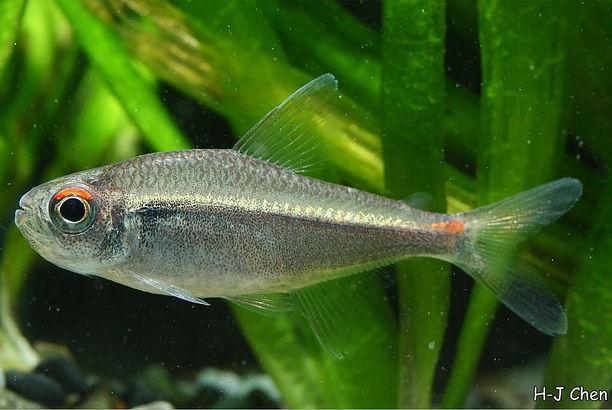
Hyphessobrycon agulha
Fowler, 1913
Max length42mm SL1.7in SLTank80 × 30cm31 × 12inTemp20–28°C68–82°FpH5.5–7.5This species is relatively rare in the aquarium hobby but is occasionally traded as 'red-tailed flag tetra'. It lends its name to the H. aghula group of closely-related species within the genus as proposed by Géry (1977, see below) of which members share the following characters which set them apart from other characids: lower half of the body dark, especially above the anal-fin; usually possessing a laterally-elongate humeral spot, more-or-less united wit...
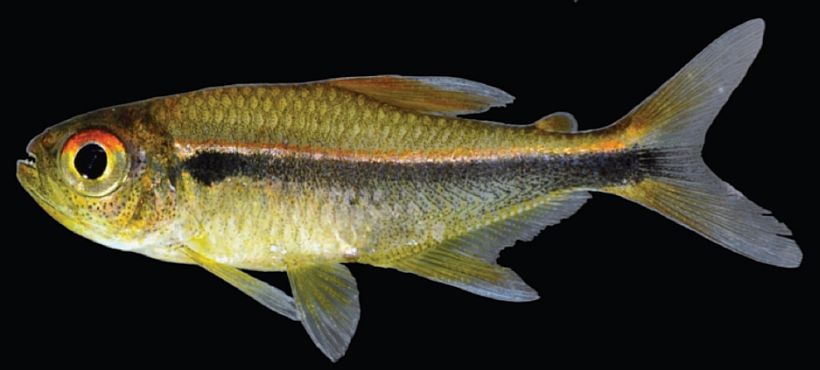
Hyphessobrycon eschwartzae
Román-Valencia & Ortega, 2013
Max lengthnot recordedTanknot recordedTempnot recordedpHnot recordedH. eschwartzae is told apart from other laterally-striped Hyphessobrycon species from the Madre de Dios watershed by the following characters: 4 simple anal-fin rays (vs. 3 in other species listed); 13-15 dentary teeth (vs. 5-11); 6 teeth in the internal premaxillary ro...