Results for “character”
Type a name: scientific, common, or one a species used to go by. Or narrow the catalogue with the filters.
Filters
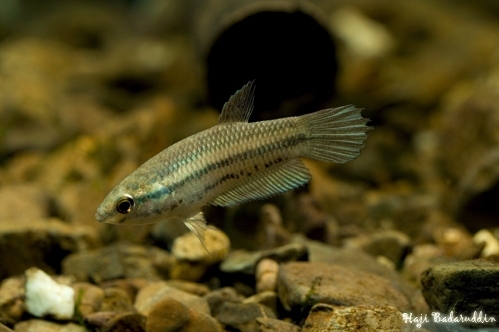
Betta prima
Kottelat, 1994
Max length50mm SL2.0in SLTank60 × 30cm24 × 12inTemp23–27°C73–81°FpH4.0–7.0It can be told apart from other members of the B. pugnax group by the following characters: second postorbital stripe on opercle complete; no transverse bars in caudal-fin; 20-22 predorsal scales; preanal length 50.6-54.8 % SL. Not all authors consider it a member of this group, however, with some placing it in the B. picta complex, e.g., Schindler and Schmidt (2006). The genus is th...
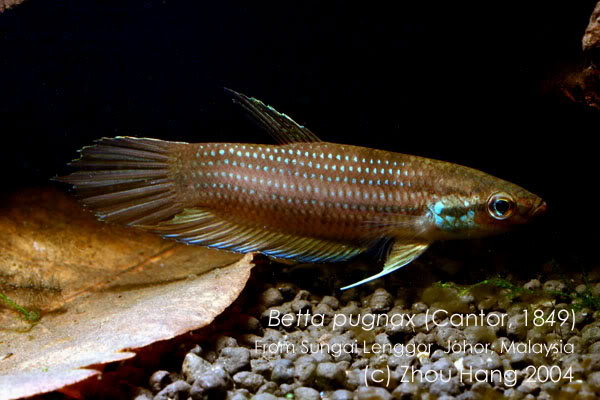
Betta pugnax
Cantor, 1849
Max length70mm SL2.8in SLTank80 × 30cm31 × 12inTemp22–28°C72–82°FpH4.0–7.5It can be told apart from other members of the B. pugnax group by the following characters: chin bar present; no complete second postorbital stripe on opercle; presence of transverse bars in caudal-fin of males; caudal-fin in males broadly lanceolate; opercle scales iridescent blue; anal-fin with reddish subdistal band and black margin; caudal-fin without dark margin; 25-28 anal-fin rays; 28-31 lateral scales; 11-12 postdorsal scales; length of pelvic fins 26.6-43.8 % SL; length of head 27.5-35.2 % SL; inter-orbital width 32.4-53.0 % HL.
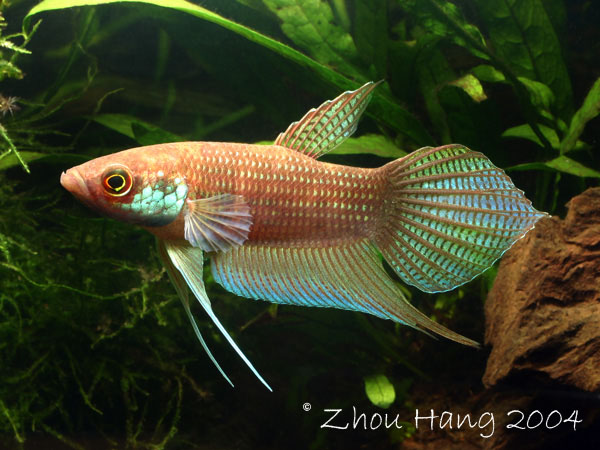
Betta raja
Tan & Ng, 2005
Max length70mm SL2.8in SLTank80 × 30cm31 × 12inTemp22–27°C72–81°FpH4.0–7.0It should be noted that not all authors consider the B. pugnax group to contain the same species, with some placed in the B. picta complex by Schindler and Schmidt (2006), for example. B. raja can be told apart from other members of the B. pugnax group by the following characters: mature males with very long pelvic fins covering 15-23 anal-fin rays or even longer than the base of the anal-fin in some cases; anal-fin and lower caudal-fin with black marginal bands; 25-28 anal-fin rays; 30-32 lat...
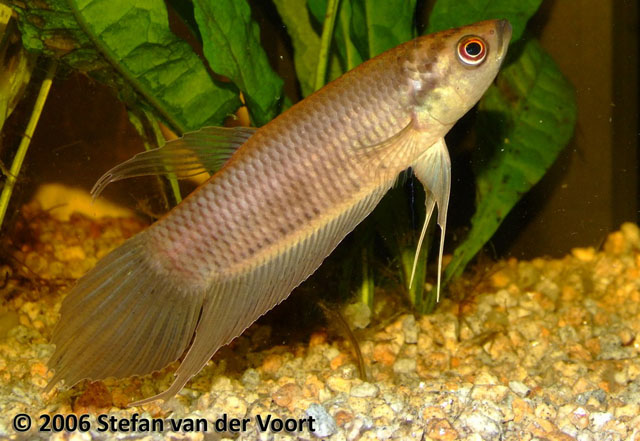
Betta renata
Tan, 1998
Max length85mm SL3.3in SLTank90 × 30cm36 × 12inTemp23–27°C73–81°FpH4.0–6.0This species is included in the Betta waseri group/complex of closely-related species within the genus, an assemblage which also includes a handful of potentially new species such as B. sp. 'Medas' on an unofficial basis. Group members share the following combination of characters: base body colouration clay yellow; opercle scales iridescent gold in mature males of all species except B. tomi; throat with black markings which join with black lower jaw in some species; no chin bar.
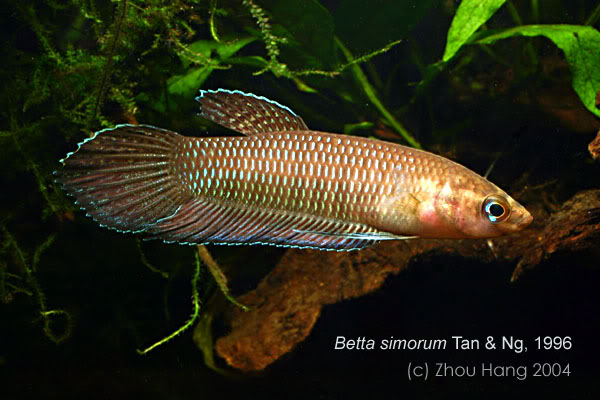
Betta simorum
Tan & Ng, 1996
Max length90mm SL3.5in SLTank80 × 30cm31 × 12inTemp25–30°C77–86°FpH3.0–6.0This species is included in the B. bellica group/complex of closely-related species within the genus, an assemblage of which members share the following set of characters: long and slender body with dorsal and ventral margins almost parallel; body depth 23-28 % SL; 30-33 anal-fin rays; 11-13 dorsal-fin rays; 32-34 total vertebrae; body dark brown in colour with iridescent green markings on each individual scale.
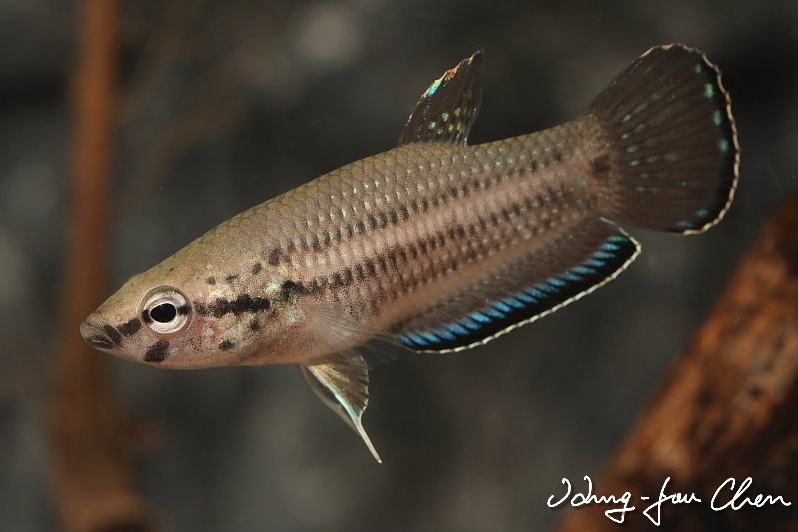
Betta simplex
Kottelat, 1994
Max length60mm SL2.4in SLTank60 × 30cm24 × 12inTemp20–28°C68–82°FpH7.0–8.0B. simplex is included in the Betta picta group/complex of closely-related species within the genus, an assemblage comprising species with the following shared characters: unpaired fins rounded (anal-fin sometimes tapering to a blunt point); anal-fin rays I-III, 18-24; dark marginal band on anal and caudal fins, more pronounced in mature males; presence of pre-orbital and post-orbital stripes; presence of chin bar on throat; iridescent green, gold, or blue scales on opercle.
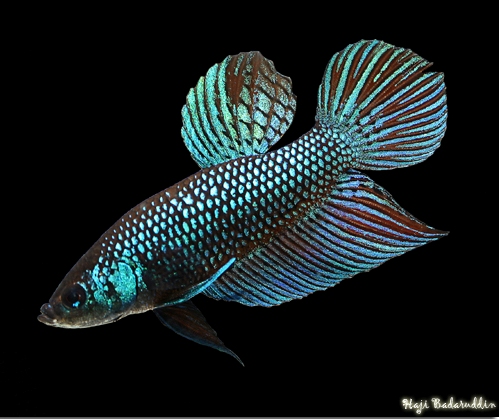
Betta smaragdinaEmerald Betta
Ladiges, 1972
Max length60mm SL2.4in SLTank45 × 30cm18 × 12inTemp22–28°C72–82°FpH5.5–7.5This species is included in the Betta splendens complex of closely-related species within the genus, of which members share the following set of characters: head length short 22-31 % SL; often a brightly-coloured body; iris of the eye with iridescent green or blue patches; body elongate or slender; opercles parallel when head viewed dorsally; caudal-fin rays red or brown and contrasting with the iridescent interradial membranes; unpaired fins without an iridescent margin; opercle with red or blue vertical bars in males; dorsal-fin rays 0-II, 7-9; anal-fin rays II-V, 21-26.
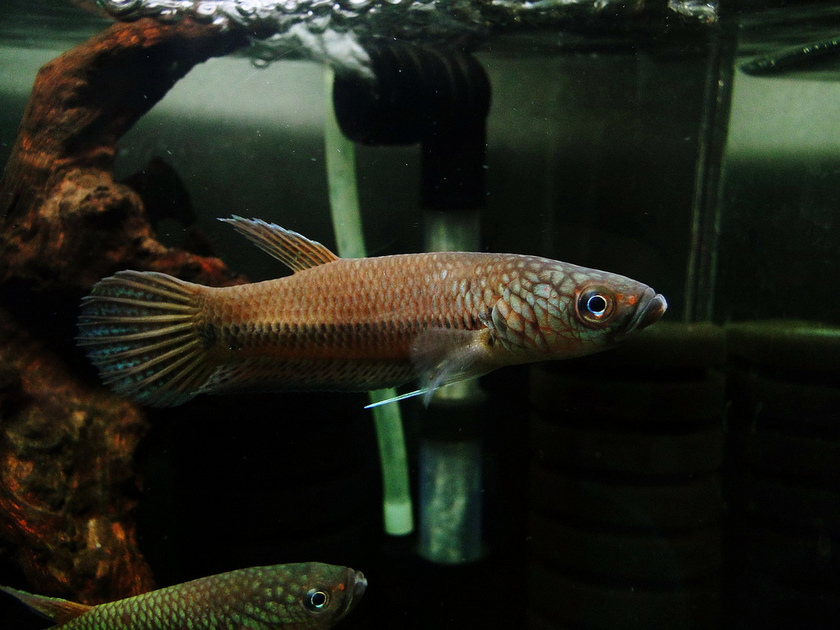
Betta sp. 'Antuta/Bulungan'
authority not recorded
Max length100mm SL3.9in SLTank80 × 30cm31 × 12inTemp21–27°C70–81°FpH5.5–7.5This hypothetically-undescribed species appears to be a member of the Betta unimaculata complex of closely-related species within the genus, of which members share the following set of characters: body long and slender with depth at dorsal fin origin 18-25 % SL; head large and blunt with width 19-24 % SL; long maxilla and lower lip with distance from tip of lower jaw to posterior end of maxilla 27-54 % HL; caudal-fin rounded in shape, occasionally with elongated median rays; pelvic-fin short and filamentous; dorsal and anal fins relatively pointed.
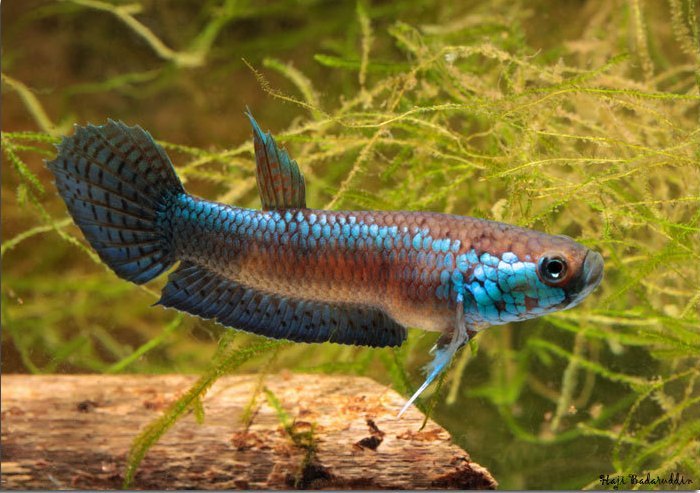
Betta unimaculata
Popta, 1905
Max length115mm SL5in SLTank80 × 30cm31 × 12inTemp21–26°C70–79°FpH5.0–7.5This species is included in the Betta unimaculata complex of closely-related species within the genus, of which members share the following set of characters: body long and slender with depth at dorsal fin origin 18-25 % SL; head large and blunt with width 19-24 % SL; long maxilla and lower lip with distance from tip of lower jaw to posterior end of maxilla 27-54 % HL; caudal-fin rounded in shape, occasionally with elongated median rays; pelvic-fin short and filamentous; dorsal and anal fins relatively pointed.
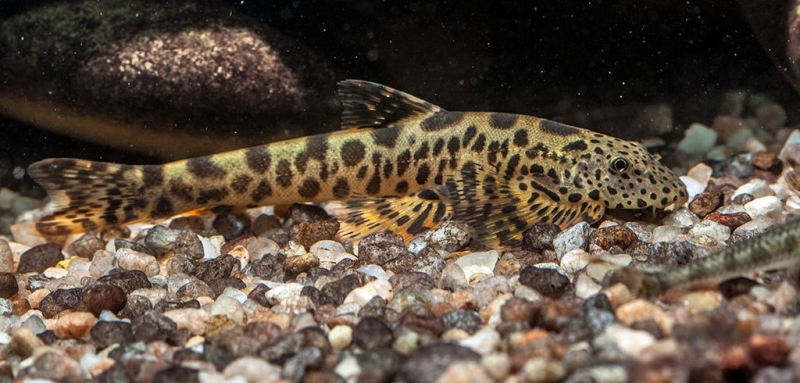
Bhavania australis
Jerdon, 1849
Max length100mm SL3.9in SLTank120 × 30cm48 × 12inTemp16–24°C61–75°FpH6.0–7.5An obligate dweller of shallow, fast-flowing, highly-oxygenated headwaters and minor tributaries characterised by stretches of riffles and runs broken up by pools or cascades in some cases. Substrates are normally composed of smaller rocks, sand and gravel with jumbles of boulders, and whil...
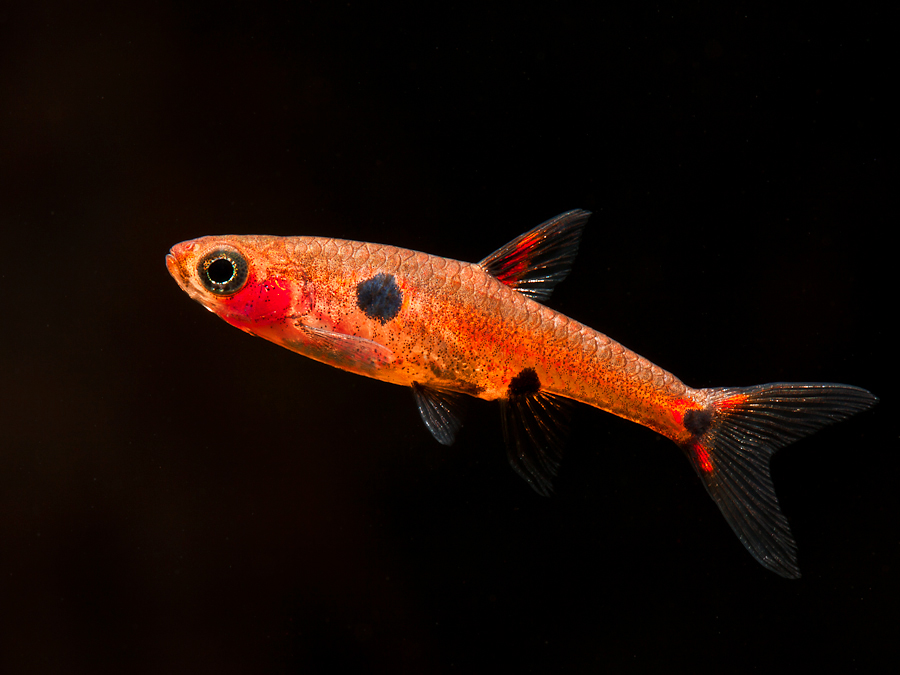
Boraras maculatusDwarf Rasbora
Duncker, 1904
Max length25mm SL1.0in SLTank45 × 30cm18 × 12inTemp20–28°C68–82°FpH4.0–6.5Within the genus Boraras this species is most similar to B. naevus, though in the latter the red body colouration does not extend into the head. The two also differ in the following characters: anteriormost lateral blotch of comparable size in both sexes in B. maculatus vs. significantly larger in male than female B. naevus; 9-10 + 9 principal caudal-fin rays vs. 9 + 8; 26-29 lateral scales vs. 24-26; i.6.i. pelvic-fin rays vs. i.5.i.
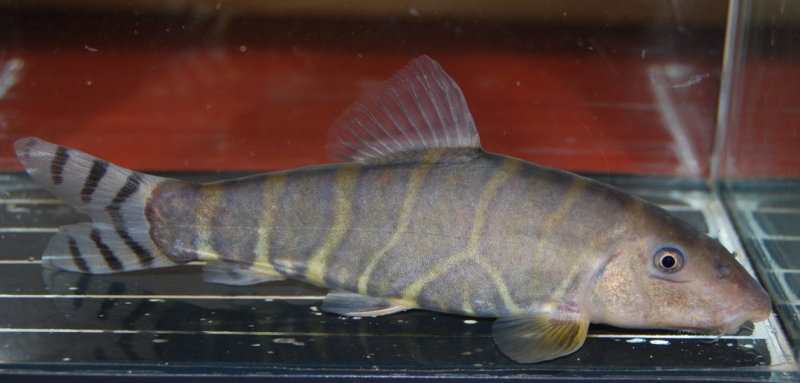
Botia darioBengal Loach
Hamilton, 1822
Max length130mm SL5in SLTank120 × 45cm48 × 18inTemp23–26°C73–79°FpH6.0–7.5Following Grant (2007) this species is included in the B. dario complex of closely-related species within the genus alongside B. striata. They're characterised by body patterning consisting of a base yellow to golden colour with 7-9 blue, green, grey or black body bars usually with thinner, lighter bars between. In some individuals the...
Botia rostrata
Günther, 1868
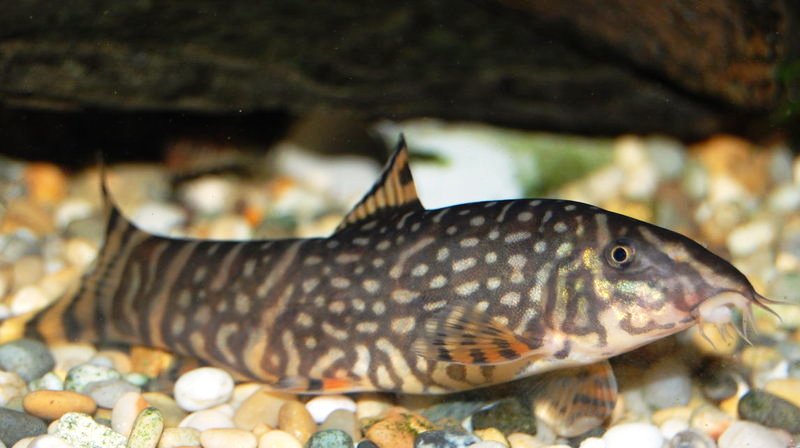
Max length120mm SL5in SLTank120 × 45cm48 × 18inTemp19–27°C66–81°FpH6.0–7.5Within the nominal species grouping suggested by Grant (2007) almost all B. rostrata sold in the hobby are B. sp. 'upper Brahmaputra' with B. rostrata sensu stricto rarely, if ever, available. Trade names include 'Gangetic loach', 'twin-banded loach' and 'ladder loach'. The defining characters of the group are "Pattern consisiting of 8-10 black to dark brown body bars that exhibit pale and numerous spots in juveniles, and in adults the bars can anast...
Boulengerella cuvieri
Spix & Agassiz, 1829
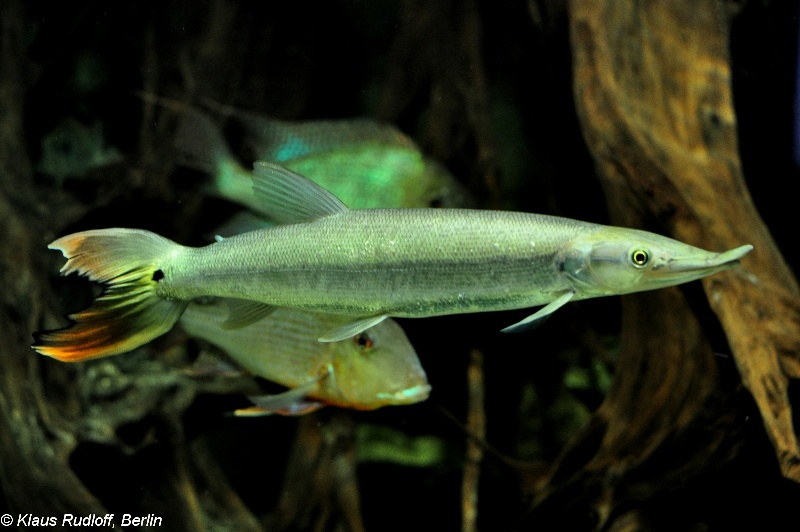
Max length800mm SL31in SLTanknot recordedTemp22–28°C72–82°FpH5.0–7.5It's known by various vernacular names including 'Pirá-pacu', 'Pira-pucu' or 'Diente de cao' (central Amazon), 'Bicuda' or 'Uena' (rio Tocantins), 'Bicuda' (rio Tapajós), 'Aguejeta' or 'Picua' (Venezuela), and 'Moruwi' or 'Pirapoko' (Guyana). The entire dorsal-fin base is located anteriorly to a vertical through the anal-fin origin and this character distinguishes it from all other ctenolucids except B. lucius and B. xyrekes.
Brachydanio roseaRosy 'Danio'
Fang & Kottelat, 2000
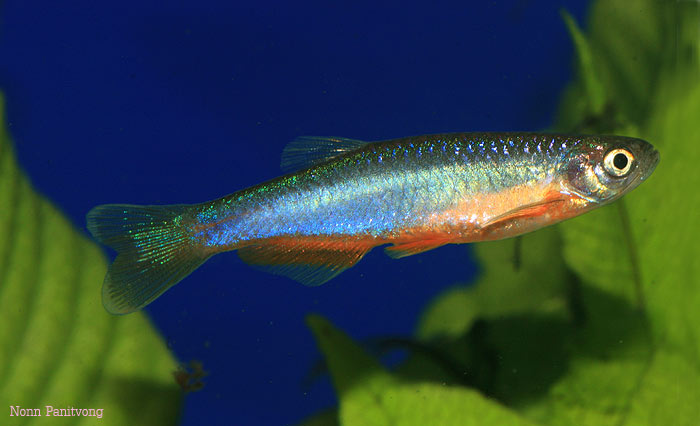
Max length55mm SL2.2in SLTank90 × 30cm36 × 12inTemp18–25°C64–77°FpH6.0–7.5B. rosea is a relatively recent addition to the aquarium trade but has proved very popular since it's colourful, hardy and usually quite cheap making it ideal for beginners. It's sometimes sold as 'purple passion danio'. It's very similar to B. albolineata sensu stricto but differs in several characters, notably the relatively slimmer body, shorter rostral barbels and lack of...
Brachyplatystoma juruenseGold Zebra Catfish
Boulenger, 1898
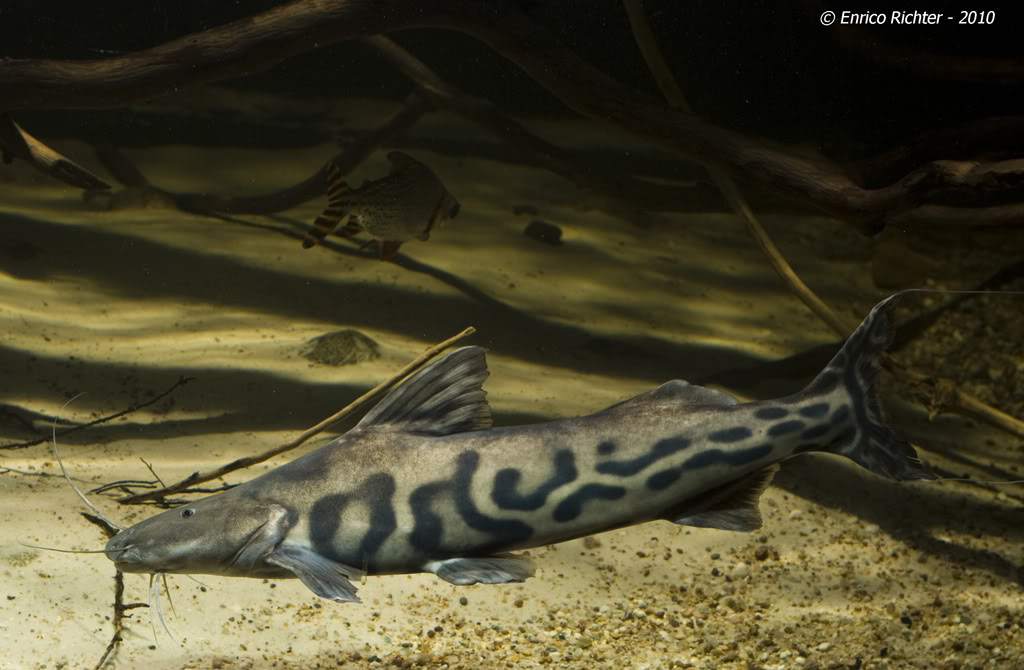
Max length600mm SL24in SLTanknot recordedTemp22–27°C72–81°FpH6.0–7.5Brachyplatystoma spp. are distinguished from all other catfishes by two synapomorphies. The first comprises several morphological characters relating to the skull, specifically that the mandibular suspensorium (that which connects the lower jaw bone to the skull) is greatly expanded mediodorsally to form a large plate approaching the parasphenoid bone, with the hyomandibula and metapterygoid similarly enlarged.
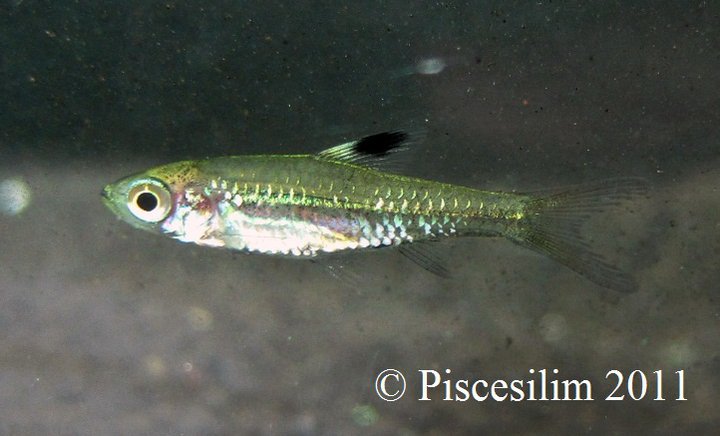
Brevibora cheeya
Liao & Tan, 2011
Max length55mm SL2.2in SLTank80 × 30cm31 × 12inTemp20–25°C68–77°FpH4.0–7.0This species is very rare in the trade and is normally imported only as bycatch among shipments of other fishes. It can be told apart from its well-known congener B. dorsiocellata by a combination of characters as follows: lateral line complete (25-30 pored scales vs. 4-9); more scales in the lateral row (29-32 vs. 25-27); larger adult siz...
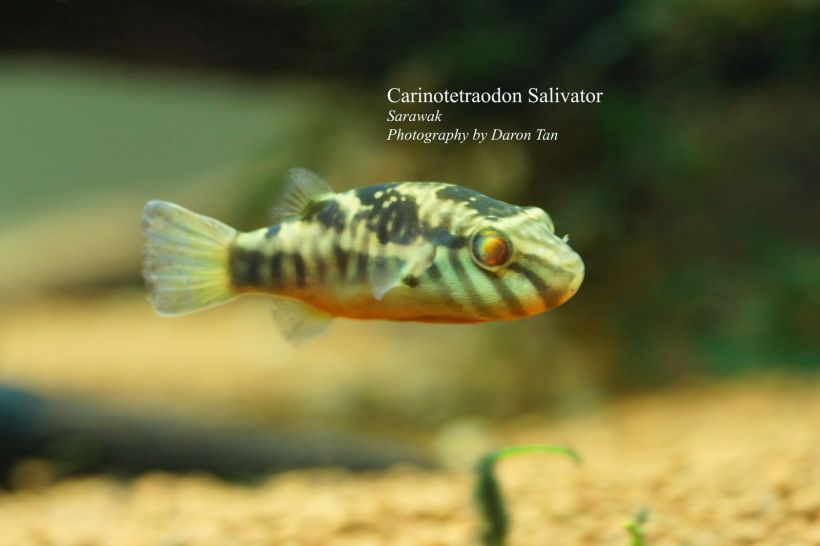
Carinotetraodon salivator
Lim & Kottelat, 1995
Max length50mm SL2.0in SLTank60 × 30cm24 × 12inTemp20–28°C68–82°FpH5.0–7.5It is included in a group often referred to as 'red-eyed puffers', which currently contains four recognised species distributed in Indochina and the Greater Sunda Islands. It can be distinguished from C. borneensis, C. irrubesco, and C. lorteti, the remaining members of this group, by the following combination of characters: 11 dorsal-fin rays; 16 pectoral-fin rays; 11-13 anal-fin rays; 11 caudal-fin rays; eyes not bulging above the head; in males dorsal-fin hyaline, black spot on dorsal-fin base present, pectoral-fin base hyaline, anal-fin hyaline with no black spot at base...
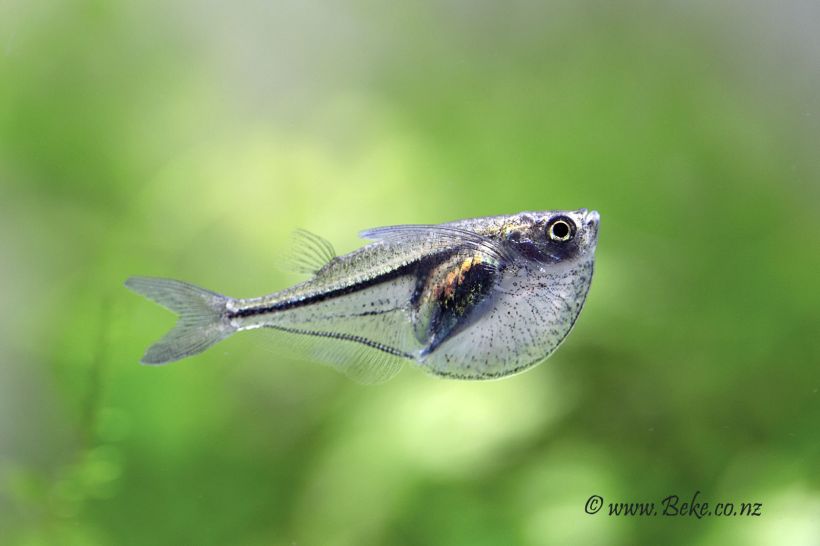
Carnegiella myersiPygmy Hatchetfish
Fernandez-Yepes, 1950
Max length25mm SL1.0in SLTank50 × 30cm20 × 12inTemp23–26°C73–79°FpH4.0–7.0The smallest and most delicate of the nominal hatchetfishes. The rounded keel is shallower than related species, giving this fish a distinctive elongate profile. The family Gasteropelecidae is separated from other Characiformes by the following combination of characters: front...
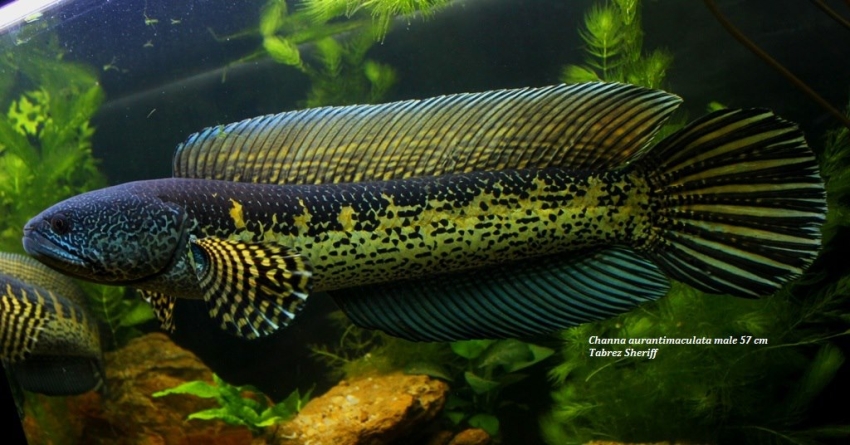
Channa aurantimaculataOrange-spotted Snakehead
Musikasinthorn, 2000
Max length400mm SL16in SLTank150 × 60cm60 × 24inTemp10–28°C50–82°FpH6.0–8.0This species is also traded as 'golden cobra snakehead' and is available in the aquarium trade on a regular basis. It can be distinguished from other Channa species by the following combination of characters: 51-54 lateral line scales; 45-47 dorsal-fin rays; 28-30 anal-fin rays; 8-12 cheek scales; 50-52 total verte...