Results for “description”
Type a name: scientific, common, or one a species used to go by. Or narrow the catalogue with the filters.
Filters
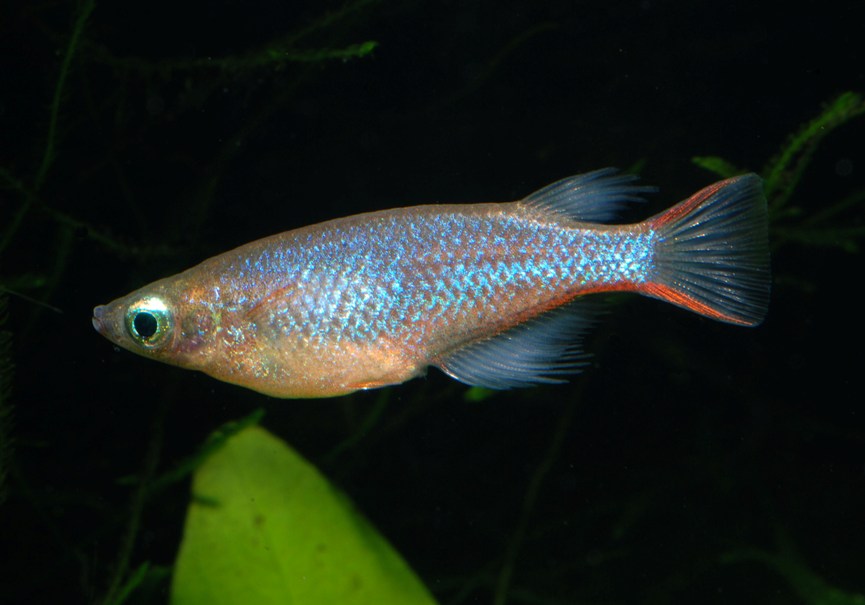
Oryzias wolasiWolasi Ricefish
Parenti, Hadiaty, Lumbantobing & Herder, 2013
Max length35mm SL1.4in SLTank45 × 30cm18 × 12inTemp23–27°C73–81°FpH7.0–8.0This species was discovered in 2009 and as far as we know it has only been collected for the aquarium hobby on a single occasion to date, by Jeffrey Christian of Maju Aquarium, Frank Evers and Hans-Georg Evers. Prior to description it was referred to as O. sp. 'Kendari', O. sp. 'neon' or O. sp. 'Sulawesi'.
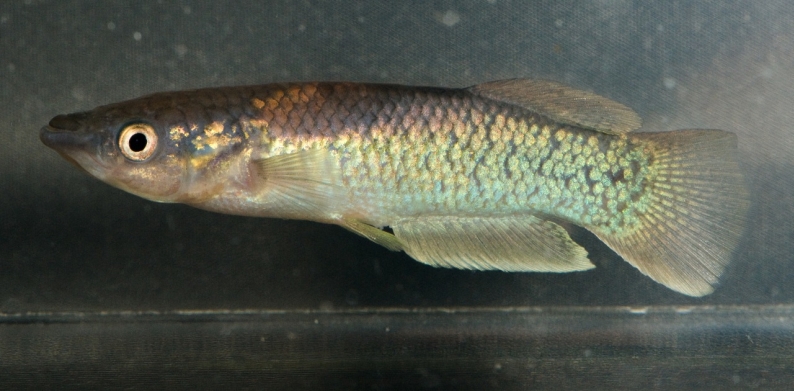
Pachypanchax arnoulti
Loiselle, 2006
Max length80mm SL3.1in SLTank90 × 30cm36 × 12inTemp20–28°C68–82°FpH6.0–7.5P. arnoulti has been in the aquarium hobby for many years but was identified as the congener P. omalonotus prior to its description. It appears in the majority of older aquarium literature under that name and as a result a degree of hybridisation has undoubtedly occurred.
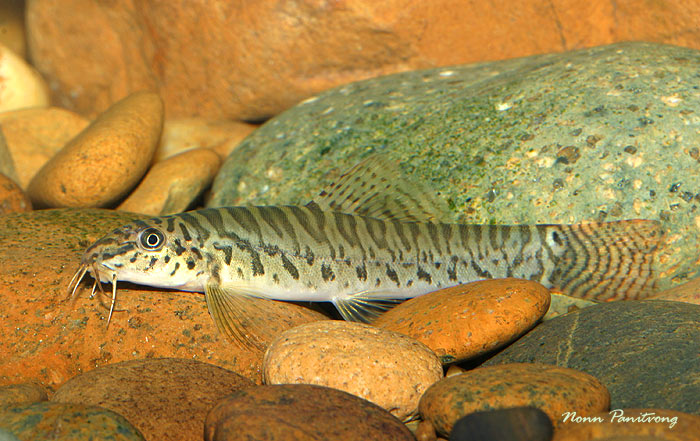
Paracanthocobitis pictilisCherry-fin Loach
Kottelat, 2012
Max length91mm SL3.6in SLTank90 × 30cm36 × 12inTemp21–26°C70–79°FpH6.5–7.5Prior to description this species was considered to represent, and traded as, A. rubidipinnis, but that species is apparently endemic to the lower Irrawaddy basin in Myanmar and unknown in the aquarium hobby. Male individuals of A. pictilis, A. botia and A. mandalaysensis possess a suborbital slit rather than suborbital flap which immediately distinguishes...
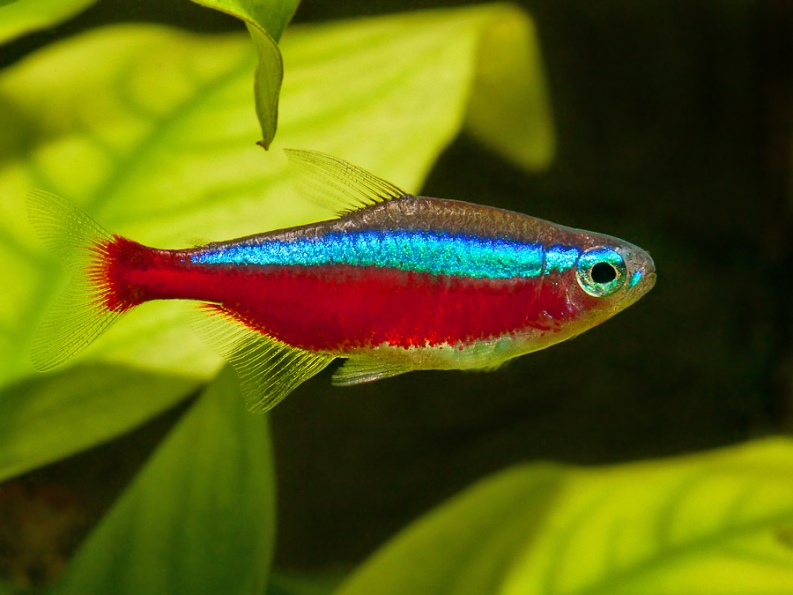
Paracheirodon axelrodiCardinal Tetra
Schultz, 1956
Max length35mm SL1.4in SLTank60 × 30cm24 × 12inTemp23–29°C73–84°FpH3.5–7.5It was initially going to be described as Hyphessobrycon cardinalis by Myers and Weitzman (1956) but just before this was due to be published Schultz presented an alternative description in the hobbyist magazine 'Tropical Fish Hobbyist' and named the fish after the publication's founder, Dr. Herbert R. Axelrod. A significant proportion of the fish available in the aquarium trade are still wild caught or derive from community-led breeding projects such as Project Piaba in the middle Negro region, where this sp...
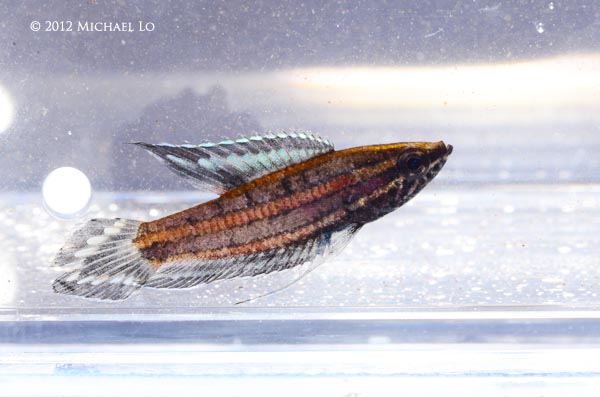
Parosphromenus deissneriDeissner's Liquorice Gourami
Bleeker, 1859
Max length40mm SL1.6in SLTank40 × 20cm16 × 8inTemp22–28°C72–82°FpH3.0–6.5P. deissneri was the only recognised member of the genus for almost a century following its description in 1859. As a result its name has and continues to be widely misapplied in both aquarium and ichthyological literature although it's probably always been very rare in the hobby, while a number of fishes previously identified under the name from other pa...
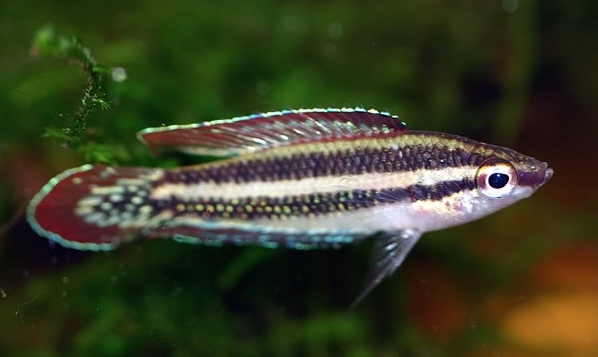
Parosphromenus quindecim
Kottelat & Ng, 2005
Max length40mm SL1.6in SLTank45 × 30cm18 × 12inTemp22–28°C72–82°FpH3.0–6.5This species has occasionally been traded on a commercial basis and was known as P. sp. 'Manis Mata' prior to description, with the latter apparently referring to a location some 100 km away from the type locality where the fish do not occur. It's said to be slightly easier to maintain than the majority of congeners and is therefore a recommended choice for those ne...
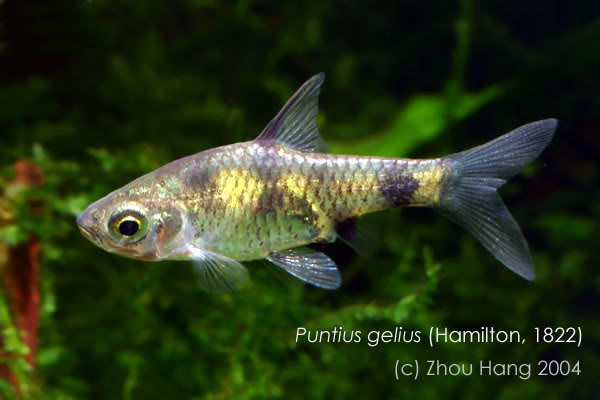
Pethia aurea
Knight, 2013
Max length25mm SL1.0in SLTank45 × 30cm18 × 12inTemp18–24°C64–75°FpH6.0–7.0This species was considered to be a phenotype of the similar-looking P. gelius prior to its description. Following Knight (2013) it is included a group of closely-related species alongside P. gelius and P. canius, the trio being distinguished from other members of the genus Pethia by the following combination of characters: lateral line incomplete with 3-4 por...
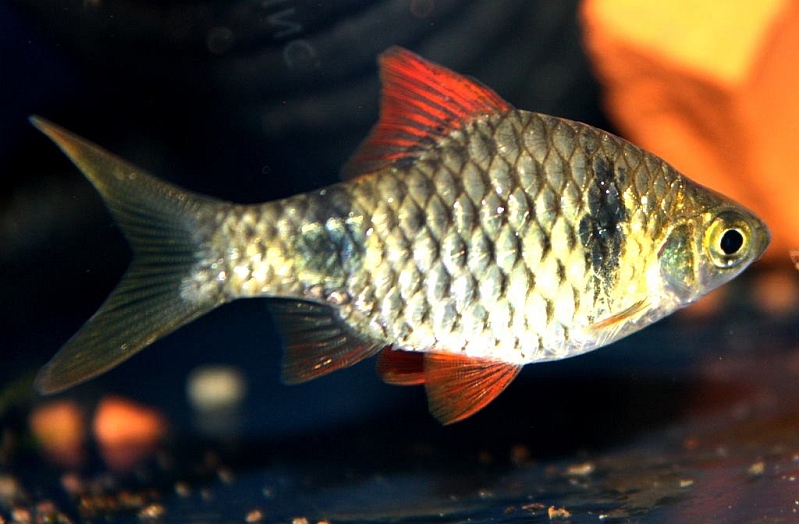
Pethia reval
Meegaskumbura, Silva, Maduwage & Pethiyagoda, 2008
Max length34mm SL1.3in SLTank75 × 30cm30 × 12inTemp18–26°C64–79°FpH6.0–7.5This species was considered a colour form of the related Pethia cumingii prior to its description. It can be told apart from P. cumingii by the following combination of characters: maximum standard length 33.6 mm (vs. 41.2 mm); smaller eye diameter (9.8-10.5, vs. 10.8-12.1 % SL); 11+13 (vs. 11+15) vertebrae; cleithrum with a single spine (vs. smooth); proximal arm of fifth ceratobranchial with an oval...
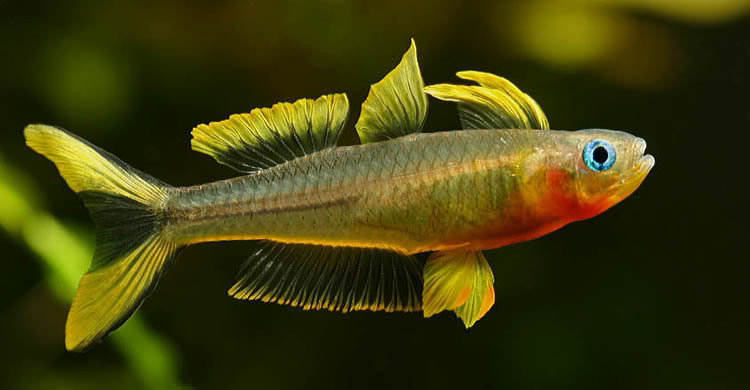
Pseudomugil furcatusForktail Blue-eye
Nichols, 1955
Max length60mm SL2.4in SLTank60 × 30cm24 × 12inTemp24–28°C75–82°FpH7.0–8.0This species is also traded as 'forktail rainbowfish' or 'yellow forktail', and it's also undergone several changes in scientific name since description. Pseudomugil furcatus is the original designation, but Allen (1980) created the genus Popondetta for it on the basis of morphological characters including number of anal-fin rays (16-20 in P. furcatus, 8-12 in other Pseudomugil spp.), absence of anterior...
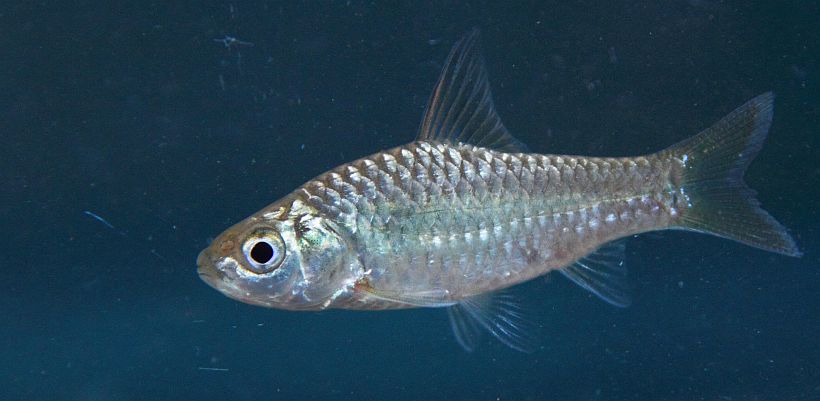
Puntius kamalikaKami's Barb
Silva, Maduwage & Pethiyagoda, 2008
Max length75mm SL3.0in SLTank120 × 30cm48 × 12inTemp20–27°C68–81°FpHnot recordedPrior to its description P. kamalika was referred to as P. amphibius, a putatively valid species probably restricted to western India. It differs from all congeners in the following combination of characters: 4½/1/2½ scales in a transverse line between the mid-dorsal...
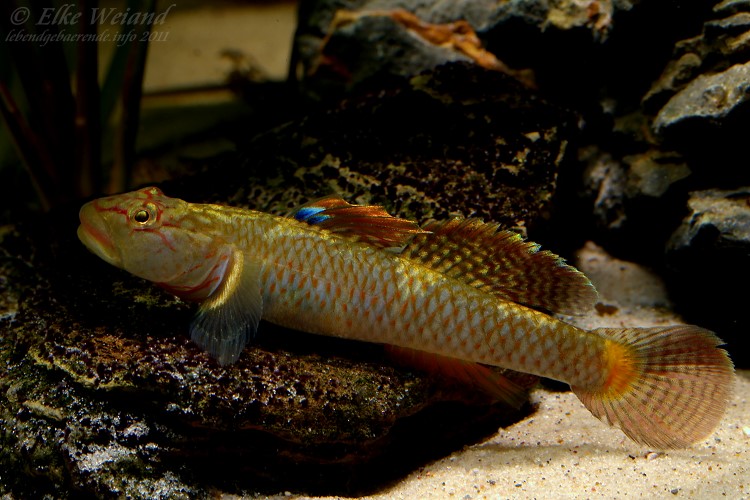
Rhinogobius leavelli
Herre, 1935
Max length60mm SL2.4in SLTank60 × 30cm24 × 12inTemp20–28°C68–82°FpH6.0–8.0This species appears to exist in a number of different forms which exhibit differences in colour pattern, morphology, or both, and it's currently unclear whether all of them are truly conspecific or not although those in the aquarium trade all appear similar to one another. We've been unable to obtain a copy of the original description so it's not currently possible to provide a detailed diagnosis either, with most recent studi...
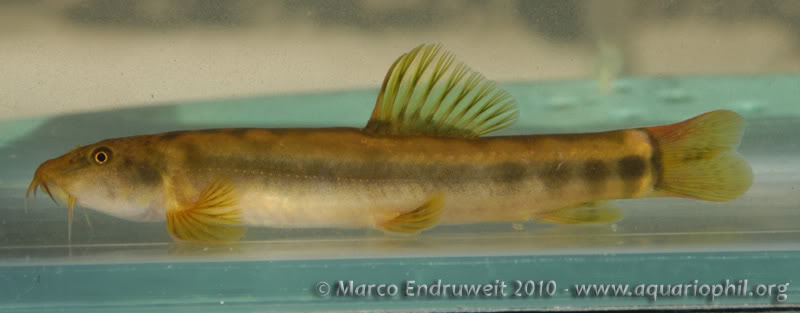
Schistura laterivittata
Zhu & Wang, 1985
Max length80mm SL3.1in SLTank120 × 30cm48 × 12inTemp10–22°C50–72°FpH7.0–9.0It's been considered a synonym of Schistura caudofurca (Mai, 1978) by the majority of recent authors following Kottelat (2001) but this appears to be a case of misidentification since the two species exhibit several notable differences based on their respective descriptions (Endruweit, 2010).
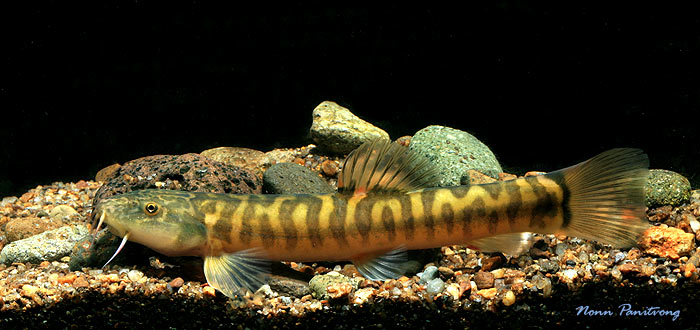
Schistura schultzi
Smith, 1945
Max length93mm SL3.7in SLTank120 × 30cm48 × 12inTemp16–24°C61–75°FpH6.0–8.0There appears to be some discrepancy between Smith's original description and Kottelat (1990) in that Smith states the fish is a member of a group of species lacking an ocellus at the upper caudal-fin base, whereas Kottelat mentions the presence of 'a black spot at upper extremity of caudal-fin base, surrounded by a whitish area'.
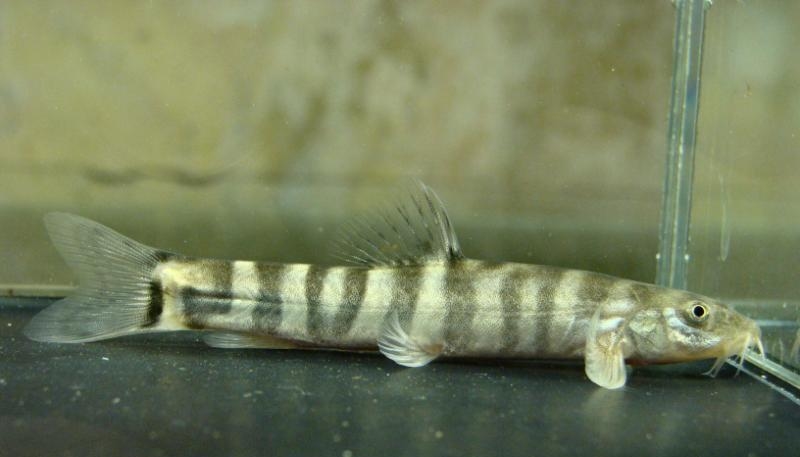
Schistura sp. 3
authority not recorded
Max length50mm SL2.0in SLTank80 × 30cm31 × 12inTemp20–26°C68–79°FpH6.0–7.5The identity of this fish is unclear but it has been traded as Schistura scaturigina M'Clelland, 1839 but does not appear to be that species based on its original description plus Vishwanath and Laisram (2001). The latter describe S. scaturigina as possessing a yellowish-white body with 12 transverse, triangu...
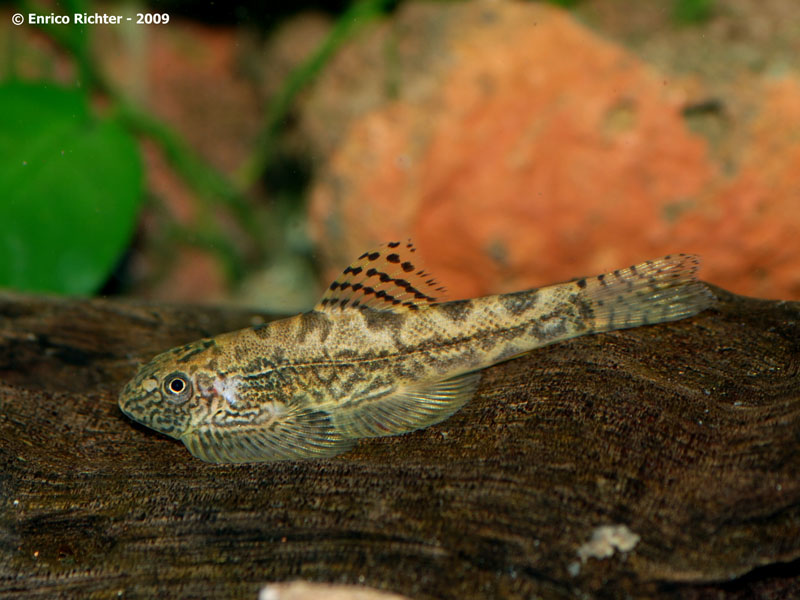
Sewellia sp. 'SEW02'
authority not recorded
Max length65mm SL2.6in SLTank75 × 30cm30 × 12inTemp18–24°C64–75°FpH6.0–7.5This species first became available in early 2009 and was initially identified as S. breviventralis (Freyhof and Serov, 2000) because there is a clear space between the pelvic and anal fins and body patterning is vaguely similar to that species, and also appears quite similar to S. elongata (Roberts, 1998) and S. sp. 'SEW03'. It does not fully match the original descriptions of either, however, and therefore remains in need of identification.
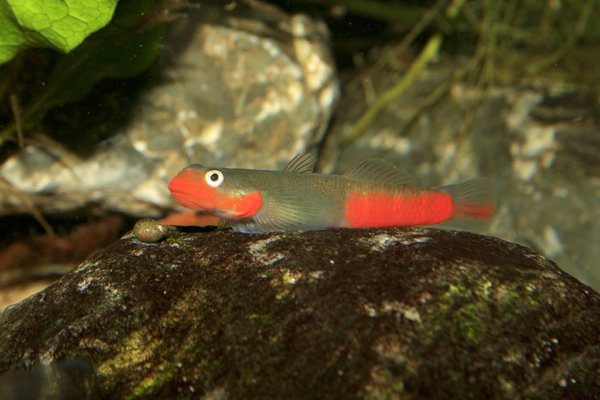
Sicyopus exallisquamulus
Watson & Kottelat, 2006
Max length52mm SL2.0in SLTank60 × 30cm24 × 12inTemp22–28°C72–82°FpH6.5–7.5Live colouration of this species was not included in the original description but the specimens in our images were identified by Dr. Ronald E. Watson, the principal author, as S. exallisquamulus. It's normally misidentified and traded as the Sri Lankan endemic species Sicyopus jonklaasi. It is diagnosable from congeners by the following combination of characters: 14-15 pectoral-fin rays; both genders exhibit small, widely-spaced scales...
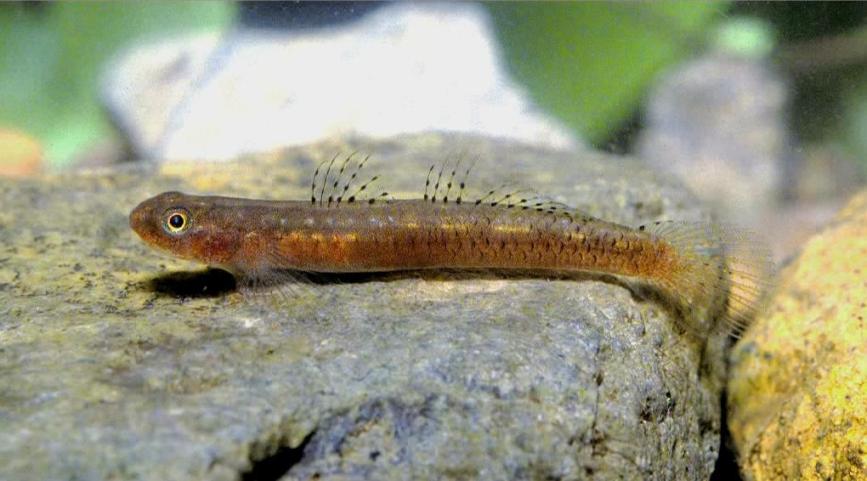
Stiphodon birdsong
Watson, 1996
Max length23mm SL0.9in SLTank60 × 30cm24 × 12inTemp22–28°C72–82°FpH6.5–7.5This species probably hasn't been seen in the trade yet but should make an interesting aquarium fish if it ever becomes available. Within the genus it's most similar to S. surrufus and S. mele from which it differs only in terms of meristics. In description it's distinguished from the former only by possession of more teeth in the upper jaw although images of live specimens depict S. surrufus as a more intensely-coloured, reddish fi...