Results for “ex gr.”
Type a name: scientific, common, or one a species used to go by. Or narrow the catalogue with the filters.
Filters
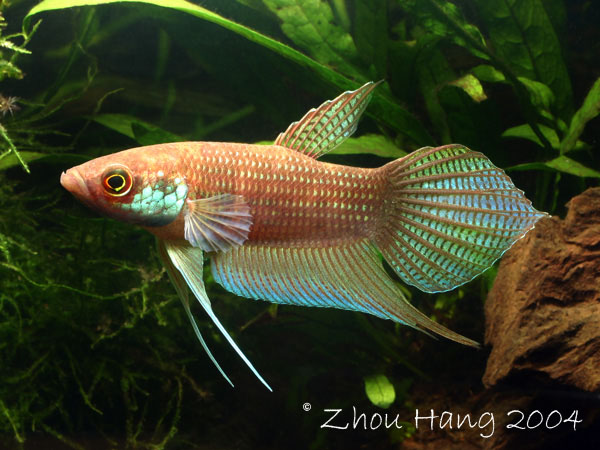
Betta raja
Tan & Ng, 2005
Max length70mm SL2.8in SLTank80 × 30cm31 × 12inTemp22–27°C72–81°FpH4.0–7.0It should be noted that not all authors consider the B. pugnax group to contain the same species, with some placed in the B. picta complex by Schindler and Schmidt (2006), for example. B. raja can be told apart from other members of the B. pugnax group by the following characters: mature males with very long pelvic fins covering 15-23 anal-fin rays or even longer than the base of the anal-fin in some cases; anal-fin and lower caudal-fin with black marginal bands; 25-28 anal-fin rays; 30-32 lat...
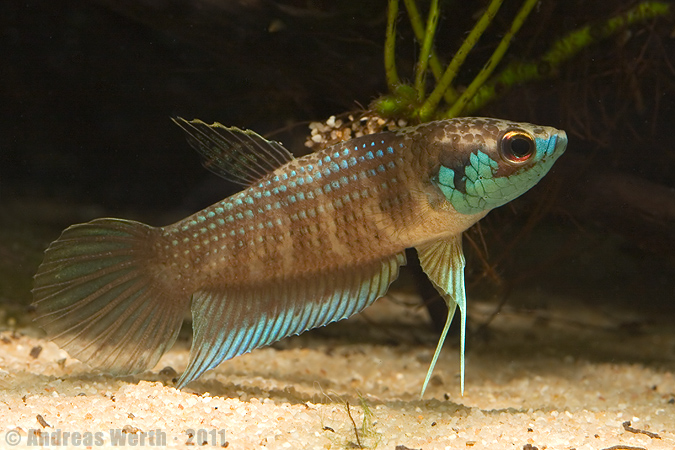
Betta kuehnei
Schindler & Schmidt, 2008
Max length60mm SL2.4in SLTank60 × 30cm24 × 12inTemp21–25°C70–77°FpH6.0–7.5It can be told apart from other members of the B. pugnax group by the following characters: caudal fin rounded in both males and females; chin bar and second postorbital stripe absent; adult males possess intensive blue or bluish-green iridescent (blackish in preservation) colouration on the sides of the head and throat extending from the snout tip to posterior edge of opercle; possession of two central body stripes, the upper extending from the pec...
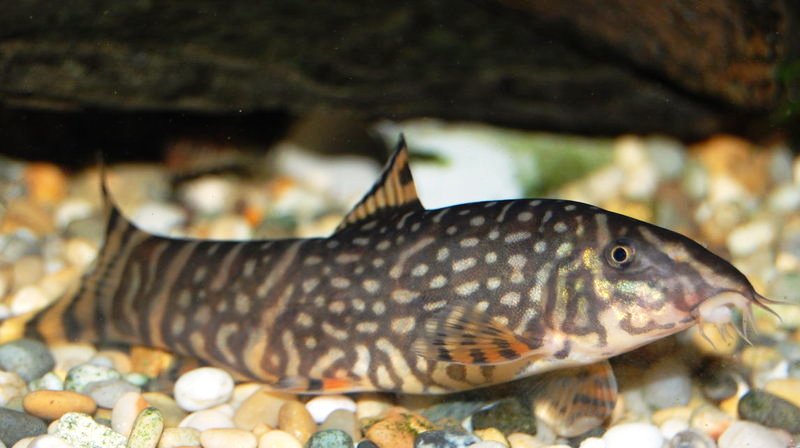
Botia rostrata
Günther, 1868
Max length120mm SL5in SLTank120 × 45cm48 × 18inTemp19–27°C66–81°FpH6.0–7.5Within the nominal species grouping suggested by Grant (2007) almost all B. rostrata sold in the hobby are B. sp. 'upper Brahmaputra' with B. rostrata sensu stricto rarely, if ever, available. Trade names include 'Gangetic loach', 'twin-banded loach' and 'ladder loach'. The defining characters of the group are "Pattern consisiting of 8-10 black to dark brown body bars that exhibit pale and numerous spots in juveniles, and in adults the bars can anast...
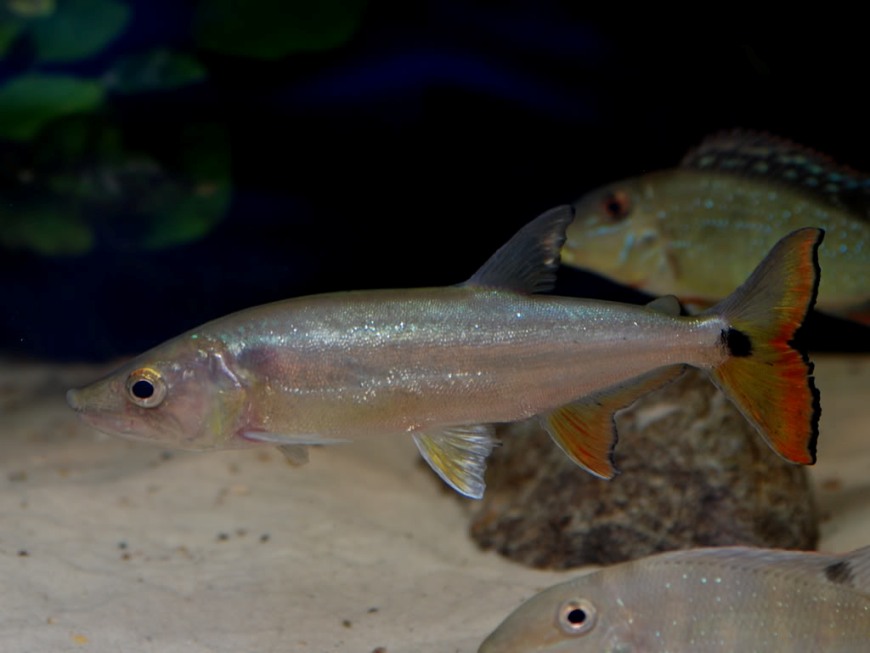
Acestrorhynchus altusRed Barracuda Tetra
Menezes, 1969
Max length233mm SL9in SLTank250 × 90cm98 × 36inTemp22–28°C72–82°FpH6.0–7.5This species is not normally aggressive towards conspecifics with juveniles in particular exhibiting a marked schooling instinct. Older individuals tend to be more solitary but still group together from time-to-time, and it's best maintained in numbers of four or more. One important point to note is that acestrorhynchids are can...
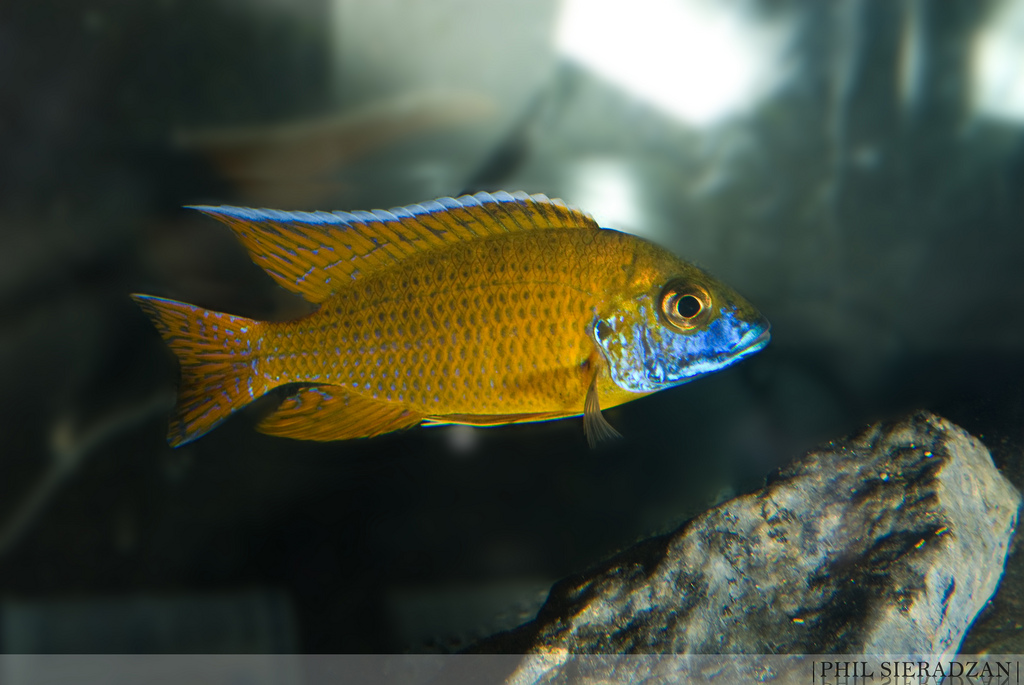
Aulonocara baenschiNew Yellow Regal Peacock
Meyer & Riehl, 1985
Max length♂ 120 · ♀ 90mm SL♂ 5 · ♀ 3.5in SLTank120 × 45cm48 × 18inTemp25–29°C77–84°FpH7.5–9.0This species may also be sold variously as 'yellow regal cichlid', 'Baensch's peacock', 'sunshine peacock' and 'Nkhomo-Benga peacock'. The easiest way to distinguish it from similar-looking congeners is to look at the profile of the snout, which is steeper and more curved than that of its congeners. Aulonocara spp. are benthophagous by nature employing a method of feeding whereby mouthfuls of substrate are taken and sifted for edible items with the remaining material expelled via the gills and mouth. They're equally-skilled at hunting as grazing, tending to hover above the substrate until tiny movements are detected, and possess enlarged sensory pores on the head which assist in this technique.
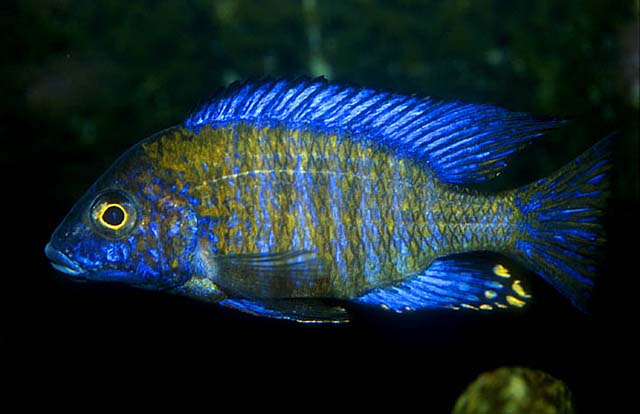
Aulonocara ethelwynnaeNorthern Aulonocara
Meyer, Riehl & Zetzsche, 1987
Max length110mm SL4in SLTank90 × 45cm36 × 18inTemp22–26°C72–79°FpH7.4–9.0Endemic to Lake Malawi where it was described from and only occurs around 'Chitendi Island', now normally referred to as Chitande island plus a short stretch of coastline between Ngara and Chilumba along the lake's northwestern shoreline. Aulonocara spp. are benthophagous by nature employing a method of feeding whereby mouthfuls of substrate are taken and sifted for edible items with the remaining material expelled via the gills and mouth. They're equally-skilled at hunting as grazing, tending to hover above the substrate until tiny movements are detected, and possess enlarged sensory pores on the head which assist in this technique.
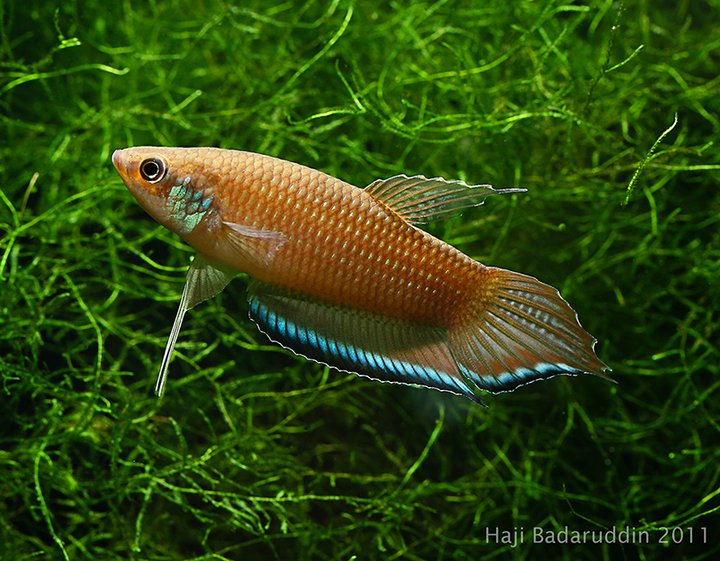
Betta enisae
Kottelat, 1995
Max length60mm SL2.4in SLTank45 × 30cm18 × 12inTemp21–24°C70–75°FpH5.5–7.0This species is included in the B. pugnax complex of closely-related species within the genus, an assemblage of which members are notoriously difficult to tell apart from one another, but which can be characterised collectively by the following set of shared characters: relatively large head measuring 28-40% SL; live colouration usually brown with green or blue iridescent spots; male with similarly-coloured scales on opercle, sometimes extending to abdomen; juveniles and females usually brown with two central body stripes and a dark marking on the caudal peduncle; anal-fin in mature specimens pointed and often elongated; caudal-fin lanceolate.
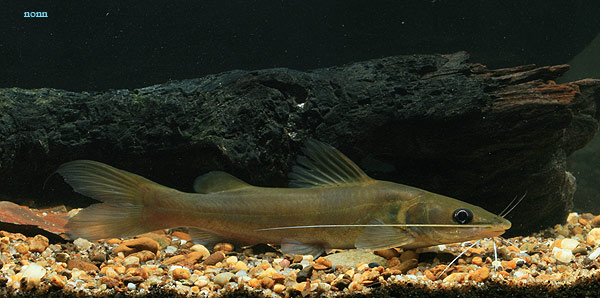
Hemibagrus spilopterus
Ng & Rainboth, 1999
Max length500mm SL20in SLTanknot recordedTemp20–27°C68–81°FpH6.0–8.0This species is relatively common in the aquarium trade but has been widely misidentified as the congener H. nemurus which is native to Java and may never have been exported for ornamental purposes. Hemibagrus has been divided into a number of putative species groups which may or may not rep...
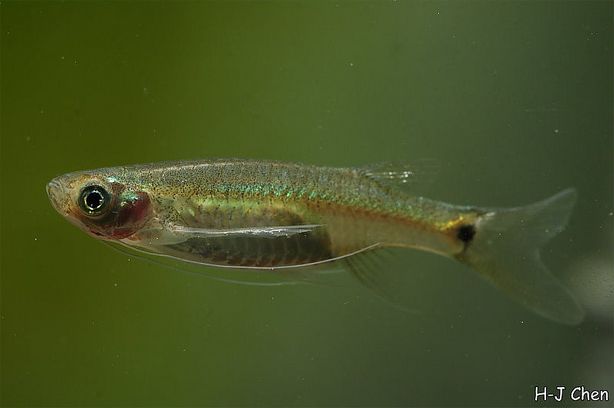
Esomus caudiocellatus
Ahl, 1924
Max length40mm SL1.6in SLTank120 × 30cm48 × 12inTemp20–26°C68–79°FpHnot recordedE. caudiocellatus can be told apart from congeners by lacking a dark lateral stripe and possessing a prominent dark marking on the caudal peduncle. In recent years a number of phylogenetic studies involving Esomus and its near relatives have been conducted and conflicting results published. For example a 2003 study by Fang et al. concluded that the genus is the sister group, i.e., most closely-related to...
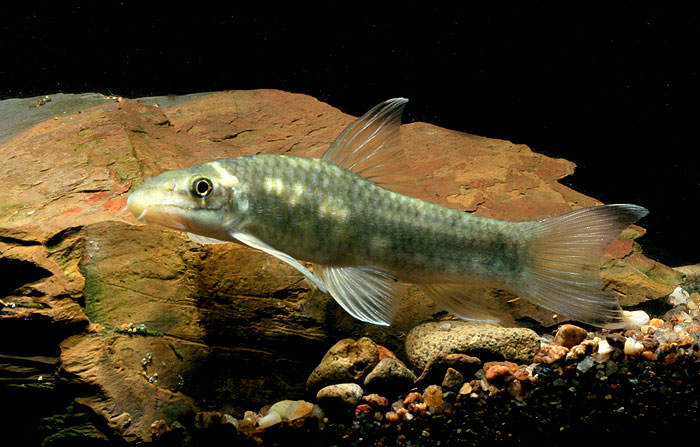
Garra rakhinica
Kullander & Fang, 2004
Max length60mm SL2.4in SLTanknot recordedTempnot recordedpHnot recordedG. rakhinica can be distinguished from other members of the genus by the following combination of characters: rostral furrow shallow and snout tip smoothly rounded; rostral lobe present, proboscis absent; scaled predorsal region, chest, and abdomen; two pairs of barbels; 28 lateral line scales; 16 circumpeduncular scale rows; colour pattern almost uniform greyish on body and caudal-fin; a dark spot immediately posterior to the upper extremity of the...
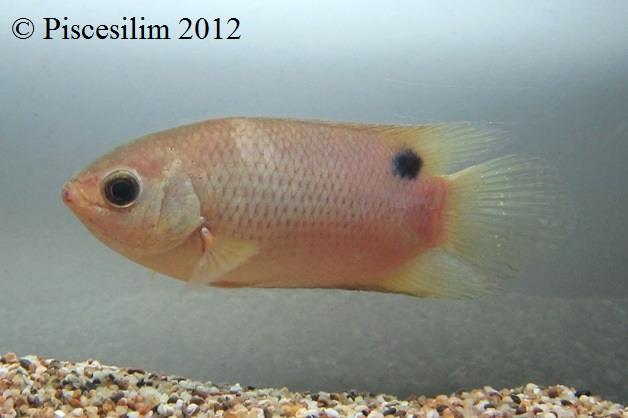
Belontia hasseltiJava Combtail
Cuvier, 1831
Max length200mm SL8in SLTank120 × 30cm48 × 12inTemp21–26°C70–79°FpH4.5–8.5This species is also referred to by the vernacular name 'Malay combtail'. In terms of external characters it differs most obviously from its only congener, B. signata by its overal brownish grey (vs. reddish) body colouration and presence of a mosaic-type patterning in the unpaired fins (vs. absence). The position of relatedness of the genus Belontia with respect to other anabantoids remains somewhat...
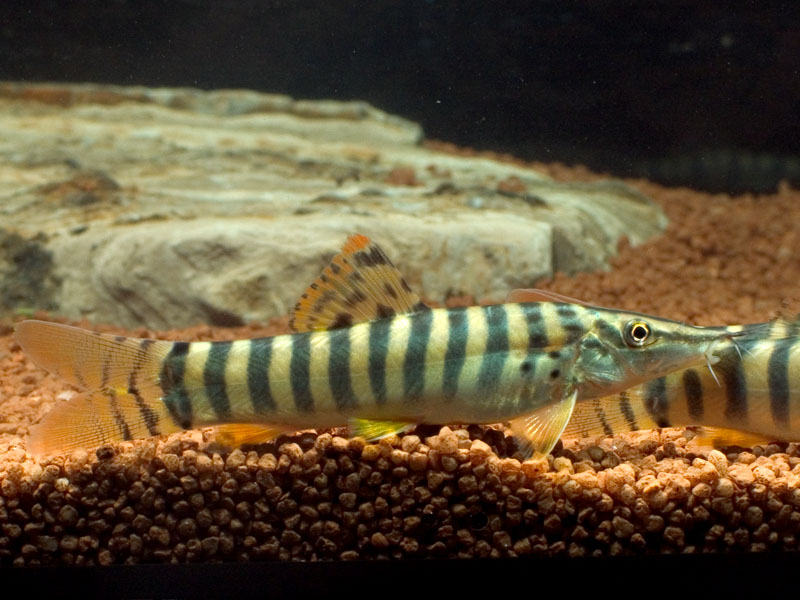
Syncrossus berdmoreiRedfin Tiger Loach
Blyth, 1860
Max length250mm SL10in SLTank180 × 45cm72 × 18inTemp21–26°C70–79°FpH6.5–7.5Interestingly some observations suggest that the character of the highest-ranked, or alpha, fish appears to affect that of the whole group though it must be said that scientific studies of botiid loach behaviour are virtually non-existent. It certainly seems that they display a degree of 'personality' with some specimens being naturally bolder/more aggressive than others. The alpha is normally the largest specimen within the group and often female. Sound also appears to be an important factor in communication since these loaches are able...
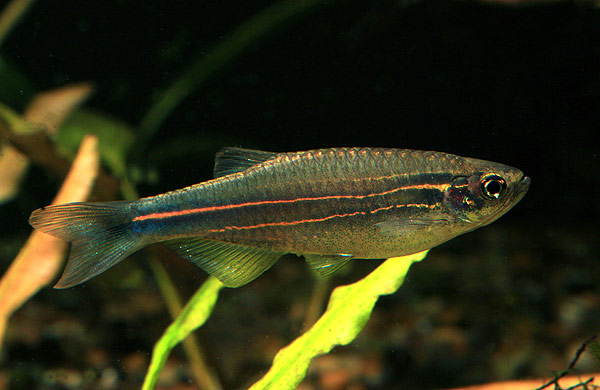
Brachydanio kerriBlue 'Danio'
Smith, 1931
Max length45mm SL1.8in SLTank80 × 30cm31 × 12inTemp18–26°C64–79°FpH6.5–7.5Can be hard to find in aquarium shops, and there has been some confusion surrounding its identity in the past. Base body colour is either powdery-blue or yellow-green (see 'Distribution') and this continues into the caudal-fin, while pinkish-yellow lateral stripes extend from opercle to caudal peduncle.
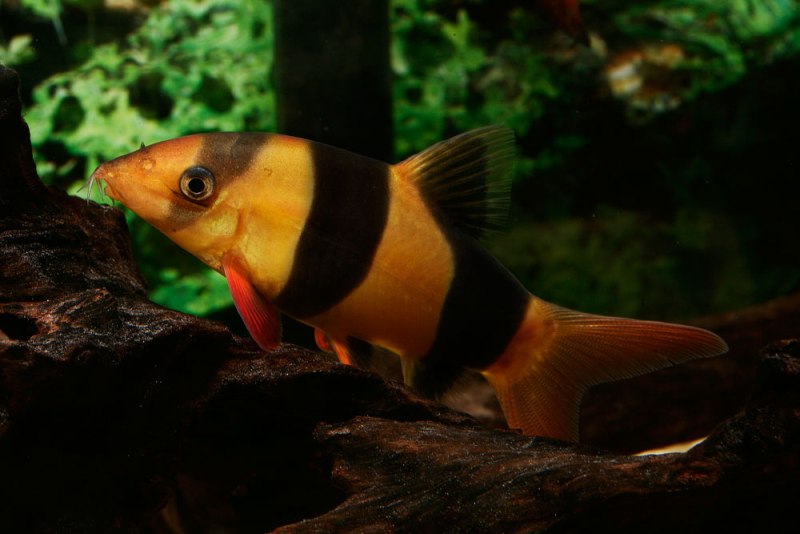
Chromobotia macracanthusClown Loach
Bleeker, 1852
Max length400mm SL16in SLTank180 × 60cm72 × 24inTemp24–30°C75–86°FpH5.0–7.0This species is arguably one of the most misunderstood in the hobby since it's wholly unsuitable for smaller aquaria despite its ubiquitous availability. Most retailers sell it without providing what should be considered essential information regarding long-term care and most specimens undoubtedly fail to reach their potential in captivity. The purchase of a group is also a considerable investment given that if properly cared for typical life span is in excess...
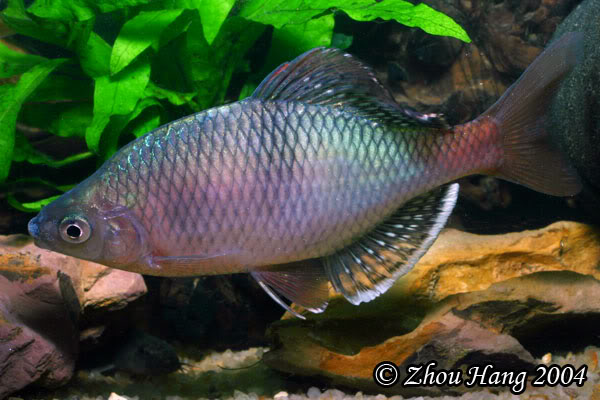
Acheilognathus macropterusGiant Chinese Bitterling
Bleeker, 1871
Max length275mm SL11in SLTank180 × 60cm72 × 24inTemp14–22°C57–72°FpH6.0–8.0A. macropterus appears in the ornamental trade on an irregular basis and should only be considered by more experienced aquarists with sufficiently large facilities. Given its wide geographical distribution there is a possibility that it represents a group of closely-related species, with genetic studies indicating the existence of several distinct clades.
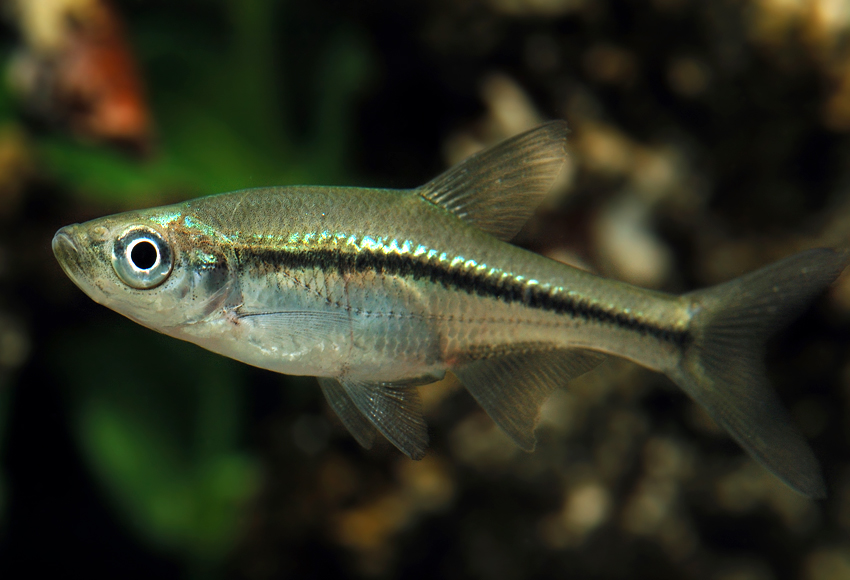
Metzia formosae
Oshima, 1920
Max length75mm SL3.0in SLTanknot recordedTempnot recordedpHnot recordedAlthough it is included in the genus Metzia this grouping remains somewhat unresolved in terms of taxonomy and it may contain more than a single genetic lineage. For example, members share a number of characters with the genera Ischikauia Jordan and Snyder 1900, Hemiculterella Warpachowski 1887, and several species of Anabarilius Cockerell 1923, including a bipartite gas bladder, a non-spinous dorsal-fin ray, and a sharp ventral keel between the pelvic-fin insertion and anus.
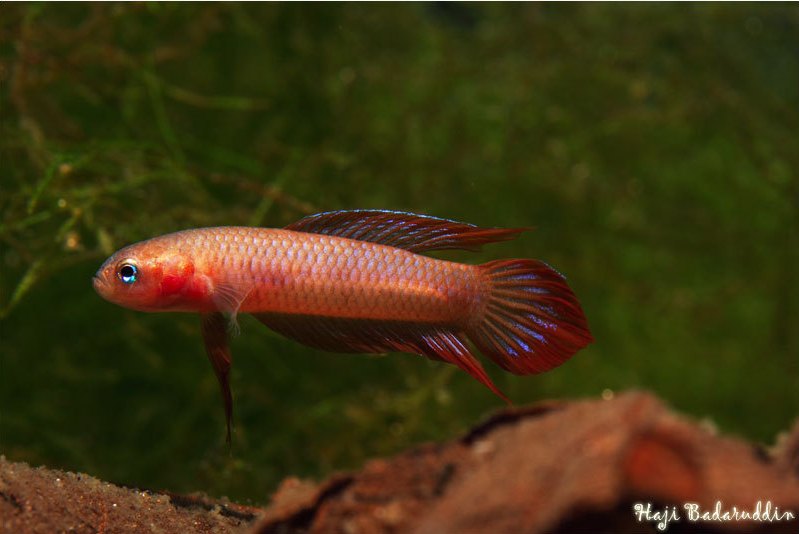
Betta burdigala
Kottelat & Ng, 1994
Max length35mm SL1.4in SLTank45 × 30cm18 × 12inTemp22–30°C72–86°FpH4.0–6.0B. burdigala is exceptionally rare in the hobby with many fishes traded or pictured as such being B. uberis or other congener. It's included in the Betta coccina group/complex of closely-related species within the genus. This assemblage mostly comprises small, red-coloured fishes with the exceptions of B. persephone and B. miniopinna which are darkish. Identifying some of the red ones correctly is not always easy as the patterning in them can be both similar and confusingly variable.
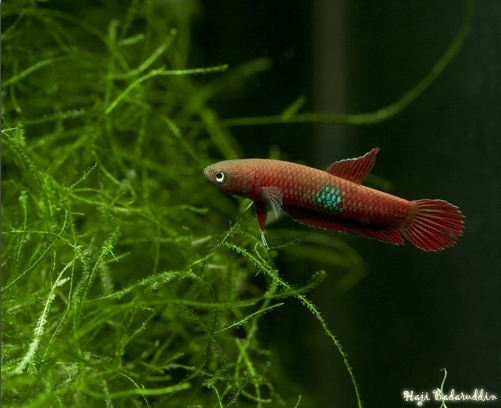
Betta brownorum
Witte & Schmidt, 1992
Max length30mm SL1.2in SLTank45 × 30cm18 × 12inTemp24–30°C75–86°FpH3.0–6.0B. brownorum is included in the Betta coccina group/complex of closely-related species within the genus. This assemblage mostly comprises small, red-coloured fishes with the exceptions of B. persephone and B. miniopinna which are darkish. Identifying some of the red ones correctly is not always easy as the patterning in them can be both similar and confusingly variable. In B. brownorum and B. livida, for example, both male and female individuals may or may not possess a green lateral blotch.
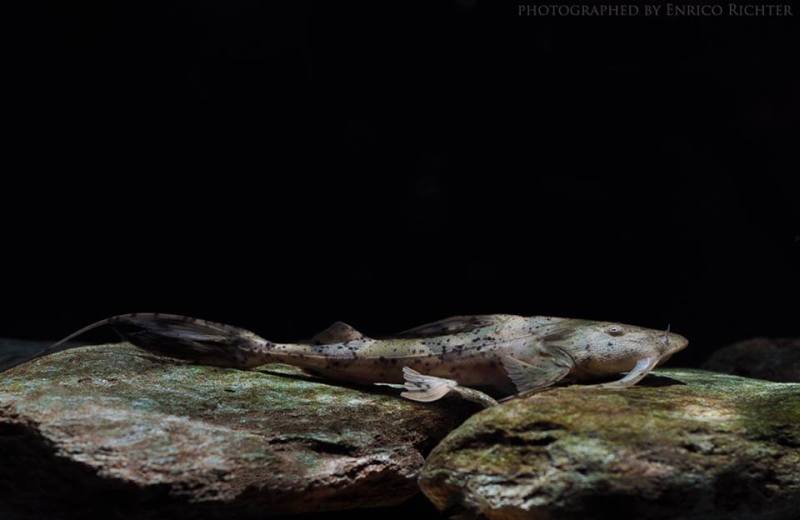
Bagarius yarrelliGoonch
Sykes, 1839
Max length2000mm SL79in SLTanknot recordedTemp16–23°C61–73°FpH6.0–7.5This species is clearly unsuitable for the home aquarium given its eventual size and natural behaviour, and we know of only a handful of private aquarists with the facilities required to house it long-term. The grouping currently contains four species but is in urgent need of review with a number of additional taxa thought to exist and B. yarrelli possibly representing a synonym of B. bagarius.
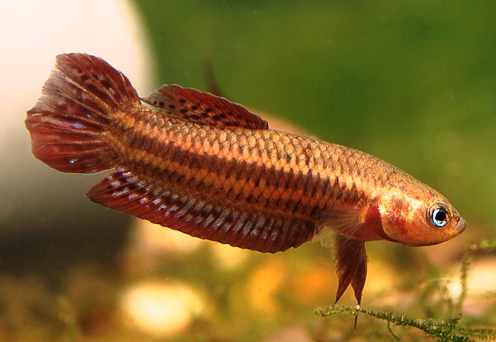
Betta livida
Ng & Kottelat, 1992
Max length36mm SL1.4in SLTank45 × 30cm18 × 12inTemp22–27°C72–81°FpH3.0–6.0This species is included in the B. coccina group/complex of closely-related species within the genus. This assemblage mostly comprises small, red-coloured fishes, with the exceptions of B. persephone and B. miniopinna which are darkish, and identifying some of them can be problematic as the patterning in them can be both similar and confusingly variable. Members possess the foll...