Results for “lateral line”
Type a name: scientific, common, or one a species used to go by. Or narrow the catalogue with the filters.
Filters
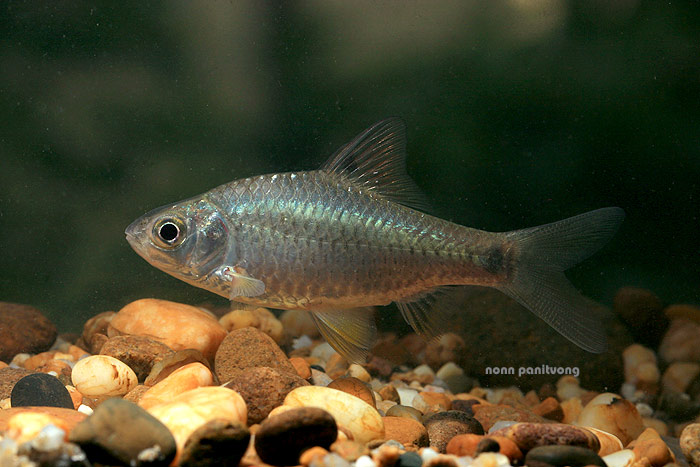
Puntius cholaSwamp Barb
Hamilton, 1822
Max length130mm SL5in SLTank120 × 45cm48 × 18inTemp18–26°C64–79°FpH5.5–8.0P. chola was retained in Puntius sensu stricto, of which members are defined by the following combination of characters: adult size usually less than 120 mm SL; maxillary barbels absent or present; rostral barbels absent; 3-4 unbranched and 8 branched dorsal-fin rays; 3 unbranched and 5 branched anal-fin rays; last unbranched dorsal-fin ray weak or strong and unserrated; lateral line complete with 22-28 pored body scales...
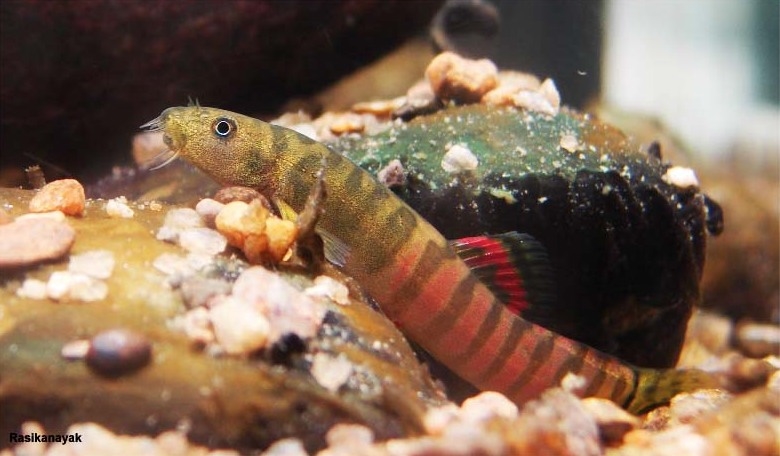
Schistura kodaguensis
Menon, 1987
Max length36mm SL1.4in SLTank60 × 30cm24 × 12inTemp20–25°C68–77°FpH6.0–7.5This species is not a well-known aquarium fish but is maintained by a number of Indian enthusiasts. It can be told apart from related species by the following combination of characters as per Sreekantha et al. (2006): pectoral-fin rays 10; absence of black spot at base of dorsal-fin; presence of rows of spots on caudal-fin; lateral line incomplete; caudal-fin slightly emarginate; 11-14 vertical bars on the body.
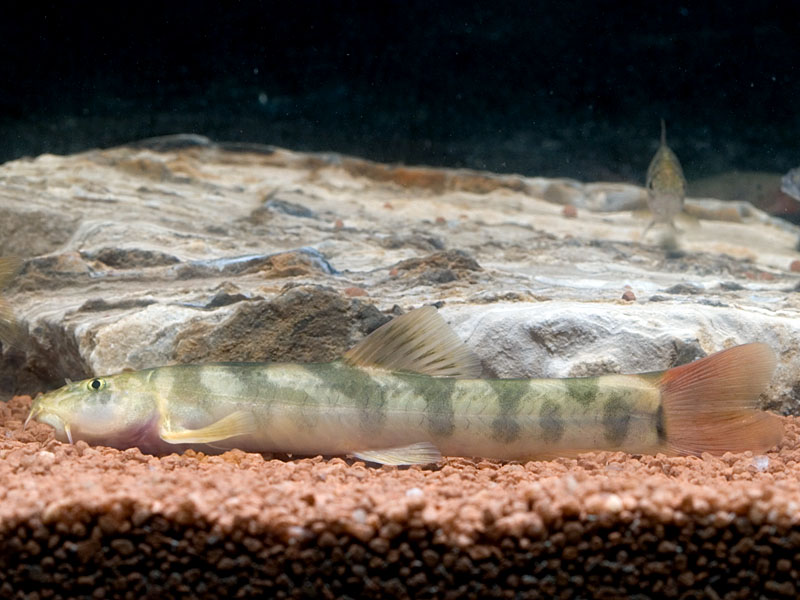
Schistura spilota
Fowler, 1934
Max length100mm SL3.9in SLTank120 × 30cm48 × 12inTemp20–26°C68–79°FpH6.0–7.5Not a commonly species in the aquarium hobby but sporadically available in shipments of wild fishes from Thailand. Following Kottelat (1990) it's a member of a group of species possessing a complete or near-complete lateral line, 8 ½ branched dorsal-fin rays, 17 branched caudal-fin rays and lacking sexual dimorphism (the latter is not strictly true - see above). Its colour pattern is quite distinctive, howe...
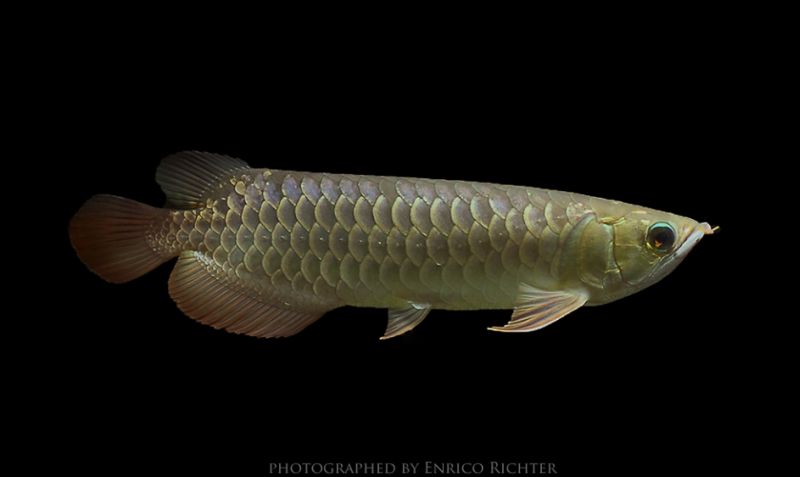
Scleropages formosusAsian Arowana
Müller & Schlegel, 1840
Max length900mm SL35in SLTanknot recordedTemp22–28°C72–82°FpH5.0–8.0This species is distinguished from its Australian congeners S. jardinii and S. leichardti by possessing a lower number of lateral line scales (21-26 vs 32-36). It occurs naturally in a number of colour forms of which three were elevated to distinct species status in 2003, but the current majority view is that all represent S. formosus pending a detailed review. Kottelat (2013) mentions that the red form may...
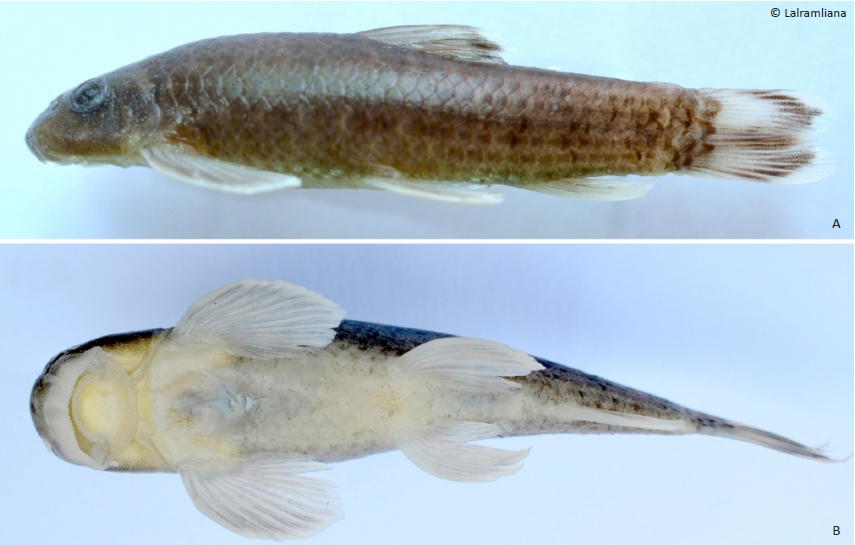
Garra dampaensis
Laironunga, Lainuntluanga & Lairamliana, 2013
Max length55mm SL2.2in SLTanknot recordedTempnot recordedpHnot recordedThis species can be told apart from Indian congeners by the following combination of characters: no transverse groove or proboscis on the snout; tip of dorsal fin falcate; long axillary scale present at the base of pelvic fin, reaching base of last pelvic fin ray; 27–29 lateral-line scales, 10–11 regularly arranged predorsal scales; W-shaped black band across middle of caudal fin; presence of scales on the abdomen.
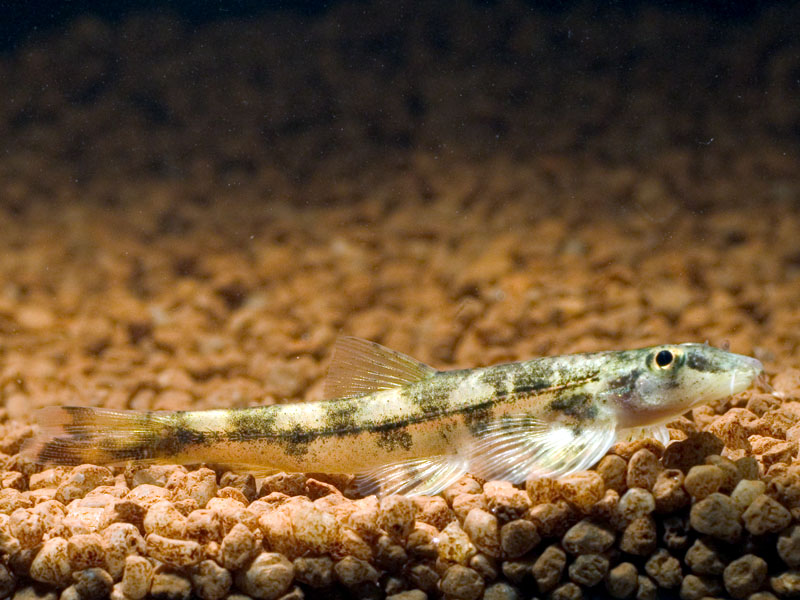
Homalopteroides nebulosus
Alfred, 1969
Max length36mm SL1.4in SLTank60 × 30cm24 × 12inTemp20–25.5°C68–78°FpH6.0–7.5The genus Homalopteroides was revalidated by Randall and Page (2012) and is told apart from the related Homaloptera by the following character combination: dorsal-fin origin above pelvic-fin; ≤ 60 lateral-line scales; ≤ 30 predorsal scales; oral morphology consisting of two thin and widely separated rostral barbels on each side of the mouth, thin crescent-shaped lips, the absence of any structure such as a mental pad or lobes between the lateral portions of the lower lip, and a chin that extends anterior to the lateral portions of the lower lip.
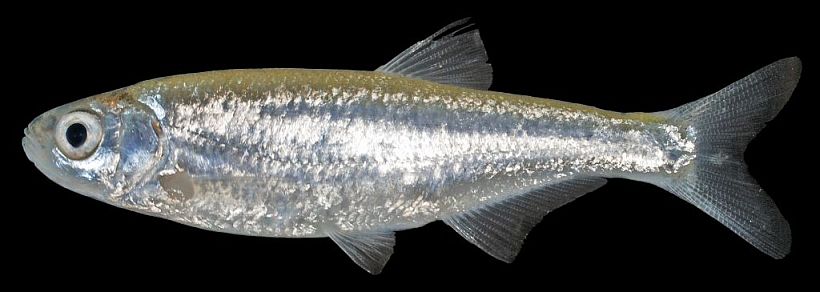
Metzia bounthobi
Shibukawa, Phousavanh, Phongsa & Iwata, 2012
Max length61mm SL2.4in SLTanknot recordedTempnot recordedpHnot recordedThis species can be distinguished from congeners by the following combination of characters: 18–20 (vs. 10-18) branched anal-fin rays; 49–55 (vs. 35-48) lateral-line scale rows; 33–36 (vs. 15-20) predorsal sca...
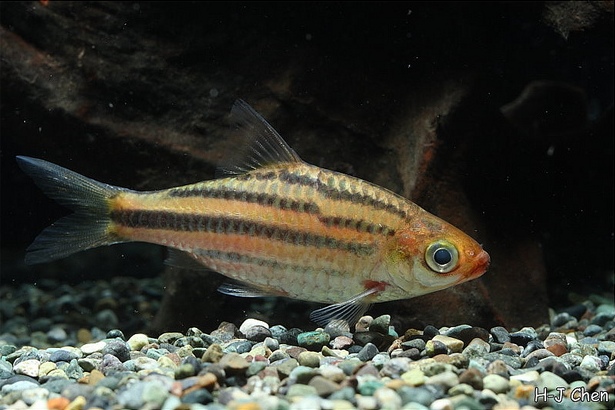
Desmopuntius trifasciatus
Kottelat, 1996
Max length100mm SL3.9in SLTank120 × 45cm48 × 18inTemp20–25°C68–77°FpH5.0–7.0This species is one of three similar-looking members of the genus alongside D. johorensis and D. trifasciatus, while it may also be confused with Striuntius lineatus. Juveniles of all except S. lineatus exhibit a vertically-barred rather than laterally-striped colour pattern, the metamorphosis to adult patterning beginning at around 20 mm SL and normally being complete by 30-40 mm.
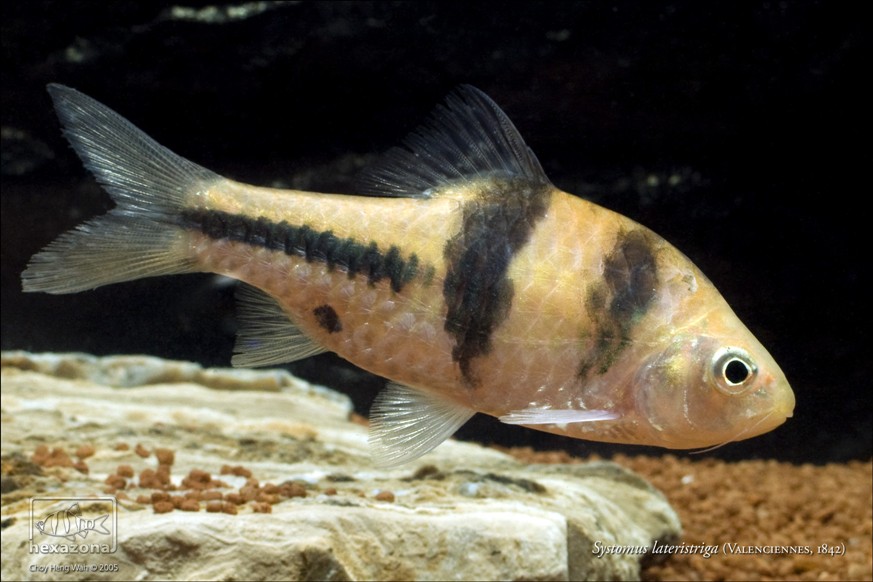
Barbodes lateristrigaSpanner Barb
Valenciennes, 1842
Max length150mm SL6in SLTank150 × 45cm60 × 18inTemp20–28°C68–82°FpH6.0–8.0This species is commonly-referred to as 'T-barb' in some countries. It's closely-affiliated with and sometimes traded as the congener B. kuchingensis but that species can be told apart by colour pattern comprising a prominent row of dark spots along the lateral line, plus a short, horizontally-orientated streak extending from the upper part of the operculum. In B. lateristriga the lateral markings usually form a solid stripe and there is no streak extending from the operculum.
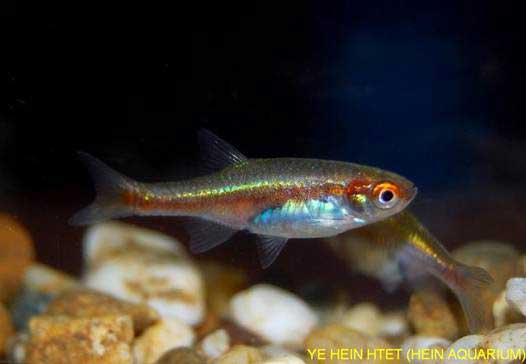
Microrasbora cf. rubescensFlame Red 'Rasbora'
authority not recorded
Max length40mm SL1.6in SLTank60 × 30cm24 × 12inTemp20–26°C68–79°FpH6.5–7.5This is possibly an undescribed species and has been marketed as 'Asian Cardinal Rasbora', 'flame red rasbora', M. sp. 'rose blue line' or M. 'thuzari' in the ornamental trade. It differs from M. rubescens by its larger adult size, possession of a greenish to bluish lateral stripe, and lesser extent of orange pigmentation on the body. It also appears to represent a distinct genetic lineage (Collins et al., 2012).
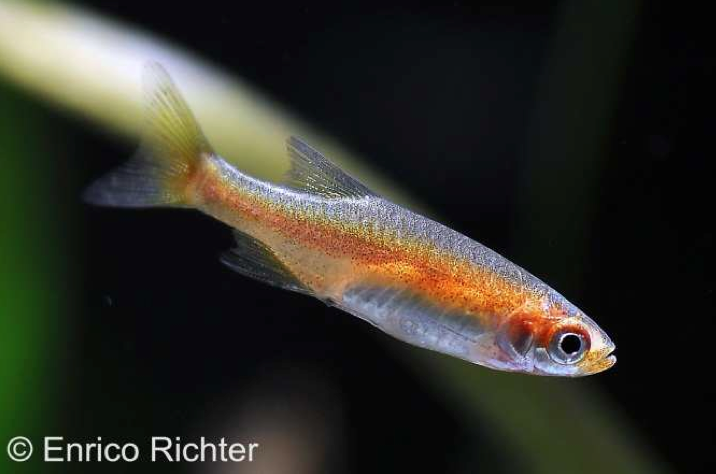
Microrasbora rubescensRed Dwarf 'Rasbora'
Annandale, 1918
Max length30mm SL1.2in SLTank60 × 30cm24 × 12inTemp20–24°C68–75°FpH6.0–8.0This species may be seen on sale under various trade names including 'red-line dwarf rasbora', 'emerald dwarf rasbora', or 'red dwarf rasbora'. A similar-looking, apparently undescribed congener has been collected near the town of Hopong, also in Shan State. It differs from M. rubescens by possessing a greenish to bluish lateral stripe plus a larger adult size, and is traded as Microrasbora cf. rubescens, M. 'thuzari', M. sp. 'rose blue line', 'Asian Cardinal Rasbora', or 'flame red rasbora'.
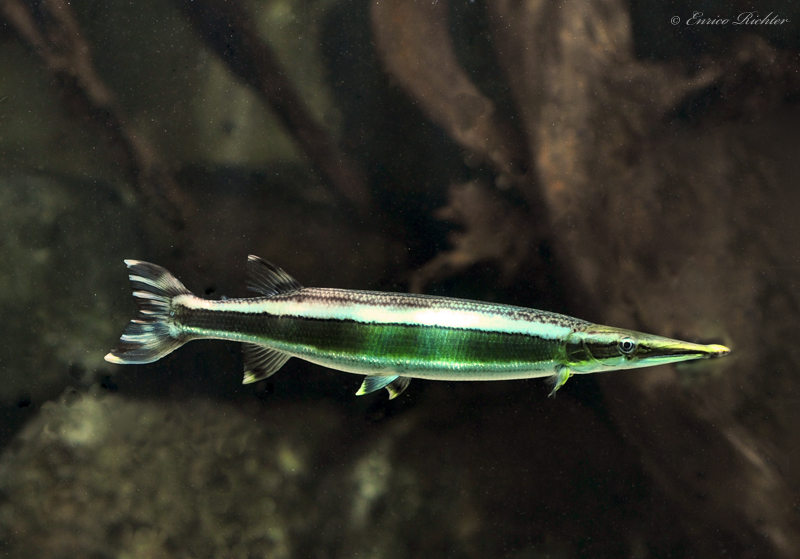
Boulengerella lateristrigaStriped Pike 'Characin'
Boulenger, 1895
Max length258mm SL10in SLTank240 × 90cm96 × 36inTemp22–28°C72–82°FpH4.0–7.0Boulengerella differs from Ctenolucia, the only other genus currently contained in the family Ctenolucidae, by a series of derived features including possession of 87-124 (vs. 45-50) lateral line scales, presence of a strongly (vs. weakly) developed fleshy appendage at the tip of the snout and absence (vs. presence) of fleshy flaps on the lower jaw. Within the order Characiformes the family Ctenoluciidae is also distinguished by a set o...
Rasbora cephalotaeniaPorthole Rasbora
authority not recorded
Max length130mm SL5in SLTank120 × 45cm48 × 18inTemp22–25°C72–77°FpHnot recordedThis species is not often exported which is a shame as it makes an elegant, peaceful resident of the larger community tank. It can be easily distinguished from similar-looking congeners such as R. einthovenii and R. jacobsoni by examining the dark lateral stripe that extends lengthways along the body of the fish as in R. cephalotaenia it is composed of a series of dark spots whereas in the other species it forms a continous solid line. Rainboth's 'Fishes of the Cambodian Mekong'...
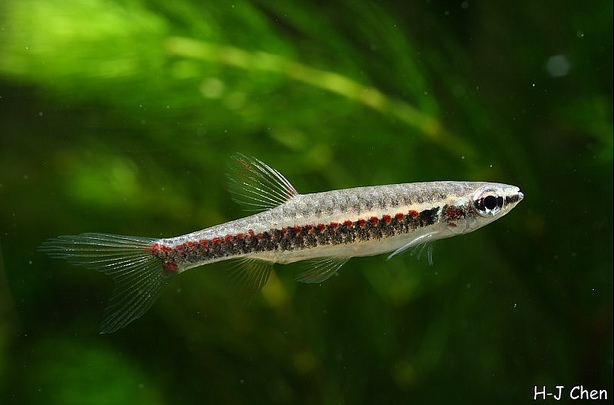
Copella nattereri
Steindachner, 1876
Max length45mm SL1.8in SLTank60 × 30cm24 × 12inTemp20–28°C68–82°FpH4.0–7.0This species is sometimes traded as C. sp. 'red line', 'spotted tetra' or as its congener C. nigrofasciata. In the past it's name was also widely applied to the fish now identified as C. callolepis and C. meinkeni, and this misidentification continues to an extent although the two are easily-distinguished by the fact that C. nattereri is the only one of the three possessing a dark lateral stripe on each side of the body.