Results for “ex gr.”
Type a name: scientific, common, or one a species used to go by. Or narrow the catalogue with the filters.
Filters
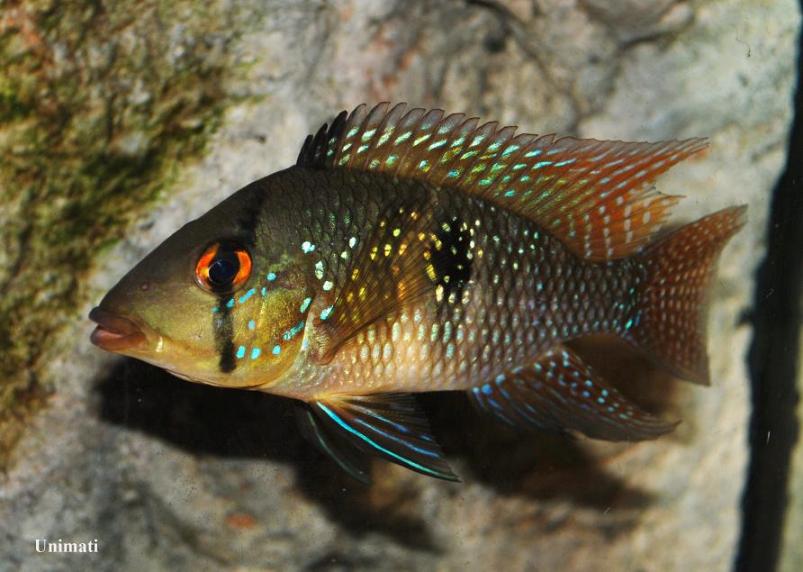
'Geophagus' brasiliensisPearl Cichlid
Quoy & Gaimard, 1824
Max length250mm SL10in SLTank150 × 45cm60 × 18inTemp18–28°C64–82°FpH6.0–8.0This species is also known as the 'pearlscale' or 'mother-of-pearl' cichlid in deference to the iridescent body scaling. It's also worth noting that fishes sold as Gymnogeophagus australis in Europe are 'G.' brasiliens is more often than not. Wild specimens exhibits significant dissimilarities in body colour and patterning depending on locality with basic colouration being dominated by varying shades of blue, green or yellow, for example. Some populations al...
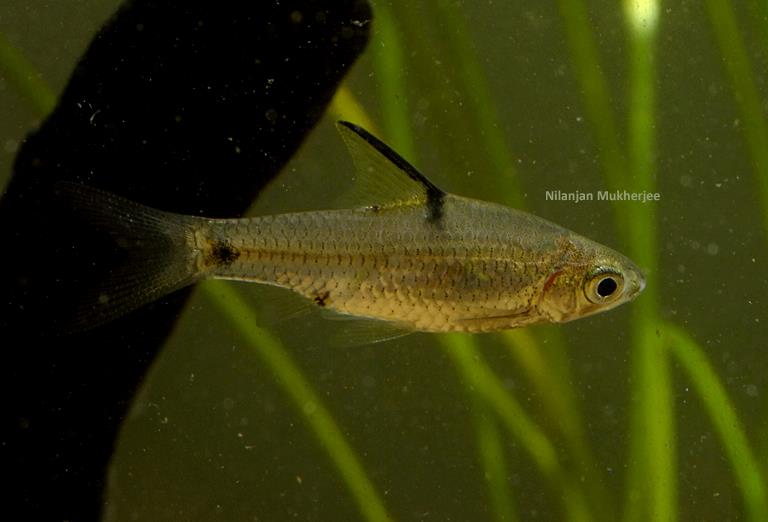
'Puntius' guganioGlass Barb
Hamilton, 1822
Max length65mm SL2.6in SLTank75 × 30cm30 × 12inTemp18–26°C64–79°FpH6.0–7.5Probably a micropredator feeding on small insects, worms, crustaceans and other zooplankton in nature. In the aquarium it should accept dried foods of a suitable size but should not be fed these exclusively. Daily meals of small live and frozen fare such as Daphnia, Artemia, Moina, etc., along with good quality flakes and granules will result in the best colouration and encourage the fish to come into breeding condition.
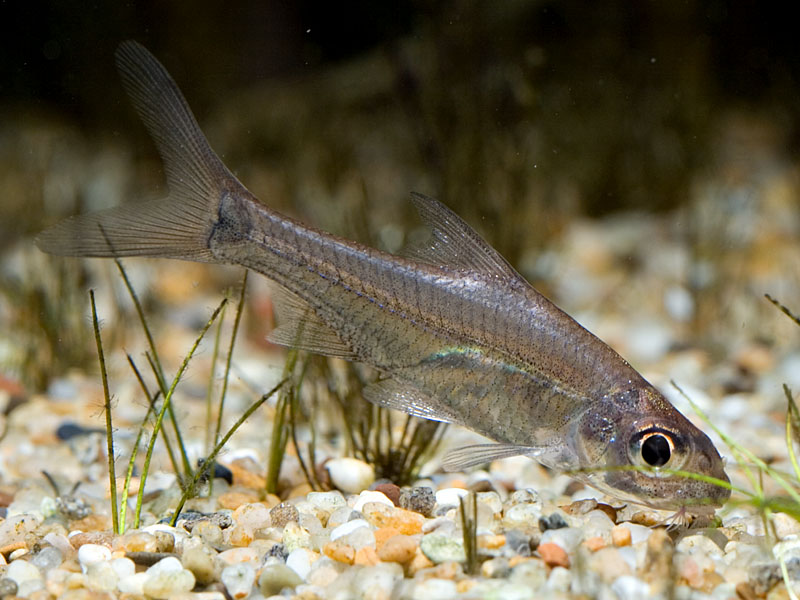
Cyclocheilichthys heteronema
Bleeker, 1854
Max length120mm SL5in SLTank120 × 45cm48 × 18inTemp21–26°C70–79°FpH6.0–7.5This species is currently understood to have a considerable natural range extending eastwards from Myanmar via Thailand, Laos, Cambodia as far as Vietnam and to the south through Peninsular Malaysia and into the Greater Sunda Islands of Borneo and Sumatra. It thus occurs in the Mekong, Mae Klong and Chao Phraya drainages as well as a host of other river basins, lakes and reservoirs including the Tonlé Sap river...
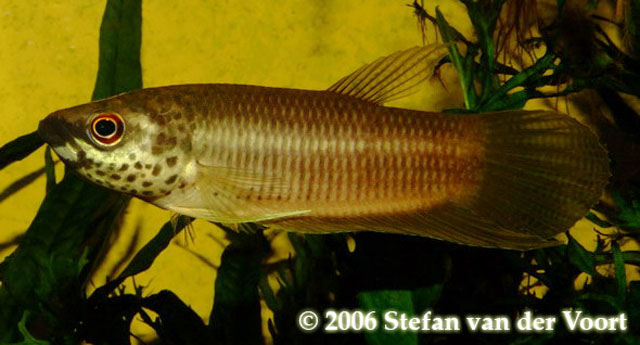
Betta pardalotos
Tan, 2009
Max length90mm SL3.5in SLTank80 × 30cm31 × 12inTemp22–27°C72–81°FpH4.0–6.5This species is included in the Betta waseri group/complex of closely-related species within the genus, an assemblage which also includes a handful of unidentified fishes such as B. sp. 'Medas' on an unofficial basis. Group members share the following combination of characters: base body colouration clay yellow; opercle scales iridescent gold in mature males of all species except ...
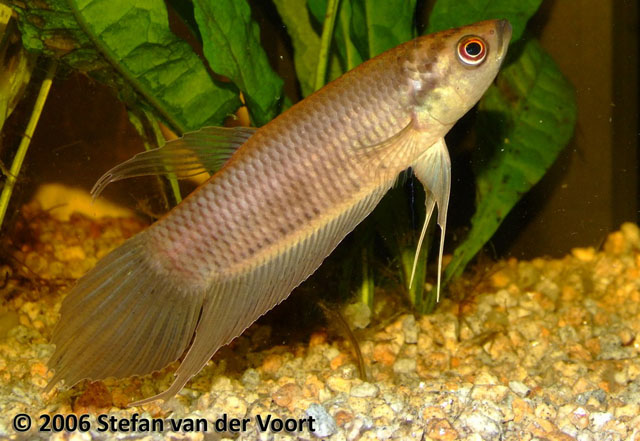
Betta renata
Tan, 1998
Max length85mm SL3.3in SLTank90 × 30cm36 × 12inTemp23–27°C73–81°FpH4.0–6.0This species is included in the Betta waseri group/complex of closely-related species within the genus, an assemblage which also includes a handful of potentially new species such as B. sp. 'Medas' on an unofficial basis. Group members share the following combination of characters: base body colouration clay yellow; opercle scales iridescent gold in mature males of all species except B. tomi; throat with black markings which join with black lower jaw in some species; no chin bar.
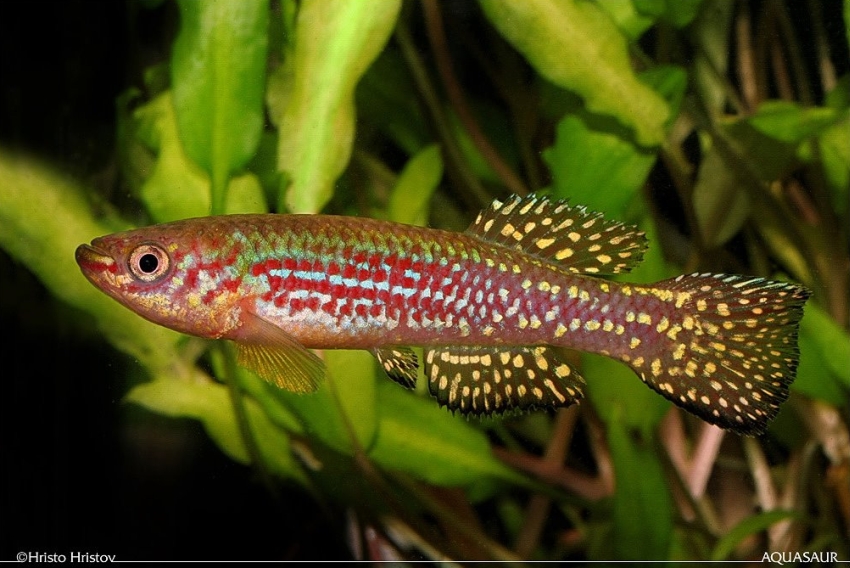
Fundulopanchax gresensi
Berkenkamp, 2003
Max length47mm SL1.9in SLTanknot recordedTemp22–26°C72–79°FpH6.0–7.5Known only from a relatively small area near the villages of Takwai I and II, Atebong Wire and Edjuingan in wester Cameroon, with records existing from the Bagwor and Mack river systems both of which are tributaries within the upper Cross River basin, western Cameroon. Type locality is 'West Cameroon, 5°34'N, 9°50'E'. Collections of wild fish are generally lab...
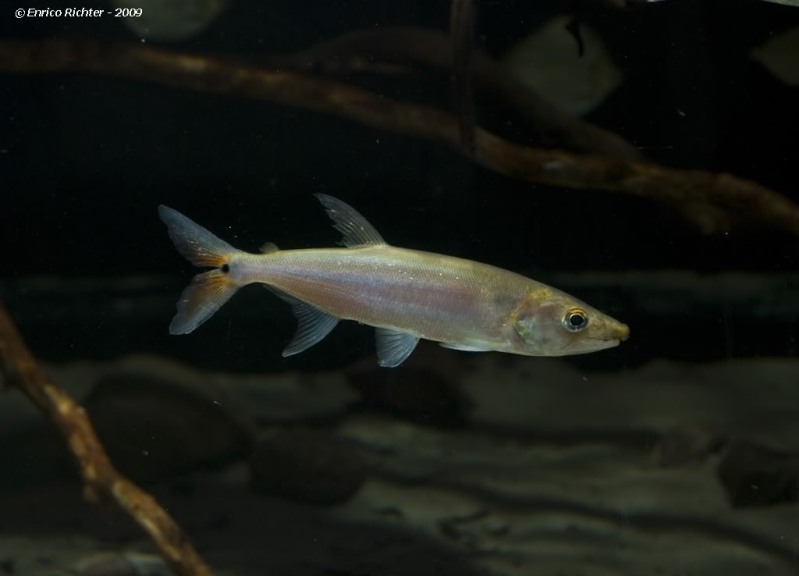
Acestrorhynchus falcatusRed-Tailed Freshwater Barracuda
Bloch, 1794
Max length275mm SL11in SLTank250 × 90cm98 × 36inTemp22–28°C72–82°FpH6.0–7.5The vernacular name of this fish is derived from its appearance and behaviour, rather than a genetic association with the marine barracuda, and it's also sometimes referred to as 'pike characin' or 'spotted cachorro' with local vernacular names including 'Grand dent-chien' (French Guiana), ' Cachorrinho' or 'Ueua' (Brazil). Although most species of Acestrorhynchus appear superficially similar to one another most exhibit distinguishable external chara...
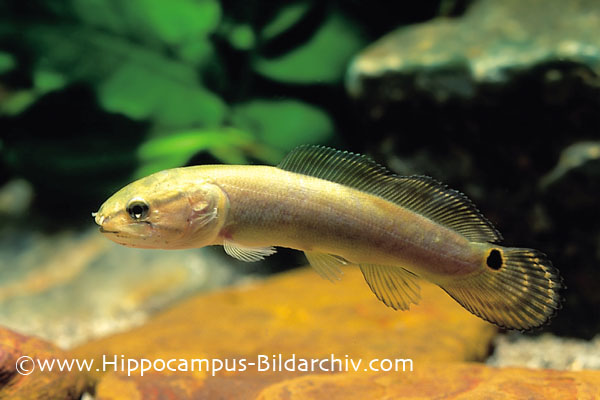
Amia calvaBowfin
Linnaeus, 1766
Max length900mm SL35in SLTank180 × 60cm72 × 24inTemp15–24°C59–75°FpH6.0–7.5Rare in the hobby, the bowfin is a stunning specimen fish for the aquarist with the means to house it properly. It is the sole remaining species in the family Amiidae, an ancient and primitive group that is related to the garfish. It possesses the ability to breathe atmospheric air, via an enormous, highly vascularised accessory breathing organ that extends throughout the entire body cavity. The gills are stiffened in order to prevent them collapsing outside the water and, provided it's kep...
Melanotaenia australisWestern rainbowfish
authority not recorded
Max length120mm SL5in SLTank120 × 30cm48 × 12inTemp22–27°C72–81°FpH6.5–8.0This species was formerly classified as part of the Melanotaenia splendida complex, but more recent research into the genetics of the species has shown that not only is M. australis genetically dissimilar to the splendida group, but also that there are 2 clear lineages within australis This may yet result in another official member of the genus. M. australis exhibits a wide variation in colour and patterning depending on locality, and is probably the commonest rainbowfish species in Australi...
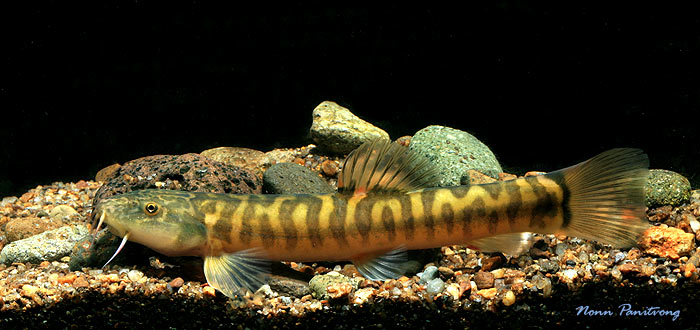
Schistura schultzi
Smith, 1945
Max length93mm SL3.7in SLTank120 × 30cm48 × 12inTemp16–24°C61–75°FpH6.0–8.0There appears to be some discrepancy between Smith's original description and Kottelat (1990) in that Smith states the fish is a member of a group of species lacking an ocellus at the upper caudal-fin base, whereas Kottelat mentions the presence of 'a black spot at upper extremity of caudal-fin base, surrounded by a whitish area'.
Trematocranus placodonSnail-Crusher Hap
authority not recorded
Max length250mm SL10in SLTank150 × 38cm60 × 15inTemp24–28°C75–82°FpH7.6–8.8An ideal species for the larger Malawian community but one not often seen for sale. In nature, it is a molluscivore, feeding primarily on snails. It has specially developed pharyngeal teeth, which can crush and grind the shells of these animals with ease. Several other species were originally assigned to the genus but currently, only 3 species of Trematocranus exist, most having been reclassified as Aulonocara or Alticorpus....
Buccochromis lepturusSlender Tail Hap
authority not recorded
Max length400mm SL16in SLTank150 × 45cm60 × 18inTemp24–27°C75–81°FpH7.5–8.8Also known as the green lepturus, this is a stunning species when mature. Unfortunately, it is rarely seen for sale. Its pelagic nature means it is difficult to catch for export. As a result it can be quite expensive when it is available....
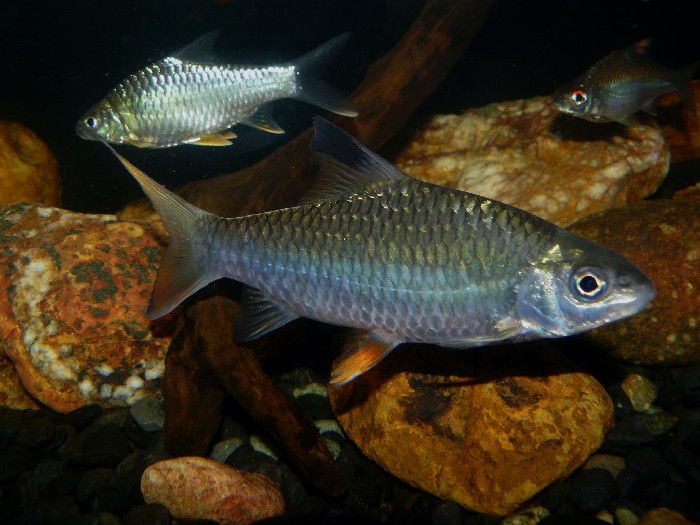
Hypselobarbus jerdoniJerdon's Carp
authority not recorded
Max length460mm SL18in SLTank240 × 120cm96 × 48inTemp20–26°C68–79°FpH6.5–7.5There are currently eleven species in the genus most of which have previously been included in Puntius, Barbus and the now defunct genus Gonoproktopterus. Of these the only ones we've seen in the trade are H. jerdoni and H. curmuca although it's possible that others have been exported in small numbers or as contaminants among shipments of other species. Even these two are very rarely encountered and little has been written about the group as a whole....
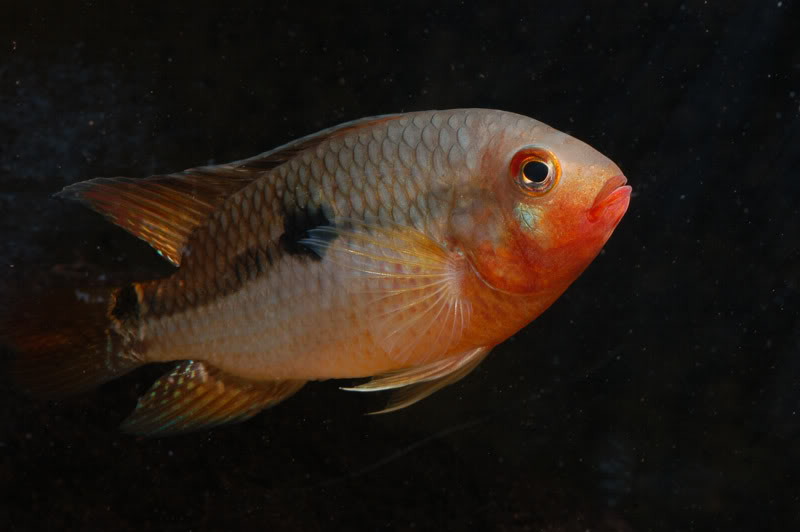
Aequidens tetramerusSaddle Cichlid
Heckel, 1840
Max length162mm SL6in SLTanknot recordedTemp24–27°C75–81°FpH4.5–7.5This is the type species of the genus Aequidens and has the widest distribution of any member species. It exists in various colour forms depending on locality with variants from Ecuador and Peru being particularly sought after since they develop striking red (Ecuador) or orange (Peru) colouration on the lower part of the jaw, head and anterior portion of the belly whereas those from Brazil tend to have an overall grey/blue/green colouration, for example. Despite its type status it's long...
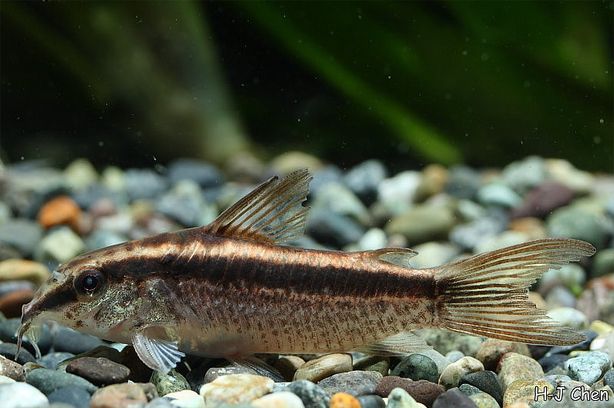
Corydoras gracilis
Nijssen & Isbrücker, 1976
Max length40mm SL1.6in SLTank60 × 30cm24 × 12inTemp20–26°C68–79°FpH5.0–7.5It can be distinguished from the majority of other Corydoras species by its distinctive colour pattern, comprising a uniform, lightish base pigmentation with a dark arched stripe extending over the upper portion of each flank, from the tip of the snout to the caudal-fin base. This is shared with a few congeners, however, including C. arcuatus, C. narcissus, and C. urucu.
Leporacanthicus joselimaiSultan Plec
authority not recorded
Max length150mm SL6in SLTank120 × 30cm48 × 12inTemp25–27°C77–81°FpH6.0–7.5Leporacanthicus species are commonly referred to as "vampire plecs". This is derived from the unique upper jaw dentition exhibited by members of this genus, unsurprisingly consisting of two large teeth or "fangs". The exact use for these is unknown, but they're probably utilised to grip prey items such as snails or other aquatic invertebrates in some way. Another feature shared by all Leporacanthicus is a small bony growth of unknown use on top of the head. This particul...
Fossorochromis rostratus
authority not recorded
Max length250mm SL10in SLTank150 × 38cm60 × 15inTemp25–29°C77–84°FpH7.5–8.8F. rostratus was formerly classified as Haplochromis rostratus. When startled, it may bury itself in the substrate. It often displays its natural sand-sifting method of feeding in aquaria, and a substrate of sand is essential as gravel may injure the fish. In nature, it is only the largest dominant males that build nests, whilst the subdominant males and females shoal together. There also exists a feeding relationship between this species and Cyrtocara moorii in the wild, in which shoals of C. m...
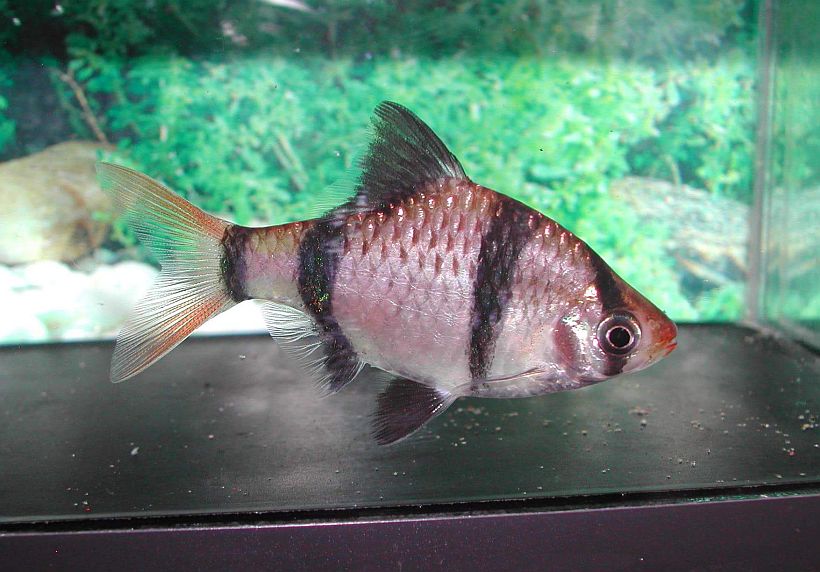
Puntigrus tetrazonaTiger Barb
Bleeker, 1855
Max length60mm SL2.4in SLTank80 × 30cm31 × 12inTemp20–26°C68–79°FpH5.0–8.0P. tetrazona is traditionally considered to be among the most ubiquitous species available in the aquarium trade. Wild examples are rarely traded, however, and there exists ongoing confusion as to the identity of the commercially-produced 'aquarium' tiger barb. A number of selectively-bred, ornamental strains are available. The albino, 'green' (aka 'moss'), and 'golden' (leucistic) variants are particularly pop...
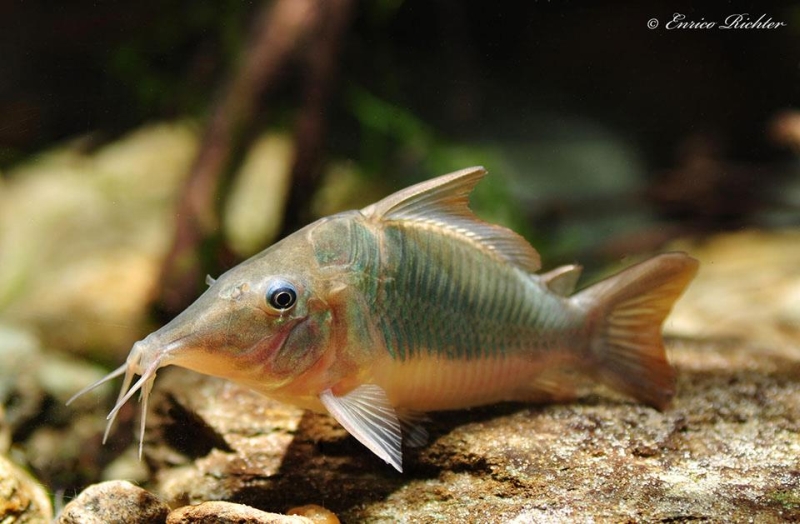
Corydoras multiradiatusHognose 'Brochis'
Orcés V., 1960
Max length100mm SL3.9in SLTank120 × 45cm48 × 18inTemp20–26°C68–79°FpH6.0–7.5The genus is included in the family Callichthyidae, of which members are often referred to collectively as 'armoured' or 'mailed' catfishes group due to the presence of bony plates in place of scales on the body. Their taxonomy can be confusing, and numerous undescribed species are also thought to exist.
Gymnarchus niloticusAba Aba
authority not recorded
Max length1650mm SL65in SLTank360 × 120cm142 × 48inTemp23–28°C73–82°FpH6.5–8.0G. niloticus is the only species in its genus and is utterly unique. Unlike other knifefish it has an extended dorsal rather thangiving rise to the alternative common name of upside-down knifefish. Despite this common name, it is actually more closely related to the Mormyrid group of species. It is a truly beautiful sight in motion despite its lack of bright colours, as it can move in virtually any direction with ease using its undulatingto 'steer'. It also produces a weak electrical d...