Results for “caudal”
Type a name: scientific, common, or one a species used to go by. Or narrow the catalogue with the filters.
Filters
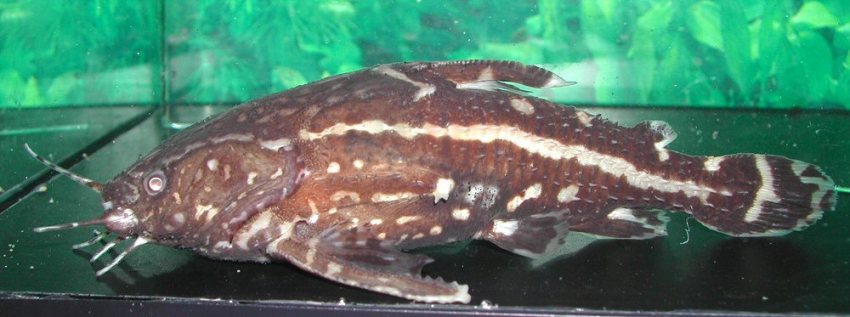
Acanthodoras spinosissimusChocolate Talking Catfish
Eigenmann & Eigenmann, 1888
Max length137mm SL5in SLTank120 × 30cm48 × 12inTemp22–26°C72–79°FpH6.0–7.5This species, which may also be referred to by the alternative vernacular names 'spiny catfish', 'painted talking catfish' or 'chocolate raphael', isn't particularly common in the trade and most often exported only as bycatch among shipments of Platydoras armatulus. It appears very similar to A. cataphractus with the most useful external distinguishing character being the presence of pale blotches on the dorsal surface, between the dorsal and caudal fins, in....
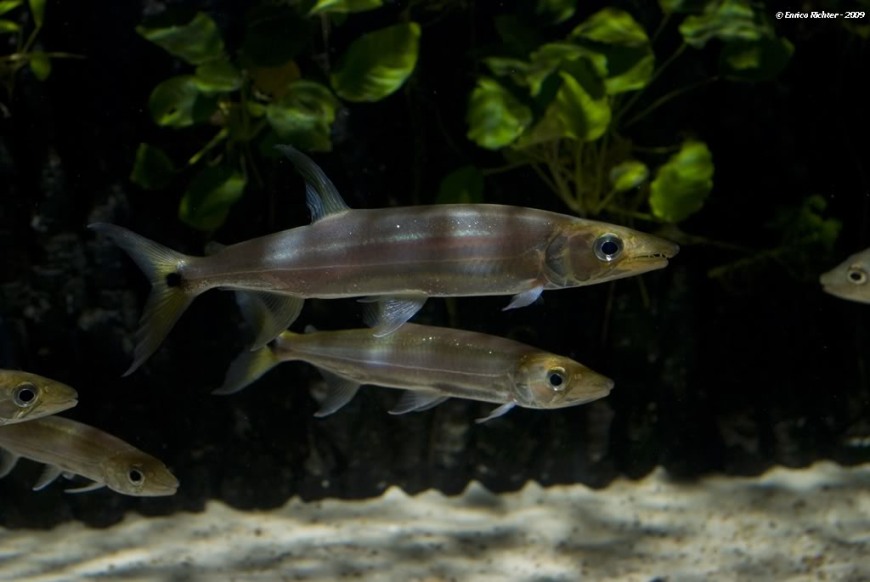
Acestrorhynchus falcirostrisBig-Eyed Cachorro
Cuvier, 1819
Max length350mm SL14in SLTank250 × 90cm98 × 36inTemp22–28°C72–82°FpH6.0–7.5This species is a member of the putative A. nasutus group of closely-related species within the genus alongside A. nasutus, A. maculipinna and A. isalineae. These are characterised by possession of two dark, longitudinal stripes, one running from the tip of the snout to the base and the other from the posterior edge of the lower maxilla to the underside of the caudal peduncle.
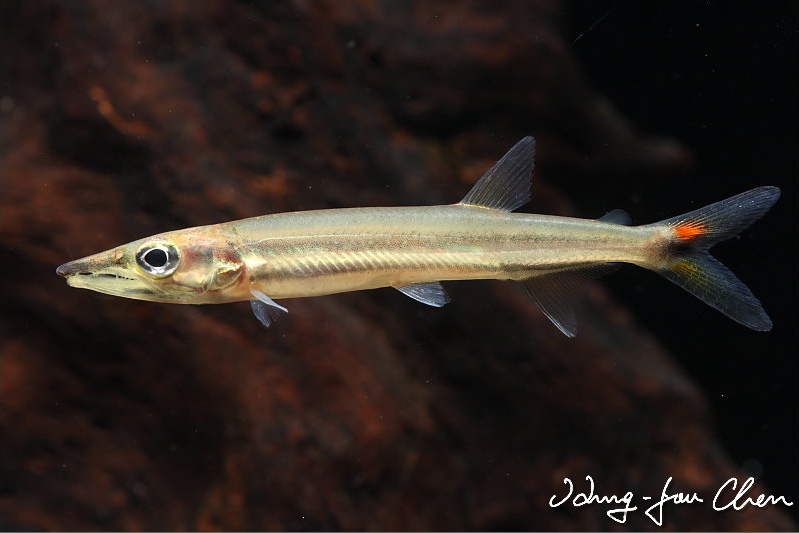
Acestrorhynchus isalineaeStriped Barracuda Tetra
Menezes & Géry, 1983
Max length105mm SL4in SLTank120 × 45cm48 × 18inTemp24–28°C75–82°FpH6.0–7.5This species is a member of the putative A. nasutus group of closely-related species within the genus alongside A. nasutus, A. maculipinna and A. isalineae. These are all characterised by possession of two dark, longitudinal stripes, one running from the tip of the snout to the base and the other from the posterior edge of the lower maxilla to the underside of the caudal peduncle.
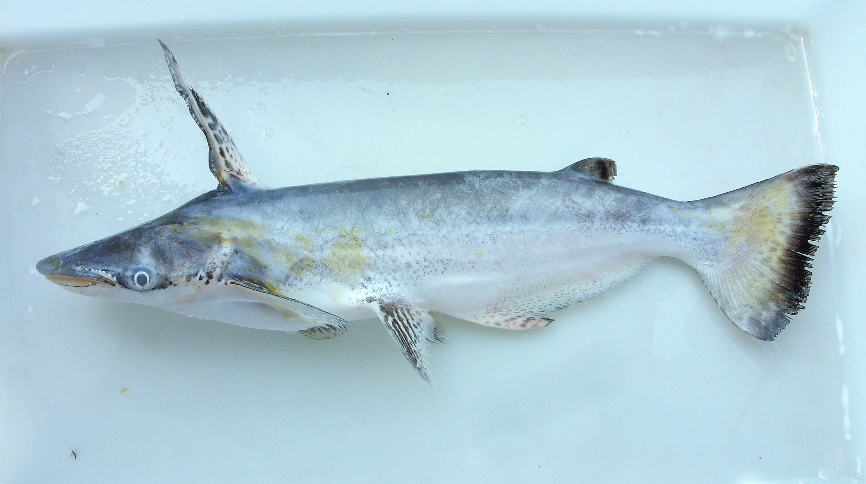
Ageneiosus inermisManduba
Linnaeus, 1766
Max length470mm SL19in SLTank400 × 120cm157 × 48inTemp22.5–26°C73–79°FpH5.5–7.5The genus Ageneiosus was at one point classified in the family Ageneiosidae alongside the genus Tetranematichthys, but this was not accepted by all authors. The grouping remains poorly-studied with the last major revision having been conducted by Watson (1990) in his unpublished dissertation, in which A. inermis was included under the currently synonymous name A. brevifilis. It can be separated from the majority of the genus (except A. marmoratus) by possession of a truncate caudal fin, and from...
Akysis hendricksoniHendrickson's Stream Catfish
Alfred, 1966
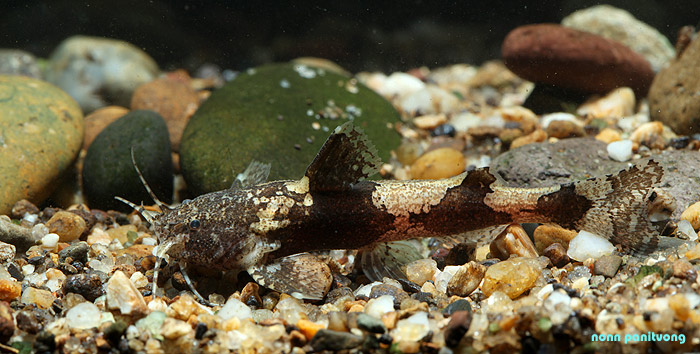
Max length50mm SL2.0in SLTank45 × 30cm18 × 12inTemp16.5–24°C62–75°FpH6.0–7.2This species is among the few members of the family to have been exported for the aquarium hobby. It can be differentiated from all other Akysis species by the following combination of characters: head length 17.7-26.5% of standard length (SL); head width 25.4-28.7% SL; body depth at anus 13.0-17.0% SL; caudal peduncle depth 8.1-10.1% SL; interorbital di...
Akysis maculipinnisSpotfin Stream Catfish
Fowler, 1934
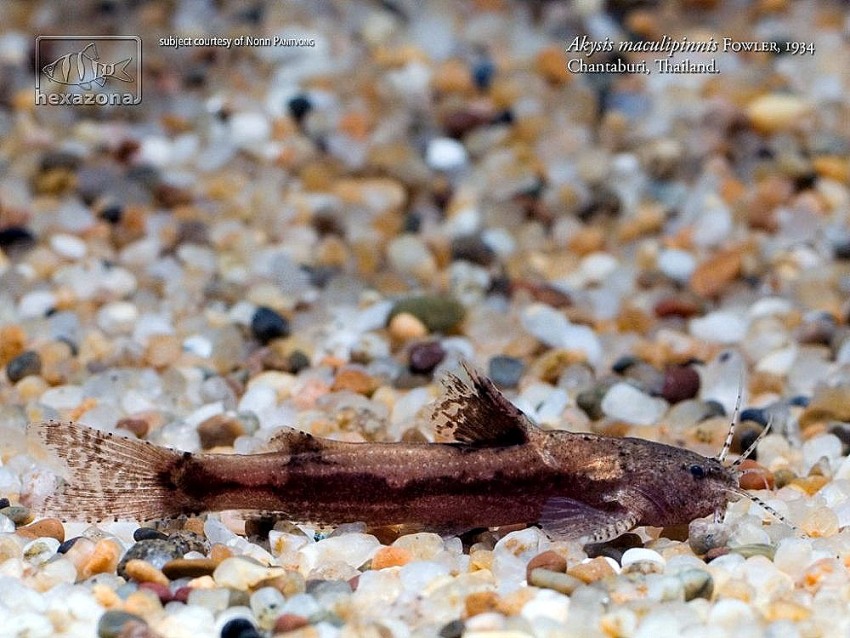
Max length35mm SL1.4in SLTank45 × 30cm18 × 12inTemp16.5–24°C62–75°FpH6.0–7.5This species has been exported for the aquarium hobby and ranks among the smaller members of the family. It can be differentiated from all other Akysis species by the following combination of characters: head length 22.0-28.6% of standard length (SL); caudal peduncle depth 8.8-10.7% of SL; anal-fin base length 15.2-19.1% of SL; eye diameter 12-16% of head length (HL); nasal barbel length 57 92% of HL; posession of 3-4 serrae on the posterior edge ofspine; body patterning mottled with indistinct ...
Akysis pulvinatusKra Stream Catfish
Ng, 2007
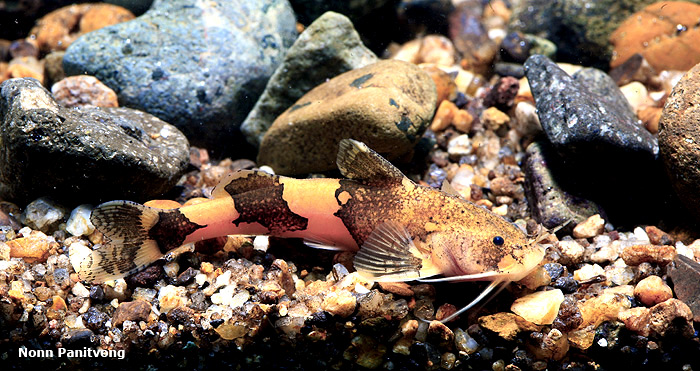
Max length30mm SL1.2in SLTank45 × 30cm18 × 12inTemp16.5–23.5°C62–74°FpH6.0–7.2This species has been exported for the aquarium hobby on an extremely limited basis. It can be differentiated from all other Akysis species by the following combination of characters: head length 27.6–29.8% of standard length (SL); head width 21.9–25.1% SL; caudal peduncle depth 9.4–10.3% SL; length ofbase 23.0–25.2% SL; nasal barbel len...
Alfaro cultratusKnife Livebearer
Regan, 1908
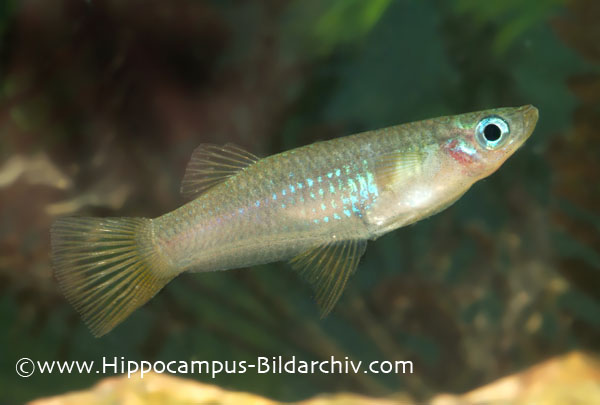
Max length75mm SL3.0in SLTanknot recordedTemp24–28°C75–82°FpH6.0–8.0This is an exceptionally hardy and adaptable species. It's not an especially common fish in stores, but is quite widely available in hobbyist circles. The common name arises from the row of modified, paired scales that form a keel running from the base of theto the caudal fin....
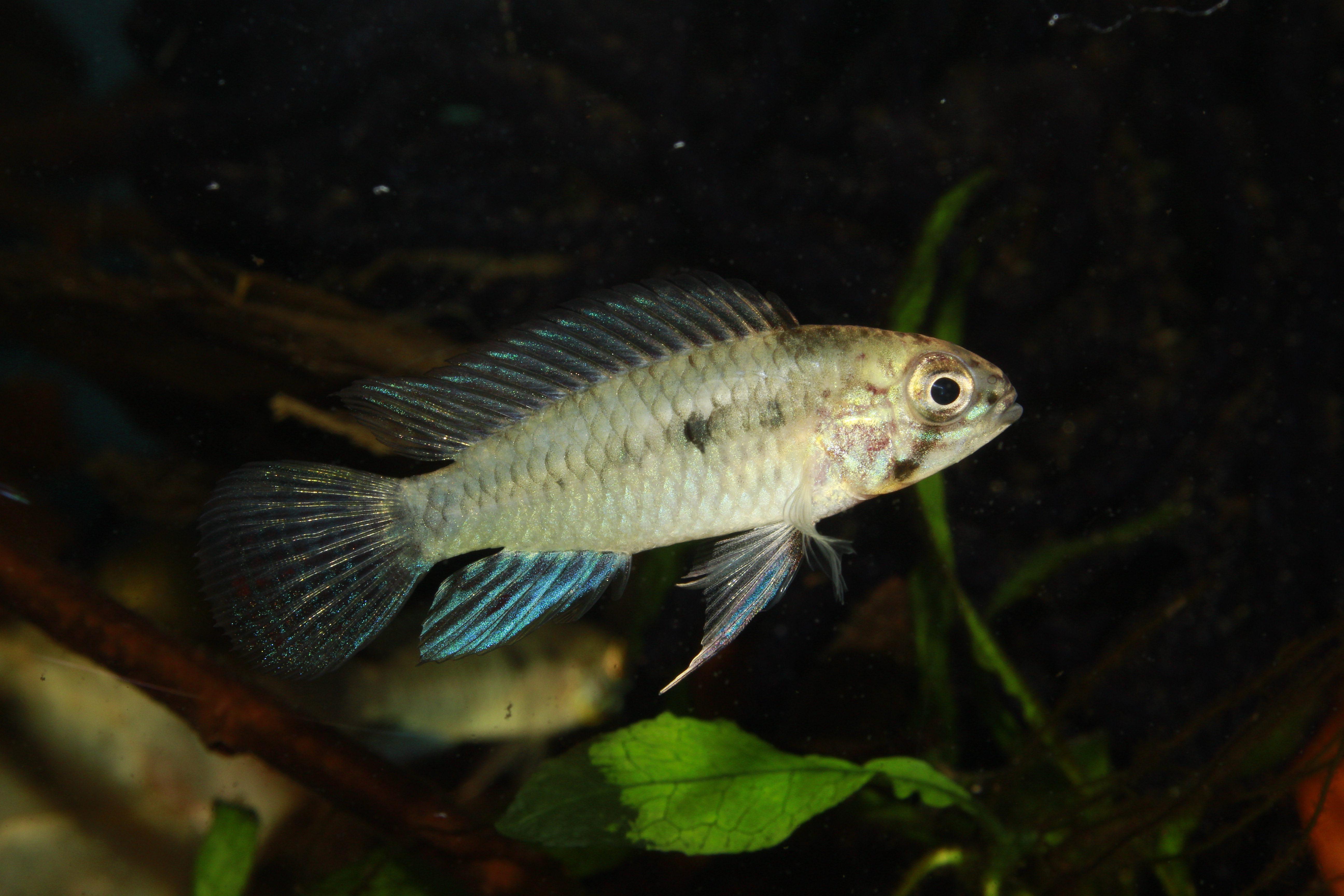
Apistogramma commbraeA93
Regan, 1906
Max length♂ 50 · ♀ 30mm SL♂ 2.0 · ♀ 1.2in SLTank60 × 30cm24 × 12inTemp15–27°C59–81°FpH6.0–7.4Apistogramma commbrae and other members of the commbrae complex can be distinguished from congeners by the conspicuous double caudal peduncle spot. This species may also be polymorphic, with some males exhibiting red and blue markings on the cheeks and a yellow gular region.
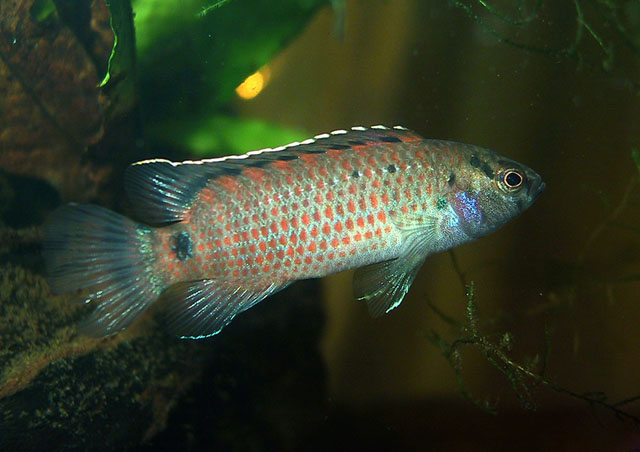
Badis khwae
Kullander & Britz, 2002
Max length60mm SL2.4in SLTank60 × 30cm24 × 12inTemp22–26°C72–79°FpH6.5–7.5Like most badids this species is poorly documented and has yet to find significant popularity in the aquarium hobby, though given its restricted natural distribution it is unlikely ever to be available in large numbers. Within the genus it is most easily confused with B. ruber and B. siamensis but both these species have rows of dark spot-like markings on the flanks which are lacking in B. khwae. The three also differ in the shape of the dark marking on the caudal peduncle; in B. ruber it is rel...
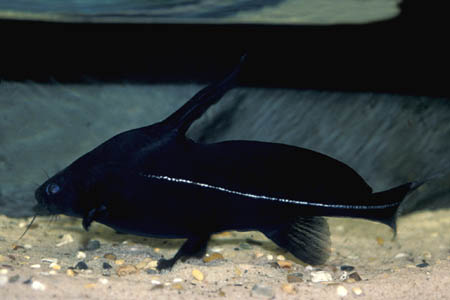
Bagrichthys macracanthusBlack Lancer
Bleeker, 1854
Max length230mm SL9in SLTank120 × 45cm48 × 18inTemp24–28°C75–82°FpH5.5–7.0The vernacular name 'lancer' is derived from the extended dorsal spine possessed by several members of the genus, which currently contains 7 species. Among them B. macracanthus is most similar to B. majusculus and B. vaillantii but can be told apart from the former by possession of shorter pectoral spines (13.3 - 16.2% SL vs. 15.8 - 20.7%), shorter adipose fin (46.0 - 58.0% SL vs. 38.8 - 45.8%), less deep caudal peduncle (7.1 - 7.5% SL vs. 5.6-7.0%) and larger adult size. From B. vaillantii it di...
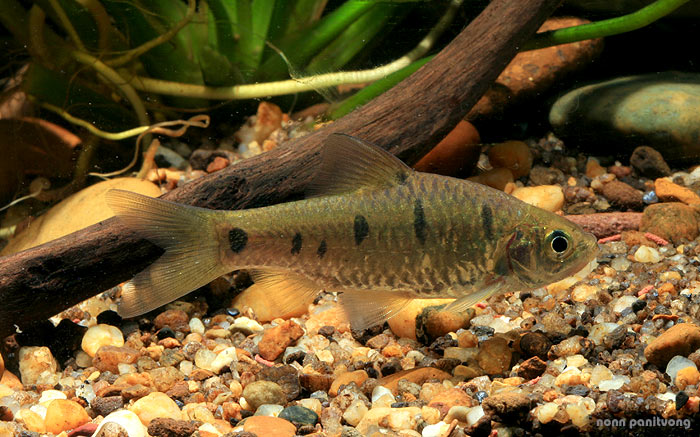
Barbodes aurotaeniatus
Tirant, 1885
Max length65mm SL2.6in SLTank80 × 30cm31 × 12inTemp18–26°C64–79°FpH6.0–7.5B. aurotaeniatus is uncommon in the aquarium trade. Following Kottelat (1998) it has a single pair of maxillary barbels, a complete lateral line and colour pattern usually comprising four small, vertically-orientated black markings on the flanks (located above anterior lateral line origin, below dorsal-fin origin, below posterior end of dorsal-fin base and on caudal peduncle, respectively) and one on the dorsal surface, below dorsal-fin origin.
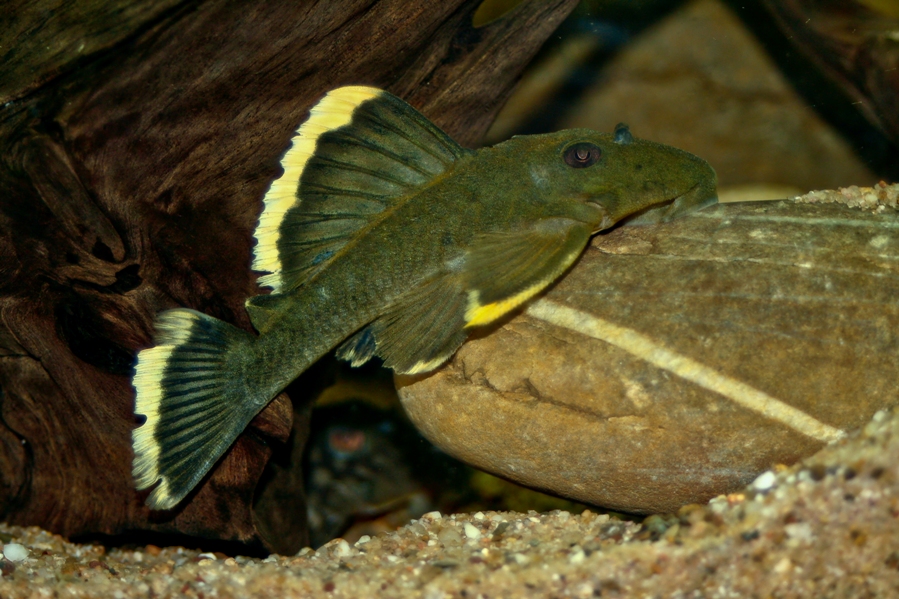
Baryancistrus chrysolomusMango Pleco
Rapp Py-Daniel, Zuanon & Ribeiro de Oliveira, 2011
Max length219mm SL9in SLTank120 × 45cm48 × 18inTemp27–32°C81–90°FpH6.0–7.5Prior to description this species was traded under the DATZ code L047 or the alternative vernacular name 'magnum pleco'. It can be distinguished from congeners by a combination of the following characters: presence of a broad, light-coloured (usually yellowish) distal band on the dorsal and caudal fins throughout life, slightly reduced in adults. The only other member of the genus to possess such bands is B. xanthellus but in that species they are reduced to small markings at the fin tips in adults, and the body is covered in pale, normally yellowish, spots.
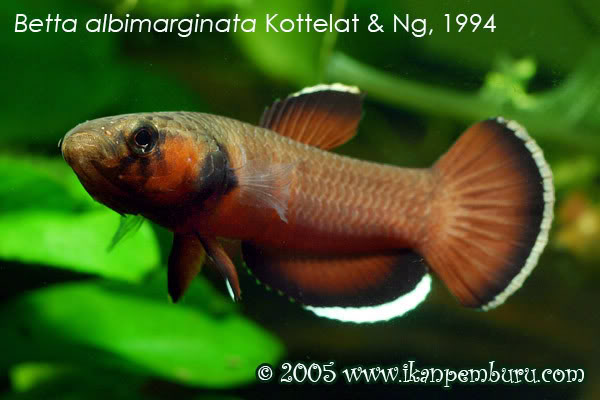
Betta albimarginata
Kottelat & Ng, 1994
Max length30mm SL1.2in SLTank45 × 30cm18 × 12inTemp23–28°C73–82°FpH4.0–6.5Additonally, fin patterning in B. albimarginata, except the pectoral fins, consists of a broad white distal band, broad dark submarginal band with sharp outer margin and less sharp inner margin, and a plain red inner portion, while in B. channoides the dorsal fin is almost entirely red with only a thin white distal band and the dark submarginal band in the caudal fin does not extend into the uppermost portion of the fin. Base body colouration tends towards a brick-red shade in displaying male B. albimarginata, scarlet in B. channoides (pers. obv.).
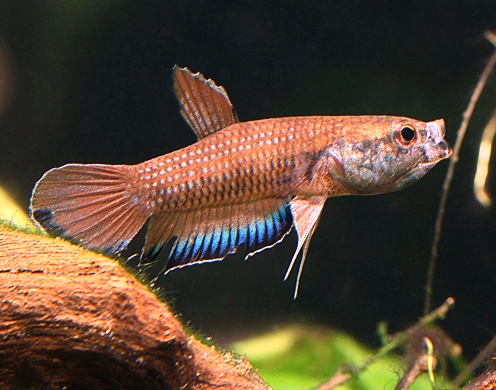
Betta falx
Tan & Kottelat, 1998
Max length50mm SL2.0in SLTank60 × 30cm24 × 12inTemp22–27°C72–81°FpH4.7–6.8B. falx is included in the Betta picta group/complex of closely-related species within the genus, an assemblage comprising species with the following shared characters: unpaired fins rounded (anal-fin sometimes tapering to a blunt point); anal-fin rays I-III, 18-24; dark marginal band on anal and caudal fins, more pronounced in mature males; presence of pre-orbital and post-orbital stripes; presence of chin bar on throat; iridescent green, gold, or blue scales on opercle.
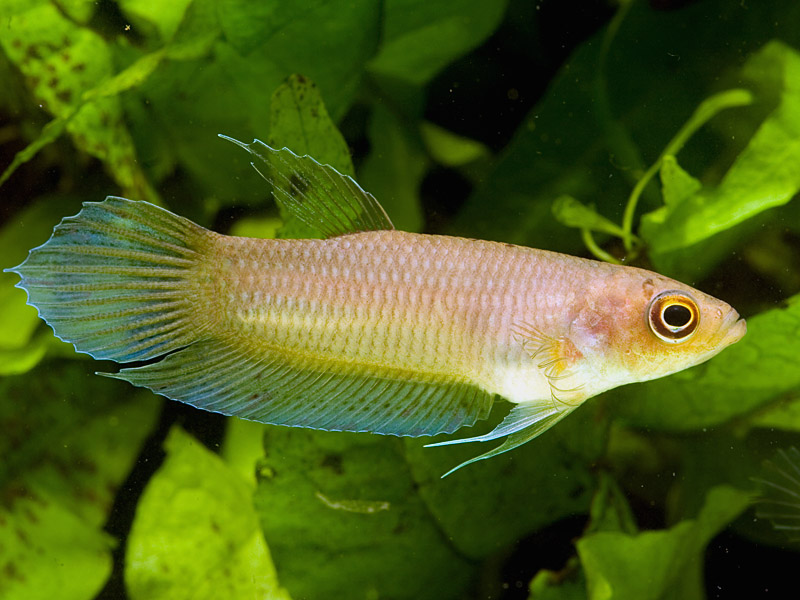
Betta hipposideros
Ng & Kottelat, 1994
Max length80mm SL3.1in SLTank80 × 30cm31 × 12inTemp22–28°C72–82°FpH3.5–6.0The easiest way to distinguish these is by examining the throat markings, which vary according to species, and in the case of B. hipposideros form a black horse-shoe shape. It can also be separated from other group members by the following suite of characters: dark blotch on throat joined to black lower lip; presence of transverse bars in dorsal and caudal fins; absence of dark margin in anal-fin; opercle usually with gold scales, without iridescrent green scales; ventral margin of opercle brown; 6.5-7 subdorsal scales (mode 6.5); 9-10 postdorsal scales (mode 9.5); 31-32 lateral scales (mode 32).
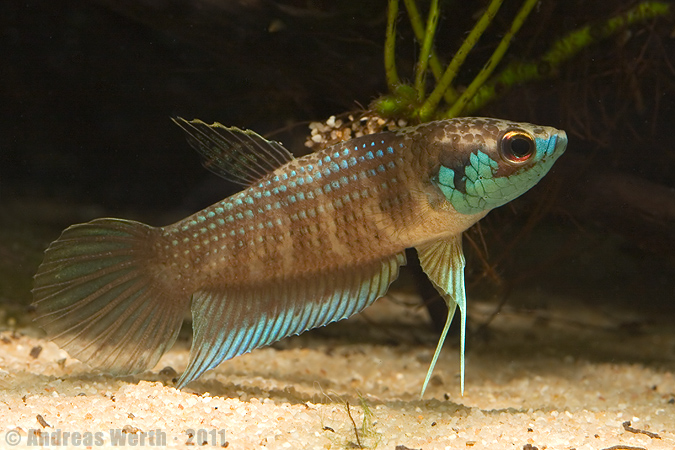
Betta kuehnei
Schindler & Schmidt, 2008
Max length60mm SL2.4in SLTank60 × 30cm24 × 12inTemp21–25°C70–77°FpH6.0–7.5It can be told apart from other members of the B. pugnax group by the following characters: caudal fin rounded in both males and females; chin bar and second postorbital stripe absent; adult males possess intensive blue or bluish-green iridescent (blackish in preservation) colouration on the sides of the head and throat extending from the snout tip to posterior edge of opercle; possession of two central body stripes, the upper extending from the pec...
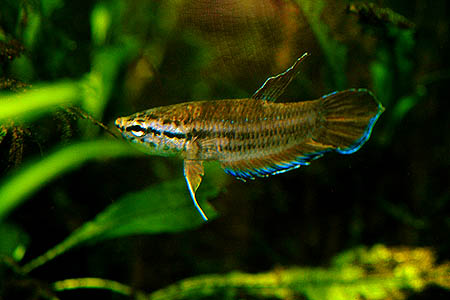
Betta pictaSpotted Betta
Valenciennes, 1846
Max length50mm SL2.0in SLTank60 × 30cm24 × 12inTemp22–28°C72–82°FpH5.5–7.5This species lends its name to the Betta picta complex of closely-related species, an assemblage of which members share the following combination of characters: unpaired fins rounded (anal fin sometimes pointed): I-III, 18-24 anal-fin rays; anal and caudal fins with dark distal margins, most pronounced in mature males; pre- and post-orbital stripes present; chin bar present; opercle with iridescent blue, green, or gold scales.
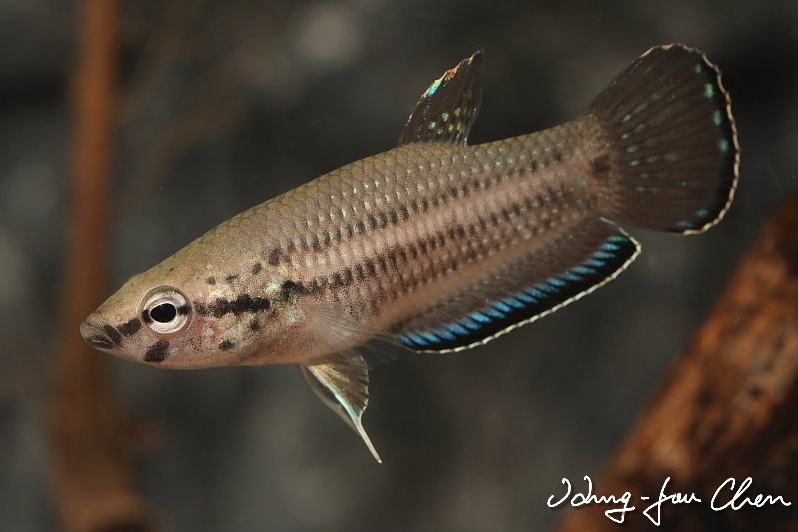
Betta simplex
Kottelat, 1994
Max length60mm SL2.4in SLTank60 × 30cm24 × 12inTemp20–28°C68–82°FpH7.0–8.0B. simplex is included in the Betta picta group/complex of closely-related species within the genus, an assemblage comprising species with the following shared characters: unpaired fins rounded (anal-fin sometimes tapering to a blunt point); anal-fin rays I-III, 18-24; dark marginal band on anal and caudal fins, more pronounced in mature males; presence of pre-orbital and post-orbital stripes; presence of chin bar on throat; iridescent green, gold, or blue scales on opercle.
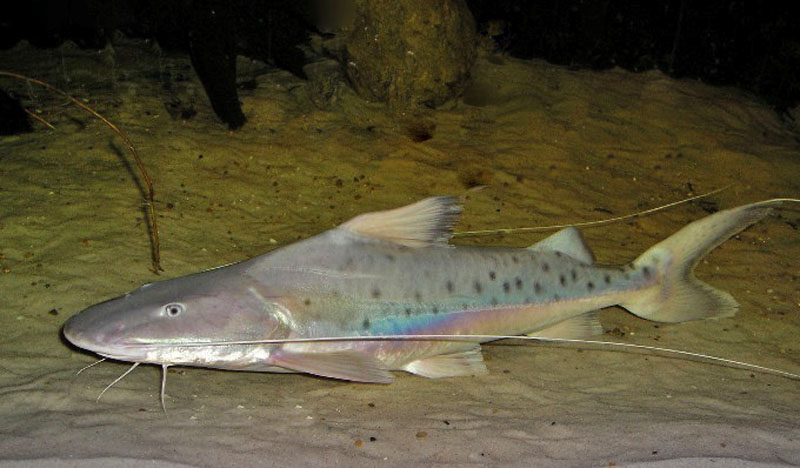
Brachyplatystoma capapretum
Lundberg & Akama, 2005
Max length880mm SL35in SLTanknot recordedTemp22–28°C72–82°FpH6.0–8.0This species can be told apart from the very similar-looking congener B. filamentosum by its smaller adult size (B. filamentosum can grow to almost 3 m in length), shorter maxillary barbels (never extending beyond base of adipose fin (vs. extending beyond base of adipose fin), moderately-forked with lobes of equal size (vs. deeply-forked caudal fin with upper lobe usually longer than the lower) and body col...