Results for “lateral”
Type a name: scientific, common, or one a species used to go by. Or narrow the catalogue with the filters.
Filters
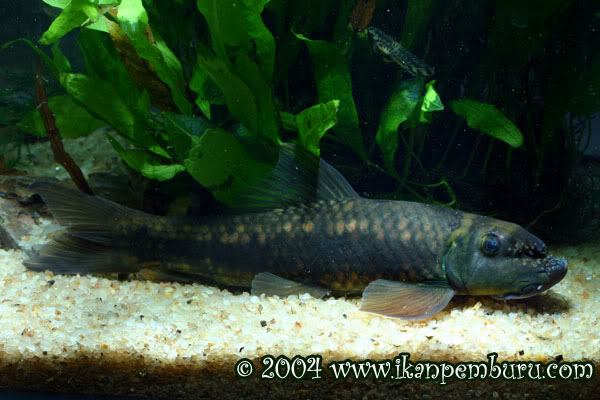
Garra bispinosa
Zhang, 2005
Max length130mm SL5in SLTanknot recordedTempnot recordedpHnot recordedG. bispinosa can be distinguished from all other congeners in Southeast Asia and China by the following combination of characters: a conspicuous, quadrate, anteriorly-directed proboscis orientated ventrally against the snout and anteriorly adorned with a single, large, uniscupid, acanthoid tubercle on the distal tip of each lobe; snout with a deep groove across its tip to form a transverse lobe; 34-35 lateral...
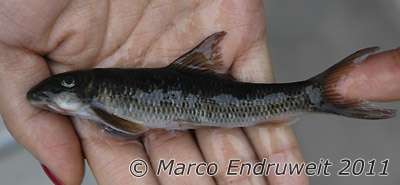
Garra imberba
Garman, 1912
Max length120mm SL5in SLTanknot recordedTempnot recordedpHnot recordedThis species can be distinguished from congeners inhabiting the Red River basin in Yunnan province, China, by the following combination of characters: no barbels; 46-52 lateral line scales; 16 circumpeduncular scales; pharyngeal teeth in 3 rows, 2.4.5-5.4.2; snout rounded, no secondary rostrum, no longitudinal...
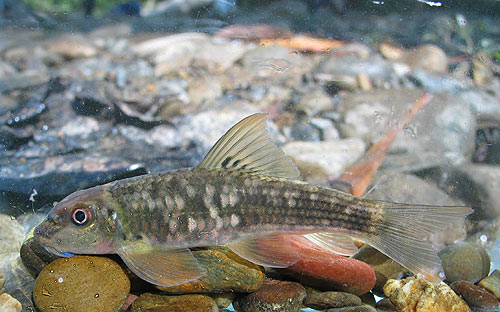
Garra notata
Blyth, 1860
Max length120mm SL5in SLTanknot recordedTempnot recordedpHnot recordedG. notata is one of a number of congeners to lack both a transverse groove and a proboscis on the snout. It also possesses 33-34 lateral line scales and a series of dark spots at the base of the dorsal-fin rays, and lacks scales on the lower portion of the body and abdomen. The genus Garra is a particularly enigmatic grouping with new taxa...
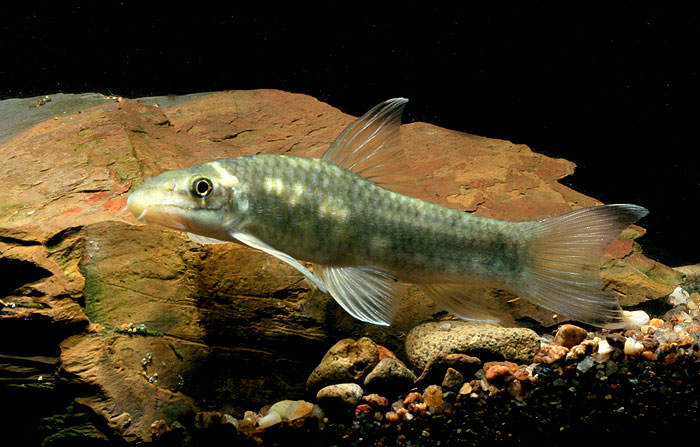
Garra rakhinica
Kullander & Fang, 2004
Max length60mm SL2.4in SLTanknot recordedTempnot recordedpHnot recordedG. rakhinica can be distinguished from other members of the genus by the following combination of characters: rostral furrow shallow and snout tip smoothly rounded; rostral lobe present, proboscis absent; scaled predorsal region, chest, and abdomen; two pairs of barbels; 28 lateral line scales; 16 circumpeduncular scale rows; colour pattern almost uniform greyish on body and caudal-fin; a dark spot immediately posterior to the upper extremity of the...
Geophagus brokopondo
Kullander & Nijssen, 1989
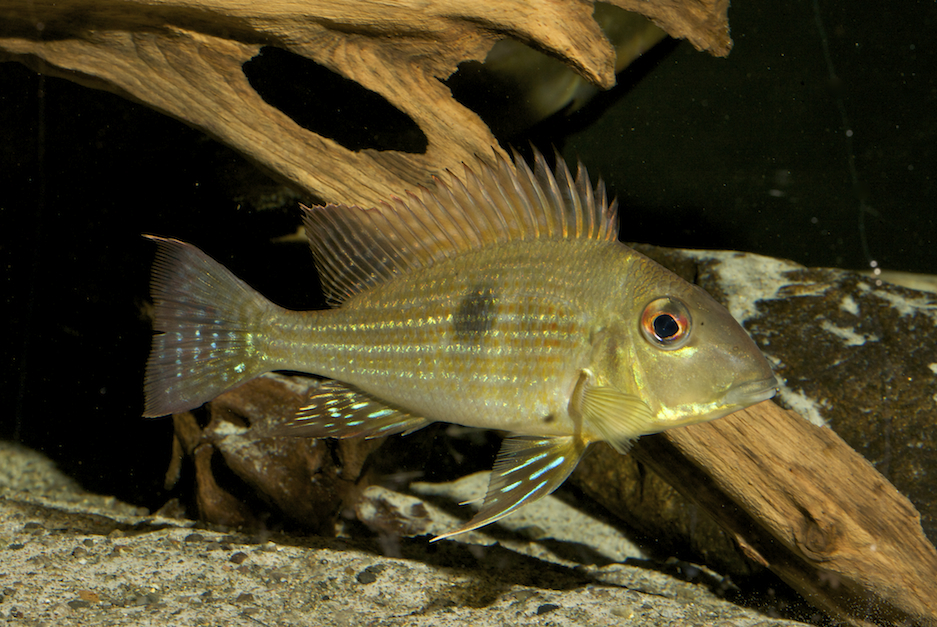
Max length150mm SL6in SLTank150 × 60cm60 × 24inTemp25–33°C77–91°FpH5.0–7.0This species is very rarely-traded since collections of fishes for commercial purposes aren't common in Suriname. It's a member of the nominal G. surinamensis 'group' of closely-related species within the genus and can be identified by a combination of characters including: no dark preopercular marking; six vertical/parallel bars on each flank (normally visible only when the fish are stressed, spawning or preserved); dark, squarish lateral spot positioned within the third vertical bar; sixth (posterior) bar elongate an...
Geophagus dicrozoster
López-Fernández & Taphorn, 2004
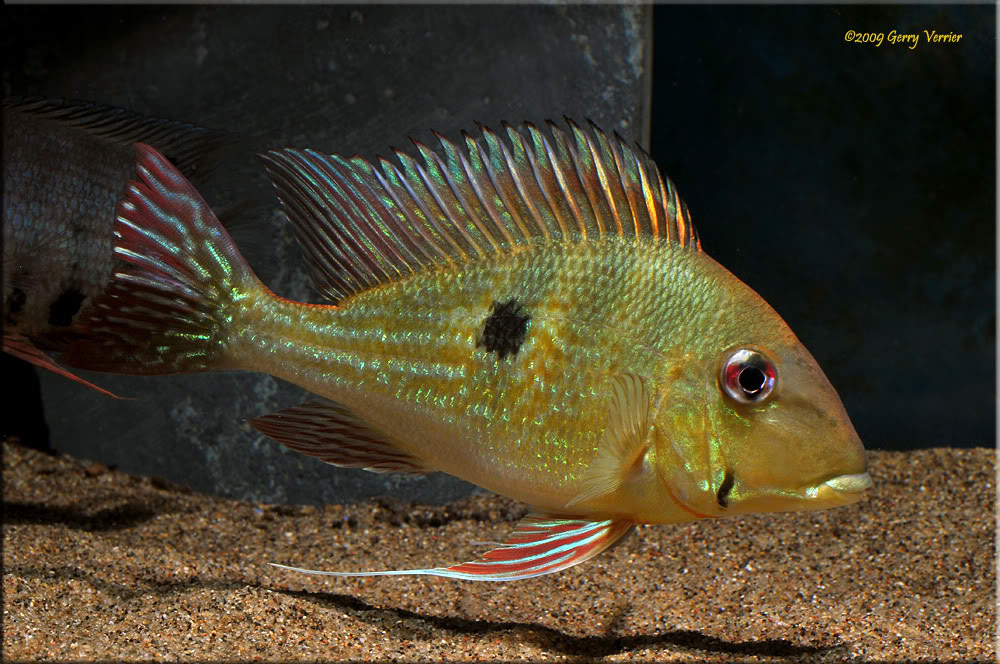
Max length202mm SL8in SLTank180 × 60cm72 × 24inTemp26–30°C79–86°FpH4.0–7.0It's a member of the nominal G. surinamensis 'group' of closely-related species within the genus and can be identified by a combination of characters including: presence of dark preopercular markings; seven parallel vertical bars on each flank (normally visible only when the fish are stressed, spawning or preserved); vertical bars four and five meet in such a way that they form a 'Y' shape; dark lateral spot positioned within the third vertical bar; caudal fin reddish with variable pattern of iridescent blue spots and stripes.
Geophagus winemilleri
López-Fernández & Taphorn, 2004
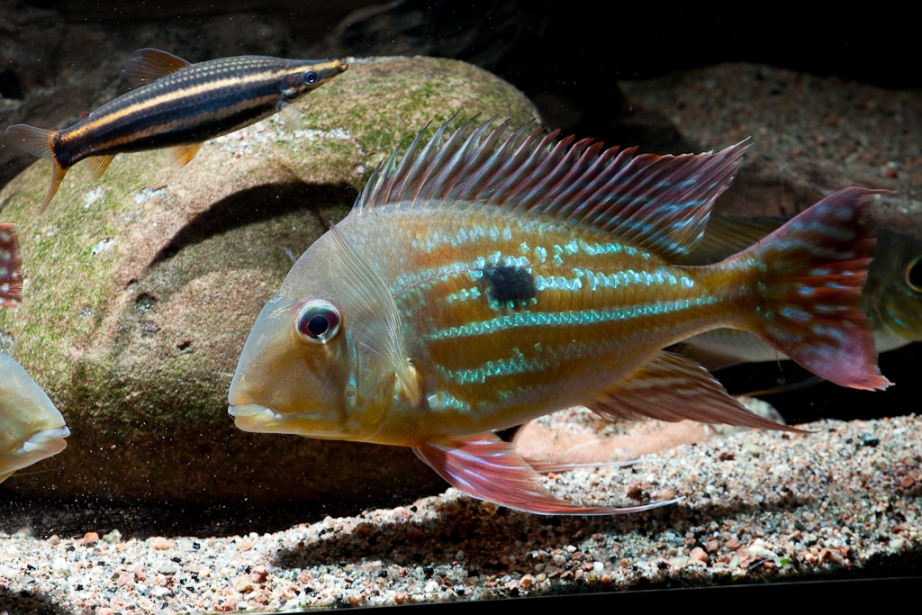
Max length200mm SL8in SLTank180 × 60cm72 × 24inTemp26–30°C79–86°FpH4.0–7.0This species is rare in the hobby although other species are sometimes sold under the name. It's a member of the nominal G. surinamensis 'group' of closely-related species within the genus and can be identified by a combination of characters including: possession of dark preopercular marking; four parallel, ventrally-inclined bars on each flank (normally visible only when the fish are stressed, spawning or preserved); dark lateral spot positioned within the second vertical bar; caudal fin red with variable pattern of large, iridescent blue to white spo...
Gymnostomus siamensisSiamese Mud Carp
Sauvage, 1881
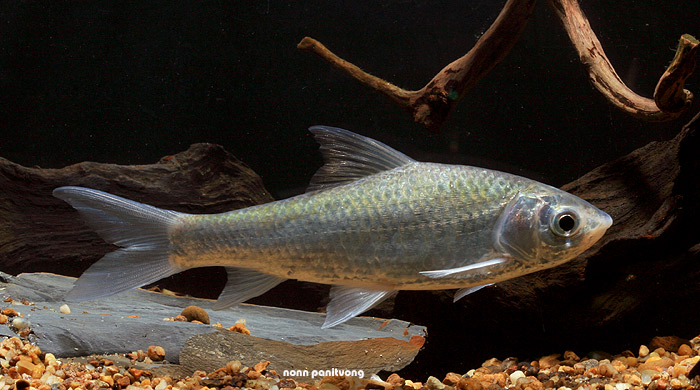
Max length150mm SL6in SLTanknot recordedTempnot recordedpHnot recordedG. siamensis can be distinguished from congeners by the following combination of characters: possession of 5½ lateral line scales; body relatively deep, depth fits 3.2-3.4 times in SL; head large and broad, width fits 5.5-6.7 times in SL; snout not or only weakly projecting; body plain silver in colour with no dark marking on caudal peduncle.
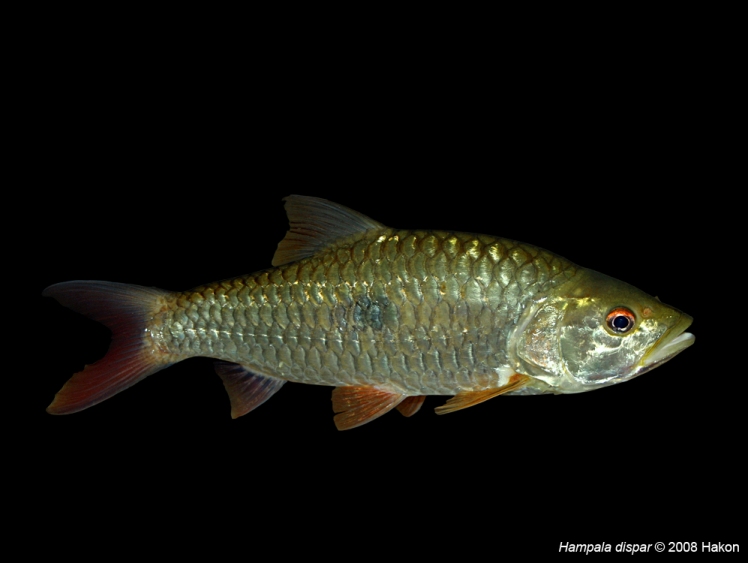
Hampala disparSpotted Hampala Barb
Smith, 1934
Max length350mm SL14in SLTank240 × 60cm96 × 24inTemp20–25°C68–77°FpH6.0–8.0The genus currently contains seven species of which H. macrolepidota and, to a lesser extent, H. dispar are the only ones seen with any regularity in the aquarium trade. As well as having the widest distribution H. macrolepidota is also the largest member of the group. All representatives can appear superficially similar at first glance, the exception being H. lopezi which is endemic to a single island in The Philippines and displays a unique lateral band-like marking on the flanks.
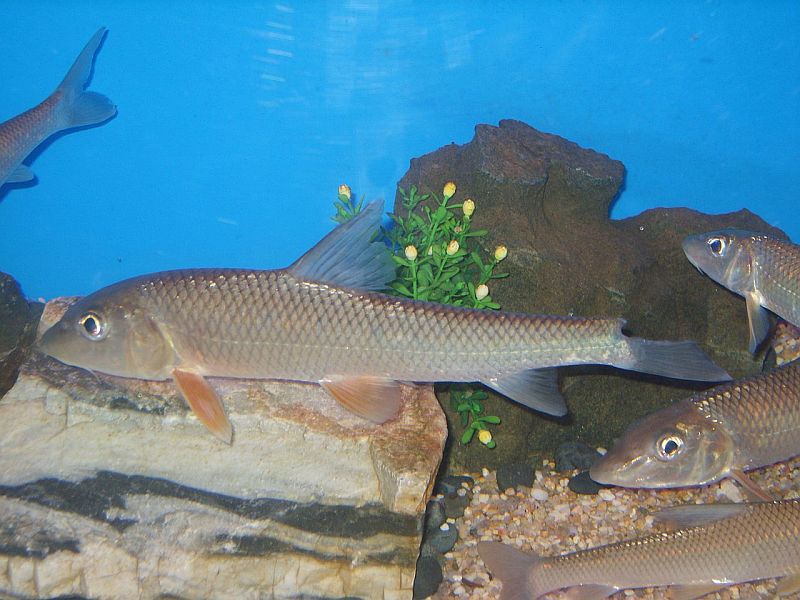
Hemibarbus labeoBarbel Steed
Pallas, 1776
Max length450mm SL18in SLTanknot recordedTempnot recordedpHnot recordedThis species can be distinguished from other members of the genus by the following combination of characters: absence of dark spots on body in adults; body elongate with slightly convex dorsal profile; head longer than body is deep; snout much longer than postorbital head length; lips well developed, lateral lobes of lower lip broad and thick with folds, median process small; barbel thickness shorter or equal to eye diameter; dorsal spine strong, ⅔ of HL; dorsal-fin origin closer to tip of snout than caudal-fin base base; 15+ gill rakers; 6½ branched anal-fin rays; posterior simple dorsal-fin rays ossified and spinous.
Hemichromis elongatusFive Star General
authority not recorded
Max length150mm SL6in SLTanknot recordedTemp22–25°C72–77°FpH6.5–7.5A real bruiser of a cichlid, H. elongatus is not seen for sale very often, and with good reason. Pound for pound it must rank as one of the most aggressive cichlids available in the hobby. It is such an efficient predator that, in some of its native countries, it is used to control populations of Tilapia. As a result it's definitely not recommended for the inexperienced aquarist. The common name is derived from the row of 5 dark markings that run laterally along the flanks of the fish. I...
Hemiodus ternetzi
authority not recorded
Max length105mm SL4in SLTank120 × 30cm48 × 12inTemp23–27°C73–81°FpH6.0–7.0Hemiodus species can be a very skittish when first introduced to the aquarium, but usually settle down over time, especially if a large number are being kept together. All of them look superficially similar, but can be distinguished by differences in patterning. None are particularly common in the hobby. H. ternetzi can be identified by the fact that the black lateral stripe extends to behind the eye, and thehas no pigmentation....
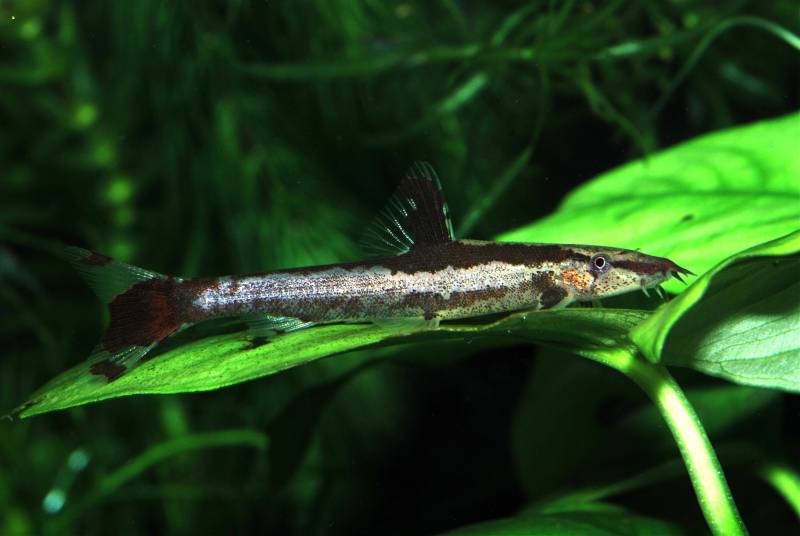
Homaloptera bilineata
Blyth, 1860
Max length100mm SL3.9in SLTank120 × 30cm48 × 12inTemp20–25.5°C68–78°FpH6.0–7.5This rarely-traded species is a member of the H. ocellata 'group' of closely-related congeners, an assemblage which currently comprises H. ocellata, H. bilineata, H. confuzona, H. orthogoniata, H. ogilviei and H. parclitella. Following Tan and Ng (2005) these share possession of a colour pattern with reddish tints and dark brown head markings, elongate head, slightly compressed body, 61-77 lateral line scales and dorsal-fin origin placed in advance of pelvic-fin origin.
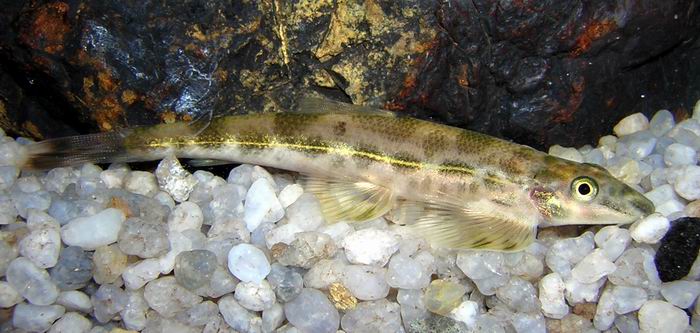
Homalopteroides stephensoni
Hora, 1932
Max length65mm SL2.6in SLTank60 × 30cm24 × 12inTemp20–25.5°C68–78°FpH6.0–7.5Tan (2009) redescribed H. stephensoni and it possesses the following unique character set: sub-inferior mouth with thin barbels; five principle, 12-13 secondary pectoral fin rays (usually 12); scaleless belly; pattern of keeled scales on anterior, dorsal portion of body consisting of a single central keel in the posterior third of each scale; 43-50 lateral line...
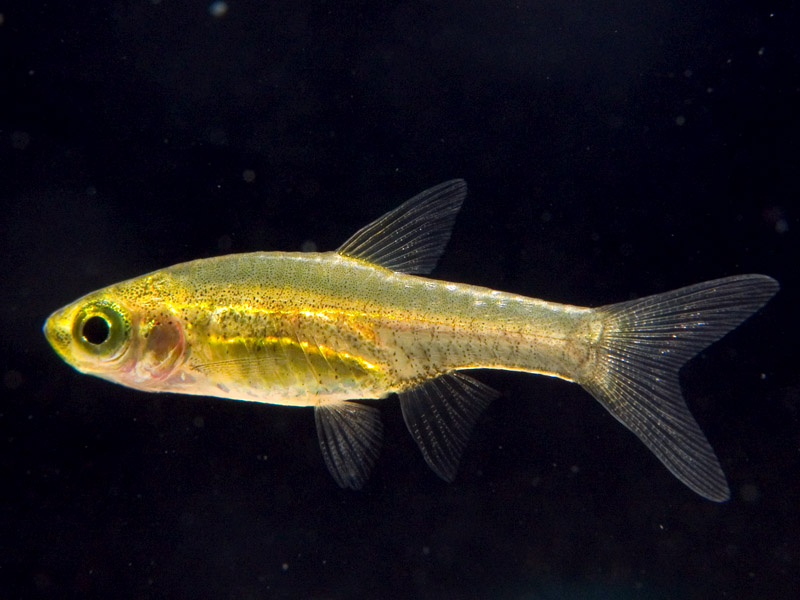
Horadandia atukorali
Deraniyagala, 1943
Max length30mm SL1.2in SLTank45 × 30cm18 × 12inTemp20–26°C68–79°FpH5.5–7.5The genus is monotypic and distinguished from other cyprinid taxa by a combination of a moderately compressed, elongated body with two rows of teeth on the lower pharyngeal (throat) bone and lacking barbles, visible lateral line and a symphyseal knob on the lower jaw (Talwar & Jhingran, 1991). Its small adult size evolved via a process known as miniaturisation characterised by sexually mature adults with a significantly reduced size of less than 20 mm SL. Among bony fishes cyprinids are one of the few groups in which this phenomenon occurs repeatedly...
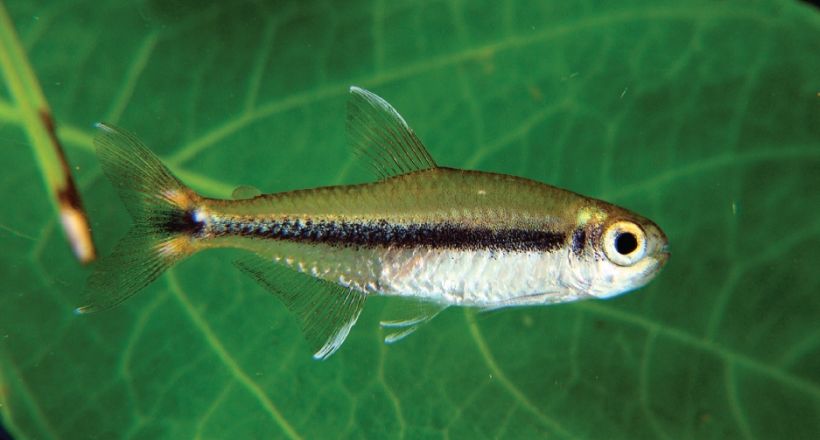
Hyphessobrycon stegemanniSavanna Tetra
Géry, 1961
Max length35mm SL1.4in SLTank60 × 30cm24 × 12inTemp20–25°C68–77°FpH5.5–7.5In the aquarium hobby the name Hyphessobrycon stegemanni has frequently been misapplied to a species that has been described as Hemigrammus ataktos Marinho, Dagosta, & Birindelli 2014. The reasons for this confusion are presumably that the two occur sympatrically in the rio Tocantins system and both possess a dark lateral stripe on the body.
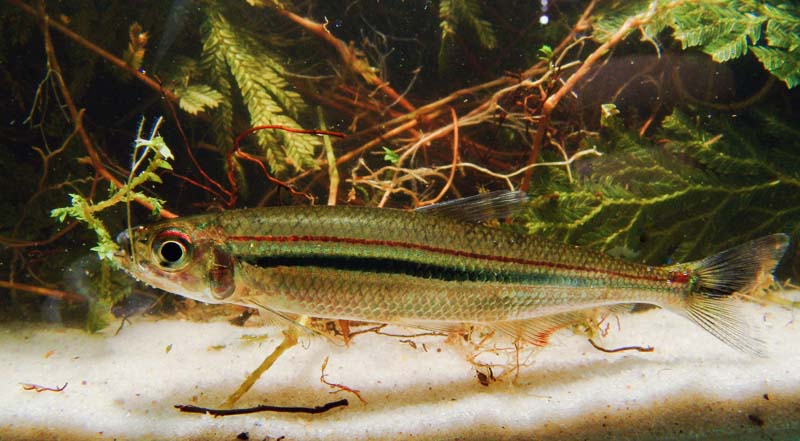
Iguanodectes geisleri
Géry, 1970
Max length55mm SL2.2in SLTank120 × 30cm48 × 12inTemp20–26°C68–79°FpH5.0–7.0I. geisleri is typically exported for the aquarium trade alongside the similar-looking congener I. adujai (Géry, 1970) but can be identified by presence (vs. absence in I. adujai) of a black lateral stripe on the body beneath the red stripe, and possession of 20-25 (vs. 28-34) anal-fin rays.
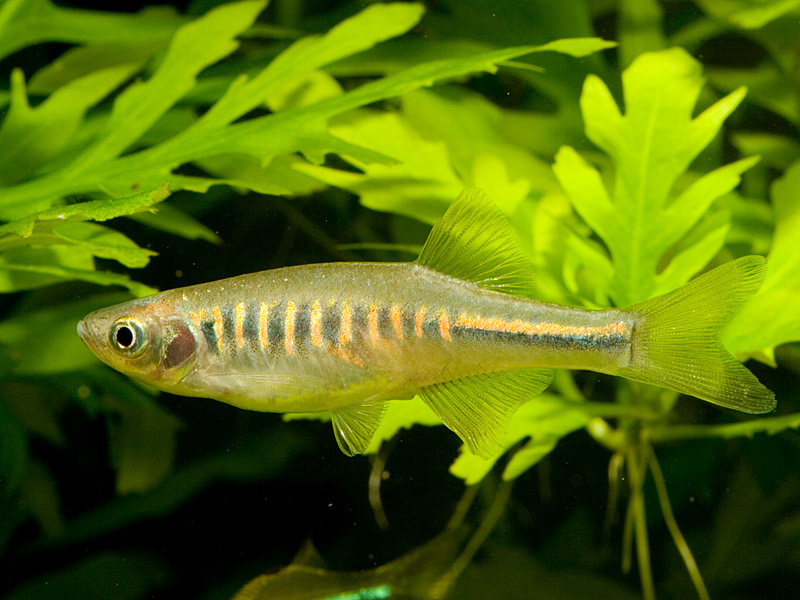
'Inlecypris' shanensis
Hora, 1928
Max length60mm SL2.4in SLTank80 × 30cm31 × 12inTemp18–26°C64–79°FpH6.0–8.0This species is sometimes referred to as 'Hora danio' or Salween danio'. It is distinguished from similar-looking species by a combination of characters as follows: lateral line complete or incomplete with 22-33 pored scales; absence of infraorbital process; 7 branched dorsal-fin rays; usually 10 or 11 branched anal-fin rays; barbels absent or rudimentary; flank markings comprising a series of narrow vertical bars on the anterior portion of each flank, fol...
Kryptopterus palembangensis
Bleeker, 1852
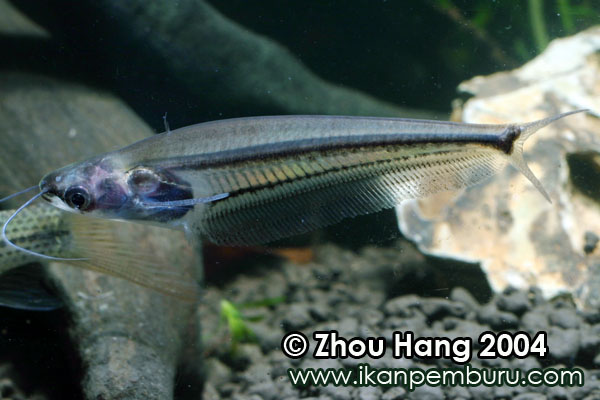
Max length140mm SL6in SLTank120 × 30cm48 × 12inTemp20–28°C68–82°FpH6.0–7.5This species is almost unheard of in the aquarium trade though may occasionally be exported among shipments of wild fishes from Sumatra. It's closely-related to K. bichirris but is told apart by presence (vs. absence) of a prominent, dark lateral stripe on each flank. Kryptopterus species are found only in Southeast Asia and the genus has been consi...
Labeo angra
Hamilton, 1822
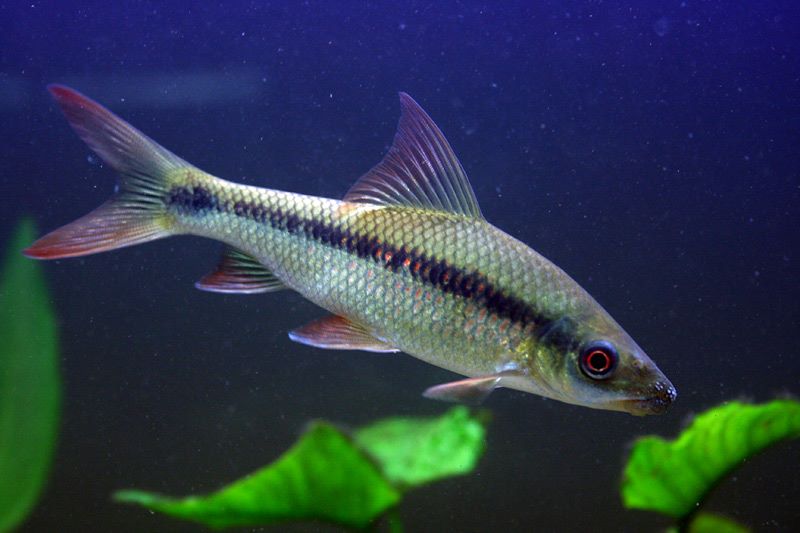
Max length200mm SL8in SLTanknot recordedTempnot recordedpHnot recordedThis species can be identified by colour pattern comprising a brownish dorsal surface, yellowish flanks and abdomen, and a black to bluish lateral stripe extending from the eye to the caudal-fin base.