Results for “scale”
Type a name: scientific, common, or one a species used to go by. Or narrow the catalogue with the filters.
Filters
Neolamprologus multifasciatus
authority not recorded
Max length45mm SL1.8in SLTanknot recordedTemp24–27°C75–81°FpH7.5–9.0This is probably the smallest known cichlid species and exhibits truly fascinating behaviour. The territories it establishes are very small, usually measuring no more than 6" across, but they are defended vigorously. The tiny fish will even bite hands or fingers that invade their 'personal space'! Highly recommended to anyone wishing to observe some unique behaviour on a small scale....
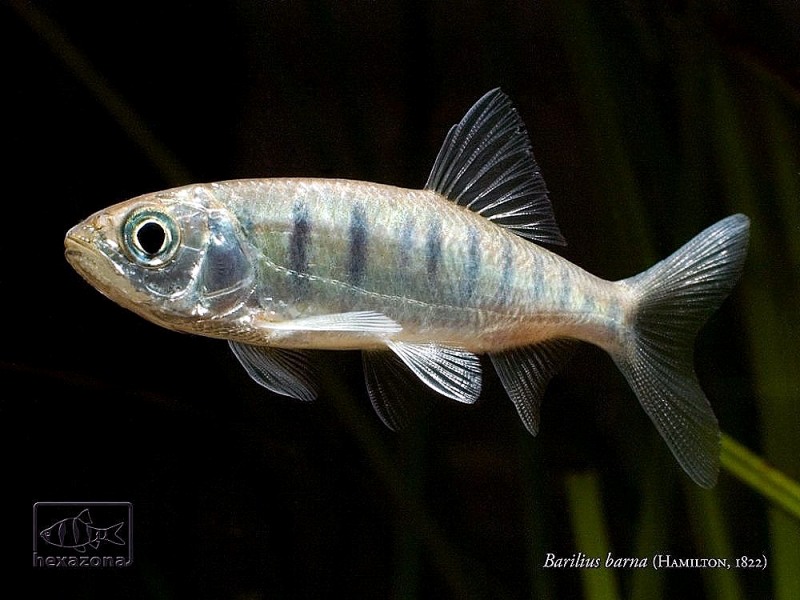
Opsarius barna
Hamilton, 1822
Max length130mm SL5in SLTank150 × 60cm60 × 24inTemp16–24°C61–75°FpH6.0–8.0This species occasionally appears in the ornamental trade, usually as 'striped hill trout' or 'banded hill trout'. It can be distinguished from congeners by the following combination of characters: lateral line complete with 40-42 scales; barbels absent; 10-13 anal-fin rays; body with 9-11 dark blue vertical bars; last dorsal-fin ray extending to caudal-fin base.
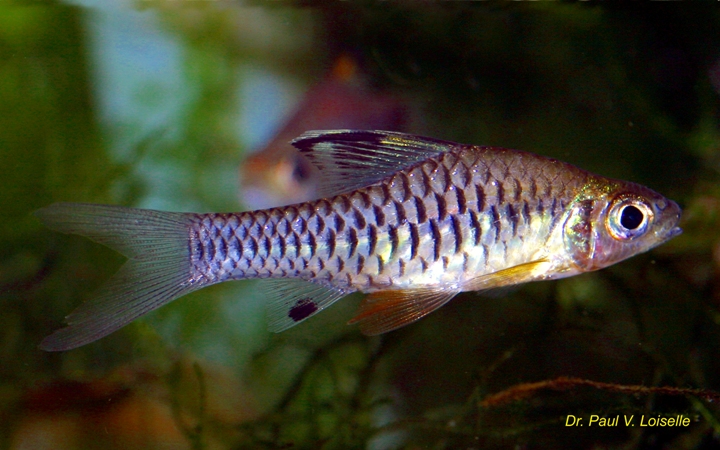
Oreichthys cosuatis
Hamilton, 1822
Max length43mm SL1.7in SLTank60 × 30cm24 × 12inTemp24–28°C75–82°FpH6.5–7.5An assortment of undescribed Oreichthys spp. from India, Myanmar and Thailand are currently traded as O. cosuatis. It can be distinguished from other described members of the genus by lacking a black blotch on the caudal peduncle, plus the following combination of characters: 2-3 perforated scales in lateral line; ½6½ between pelvic-fin origin and dorsal midline; presence of dark stripe in centre of anal-fin, forming a triangular blotch in adult individuals; dorsal-fin with whitish tip and broad, black, subdistal margin in the upper portion of the fin; 11-13 rows...
Osphronemus goramyGiant Gourami
authority not recorded
Max length700mm SL28in SLTank183 × 61cm72 × 24inTemp20–30°C68–86°FpH6.5–8.0An incredibly hardy, long-lived fish which can survive for over 20 years in captivity. These fish develop real personality and can learn to recognise their owner. They are often sold as cute juveniles in aquatic shops with no information provided as to their adult size. The young have an attractive barred patterning which fades as the fish grow, which they do very quickly. A golden variety also exists in aquaria. O. goramy is cultured commercially for food on a large scale in several countrie...
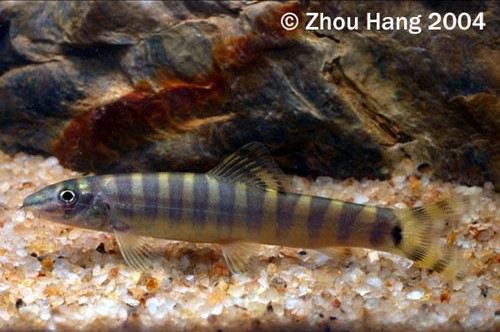
Parabotia lijiangensis
Chen, 1980
Max length83mm SL3.3in SLTank120 × 30cm48 × 12inTemp20–24°C68–75°FpH6.0–7.5It's told apart from congeners by a combination of characters as follows: large scales present on body and sides of head; caudal fin deeply forked with subequal lobes; 10-13 dark, vertical bars on the body; a dark, ocellated spot in the centre of the caudal-fin base; two bars on top of head, dorsal-fin with two rows of greyish spots; caudal-fin lobes with 3-4 dark bands on each; anal-fin with one indistinct band and another, more distinct, submarginal band; ventral fins with two indistinct bands.
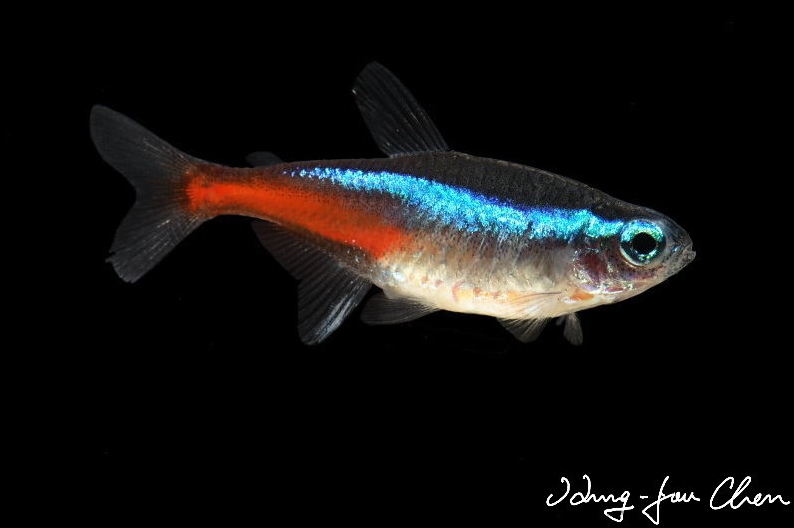
Paracheirodon innesiNeon Tetra
Myers, 1936
Max length30mm SL1.2in SLTank60 × 30cm24 × 12inTemp21–25°C70–77°FpH4.0–7.5One of the most popular and instantly recognisable fishes in the aquarium hobby, this species has been selectively-bred to produce a number of additional strains including albino, 'golden' (leucistic), short-bodied, long-finned and 'diamond' (in which the dorsal surface is covered in reflective scales). Unfortunately years of commercial breeding have somewhat affected the genetic vigour of the ornamental strain meaning morphological defects an...
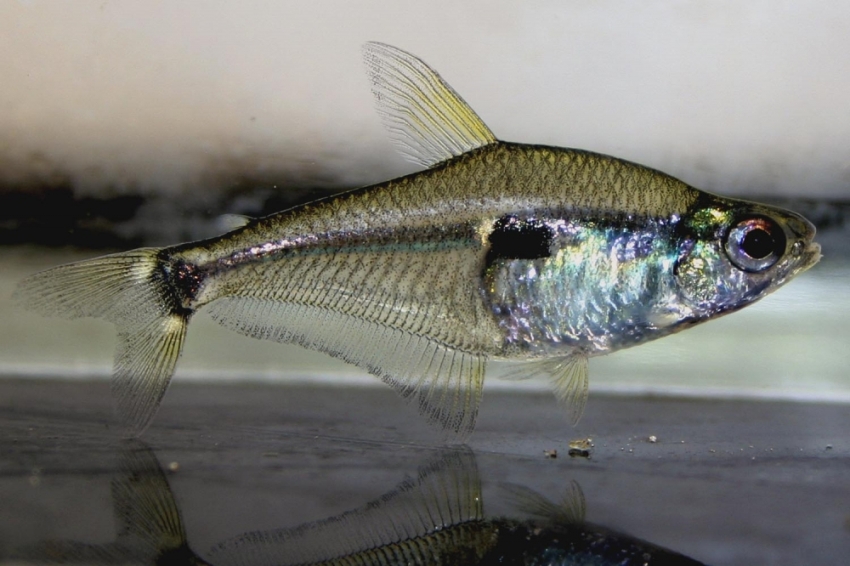
Phenacogaster tegatus
Eigenmann, 1911
Max length45mm SL1.8in SLTank60 × 30cm24 × 12inTemp20–28°C68–82°FpH6.0–7.5This species has been traded as 'six-eyed tetra' in reference to its colour pattern comprising two dark spots on each flank plus the eye. Based on the extensive review of the genus by Lucena and Malabarba (2010), in which nine new species were described, P. tegatus can be told apart from congeners by the following combination of characters: lateral line incomplete with 8-13 perforated scales; laterally elongate humera...
Piaractus brachypomusRed-bellied Pacu
authority not recorded
Max length880mm SL35in SLTank300 × 90cm118 × 36inTemp23–28°C73–82°FpH4.8–7.5Know as the pirapitinga in its native countries, this is the one of the largest species of scaled fish found in the Amazon basin. This alone should tell you much of what you need to know about its suitability as an aquarium inhabitant. In reality it's debatable as to whether the species should be considered an aquarium subject at all. While pacu rarely reach their maximum size in captivity, they're still easily capable of growing to a couple of feet in length. The myth that fish will o...
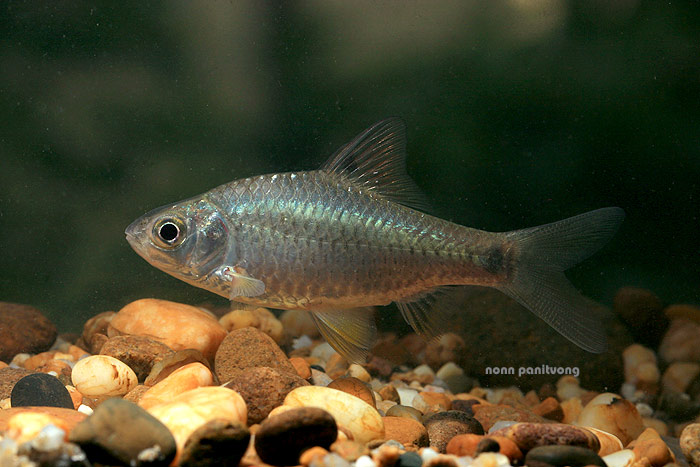
Puntius cholaSwamp Barb
Hamilton, 1822
Max length130mm SL5in SLTank120 × 45cm48 × 18inTemp18–26°C64–79°FpH5.5–8.0P. chola was retained in Puntius sensu stricto, of which members are defined by the following combination of characters: adult size usually less than 120 mm SL; maxillary barbels absent or present; rostral barbels absent; 3-4 unbranched and 8 branched dorsal-fin rays; 3 unbranched and 5 branched anal-fin rays; last unbranched dorsal-fin ray weak or strong and unserrated; lateral line complete with 22-28 pored body scales...
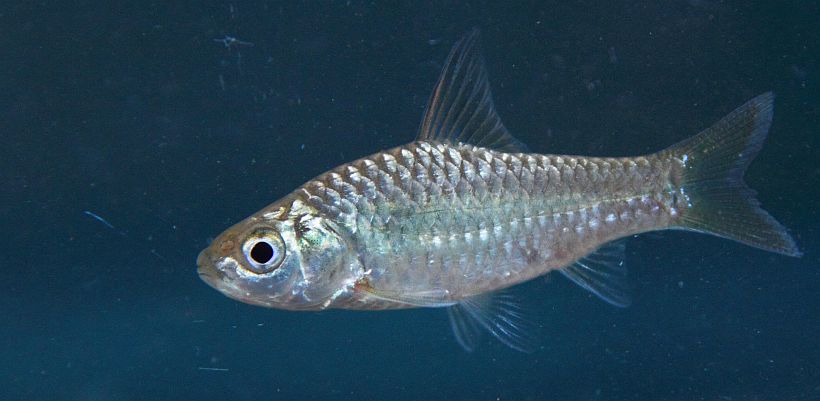
Puntius kamalikaKami's Barb
Silva, Maduwage & Pethiyagoda, 2008
Max length75mm SL3.0in SLTank120 × 30cm48 × 12inTemp20–27°C68–81°FpHnot recordedPrior to its description P. kamalika was referred to as P. amphibius, a putatively valid species probably restricted to western India. It differs from all congeners in the following combination of characters: 4½/1/2½ scales in a transverse line between the mid-dorsal...
Rasbora einthoveniiBrilliant Rasbora
authority not recorded
Max length90mm SL3.5in SLTank120 × 30cm48 × 12inTemp22–26°C72–79°FpHnot recordedThis is one of the more commonly-seen rasboras in the hobby and is ideal for the medium-sized community set-up. It shares some close similarities with R. jacobsoni but can be most easily identified by the fact it lacks dark reticulated scales above the lateral stripe. This stripe also has noticeably more uneven or "crinkly" edges in R. einthovenii than in R. jacobsoni or indeed any other species of laterally-striped Rasbora. A further distinguishing combination of characters for both t...
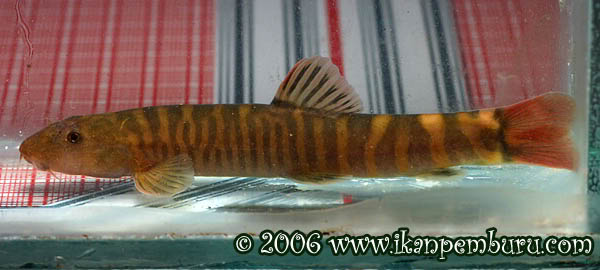
Schistura yingjiangensis
Zhu, 1982
Max lengthnot recordedTank80 × 30cm31 × 12inTemp20–24°C68–75°FpH6.0–7.5Following Kottelat (1990) the genus Nemacheilus is characterised by a combination of characters as follows: elongate body; complete lateral line; presence of enlarged scales above and below the lateral line in some species; caudal-fin forked to deeply forked with enlarged upp...
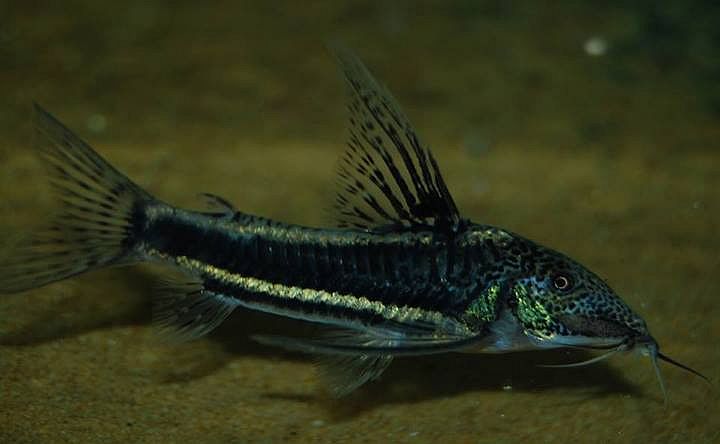
Scleromystax sp. C113
authority not recorded
Max length65mm SL2.6in SLTank120 × 30cm48 × 12inTemp16–24°C61–75°FpH5.0–7.5This fish is one of a number of apparently unidentified Scleromystax species known in the aquarium hobby. The genus Scleromystax is included in the family Callichthyidae, of which members are often referred to collectively as 'armoured' or 'mailed' catfishes group due to the presence of bony plates in place of scales on the body.
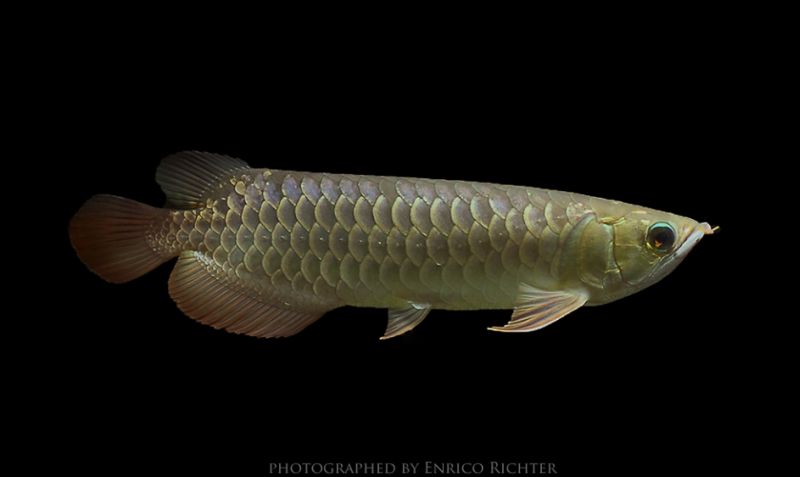
Scleropages formosusAsian Arowana
Müller & Schlegel, 1840
Max length900mm SL35in SLTanknot recordedTemp22–28°C72–82°FpH5.0–8.0This species is distinguished from its Australian congeners S. jardinii and S. leichardti by possessing a lower number of lateral line scales (21-26 vs 32-36). It occurs naturally in a number of colour forms of which three were elevated to distinct species status in 2003, but the current majority view is that all represent S. formosus pending a detailed review. Kottelat (2013) mentions that the red form may...
Serrasalmus geryiGéry's Pirambeba
authority not recorded
Max length181mm SL7in SLTank120 × 60cm48 × 24inTemp22–29°C72–84°FpHnot recordedS. geryi is sometimes sold as the "violet-line piranha" in reference to the unusal purple stripe that runs from the base of the lower jaw over the top of the body. It makes a stunning aquarium fish as it also possesses highly reflective scales, deep orange/red eyes and a compressed, high-bodied shape. Far from widespread in nature or the hobby, it tends to be pricey and highly sought-after when available. There are currently 24 described species of Serrasalmus, many of which look s...
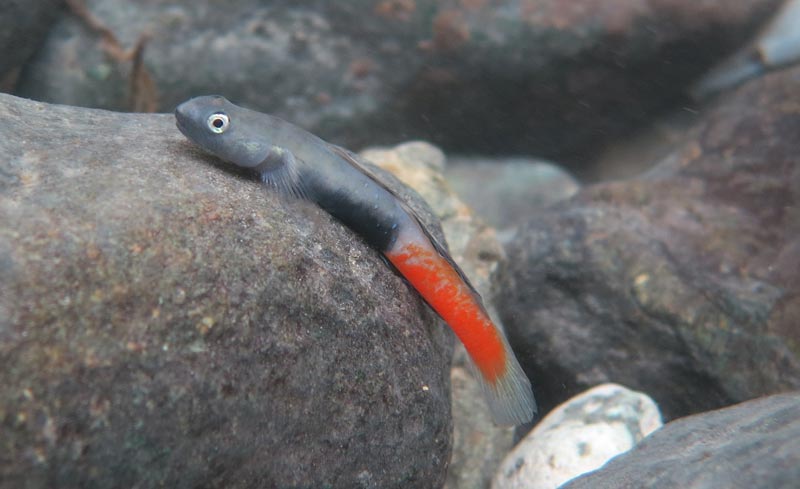
Sicyopus cebuensis
Chen & Shao, 1998
Max length45mm SL1.8in SLTank60 × 30cm24 × 12inTemp22–28°C72–82°FpH6.5–7.5This species is not in the aquarium trade though is maintained by a few private collectors. It can be distinguished from all other members of the genus by the following combination of characters: first dorsal-fin withfirst dorsal-fin elongate in males; anterior portion of body with loosely-arranged ctenoid scales; head, entire nape to first dorsal-fin base, pectoral base, and belly naked; male colour pattern comprising creamy-yellow anterior portion of body with dark blotch at midbody and bright orange/red in postero...
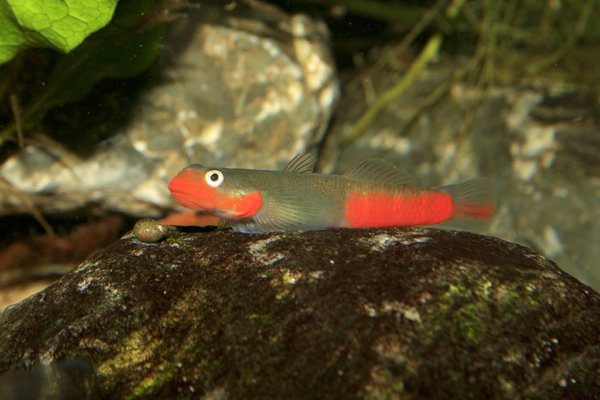
Sicyopus exallisquamulus
Watson & Kottelat, 2006
Max length52mm SL2.0in SLTank60 × 30cm24 × 12inTemp22–28°C72–82°FpH6.5–7.5Live colouration of this species was not included in the original description but the specimens in our images were identified by Dr. Ronald E. Watson, the principal author, as S. exallisquamulus. It's normally misidentified and traded as the Sri Lankan endemic species Sicyopus jonklaasi. It is diagnosable from congeners by the following combination of characters: 14-15 pectoral-fin rays; both genders exhibit small, widely-spaced scales...
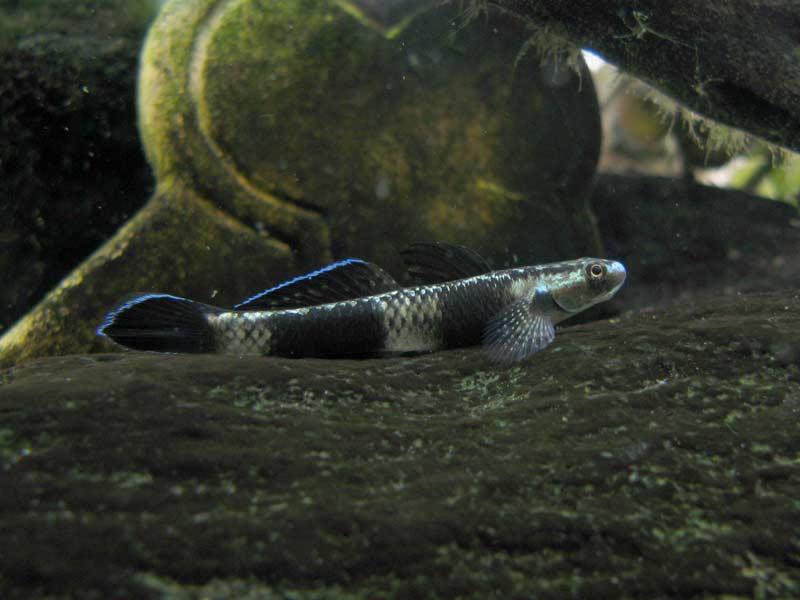
Stiphodon pelewensis
Herre, 1936
Max length45mm SL1.8in SLTank60 × 30cm24 × 12inTemp22–28°C72–82°FpH6.5–7.5This species seems not to have appeared in the trade and is similar to several congeners in appearance, most notably S. weberi which is native to the Maluku archipelago and other islands around the coast of Papua (formerly Irian Jaya). The two are said to be most easily-distinguished by examination of the belly which is fully-scaled in S. pelewensis but lacks scalation in S. weberi. The Gobiidae is the most speciose vertebrate family and notoriously problematic in terms of identifying fishes down to sp...
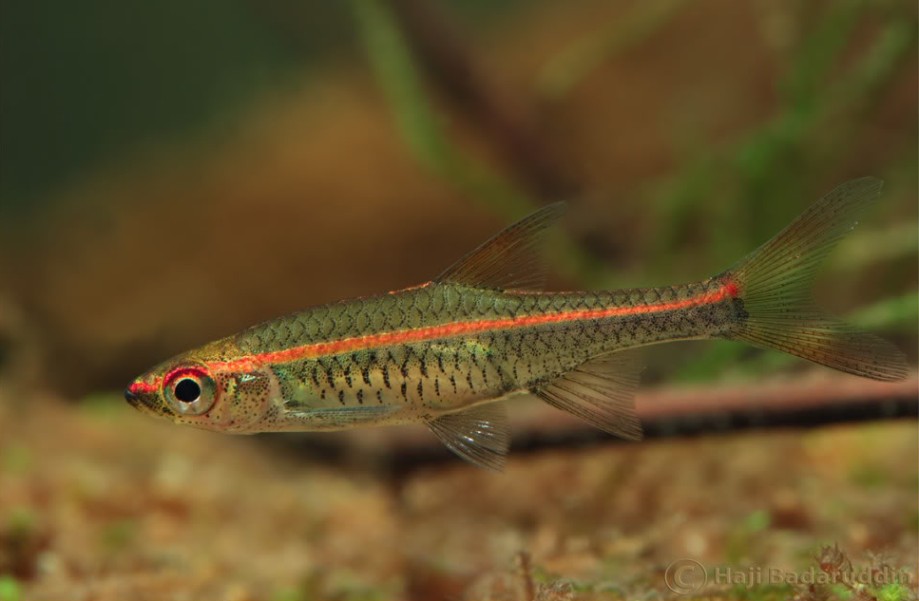
Trigonopoma pauciperforatumGlowlight Rasbora
Weber & de Beaufort, 1916
Max length60mm SL2.4in SLTank90 × 30cm36 × 12inTemp21–26°C70–79°FpH4.0–7.5This species is also sold as the 'redline' rasbora which is something of a misnomer as in reality the colour of the lateral stripe that gives rise to the name can vary from deep orange to golden depending upon the collection locality of the fish as well as diet, condition, and even mood. Some specimens also have a second, darkish stripe beneath the other which seems to vary in length and intensity depending on a similar array of factors. Older fish tend to possess a greater degree of black edging to the scales, especially in the ventral portion of the body.
Uaru amphiacanthoidesUaru
authority not recorded
Max length254mm SL10in SLTanknot recordedTemp27–30°C81–86°FpH6.0–7.0A large, peaceful South American cichlid. Uaru can make very interesting aquarium subjects. They require clean, well filtered water on the higher end of the temprature scale. Avoid keeping with overly aggressive fish, Uaru are happiest when kept in groups or pairs....