Results for “Maracyn-2”
Type a name: scientific, common, or one a species used to go by. Or narrow the catalogue with the filters.
Filters
Corydoras oiapoquensisFlag-tailed Panda Cory
authority not recorded
Max length55mm SL2.2in SLTank45 × 38cm18 × 15inTemp23–28°C73–82°FpH6.0–7.2This species occurs alongside a near-identical congener, C. condiscipulus in nature. In fact condiscipulus literally means 'schoolmate', as the species are often found shoaling together. The only external difference between the 2 seems to be the longer snout and wider distribution within the Rio Oyapock of condiscipulus....
Corydoras pastazensisPastaza Cory
Weitzman, 1963
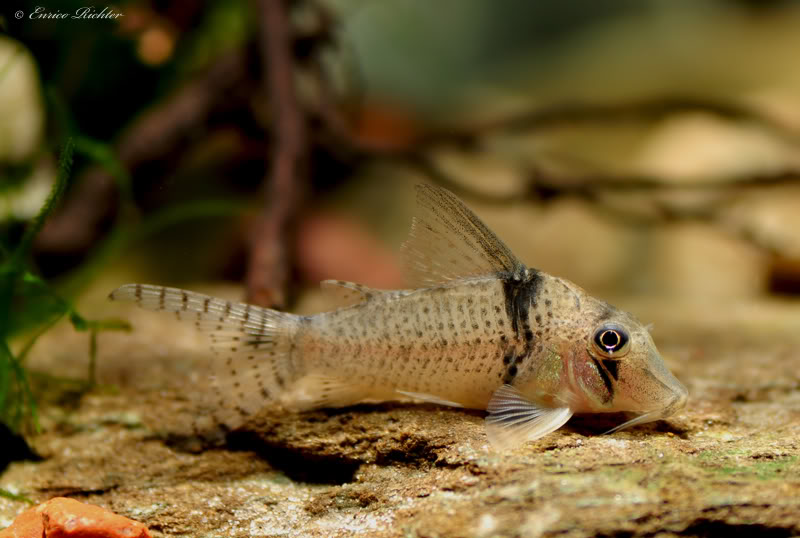
Max length70mm SL2.8in SLTank90 × 30cm36 × 12inTemp22–28°C72–82°FpH5.0–7.0The form from the Río Tigre, previously referred to as the subspecies C. p. orcesi (Weitzman & Nijssen, 1970) was raised to full species status as C. orcesi by Isbrücker (2001), but this decision does not appear to have been followed by all authorities some of which consider C. p. orcesi a synonym of C. pastazensis. The two species are relatively easy to tell apart by colour pattern; in C. pastazensis the dark vertical...
Corydoras septentrionalisNorthern Longnose Cory
authority not recorded
Max length60mm SL2.4in SLTank60 × 38cm24 × 15inTemp22–27°C72–81°FpH6.0–7.5There are 2 other species that superficially resemble C. septentrionalis. These are C. simulatus and C. amapaensis. Simulatus differs from septentrionalis by the absence of the third set of small, upper (rictal) barbels, situated behind the other two pairs in both septentrionalis and amapaensis. Amapaensis differs in that it has a clear caudal fin. This fin is noticeably barred in septentrionalis....
Corydoras spectabilisMillenium Cory
authority not recorded
Max length70mm SL2.8in SLTank60 × 38cm24 × 15inTemp23–27°C73–81°FpH6.5–7.2This species was named the millenium cory because it was the first catfish species to be described in the year 2000. It was in fact described in late 1999, but the date of the journal containing the information was 01/2000. There are 4 other species of cory that may be confused with C. spectabilis at first glance. These are C. guapore, C. ourastigma, C. similis and C. caudimaculatus. They can be distinguished quite easily upon close examination, however. C. guapore, whilst exhibiting similar pat...
Corynopoma riiseiSwordtail Characin
authority not recorded
Max length65mm SL2.6in SLTank75 × 38cm30 × 15inTemp22–28°C72–82°FpH6.0–7.0This unusual tetra is not often seen on sale in the trade, but is never particularly expensive when available. It is currently the only member in the genus although the family Glandulocaudinae actually contains about 20 member genera. None are especially popular aquarium fish, although a couple of Mimagoniates species are occasionally seen in the hobby. Almost all members of the Glandulocaudinae are characterised by the presence of secretory caudal glands in male fish, the particular structur...
Cryptoheros nanoluteus
Allgayer, 1994
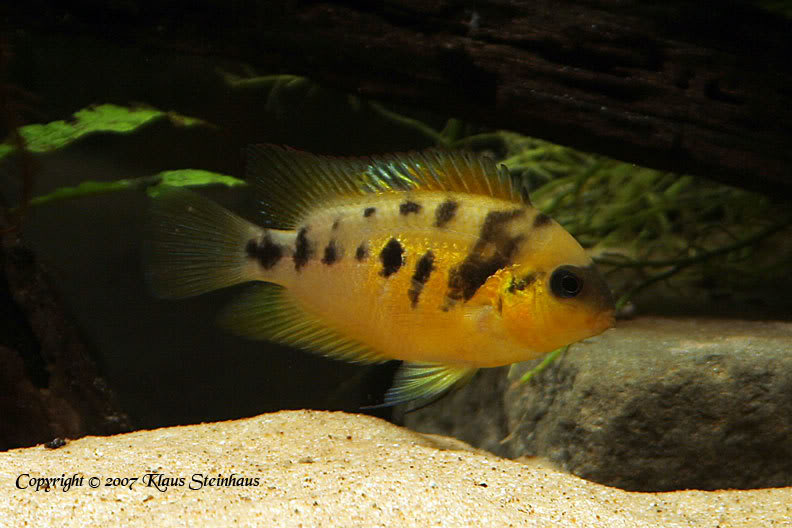
Max length65mm SL2.6in SLTank90 × 30cm36 × 12inTemp23–26°C73–79°FpH5.0–7.5Inhabits moderate to fast-flowing, well-oxygenated, lowland streams and rivers with pH measured to range between 5.4 and 8.0 and temperature 22-31°C/71.6-87.8°F, while conductivity at one habitat was 600 µS. Substrates may be composed of open mud or sand, or strewn with variably-sized boulders depending on locality, while aquatic plants have not been observed. It occurs sympatrically with the convict cichlid, Amatitlania nigrofasciata with oth...
Ctenopoma weeksiiMottled Bushfish
authority not recorded
Max length100mm SL3.9in SLTanknot recordedTemp24–28°C75–82°FpH6.2–7.2There are currently 20 species of Ctenopoma, most of which most are seldom seen in the aquatic trade. Originally the genus was significantly larger, but a number of original members were reclassified by Norris in 1995. Whilst describing what were apparently two new Ctenopoma, he discovered sufficient morphological anomalies in the fish to erect a new genus for them. The name Microctenopoma was chosen, although this does not relate to the size of the fish. Similar defining characteristics were al...
Cyclocheilichthys lagleri
Sontirat, 1985
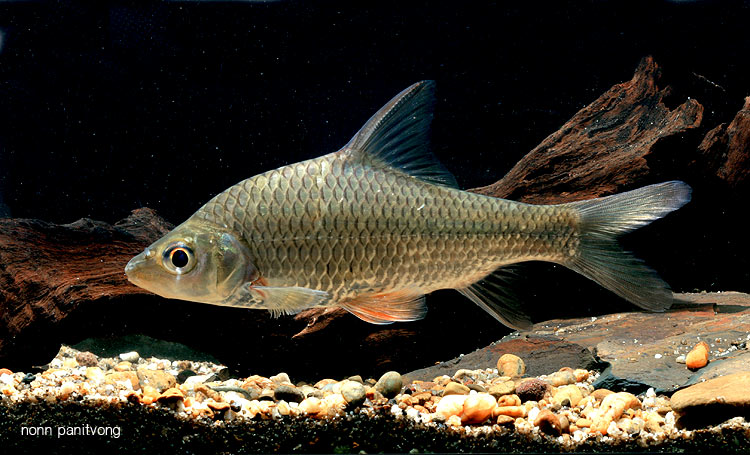
Max length200mm SL8in SLTank180 × 60cm72 × 24inTemp20–26°C68–79°FpH6.0–8.0As with others in the genus little has been written regarding captive care of this species, but it makes a peaceful and unusual addition to larger aquaria. The best way of obtaining it may be to keep an eye on shipments of wild fishes from Indochina. It can be distinguished from congeners by possessing 20 circumpeduncular scales and lacking barbels entirely.
Cyphotilapia gibberosa
Takahashi & Nakaya, 2003
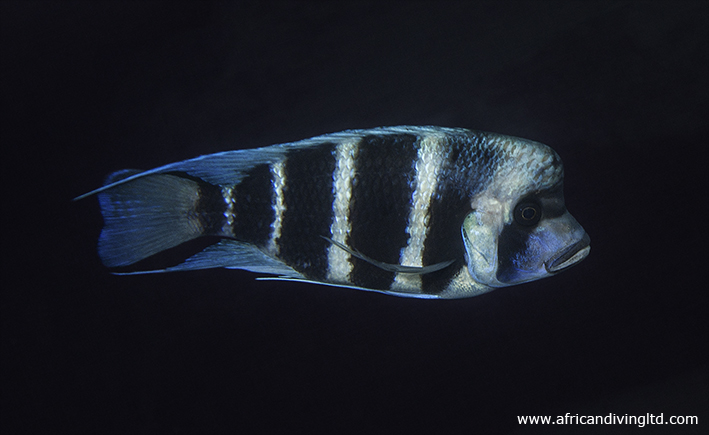
Max length255mm SL10in SLTank240 × 60cm96 × 24inTemp23–27°C73–81°FpH8.0–9.0Prior to the description of C. gibberosa in 2003 the genus Cyphotilapia was considered monotypic for almost a century. Members are separated from other cichlid taxa inhabiting Lake Tanganyika by possession of a hump on the forehead and broad vertical bands on the body, although the latter tend not to be visible in large males.
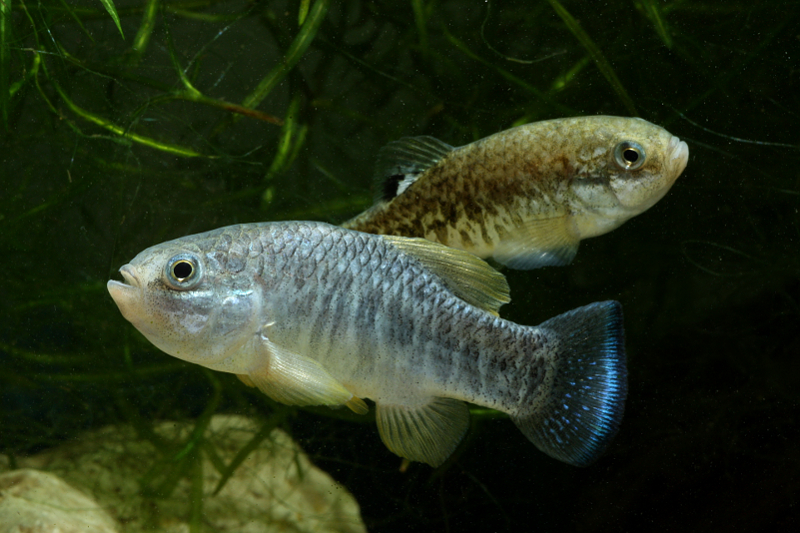
Cyprinodon julimesJulimes Pupfish
De la Maza-Benignos & Vela-Valladores, 2009
Max lengthnot recordedTank60 × 30cm24 × 12inTempnot recordedpHnot recordedEl Pandeño de los Pando has a surface area of around 287 m² with depth ranging from 40-80 cm but there is an abandoned artificial channel which has an area of approximately 437 m². Water temperature fluctuates between 38-48°C/100.4-118.4°F and the spring is considered one of the hottest environments inhabited by fish in the world.
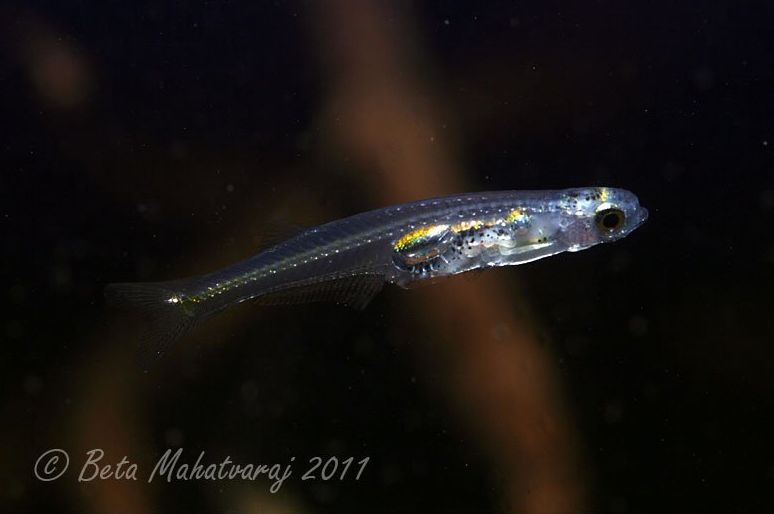
Danionella priapus
Britz, 2009
Max length16mm SL0.6in SLTank45 × 30cm18 × 12inTemp18–24°C64–75°FpH6.0–8.0As far as we know this species has not been bred in aquaria although Pete Liptrot and Paul Dixon of the Bolton Museum Aquarium, UK, have achieved great success with an unidentified congener. They first noticed fry from their group of 24 adults after moving the school to a dedicated set-up planted with mature Java moss and have since rewarded with regular batches of fry.
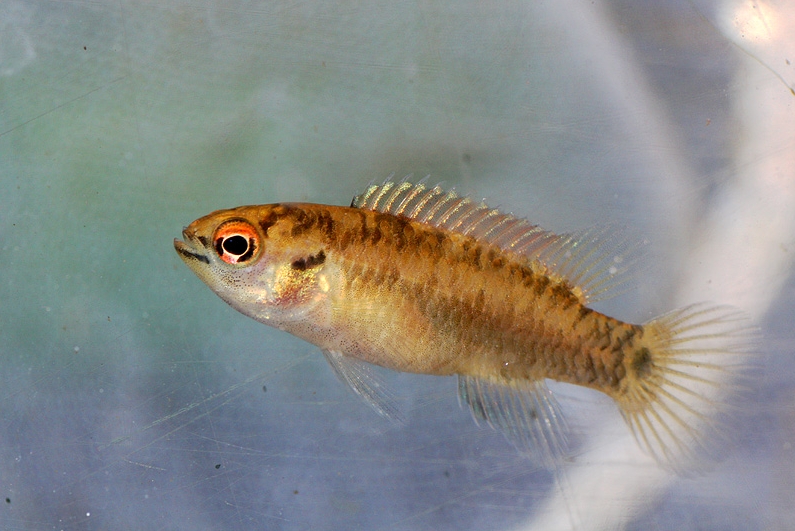
Dario urops
Britz, Ali & Philip, 2012
Max length28mm SL1.1in SLTanknot recordedTempnot recordedpHnot recordedThis species has not yet entered the aquarium trade but is maintained by a handful of private collectors. Though described in 2012 it was in fact first collected in the latter half of the 19th century with Day (1875-1878) having mentioned the presence of Badis dario in ‘Wynaad’ and its occurrence "along the Western Ghats" (the chain of mountains in southwestern India).
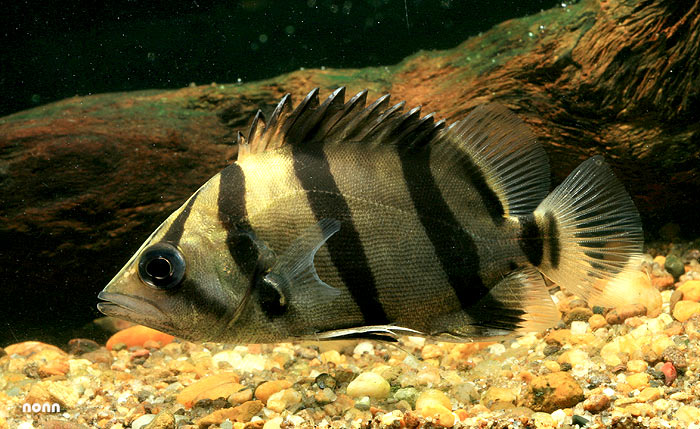
Datnioides undecimradiatusMekong Tiger Perch
Roberts & Kottelat, 1994
Max length300mm SL12in SLTank180 × 60cm72 × 24inTemp20–28°C68–82°FpH5.5–7.5An efficient, largely piscivorous, predator with highly protrusible mouthparts. In the aquarium, juveniles can be offered chironomid larvae (bloodworm), small earthworms, chopped prawn, and suchlike, while adults will accept strips of fish flesh, whole prawns, mussels, live river shrimp, larger earthworms, etc. Older individuals do not require feeding on a daily basis, with 2-3 times per week sufficient.
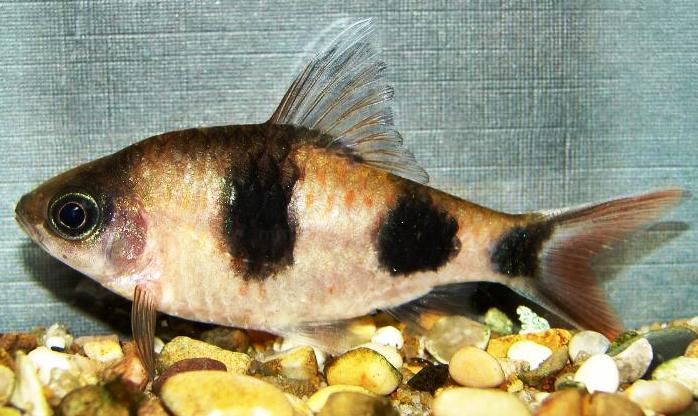
Dawkinsia arulius
Jerdon, 1849
Max length100mm SL3.9in SLTank120 × 45cm48 × 18inTemp19–25°C66–77°FpH6.0–7.5The fish appearing in the majority of earlier literature as P. arulius or 'arulius barb', and often still traded as such, is the related D. tambraparniei. Though similar the latter can be told apart from D. arulius by possession of filamentous extensions to the dorsal-fin rays in males, longer maxillary barbels measuring > ½ eye diameter, i.e., 2.4 - 4.7 % SL, and some aspects of colour pattern.
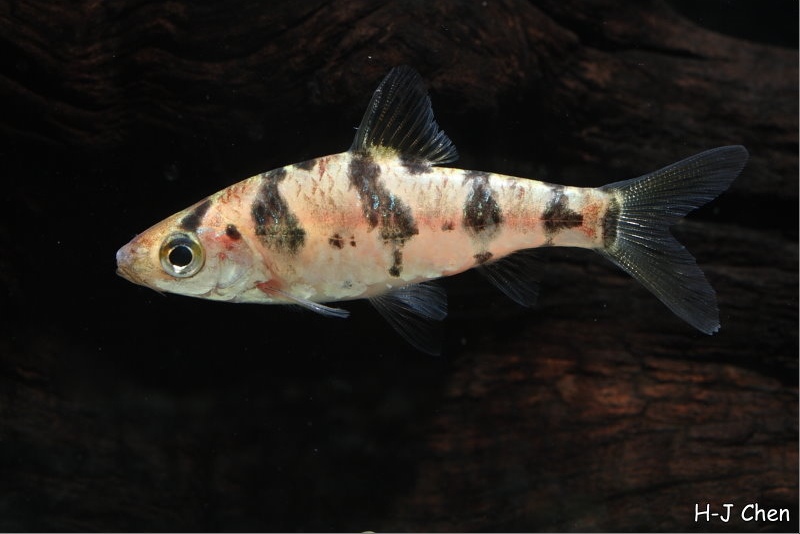
Desmopuntius foerschi
Kottelat, 1982
Max length55mm SL2.2in SLTank80 × 30cm31 × 12inTemp20–28°C68–82°FpH5.0–7.0D. foerschi is sometimes traded as 'boomerang barb' or 'Foersch's fire barb' and is included in a group of closely-related, similar-looking fishes which were moved into the new genus Desmopuntius by Kottelat (2013). It can be told apart from other vertically-striped congeners by possession of additional dark blotches between the second, third and fourth vertical bars and a further marking at the posterior base o...
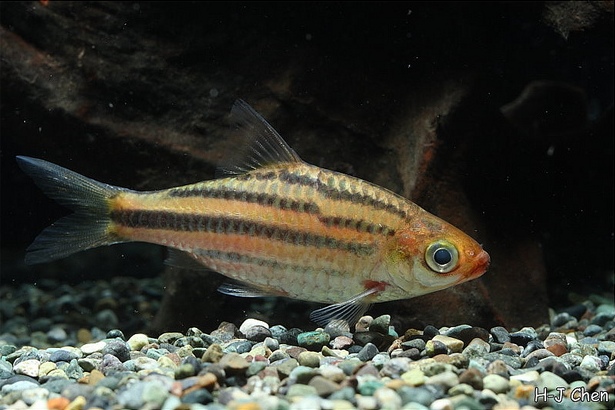
Desmopuntius trifasciatus
Kottelat, 1996
Max length100mm SL3.9in SLTank120 × 45cm48 × 18inTemp20–25°C68–77°FpH5.0–7.0This species is one of three similar-looking members of the genus alongside D. johorensis and D. trifasciatus, while it may also be confused with Striuntius lineatus. Juveniles of all except S. lineatus exhibit a vertically-barred rather than laterally-striped colour pattern, the metamorphosis to adult patterning beginning at around 20 mm SL and normally being complete by 30-40 mm.
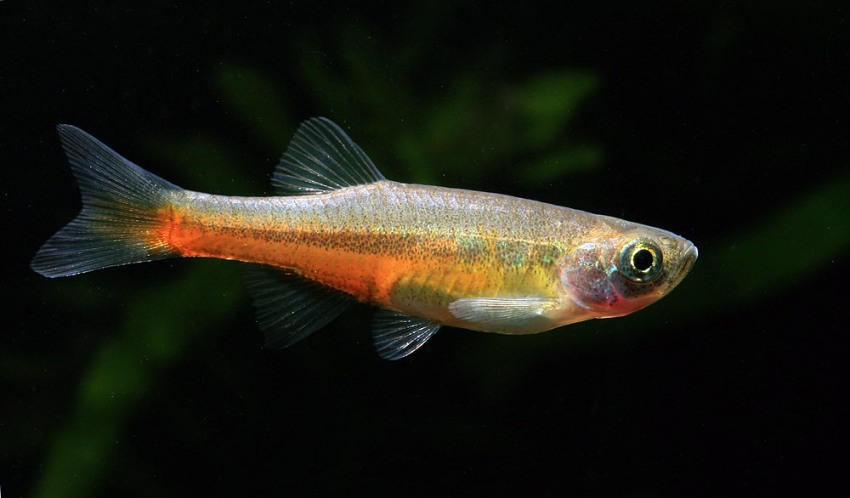
Devario acuticephalus
Hora, 1921
Max length40mm SL1.6in SLTank80 × 30cm31 × 12inTemp16–22°C61–72°FpH6.0–7.0Described from Manipur state, northeastern India and also known from neighbouring Nagaland state. In the original description Hora refers to it as 'widely-distributed' in the region but during an assessment conducted by the IUCN in 2010 it was recorded only from a handful of localities and restricted to an area of less than 15,000 square kilometres. Most habitats lie within the Manipur river basin, including the tributary Iril and Khuga drainages, and the Di...
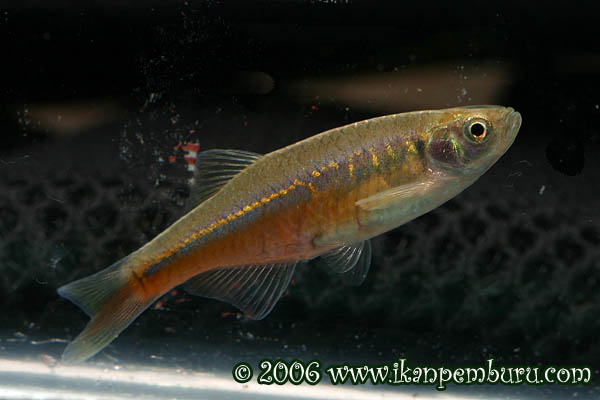
Devario chrysotaeniatus
Chu, 1981
Max length75mm SL3.0in SLTank120 × 30cm48 × 12inTemp23–26°C73–79°FpH6.0–7.0This species is poorly known and first appeared in the hobby during 2005 but has rarely been seen since, probably because its natural waters lie outside the range of most commercial collectors. It can be distinguished by a combination of characters including: lateral line complete; infraorbital process absent; two pairs of short barbels; 8-9 branched dorsal fin rays; 12-13 branched anal fin rays; P stripe originating above pelvic fin and extending to en...
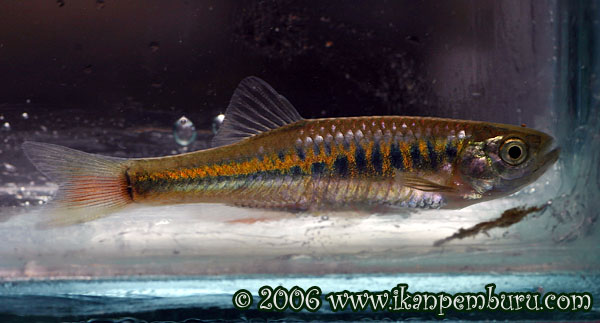
Devario interruptus
Day, 1870
Max length60mm SL2.4in SLTank75 × 30cm30 × 12inTemp16–21°C61–70°FpH6.5–7.5This species has mostly been collected from small (1-2 metres wide, 20-40 cm deep), moderate-to-swiftly-flowing streams with clear water, substrates of sand, gravel and rocks and no aquatic vegetation. Marginal vegetation was present in some cases, offering a degree of shade, and sympatric species included an unidentified Schistura sp., S. vinciguerrae, Misgurnus anguillicaudatus, Garra qiaojiensis,...
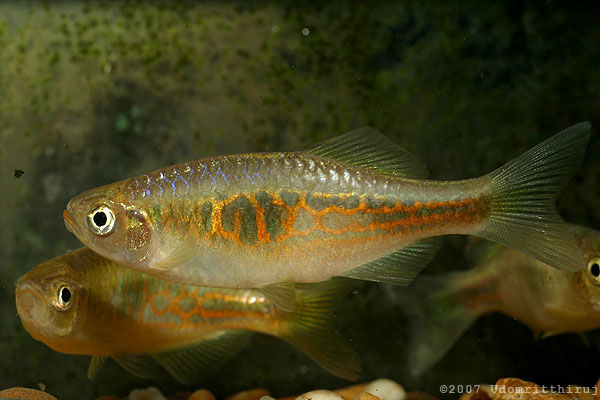
Devario sp. 'giraffe'
authority not recorded
Max length80mm SL3.1in SLTank120 × 30cm48 × 12inTemp18–26°C64–79°FpH6.0–8.0This unidentified species was first collected in 2007 but very little is known about it. The vernacular name refers to the colour pattern on the body which resembles that of a giraffe, and it's known to be collected in Myanmar although its distribution and natural habitat remain a mystery.