Results for “river”
Type a name: scientific, common, or one a species used to go by. Or narrow the catalogue with the filters.
Filters
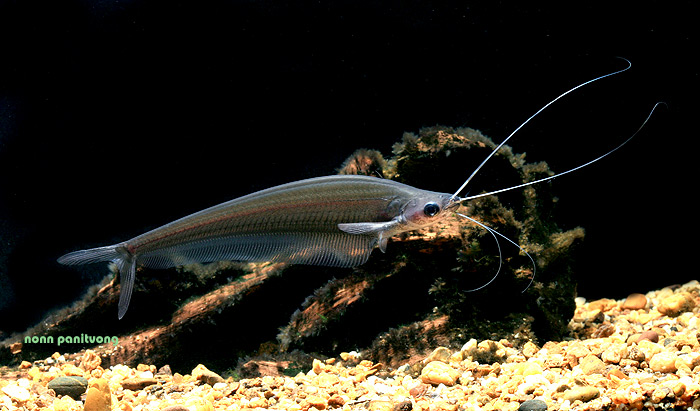
Kryptopterus limpok
Bleeker, 1852
Max length260mm SL10in SLTank240 × 60cm96 × 24inTemp20–28°C68–82°FpH6.0–7.5Type locality is 'Palembang, Sumatra, Indonesia', but this species is widely-distributed throughout much of Southeast Asia including major river systems in Thailand, Laos, Cambodia, Vietnam and Peninsular Malaysia plus the Greater Sunda Islands of Sumatra, Borneo and Java. It's been extensively recorded from the Mekong, Cha...
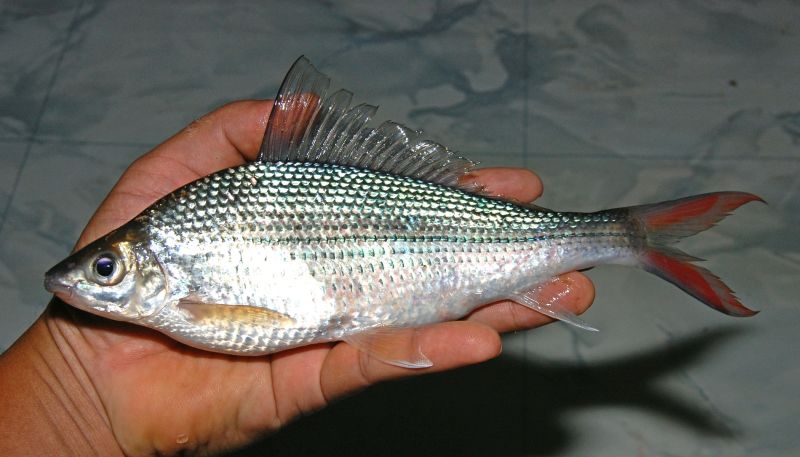
Labiobarbus fasciatus
Bleeker, 1853
Max length200mm SL8in SLTanknot recordedTempnot recordedpHnot recordedKnown from the Pahang River system in southern Peninsular Malaysia, and the Greater Sunda Islands of Sumatra and Borneo. On the latter records exist from the Kapuas, Barito, and Mahakam watersheds in Kalimantan, the Indonesian portion of the island Type locality is 'Pangabuang, Lampong Province, Sumatra, Indonesia'.
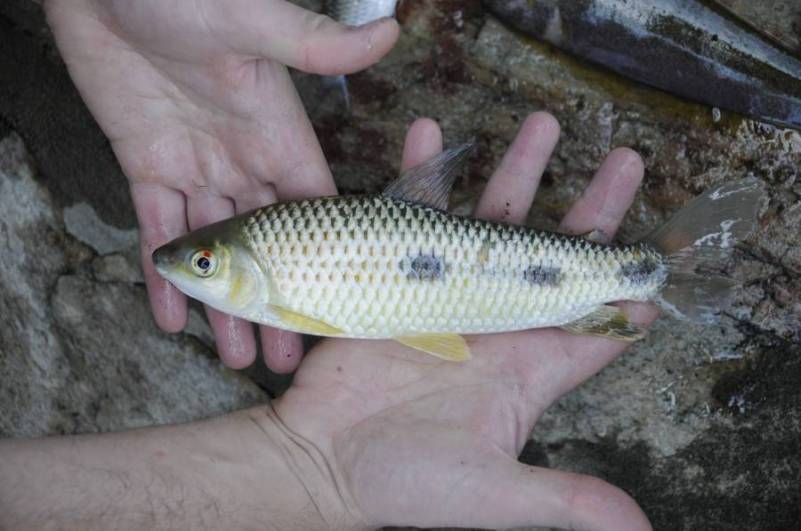
Leporinus fridericiThreespot Leporinus
Bloch, 1794
Max length400mm SL16in SLTank240 × 90cm96 × 36inTemp20–28°C68–82°FpH5.0–8.0This species was described from Suriname but no specific locality was given. It's currently accepted to occur throughout much of the Amazon river system in Brazil, Peru and Bolivia with additional records from coastal drainages of Guyana, Suriname and French Guiana plus the island of Trinidad (Trinidad and Tobago).
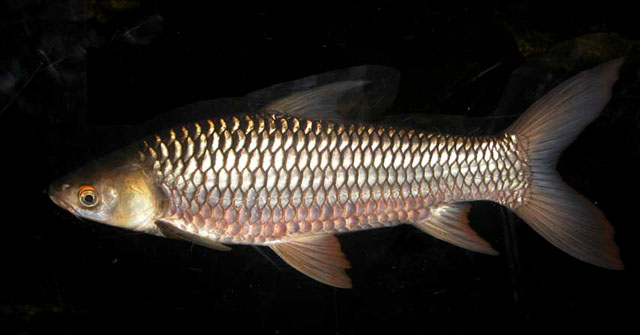
Leptobarbus hoeveniiMad Barb
Bleeker, 1851
Max length1000mm SL39in SLTanknot recordedTemp20–26°C68–79°FpH6.0–8.0Apparently native to Peninsular Malaysia plus the Greater Sunda Islands of Borneo, Sumatra, and Java. Reports of this species from the Mekong, Chao Phraya, and other rivers in Indochina refer to the congener L. rubripinna (see 'Notes'). Type locality is 'Indonesia: Borneo: Kalimantan Selatan: Banjarmasin'.
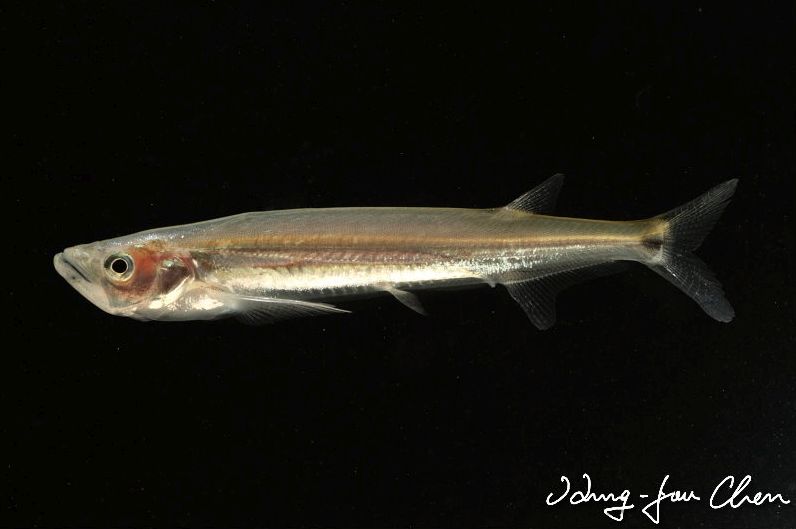
Macrochirichthys macrochirusGiant Sword Minnow
Valenciennes, 1844
Max length800mm SL31in SLTanknot recordedTemp20–26°C68–79°FpH6.0–8.0It is thought to have been extirpated from the Chao Phraya and Mae Klong rivers, Lake Songkhla, and the entire island of Java due to a variety of anthropogenic factors, and the Mekong populations have also been drastically reduced. In particular, it is sensitive to pollution and gillnetting, and is heavily overfished.
Melanotaenia affinisNew Guinea Rainbowfish
authority not recorded
Max length120mm SL5in SLTank120 × 30cm48 × 12inTemp20–30°C68–86°FpH6.5–8.0M. affinis was one of the first rainbowfish species to be imported for the hobby in any numbers. There are several geographical variants, three of which can be found in the hobby. The "standard" form has a large natural range and is the most commonly encountered. The "Pagwi" form has a very limited distribution, being known only from a tributary of the Sepik River in New Guinea, while the "Bluewater Creek" form has only been collected from a single location close t...
Melanotaenia fluviatilisAustralian Rainbowfish
authority not recorded
Max length100mm SL3.9in SLTank90 × 30cm36 × 12inTemp20–25°C68–77°FpH6.5–8.0Also known as the Murray River or crimson-spotted rainbowfish, this species is not as common in the hobby as some of its relatives, but can still be found from time to time. It is easily confused with the very similar M. duboulayi, indeed these two were once grouped together as a single species. However, there are clear differences in patterning, fin ray counts and the way in which their eggs and fry develop. The range of M. fluviatilis extends further south than any other rainbowfish, and a...
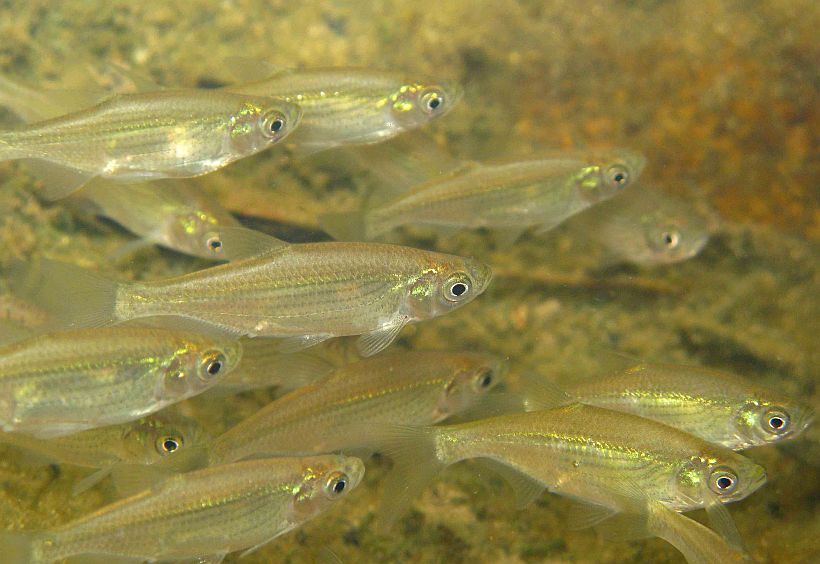
Metzia lineata
Pellegrin, 1907
Max length100mm SL3.9in SLTanknot recordedTempnot recordedpHnot recordedPopulations from the upper Pearl River (Nanpan Jiang basin) differ in several morphological characters from those inhabiting Guangdong, Guangxi, and Guizhou Provinces, and Hainan Island. Those from Vietnam also seem to be different (Gan et al., 2009), the implication being that there may be several species currently included under the name M. lineata.
Microctenopoma ansorgiiOrnate ctenopoma
authority not recorded
Max length70mm SL2.8in SLTanknot recordedTemp20–27°C68–81°FpH5.5–7.5This is the most colourful of the African anabantoids and is much sought after by hobbyists. A male in full breeding dress is truly a sight to behold. In nature it can be found in small streams, inhabiting areas of dense vegetation close to the riverbanks. It is difficult to collect a lot of fish from these habitats and so M. ansorgei is relatively rare in the hobby. These fish can be difficult to acclimatise but once settled are very hardy and can live up to 5 years in the aquarium....
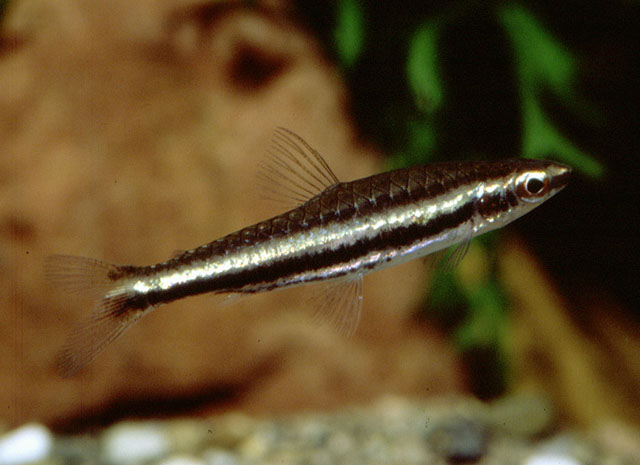
Nannostomus digrammusTwostripe Pencilfish
Fowler, 1913
Max length30mm SL1.2in SLTank45 × 30cm18 × 12inTemp22–28°C72–82°FpH5.0–7.0Native to the central Amazon basin with records existing from the Madeira, Branco, Trombetas, and Tapajós river drainages, plus the Rupununi basin in Guyana. Although an affluent of the rio Essequibo and thus not officially part of the Amazon basin, the latter is connected to the rio Takutu, a tributary of the upper rio Branco, during the annual wet season. Type locality is given by Fowler as 'Rio Madeira about 200 miles east of W. Long. 62°20', Brazil'.
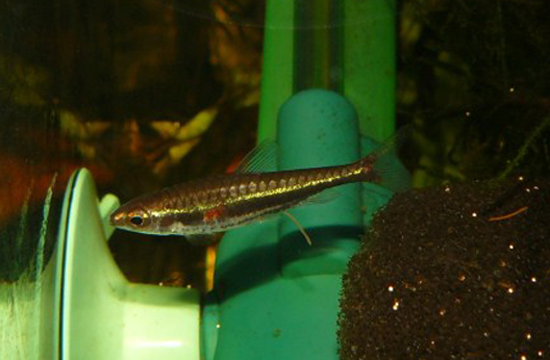
Nannostomus minimusLeast Pencilfish
Eigenmann, 1909
Max length23mm SL0.9in SLTank45 × 30cm18 × 12inTemp22–28°C72–82°FpH4.0–6.5Inhabits sluggish blackwater tributaries, small rivers and swampy areas, particularly in areas with dense growth of aquatic or overhanging riparian vegetation, submerged woody structures and leaf litter. The water is typically stained darkly with humic acids and other chemicals released by decaying organic material, the dissolved mineral content is generally negligible and pH can be as low as 4.0. N. minimus occurs sympat...
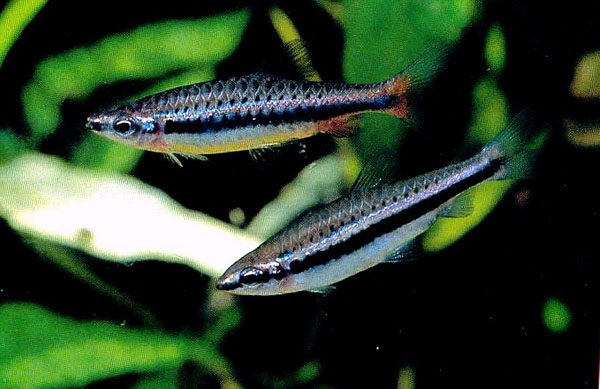
Nannostomus nitidusShining Pencilfish
Weitzman, 1978
Max length35mm SL1.4in SLTank60 × 30cm24 × 12inTemp23–28°C73–82°FpH4.0–7.0Described from 'Igarapé Candiru-Mirim, Rio Capim, Pará, Brazil', a relatively short river draining into the rio Pará near the city of Belem, eastern Brazil. Records of similar-looking fish exist from Santarém, Pará state, in the central Amazon region, and the coastal city of Fortaleza, Ceará state, much further southeast. These may require confirmation.
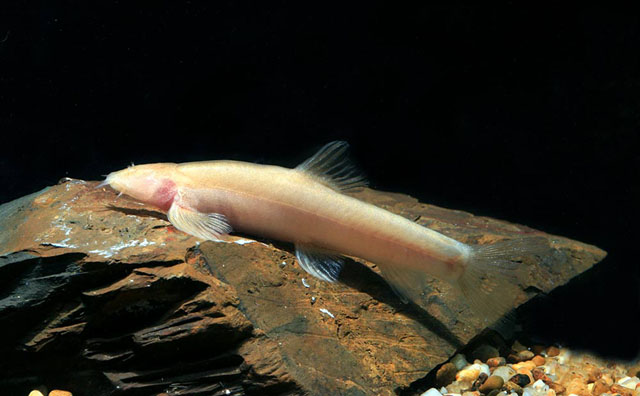
Nemacheilus troglocataractus
Kottelat & Géry, 1989
Max length68mm SL2.7in SLTanknot recordedTempnot recordedpHnot recordedKnown only from a single cave system (Tham Sai Yok Noi) near the town of Nam Tok Sai Yok Noi, Sai Yok district, Kanchanaburi Province, Thailand. The headwater stream running through the cave is part of the Khwae Noi river basin, itself a tributary of the upper Mae Klong system. 621 metres of the cave system has repor...
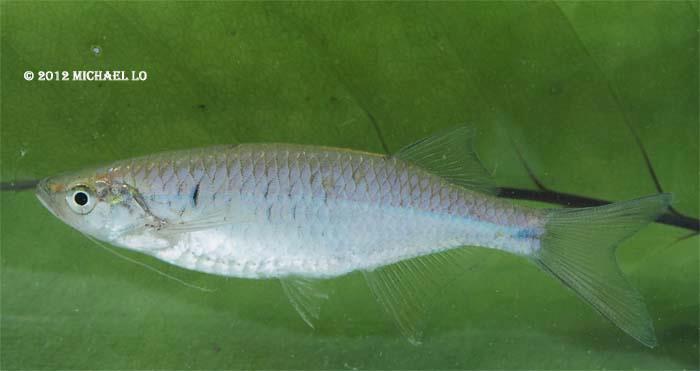
Nematabramis steindachnerii
Popta, 1905
Max length112mm SL4in SLTanknot recordedTempnot recordedpHnot recordedEndemic to northern and central Borneo, with records from the Malaysian states of Sarawak and Sabah, Brunei Darussalam, and the Indonesian provinces North Kalimantan (Kalimantan Utara) and East Kalimantan (Kalimantan Timur). Type locality is 'Kajan River, eastern slope of central Kalimantan, Indonesia [Borneo]'.
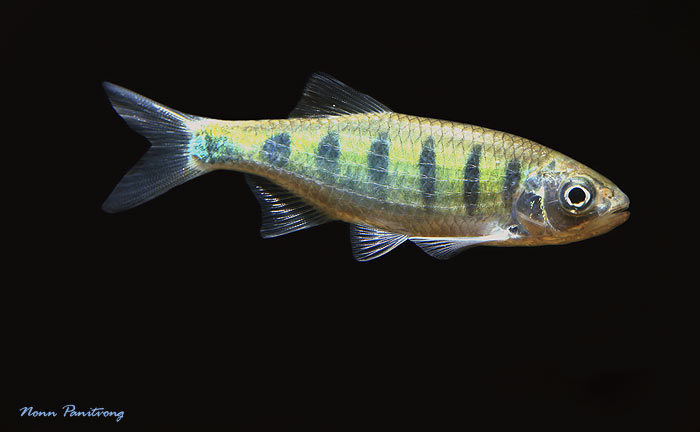
Opsarius bernatziki
Koumans, 1937
Max length90mm SL3.5in SLTank120 × 45cm48 × 18inTemp18–26°C64–79°FpH6.0–7.5Type locality is ' Kapa, northwestern peninsular Thailand', which may refer to modern-day Kapoe district, Ranong province, and additional records exist from other localities in Ranong as well as Phang-nga and Pattani provinces. Although the precise extent of its distribution is unclear it appears to occur in river systems on both sides of the Tennaserim Hills in pen...
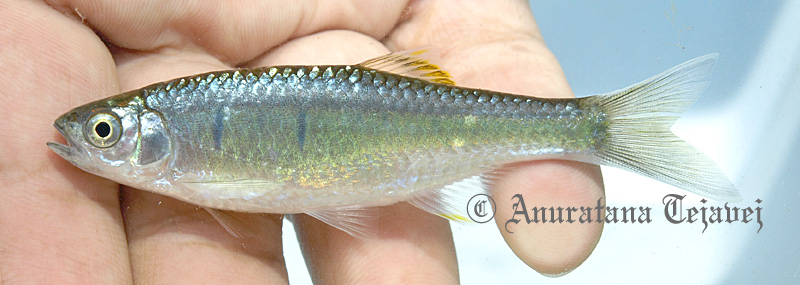
Opsarius koratensis
Smith, 1931
Max length100mm SL3.9in SLTank150 × 45cm60 × 18inTemp22–30°C72–86°FpH6.0–8.0Inhabits well-oxygenated, low-to-medium gradient, slow to moderate-flowing rivers and streams with substrates of gravel, cobbles, larger boulders and exposed bedrock. At the habitat in our image pH was 7.5, temperature 26°C and cond...
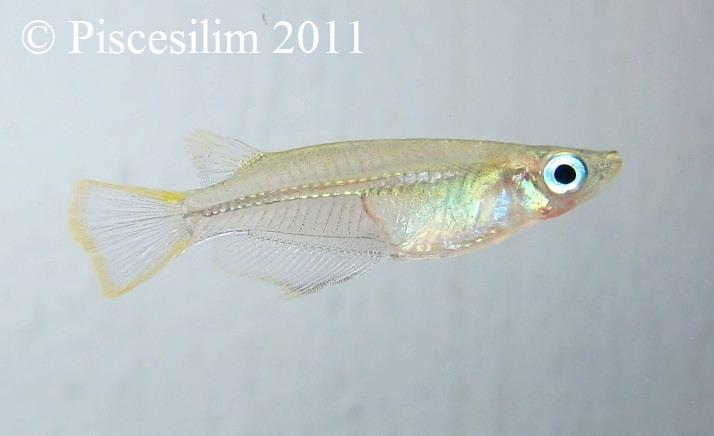
Oryzias javanicusJavanese Ricefish
Bleeker, 1854
Max length35mm SL1.4in SLTank45 × 30cm18 × 12inTemp24–29°C75–84°FpH7.0–9.0This species is widely-distributed throughout Peninsular Thailand, Malaysia (Malay Peninsula plus the states of Sabah and Sarawak, Borneo), Singapore and Indonesia, with records from the Riau Archipelago, Sumatra, Java, Borneo, Bali, Lombok, and Sulawesi existing in the latter. Type locality is 'Panimbang River, Perdana, Indonesia'. It's typically found in coastal, normally brac...
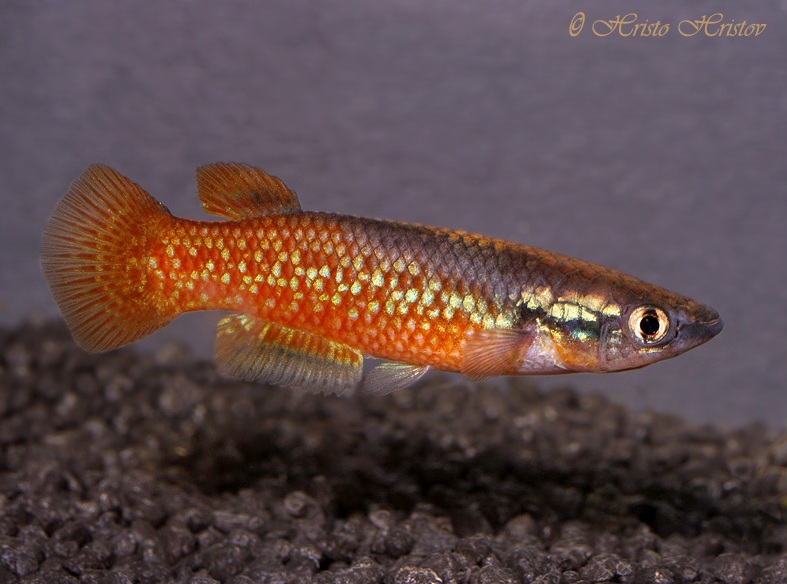
Pachypanchax sakaramyiMadagascar Panchax
Holly, 1928
Max length90mm SL3.5in SLTank90 × 30cm36 × 12inTemp20–24°C68–75°FpH6.5–7.5The majority of original populations have already been extirpated due to introduction of invasive species such as Gambusia holbrooki and Poecilia reticulata, ongoing deforestation of the Ambohitra Massif, and physical diversion of the source of the Sakaramy River for domestic use by locals. An additional population may exist in a stream on the southern slope of the Ambohitra Massif on the road between Bobasokoa and Anivorano, near the village of Andranotohiliny, but this requires verification.
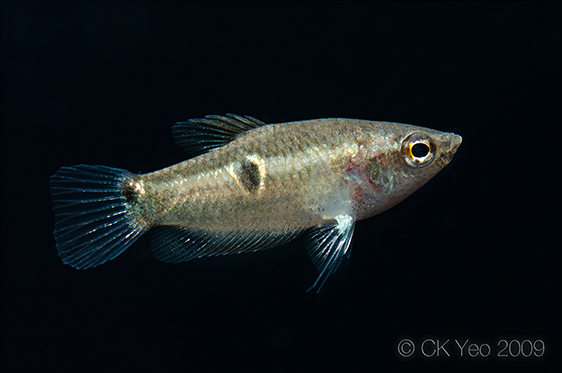
Parasphaerichthys ocellatusEyespot Gourami
Prashad & Mukerji, 1929
Max length32mm SL1.3in SLTank45 × 30cm18 × 12inTemp15–25°C59–77°FpH6.5–7.5To date the species is known mostly from the upper Ayeyarwady River basin in northern Myanmar where it's been collected close to the city of Myitkyina in Kachin State as well as around nearby Lake Indawgyi, the largest inland lake in Southeast Asia and home to ten globally threatened bird species. The lake and surrounding area were designated a protected zone by the Ministry of Ecotourism in 1999 and now form the Indawgyi Lake Wildlife Sanc...
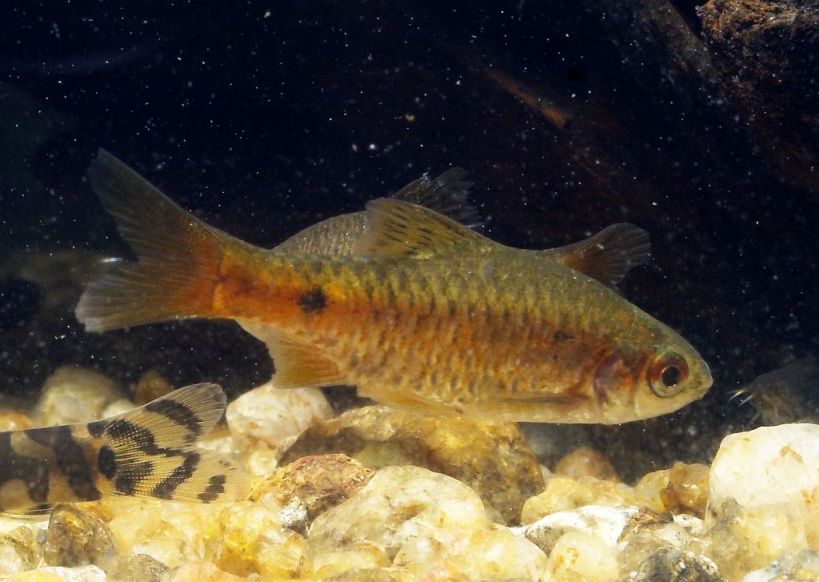
Pethia pookodensisPookode Lake Barb
Mercy & Jacob, 2007
Max length42mm SL1.7in SLTank75 × 30cm30 × 12inTemp20–25°C68–77°FpH5.5–7.5Described from Pookode Lake in Wayanad district, Kerala state, southern India and possibly endemic there although some unconfirmed records exist from within the surrounding Wayanad Wildlife Sanctuary. Pookode is a small freshwater lake surrounded by forest with a surface area of around 2 km² and is the source of the Panamaram River, a tributary within the much larger Kabani system. Its maximum depth is around 6.5 metres and in marginal areas dense patches of water lilies can be found.