Results for “type”
Type a name: scientific, common, or one a species used to go by. Or narrow the catalogue with the filters.
Filters
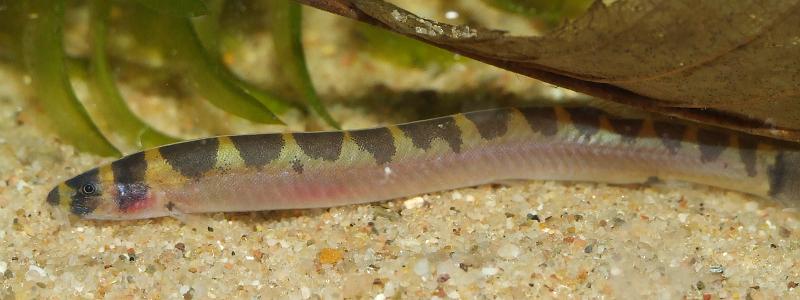
Pangio malayana
Tweedie, 1956
Max length60mm SL2.4in SLTank45 × 30cm18 × 12inTemp21–26°C70–79°FpH3.5–7.0Originally known only from Johor and Pahang states, Peninsular Malaysia but since recorded from the Batang Hari river drainage, Sumatra and the Kapuas system, Kalimantan Barat (West Kalimantan) province, Indonesian Borneo. Type locality is 'Tahan River, Pahang, Malaysia'.
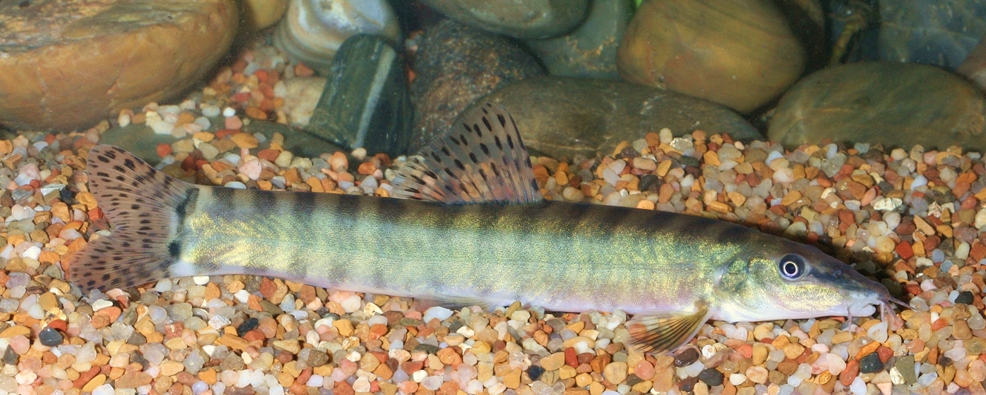
Parabotia bimaculata
Chen, 1980
Max length140mm SL6in SLTank120 × 45cm48 × 18inTemp20–24°C68–75°FpH6.0–7.5Type locality is the town of Luxian, located north of Luzhou city, Sichuan province, southwest China. Luxian lies on the Laixi River, one of several tributaries converging with the main Yangtze river channel near Luzhou and forming part of the latter's upper drainage basin. The full extent o...
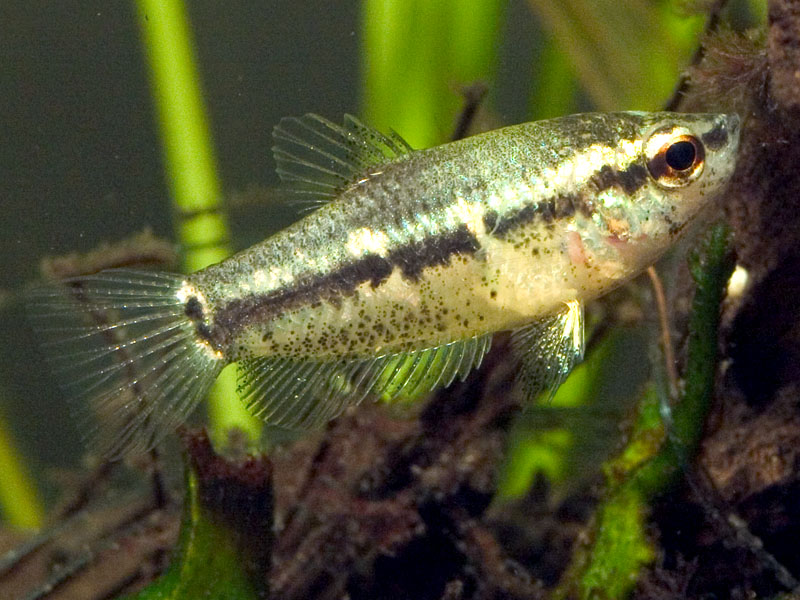
Parasphaerichthys lineatus
Britz & Kottelat, 2002
Max length19mm SL0.7in SLTank40 × 20cm16 × 8inTemp22–27°C72–81°FpH6.5–8.0This species is sometimes traded under the names 'mini chocolate gourami', 'Burmese chocolate gourami' or mislabelled as the congener P. ocellatus, these two currently comprising the only known members of the genus. P. lineatus can be told apart from P. ocellatus via the following combination of characters: smaller body size (maximum standard length 18.7 mm vs. 32.0 mm); absence of ocellus-type marking in middle of each flank (vs. presence); presence of dark, stripe (vs. abs...
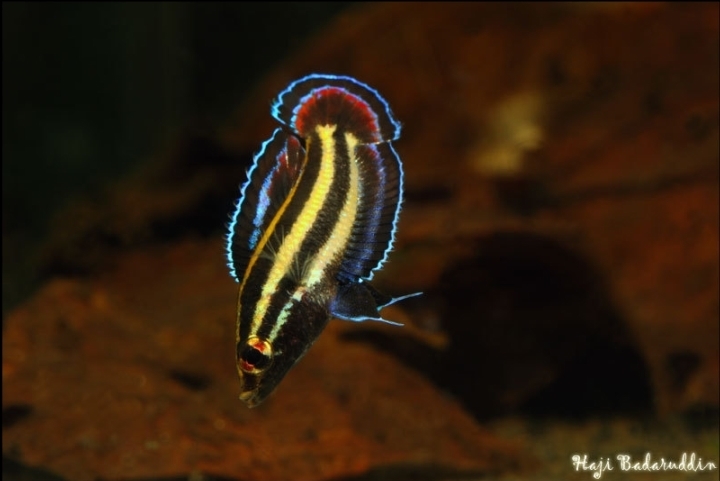
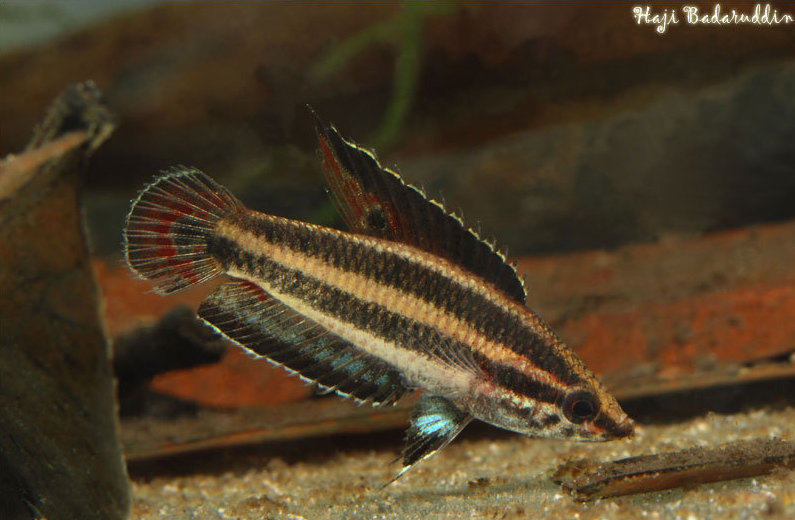
Parosphromenus alfredi
Kottelat & Ng, 2005
Max length26mm SL1.0in SLTank40 × 20cm16 × 8inTemp22–28°C72–82°FpH3.0–6.5Type locality is 'Kota Tinggi, Mawai-Desaru road, Johor, Peninsula Malaysia' and this species is endemic to a small portion of eastern Johor state, Peninsular Malaysia around the towns of Kota Tinggi, Mawai and Desaru. A great deal of its original habitat has been lost via deforestation and other human alterations and it's considered in grave danger of extinction.
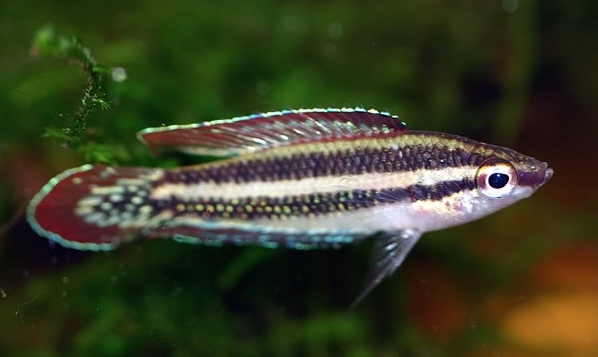
Parosphromenus allani
Brown, 1987
Max length35mm SL1.4in SLTank40 × 20cm16 × 8inTemp22–28°C72–82°FpH3.0–6.5Type locality is given only as 'Sarawak state, Borneo, East Malaysia', with the material deriving from Sibu Division in western Sarawak. It's since been recorded at other localities within Sarawak, to which it appears endemic, but it remains unclear whether all represent a single species or not with those from the area around Lundu in northwestern Kuching Division in par...
Parosphromenus quindecim
Kottelat & Ng, 2005
Max length40mm SL1.6in SLTank45 × 30cm18 × 12inTemp22–28°C72–82°FpH3.0–6.5This species has occasionally been traded on a commercial basis and was known as P. sp. 'Manis Mata' prior to description, with the latter apparently referring to a location some 100 km away from the type locality where the fish do not occur. It's said to be slightly easier to maintain than the majority of congeners and is therefore a recommended choice for those ne...
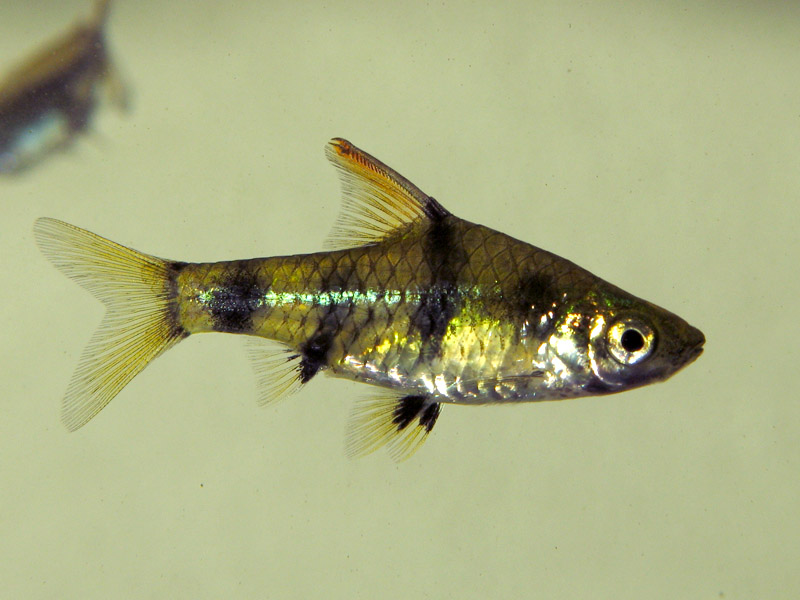
Pethia canius
Hamilton, 1822
Max length30mm SL1.2in SLTank60 × 30cm24 × 12inTemp18–24°C64–75°FpH6.0–7.0This species' identity was settled and a neotype designated by Knight (2013), with its validity having been discussed since the late 19th century. P. canius and the closely-related P. gelius were both described by Hamilton (1822) and share the type locality of 'northeastern Bengal'. Although Hamilton did not provide drawings M'Clelland (1839) included colour illustrations depicting two quite different-looking species.
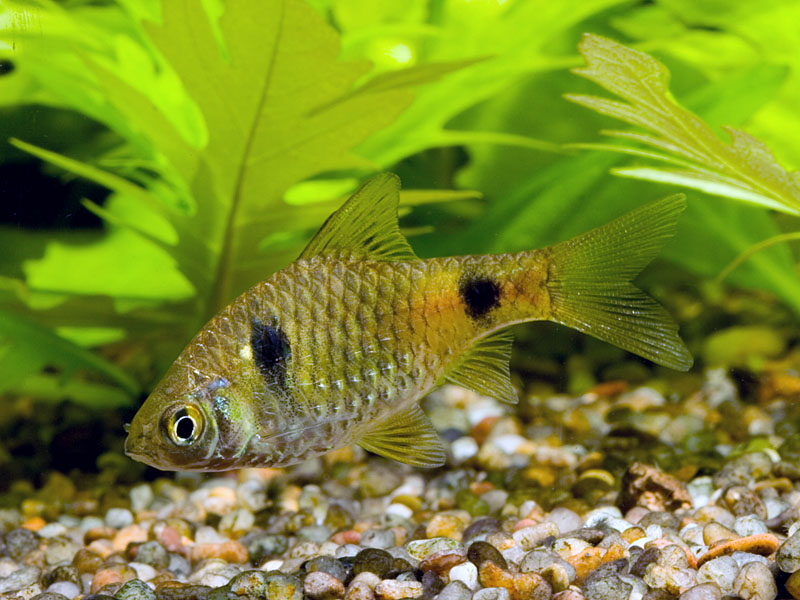
Pethia didi
Kullander & Fang, 2005
Max length41mm SL1.6in SLTank60 × 30cm24 × 12inTemp15–25°C59–77°FpH6.5–9.0The type locality is a stream with a mixed substrate of mud and stones which flows swiftly through an area of bamboo forest so is quite well-shaded. At time of collection the water was clear but slightly tannin-stained and sympatric species included Pethia thelys, Puntius sophore, Devario strigillifer, Rasbora daniconius, R. rasbora, Acanthocobitis botia, Notopterus notopterus, plus unidentified species of Oreichthys, Parambassis, Xenentodon, and Mastacembelus.
Pethia tiantian
Kullander & Fang, 2005
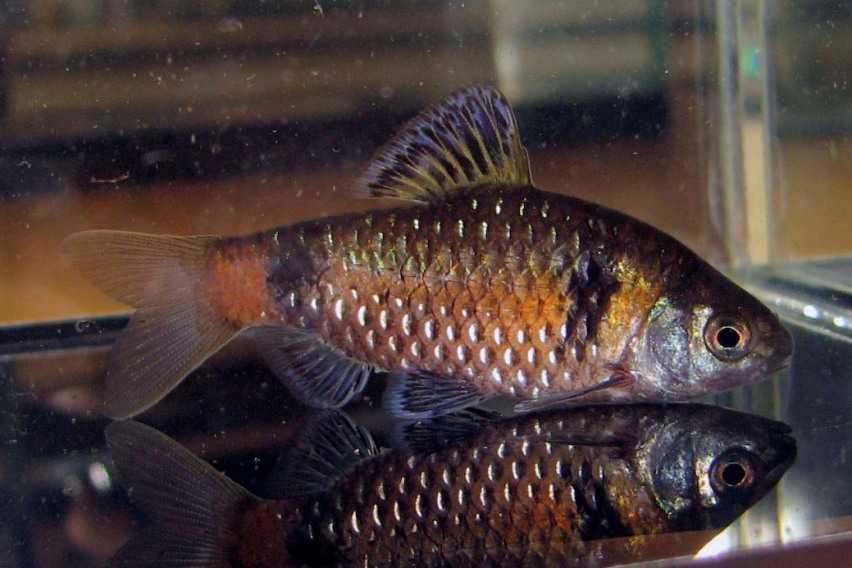
Max length50mm SL2.0in SLTank75 × 30cm30 × 12inTemp15–25°C59–77°FpH6.5–7.5Known only from the remote, mountainous area of Putao in Kachin state, northern Myanmar. The holotype and most of the type series was collected from the Nan Hto Chaung (Nan Hto stream) with the Mali Hka River representing the only other locality known. Both are part of the upper Irrawaddy/Ayeyarwady system. The Nan Hto Chaung flows through forested hills and...
Pethia tictoTicto Barb
Hamilton, 1822
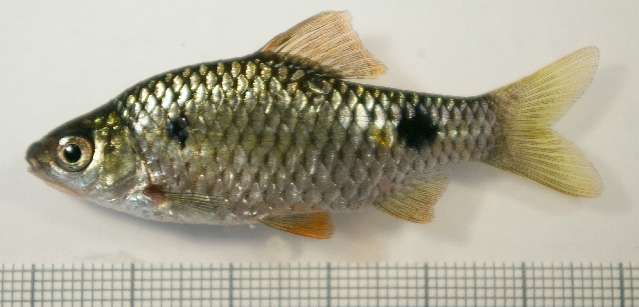
Max length65mm SL2.6in SLTank80 × 30cm31 × 12inTemp18–25°C64–77°FpH6.0–7.5Apparently most abundant in shallow streams and minor tributaries, sometimes at relatively high altitudes, and apparently shows a preference for substrates of mud or silt. Given the extent of its range it would seem sensible to assume that it inhabits various habitat-types which also vary in water depth, flow, and turbidity depending on the time of year.
Poecilia latipinnaSailfin Molly
Lesueur, 1821
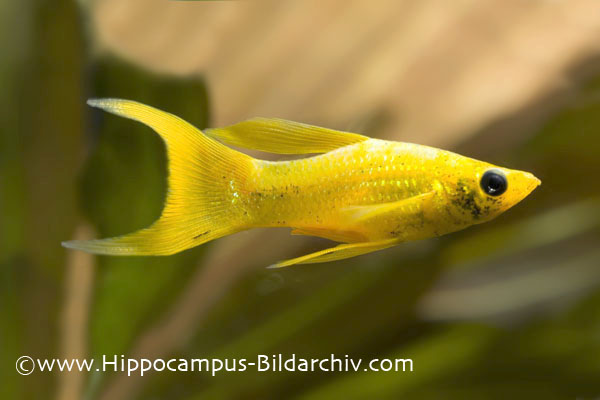
Max length125mm SL5in SLTank76 × 38cm30 × 15inTemp21–26°C70–79°FpH7.0–8.5The wild fish can exhibit several different types of patterning. P. latipinna has been selectively bred into many different colour morphs for the aquarium trade, and has also been crossbred with other molly species, particularly P. sphenops. They will also interbreed readily in the aquarium and in order to avoid this we suggest keeping only one species of molly per tank. There also exists a (in our opinion) grotesque 'balloon' variety of this fish in which the body is malformed and rou...
Poecilia wingeiEndler's Livebearer
Poeser, Kempkes & Isbrucker, 2005
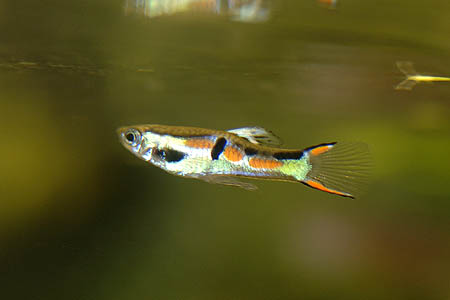
Max length25mm SL1.0in SLTank45 × 30cm18 × 12inTemp24–30°C75–86°FpH7.0–8.5Endler's Livebearer was actually discovered in 1937 by Franklyn F. Bond before being rediscovered by John Endler in 1975 in Laguna de Patos, Cumana, northeastern Venezuela. It was found coexisting, but not interbreeding with, a wild form of P. reticulata. Both species are native to this area of Venezuela, but P. reticulata was much less common in areas where P. wingei was thriving. This is thought to be partially related to habitat type, as guppies are usually found in colder, running water...
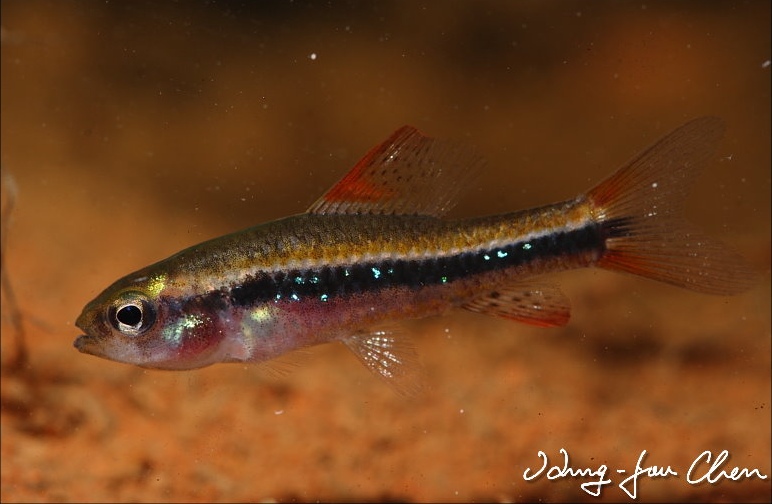
Poecilocharax weitzmaniBlack Darter Tetra
Géry, 1965
Max length50mm SL2.0in SLTank45 × 30cm18 × 12inTemp21–28°C70–82°FpH3.0–6.5Quite widely distributed having been recorded from Brazil, Colombia, Peru and Venezuela. It's been collected from the upper parts of several major river drainages including the Río Negro, Río Orinoco (including the Río Inírida and Casiquiare canal) and Río Solimões. The type series was collected from 'Igarapé Préto', Brazil, said to be 60 kilometres to the south of the Colombian border city Leticia. Populations from Colombia and Brazil tend to be more intensely-coloured, and the Peruvian populations may apparently represent an undescribed species.
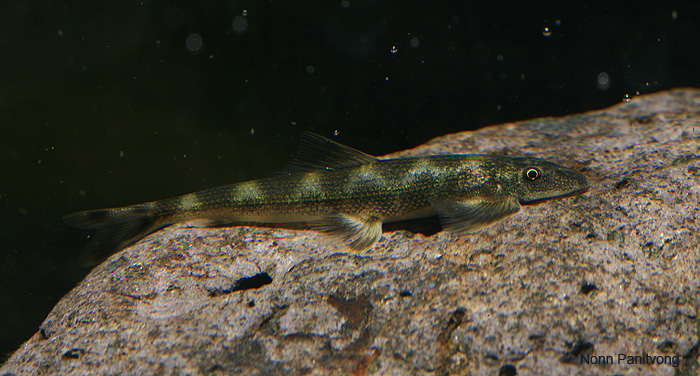
Pseudohomaloptera leonardi
Hora, 1941
Max length70mm SL2.8in SLTank80 × 30cm31 × 12inTemp20–25.5°C68–78°FpH6.0–7.5Type locality is given as 'Kuala Tahan, Pahang (King George V National Park)' which corresponds to the village of Kuala Tahan in Pahang state, central Peninsular Malaysia. The settlement is located at the confluence of the Tahan and Tembiling Rivers which form part of the Pahang river basin, while the national park was re...
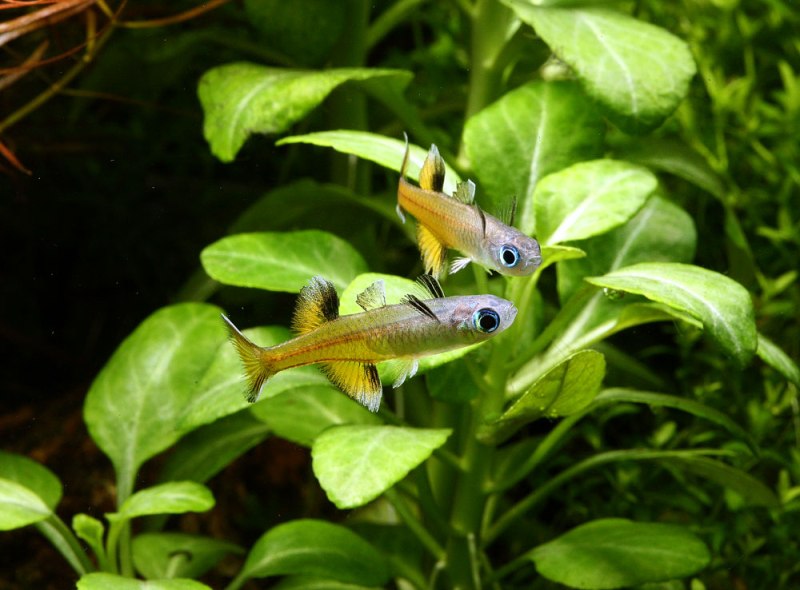
Pseudomugil signiferPacific Blue-eye
Kner, 1866
Max length70mm SL2.8in SLTank60 × 30cm24 × 12inTemp20–26°C68–79°FpH6.5–7.5Generally found within 15-20 km of the sea but habitat-type is extremely variable. It's been recorded in full marine conditions as well as pure freshwater environments, and commonly inhabits coastal mangrove creeks, swamps, and salt marshes. Freshwater habitats tend to comprise lowland swamps or forest streams with clear water but some populations inhabit acidic, tannin-stained, black waters. It's also abundant in the artificial canals typical of residential zones in the Gold Coast, southern Queensland.
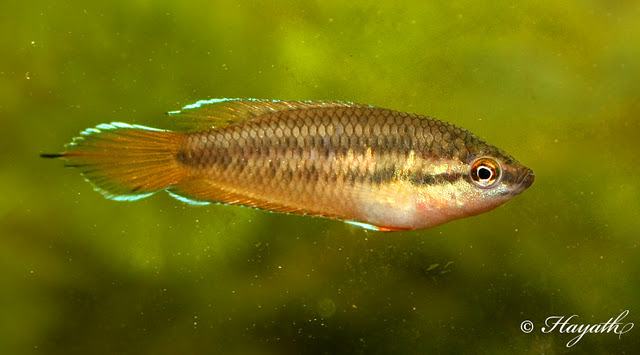
Pseudosphromenus dayiBrown Spike-tailed Paradise Fish
Engman, 1909
Max length65mm SL2.6in SLTank60 × 30cm24 × 12inTemp20–28°C68–82°FpH6.0–7.5Engmann (1909) mentions that the type series was collected from 'Malakka' but this is considered an error which probably should have read 'Kerala' since this species is known only from coastal drainages of the Western Ghats mountains in southern Kerala state, India.
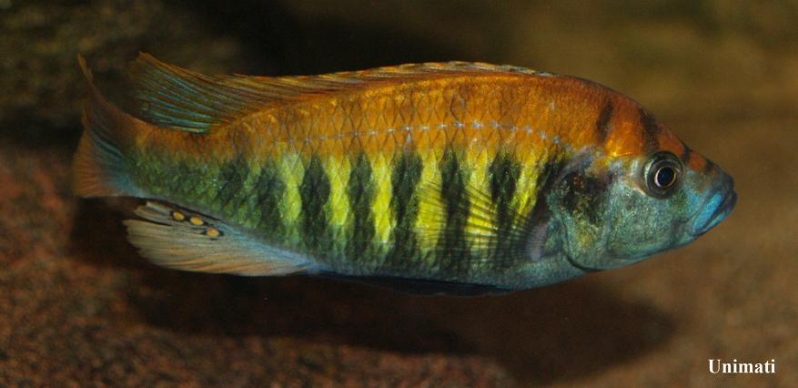
Pundamilia nyererei
Witte-Maas & Witte, 1985
Max length80mm SL3.1in SLTank120 × 45cm48 × 18inTemp23–27°C73–81°FpH7.0–8.5Endemic to Lake Victoria which has a shoreline divided between Kenya, Uganda and Tanzania, although P. nyererei has been recorded only in the southern part of the lake belonging entirely to Tanzania. Type locality is 'Mwanza Gulf, Tanzania, Lake Vic...
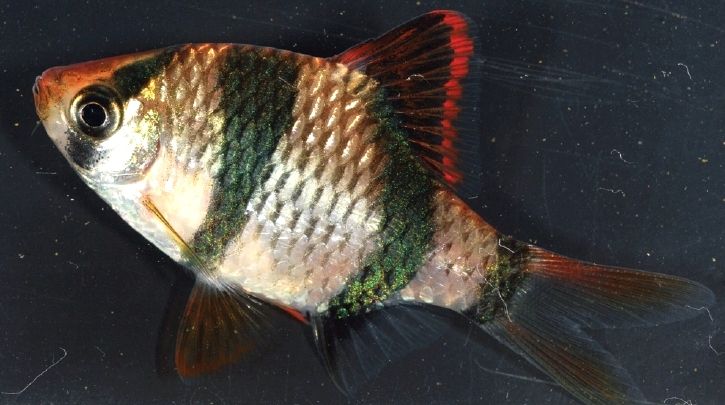
Puntigrus navjotsodhii
Tan, 2012
Max length48mm SL1.9in SLTanknot recordedTempnot recordedpHnot recordedThe type series was collected from a small clear-water stream with a pH of 6.0, forming a series of riffles and deeper pools, with a maximum width of 5 metres and depth ranging from 10 cm to 1 metre. The substrate was composed of sand gravel and rocks, with some leaf litter and overhanging marginal vegetation.
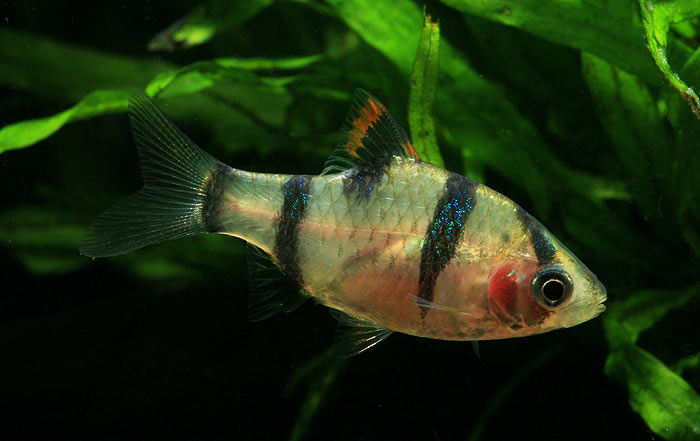
Puntigrus partipentazona
Fowler, 1934
Max length40mm SL1.6in SLTank80 × 30cm31 × 12inTemp20–26°C68–79°FpH5.0–7.0Recorded from numerous river basins in Vietnam, Cambodia, Laos, Thailand, and Peninsular Malaysia, including the Mekong, Chao Phraya, Mae Khlong, Chanthaburi, Tapi, Golok, Terengganu, Pahang, Endau, and Muar. Type locality is 'Kratt, southeastern Siam', which corresponds to modern-day Trat Province, Thailand.
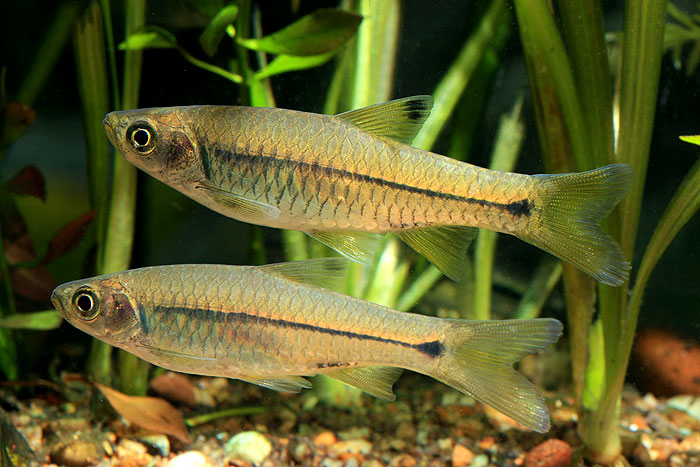
Rasbora dorsinotata
Kottelat, 1987
Max length43mm SL1.7in SLTank90 × 30cm36 × 12inTemp20–25°C68–77°FpH6.0–7.5Type locality is 'Mae Nam Huey Bon, kilometer 45 on road from Amphoe ThaWang Pha to Amphoe Chiang Kham, Chiang Rai Province, Thailand', and this species appears restricted to the Mekong and upper Chao Phraya river basins in northern Thailand and northern Laos. The specimens pictured here were collected from th...