Results for “armoured”
Type a name: scientific, common, or one a species used to go by. Or narrow the catalogue with the filters.
Filters
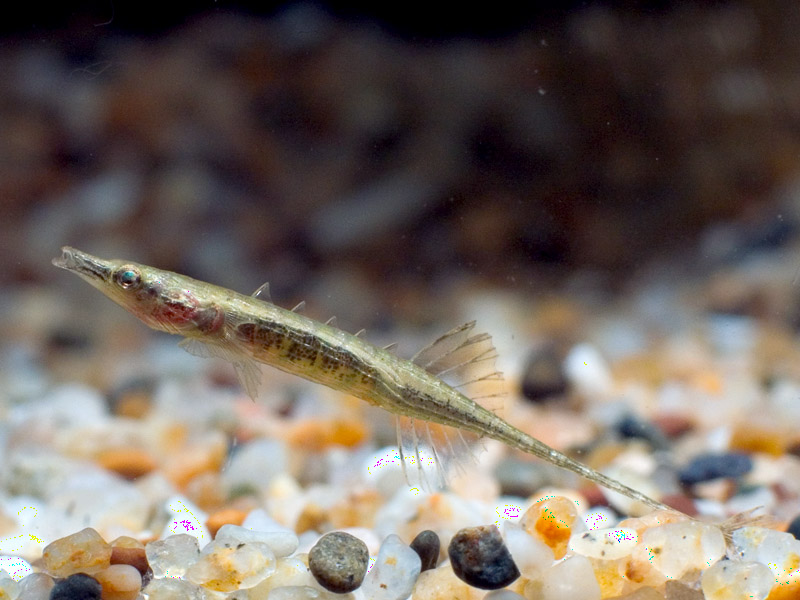
Indostomus paradoxusArmoured Stickleback
Prashad & Mukerji, 1929
Matched on the common name Armoured Stickleback
Max length30mm SL1.2in SLTank40 × 20cm16 × 8inTemp22–27°C72–81°FpH6.5–7.5This species is rare in the aquarium hobby though its name is often misapplied to the closely-related I. crocodilus. It can be told apart from congeners by the following characters: dorsal and anal fins without dark markings, with a light brown bar in breeding males; ventral surface light brown; throat white, occasionally with a few brown spots; ridges of head bones weakly serrated or not serrated, depending on the bone. The family Indostomidae currently contains just a single genus with three species of which I. paradoxus is the type. It was raised alongside both family...
Polypterus delheziArmoured Bichir
authority not recorded
Matched on the common name Armoured Bichir
Max length350mm SL14in SLTank120 × 45cm48 × 18inTemp24–30°C75–86°FpH6.0–8.0An incredibly hardy, nocturnal species with very poor vision, P. delhezi relies on its excellent sense of smell to locate food. This species, along with others of its genus, is one of the last surviving relatives of very ancient species. Fossils of earlier relatives have been found that date back to the Triassic Period, which occured during the early development of the dinosaurs more than 200 million years ago. They have several interesting adaptations. The swim bladder is divided into 2 par...
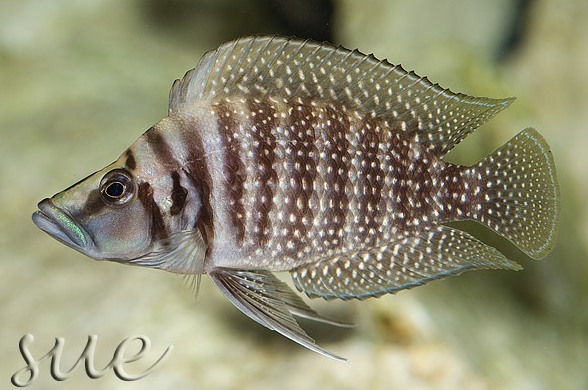
Altolamprologus calvusCalvus Cichlid
Poll, 1978
Max length138mm SL5in SLTanknot recordedTemp24–27°C75–81°FpH7.5–9.0A. calvus is a predator by nature and its body shape has been adapted to allow it to enter small crevices and gaps in the rockwork of Lake Tanganyika to prey on eggs, fry and small fish. Its laterally compressed shape makes the fish hard to spot head on, giving it an advantage over would be predators and prey alike. It is also quite well-armoured, possessing thick scales which can be turned towards potential attackers. These can cause real damage with their serrated edges. Several colour form...
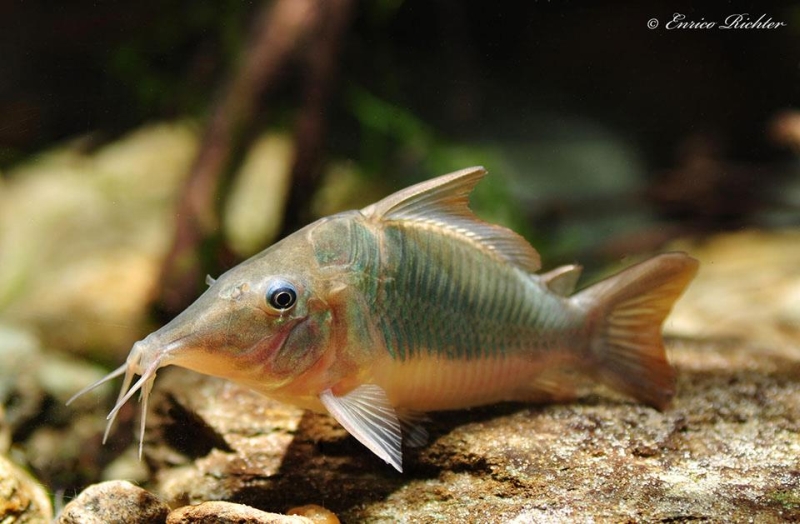
Corydoras multiradiatusHognose 'Brochis'
Orcés V., 1960
Max length100mm SL3.9in SLTank120 × 45cm48 × 18inTemp20–26°C68–79°FpH6.0–7.5The genus is included in the family Callichthyidae, of which members are often referred to collectively as 'armoured' or 'mailed' catfishes group due to the presence of bony plates in place of scales on the body. Their taxonomy can be confusing, and numerous undescribed species are also thought to exist.
Corydoras paleatusPepper Cory
authority not recorded
Max length70mm SL2.8in SLTank61 × 38cm24 × 15inTemp22–26°C72–79°FpH6.0–7.0Corydoras are members of the armoured catfish family. The genus name means "helmet skin" and the fish live up to this name as they are rather tough little fish. They also have spines in the leading rays of the pectoral fins to deter larger predators from eating them. Corydoras are sometimes observed taking a gulp of air at the water surface: this is because they can absorb oxygen through their gut. It is not known why cories do this even on oxygen rich waters. Along with the bronze ...
Euchilichthys guentheri
authority not recorded
Max length190mm SL7in SLTank120 × 30cm48 × 12inTemp23–27°C73–81°FpH6.4–7.4This is one of only 4 described species of Euchilichthys (although more have been discovered) and is very rare in the hobby. It can be distinguished from similar Chiloglanis species by its elliptical (as opposed to circular) mouthparts and larger adult size. Unlike the South American Loricariids, it lacks armoured scuting on the body....
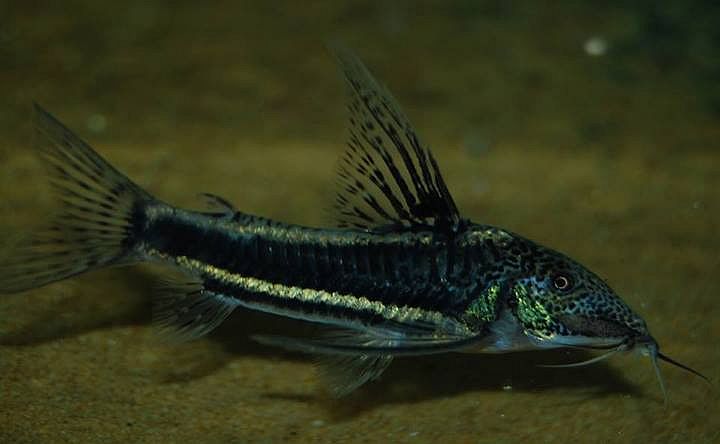
Scleromystax sp. C113
authority not recorded
Max length65mm SL2.6in SLTank120 × 30cm48 × 12inTemp16–24°C61–75°FpH5.0–7.5This fish is one of a number of apparently unidentified Scleromystax species known in the aquarium hobby. The genus Scleromystax is included in the family Callichthyidae, of which members are often referred to collectively as 'armoured' or 'mailed' catfishes group due to the presence of bony plates in place of scales on the body.