Results for “basal”
Type a name: scientific, common, or one a species used to go by. Or narrow the catalogue with the filters.
Filters
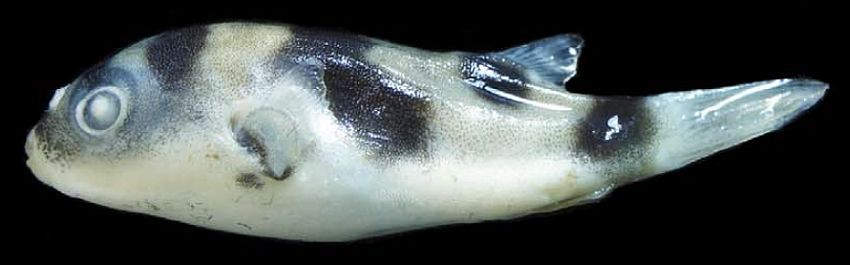
Colomesus tocantinensis
Amaral, Brito, Silva & Carvalho, 2013
Max length35mm SL1.4in SLTanknot recordedTempnot recordedpHnot recordedIt is distinguished from congeners by the following combination of characters: anal-fin with 6-7 basal pterygiophores and 9 rays (vs. 10-11 rays in C. asellus and C. psittacus; dorsal-fin with 10 bas...
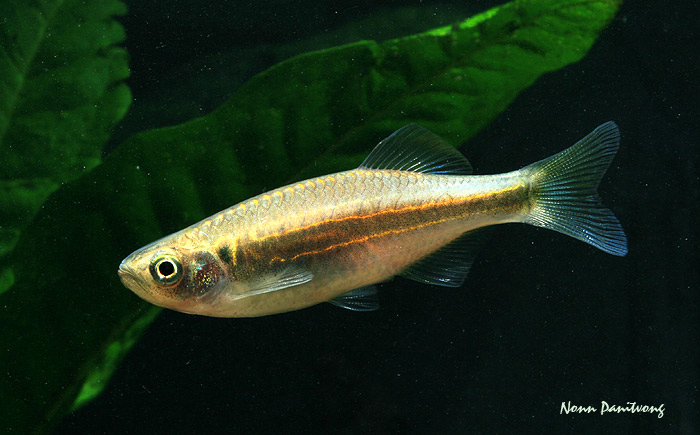
Devario acrostomus
Fang & Kottelat, 1999
Max length80mm SL3.1in SLTank120 × 45cm48 × 18inTemp23–26°C73–79°FpH6.0–7.0The type series was collected during the dry season from localities with varying gradient both within the Nam Leuk mainstream and smaller tributaries. In the tributaries the fish were found congregating in pools some of which were isolated on steep slopes. All habitats above Tad Leuk falls were characterised by clear to very clear water under forest cover while below the falls they were dominated by exposed basalt slabs with some underground water channels.
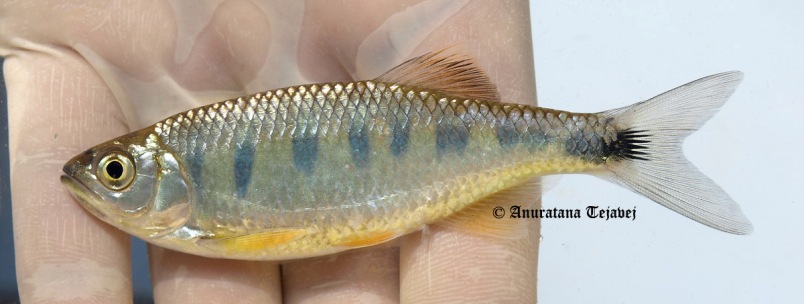
Opsarius signicaudus
Tejavej, 2012
Max length100mm SL3.9in SLTank120 × 45cm48 × 18inTemp18–26°C64–79°FpH6.0–8.0O. dogarsinghi and O. bernatziki are the only two Southeast Asian congeners to possess a large blotch at the caudal-fin base but in the former the blotch is vertically-orientated and hardly extends onto the fin itself (vs. laterally-elongate and extending onto the basal fin rays) and long (vs. short) barbels, while th...
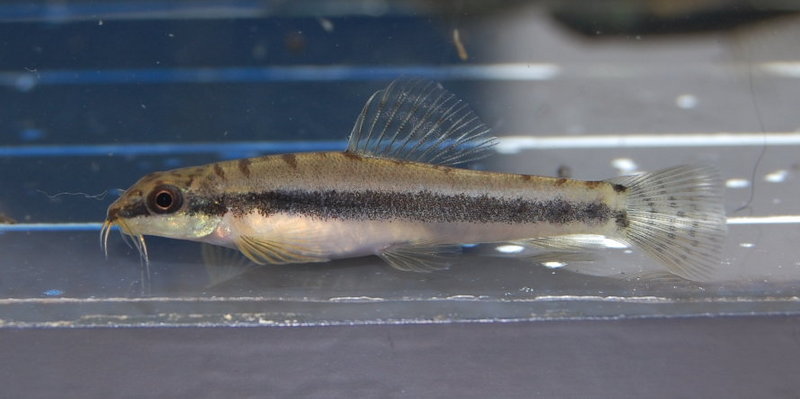
Paracanthocobitis zonalternans
Blyth, 1860
Max length78mm SL3.1in SLTank60 × 30cm24 × 12inTemp20–25°C68–77°FpH6.0–7.5According to Kottelat (1990) the chief distinguishing characters for the genus are: possession of 9-18½ branched dorsal-fin rays; colour pattern without black basal caudal bar, but with an ocellus at upper base of caudal-fin; upper lip with or without several rows of papillae; lower lip with a broad median interruption and a widened, papillated pad on each side.
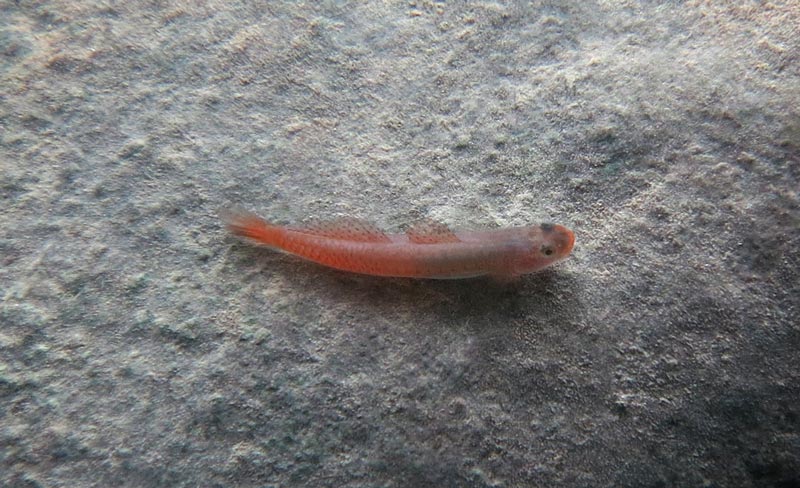
Stiphodon surrufus
Watson & Kottelat, 1995
Max length35mm SL1.4in SLTank60 × 30cm24 × 12inTemp22–28°C72–82°FpH6.5–7.5As with all members of the genus sexual dimorphism is pronounced. Males are brightly-coloured, with a reddish-orange stripe extending posteriorly from the pectoral-fin, with the posterior portion of the body entirely suffused with red. A darkish band extends from behind the eye to the edge of the opercle, and the basal third of the caudal-fin is reddish-orange.
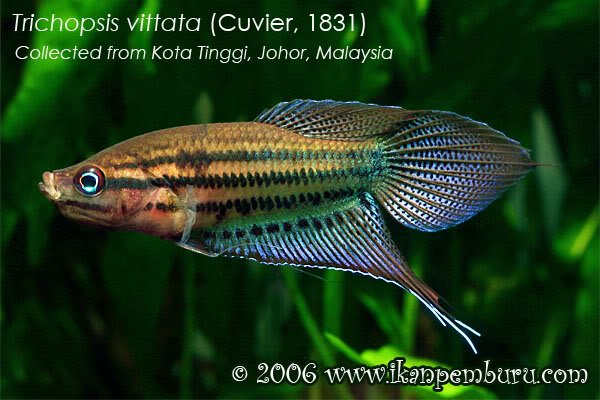
Trichopsis vittataCroaking gourami
Cuvier, in Cuvier & Valenciennes, 1831
Max length70mm SL2.8in SLTank60 × 30cm24 × 12inTemp22–28°C72–82°FpH5.0–7.5The common name is derived from the ability of genus members to produce audible sounds via a specialised pectoral mechanism which is unique within the family Osphronemidae. The structure comprises modified pectoral-fin tendons and muscles which are stretched and plucked by basal elevations of two fin rays in a similar way to guitar strings via rapid beating of the fins. The pectoral-fins beat alternately, each able to generate short or long bursts of sound. These sounds are produced by both sexes, predom...
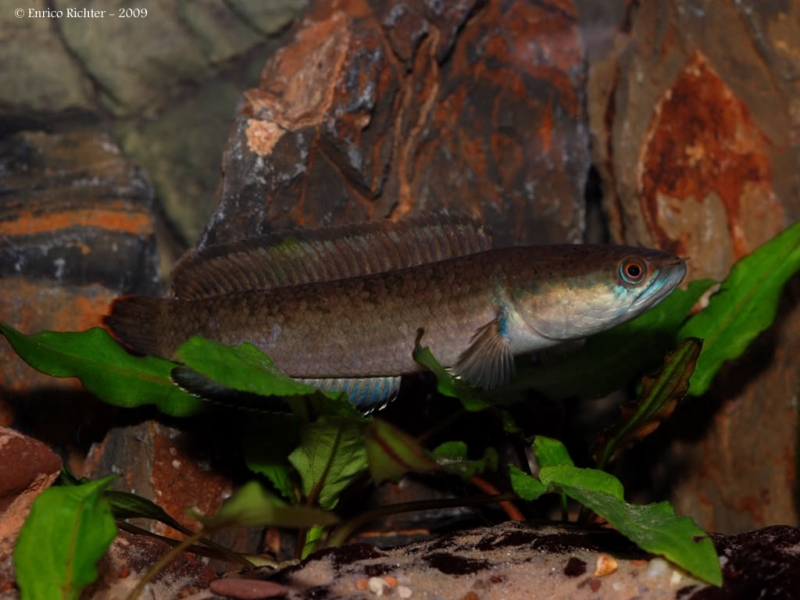
Channa gachuaDwarf Snakehead
Hamilton, 1822
Matched on Ophiocephalus gachua var. basalis, a name it was formerly known by
Max length200mm SL8in SLTank120 × 45cm48 × 18inTemp18–28°C64–82°FpH5.0–8.0Generally considered to have an enormous natural range extending from Iran to Taiwan and Bali, with records existing from Iran, Iraq, Afghanistan, Pakistan, Nepal, India, Sri Lanka, Bangladesh, Bhutan, China, Myanmar, Thailand, Laos, Cambodia, Vietnam, Malaysia, Indonesia, and Singapore. However there exists significant evidence to suggest that C. gachua as currently understood represents a complex of similar-looking species, and a taxonomic review of the group is clearly required.