Results for “cf.”
Type a name: scientific, common, or one a species used to go by. Or narrow the catalogue with the filters.
Filters
Pseudomystus sp. cf stenomusFalse Asian Bumblebee Catfish
authority not recorded
Max length150mm SL6in SLTanknot recordedTemp20–27°C68–81°FpH6.0–7.6This fish is usually imported as Pseudomystus stenomus but actually seems to be an undescribed species, as it's collected from the Malay Peninsula. P. stenomus is endemic to the island of Java and supposedly exhibits a higher degree of light-coloured patterning on the body. The genus Pseudomystus contains many similarly-patterned species, of which the most common in the hobby is the Asian bumblebee catfish, P. siamensis. This can easily be distinguished from P. sp. cf stenomus by its cha...
Rasbora cf. dandia
authority not recorded
Max length99mm SL3.9in SLTank120 × 45cm48 × 18inTemp22–25°C72–77°FpHnot recordedThis fish may well be a form of R. dandia itself but in the absence of scientific confirmation we list it with a 'cf' abbreviation for the time being. It appears to be widely available in the trade but is often (mis)identified as R. wilpita, a species now confirmed as endemic to a small number of streams in Sri Lanka and which is probably much rarer in the hobby than previously thought. Valenciennes initially described Leuciscus dandia as a new species from Sri Lanka in 1844 but the...
Squaliforma cf. emarginataRed Fin Thresher Plec
authority not recorded
Max length400mm SL16in SLTanknot recordedTemp25–28°C77–82°FpH6.4–7.2This attractive species is often seen for sale at around 3-4" in length (often as Hypostomus cf. emarginata or H. emarginatus), but given its adult size, its not a terribly good choice for the general community tank. Due to its very wide natural distribution, there are a number of known geographical variants, and this has resulted in four L numbers currently being assigned to it. In reality, there are many more variants than this, and all share the characteristic elongated which gives rise...
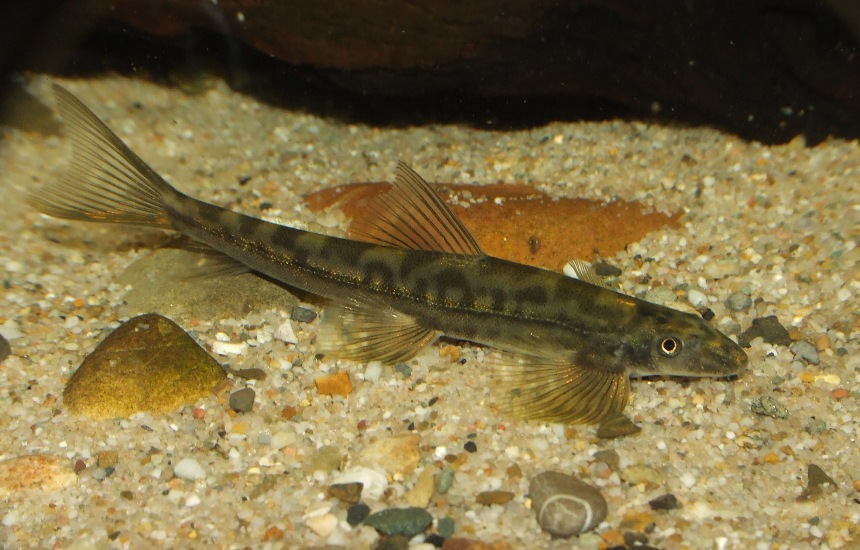
Annamia cf. thuathienensis
Nguyen, 2005
Max length100mm SL3.9in SLTank120 × 30cm48 × 12inTemp16–22°C61–72°FpH6.0–7.5Annamia spp. may be confused with related genera such as those of the genus Balitoropsis. They can be identified by their more depressed body shape, elongate lower caudal-fin lobe, and the presence of a single unbranched ray in the pectoral and pelvic fins. At least one undescribed member of the genus is thought to exist.
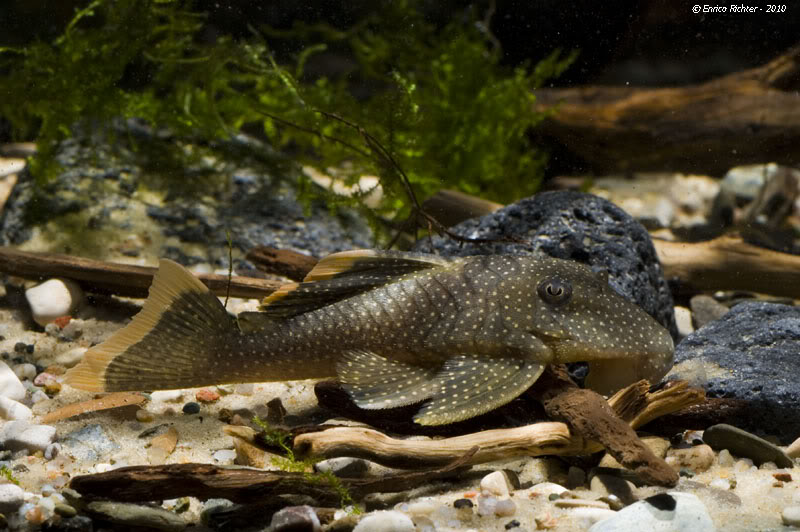
Baryancistrus sp. cf. xanthellusGold Nugget Pleco
authority not recorded
Max length180mm SL7in SLTank120 × 45cm48 × 18inTemp27–32°C81–90°FpH6.4–7.6It remains unconfirmed as to whether this fish represents a colour form of B. xanthellus or not since its DATZ code number of L081 is not referred to in the description paper whereas all other codes for 'gold nugget' plecos, i.e., L018, L085, L177 plus the 'Das Aquarium' code LDA060 are mentioned. In addition, one of the specimens in our images was apparently collected at São Félix do Xingu which is significantl...
Hypostomus cf. cochliodonSpotted Cochliodon
authority not recorded
Max length230mm SL9in SLTank120 × 45cm48 × 18inTemp21–24°C70–75°FpH6.3–7.2This undescribed species is part of the Hypostomus cochliodon complex, all of which were previously included in the genus Cochliodon. This is now considered a synonym of Hypostomus. Members of this group can be distinguished from congeners by several differences in morphology, most notably the hump-backed profile of mature fish and spoon-shaped dentition. These features, along with the fishes tendency to eat wood, are shared with the Panaque genus of the Ancistrinae subfamily, but the two genera...
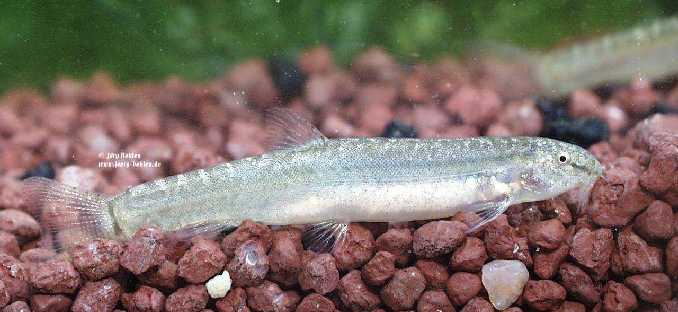
Lepidocephalichthys cf. irrorataLoktak Loach
Hora, 1921
Max length30mm SL1.2in SLTank45 × 30cm18 × 12inTemp20–25°C68–77°FpH5.5–7.5This species is not traded often but may occasionally be exported as bycatch among shipments of other species. It can be distinguished from congeners by the following combination of characters: presence of large, exposed scales on top of head; dorsal-fin origin posterior to pelvic-fin origin; moderate to small size (to 29 mm SL); caudal-fin emarginate and with dark reticulations; caudal-fin lobes with dark, elongated spots along upper and lower edges.
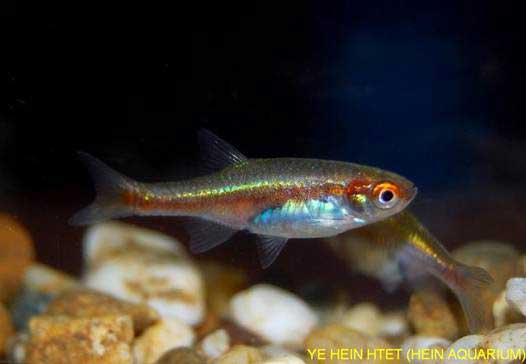
Microrasbora cf. rubescensFlame Red 'Rasbora'
authority not recorded
Max length40mm SL1.6in SLTank60 × 30cm24 × 12inTemp20–26°C68–79°FpH6.5–7.5This is possibly an undescribed species and has been marketed as 'Asian Cardinal Rasbora', 'flame red rasbora', M. sp. 'rose blue line' or M. 'thuzari' in the ornamental trade. It differs from M. rubescens by its larger adult size, possession of a greenish to bluish lateral stripe, and lesser extent of orange pigmentation on the body. It also appears to represent a distinct genetic lineage (Collins et al., 2012).
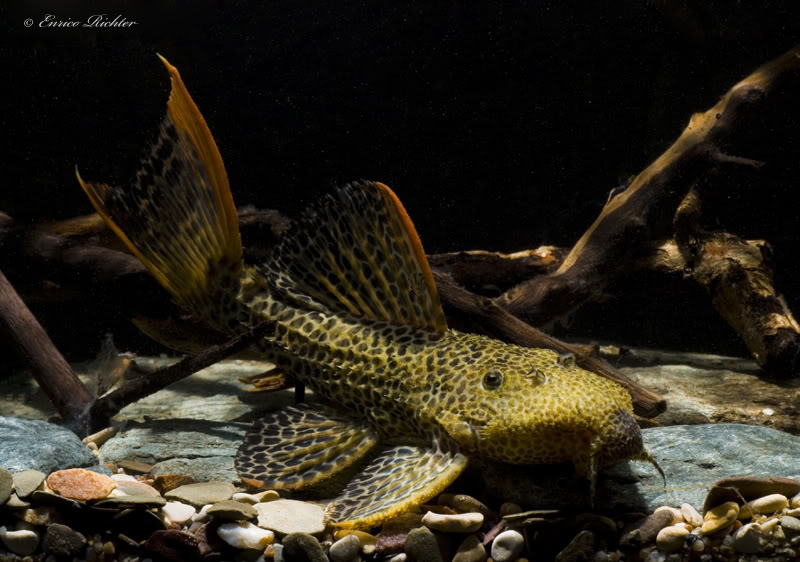
Pseudacanthicus cf. leopardusL114
authority not recorded
Max length250mm SL10in SLTank180 × 60cm72 × 24inTemp24–30°C75–86°FpH5.5–7.5Mostly collected in the in the rio Negro basin, Amazonas state, Brazil, and in particular the rio Demini, a northern tributary flowing into the central Negro in the municipality of Barcelos. P. leopardus was described from the Rupununi River in Guyana and the identity of this fish thus remains unconfirmed. This 'species' is also traded simply as 'leo...
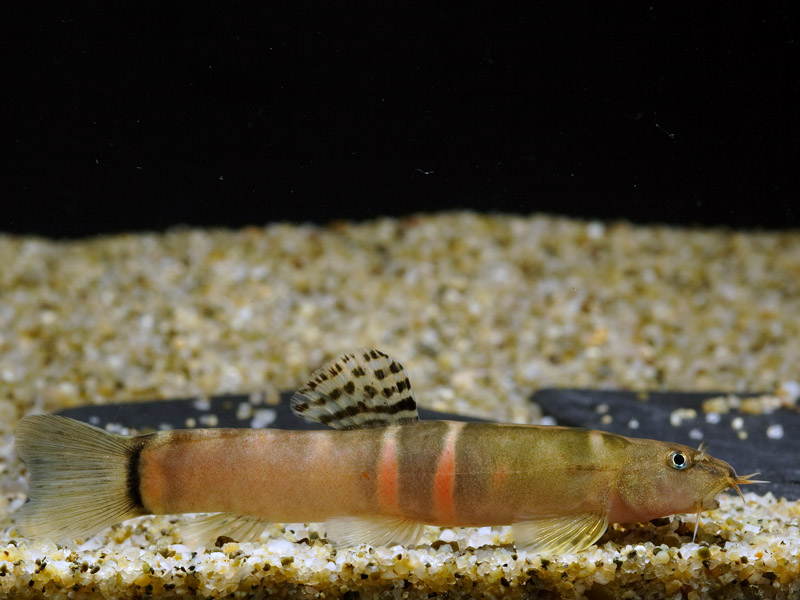
Schistura cf. balteataSumo Loach II
authority not recorded
Max length80mm SL3.1in SLTank90 × 30cm36 × 12inTemp22–26°C72–79°FpH6.5–7.5This apparently undescribed species has been available in the hobby since around 2006 and has been traded under several trade names of which others include 'tri-band sumo loach' and 'chubby loach'. The name 'Sumo II' is now in wide use to distinguish it from the real S. balteata since both have been traded as 'Sumo loach'...
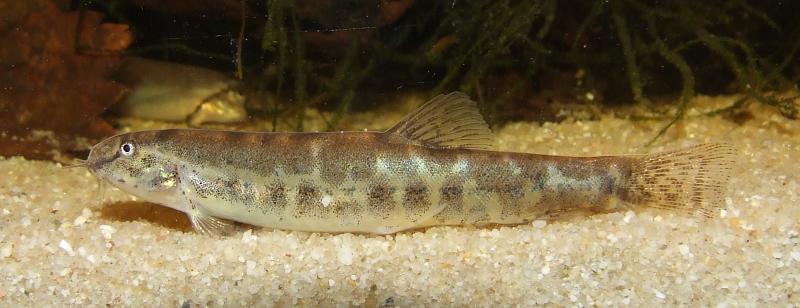
Lepidocephalichthys sp. 'LE1'Vietnamese Marbled Hog-faced Loach
authority not recorded
Max length55mm SL2.2in SLTank45 × 30cm18 × 12inTemp23–26°C73–79°FpH6.0–7.5This fish has only been traded on a handful of occasions to date. It's been referred to as Lepidocephalichthys cf. hasselti and Lepidocephalus cf. thermalis but appears to be an undescribed member of the former genus. Following a...
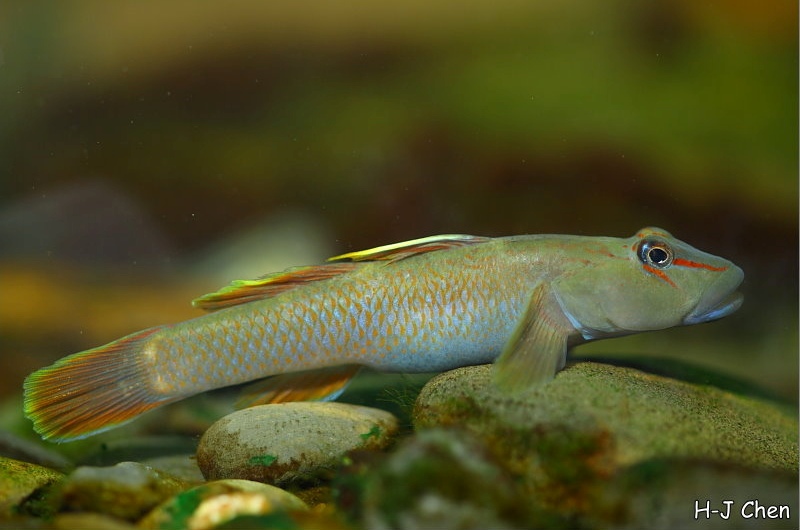
Rhinogobius candidianus
Regan, 1908
Max length80mm SL3.1in SLTank80 × 30cm31 × 12inTemp18–28°C64–82°FpH6.0–8.0This species is normally imported alongside a smaller-growing, near-identical congener currently listed as R. cf. nantaiensis with both traded as R. candidianus. They can be separated by snout length, which is noticeably longer in R. candidianus, and adult size with R. cf. nantaiensis reaching just 50-55 mm. R. candidianus can be distinguished from other congeners by a combination of cha...
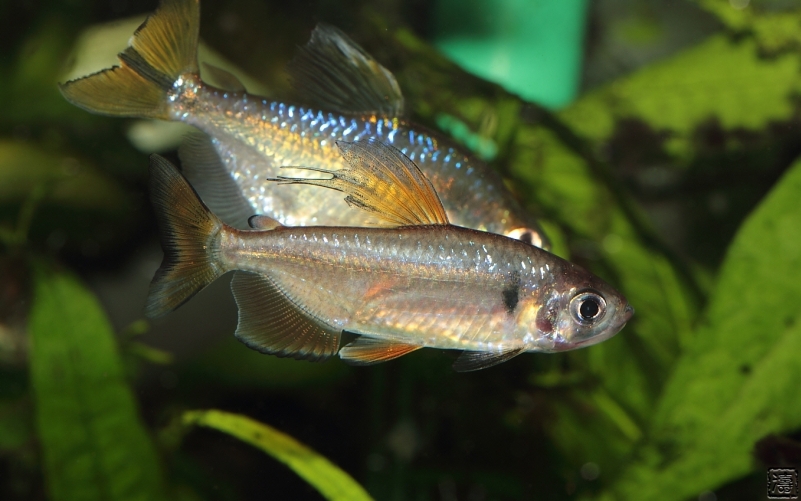
Alestopetersius nigropterusAfrican Rainbow Tetra
Poll, 1967
Max length60mm SL2.4in SLTank120 × 30cm48 × 12inTemp22–26°C72–79°FpH5.0–7.0This fish is normally traded as A. nigropterus or A. cf. ansorgii although neither appears to be its correct name meaning it remains unidentified at present. A. nigropterus is a valid congener that is not in the aquarium trade with little to no export from Lake Mai-Ndombe, to which it is endemic, while A. ansorgii is a synonym of Nannopetersius ansorgii.
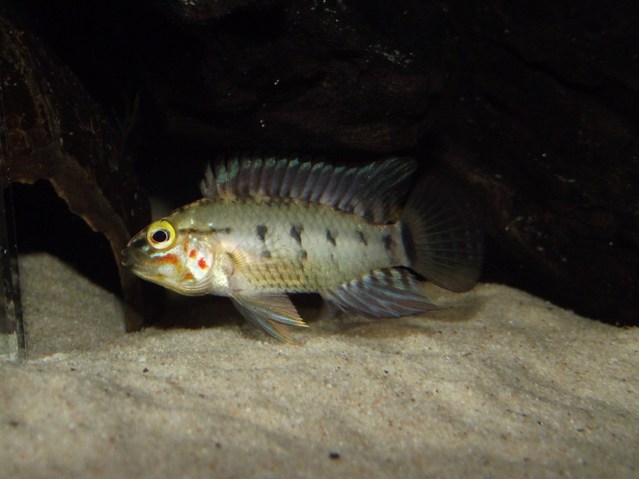
Apistogramma paulmuelleriA52
Römer, Beninde, Duponchelle, García Dávila, Vela Díaz & Renno, 2013
Max length♂ 42 · ♀ 33mm SL♂ 1.7 · ♀ 1.3in SLTank45 × 30cm18 × 12inTemp22–31°C72–88°FpH4.0–6.5This species is assigned the code A52 under the DATZ 'A' number system and is also known by the trade names A. sp. 'Apache', A. sp. 'Peru (II)', A. sp. 'Peru-regani', A. sp. cf. regani (Belém) and A. sp. 'carapintada'. Apistogramma is among the most speciose of South American cichlid genera with around 70 species valid at present but many more awaiting description. In addition many species exist in two or more geographical colour forms which may or ma...
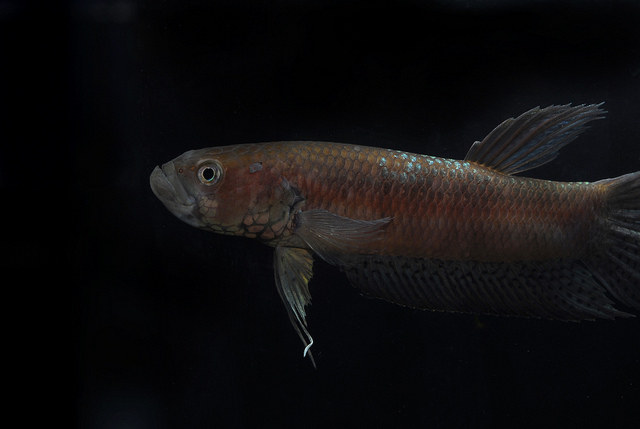
Betta gladiator
Tan & Ng, 2005
Max length90mm SL3.5in SLTank90 × 30cm36 × 12inTemp22–27°C72–81°FpH4.0–6.0Presumed endemic to the geographically-isolated Maliau basin, a roughly circular plateau enclosed by hills in Sabah state, Malaysia, Borneo. The Maliau River is part of the much larger Kinabantangan watershed, Malaysia's second longest river. The type series was collected from heath forest alongside 'Puntius' sealei and Hemibagrus cf. baramensis in acidic water with a pH of 4.2-4.8. Adult individuals were spaced around a metre apa...
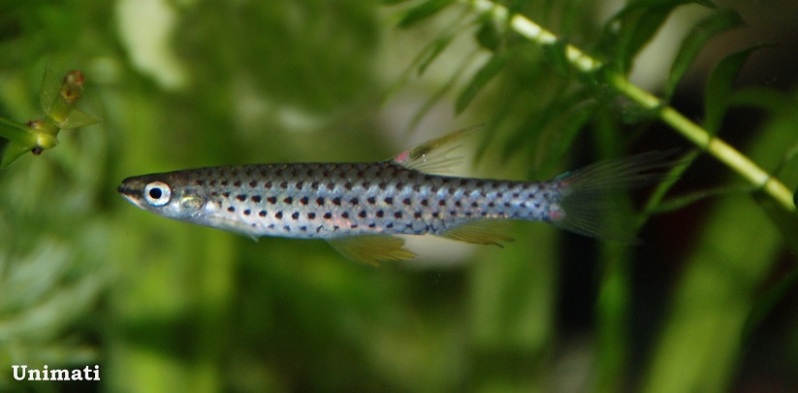
Copella callolepis
Regan, 1912
Max length42mm SL1.7in SLTank60 × 30cm24 × 12inTemp20–28°C68–82°FpH4.0–7.0This species is quite common in the aquarium trade although normally misidentified as the congeners C. nattereri or the very similar C. meinkeni. It was considered synonymous with C. nattereri for a number of years and was also referred to as C. cf. meinkeni by Zarske and Géry (2006) befo...
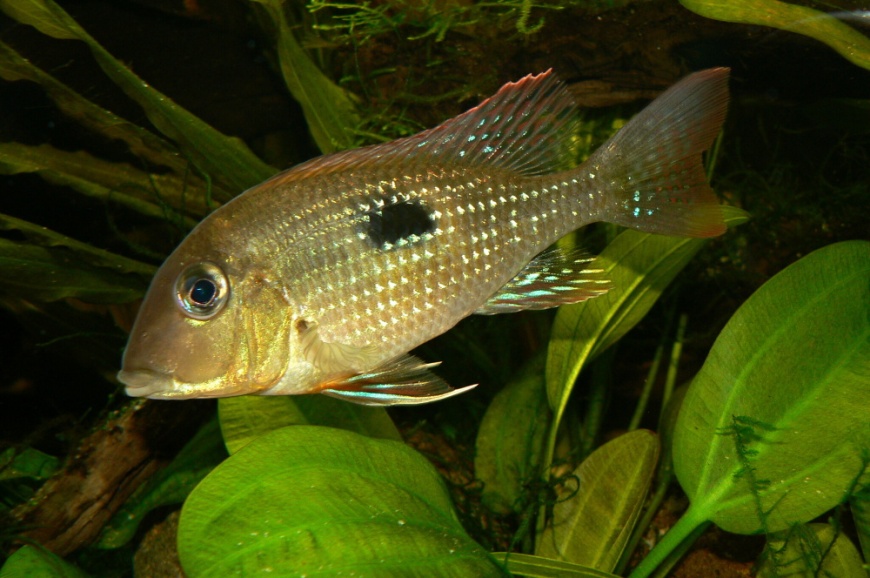
Geophagus camopiensisOiapoque Eartheater
Pellegrin, 1903
Max length200mm SL8in SLTank150 × 45cm60 × 18inTemp25–33°C77–91°FpH6.0–7.5In a study conducted on the Arataye River, the main tributary of the Approuage, this species was mostly collected from stretches of rapids with rocky substrate which were reduced to a series of pools during the dry season. Other fishes observed at the same site were Auchenipterus nuchalis, Hypostomus gymnorhynchus and Moenkhausia cf. intermedia while at other localities in the river Bryconops affinis, Myleus ternetzi, M. rhomboidalis, Moenkhausia aff. barbouri, Curimata sp. and Serrasalmus sp. were collected.
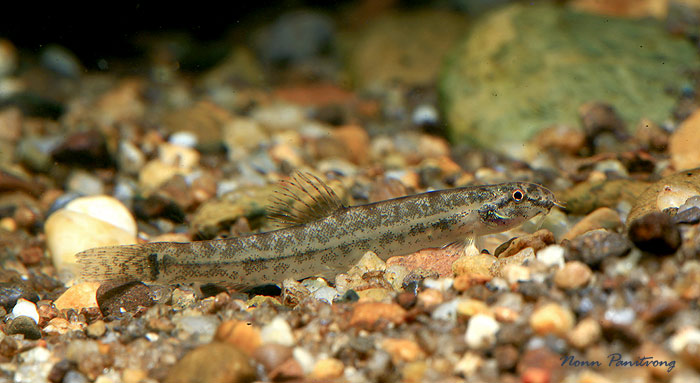
Lepidocephalichthys hasselti
Valenciennes, 1846
Max length60mm SL2.4in SLTank60 × 30cm24 × 12inTemp23–26°C73–79°FpH5.5–7.5At one locality close to Ban Na Hwai, Chiang Mai Province, Thailand L. hasselti was collected from a shallow (<0.5 m) pool in a swampy zone between forest and rice fields. The substrate was of mud, there was no aquatic vegetation and it was being used as drinking water by local animals, with the only effluent connected to a 'small creek'. Other species found there were Physoschistura pseudobrunneana, Rasbora hobelmani and Systomus cf. orphoides.
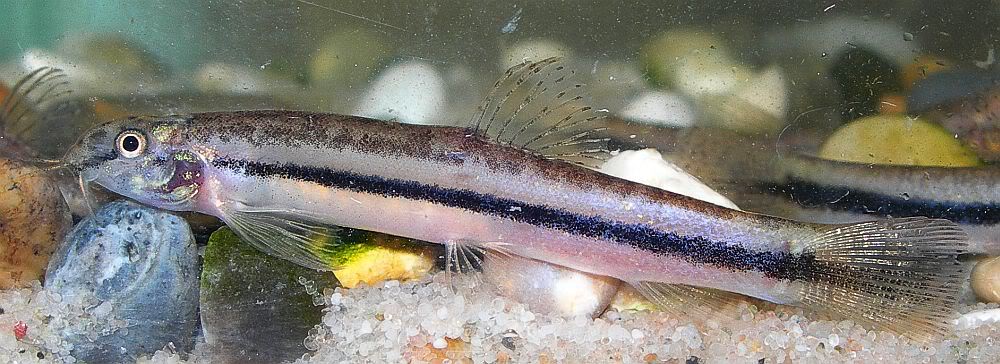
Lepidocephalichthys sp. 'LE2'
authority not recorded
Max length60mm SL2.4in SLTank45 × 30cm18 × 12inTemp26°C79°FpH6.0–7.5This fish may only have been exported for aquaria on a single occasion to date. It exhibits characters reminiscent of both L. alkaia and L. guntea, and has been referred to as L. cf. guntea) but is most likely an undescribed species (Havird, pers. comm.).
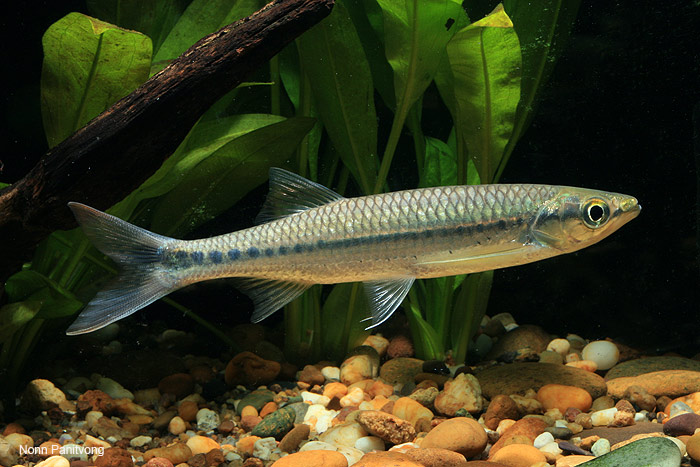
Luciosoma setigerumApollo Shark
Valenciennes, 1842
Max length220mm SL9in SLTank240 × 60cm96 × 24inTemp20–26°C68–79°FpH6.0–8.0There is a fish of unknown geographical origin which matches the majority of diagnostic features for L. setigerum with the exception that the dark lateral stripe is absent in the anterior portion of the body and is not composed of interconnected spots. It is relatively common in the aquarium trade and included here as L. cf. setigerum until a confirmed identity is established.