Results for “coast”
Type a name: scientific, common, or one a species used to go by. Or narrow the catalogue with the filters.
Filters
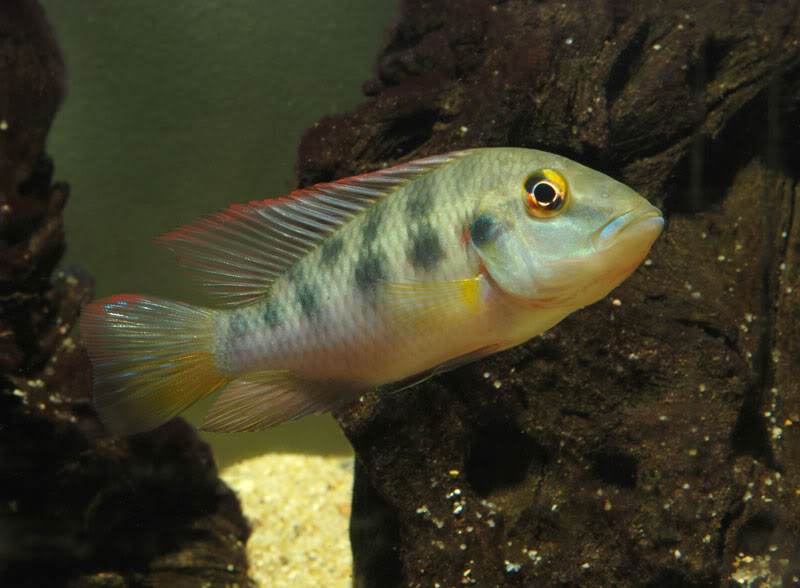
Chromidotilapia guntheri
Sauvage, 1822
Max length♂ 150 · ♀ 100mm SL♂ 6 · ♀ 3.9in SLTank120 × 30cm48 × 12inTemp24–27°C75–81°FpH6.0–8.0Described from Assinie-Mafia in south-eastern Côte d'Ivoire (Ivory Coast), western Africa but currently accepted to be extensively distributed in coastal river drainages of central western Africa from the Saint John River, central Liberia to the Cross River drainage, in southeastern Nigeria and southwestern Cameroon. It also occurs in the Niger and its major tributary the Benue (Bénoué) and has thus been recorded from Benin, Burkina Faso, Cameroon, Côte d'Ivoire, Equatorial Guinea, Ghana, Guinea, Liberia, Mali, Niger, Nigeria and Togo.
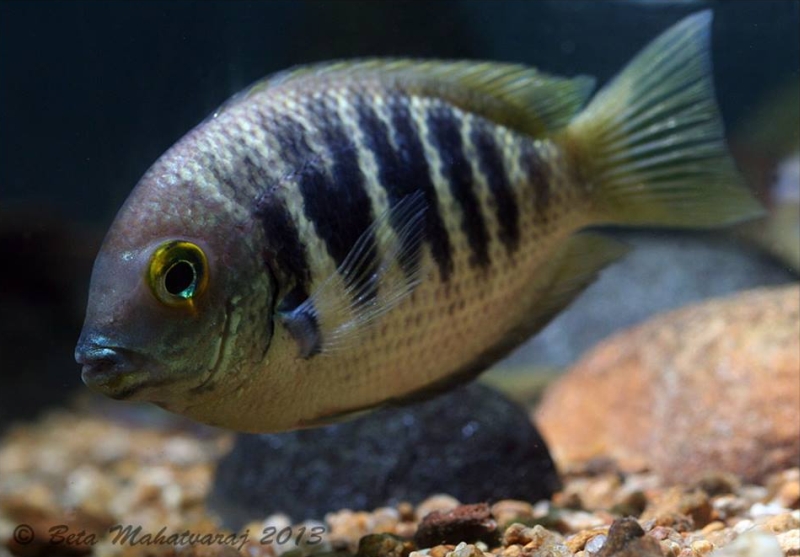
Etroplus canarensisCanara Pearlspot Cichlid
Day, 1877
Max length110mm SL4in SLTank120 × 45cm48 × 18inTemp22–32°C72–90°FpH6.0–7.5Etroplus is the only cichlid genus native to the Indian subcontinent and Sri Lanka and currently comprises three species among which E. canarensis is uniquely limited to freshwater and restricted in range. Its congeners E. maculatus and E. suratensis are both euryhaline inhabiting estuaries, coastal lagoons and the lower reaches of rivers around coastlines of western and southern India plus northern Sri Lanka.
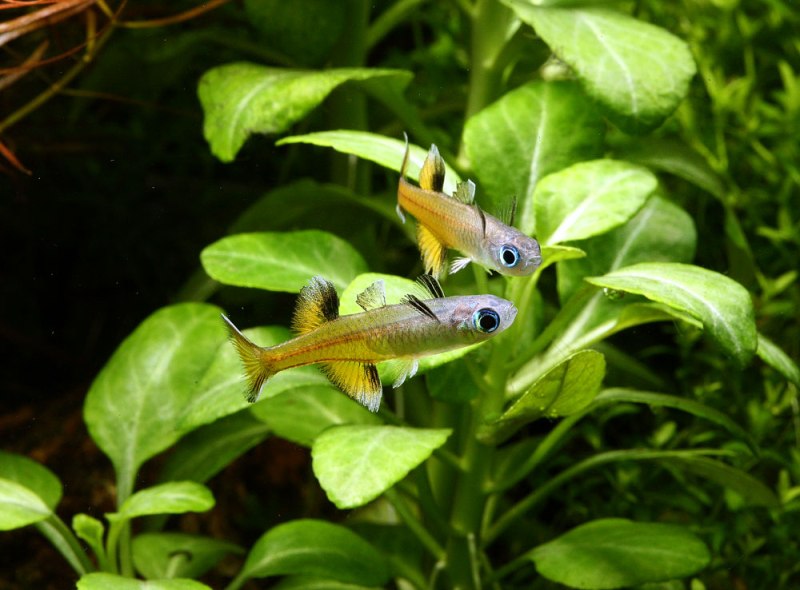
Pseudomugil signiferPacific Blue-eye
Kner, 1866
Max length70mm SL2.8in SLTank60 × 30cm24 × 12inTemp20–26°C68–79°FpH6.5–7.5Generally found within 15-20 km of the sea but habitat-type is extremely variable. It's been recorded in full marine conditions as well as pure freshwater environments, and commonly inhabits coastal mangrove creeks, swamps, and salt marshes. Freshwater habitats tend to comprise lowland swamps or forest streams with clear water but some populations inhabit acidic, tannin-stained, black waters. It's also abundant in the artificial canals typical of residential zones in the Gold Coast, southern Queensland.
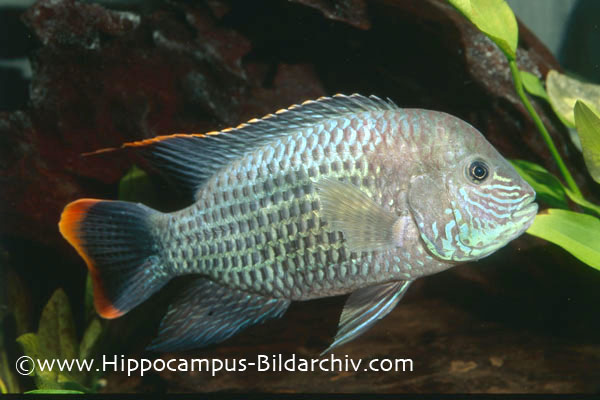
Andinoacara rivulatusGreen Terror Cichlid
Günther, 1860
Max length300mm SL12in SLTank150 × 45cm60 × 18inTemp20–24°C68–75°FpH6.5–8.0Native to extreme northern Peru and coastal drainages of western Ecuador as far north as the Río Esmereldas drainage and possibly beyond. The form from the Esmereldas and above may represent a different species (see 'notes').
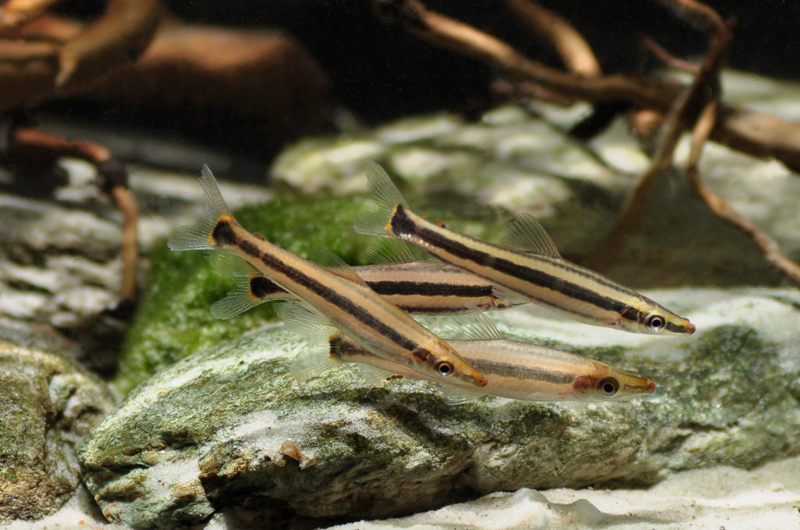
Anostomus ternetziGold-Striped Headstander
Fernández-Yépez, 1949
Max length125mm SL5in SLTank120 × 30cm48 × 12inTemp20–28°C68–82°FpH5.5–7.5This species is widely-distributed in the Río Orinoco system in Brazil, Colombia and Venezuela plus coastal drainages in Guyana, Suriname and French Guiana including the Essequibo and Mazaruni. Type locality is 'Palital, Estado Guárico, Venezuela' which appears to correspond to a wetland called Esteros de Palital in the Aguaro-Guariquito National Park of Guárico state, northern Venezuela.
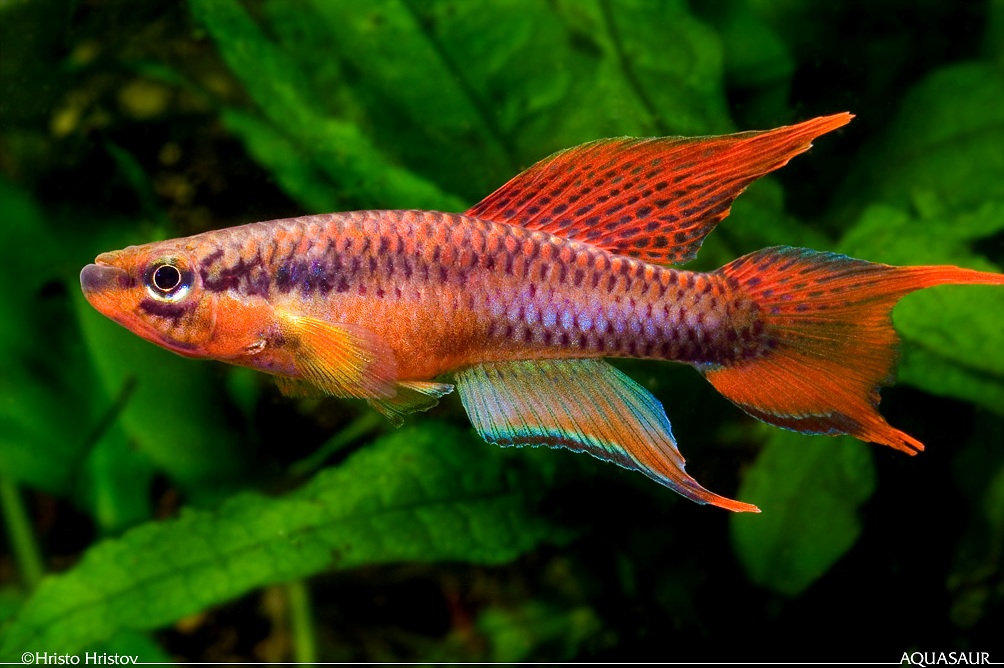
Aphyosemion bitaeniatumTwo-Striped Lyretail
Ahl, 1924
Max length45mm SL1.8in SLTanknot recordedTemp24–30°C75–86°FpH5.0–6.5This species is widely-distributed in lowland, coastal regions of Togo, Benin and Nigeria as far as the Cross River delta, and occurs at some inland localities along the lower Niger River. Populations in Cameroon, Equatorial Guinea and Gabon are now considered to represent other species.
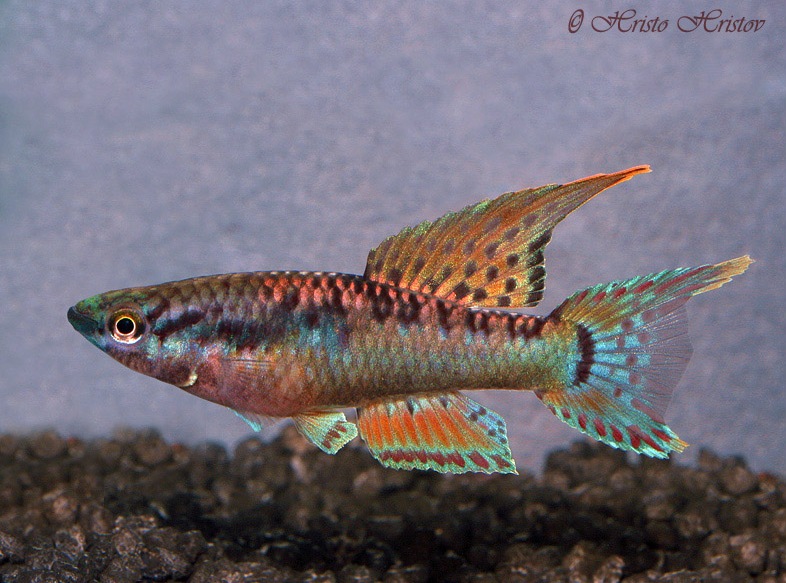
Aphyosemion bivittatumTwo-Banded Lyretail
Lönnberg, 1895
Max length50mm SL2.0in SLTanknot recordedTempnot recordedpHnot recordedType locality is close to a waterfall on the Ndian River in southwestern Cameroon, and appears restricted to the coastal plains either side of the border between Cameroon and Nigeria, including the Korup and Cross River National Parks.
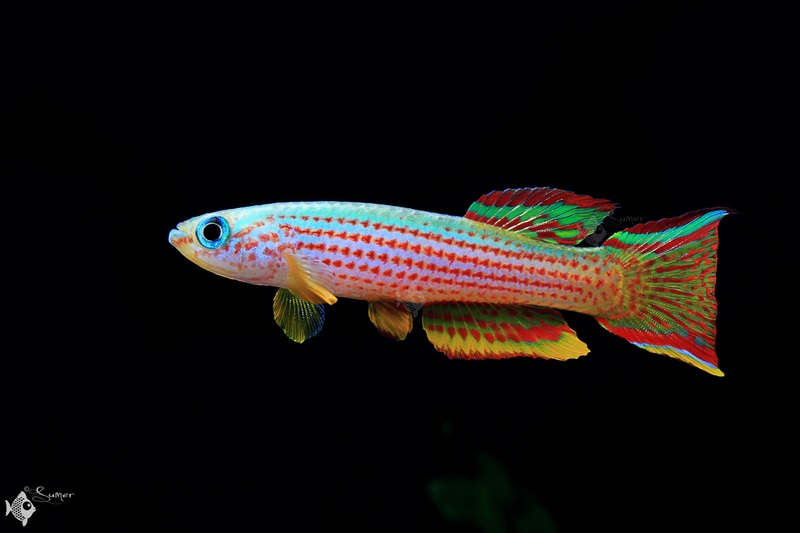
Aphyosemion striatumRed-Striped Lyretail
Boulenger, 1911
Max length50mm SL2.0in SLTank45 × 30cm18 × 12inTemp20–26°C68–79°FpH6.5–7.5Appears restricted to the area between the lower Mitmele River, Equatorial Guinea and the lower Ogooué basin in Gabon, including coastal drainages such as the Mbei, Komo and Gabon watersheds in between. Type locality is 'Abanga River, between first and second rapids, Ogowe River system, Gabon', corresponding to the Abanga River bas...
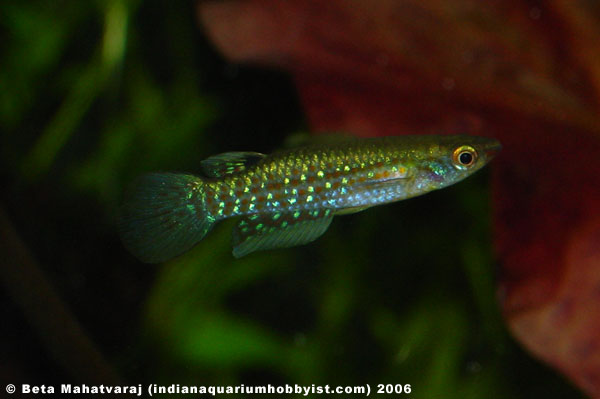
Aplocheilus blockiiGreen Panchax
Arnold, 1911
Max length45mm SL1.8in SLTank45 × 30cm18 × 12inTemp20–28°C68–82°FpH6.0–8.5This species is euryhaline and mostly inhabits lowland, often coastal, habitats containing still or slow-moving brackish or freshwater. It displays a preference for habitats with surface vegetation or overhanging cover and is commonly found in mangrove swamps and rice paddies.
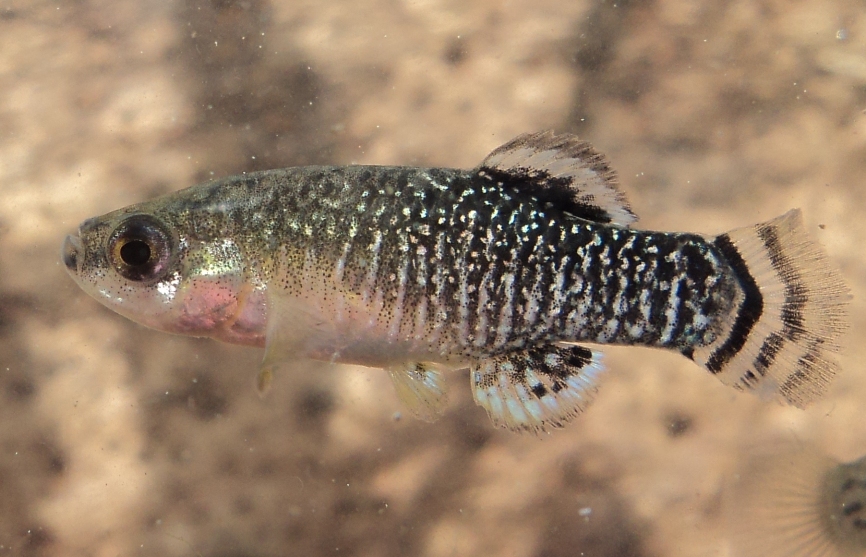
Apricaphanius iberusSpanish Toothcarp
Valenciennes, 1846
Max length50mm SL2.0in SLTank120 × 30cm48 × 12inTemp2–30°C36–86°FpH7.0–9.0Populations of Aphanius from Spain's southern, Atlantic coastline and Algeria previously considered representative of A. iberus have now been elevated to full species status with the names A. baeticus (Doadrio, Carmona & Fernández-Delgado, 2002) and A. saourensis (Blanco, Hrbek & Doadrio, 2006), respectively. All three species look broadly similar although A. saourensis can be easily identified as the patterning in males is mottled and does not form vertical bars, while femal...
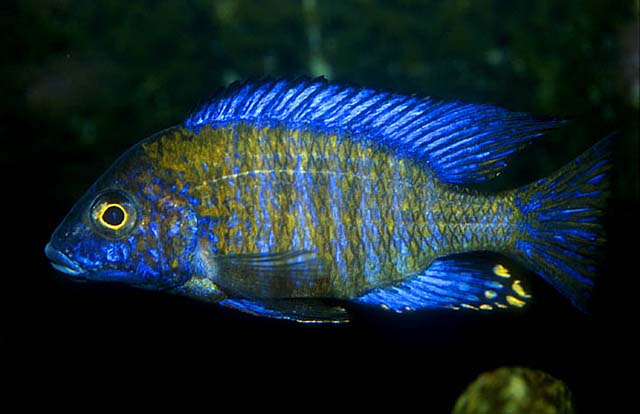
Aulonocara ethelwynnaeNorthern Aulonocara
Meyer, Riehl & Zetzsche, 1987
Max length110mm SL4in SLTank90 × 45cm36 × 18inTemp22–26°C72–79°FpH7.4–9.0Endemic to Lake Malawi where it was described from and only occurs around 'Chitendi Island', now normally referred to as Chitande island plus a short stretch of coastline between Ngara and Chilumba along the lake's northwestern shoreline. Aulonocara spp. are benthophagous by nature employing a method of feeding whereby mouthfuls of substrate are taken and sifted for edible items with the remaining material expelled via the gills and mouth. They're equally-skilled at hunting as grazing, tending to hover above the substrate until tiny movements are detected, and possess enlarged sensory pores on the head which assist in this technique.
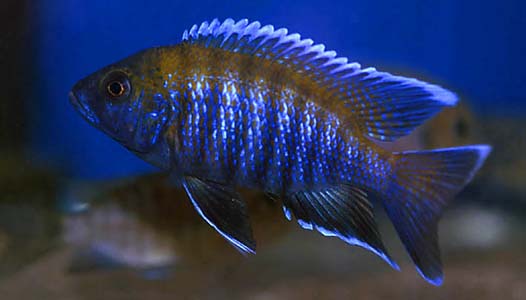
Aulonocara sp. 'walteri'Blue-faced Peacock
authority not recorded
Max length130mm SL5in SLTank120 × 45cm48 × 18inTemp25–29°C77–84°FpH7.5–9.0This fish has been known in the aquarium hobby for a number of years but remains undescribed to science despite the confusing trade name which has resulted in it often being referred to incorrectly as 'Aulonocara walteri'. It's known only from Chizumulu Island and Likoma Island in Lake Malawi, both located off the eastern shoreline of the central part of the lake (Mozambique). There is a similar-looking, potentially conspecific, fish which can be found between the coastal settlements of Meponda (Mozambique) and Ntekete (Malawi) further south, and has been referred to A. sp. 'trematocranus masinje'.
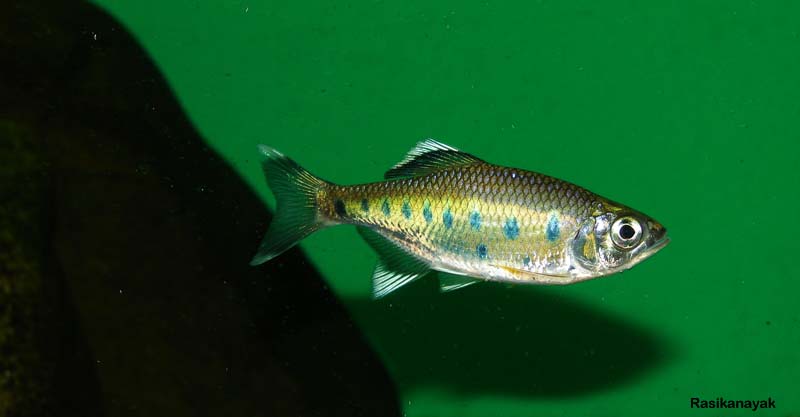
Barilius canarensis
Jerdon, 1849
Max length130mm SL5in SLTank150 × 60cm60 × 24inTemp18–26°C64–79°FpH6.0–7.5Type locality is 'Canara, southern India', which corresponds to a coastal region of approximately 300 km in length covering several districts of Karnataka and Kerala states, southwestern India. Rivers in this area drain the Western Gha...
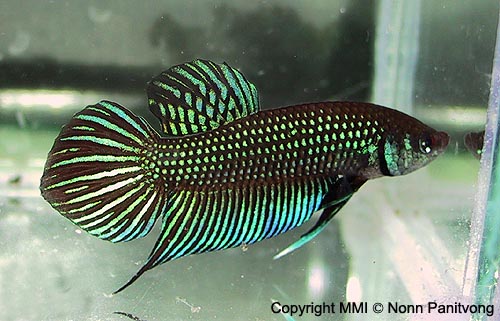
Betta mahachaiensis
Kowasupat, Panijpan, Ruenwongsa & Sriwattanarothai, 2012
Max length60mm SL2.4in SLTank45 × 30cm18 × 12inTemp22–28°C72–82°FpH7.0–8.5Known only from a handful of localities in Bangkok, Samut Sakhon, Samut Songkhram and Samut Prakan provinces in central Thailand, all of which lie on the coast of the Gulf of Thailand. Most habitats are in close proximity to Bangkok, which continues to expand rapidly, are considered under extreme threat, and recent surveys have failed to confirm that the fish is still present in Samut Songkhram and Samut Prakan.
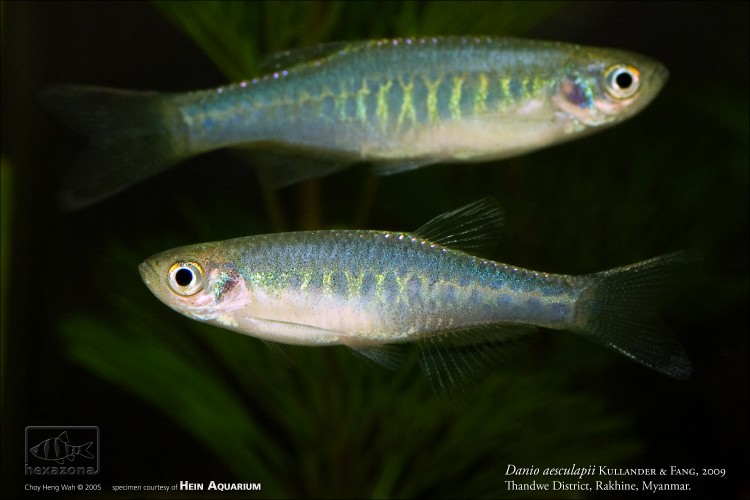
Brachydanio aesculapiiPanther 'Danio'
Kullander & Fang, 2009
Max length30mm SL1.2in SLTank60 × 30cm24 × 12inTemp22–27°C72–81°FpH6.9–7.1Endemic to the Rakhine Yoma/Arakan mountains in Rakhine state, western Myanmar; this range forms a natural barrier which cuts the state off from the remainder of the country. It was originally collected from a handful of streams and rivers of the western, interior, slopes of which the type specimens originated from the Kananmae Chaung, a coastal rivulet draining into the Bay of Bengal (Kullander and Fa...
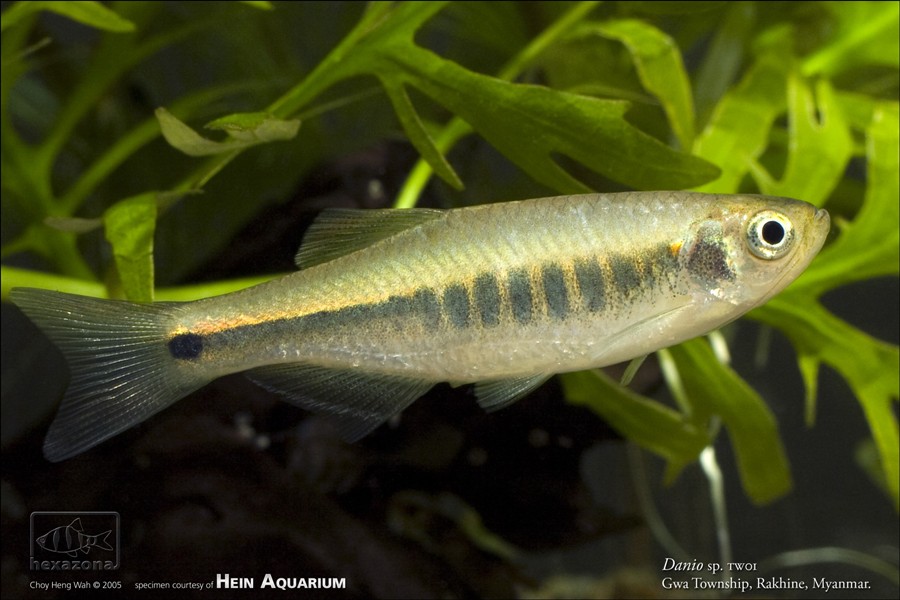
Brachydanio sp. 'TW01'Black-barred 'Danio'
authority not recorded
Max length65mm SL2.6in SLTank120 × 30cm48 × 12inTemp18–26°C64–79°FpH6.0–7.5Apparently discovered close to the coastal town of Gwa in Rakhine State, western Myanmar. Rakhine is largely cut off from the rest of the country by the Rakhine Yoma/Arakan mountains which form a natural barrier along its eastern side. Rakhine is located within a tropical monsoon region and has a pronounced rainy season between May and October, while at other times it can be quite dry. The streams thus swell in depth by a metre or mo...
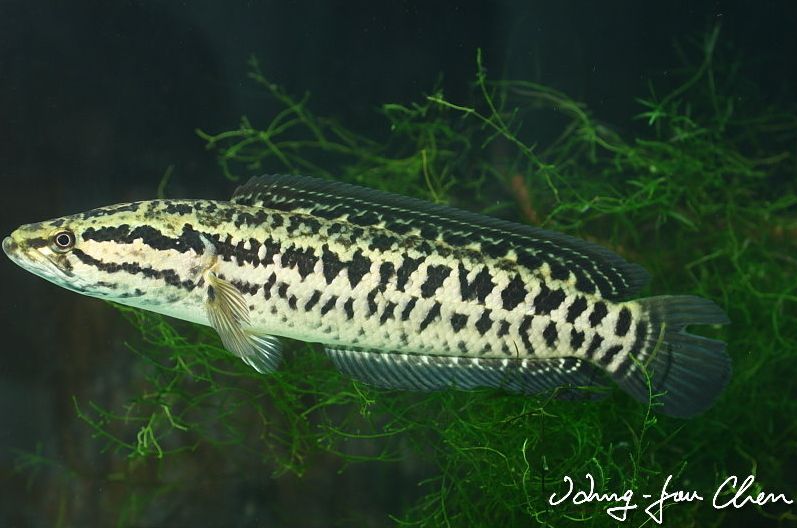
Channa maculataBlotched Snakehead
Lacepède, 1801
Max length300mm SL12in SLTanknot recordedTempnot recordedpHnot recordedThis species is frequently confused with C. argus but can be distinguished by the following characters: dorsal-fin rays 38-45 (vs. 47-50 in C. argus); anal fin rays 26-29 (vs. 31-36); lateral line scales 50-56 (vs. 60-66); 2-3 rounded blotches on caudal peduncle (vs. no blotches on caudal peduncle). It is widely-distributed in Pacific coastal drainages of southeastern China (e.g. the Yangtze, Minjiang, Hangjiang River, and Pearl (Nanjiu...
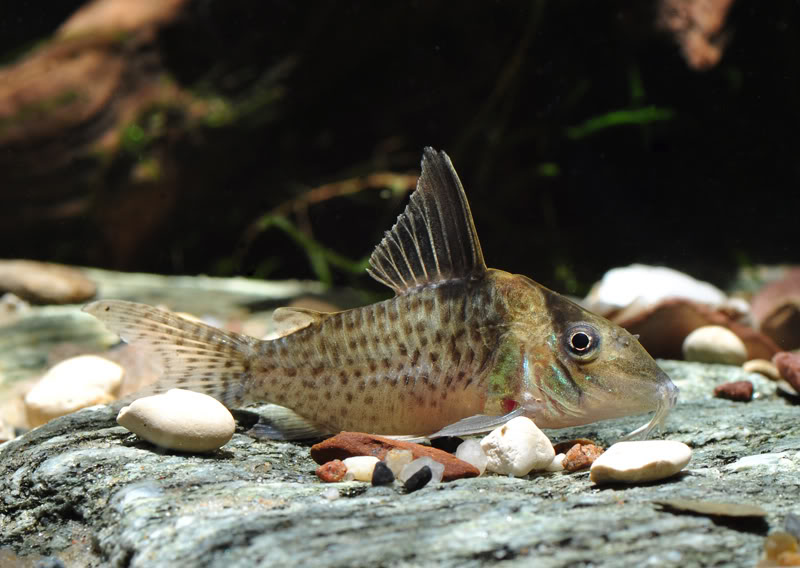
Corydoras brevirostrisSpotted Cory
Fraser-Brunner, 1947
Max length60mm SL2.4in SLTanknot recordedTemp20–26°C68–79°FpH6.0–7.5C. brevirostris was described from an aquarium specimen apparently exported from the Río Orinoco drainage in Venezuela, and its wider distribution is somewhat vague, usually being given as the Orinoco system plus unnamed coastal rivers in Suriname. This represents a somewhat disjunct pattern of distribution and if correct the species is also likely to occur in Guyana.
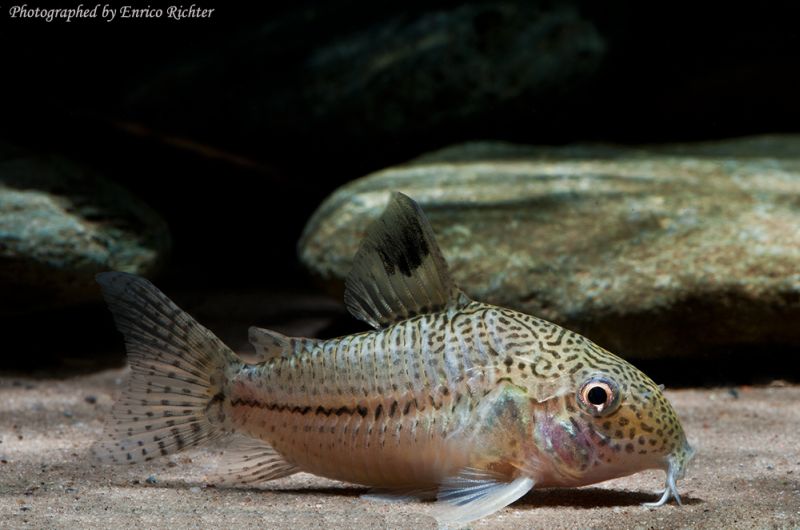
Corydoras juliiJulii Cory
Steindachner, 1906
Max length55mm SL2.2in SLTank90 × 30cm36 × 12inTemp20–26°C68–79°FpH5.5–7.5Native to coastal river systems south of the Amazon delta in the states of Piauí, Maranhão, Pará, and Amapá, northeastern Brazil. It has been recorded from the rios Guamá (including tributaries such as the rio Ararandeua), Maracanã (rio Peixe-Boi), Morcego, Parnaíba, Piriá, Caeté, Turiaçu (rio Jamari), and Mearim (rio Pindaré). Reports from French Guiana and western Brazil appear to represent cases of misidentification.
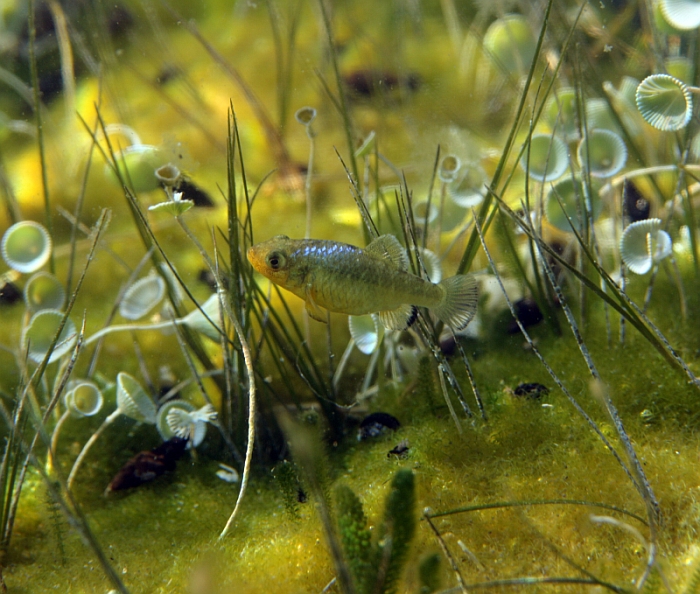
Cyprinodon variegatusSheepshead 'Minnow'
Lacepède, 1803
Max length50mm SL2.0in SLTank60 × 30cm24 × 12inTempnot recordedpHnot recordedTends to be most common in brackish to hypersaline environments such as coastal salt marshes, lagoons and estuaries. On San Salvador Island, Bahamas, it appears to be the parent of a species group occurring in sympatry and exploiting diverse but specific resources with some spectacular morphological adaptations.