Results for “competition”
Type a name: scientific, common, or one a species used to go by. Or narrow the catalogue with the filters.
Filters
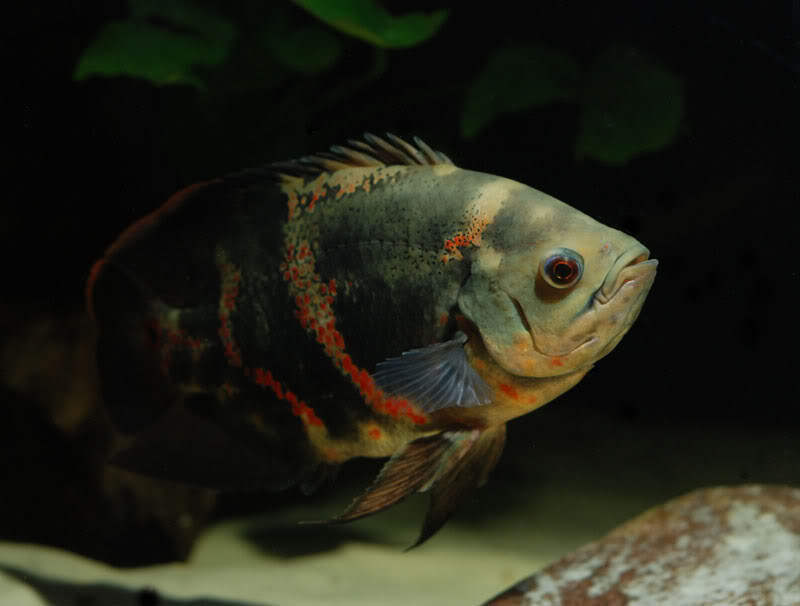
Astronotus ocellatusOscar
Agassiz, 1831
Max length350mm SL14in SLTank150 × 60cm60 × 24inTemp20–28°C68–82°FpH6.0–7.5This species is also referred to as 'velvet cichlid', 'red oscar', 'tiger oscar', or 'marble cichlid'. It is a popular aquarium fish although its adult size and typical life-span of 10-20 years must be taken into account before purchase. Numerous ornamental strains are now available, and while care is more-or-less identical for all of them a degree of additional care must be taken with the 'long-finned' variety which is a little less competitive than other forms.
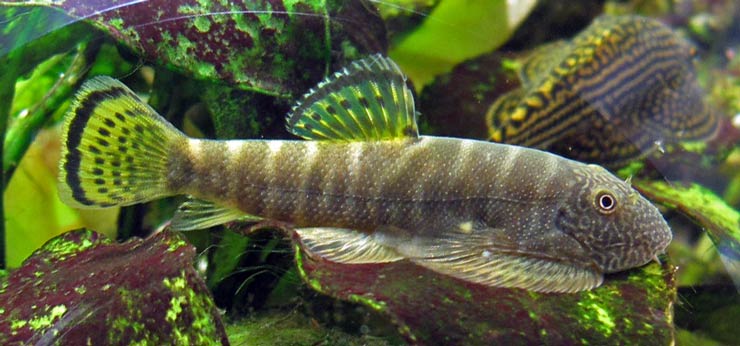
Gastromyzon viriosus
Tan, 2006
Max length55mm SL2.2in SLTank75 × 30cm30 × 12inTemp20–24°C68–75°FpH6.0–7.5Many loaches from the families Nemacheilidae, Balitoridae and Gastromyzontidae are also suitable but research your choices before purchase in order to be sure as some are excessively aggressive or otherwise competitive. Gastromyzon spp. tend to exist in lo...
Labeotropheus trewavasaeTrewavas' Cichlid
authority not recorded
Max length113mm SL4in SLTank90 × 45cm36 × 18inTemp24–28°C75–82°FpH7.6–8.8This species has the characteristic overhanging snout possessed by all three members of the genus. It also has chisel-shaped teeth which are designed for scraping algae off rocks. These physical adaptations give it a competitive advantage, as they allow it to graze from rocks situated in very shallow water which other species cannot reach. The position of the mouth allows the fish to remain parallel to the rock surfaces, thus enabling it to cope with the turbulence in these areas. L. trewava...
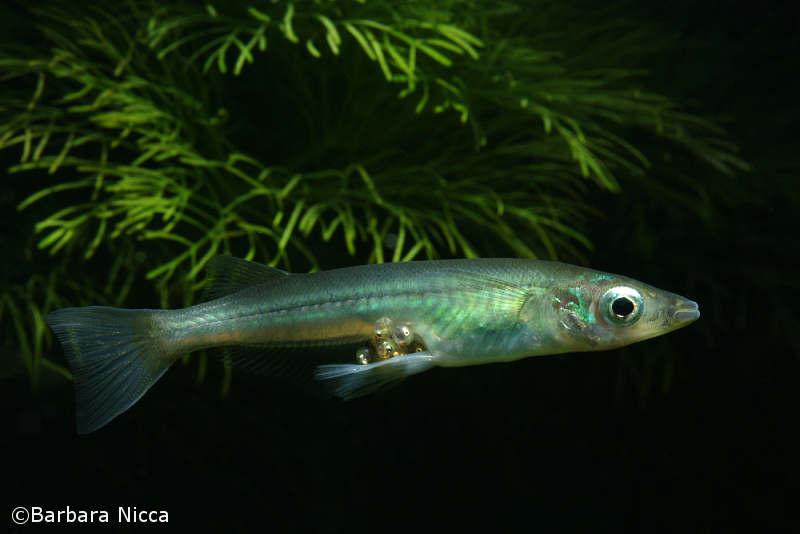
Oryzias sarasinorumSarasin's Buntingi
Popta, 1905
Max length60mm SL2.4in SLTank100 × 30cm39 × 12inTemp24–29°C75–84°FpH7.0–8.0Utilises a strategy which has become known as 'pelvic brooding'. Spawning tends to occur in the early morning, with dominant males darkening in colouration and defending their space by driving away potential competitors, while approaching ripe females in a rigid 'head-down' position. The eggs normally number 8-12 and are expelled as a single mass while being fertilised simultaneously, after which they continue to hang from th...
Paratilapia polleni
authority not recorded
Max length280mm SL11in SLTank120 × 45cm48 × 18inTemp17–28°C63–82°FpH6.5–8.0Now the only species in the genus Paratilapia, P. polleni is known as the "marakely" to many natives in Madagascar, which means "black fish". As with most Madagascan cichlid species, it is highly endangered in the wild due to habitat destruction and competition from introduced species and all attempts at captive breeding are to be encouraged. There is still some confusion as to the identity of the "true" P. polleni as there are both large and small-spotted forms...