Results for “eyed-up”
Type a name: scientific, common, or one a species used to go by. Or narrow the catalogue with the filters.
Filters
Dimidiochromis compressicepsMalawi Eye-Biter
authority not recorded
Matched on the common name Malawi Eye-Biter
Max length250mm SL10in SLTank150 × 38cm60 × 15inTemp23–28°C73–82°FpH7.5–8.8D. compressiceps is an ambush predator in nature, its laterally compressed shape and head-down hunting position allowing it to remain hidden among Vallisneria beds and making it tricky to spot in open water. It has a dark stripe running from the snout along the back to the tail which serves to provide further camouflage. Despite its common name, it does not prey solely on the eyes of other species, preferring to hunt small fish (particularly juvenile Copadichromis sp.). It swallows these tai...
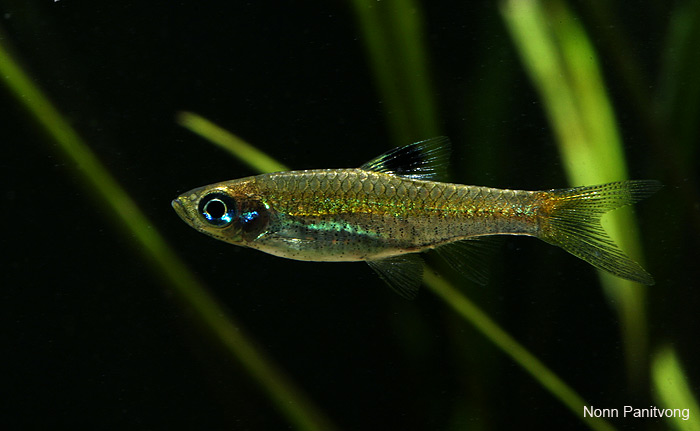
Brevibora dorsiocellataEyespot Rasbora
Duncker, 1904
Matched on the common name Eyespot Rasbora
Max length35mm SL1.4in SLTank45 × 30cm18 × 12inTemp20–25°C68–77°FpH5.0–7.5B. dorsiocellata is sometimes traded as 'green-eyed', 'emerald-eyed' or 'hi-spot' rasbora. There appear to exist several geographical forms of the species at least two of which have been seen in the trade. The most common is the rather plain-coloured fish that is produced commercially in large numbers and has gained popularity due to the bright green/blue reflective patch in the lower part of the eye.
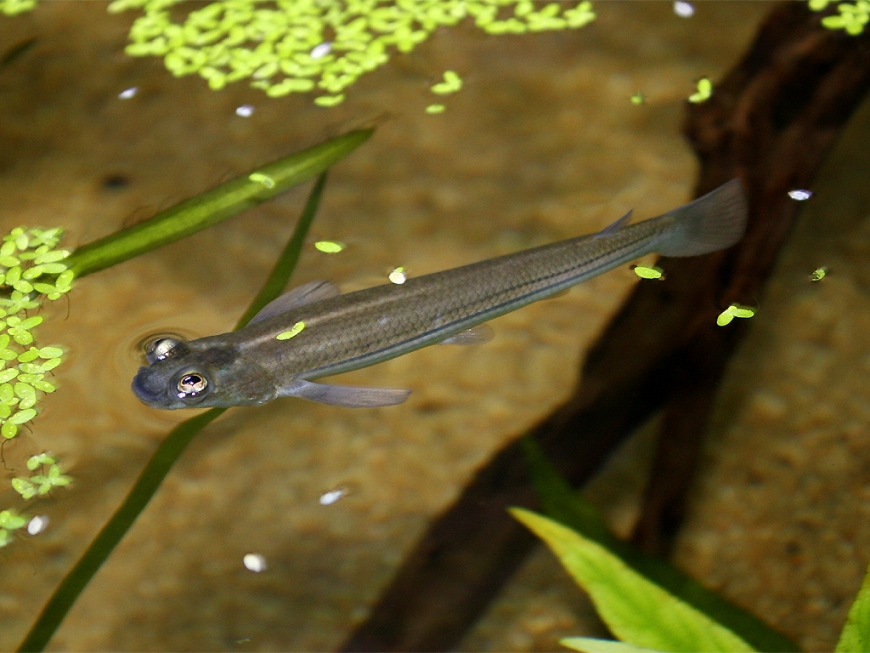
Anableps anablepsFour-Eyed Fish
Linnaeus, 1758
Matched on the common name Four-Eyed Fish
Max length260mm SL10in SLTank150 × 45cm60 × 18inTemp25–31°C77–88°FpH7.5–9.0The eye of Anableps species is split horizontally by a band of epithelial tissue. It has two corneas, two pupils, a single, egg-shaped lens and one retina that's also split into two sections. The lens is oval and asymmetric with the upper part flattened as in the human eye and the lower section curved as in most other fishes. The upper cornea is thicker and enriched with glycogen which possibly helps to protect it from drying and UV irradiation. Two horizontal flaps of the iris are thought ...
Synodontis pleuropsBig Eyed Synodontis
authority not recorded
Matched on the common name Big Eyed Synodontis
Max length230mm SL9in SLTank120 × 30cm48 × 12inTemp22–26°C72–79°FpH6.0–7.0S. pleurops is a very nocturnal species and unless the light in the aquarium is dim will rarely be seen. It is also very distinctive and is hard to confuse with other species. It has very large eyes and a downturned mouth, denoting its algae grazing habits. It will rarely venture into open water in the aquarium, preferring to hug the surface of pieces of driftwood, rocks and broad plant leaves. The colouration and patterning can vary considerably depending on type locality....
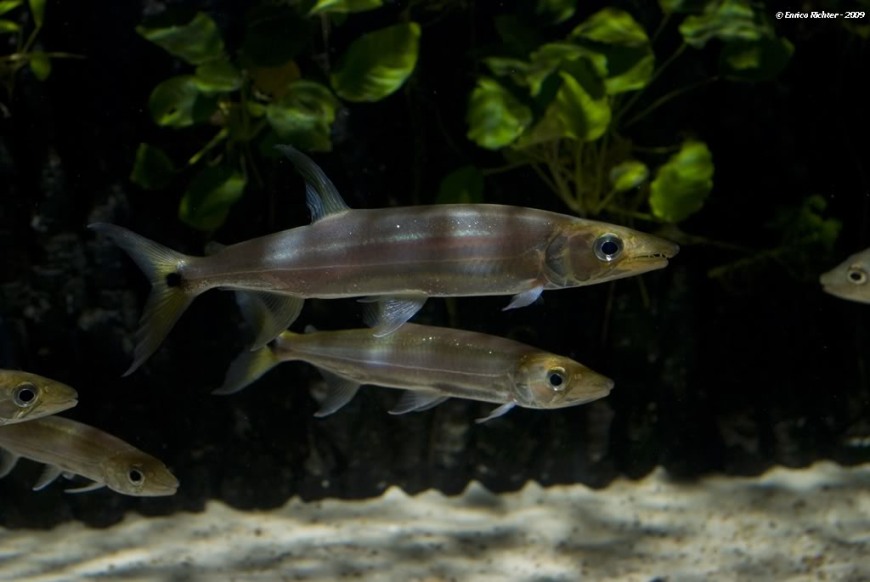
Acestrorhynchus falcirostrisBig-Eyed Cachorro
Cuvier, 1819
Matched on the common name Big-Eyed Cachorro
Max length350mm SL14in SLTank250 × 90cm98 × 36inTemp22–28°C72–82°FpH6.0–7.5This species is a member of the putative A. nasutus group of closely-related species within the genus alongside A. nasutus, A. maculipinna and A. isalineae. These are characterised by possession of two dark, longitudinal stripes, one running from the tip of the snout to the base and the other from the posterior edge of the lower maxilla to the underside of the caudal peduncle.
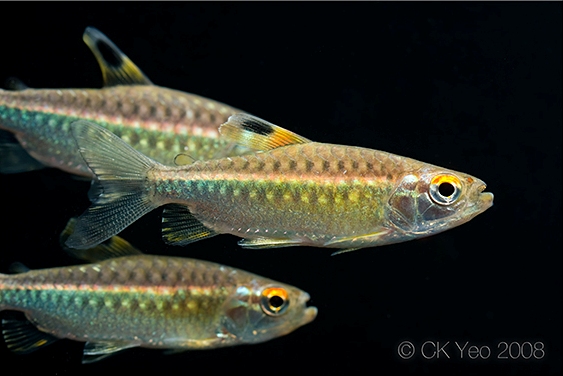
Arnoldichthys spilopterusAfrican Red-eyed Tetra
Boulenger, 1909
Matched on the common name African Red-eyed Tetra
Max length100mm SL3.9in SLTank120 × 30cm48 × 12inTemp24–27°C75–81°FpH6.0–7.5Endemic to Nigeria, where it occurs in the Ogun and lower Niger river systems. Despite its popularity in the aquarium hobby it's relatively scarce in the wild and is known from less than 10 localities, all lying in an area where deforestation and pollution are uncontrolled and continue to occur extensively.
Callochromis macropsBig-eyed Mouthbrooder
authority not recorded
Matched on the common name Big-eyed Mouthbrooder
Max length135mm SL5in SLTank120 × 45cm48 × 18inTemp24–27°C75–81°FpH7.8–9.5Members of the genus Callochromis feed in a similar way to the South American "eartheaters" such as Geophagus species. They extract invertebrates and other items hidden in the substrate by taking in mouthfulls of sand and sifting it through the gills. The common term "sand sifters" is applied to these and other Tanganyikan species that inhabit a similar ecological niche, such as Enantiopus and Xenotilapia spp. Several geographical colour forms of this species exist. These ...
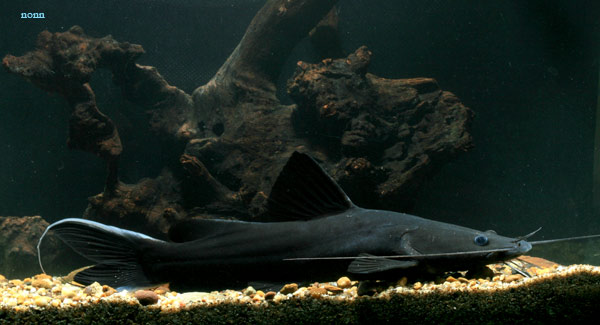
Hemibagrus wyckiiCrystal-eyed Catfish
Bleeker, 1858
Matched on the common name Crystal-eyed Catfish
Max length710mm SL28in SLTanknot recordedTemp20–27°C68–81°FpH6.0–8.0Aggressively territorial and incompatible with other fishes in all but the largest public installations and even then may attack its tankmates. It's also one of few freshwater fishes that appear unafraid of humans meaning care must be exercised when performing maintenance.
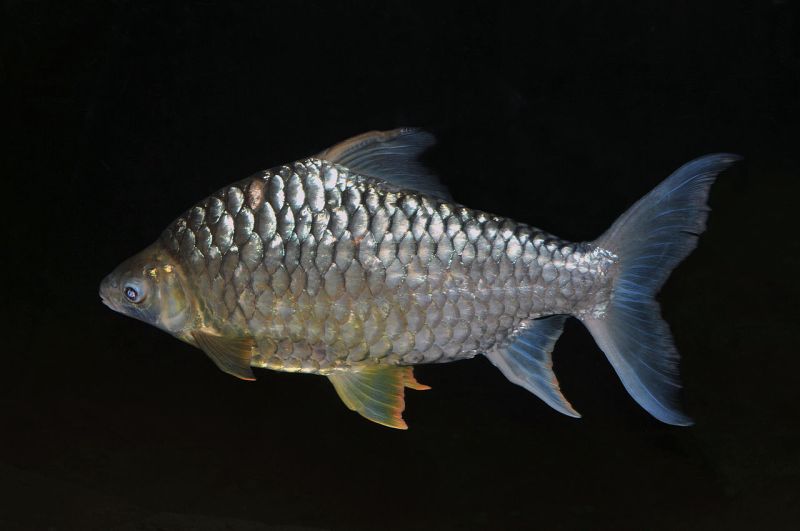
Hypsibarbus pierreiYellow Eyed Silver Barb
Sauvage, 1880
Matched on the common name Yellow Eyed Silver Barb
Max length300mm SL12in SLTanknot recordedTempnot recordedpHnot recordedKnown from the middle and lower Mekong basins in Laos, Thailand, Cambodia, and Vietnam, plus the Dong Nai drainage in central Vietnam. Type locality is 'Rapids of Dang-nai, Bien Hoa Province, Thailand', which corresponds to what is now the city of Biên Hòa in Đồng Nai province, southern Vietnam.
Moenkhausia sanctaefilomenaeRed-eye Tetra
authority not recorded
Matched on the common name Red-eye Tetra
Max length70mm SL2.8in SLTank90 × 38cm36 × 15inTemp22–26°C72–79°FpH6.0–8.0This species can be found swimming in most dealers' tanks and is one of the best choices for the newcomer to fishkeeping. All the fish sold in the trade have been captive bred and as such are unfussy regarding water chemistry and diet. The taxonomic status of all species in the genus Moenkhausia is currently Incertae Sedis, meaning uncertain. The genus is currently used as something of a catch-all for a large number of small characin species. Most experts agree that a full revision is re...
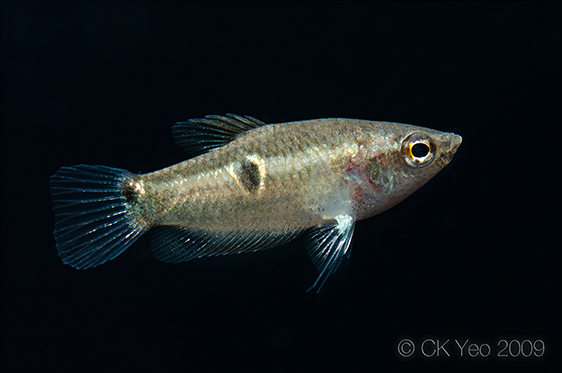
Parasphaerichthys ocellatusEyespot Gourami
Prashad & Mukerji, 1929
Matched on the common name Eyespot Gourami
Max length32mm SL1.3in SLTank45 × 30cm18 × 12inTemp15–25°C59–77°FpH6.5–7.5To date the species is known mostly from the upper Ayeyarwady River basin in northern Myanmar where it's been collected close to the city of Myitkyina in Kachin State as well as around nearby Lake Indawgyi, the largest inland lake in Southeast Asia and home to ten globally threatened bird species. The lake and surrounding area were designated a protected zone by the Ministry of Ecotourism in 1999 and now form the Indawgyi Lake Wildlife Sanc...
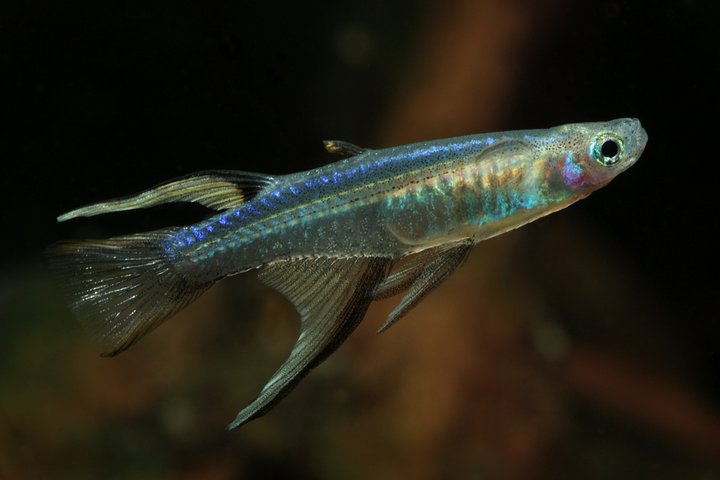
Pseudomugil cyanodorsalisNeon Blue-eye
Allen & Sarti, 1983
Matched on the common name Neon Blue-eye
Max length35mm SL1.4in SLTank45 × 30cm18 × 12inTemp21–31°C70–88°FpH7.0–8.5Euryhaline and thus capable of withstanding significant fluctuations in salinity and other water conditions. It's been recorded in full marine conditions as well as pure freshwater environments, and commonly inhabits coastal mangrove creeks and swamps. Such changes may occur on a daily or seasonal basis depending on locality, with some habitats influenced by daily tides whereas others become hypersal...
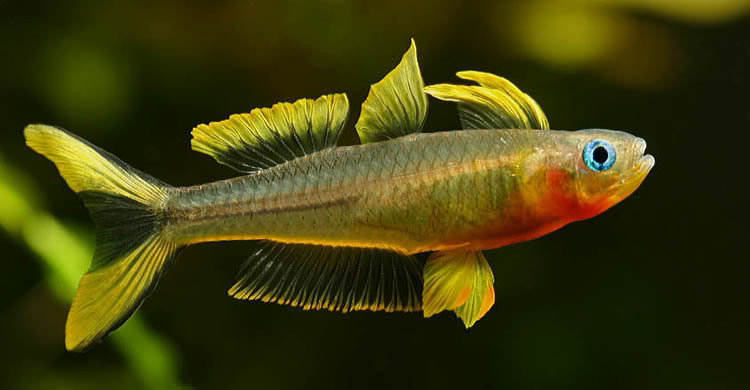
Pseudomugil furcatusForktail Blue-eye
Nichols, 1955
Matched on the common name Forktail Blue-eye
Max length60mm SL2.4in SLTank60 × 30cm24 × 12inTemp24–28°C75–82°FpH7.0–8.0This species is also traded as 'forktail rainbowfish' or 'yellow forktail', and it's also undergone several changes in scientific name since description. Pseudomugil furcatus is the original designation, but Allen (1980) created the genus Popondetta for it on the basis of morphological characters including number of anal-fin rays (16-20 in P. furcatus, 8-12 in other Pseudomugil spp.), absence of anterior...
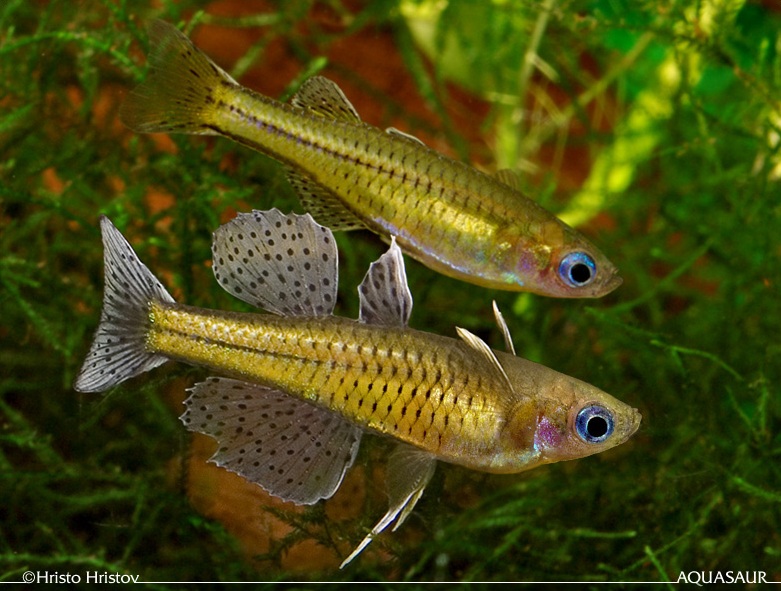
Pseudomugil gertrudaeSpotted Blue-eye
Weber, 1911
Matched on the common name Spotted Blue-eye
Max length38mm SL1.5in SLTank45 × 30cm18 × 12inTemp21–28°C70–82°FpH4.5–7.5Described from 'Rivulet in sago forest at Ngaiguli, Terangan, Aru Island, Aru Islands, Maluku, Indonesia', corresponding to the island now normally referred to as 'Trangan' in the Aru Islands group, eastern Indonesia. The islands are located in the Arafura Sea, with western New Guinea to the north and the Arnhem Land Region of Australia's Northern Territory to the south, and though they lie within Maluku province of eastern Indonesia, are part of the Australian continent in a geological sense.
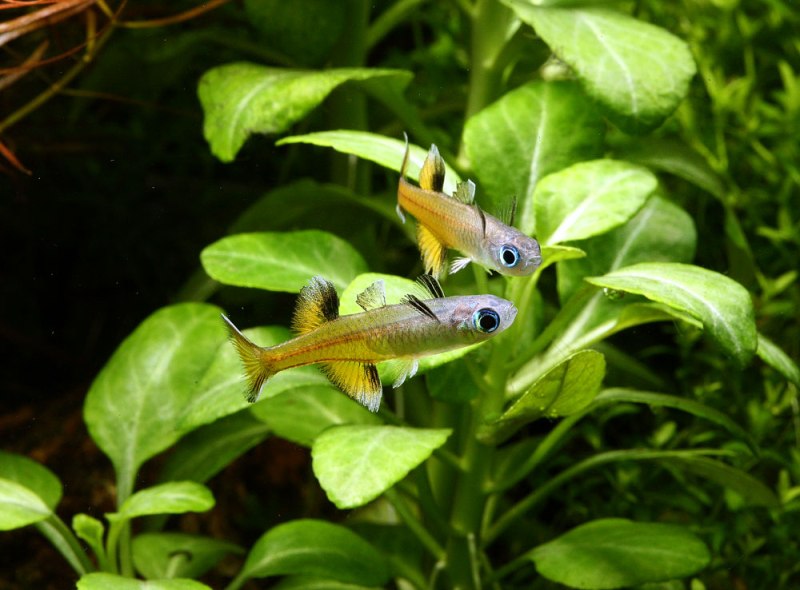
Pseudomugil signiferPacific Blue-eye
Kner, 1866
Matched on the common name Pacific Blue-eye
Max length70mm SL2.8in SLTank60 × 30cm24 × 12inTemp20–26°C68–79°FpH6.5–7.5Generally found within 15-20 km of the sea but habitat-type is extremely variable. It's been recorded in full marine conditions as well as pure freshwater environments, and commonly inhabits coastal mangrove creeks, swamps, and salt marshes. Freshwater habitats tend to comprise lowland swamps or forest streams with clear water but some populations inhabit acidic, tannin-stained, black waters. It's also abundant in the artificial canals typical of residential zones in the Gold Coast, southern Queensland.
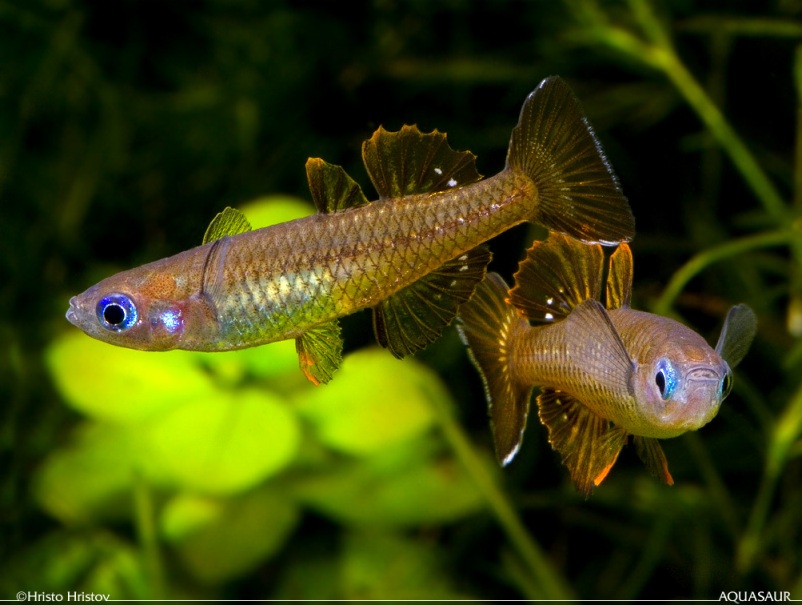
Pseudomugil tenellusDelicate Blue-eye
Taylor, 1964
Matched on the common name Delicate Blue-eye
Max length55mm SL2.2in SLTank75 × 30cm30 × 12inTemp25–32°C77–90°FpH5.5–7.5Euryhaline and mostly inhabits coastal floodplains where it's found in both fresh and brackish habitats, including tidal estuaries and salt marshes. It's particularly common in swamps, billabongs, and slow-moving streams where aquatic vegetation grows densely, but some populations have colonised upper sections of freshwater streams. Larger individuals may also move into main river channels. Tappin (2010) gives the following ranges of parameters based on those taken from various localities: temperature 27 - 38 °C, pH 5...
Xenotilapia simaBig-Eyed Xenotilapia
authority not recorded
Matched on the common name Big-Eyed Xenotilapia
Max length165mm SL6in SLTank120 × 38cm48 × 15inTemp23–27°C73–81°FpH8.0–9.5A rarely seen species in the hobby, X. sima is nevertheless a charming species for the peaceful Tanganyikan community. It feeds in a similar way to the well-known South American Geophagus species in that it will sift sand through its gills to extract invertebrates and morsels hidden in the substrate. It is quite a skittish fish and may react very nervously to rapid movements outside the tank or when lights are switched on and off....
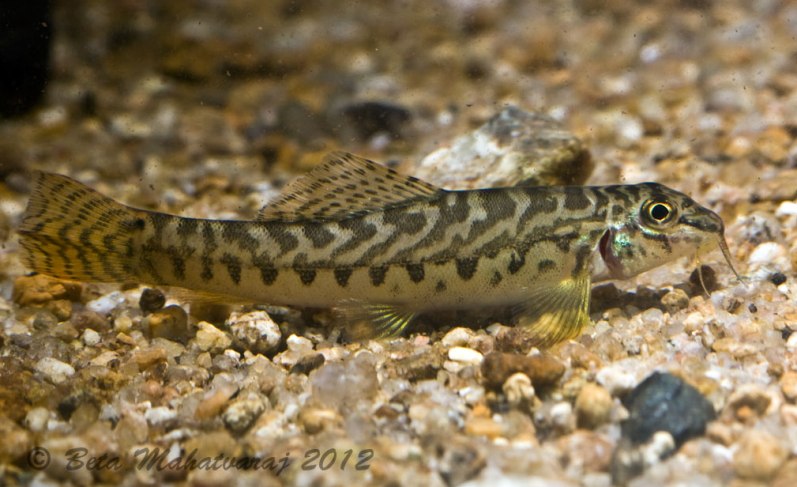
Paracanthocobitis botiaZipper Loach
Hamilton, 1822
Max length152mm SL6in SLTank75 × 30cm30 × 12inTemp21–26°C70–79°FpH6.0–7.5Traded under various names including 'mottled', 'eyepot', 'sand' and 'striped' loach. It's perhaps one of the better choices for those new to keeping nemacheilids being relatively hardy, peaceful and exhibiting some quirky behavioural traits. The characteristic ocellus, a dark marking at the top of the caudal peduncle that resembles an eye, is thought to have some function in predator distraction and is normally more intense in younger specimens.
Rasbora borapetensisRed-tailed Rasbora
authority not recorded
Max length50mm SL2.0in SLTank60 × 38cm24 × 15inTemp22–26°C72–79°FpHnot recordedR. borapetensis is one of the more commonly-encountered rasboras in stores and is particularly recommended for newcomers to the hobby. While it can appear a little plain or 'washed' of colour when seen on sale once settled and in good condition it is an eye-catching little fish that often schools quite closely. It's sometimes sold with the alternative trade names of black-line or magnificent rasbora. R. rubrodorsalis is a very similar-looking congener that occurs sympatrically...
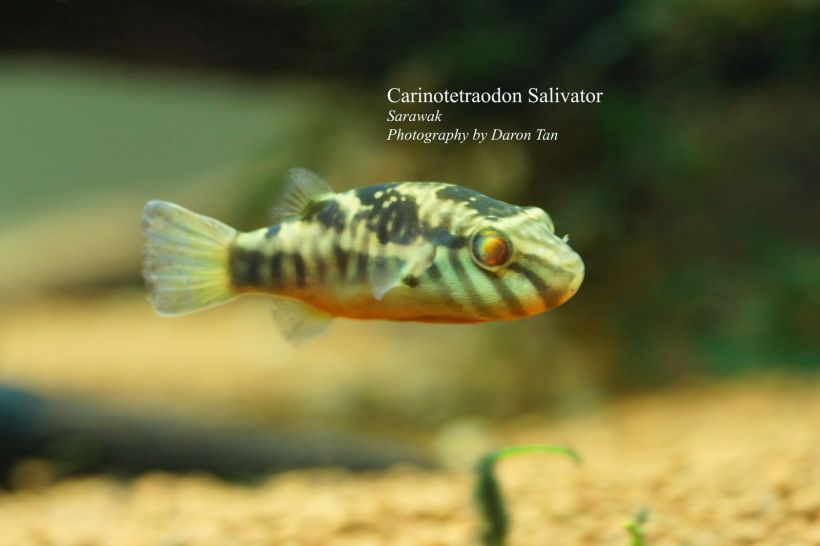
Carinotetraodon salivator
Lim & Kottelat, 1995
Max length50mm SL2.0in SLTank60 × 30cm24 × 12inTemp20–28°C68–82°FpH5.0–7.5It is included in a group often referred to as 'red-eyed puffers', which currently contains four recognised species distributed in Indochina and the Greater Sunda Islands. It can be distinguished from C. borneensis, C. irrubesco, and C. lorteti, the remaining members of this group, by the following combination of characters: 11 dorsal-fin rays; 16 pectoral-fin rays; 11-13 anal-fin rays; 11 caudal-fin rays; eyes not bulging above the head; in males dorsal-fin hyaline, black spot on dorsal-fin base present, pectoral-fin base hyaline, anal-fin hyaline with no black spot at base...