Results for “feeder fish”
Type a name: scientific, common, or one a species used to go by. Or narrow the catalogue with the filters.
Filters
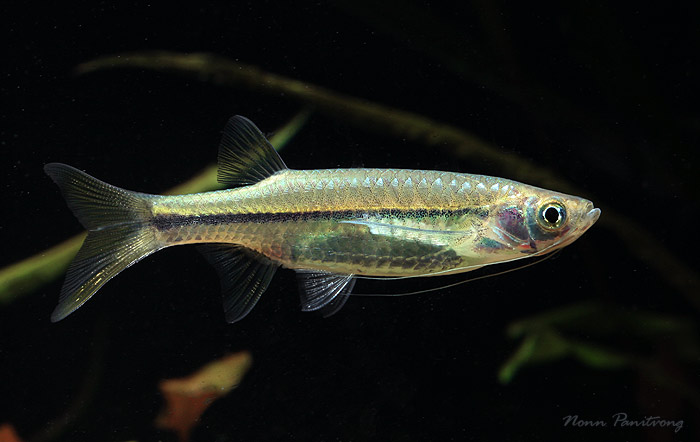
Esomus metallicusStriped Flying Barb
Ahl, 1923
Max length75mm SL3.0in SLTank120 × 30cm48 × 12inTemp20–26°C68–79°FpH6.0–7.0There currently exist a dozen described Esomus spp. alhough few are seen in the aquarium trade and none are especially popular. Most are commonplace in their native countries and also quite plainly-patterned so generally overlooked by collectors. Their most common use in some areas is actually as a feeder fish in the aquaculture of larger species. They're characterised by greatly-enlarged pectoral fins and two pairs of barbels, of which the maxillary pair are extremely long and usually reach the pectoral fins.
Crenicichla compressicepsCompressiceps Dwarf Pike Cichlid
authority not recorded
Max length76mm SL3.0in SLTank90 × 38cm36 × 15inTemp24–27°C75–81°FpH5.0–6.8Crenicichla compressiceps are an excellent little fish. They are small, but they swim a great deal (and can be incredibly quick) so require larger aquaria than other, similar sized fish. In the wild, Compressiceps are insect feeders. They will wait quietly then quickly sweep down and prey on any nearby insects. They have good vision in the night and will often feed in the dark. Be careful when choosing tankmates, though as previously mentioned it may be mandatory to include some fish to e...
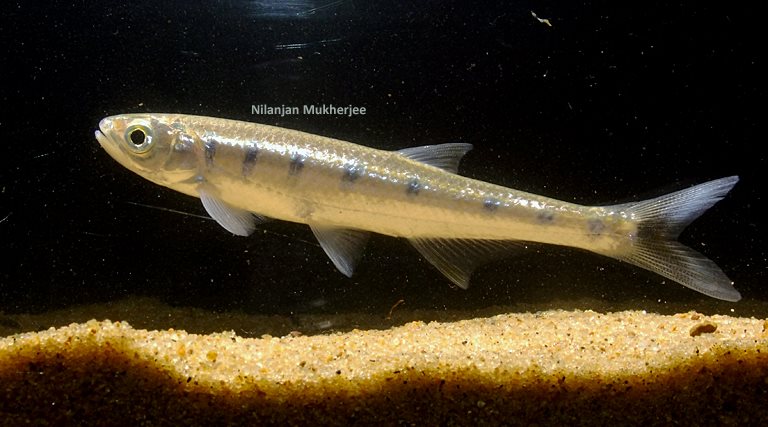
Barilius vagra
Hamilton, 1822
Max length125mm SL5in SLTank150 × 60cm60 × 24inTemp18–26°C64–79°FpH6.0–7.5Barilius spp. are near-exclusive surface-feeders preying mostly on flying insects in nature with some small fishes and benthic invertebrates probably taken as well but in the aquarium they're largely unfussy and will accept most foods.