Results for “junior synonym”
Type a name: scientific, common, or one a species used to go by. Or narrow the catalogue with the filters.
Filters
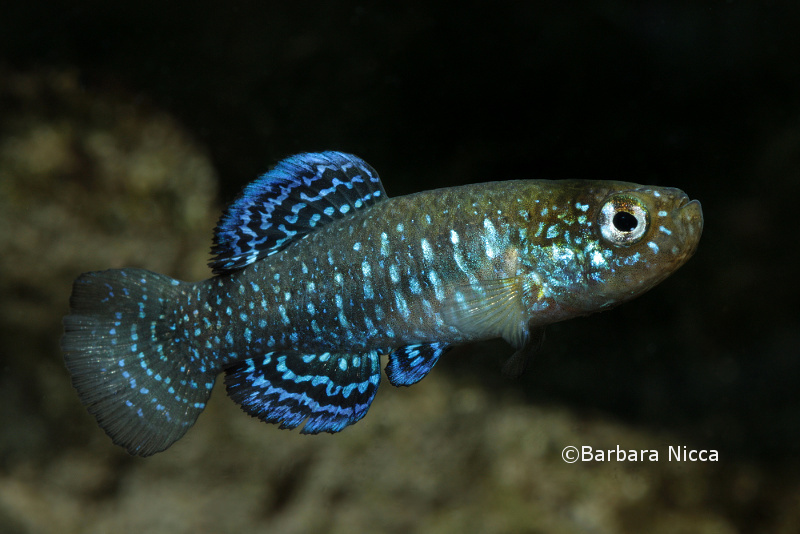
Paraphanius mentoIridescent Toothcarp
Heckel, 1843
Max length70mm SL2.8in SLTank120 × 30cm48 × 12inTemp2–30°C36–86°FpH7.5–9.0This species has something of a confused history having been previously been considered synonymous with both A. sophiae (a separate species native to Iraq and Iran) and A. cypris (currently considered a junior synonym of A. mento). Although some populations occur close to and even sympatric with other members of the genus in Turkey phylogenetic studies have shown it to be more closely-related to the Middle Eastern species A. dispar dispar, A. d. richardsoni, A. ginaonis and A. sirhani. It's...
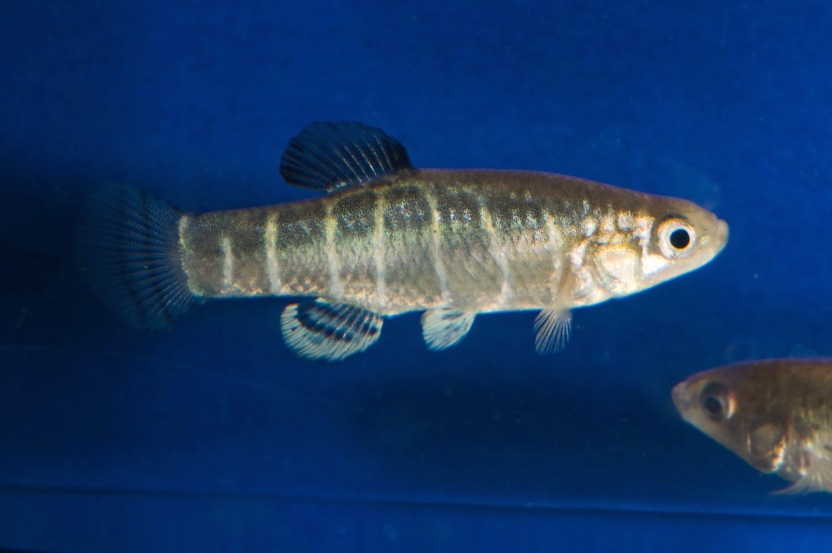
Anatolichthys danfordiiDanford's Toothcarp
Boulenger, 1890
Max length50mm SL2.0in SLTank120 × 30cm48 × 12inTemp10–30°C50–86°FpH7.0–8.5This species has something of a confused history having been previously been considered synonymous with both A. sophiae and A. fasciatus. Another species, A. chantrei is still listed as valid by some sources but is now known to be a junior synonym of A. danfordii. This became clear during a 1999 study in which the type specimens of A. danfordii were found to be indistinguishable from the Aphanius population living in the Sultan Swamps, the type locality of A. chantrei. You're unlikely t...
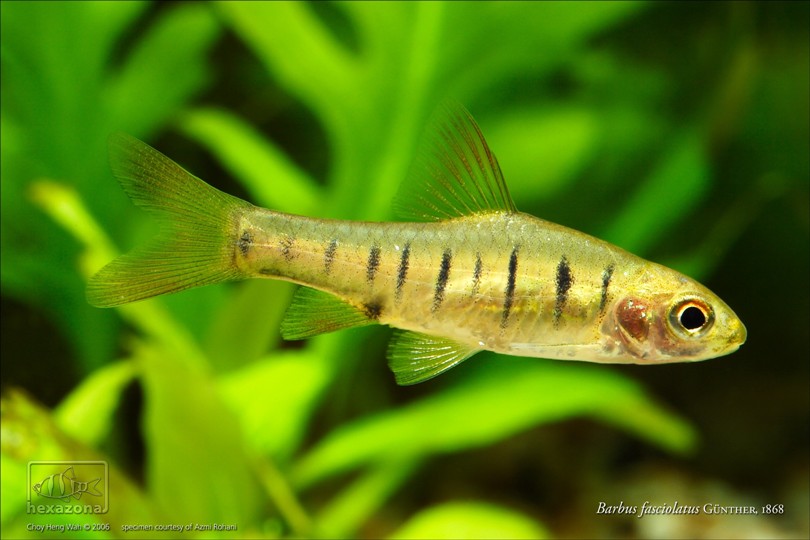
'Barbus' fasciolatusAfrican Banded Barb
Günther, 1868
Max length60mm SL2.4in SLTank75 × 30cm30 × 12inTemp20–26°C68–79°FpH5.0–6.5For many years this species was imported and sold as Barbus/Barbodes barilioides, now recognised as a junior synonym of 'B.' fasciolatus, and is sometimes called the Blue Banded or Angola Barb. It's an exceptionally attractive little fish when in good condition but like all African barbs is quite rare in the hobby due to sporadic exports from the countries in which it is found. Distinguishing features include 25-30 late...
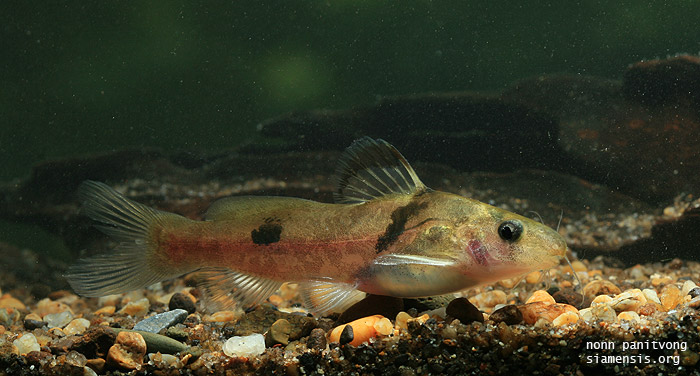
Batasio fluviatilis
Day, 1888
Max length72mm SL2.8in SLTank120 × 30cm48 × 12inTemp16–24°C61–75°FpH6.0–7.0Batasio havmolleri (Smith, 1931) is currently considered a junior synonym of B. fluviatilis. Members of the genus Batasio are characterised by the following combination of characters; laterally-compressed body shape; presence of large sensory pores on the head; a narrow mental region; a pair of prominent posterior proces...
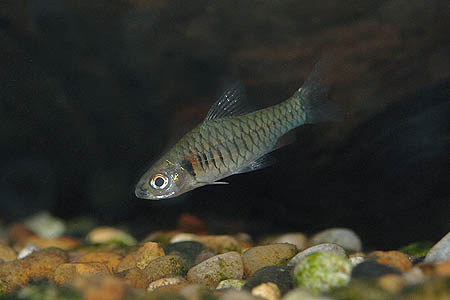
Clypeobarbus congicusCongo Barb
Boulenger, 1899
Max length60mm SL2.4in SLTank90 × 30cm36 × 12inTemp22–26°C72–79°FpH6.0–7.0Clypeobarbus was originally put forward as a subgenus of Barbus by Fowler in 1936 on the basis that member species possessed a midlateral row of enlarged, shield-like scales but he only included the type species 'Barbus' kemoensis (now a junior synonym of Clypeobarbus pleuropholis) in the group. Subsequent work by Poll and Lambert (1961), Jubb (1965) and Skelton (1993) resulted in several additional species being placed into the grouping although it appears that little of this work was widely-recognised until the recent study was published.
Gymnocorymbus bondiSilver Tetra
authority not recorded
Max length50mm SL2.0in SLTank60 × 38cm24 × 15inTemp22–27°C72–81°FpH5.5–7.5Not often seen in the hobby, probably because it's a fairly bland species when mature. Juveniles are more attractive, possessing reddish unpaired fins, but these fade as the fish mature. It is, however, both peaceful and hardy and is a good choice for the beginner. It is sometimes seen labelled as G. socolofi. This name is now considered a junior synonym of G. bondi....
Megalodoras uranoscopusGiant Raphael Catfish
authority not recorded
Max length700mm SL28in SLTank240 × 120cm96 × 48inTemp21.1–25°C70–77°FpHnot recordedThis species is also known by the vernacular name "ripsaw catfish" (U.S.) and was often referred to by the scientific name M. irwini, now considered a junior synonym of M. uranoscopus, in older literature. Within the family Doradidae the genus Megalodoras is considered most closely-related to Lithodoras, Centrodoras and Platydoras, respectively. Members of the family Doradidae can be distinguished from all other Siluriformes by possession of a unique infranuchal scute, a dermal bon...
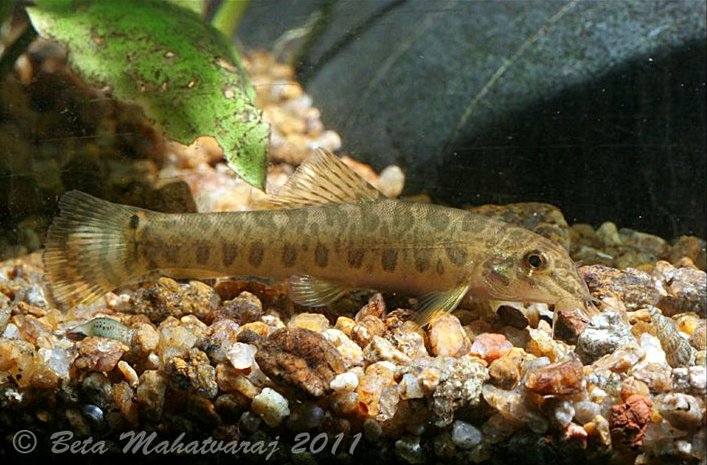
Paracanthocobitis mooreh
Sykes, 1839
Max length75mm SL3.0in SLTank75 × 30cm30 × 12inTemp20–26°C68–79°FpH6.0–7.5This species is still considered a member of the genus Nemacheilus by some sources, but it was reclassified and placed in Acanthocobitis by Grant (2008). Acanthocobitis sinuata, generally considered a junior synonym of A. mooreh (Kottelat, 2012b), also appears distinct and differs in geographical distribution plus number of dorsal-fin rays (2-3/9-10 in A. mooreh vs. 2/8-9 in A. sinuata) and some aspects of colour pattern.
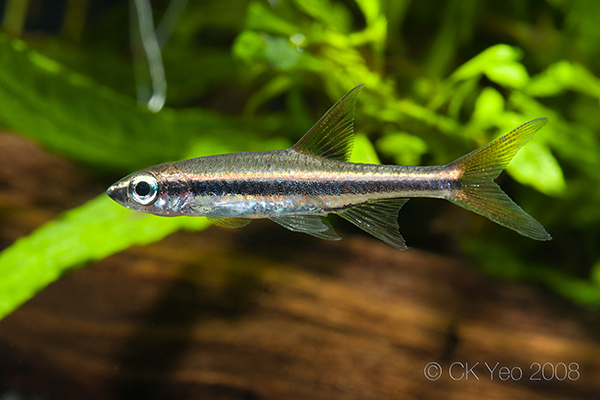
Trigonopoma gracile
Kottelat, 1991
Max length55mm SL2.2in SLTank75 × 30cm30 × 12inTemp21–26°C70–79°FpH4.0–7.0This species occurs in several colour forms depending on collection locality with some exhibiting more intense pigmentation in the fins or an additional reddish lateral stripe, for example. It's sometimes said to closely resemble and occur sympatrically with Rasbora agilis, but that name is currently considered a junior synonym of the congener Trigonopoma pauciperforatum. R. agilis had previously been us...