Results for “keel”
Type a name: scientific, common, or one a species used to go by. Or narrow the catalogue with the filters.
Filters
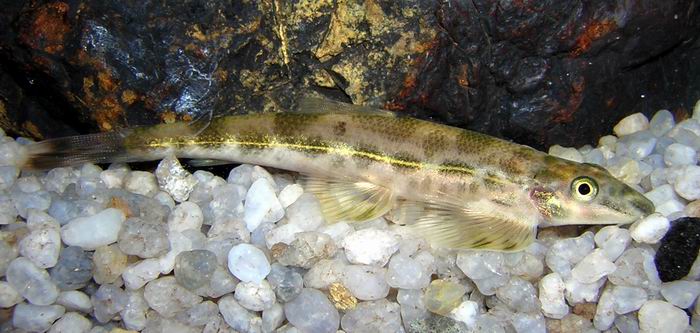
Homalopteroides stephensoni
Hora, 1932
Max length65mm SL2.6in SLTank60 × 30cm24 × 12inTemp20–25.5°C68–78°FpH6.0–7.5Tan (2009) redescribed H. stephensoni and it possesses the following unique character set: sub-inferior mouth with thin barbels; five principle, 12-13 secondary pectoral fin rays (usually 12); scaleless belly; pattern of keeled scales on anterior, dorsal portion of body consisting of a single central keel in the posterior third of each scale; 43-50 lateral line...
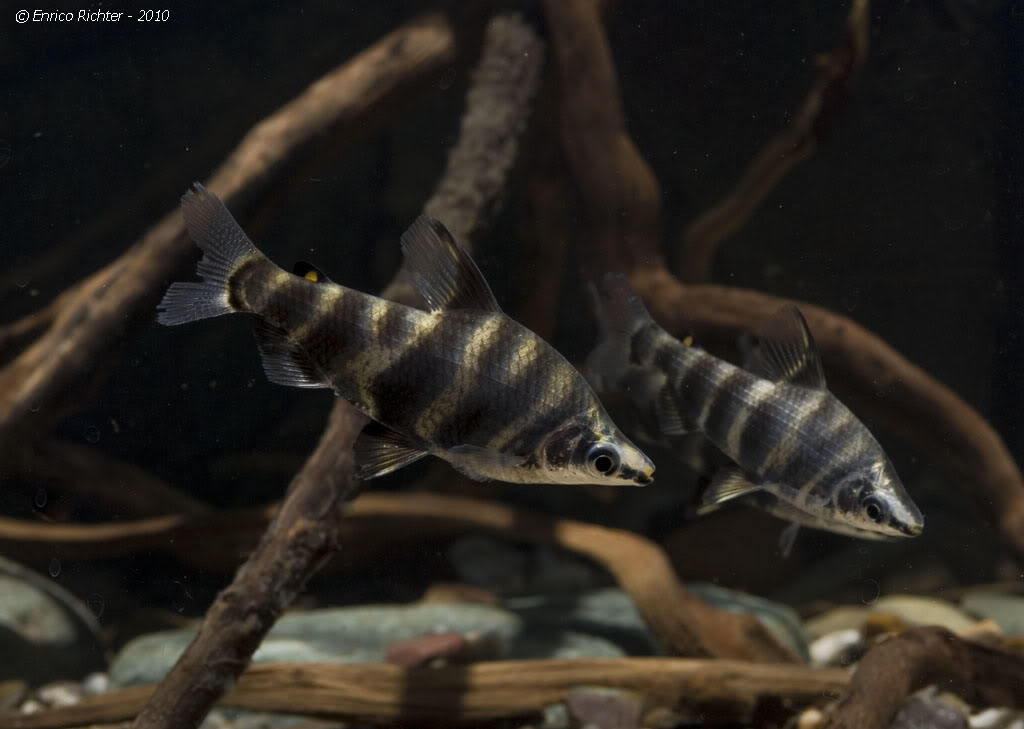
Abramites hypselonotusMarbled Headstander
Günther, 1868
Max length140mm SL6in SLTank120 × 30cm48 × 12inTemp20–30°C68–86°FpH5.5–7.5Abramites spp. are separated from other anostomids primarily on the basis of their relatively deeper bodies and presence of a prominent, post-pelvic median keel, a feature unique to the genus. At time of writing A. eques is the only other species recognised and is native to the Río Magdalena drainage in western Colombia. It can be distinguished by possession of 13-14 bra...
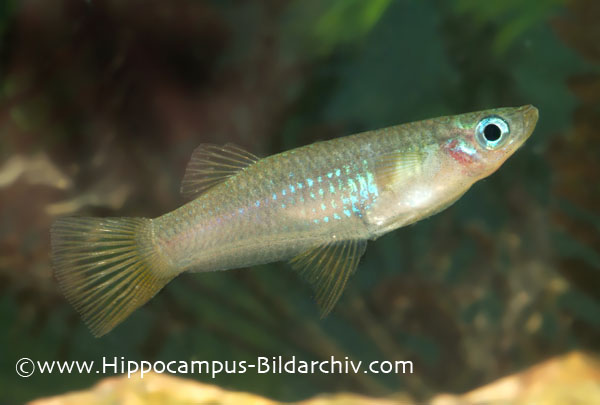
Alfaro cultratusKnife Livebearer
Regan, 1908
Max length75mm SL3.0in SLTanknot recordedTemp24–28°C75–82°FpH6.0–8.0This is an exceptionally hardy and adaptable species. It's not an especially common fish in stores, but is quite widely available in hobbyist circles. The common name arises from the row of modified, paired scales that form a keel running from the base of theto the caudal fin....
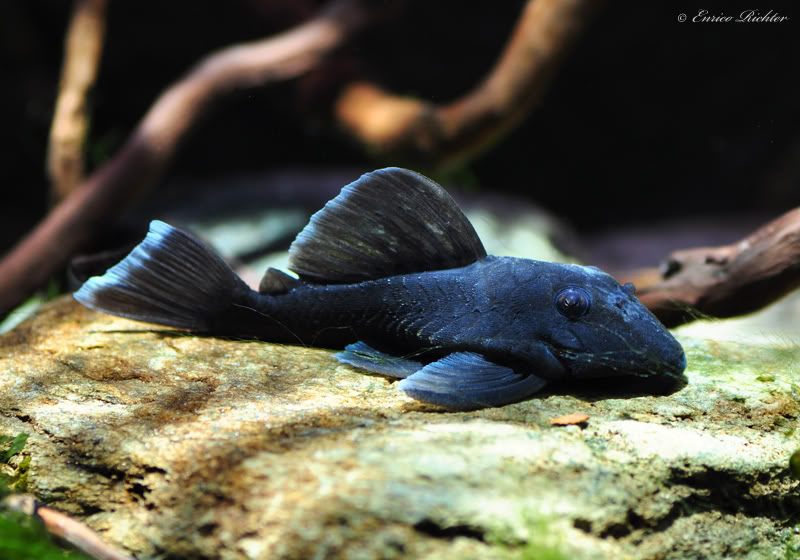
Baryancistrus begginiL239
Lujan, Arce & Armbruster, 2009
Max length81mm SL3.2in SLTank80 × 30cm31 × 12inTemp26–30°C79–86°FpH5.5–7.5Prior to description this species was traded under the DATZ code L239. It can be distinguished from other species in the genus and other hypostomines (see below for definition of this grouping) by its uniformly black to brownish body and fin colouration with a turquoise to bluish sheen, and the acutely bent shape of midventral body plates 3-5 which form a distinctive keel running along the body, above the pectoral fins...
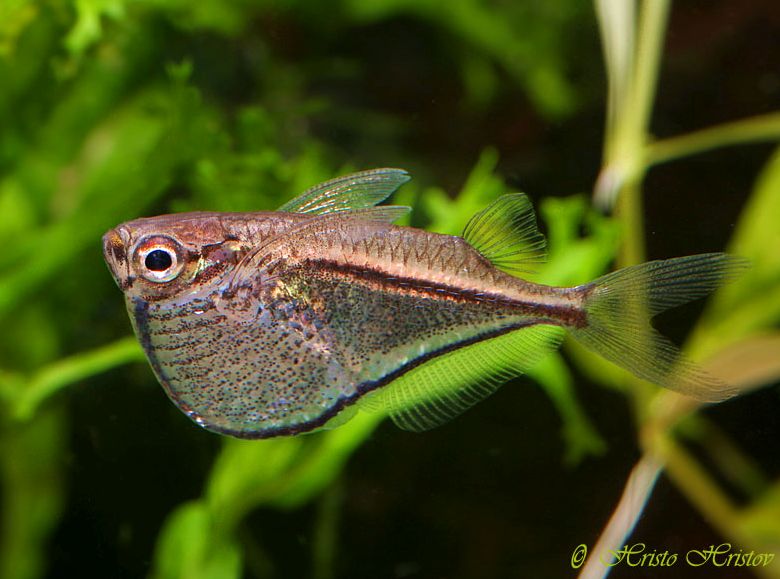
Carnegiella marthaeBlackwing Hatchetfish
Myers, 1927
Max length28mm SL1.1in SLTank60 × 30cm24 × 12inTemp20–28°C68–82°FpH4.0–7.0Gasteropelecids are commonly-referred to as 'freshwater hatchetfishes' due to their heavily-keeled body shape which has evolved in such a way due to possessing an enlarged, heavily-muscled pectoral girdle, and which resembles the shape of a hatchet head. They are sometimes said to be capable of propelled flight above the water surface by beating their pectoral fins but in fact this is not the case and was disproven by Wiest (1995) who used...
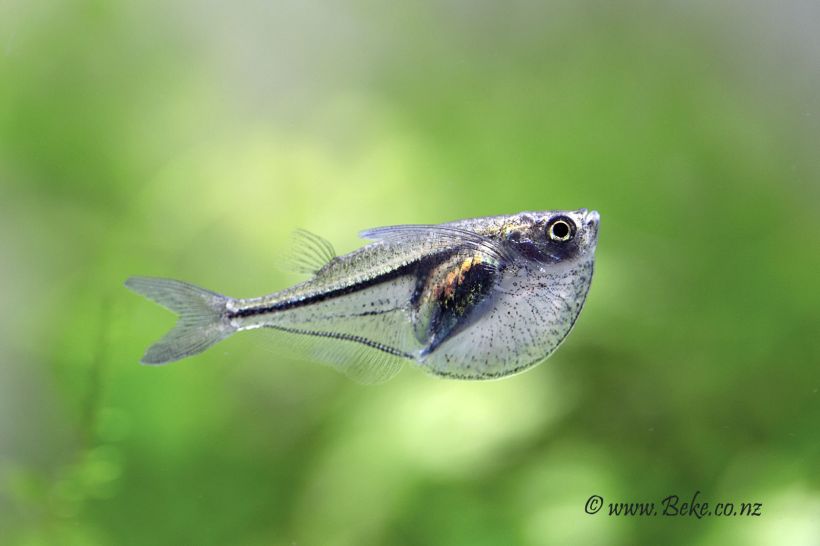
Carnegiella myersiPygmy Hatchetfish
Fernandez-Yepes, 1950
Max length25mm SL1.0in SLTank50 × 30cm20 × 12inTemp23–26°C73–79°FpH4.0–7.0The smallest and most delicate of the nominal hatchetfishes. The rounded keel is shallower than related species, giving this fish a distinctive elongate profile. The family Gasteropelecidae is separated from other Characiformes by the following combination of characters: front...
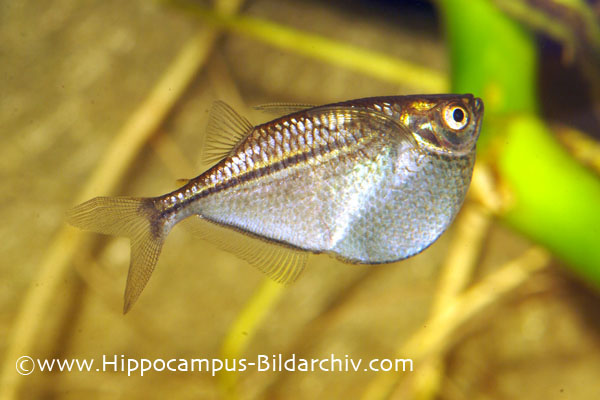
Gasteropelecus levisSilver Hatchetfish
Eigenmann, 1909
Max length35mm SL1.4in SLTank80 × 30cm31 × 12inTemp20–28°C68–82°FpH5.0–7.5Gasteropelecids are commonly-referred to as ‘freshwater hatchetfishes’ due to their heavily-keeled body shape which has evolved in such a way due to possessing an enlarged, heavily-muscled pectoral girdle, and which resembles the shape of a hatchet head. They are sometimes said to be capable of propelled flight above the water surface by beating their pectoral fins but in fact this is not the cas...
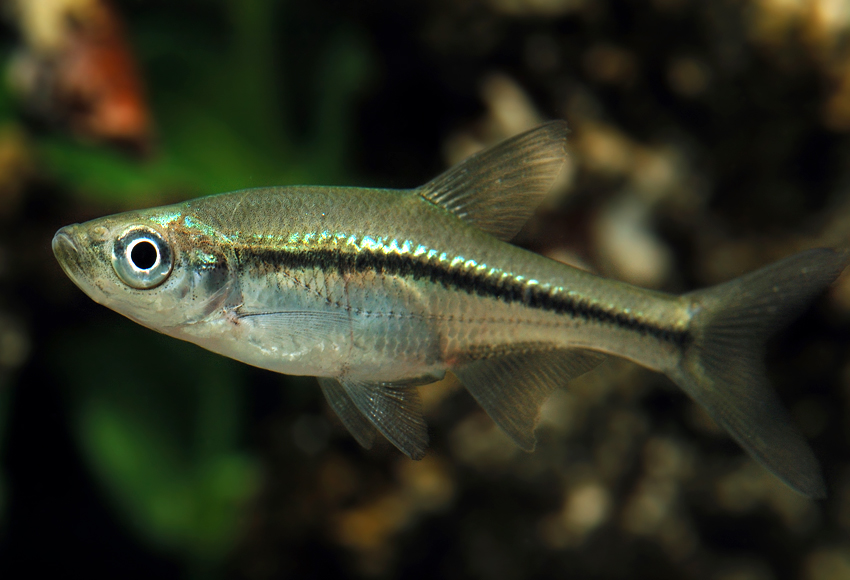
Metzia formosae
Oshima, 1920
Max length75mm SL3.0in SLTanknot recordedTempnot recordedpHnot recordedAlthough it is included in the genus Metzia this grouping remains somewhat unresolved in terms of taxonomy and it may contain more than a single genetic lineage. For example, members share a number of characters with the genera Ischikauia Jordan and Snyder 1900, Hemiculterella Warpachowski 1887, and several species of Anabarilius Cockerell 1923, including a bipartite gas bladder, a non-spinous dorsal-fin ray, and a sharp ventral keel between the pelvic-fin insertion and anus.
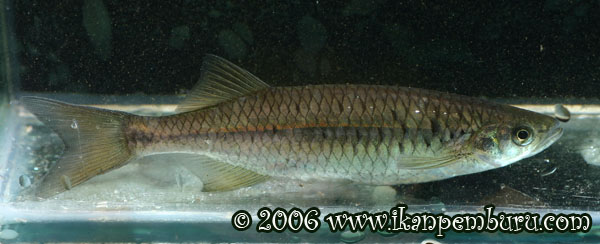
Nematabramis alestes
Seale & Bean, 1907
Max length105mm SL4in SLTanknot recordedTempnot recordedpHnot recordedN. alestes is the only member of the genus in which the barbels are shorter than the head, with additional diagnostic characters as follows: 8-9 branched dorsal-fin rays; 12-14 branched anal-fin rays; 22-23 predorsal scales; body with a pronounced ventral keel.