Results for “lobe”
Type a name: scientific, common, or one a species used to go by. Or narrow the catalogue with the filters.
Filters
Lepidosiren paradoxaSouth American Lungfish
authority not recorded
Max length1250mm SL49in SLTank240 × 90cm96 × 36inTemp24–28°C75–82°FpH6.0–8.0Lungfish are among the most intriguing of "oddball" aquarium species, being able to survive in extreme conditions. They are very ancient fish, having remained virtually unchanged for millions of years. This is the only species known from South America, and is the sole representative of its genus. Most hail from Africa, with a single species native to Australia. They belong to the class Sarcopterygii (lobe-finned fishes), members of which are actually more closely related to terrestrial...
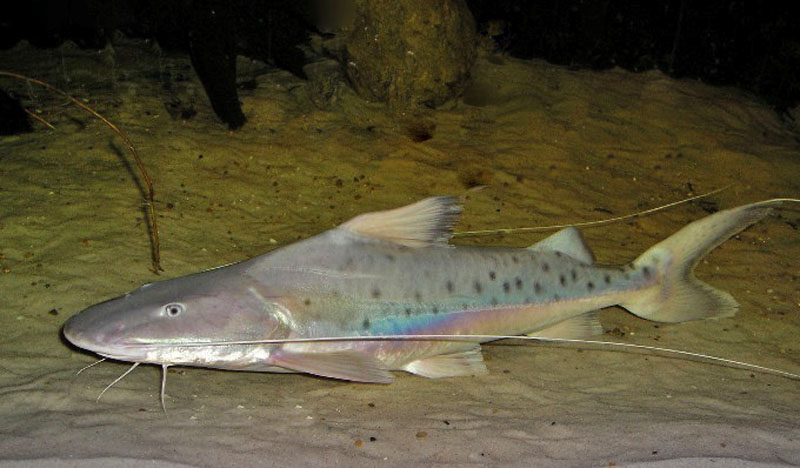
Brachyplatystoma capapretum
Lundberg & Akama, 2005
Max length880mm SL35in SLTanknot recordedTemp22–28°C72–82°FpH6.0–8.0This species can be told apart from the very similar-looking congener B. filamentosum by its smaller adult size (B. filamentosum can grow to almost 3 m in length), shorter maxillary barbels (never extending beyond base of adipose fin (vs. extending beyond base of adipose fin), moderately-forked with lobes of equal size (vs. deeply-forked caudal fin with upper lobe usually longer than the lower) and body col...
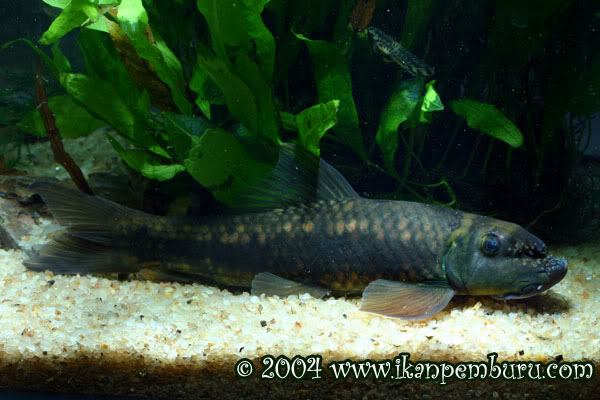
Garra bispinosa
Zhang, 2005
Max length130mm SL5in SLTanknot recordedTempnot recordedpHnot recordedG. bispinosa can be distinguished from all other congeners in Southeast Asia and China by the following combination of characters: a conspicuous, quadrate, anteriorly-directed proboscis orientated ventrally against the snout and anteriorly adorned with a single, large, uniscupid, acanthoid tubercle on the distal tip of each lobe; snout with a deep groove across its tip to form a transverse lobe; 34-35 lateral...
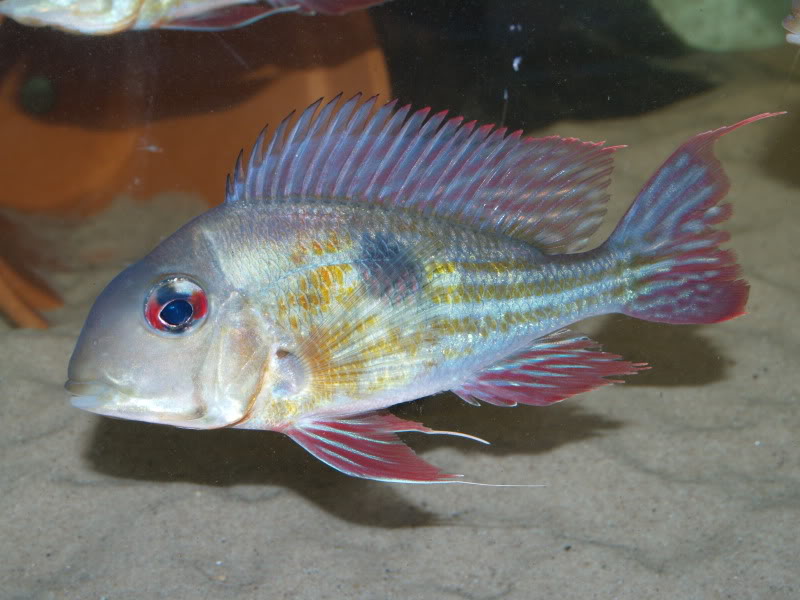
Geophagus proximus
Castelnau, 1855
Max length225mm SL9in SLTank180 × 60cm72 × 24inTemp24–32°C75–90°FpH4.0–7.0This species is rare in the hobby though it's name is often attached to shipments of other Geophagus species. It's a member of the nominal G. surinamensis 'group' of closely-related species within the genus and can be identified by a combination of characters including: possession of dark preopercular marking; no vertical bars on the flanks; relatively large, roughly oblong-shaped dark midlateral marking; caudal fin brownish with 3-5 light stripes on upper lobe and less well-defined stripes or mottled pattern of light spots with narrow dark interspaces on lower lobe.
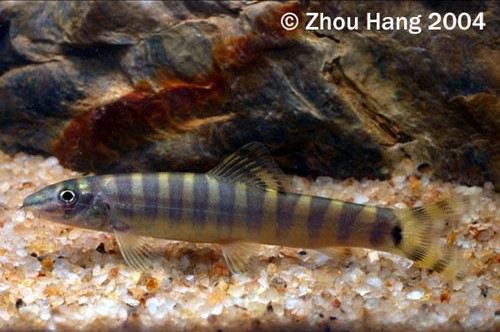
Parabotia lijiangensis
Chen, 1980
Max length83mm SL3.3in SLTank120 × 30cm48 × 12inTemp20–24°C68–75°FpH6.0–7.5It's told apart from congeners by a combination of characters as follows: large scales present on body and sides of head; caudal fin deeply forked with subequal lobes; 10-13 dark, vertical bars on the body; a dark, ocellated spot in the centre of the caudal-fin base; two bars on top of head, dorsal-fin with two rows of greyish spots; caudal-fin lobes with 3-4 dark bands on each; anal-fin with one indistinct band and another, more distinct, submarginal band; ventral fins with two indistinct bands.
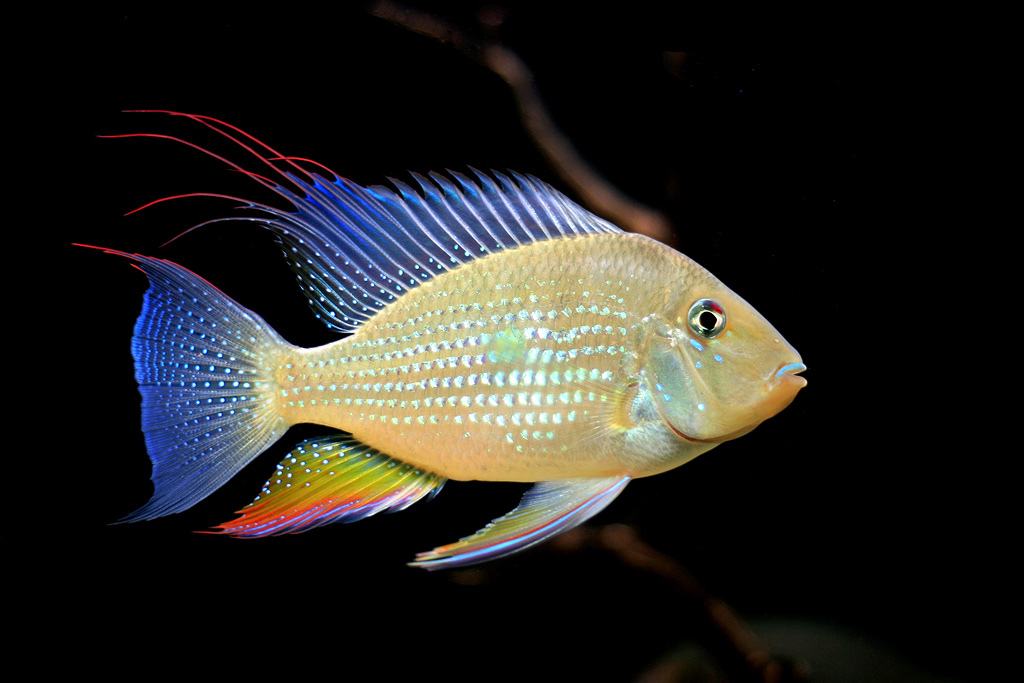
Acarichthys heckeliiThreadfin Acara
Müller & Troschel, 1849
Max length200mm SL8in SLTanknot recordedTemp24–30°C75–86°FpH6.0–8.0The genus Acarichthys remains monotypic and was resdescribed by Kullander (1986) who characterised it by the following: lack of epibranchial lobe; comparatively few (12-14)rays; pelvic fins with relatively broad tips (branches of the first ray are equal in length or the inner is slightly longer); possession of a single supraneural plus 14-15 vertebrae (these characters taken as a combination); no caudal extensions to swim bladder; no caudal ribs. Its current taxonomic position is based largel...
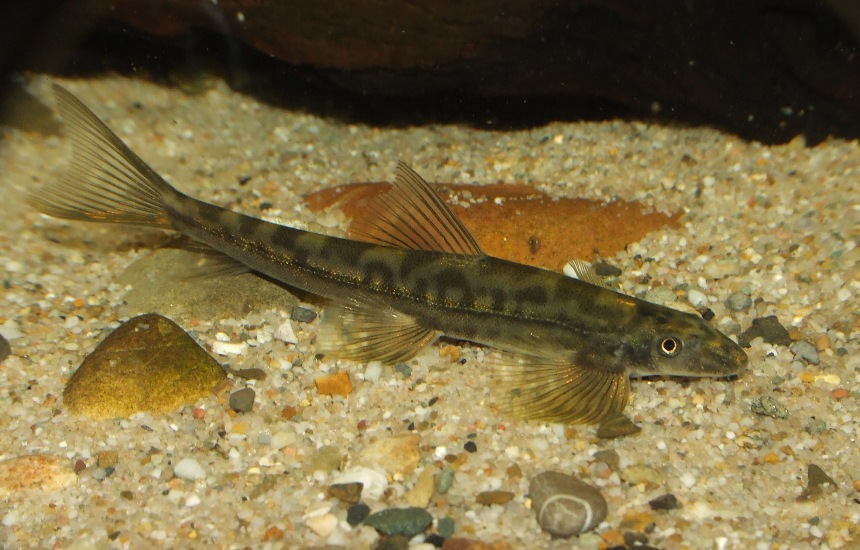
Annamia cf. thuathienensis
Nguyen, 2005
Max length100mm SL3.9in SLTank120 × 30cm48 × 12inTemp16–22°C61–72°FpH6.0–7.5Annamia spp. may be confused with related genera such as those of the genus Balitoropsis. They can be identified by their more depressed body shape, elongate lower caudal-fin lobe, and the presence of a single unbranched ray in the pectoral and pelvic fins. At least one undescribed member of the genus is thought to exist.
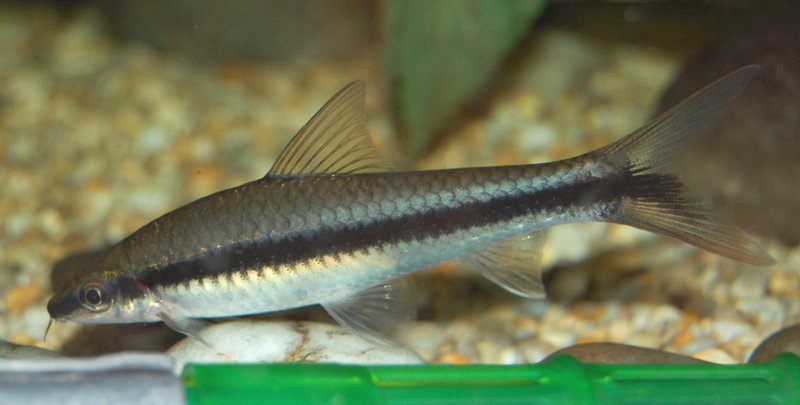
Crossocheilus nigriloba
Popta, 1904
Max length150mm SL6in SLTank150 × 45cm60 × 18inTemp20–26°C68–79°FpH6.0–7.5While separating some of the fish that may be found on sale as 'C. siamensis' is a tricky task, C. nigriloba is quite simple to identify. The dark lateral body stripe uniquely breaks up into a series of blotches when the fish are sparring, stressed or sleeping and the lower caudal fin lobe contains dark pigmentation suffused with red. The latter feature has given rise to the trade name of 'penguin flying fox'.
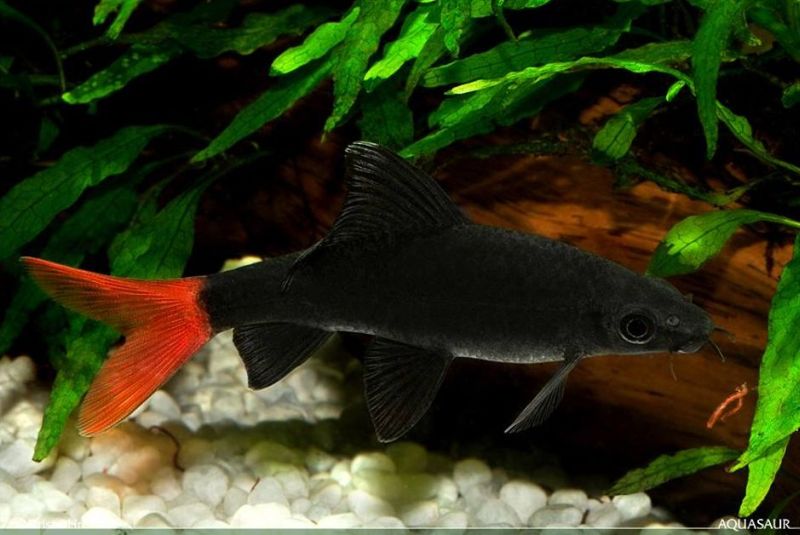
Epalzeorhynchos bicolorRed-Tailed Black Shark
Smith, 1931
Max length125mm SL5in SLTank120 × 45cm48 × 18inTemp20–26°C68–79°FpH6.0–8.0Most members of Epalzeorhynchos were formerly regarded as Labeo spp. and are thus referred to as such in older literature. According to Rainboth (1996) they're characterised by absence of a dorsal spine, possession of 10-13 branched dorsal fin rays, a thin membrane connecting the upper and lower lips and rigid, freely moveable rostral lobes. Epalzeorhynchos itself has undergone some quite recent changes with a handful of species hav...
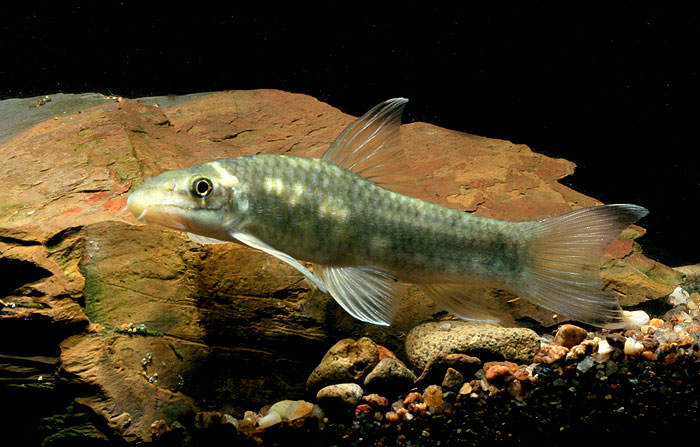
Garra rakhinica
Kullander & Fang, 2004
Max length60mm SL2.4in SLTanknot recordedTempnot recordedpHnot recordedG. rakhinica can be distinguished from other members of the genus by the following combination of characters: rostral furrow shallow and snout tip smoothly rounded; rostral lobe present, proboscis absent; scaled predorsal region, chest, and abdomen; two pairs of barbels; 28 lateral line scales; 16 circumpeduncular scale rows; colour pattern almost uniform greyish on body and caudal-fin; a dark spot immediately posterior to the upper extremity of the...
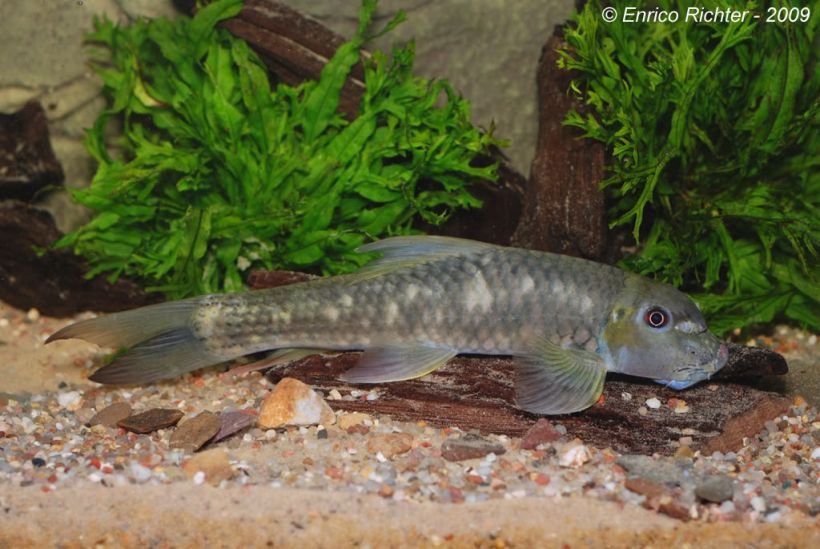
Garra salweenica
Hora & Mukerji, 1934
Max length175mm SL7in SLTanknot recordedTempnot recordedpHnot recordedG. salweenica can be distinguished from other congeners inhabiting the Salween watershed by the following combinatuion of characters: body brownish; presence of a trilobed proboscis on the snout; snout blunt; a series of black spots at the base of the central dorsal-fin rays; presence of longitudinal stripes on the posterior portion of the body; a dark marking at the tip of the upper (and lower in some specimens) caudal-fin lobe; body depth 22.4-25.3 % SL.
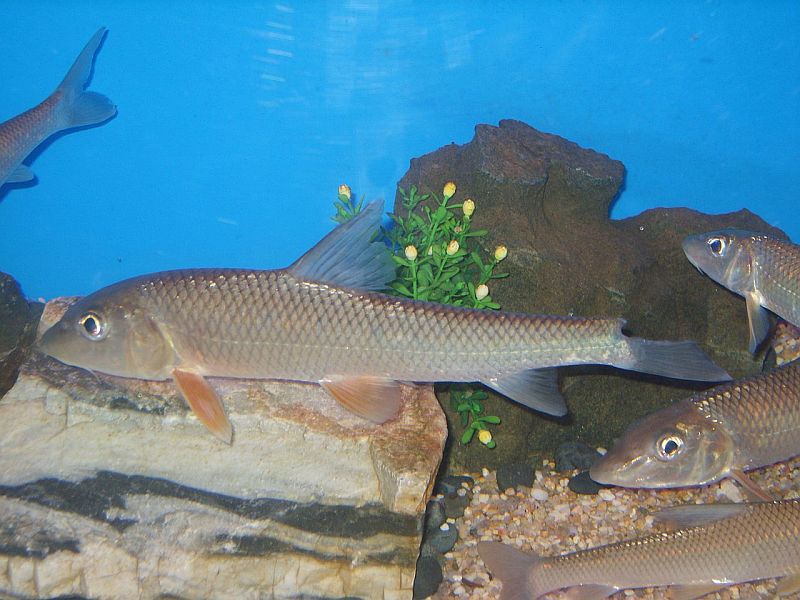
Hemibarbus labeoBarbel Steed
Pallas, 1776
Max length450mm SL18in SLTanknot recordedTempnot recordedpHnot recordedThis species can be distinguished from other members of the genus by the following combination of characters: absence of dark spots on body in adults; body elongate with slightly convex dorsal profile; head longer than body is deep; snout much longer than postorbital head length; lips well developed, lateral lobes of lower lip broad and thick with folds, median process small; barbel thickness shorter or equal to eye diameter; dorsal spine strong, ⅔ of HL; dorsal-fin origin closer to tip of snout than caudal-fin base base; 15+ gill rakers; 6½ branched anal-fin rays; posterior simple dorsal-fin rays ossified and spinous.
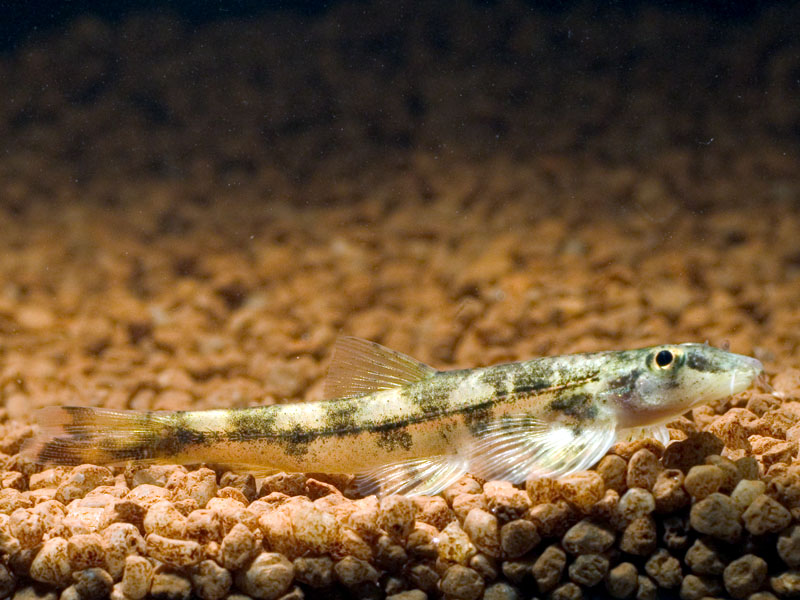
Homalopteroides nebulosus
Alfred, 1969
Max length36mm SL1.4in SLTank60 × 30cm24 × 12inTemp20–25.5°C68–78°FpH6.0–7.5The genus Homalopteroides was revalidated by Randall and Page (2012) and is told apart from the related Homaloptera by the following character combination: dorsal-fin origin above pelvic-fin; ≤ 60 lateral-line scales; ≤ 30 predorsal scales; oral morphology consisting of two thin and widely separated rostral barbels on each side of the mouth, thin crescent-shaped lips, the absence of any structure such as a mental pad or lobes between the lateral portions of the lower lip, and a chin that extends anterior to the lateral portions of the lower lip.
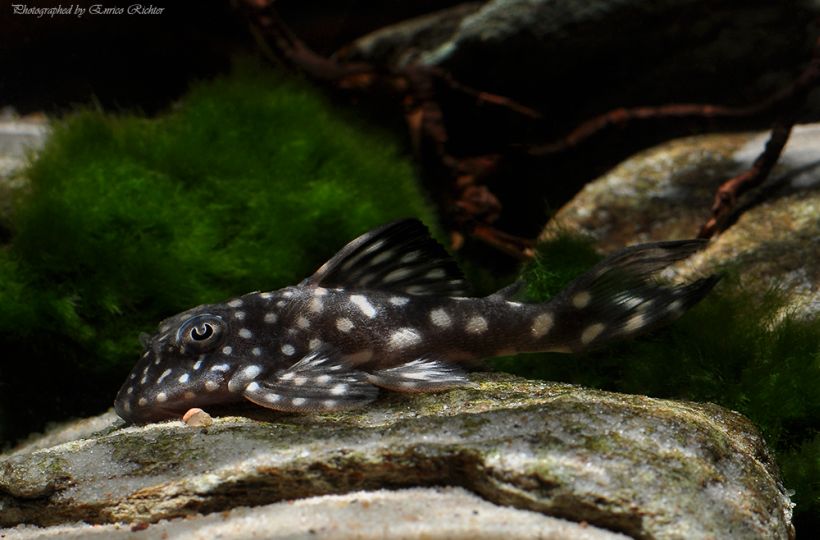
Hypancistrus inspectorL102
Armbruster, 2002
Max length160mm SL6in SLTank120 × 45cm48 × 18inTemp22–30°C72–86°FpH5.0–7.5H. inspector can be told apart from other described species in the genus by the following combination of characters: colour pattern comprising brown to black base with large whitish to yellow spots; adpressed dorsal-fin not reaching the adipose-fin spine; spots on head much smaller than on rest of body; spots in the upper caudal-fin lobe combining to form bands in adults; 24 plates in the mid-ventral series.
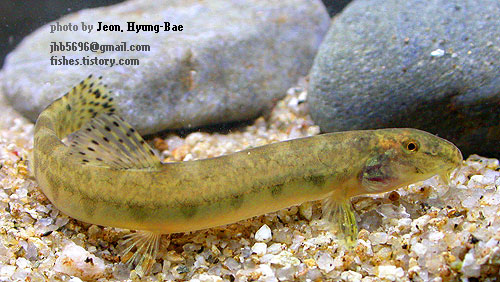
Iksookimia yongdokensis
Kim & Park, 1997
Max length160mm SL6in SLTank100 × 30cm39 × 12inTemp20–24°C68–75°FpH7.0–8.0Among them it's most similar to I. longicorpus and I. hugowolfeldi but can be distinguished by the following combination of characters: body patterning consisting of 9-13 dark vertical bars along the flanks plus a small dark spot at the base of the upper caudal-fin lobe; no black blotch or markings posterior to the operculum; reduced lamina circularis in males; interorbital width measures 14.7-17.8% o...
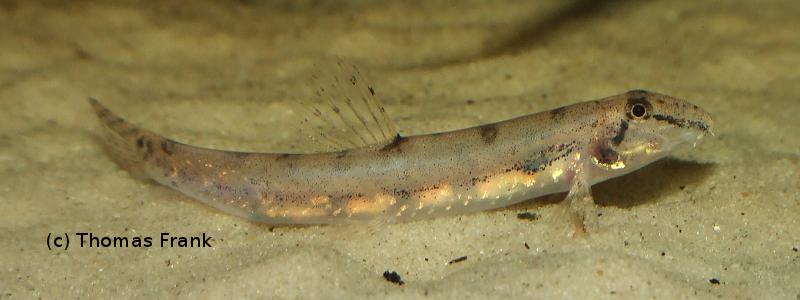
Kottelatlimia hipporhynchos
Kottelat & Tan, 2008
Max length52mm SL2.0in SLTank60 × 30cm24 × 12inTemp23–26°C73–79°FpH4.0–6.5This species differs from congeners in the presence of papillae covering the mouthparts (lips, barbels, and lobes) which are absent in other species. It's also the largest species in the genus and the serrae on the second pectoral fin rays in males form a broa...
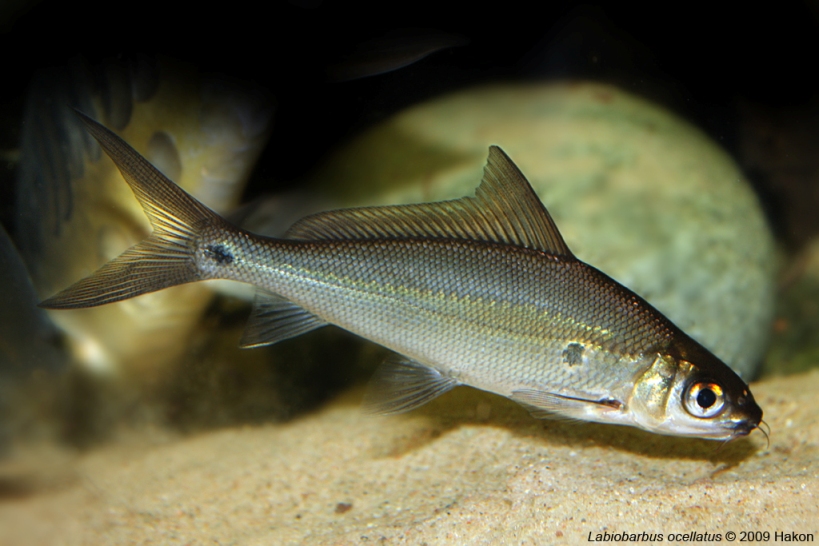
Labiobarbus ocellatus
Heckel, 1843
Max length180mm SL7in SLTank150 × 45cm60 × 18inTemp20–28°C68–82°FpH6.0–7.5It can be distinguished from congeners by the following combination of characters: 61-68 scales in the lateral series; a small, well-defined, sometimes ocellated black spot on the shoulder and another in the centre of the caudal peduncle; body without longitudinal stripes formed by spots on scales; caudal fin uniformly dusky or colourless, lobes without stripes or black margins.
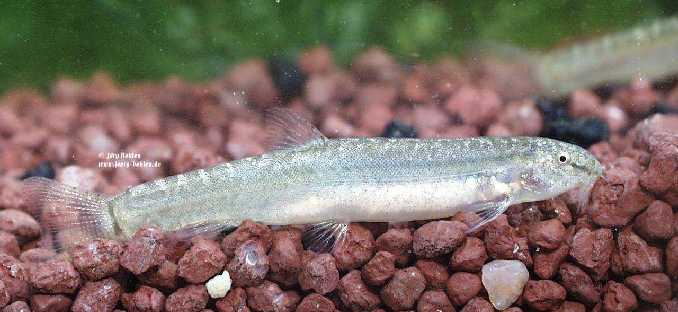
Lepidocephalichthys cf. irrorataLoktak Loach
Hora, 1921
Max length30mm SL1.2in SLTank45 × 30cm18 × 12inTemp20–25°C68–77°FpH5.5–7.5This species is not traded often but may occasionally be exported as bycatch among shipments of other species. It can be distinguished from congeners by the following combination of characters: presence of large, exposed scales on top of head; dorsal-fin origin posterior to pelvic-fin origin; moderate to small size (to 29 mm SL); caudal-fin emarginate and with dark reticulations; caudal-fin lobes with dark, elongated spots along upper and lower edges.
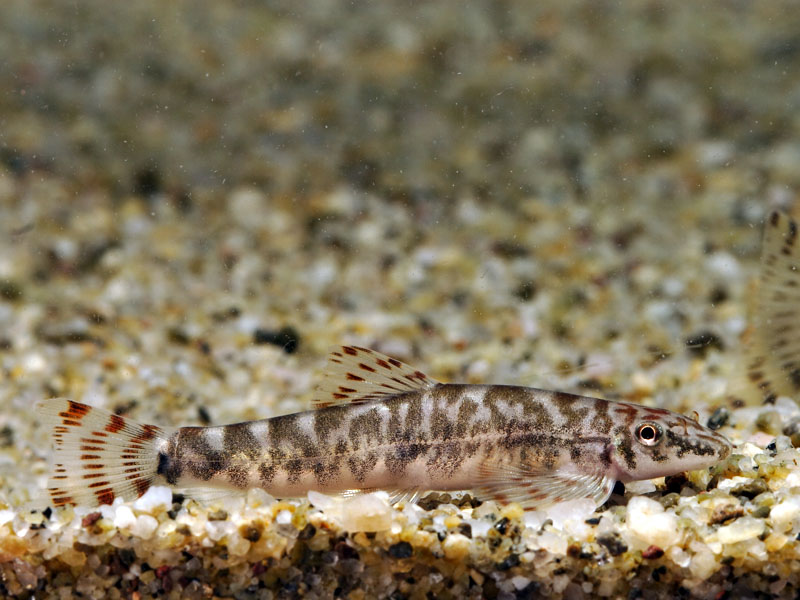
Liniparhomaloptera disparisBroken-band Hillstream Loach
Lin, 1934
Max length80mm SL3.1in SLTank80 × 30cm31 × 12inTemp20–24°C68–75°FpH6.5–8.0L. disparis is sometimes available as bycatch among shipments of other species such as Rhinogobius duospilus but also appears on trade lists under the fictitious scientific name 'Homaloptera hoffmani'. It can be told apart from similar-looking members of the genus Formosania by its noticeably shorter barbels and from Vanmanenia spp. by the fact that the rostral fold is not lobed and the mouth is relatively small (25% head width. In addition the lower lip in Liniparhomaloptera is not divided and has a flat, papillated edge.
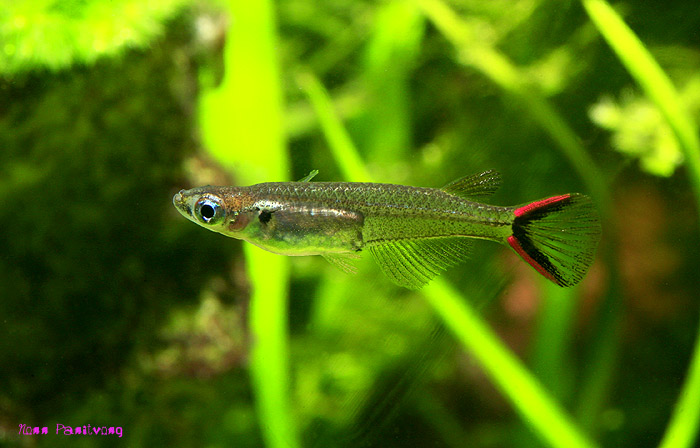
Oryzias mekongensisMekong Ricefish
Uwa & Magtoon, 1986
Max length21mm SL0.8in SLTank40 × 20cm16 × 8inTemp23–27°C73–81°FpH6.0–7.5It can be further distinguished from congeners by the following combination of characters: small adult size; bright orange-red marginal bands on caudal-fin lobes in males; caudal-fin rounded and elongate; 5-7 dorsal-fin rays; relatively few (13-18) anal-fin rays without bony contact organs, the last ray branched; 6-8 pectoral-fin rays. Members of the family Adrianichthyidae are...