Results for “midlateral”
Type a name: scientific, common, or one a species used to go by. Or narrow the catalogue with the filters.
Filters
Crossocheilus elegans
Kottelat & Tan, 2011
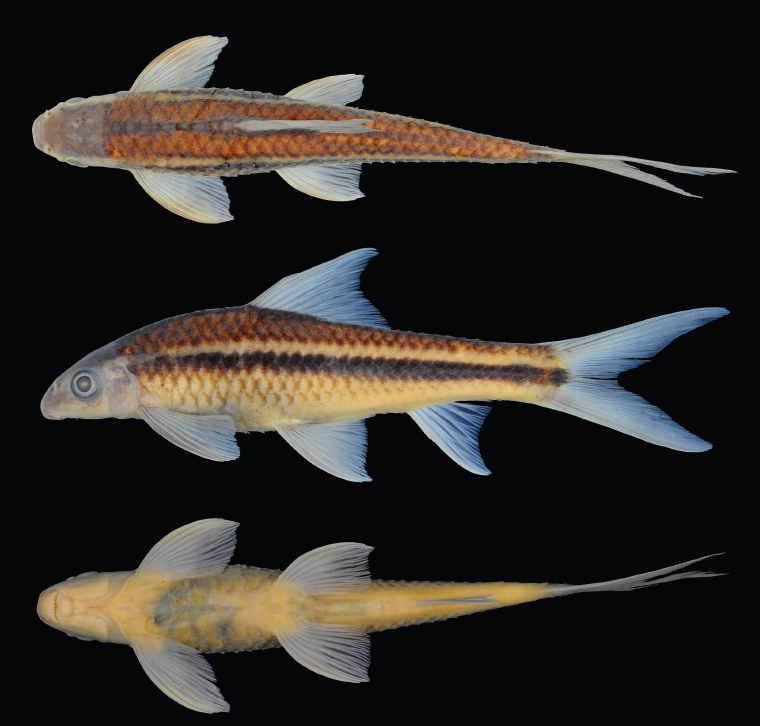
Max length110mm SL4in SLTank150 × 45cm60 × 18inTemp20–25.5°C68–78°FpHnot recordedThis species can be most easily distinguished from other members of the genus by its colour pattern which consists of a blackish midlateral stripe extending from the tip of the gill opening to the middle of the caudal-fin base, which is separated from the dark brown dorsum by a pale yellowish brown stripe. This differs from the pattern seen in other Crossocheilus species with a black midlateral stripe in which the the dorsum is olive brown and much paler than the midlateral stripe, there is no yellow stripe between the dorsum and the black stripe, and the black stripe extends to the tip of the snout.
Boulengerella maculata
Valenciennes, 1850
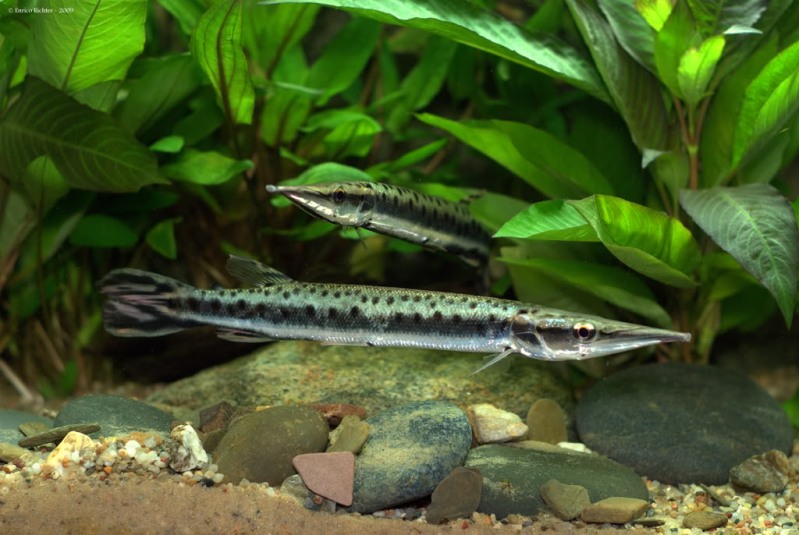
Max length329mm SL13in SLTank240 × 90cm96 × 36inTemp22–28°C72–82°FpH5.0–7.5Both species also possesses a broader dark midlateral stripe on the body which tends to be more well-defined in B. lateristriga than in B. maculata. Colour pattern in B. maculata varies considerably with some specimens noticeably paler than others, for example, and the the broad midlateral stripe usually less intense in such individuals. This does not app...
Batasio travancoriaMalabar Batasio
Hora & Law, 1941
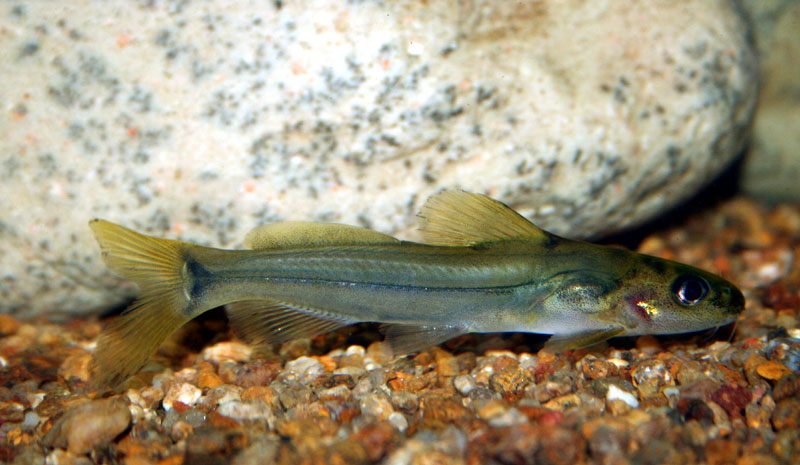
Max length100mm SL3.9in SLTank120 × 30cm48 × 12inTemp18–25°C64–77°FpH6.0–7.0The only other described member of the genus native to southwestern India is B. sharavtiensis which occurs a little further north than B. travancoria in Karanataka state. The two are easily distinguished by colour pattern in that B. travancoria possesses a darkish midlateral stripe and a poorly-defined, but normally visible, post-opercular spot, whereas B. sharavtiensis has no such mark...
Clypeobarbus congicusCongo Barb
Boulenger, 1899
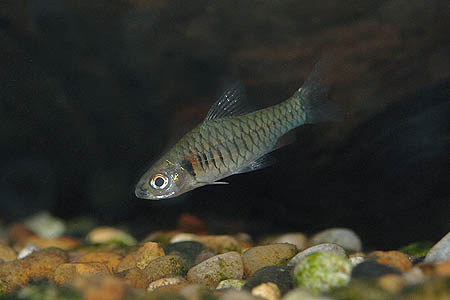
Max length60mm SL2.4in SLTank90 × 30cm36 × 12inTemp22–26°C72–79°FpH6.0–7.0Clypeobarbus was originally put forward as a subgenus of Barbus by Fowler in 1936 on the basis that member species possessed a midlateral row of enlarged, shield-like scales but he only included the type species 'Barbus' kemoensis (now a junior synonym of Clypeobarbus pleuropholis) in the group. Subsequent work by Poll and Lambert (1961), Jubb (1965) and Skelton (1993) resulted in several additional species being placed into the grouping although it appears that little of this work was widely-recognised until the recent study was published.
Corydoras cruziensisSanta Cruz Cory
Knaack, 2002
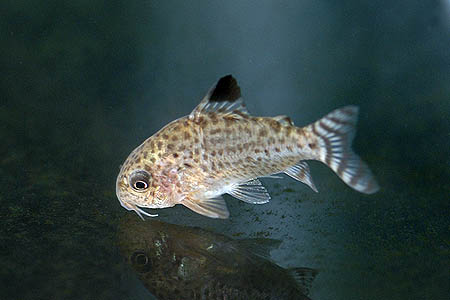
Max length50mm SL2.0in SLTank80 × 30cm31 × 12inTemp20–28°C68–82°FpH6.0–8.5This species is not well-documented but is said to differ from the comparable C. punctatus by possessing larger dark markings on the body which may form an irregular midlateral stripe in some specimens. Unfortunately diagnostic characters cannot be provided since we’ve been unable to obtain the type description, and little has been written about the species since it was published.
Crossocheilus cobitis
Bleeker, 1854
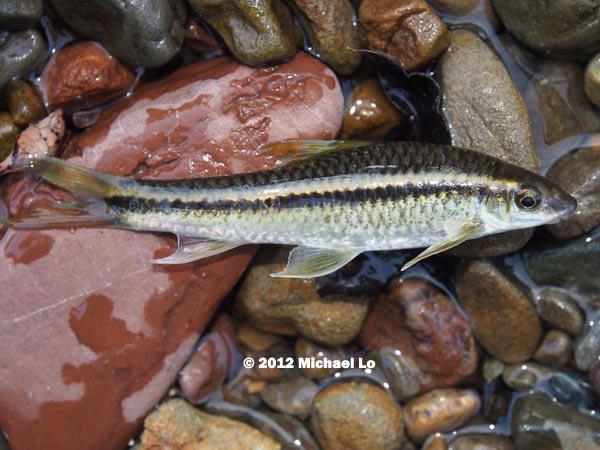
Max length52mm SL2.0in SLTank100 × 30cm39 × 12inTemp20–26°C68–79°FpHnot recordedGiven its wide natural range it seems logical that this species is or has been available in the aquarium trade, although its correct name may never have been applied. It is told apart from congeners by the following combination of characters: two pairs of barbels; a continuous midlateral stripe from the tip of the snout to the base of the caudal-fin, with a conspicuous small blotch at the posterior extremity, faintly marked on the caudal-fin; a faint mark between the anus and the anal-fin origin in juveniles; a narrow mouth.
Fundulus xenicusDiamond Killifish
Jordan & Gilbert, 1882
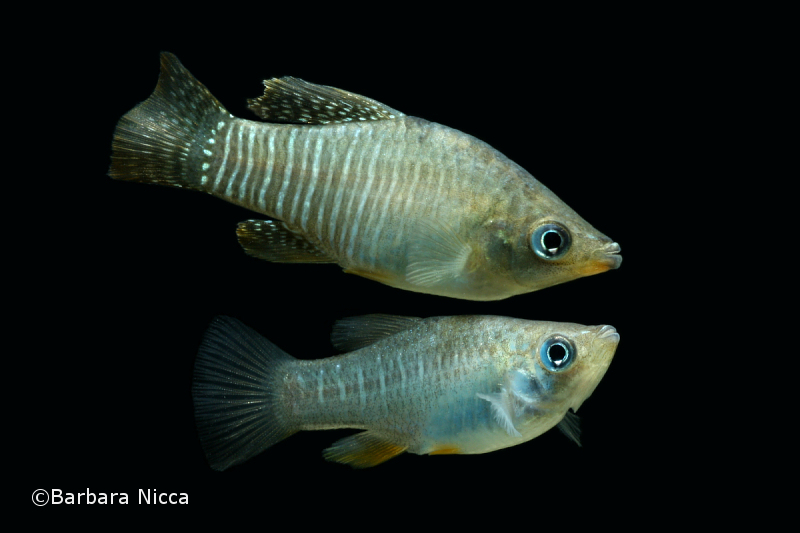
Max length50mm SL2.0in SLTanknot recordedTemp21–35°C70–95°FpH7.5–9.0This species is not a common aquarium species but is occasionally available from specialist retailers or breeders. It was initially named Adinia multifasciata by Girard (1859) before later being redescribed as Fundulus xenicus (mispelled 'Fundnlus') by Jordan and Gilbert (1882). Body stout and trapezoidal in adults, body depth usually 2 to 3 times in standard length; scales large, fewer than 30 scales along midlateral scale row...
Geophagus proximus
Castelnau, 1855
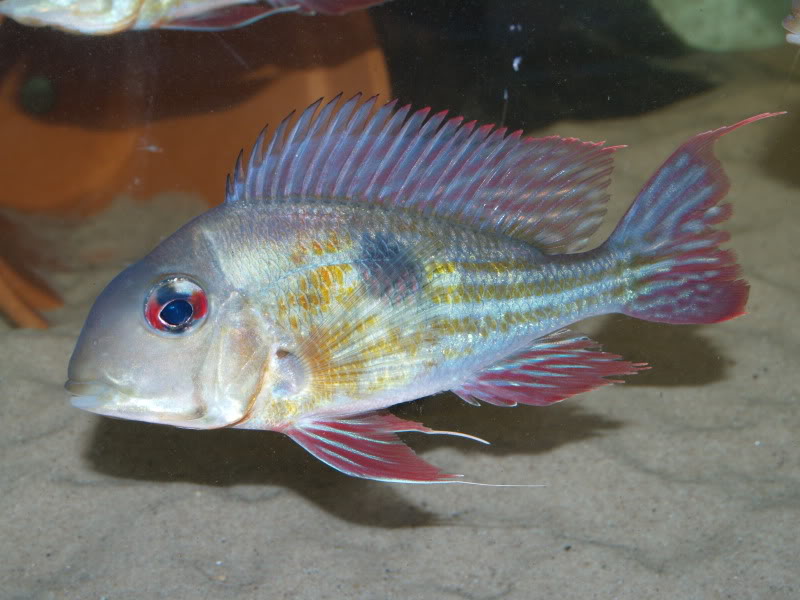
Max length225mm SL9in SLTank180 × 60cm72 × 24inTemp24–32°C75–90°FpH4.0–7.0This species is rare in the hobby though it's name is often attached to shipments of other Geophagus species. It's a member of the nominal G. surinamensis 'group' of closely-related species within the genus and can be identified by a combination of characters including: possession of dark preopercular marking; no vertical bars on the flanks; relatively large, roughly oblong-shaped dark midlateral marking; caudal fin brownish with 3-5 light stripes on upper lobe and less well-defined stripes or mottled pattern of light spots with narrow dark interspaces on lower lobe.
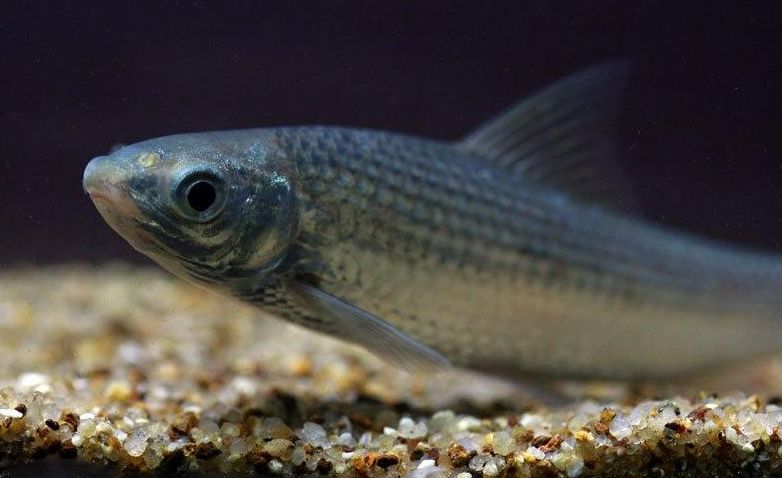
Gymnostomus ariza
Hamilton, 1807
Max length300mm SL12in SLTanknot recordedTempnot recordedpHnot recordedFollowing Roberts (1997) G. ariza can be diagnosed by the following combination of characters: body with variably intense thin stripes dustributed mostly above the lateral line; larger individuals sometimes with a broad midlateral stripe; 32-35 lateral scales; 7-8/1/5-6 transverse scale rows; 8-9 branched dorsal-fin rays 8-9; 22-24+ 11-12=34(4), 35 (3) vertebrae; live colour pattern variable, overall dull dirty white to greyish, silvery or yellow.
Hemichromis lifaliliBlood-Red Jewel Cichlid
authority not recorded
Max length100mm SL3.9in SLTank75 × 30cm30 × 12inTemp23–26°C73–79°FpH6.0–7.8Often confused with Hemichromis bimaculatus. These species can be easily distinguished as H. lifalili have only two black spots on the flanks whereas H. bimaculatus has three, having an extra spot on the caudal peduncle. It can also be told apart from the similar red form of H. guttatus by comparing the midlateral markings of the two. In lifalli the marking is round and is situated above the lateral line. In guttatus the marking is oval in shape and some of it extends below the lateral line. ...
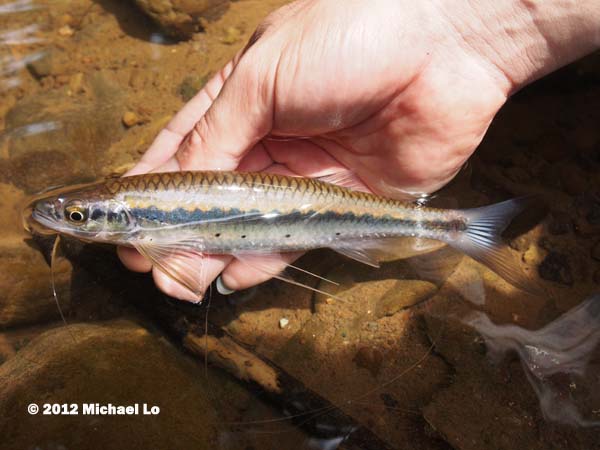
Luciosoma pellegrinii
Popta, 1905
Max length170mm SL7in SLTanknot recordedTempnot recordedpHnot recordedThe five species which currently comprise Luciosoma can be distinguished by elements of colour pattern. Popta described the colour pattern of L. pellegrinii as follows: body colour olive dorsally, with dark-edged scales, yellow ventrally; a lateral series of dark spots on the flank forming a midlateral band which extends onto the opercle but not the head; 4-8 blackish-brown, distinctly-separate spots on the lateral line; fins yellow; dorsal and anal fins with a blackish-brown band; anterior half of some pectoral-fin rays blackish-brown...
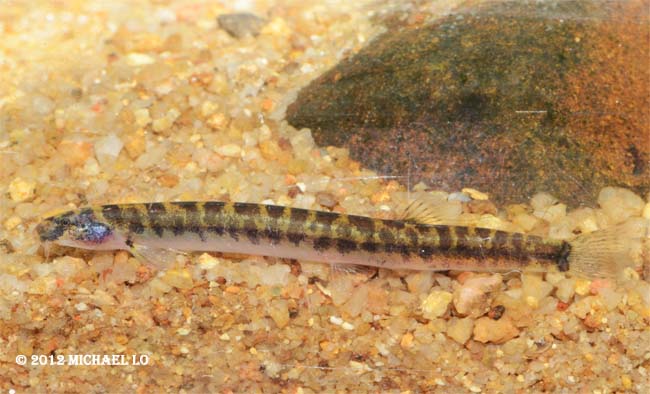
Pangio shelfordii
Popta, 1903
Max length80mm SL3.1in SLTank60 × 30cm24 × 12inTemp21–26°C70–79°FpH4.0–7.0Patterning is highly variable depending both within and between populations and the species may comprise an assemblage containing a number of taxa (Kottelat and Lim, 1993; Tan and Kottelat, 2009). For example, those from Singapore and Johor possessing intricate mottling on the dorsal surface while individuals from Terengganu have a series of saddle-like markings either alternating or connecting with the midlateral markings.
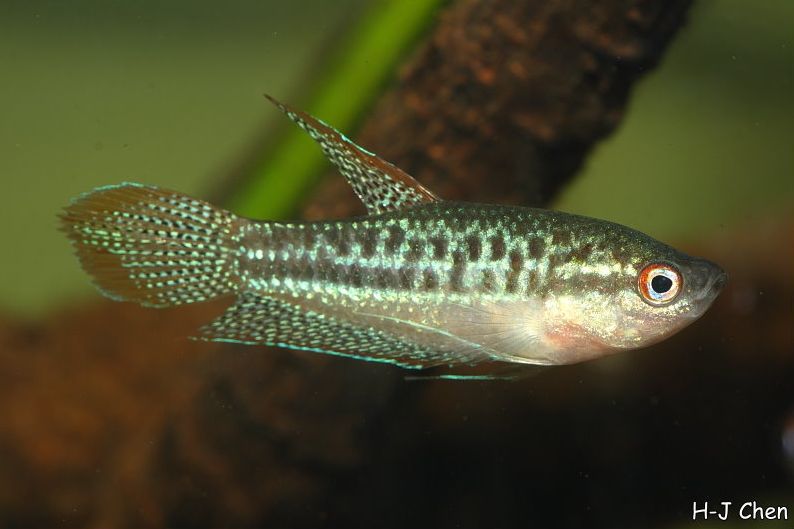
Trichopsis pumilaSparkling Gourami
Arnold, 1936
Max length40mm SL1.6in SLTank45 × 30cm18 × 12inTemp22–28°C72–82°FpH5.0–7.5It can be distinguished from congeners by its small adult size and presence of a single solid dark midlateral stripe on the body, above which is a series of dark blotches forming a second stripe. In the similar but larger, T. schalleri the upper stripe is more variable depending on the mood of the fish, sometimes fading entirely.