Results for “native”
Type a name: scientific, common, or one a species used to go by. Or narrow the catalogue with the filters.
Filters
Hepsetus odoeAfrican Pike Characin
authority not recorded
Max length700mm SL28in SLTank180 × 60cm72 × 24inTemp25–28°C77–82°FpH6.0–7.5The only species in the genus, and a popular game fish in its native range, H. odoe superficially resembles our native European Pike. It is an ambush predator with a fearsome set of teeth, and should be handled very carefully, particularly when maintaining its tank. Although juvenile specimens have become relatively common in the trade in the last few years, this is strictly a species for the specialist who is able to provide it with a suitably large aquarium and the correct conditions. In sm...
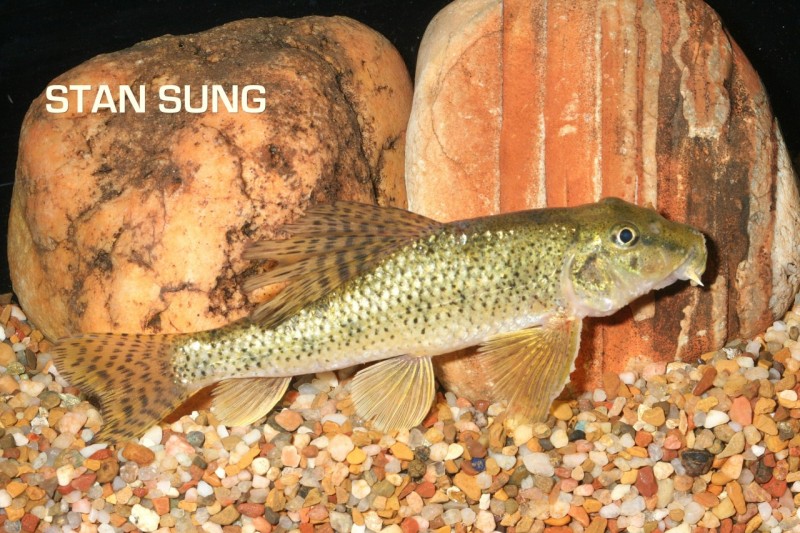
Abbottina rivularisChinese False Gudgeon
Basilewsky, 1855
Max length150mm SL6in SLTank150 × 45cm60 × 18inTemp16–24°C61–75°FpH6.0–8.0Native to continental China, the Korean peninsula, and southern Japan. Type locality is given only as 'Lakes and rivers, northern China', with the type series possibly originating from the Pai-ho River near Beijing. It has been widely introduced and is considered invasive elsewhere, including the Mekong river basin (records from Laos and Thailand), Salween river (Myanmar), northern Japan, Taiwan, Turkmeni...
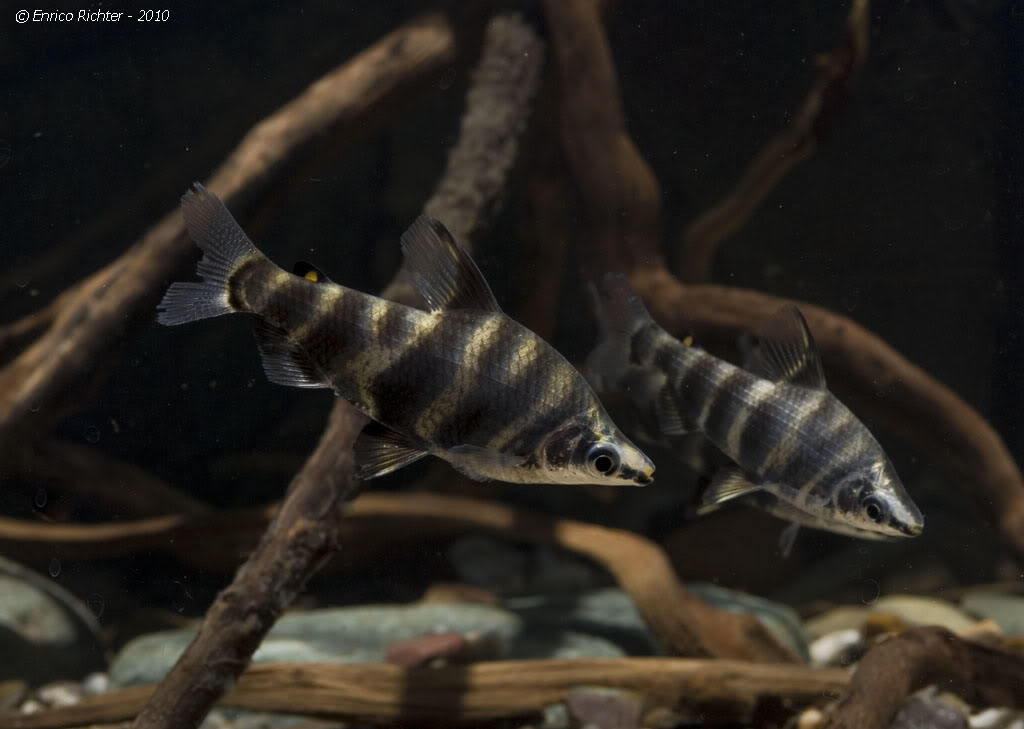
Abramites hypselonotusMarbled Headstander
Günther, 1868
Max length140mm SL6in SLTank120 × 30cm48 × 12inTemp20–30°C68–86°FpH5.5–7.5Abramites spp. are separated from other anostomids primarily on the basis of their relatively deeper bodies and presence of a prominent, post-pelvic median keel, a feature unique to the genus. At time of writing A. eques is the only other species recognised and is native to the Río Magdalena drainage in western Colombia. It can be distinguished by possession of 13-14 bra...
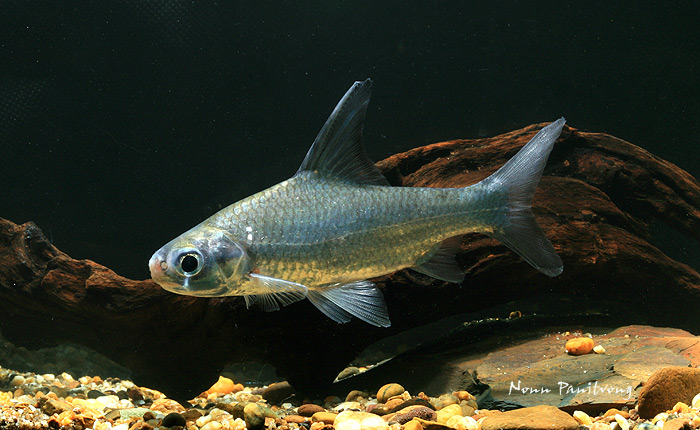
Amblyrhynchichthys micracanthus
Ng & Kottelat, 2004
Max length200mm SL8in SLTanknot recordedTempnot recordedpHnot recordedNative to the Mekong River drainage in Laos (where Vientiane province represents the upper limit of its range), Thailand, Cambodia, and Vietnam, and the Tapi, Chao Phraya, and Mae Klong systems in Thailand. Type locality is '22 kilometers upstream from Phnom Penh, Tonle Sap River, Kandal Province, Cambodia'.
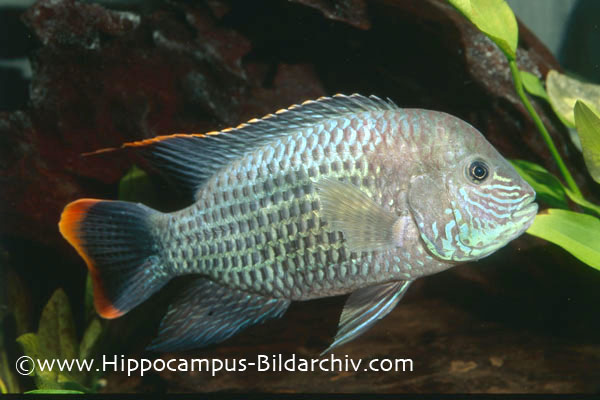
Andinoacara rivulatusGreen Terror Cichlid
Günther, 1860
Max length300mm SL12in SLTank150 × 45cm60 × 18inTemp20–24°C68–75°FpH6.5–8.0Native to extreme northern Peru and coastal drainages of western Ecuador as far north as the Río Esmereldas drainage and possibly beyond. The form from the Esmereldas and above may represent a different species (see 'notes').
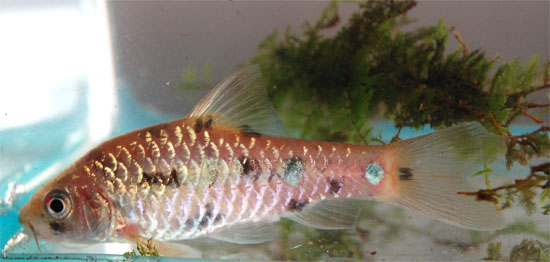
Barbodes everetti
Boulenger, 1894
Max length120mm SL5in SLTank120 × 45cm48 × 18inTemp18–28°C64–82°FpH6.0–7.0This species is uncommon in the aquarium hobby, although the scientific name is widely misapplied to Barbodes dunckeri, a similar-looking species native to Peninsular Malaysia and Singapore commonly referred to as 'clown barb' and labelled as B. everetti in the majority of available literature. The two are quite easy to tell apart, with B. everetti an overall less...
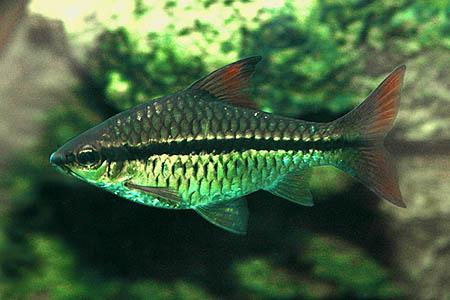
'Barbus' holotaeniaSpotscale Barb
Boulenger, 1904
Max length120mm SL5in SLTank120 × 45cm48 × 18inTemp24–30°C75–86°FpH6.0–7.0This species is native to Central West Africa where it is principally found in the great Ogooué and Congo River systems. It therefore has an extensive range and has been recorded at numerous localities right across the Democratic Republic of Congo (DRC) from the Ituri River in the far east of the country to the Luki River basin in the extreme west. The Congo River appears to represent the southernmost limit of its range as a...
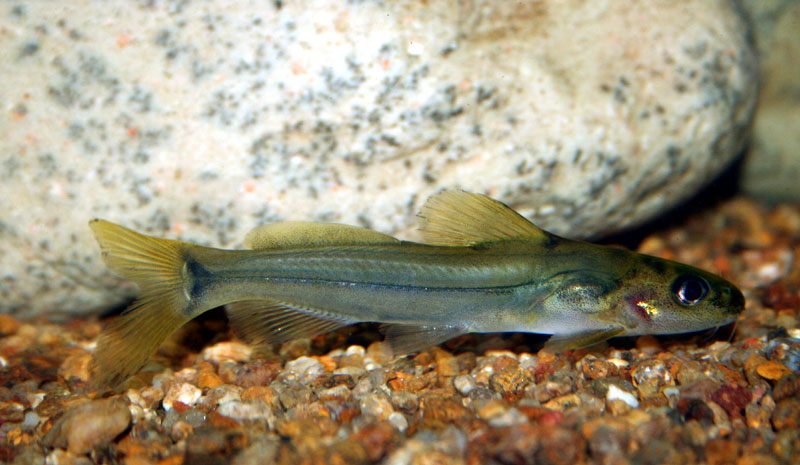
Batasio travancoriaMalabar Batasio
Hora & Law, 1941
Max length100mm SL3.9in SLTank120 × 30cm48 × 12inTemp18–25°C64–77°FpH6.0–7.0The only other described member of the genus native to southwestern India is B. sharavtiensis which occurs a little further north than B. travancoria in Karanataka state. The two are easily distinguished by colour pattern in that B. travancoria possesses a darkish midlateral stripe and a poorly-defined, but normally visible, post-opercular spot, whereas B. sharavtiensis has no such mark...
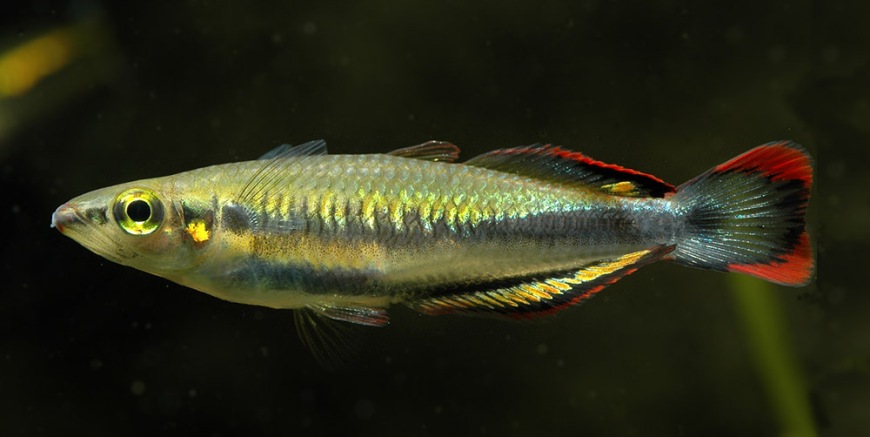
Bedotia madagascarensisMadagascan Rainbow Fish
Regan, 1903
Max length100mm SL3.9in SLTank120 × 30cm48 × 12inTemp23–32°C73–90°FpH4.5–7.5This species was first imported for the aquarium hobby during the 1950s and was for many years misidentified and traded as Bedotia geayi, a valid, but different-looking congener native to the Mananjary River system, south of the range of B. madagascarensis. In terms of external characters, the two are most easily told apart by differences in colour pattern, particularly that of the unpaired fins, and some morphometric counts.
Bryconaethiops boulengeriBoulenger's Featherfin Tetra
authority not recorded
Max length250mm SL10in SLTank120 × 45cm48 × 18inTemp22–26°C72–79°FpH6.0–8.0This rarely imported species makes an attractive addition to a community of larger peaceful fish. It is farmed commercially for food in its native countries....
Bunocephalus coracoideusBanjo Catfish
authority not recorded
Max length150mm SL6in SLTank60 × 38cm24 × 15inTemp20–27°C68–81°FpH5.8–7.8Bunocephalus is the largest genus within the Aspredinidae family and there are several undescribed species. B. coracoideus is the most common member seen in dealers' tanks. Its native name "Guitarrita" translates as "little guitar" and refers to the shape of the fish when viewed from above. Despite the regularity with which it is seen for sale, it isn't really a good catfish for the general community tank because it's a largely inactive, secretive species, ...
Cichlasoma urophthalmusMayan Cichlid
authority not recorded
Max length400mm SL16in SLTank210 × 60cm84 × 24inTemp20–30°C68–86°FpH7.0–8.0A hardy and robust fish that can tolerate and breed in full marine conditions. The Mayan cichlid is also referred to as the Mexican Mojarra and is occasionally offered for sale in the UK, or can be obtained through specialist cichlid dealers. This species is regarded as a potential pest fish in the USA due to its tolerance of a wide range of conditions and the threat it could pose to native fauna....
Colossoma macropomumBlack Pacu
authority not recorded
Max length600mm SL24in SLTank300 × 90cm118 × 36inTemp22–28°C72–82°FpH5.5–7.5Known as the tambaqui in its native countries, this is the second largest species of scaled fish found in the Amazon basin. This alone should tell you much of what you need to know about its suitability as an aquarium inhabitant. In reality, it's debatable as to whether the species should be considered an aquarium subject at all. While pacu rarely reach their maximum size in captivity, they're still easily capable of growing to a couple of feet in length. The myth that fish will only g...
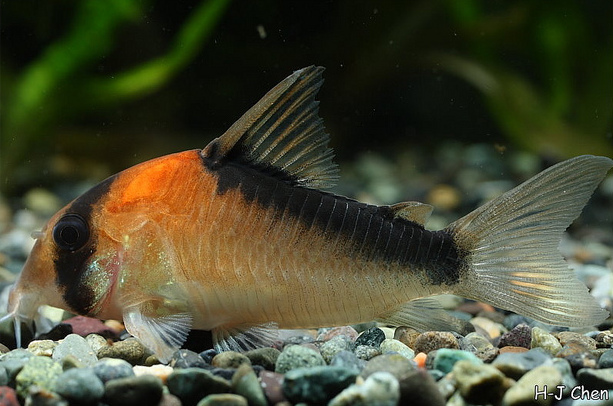
Corydoras duplicareus
Sands, 1995
Max length50mm SL2.0in SLTanknot recordedTemp20–26°C68–79°FpH4.0–7.0This species is among a number of congeners native to the rio Negro region to possess a colour pattern with an oblique dark bar running along the dorsal surface of the body. This unofficial group also includes C. burgessi, C. davidsandsi, C. duplicareus, C. imitator, C. melini, and C. serratus, and among these C. duplicareus is most easily-confused with C. adolfoi.
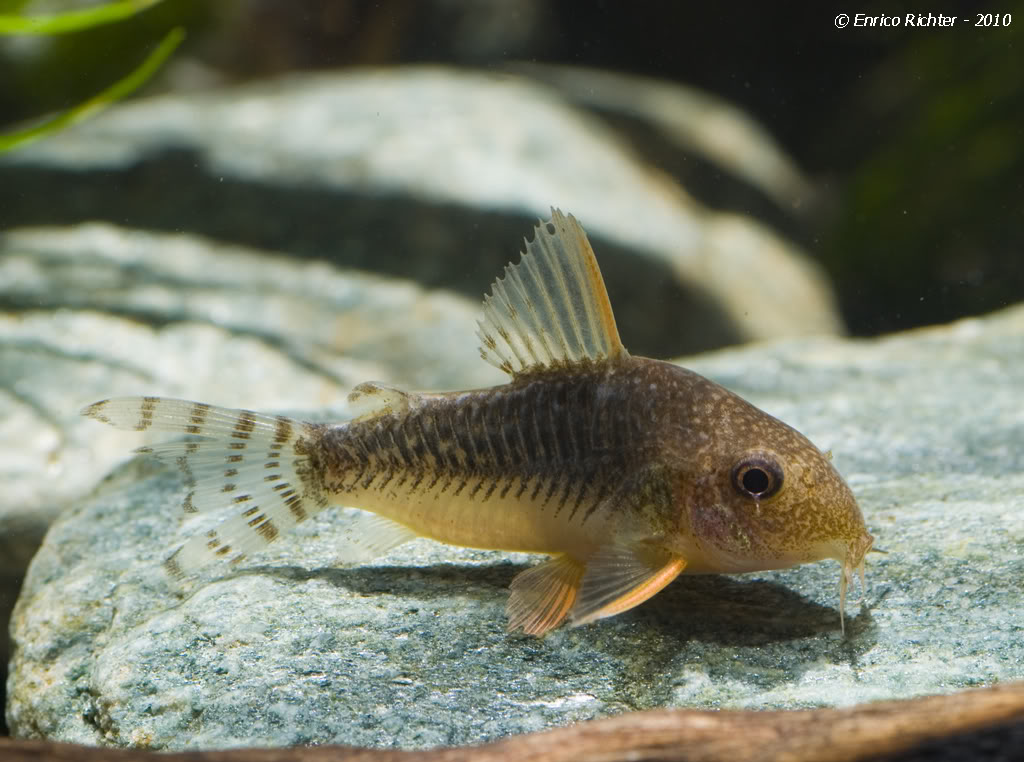
Corydoras gosseiPalespotted Cory
Nijssen, 1972
Max length55mm SL2.2in SLTank90 × 30cm36 × 12inTemp24–28°C75–82°FpH5.5–7.5The congener C. seussi, which is also native to the rio Mamoré, has a similar colour pattern but its snout is noticeably prolonged compared with that of C. gossei, plus there are some subtle differences in pigmentation. There is a third variant which has been referred to as 'CW069' in the aquarium hobby and appears to be somewhat intermediate, with a short, rounded snout as in C. gossei but a colour pattern more reminiscent of C. seussi.
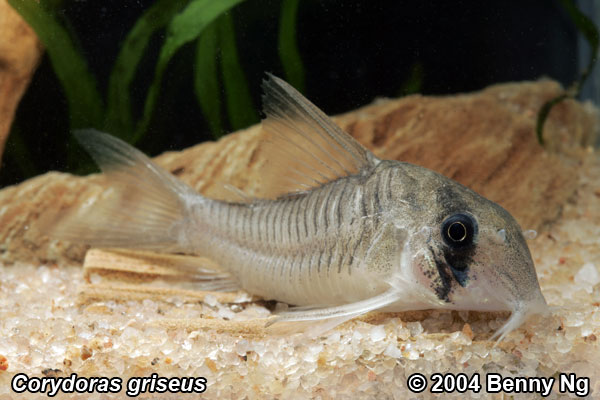
Corydoras griseus
Holly, 1940
Max length50mm SL2.0in SLTank90 × 30cm36 × 12inTemp20–26°C68–79°FpH6.0–7.5Native to Guyana, where it may be restricted to the Potaro River, a major tributary within the Essequibo watershed. It was described from aquarium specimens which were said to have been collected in 'very small water courses of the Amazon', but the type locality was corrected to 'Guyana-Essequibo, Potaro River, Kuribong trail' by Nijssen and Isbrücker (1980).
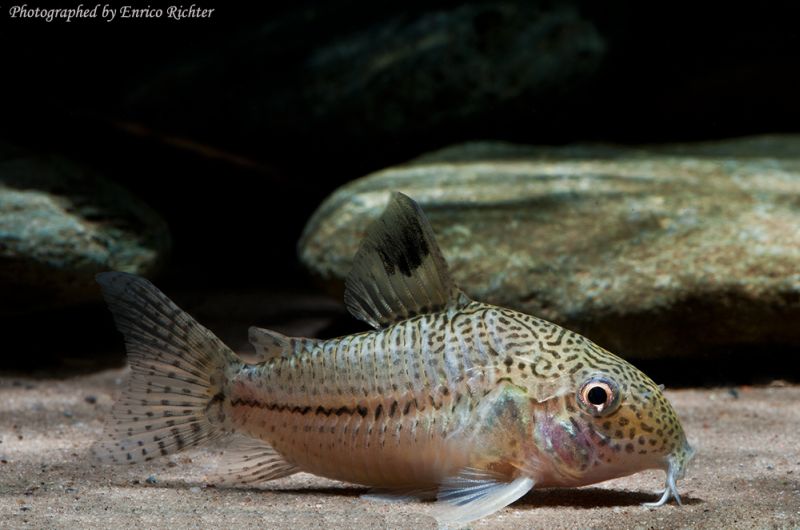
Corydoras juliiJulii Cory
Steindachner, 1906
Max length55mm SL2.2in SLTank90 × 30cm36 × 12inTemp20–26°C68–79°FpH5.5–7.5Native to coastal river systems south of the Amazon delta in the states of Piauí, Maranhão, Pará, and Amapá, northeastern Brazil. It has been recorded from the rios Guamá (including tributaries such as the rio Ararandeua), Maracanã (rio Peixe-Boi), Morcego, Parnaíba, Piriá, Caeté, Turiaçu (rio Jamari), and Mearim (rio Pindaré). Reports from French Guiana and western Brazil appear to represent cases of misidentification.
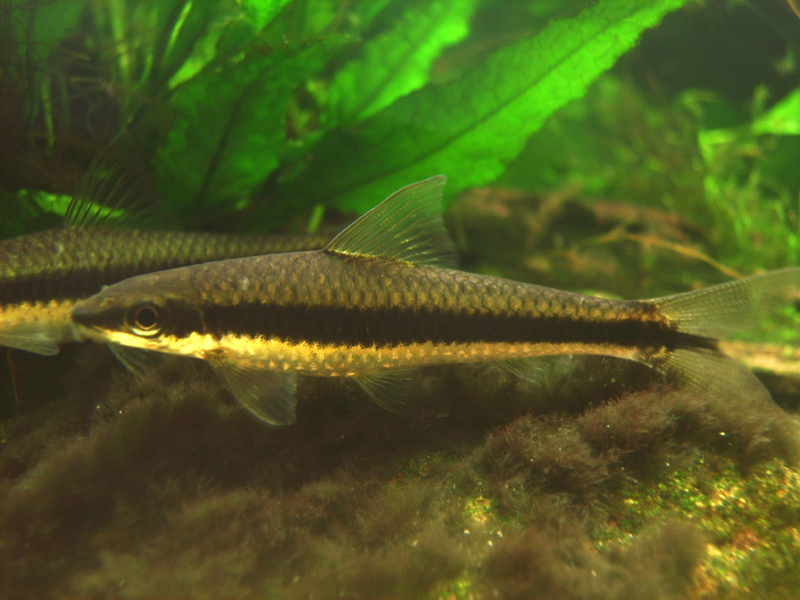
Crossocheilus langeiSiamese Algae Eater
Bleeker, 1860
Max length150mm SL6in SLTank150 × 45cm60 × 18inTemp20–26°C68–79°FpH6.0–7.5C. oblongus is another name widely misused in the trade but that species has seemingly never been exported and was described as a blueish fish with yellow fins. It's native to streams of Gunung Salak mountain in Bogor Regency, West Java, Indonesia where collecting of ornamental fishes is almost non-existent. Other species of laterally-striped Crossocheilus also exist and may be available from time-to-time but are more easily told apart from the group described above.
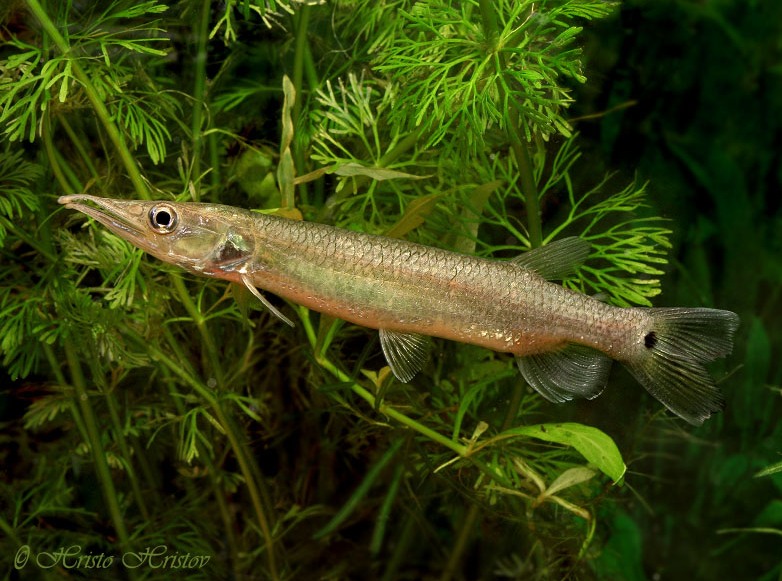
Ctenolucius hujetaGar 'Characin'
Valenciennes, 1850
Max length250mm SL10in SLTank180 × 60cm72 × 24inTemp22–28°C72–82°FpH5.0–7.5C. hujeta is traded under various names including 'slant-nosed gar', 'hujeta gar', 'rocket gar' and 'freshwater barracuda' but it and other members of the family Ctenoluciidae have traditionally been referred to as 'pike characids'. They're all predatory fishes native to South America, included in the order Characiformes and currently spread across two genera; Ctenolucius with two species and Boulengerella with five. The two genera are ...
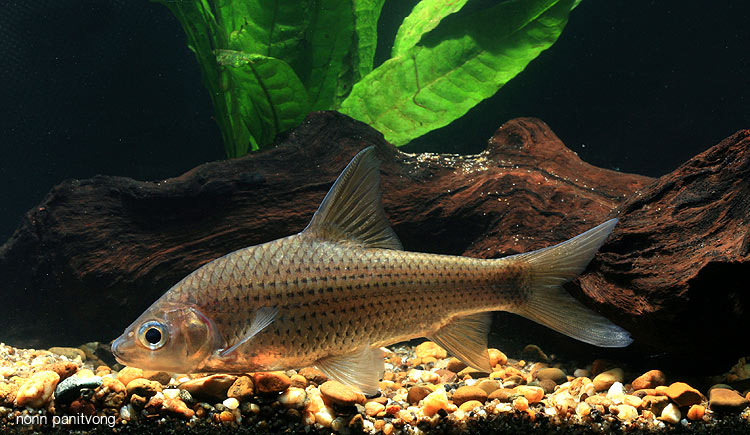
Cyclocheilichthys repasson
Bleeker, 1853
Max length280mm SL11in SLTank180 × 45cm72 × 18inTemp20–26°C68–79°FpH5.0–8.0An ideal resident of the larger, well-furnished community set-up though it might upset slow-moving or timid companions simply by its size. There are plenty of suitable tankmates including many cyprinids, loaches, cichlids, catfish and characins, but as always when selecting a compatible community of fish proper research is essential. A community based around one of its native countries or river basins...