Results for “paraphyletic”
Type a name: scientific, common, or one a species used to go by. Or narrow the catalogue with the filters.
Filters
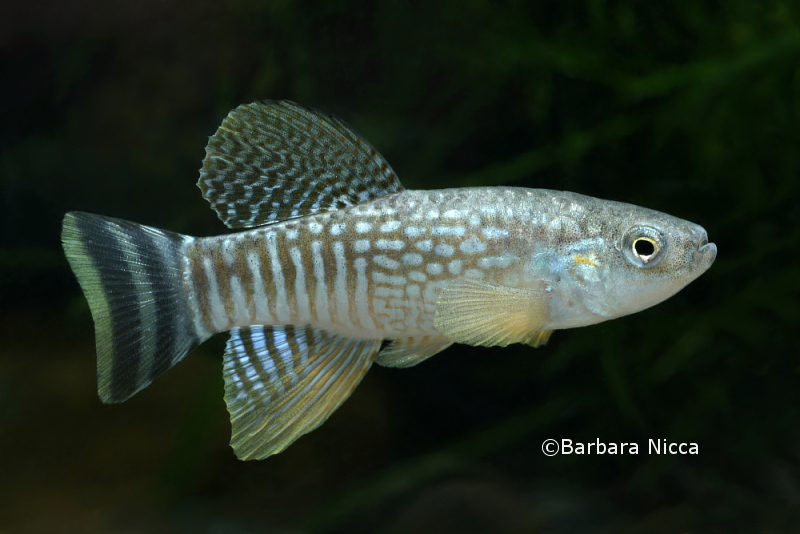
Aphaniops disparArabian Toothcarp
Rüppell, 1829
Max length80mm SL3.1in SLTank120 × 30cm48 × 12inTemp4–30°C39–86°FpH7.5–9.0A. dispar should only be considered a nominal species as demonstrated by Hrbek and Meyer (2003) who conducted an in-depth phylogenetic study covering the majority of the genus. It was found to represent a paraphyletic grouping meaning it cannot be considered to be a species following the phylogenetic species concept. A. mento, A. sirhani and especially A. ginaonis and A. richardsoni were found to be its closest surviving relatives. Hoedeman (1951) suggested that it should be moved into a separat...
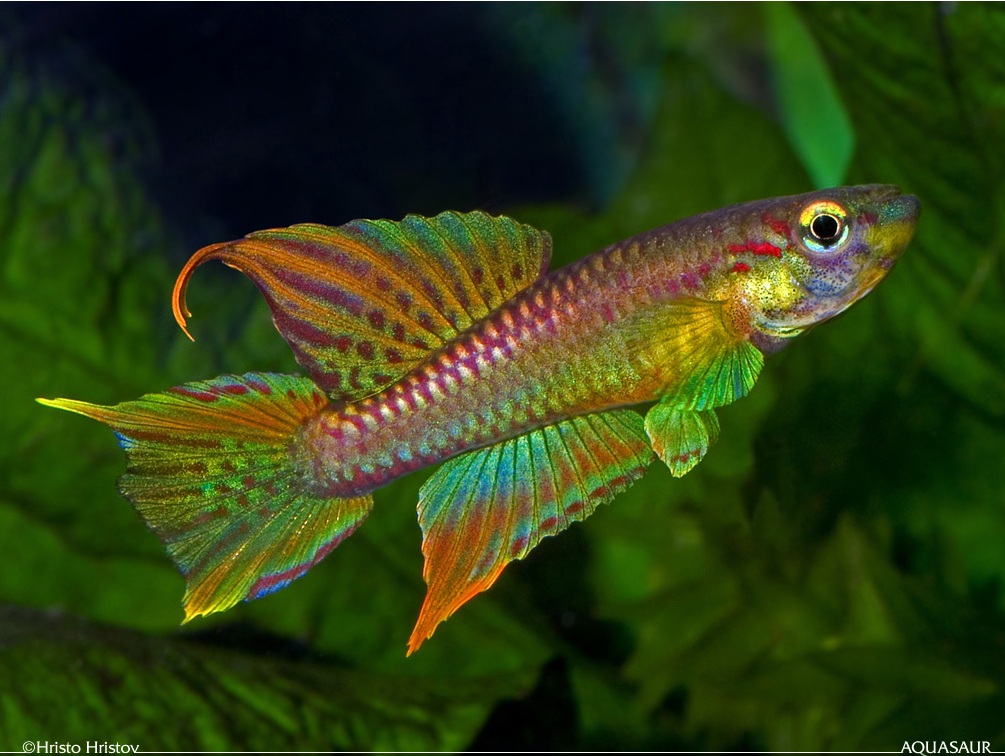
Aphyosemion splendopleureSplendid Lyretail
Brüning, 1929
Max length60mm SL2.4in SLTank45 × 25cm18 × 10inTemp22–26°C72–79°FpH6.0–7.2There exist several different colour forms of this species depending on collection locality, and these should not be kept together in order to prevent hybridisation and preserve bloodlines. It has been classified in the subgenus Chromaphyosemion by some authors who consider that nominal grouping to represent a monophyletic branch of a paraphyletic Aphyosemion.