Results for “polyphyletic”
Type a name: scientific, common, or one a species used to go by. Or narrow the catalogue with the filters.
Filters
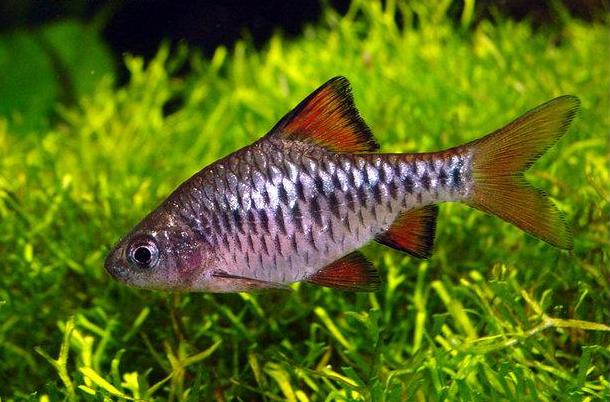
Oliotius oligolepisCheckered Barb
Bleeker, 1853
Max length45mm SL1.8in SLTank75 × 30cm30 × 12inTemp18–25°C64–77°FpH5.5–7.5This species is also traded as 'checker barb', 'checkerboard barb', or 'island barb', and is among the most ubiquitous species available in the aquarium trade. It is farmed commercially in enormous numbers with wild examples rarely, if ever, available. It was formerly included in the polyphyletic catch-all genus Puntius which contained over 100 species, but this situation has been largely resolved since the turn of the century.
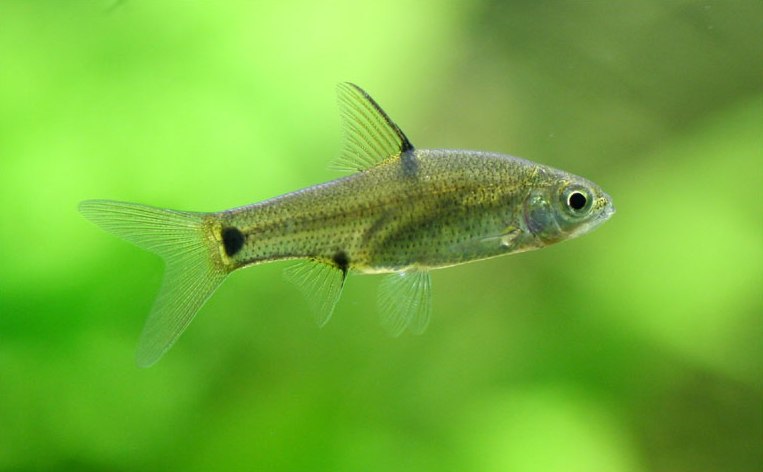
Puntius sharmai
Menon & Rema Devi, 1993
Max length40mm SL1.6in SLTank60 × 30cm24 × 12inTemp20–26°C68–79°FpH5.5–7.5This species is almost unheard of in the aquarium hobby outside of India but is maintained by some private collectors. It's distinguished from similar species by possessing a single pair of maxillary barbels, a relatively elongate body, and distinctive black spot above the anterior anal-fin base. The genus Puntius was for a number of years viewed as a polyphyletic catc...
Rasbora paucisqualis
authority not recorded
Max length40mm SL1.6in SLTank60 × 30cm24 × 12inTemp22.2–25.6°C72–78°FpHnot recordedRainboth's 'Fishes of the Cambodian Mekong' characterised members of Rasbora by possession of an unbranched, non-spiny firstray and seven soft dorsal rays, origin of thein the middle of the body, five branchedrays, a small mouth not extending below the eye and a lack of barbels. It's long been recognised as a polyphyletic lineage as noted by Kottelat (1999) amongst others, and in 2010 the results of a phylogenetic analysis by T. Y. Liao et al. suggested a number of changes in...
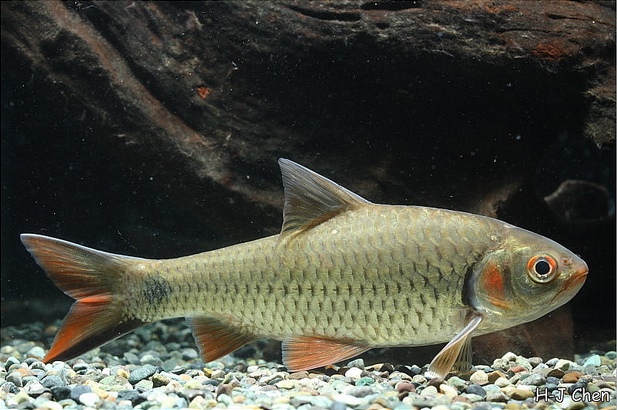
Systomus orphoides
Valenciennes, 1842
Max length250mm SL10in SLTank200 × 60cm79 × 24inTemp18–26°C64–79°FpH6.0–8.0The genus Puntius is currently viewed as something of a catch-all for well over 100 species of small to mid-sized cyprinid. Most experts agree that a full revision is required with the likely outcome that many species will be placed into new or different genera since it is clearly polyphyletic. When describing the grouping in 1822 Hamilton identified the defining characteristics as: presence or absence o...