Results for “sample”
Type a name: scientific, common, or one a species used to go by. Or narrow the catalogue with the filters.
Filters
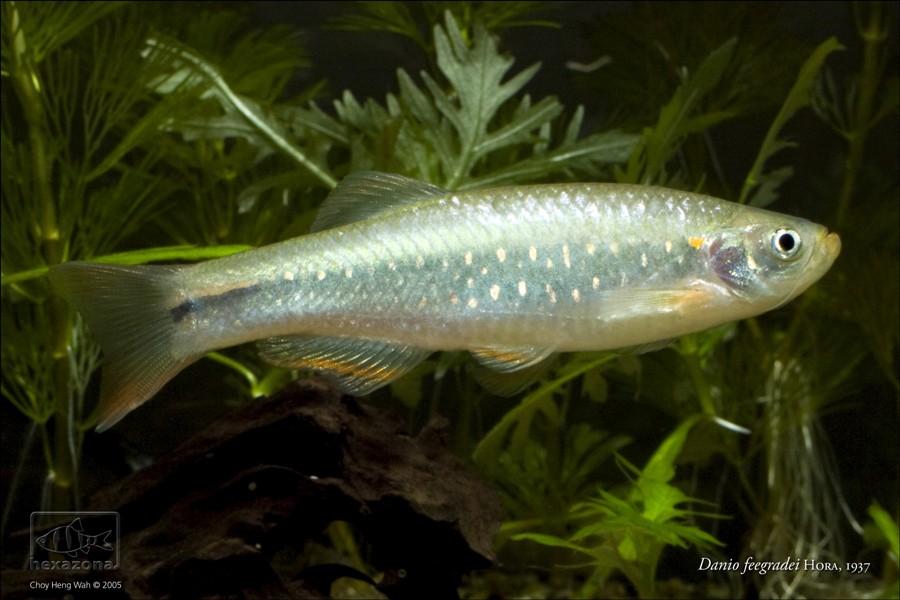
Brachydanio feegradeiYoma 'Danio'
Hora, 1937
Max length60mm SL2.4in SLTank120 × 45cm48 × 18inTemp18–25°C64–77°FpH6.5–7.5Typically inhabits small forest streams. In the Yan Khaw Chaung (Yan Khaw stream) it occurs alongside Devario xyrops, Garra rakhinica, G. vittatula, Xenentodon cancila, Sicyopterus fasciatus and unidentified species of Lepidocephalichthys and Channa (Fang and Kullander, 2009). When sampled during the dry season the habitat consisted of nothing more than a series of small, interconnected po...
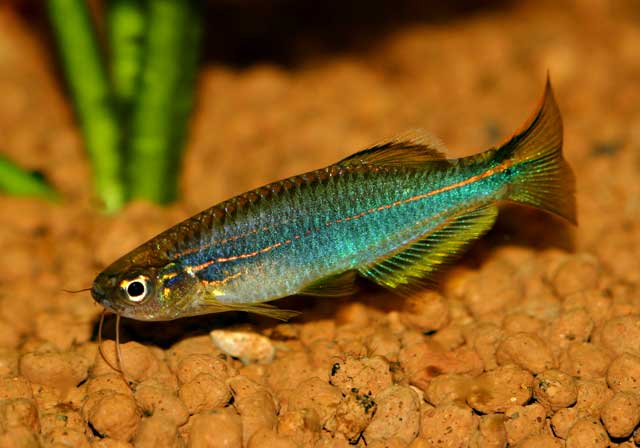
Brachydanio sp. 'hikari'Hikari 'Danio'
authority not recorded
Max length65mm SL2.6in SLTank120 × 30cm48 × 12inTemp18–26°C64–79°FpH6.5–7.5This potentially-undescribed species first became available in 2002, and males and females were marketed as 'Danio sp. hikari yellow' and 'D. sp. hikari blue', respectively. Subsequent DNA testing in the United States revealed them to be the same species and genetically distinct from the very similar B. kerri. It can be told apart as the central body (P) stripe always extends into the caudal fin whereas in B. kerri it terminates at the caudal peduncle. Only a single population of B. kerri was sampled in the stu...
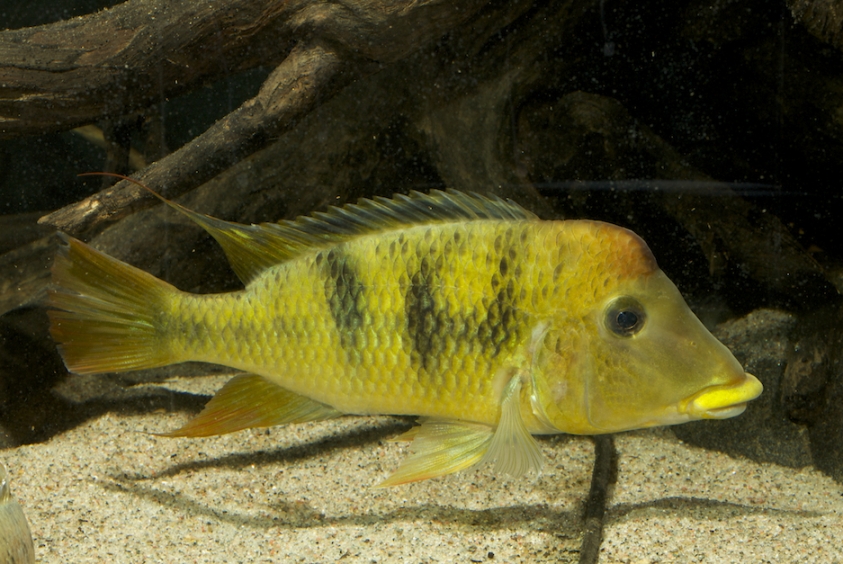
'Geophagus' pellegriniYellowhump Eartheater
Regan, 1912
Max length155mm SL6in SLTank120 × 45cm48 × 18inTemp25–30°C77–86°FpH5.0–6.0This species appears to be a relative ecological generalist. During a sampling trip in 1989 it was collected various habitat-types including a narrow (maximum width 3 m) stream containing shallow (maximum depth 1 m), transparent, moderate to fast-flowing water and substrate comprising gravel, mud, clay and organic debris including submerged logs. Aquatic plants consisted of water lilies and marginal vegetation was dense, comprising various trees, shrubs, grasses and ferns.
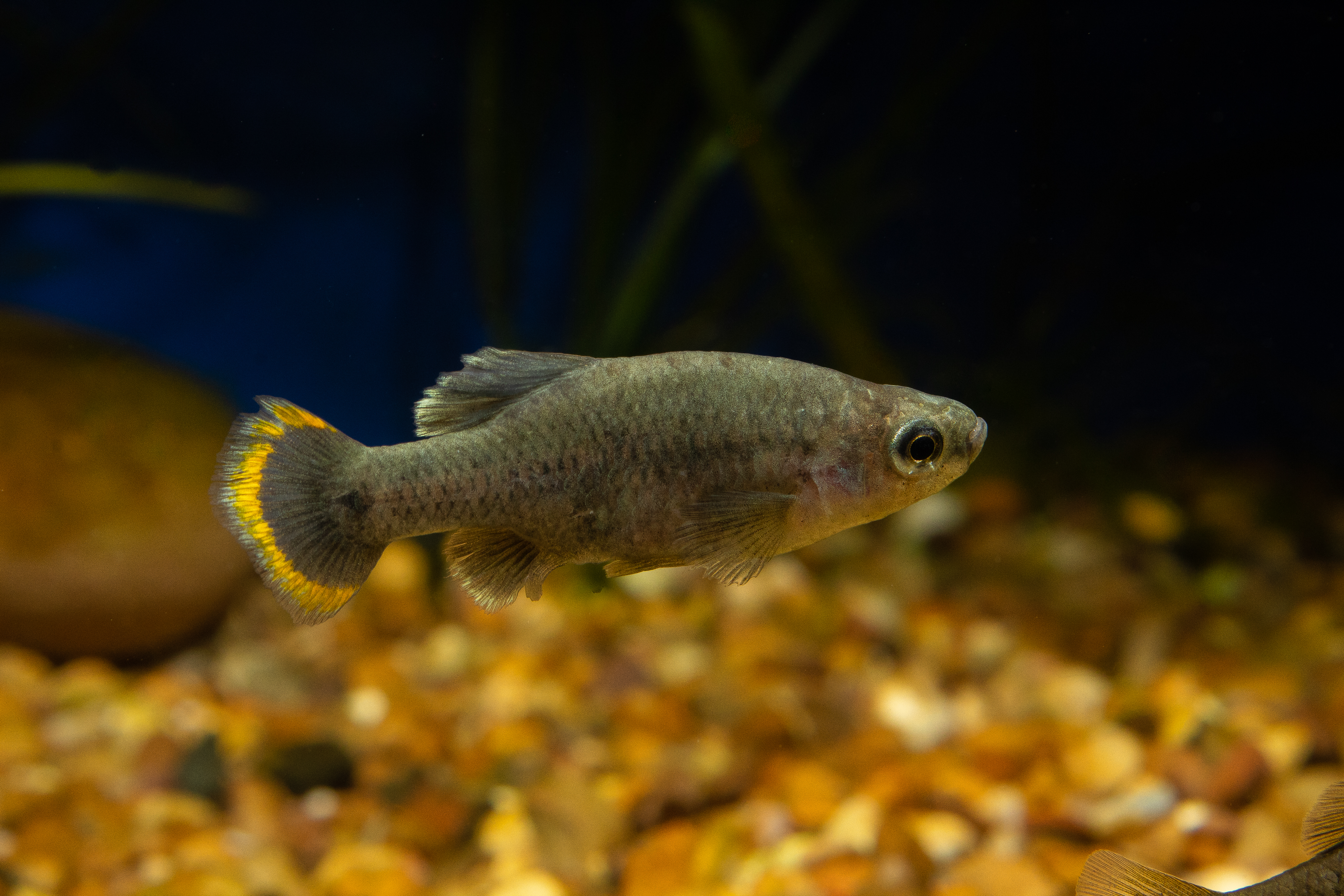
Zoogoneticus tequilaTequila Splitfin
Webb & Miller, 1998
Max length♂ 30 · ♀ 50mm SL♂ 1.2 · ♀ 2.0in SLTank90 × 30cm36 × 12inTemp17–27°C63–81°FpH6.8–7.6A single male of the Tequila Splitfin was sampled in 1955 by Miller and Greenbank, but identified erroneously as Zoogoneticus quitzeoensis, with which species it was collected and found sympatrically . Many years later, the mistake was detected, the fish identified as a new species and finally, 43 years after the first capture, described by Webb and Miller. In 2001, a wild population of this species was rediscovered in a very small spring pool (3 x 4m in diameter). The population there was composed of only a handful of adult fish and a few tens of juveniles (De la Vega-Salazar et al., 2003). In 2007, N. W. Bailey et al showed, that the allelic richness of this population (though it was comparable in size to an aquatic stock) was higher than in any aquatic stock. In 2013 the loss of this population was reported (pers. comm. Domínguez), so there is not much hope that this species is still persisting in the wild.