Results for “scute”
Type a name: scientific, common, or one a species used to go by. Or narrow the catalogue with the filters.
Filters
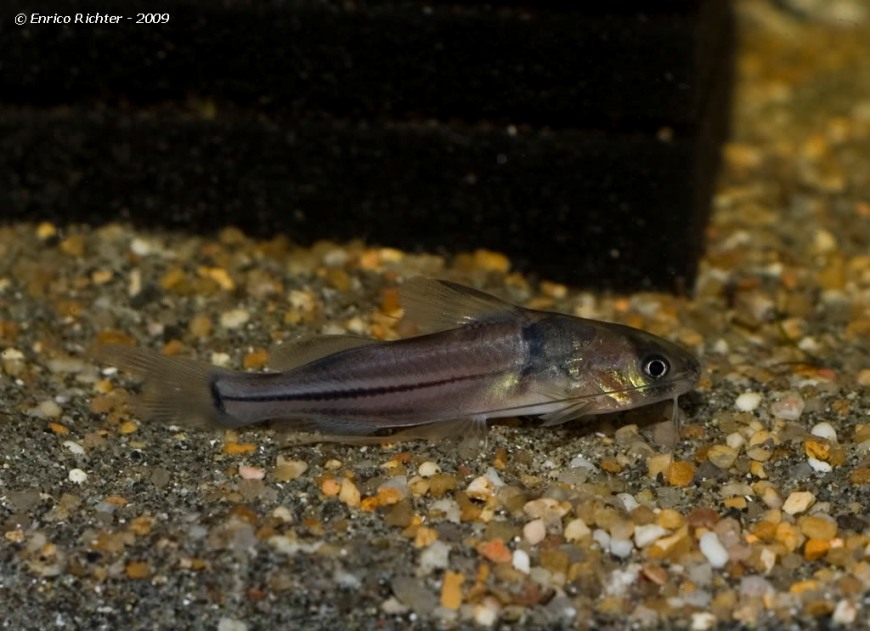
Brachyrhamdia meesi
Sands & Black, 1985
Max length61mm SL2.4in SLTank80 × 30cm31 × 12inTemp24–28°C75–82°FpH6.0–7.5Several Brachyrhamdia species have developed colour patterns that mimic syntopically-occurring Corydoras spp. throughout the life-cycle, and the remainder, including B. meesi, may mimic Otocinclus or smaller Corydoras spp. when juvenile. They're easily told apart from Corydoras by their significantly longer barbels and lack of scute-like plates on the body.
Euchilichthys guentheri
authority not recorded
Max length190mm SL7in SLTank120 × 30cm48 × 12inTemp23–27°C73–81°FpH6.4–7.4This is one of only 4 described species of Euchilichthys (although more have been discovered) and is very rare in the hobby. It can be distinguished from similar Chiloglanis species by its elliptical (as opposed to circular) mouthparts and larger adult size. Unlike the South American Loricariids, it lacks armoured scuting on the body....
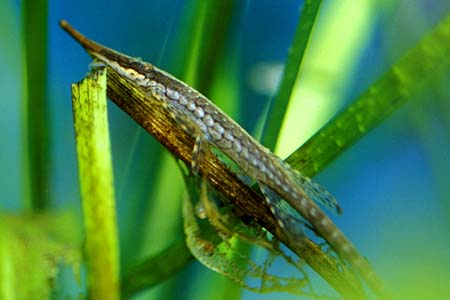
Farlowella vittataTwig Catfish
Myers, 1942
Max length150mm SL6in SLTank90 × 30cm36 × 12inTemp24–27°C75–81°FpH6.0–7.0Although often sold as the closely related F. acus (a species that is highly endangered and imported very rarely, if at all), F. vittata is the most common representative of the genus in hobbyists' tanks. The easiest way to distinguish the two is by comparing the shape of the rostrum, which is longer and more slender in vittata, although there are also differences in the arrangement of the ventral scutes. They are adapted for life among peripheral vegetation and tree roots along the edges o...
Megalodoras uranoscopusGiant Raphael Catfish
authority not recorded
Max length700mm SL28in SLTank240 × 120cm96 × 48inTemp21.1–25°C70–77°FpHnot recordedThis species is also known by the vernacular name "ripsaw catfish" (U.S.) and was often referred to by the scientific name M. irwini, now considered a junior synonym of M. uranoscopus, in older literature. Within the family Doradidae the genus Megalodoras is considered most closely-related to Lithodoras, Centrodoras and Platydoras, respectively. Members of the family Doradidae can be distinguished from all other Siluriformes by possession of a unique infranuchal scute, a dermal bon...