Results for “selective breeding”
Type a name: scientific, common, or one a species used to go by. Or narrow the catalogue with the filters.
Filters
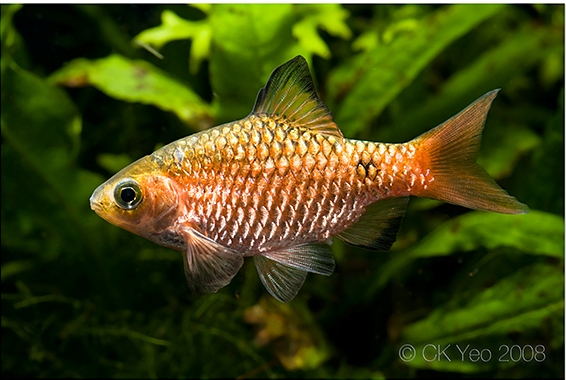
Pethia conchoniusRosy Barb
Hamilton, 1822
Max length100mm SL3.9in SLTank100 × 30cm39 × 12inTemp16–24°C61–75°FpH6.0–8.0Generally considered one of the hardiest small cyprinids available in the aquarium hobby, P. conchonius is an excellent choice for the beginner. Selective breeding has produced various ornamental strains including long-finned, 'veil-tail', 'super red', 'neon', and 'golden' forms. It's also been hybridised with some congeners although the offspring of such experiments are apparently infertile. It was formerly included in th...
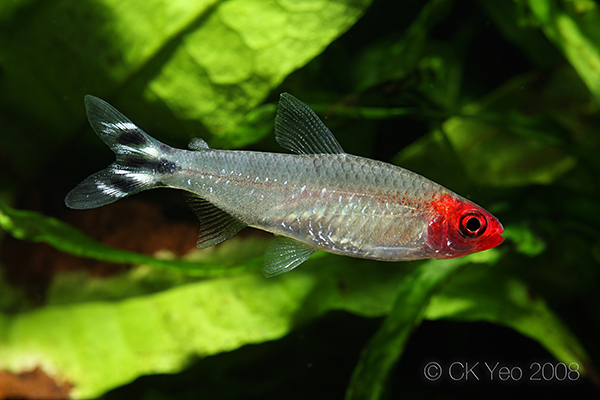
Hemigrammus bleheriFirehead Tetra
authority not recorded
Max length50mm SL2.0in SLTanknot recordedTemp23–26°C73–79°FpH5.5–7.0This is the species most commonly sold as 'rummy-nose tetra' in aquatic outlets. A selectively-bred "golden" variant has also been produced by commercial breeders and is available from time-to-time. The natural form is very similar to both the "true" rummy-nose, Hemigrammus rhodostomus and the 'false' rummy-nose, Petitella georgiae in appearance. The 3 species can distinguished by several factors. The first is by the extent to which the red colouration...
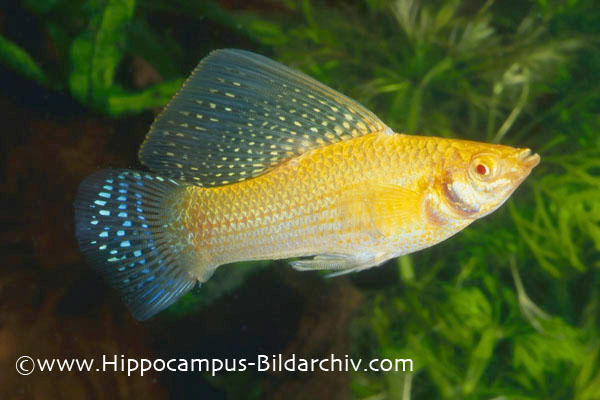
Poecilia veliferaGiant Sailfin Molly
Regan, 1914
Max length150mm SL6in SLTank91 × 38cm36 × 15inTemp22–28°C72–82°FpH7.0–8.5Another popular molly in the hobby, and another that has been selectively bred to produce several different varieties, such as albino, black, red etc. Some of these are the result of cross breeding with P.latipinna. There also exists a (in our opinion) grotesque 'balloon' variety of this fish in which the body is malformed and rounded, giving a balloon-like appearance. This condition can cause swimbladder and digestive problems and may bring about premature death. It is difficult to...
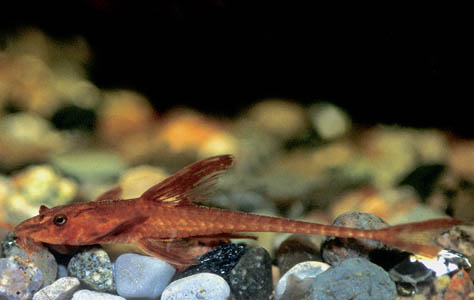
Rineloricaria sp.Red Lizard Catfish
authority not recorded
Max length110mm SL4in SLTank75 × 30cm30 × 12inTemp24–29°C75–84°FpH6.0–7.5As mentioned above, this fish may or may not be a man-made, or even hybrid, species. There are a few theories regarding this currently in circulation. Some believe that the fish are derived from a true wild caught fish, possibly of Paraguayan origin. These wild-caught red whiptails are supposed to breed true, producing all red fry, although there is no concrete evidence that they actually exist. The second possibility is that it's a selectively-bred form of Rineloricaria lanceolata, but thi...
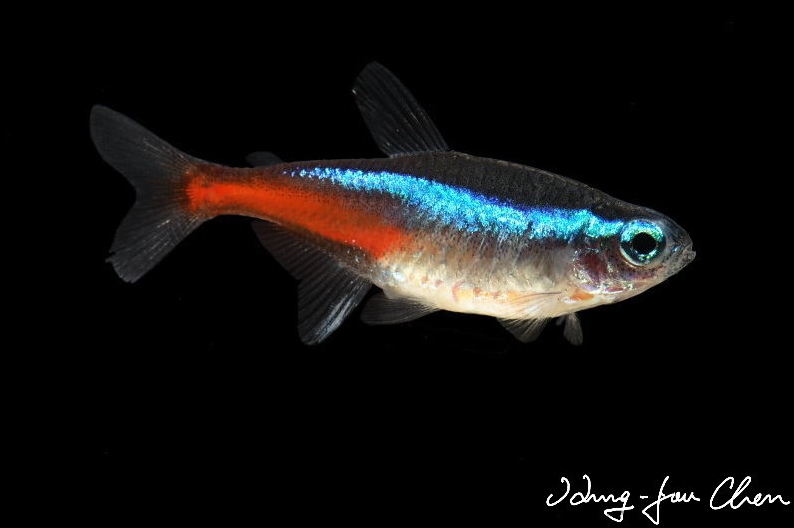
Paracheirodon innesiNeon Tetra
Myers, 1936
Max length30mm SL1.2in SLTank60 × 30cm24 × 12inTemp21–25°C70–77°FpH4.0–7.5One of the most popular and instantly recognisable fishes in the aquarium hobby, this species has been selectively-bred to produce a number of additional strains including albino, 'golden' (leucistic), short-bodied, long-finned and 'diamond' (in which the dorsal surface is covered in reflective scales). Unfortunately years of commercial breeding have somewhat affected the genetic vigour of the ornamental strain meaning morphological defects an...
Oreochromis mossambicusMozambique Mouthbrooder
authority not recorded
Max length390mm SL15in SLTank210 × 60cm84 × 24inTemp21–27°C70–81°FpH6.2–8.5One of the most invasive fish species in the world, O. mossambicus is one of the species farmed for supermarkets and restaurants across the globe. Several colour varieties have been selectively bred from the natural green fish to make the fish more appealing to consumers and unsurprisingly, it is these more brightly coloured forms which are usually seen in aquaria. Some of these variants are cross breeds with other species of Oreochromis. The destructive effect of O. mossambicus on non-nativ...