Results for “skin”
Type a name: scientific, common, or one a species used to go by. Or narrow the catalogue with the filters.
Filters
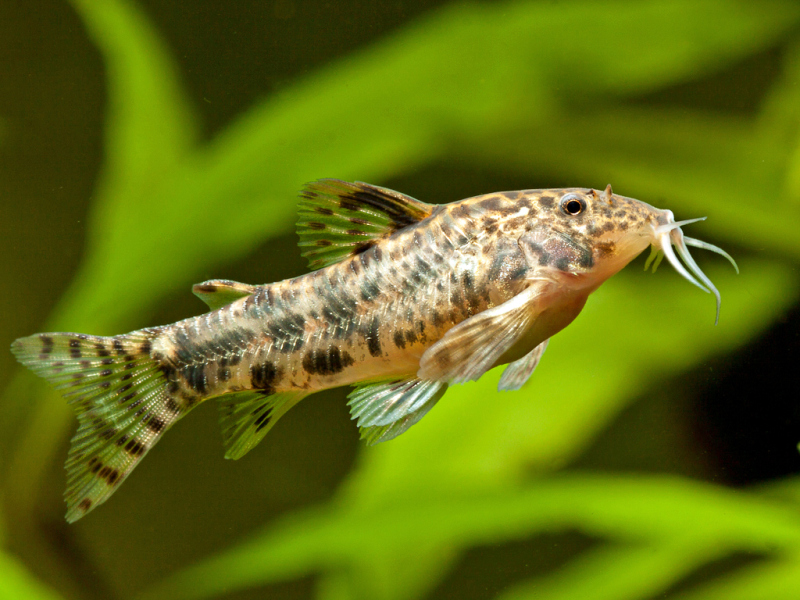
Aspidoras taurus
Lima & Britto, 2001
Max length55mm SL2.2in SLTank75 × 30cm30 × 12inTemp20–25°C68–77°FpH6.0–7.5A. taurus can be told apart from congeners by the following combination of characters: infraorbitals and preopercle covered by thick skin and not visible externally (vs. covered by thin skin and externally visible in other Aspidoras); nuchal plate reduced, covered by thick skin and not visible externally (vs. well developed, covered by thin skin and visible externally); lateral line absent posterior to two small lateral line ossicles (vs. lateral line present on at least first body plate).
Cetopsis coecutiensBlue Whale Catfish
authority not recorded
Max length265mm SL10in SLTank120 × 45cm48 × 18inTemp22–26°C72–79°FpH6.0–7.4An infrequently seen but very interesting oddball species for those who are looking for something a little different. To others, it might appear to be a rather nasty species. In the wild, it swims in voracious feeding groups. Apparently, it can home in on weakened or distressed fish as it has a very well developed sense of smell. Other specialisations include the tiny eyes and particularly slimy skin. The former are reduced in size and covered by a thin layer of skin so they are less likely to b...
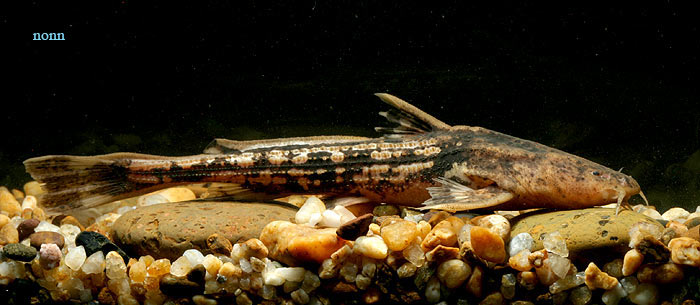
Acrochordonichthys gyrinusFalcate Chameleon Catfish
Vidthayanon & Ng, 2003
Max length80mm SL3.1in SLTank75 × 30cm30 × 12inTemp17.5–24°C64–75°FpH5.0–7.0As in other members of the genus body colouration in this species is variable, even among individuals collected from a single locality, although a few regularities have been observed which can be used to distinguish certain species from one another. This is thought related to the fact that Acrochordonichthys spp. periodically shed their skins and appear paler post-moulting.
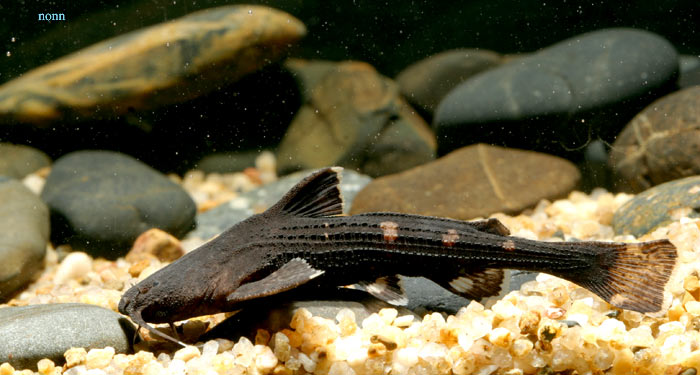
Acrochordonichthys rugosusAsian Banjo Catfish
Bleeker, 1846
Max length110mm SL4in SLTank90 × 30cm36 × 12inTemp17.5–24°C64–75°FpH5.0–7.0This is the most commonly-encountered representative of the genus in the aquatic trade though is by no means common. As in other members of the genus body colouration is highly variable, even among individuals collected from a single locality, although a few useful regularities have been observed which can be used to distinguish certain species. This is thought related to the fact that Acrochordonichthys spp. periodically shed their skins and appear paler post-moulting. A. rugosus lends its ...
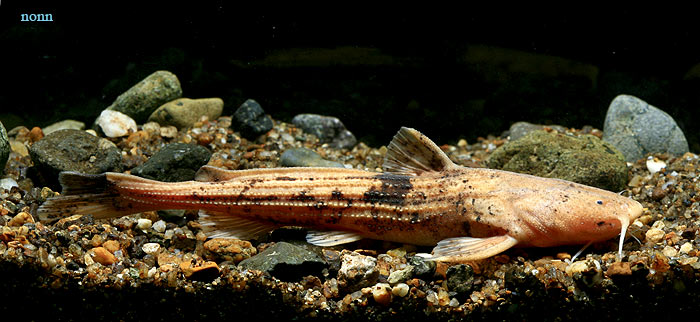
Acrochordonichthys septentrionalisMae Klong Chameleon Catfish
Ng & Ng, 2001
Max length100mm SL3.9in SLTank90 × 30cm36 × 12inTemp17.5–24°C64–75°FpH5.0–7.0As in other members of the genus body colouration in this species is variable, even among individuals collected from a single locality, although a few regularities have been observed which can be used to distinguish certain species from one another. This is thought related to the fact that Acrochordonichthys spp. periodically shed their skins and appear paler post-moulting.
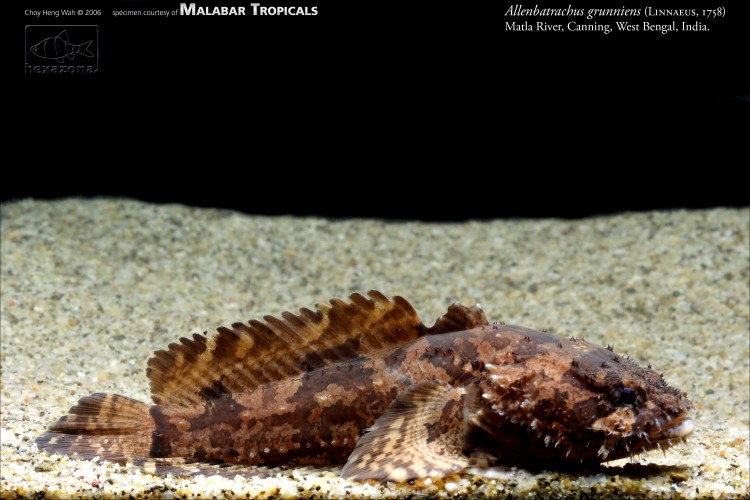
Allenbatrachus grunniensFreshwater Toadfish
Linnaeus, 1758
Max length300mm SL12in SLTanknot recordedTemp23–28°C73–82°FpH7.5–9.0This species is relatively common in the aquarium hobby but contrary to popular belief is not venomous in any way. Its dorsal and opercular spines can pierce the skin, however, meaning extreme caution is necessary when netting it or performing aquarium maintenance. The genus Allenbatrachus was erected in 1997 to accom...
Corydoras paleatusPepper Cory
authority not recorded
Max length70mm SL2.8in SLTank61 × 38cm24 × 15inTemp22–26°C72–79°FpH6.0–7.0Corydoras are members of the armoured catfish family. The genus name means "helmet skin" and the fish live up to this name as they are rather tough little fish. They also have spines in the leading rays of the pectoral fins to deter larger predators from eating them. Corydoras are sometimes observed taking a gulp of air at the water surface: this is because they can absorb oxygen through their gut. It is not known why cories do this even on oxygen rich waters. Along with the bronze ...
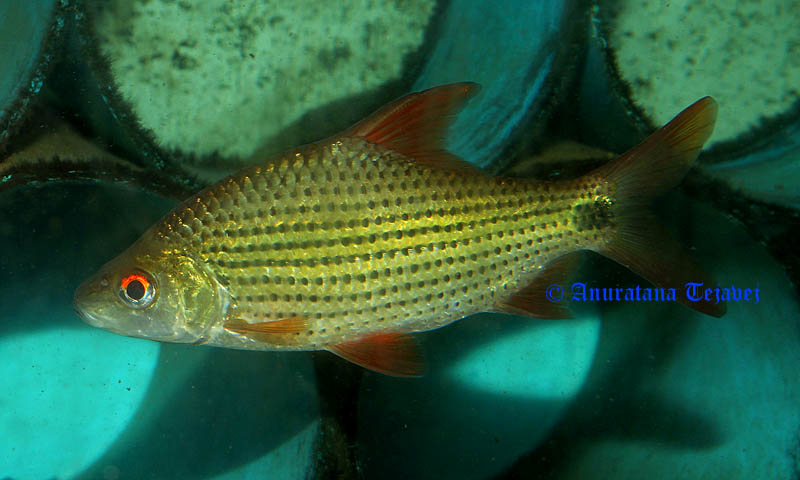
Cyclocheilichthys apogonBeardless Barb
Valenciennes, 1842
Max length180mm SL7in SLTank180 × 45cm72 × 18inTemp20–27°C68–81°FpH5.5–8.0In the aquarium trade this species may also be seen on sale as 'skinhead barb'. As with others in the genus little has been written regarding its captive care but it makes a peaceful and unusual addition to larger aquaria. The best way of obtaining it may be to keep an eye on shipments of wild fishes from Indochina and the Greater Sunda Islands as it's rarely imported in large numbers and most often arrives as bycatch.
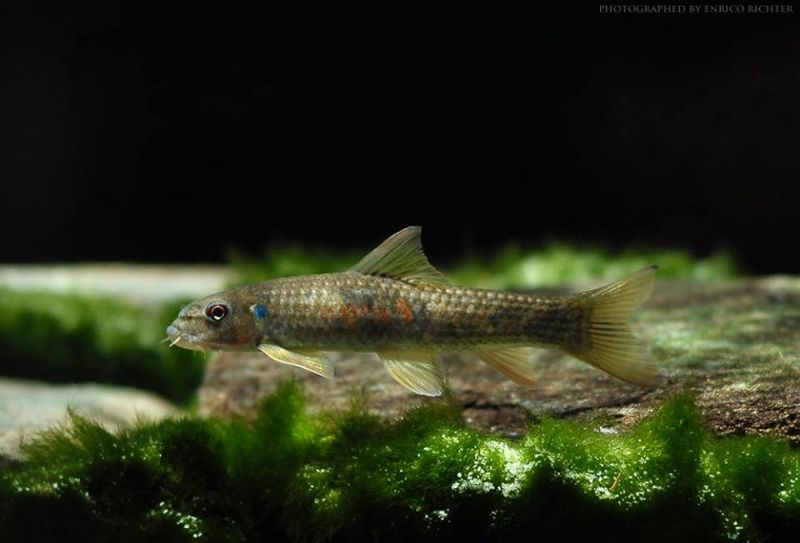
Garra rufaDoctor Fish
Heckel, 1843
Max length120mm SL5in SLTank120 × 45cm48 × 18inTemp14–20°C57–68°FpH6.0–8.0Fish referred to as G. rufa are marketed worldwide as 'doctor fish', with the questionable ability to remove dead and scaly skin and ease complaints such as psoriasis. These fish are quite commonly available in the aquarium trade as well, although in both cases it is unclear whether they represent G. rufa or another, related species.
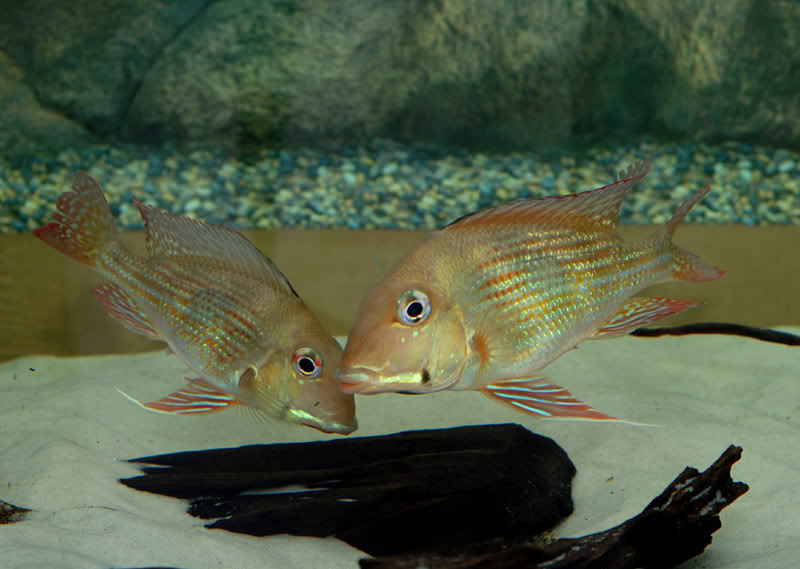
Geophagus brachybranchus
Kullander & Nijssen, 1989
Max length200mm SL8in SLTank180 × 60cm72 × 24inTemp26–30°C79–86°FpH5.0–7.0This species is generally rare in the aquarium hobby though oddly appears to be one of the commoner species in Australia where it's often referred to by the vernacular name 'black-throated eartheater'. It's a member of the nominal G. surinamensis 'group' of closely-related species within the genus and can be identified by a combination of characters including: presence of dark preopercular markings; no vertical bars on the flanks even when stressed/preserved; base of filaments on the first gill arch mostly covered by a flap of skin; exposed part of bra...
Hemigrammus rodwayiGolden Tetra
authority not recorded
Max length55mm SL2.2in SLTank60 × 38cm24 × 15inTemp24–28°C75–82°FpH5.5–7.0This species has something of a confused taxonomic past. The standard colour of the fish is a rather dull silvery grey, with a little colour in the fins. However in certain areas in nature, the species is sensitive to a particular type of trematode parasite. This causes a reaction in the skin of the fish, resulting in a spectacular metallic gold colouration formed by deposits of guanin. When initially discovered, these golden fish were mistakenly described as a new species, Hemigrammus armstron...
Macrognathus zebrinusZebra Spiny Eel
authority not recorded
Max length460mm SL18in SLTank120 × 45cm48 × 18inTemp23–26°C73–79°FpH6.5–7.5One of the newer and prettier spiny eels in the hobby, M. zebrinus was previously considered a member of the closely related Mastacembelus genus. Care should be exercised when handling spiny eels, as the common name is derived from the sharp dorsal rays that can easily puncture the skin of a human....
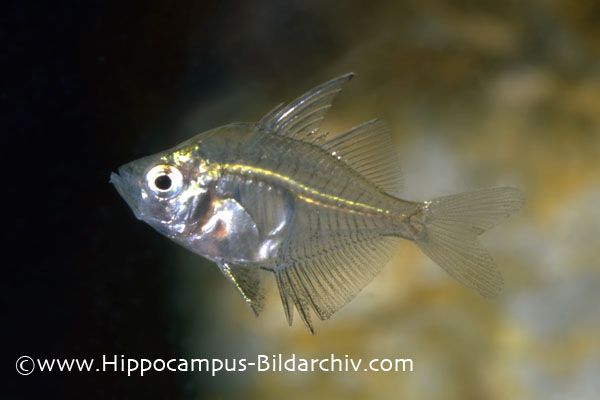
Parambassis rangaIndian Glass Fish
authority not recorded
Max length80mm SL3.1in SLTank80 × 30cm31 × 12inTemp20–30°C68–86°FpH6.5–8.0Previously known as Chanda ranga, the common name of this species arose because it's translucent skin means that the bone structure and internal organs are clearly visible. For many years it has been artificially injected with luminous dyes on fish farms in Asia and then sold as "Painted" glass fish or "Disco fish". This abhorrent act involves injecting the fish repeatedly with a large needle and most fish do not survive more than a few months afterwards. Whilst painted ...
Potamotrygon orbignyiSmooth-back Stingray
authority not recorded
Max length375mm SL15in SLTanknot recordedTemp24–26°C75–79°FpH6.0–7.5P. orbignyi is one of the species often labelled as "teacup ray" in dealers' tanks. It can be tricky to identify when young, and we have seen it misidentified on numerous occasions. The species it resembles most closely is P. humerosa, although these can be distinguished by examining the skin of the fish. The texture of this is typically rough in P. humerosa and noticeably smooth in P. orbignyi. Provided you're sure what you're buying, it is one of the best species for t...
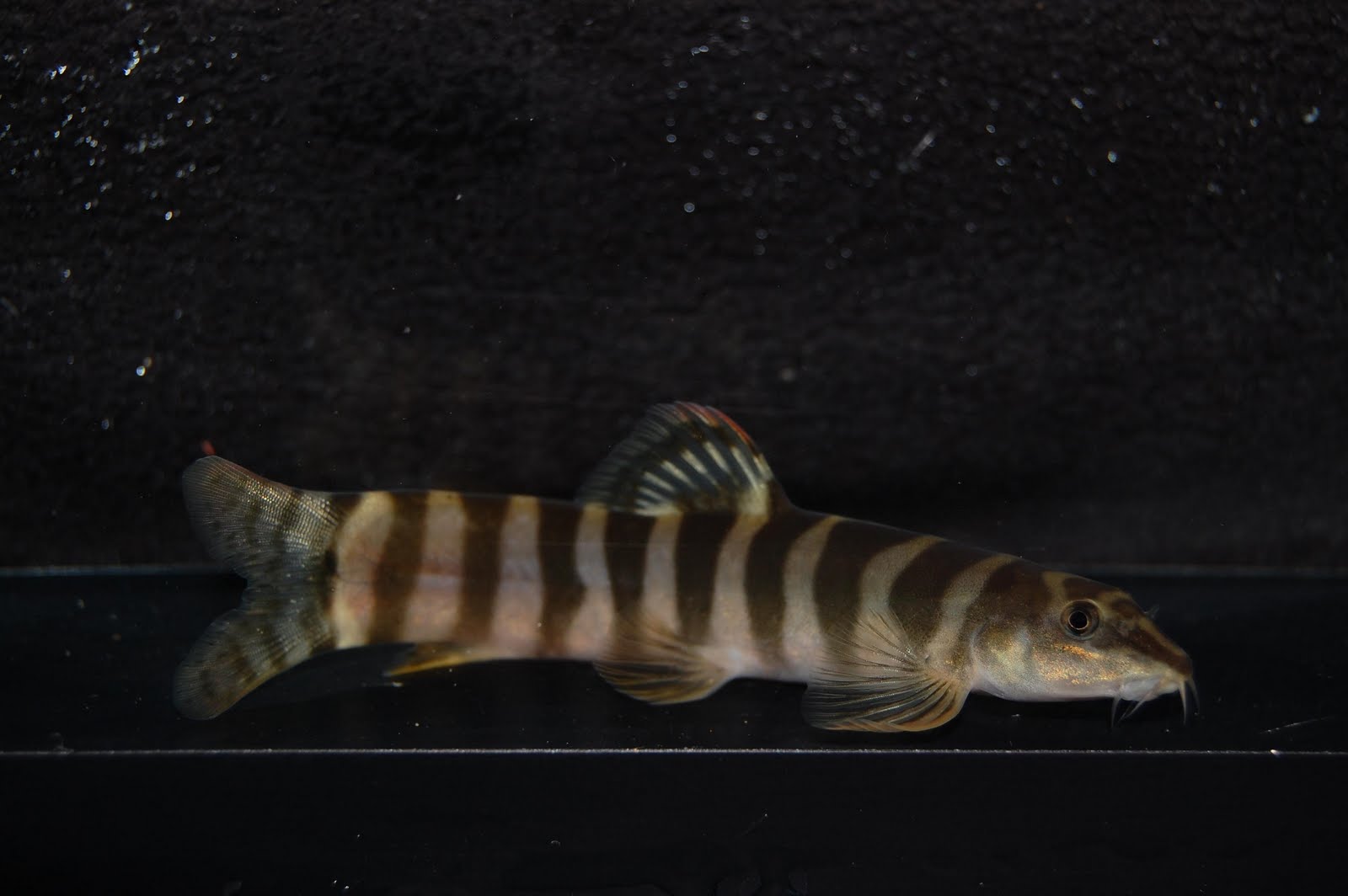
Schistura hypsiuraSuper Convict Loach
Bohlen, Ŝlechtová & Udomritthiruj, 2014
Max length73mm SL2.9in SLTank80 × 30cm31 × 12inTemp18–24°C64–75°FpH6.0–7.5It can be distinguished from congeners by the following combination of characters: caudal peduncle deep, ≥ the deepest part of the remainder of the body; no dorsal or ventral skin crests along the caudal peduncle; caudal-fin deeply forked, the outermost principal rays in the upper and lower lobes more than twice the length of the innermost: suborbital flap in males present; a well-developed suborbital groove in females; 6–8 very regular bars along the flank.
Silurus glanisWels catfish
authority not recorded
Max length5000mm SL197in SLTanknot recordedTemp3.9–20°C39–68°FpHnot recordedJuvenile specimens are occasionally available in the aquarium trade but this species is clearly not a viable subject for the vast majority of private aquarists. While it's considered a sport fish in some countries (France, Italy, Spain, UK) it's flesh and eggs are considered a delicacy in others (Hungary, Poland, Slovakia, Lithuania) and its skin is also used in the manufacture of leather and glue. The family Siluridae comprises those catfsh species commonly referred to as freshwate...