Results for “soft ray”
Type a name: scientific, common, or one a species used to go by. Or narrow the catalogue with the filters.
Filters
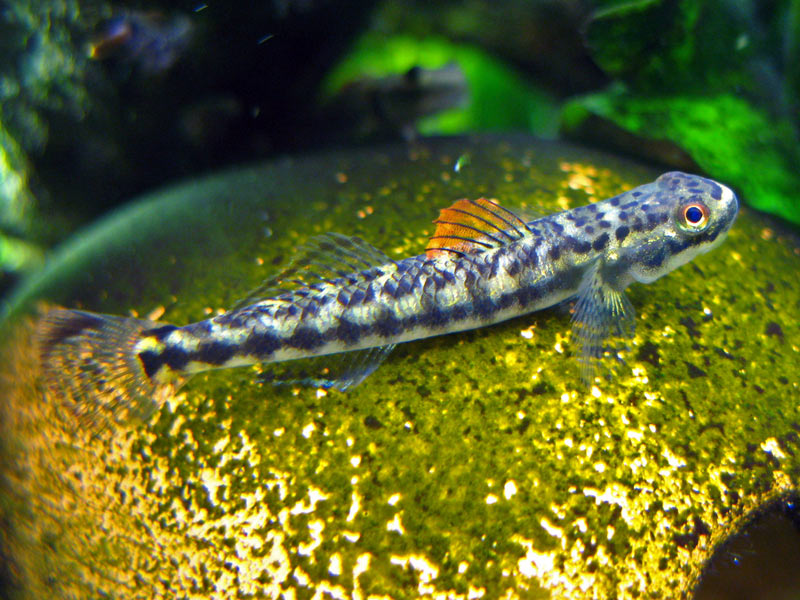
Stiphodon maculidorsalisOrange-fin Stiphodon
Maeda & Tan, 2013
Max length80mm SL3.1in SLTank80 × 30cm31 × 12inTemp20–28°C68–82°FpH6.5–7.5This species was referred to as S. sp. 'orange fin' or S. sp. 'ST01' prior to being offically named and is one of the more commonly-traded members of the genus, though often in batches containing only one gender, a mixture of species, or misidentified under an incorrect name such as S. zebrinus. It can be told apart from congeners by the following combination of characters: usually 9 soft second dorsal-fin rays; 15 soft pectoral-fin rays; first dorsal-fin in male poin...
Rasbora paucisqualis
authority not recorded
Max length40mm SL1.6in SLTank60 × 30cm24 × 12inTemp22.2–25.6°C72–78°FpHnot recordedRainboth's 'Fishes of the Cambodian Mekong' characterised members of Rasbora by possession of an unbranched, non-spiny firstray and seven soft dorsal rays, origin of thein the middle of the body, five branchedrays, a small mouth not extending below the eye and a lack of barbels. It's long been recognised as a polyphyletic lineage as noted by Kottelat (1999) amongst others, and in 2010 the results of a phylogenetic analysis by T. Y. Liao et al. suggested a number of changes in...
Rasbora rasboraGangetic Scissortail Rasbora
authority not recorded
Max length130mm SL5in SLTank120 × 45cm48 × 18inTemp20–25°C68–77°FpHnot recordedThis species is rarely seen in the trade and little has been written regarding its captive care. It's possible that several colour forms may exist depending on collection locality. Rainboth's 'Fishes of the Cambodian Mekong' characterised members of Rasbora by possession of an unbranched, non-spiny firstray and seven soft dorsal rays, origin of thein the middle of the body, five branchedrays, a small mouth not extending below the eye and a lack of barbels. It's long b...
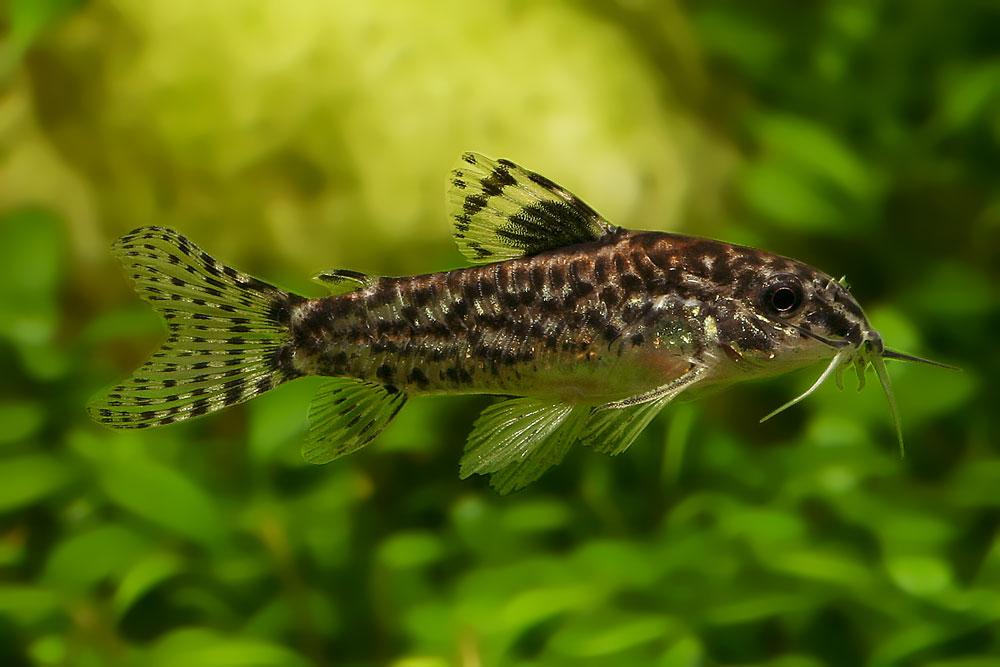
Aspidoras pauciradiatus
Weitzman & Nijssen, 1970
Max length35mm SL1.4in SLTank60 × 30cm24 × 12inTemp20–27°C68–81°FpH6.0–7.0This species is sometimes referred to as 'false corydoras' or 'sixray corydoras'. A. pauciradiatus can be distinguished from congeners by possession of 6 soft dorsal-fin rays, as opposed to 7 in other Aspidoras species, plus its distinctive colour pattern. Aspidoras species are distinguished from the very...
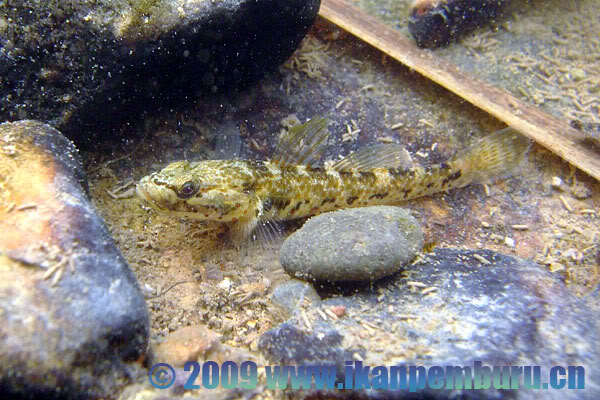
Rhinogobius lentiginis
Wu & Zheng, 1985
Max length32mm SL1.3in SLTank60 × 30cm24 × 12inTemp16–24°C61–75°FpH6.0–8.0It's unlikely that this species has been in the aquarium hobby given its natural range and the lack of commercial fishing for the ornamental trade in that area. Among congeners it's most similar to R. davidi but can be told apart by presence of 8 (vs. always 9 in R. davidi) soft dorsal-fin rays, 10 (vs. 11-12) transverse scale rows, and 6-7 (vs. 8-10) scales between the first dorsal-fin origin and upper pectoral-fin base.