Results for “specific name”
Type a name: scientific, common, or one a species used to go by. Or narrow the catalogue with the filters.
Filters
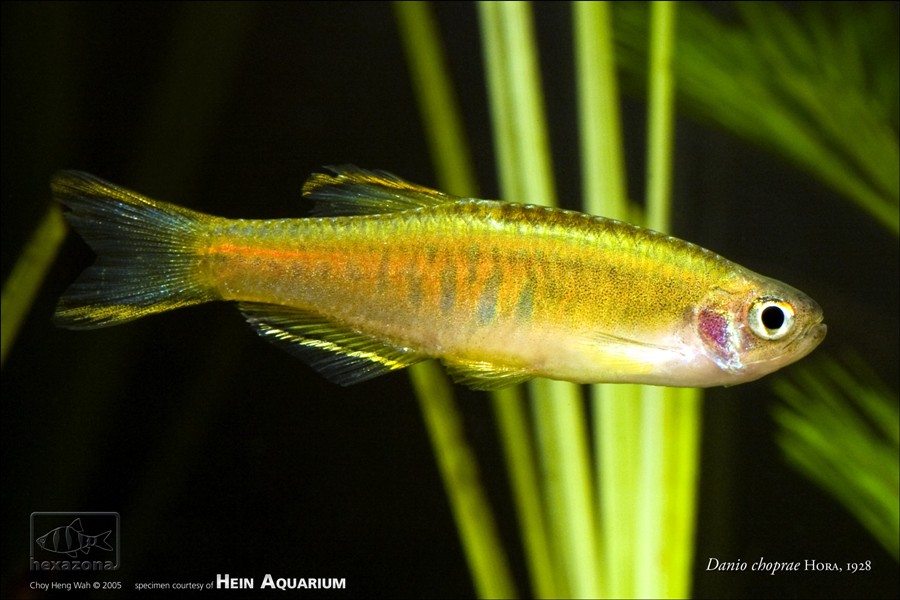
Celestichthys chopraeGlowlight 'Danio'
Hora, 1928
Max length30mm SL1.2in SLTank80 × 30cm31 × 12inTemp16–26°C61–79°FpH6.0–8.0C. choprae has only been available since 2003 but has quickly established itself as one of the most popular small danios in the hobby. There has been some confusion regarding the correct spelling of the specific name with many resources listing it incorrectly as "choprai". Briefly, when Hora described the species he named it after a man, Dr B. N. Chopra, meaning that "choprai" is technically correct as under ICZN rules the specific name ought to follow the gender of the indiv...
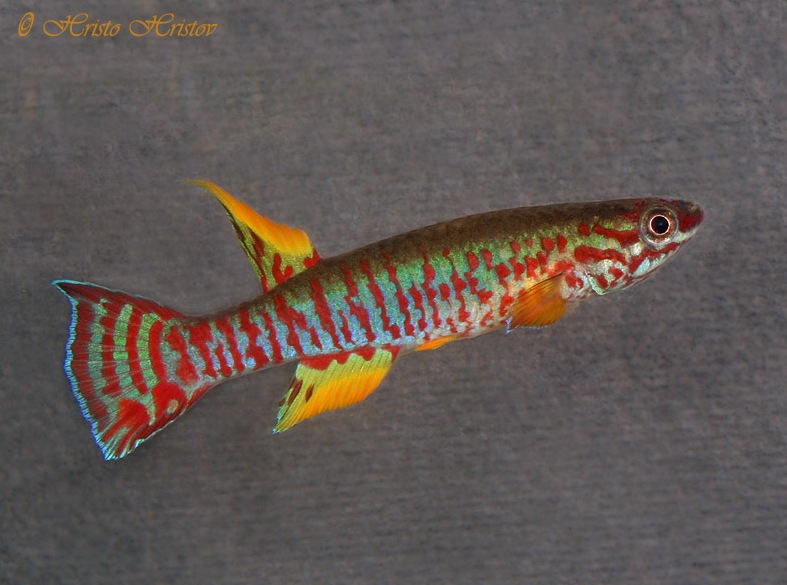
Aphyosemion bualanumBouala Lyretail
Ahl, 1924
Max length50mm SL2.0in SLTanknot recordedTempnot recordedpHnot recordedDescribed from 'Buala, Cameroon', which corresponds to modern-day Bouala in Central African Republic. It's known distribution includes parts of northern Cameroon, western Central African Republic, southeastern Chad and possibly eastern Nigeria in the upper Benue and Mayo Kébbi river systems. The specific name was mis-used to refer to various populations of the congener A. elberti prior to 1990, and we've been unable to confirm if the specimen pictured here is correctly identified or not. It is listed as 'endangered' by the IUCN.
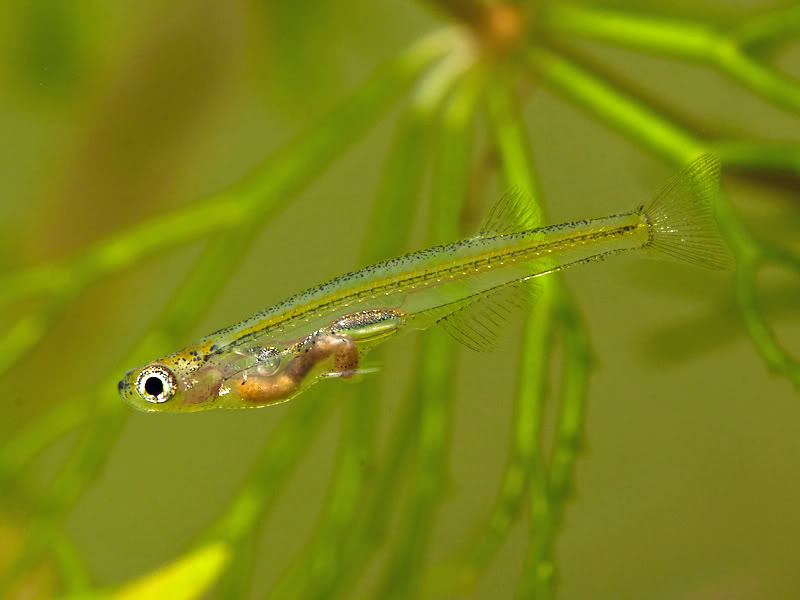
Danionella dracula
Conway & Rüber, 2009
Max length17mm SL0.7in SLTank45 × 30cm18 × 12inTemp20–26°C68–79°FpH6.5–7.5This species is available in the trade on occasion and has been sold as Danionella sp. 'neon green' or 'flourescent green'. The specific name was inspired by its jaw morphology which according to current knowledge is unique among cypriniform fishes. Both upper and lower jaws contain a series of toothlike odontoid processes; these are only rudimentary in females but in males appear to form rows of teeth of which the front pair is large and fang-like. The upper fangs project th...
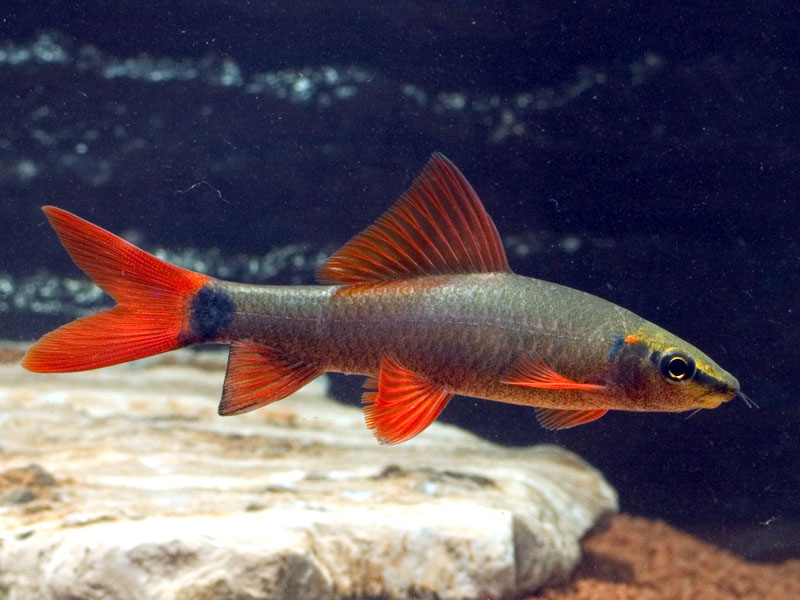
Epalzeorhynchos frenatumRainbow Shark
Fowler, 1934
Max length150mm SL6in SLTank120 × 45cm48 × 18inTemp20–26°C68–79°FpH6.5–8.0The ornamental albino variant is widely-available and has become extremely popular in the hobby and there is a commercially-produced anerythristic (lacking red pigment) mutation that has pale yellowish fins and has sometimes been misidentified as E. munense. Also worthy of note is that the specific name is sometimes misspelled 'frenatus'. Most members of Epalzeorhynchos were formerly regarded as Labeo spp. and are thus referred to as such in older literature. According to Rainboth (1996) they're characterised by absence of a dorsal spine...
Nanochromis transvestitus
authority not recorded
Max length70mm SL2.8in SLTanknot recordedTemp24–27°C75–81°FpH4.0–7.0One of our favourite dwarf cichlids, N. transvestitus is a truly stunning fish when in good condition. However, it is not recommended to the beginner due to its very specific water requirements. The scientific name is derived from the fact that the female is the more colourful fish, making it something of an oddity....