Results for “striated”
Type a name: scientific, common, or one a species used to go by. Or narrow the catalogue with the filters.
Filters
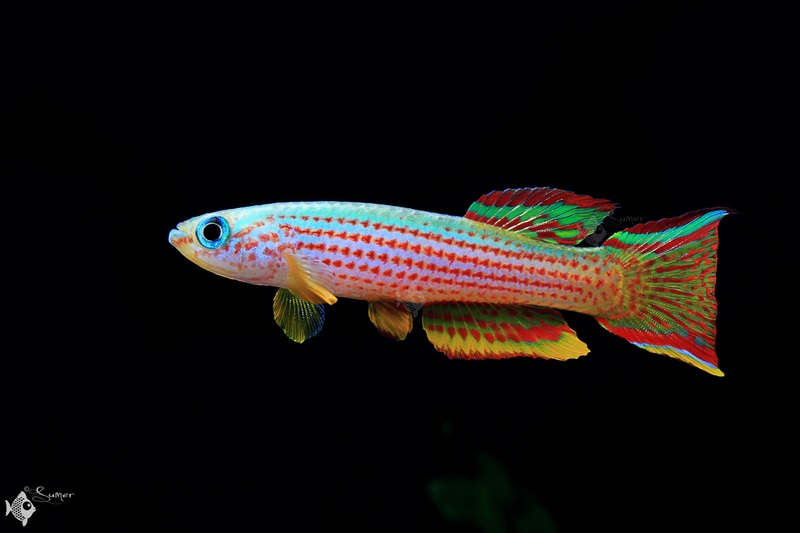
Aphyosemion striatumRed-Striped Lyretail
Boulenger, 1911
Matched on Haplochilus striatus, a name it was formerly known by
Max length50mm SL2.0in SLTank45 × 30cm18 × 12inTemp20–26°C68–79°FpH6.5–7.5Appears restricted to the area between the lower Mitmele River, Equatorial Guinea and the lower Ogooué basin in Gabon, including coastal drainages such as the Mbei, Komo and Gabon watersheds in between. Type locality is 'Abanga River, between first and second rapids, Ogowe River system, Gabon', corresponding to the Abanga River bas...
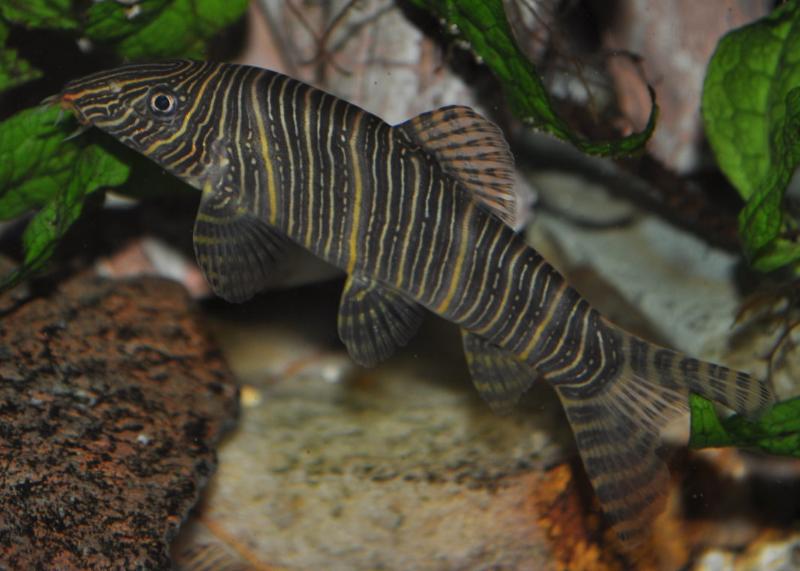
Botia striataZebra Loach
Narayan Rao, 1920
Matched on Botia striata kolhapurensis, a name it was formerly known by
Max length90mm SL3.5in SLTank120 × 30cm48 × 12inTemp21–26°C70–79°FpH6.0–7.5In a survey of fish diversity in the Bhadra River (which joins the Tunga to form the Tungabhadra) it was recorded alongside numerous other species including Puntius chola, Balitora mysorensis, and Mystus armatus. Dry season water paramaters were temperature 69.8°F/21°C, pH 7.0, hardness ~ 2.5°. The substrate was composed of bedrock, boulders, cobbles, gravel, sand and leaf litter in descending order of abundance with a maximum depth of around...
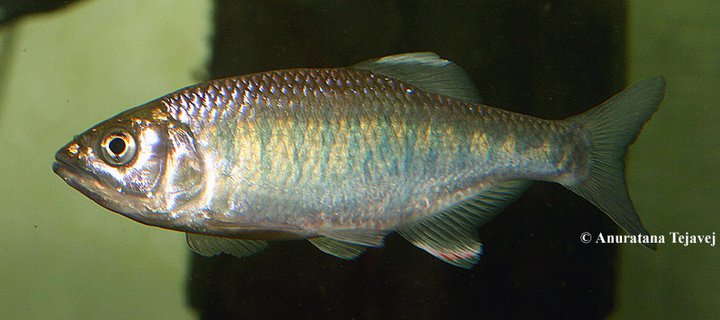
Barilius gatensisMalabar Baril
Valenciennes, 1844
Max length130mm SL5in SLTank150 × 60cm60 × 24inTemp18–26°C64–79°FpH6.0–7.5This species is traded very occasionally, sometimes under the alternative vernacular names of 'river baril, 'river carp-baril', or 'striated hill trout'. It can be told apart from congeners by the following combination of characters: 1 pair of minute rostra...
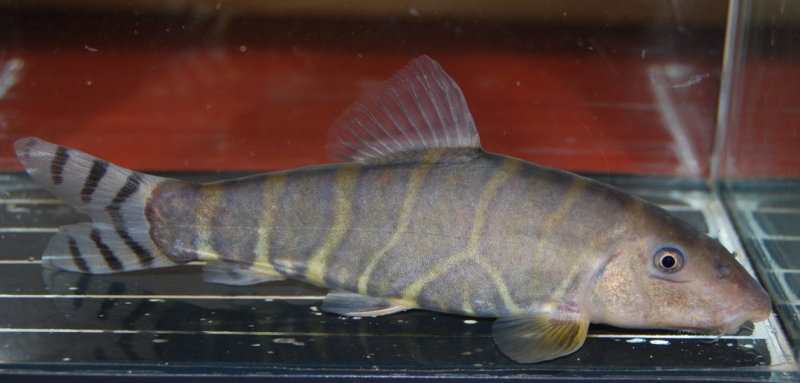
Botia darioBengal Loach
Hamilton, 1822
Max length130mm SL5in SLTank120 × 45cm48 × 18inTemp23–26°C73–79°FpH6.0–7.5Following Grant (2007) this species is included in the B. dario complex of closely-related species within the genus alongside B. striata. They're characterised by body patterning consisting of a base yellow to golden colour with 7-9 blue, green, grey or black body bars usually with thinner, lighter bars between. In some individuals the...
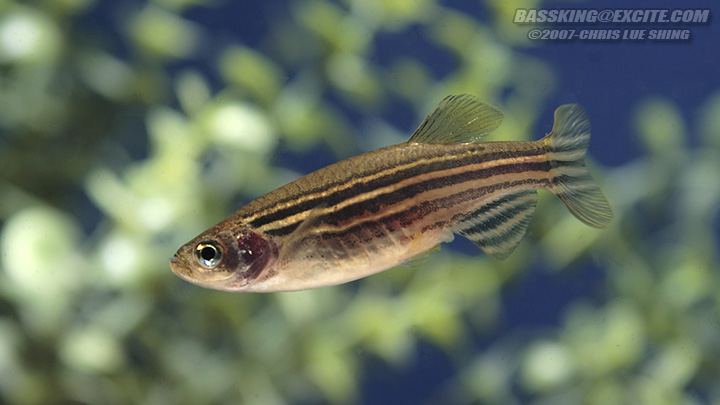
Brachydanio rerioZebra 'Danio'
Hamilton, 1822
Matched on Perilampus striatus, a name it was formerly known by
Max length50mm SL2.0in SLTank90 × 30cm36 × 12inTemp18–25°C64–77°FpH6.0–8.0This species is very peaceful indeed and can be combined with many of the most popular fish in the hobby including other small cyprinids as well as tetras, livebearers, rainbowfishes, anabantoids, catfishes and loaches. As always when selecting a compatible community of...
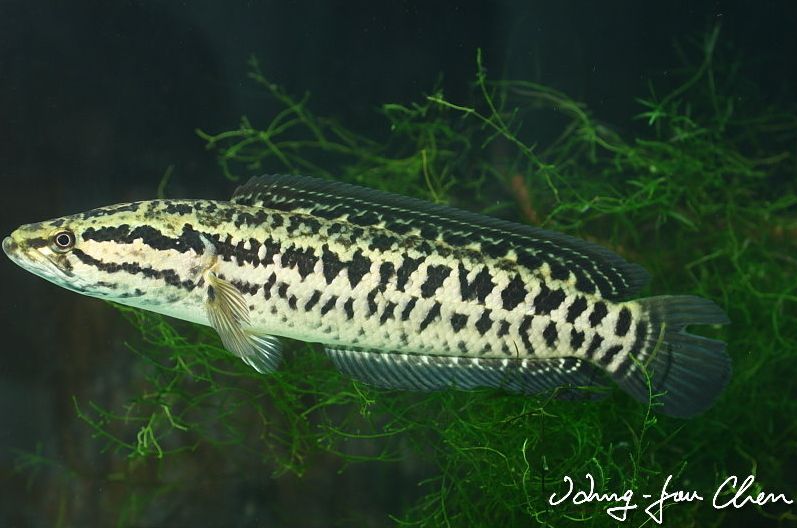
Channa maculataBlotched Snakehead
Lacepède, 1801
Matched on Channa striata, a name it was formerly known by
Max length300mm SL12in SLTanknot recordedTempnot recordedpHnot recordedThis species is frequently confused with C. argus but can be distinguished by the following characters: dorsal-fin rays 38-45 (vs. 47-50 in C. argus); anal fin rays 26-29 (vs. 31-36); lateral line scales 50-56 (vs. 60-66); 2-3 rounded blotches on caudal peduncle (vs. no blotches on caudal peduncle). It is widely-distributed in Pacific coastal drainages of southeastern China (e.g. the Yangtze, Minjiang, Hangjiang River, and Pearl (Nanjiu...
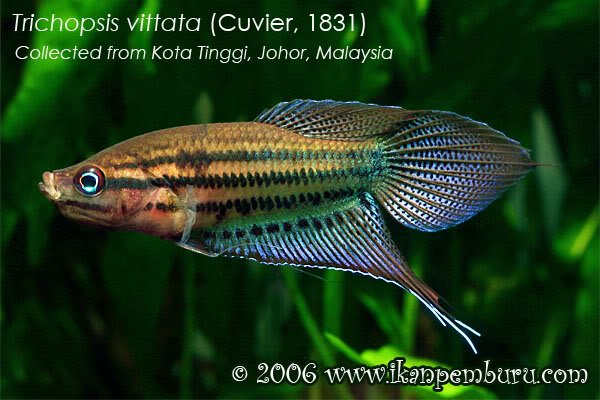
Trichopsis vittataCroaking gourami
Cuvier, in Cuvier & Valenciennes, 1831
Matched on Trichopus striatus, a name it was formerly known by
Max length70mm SL2.8in SLTank60 × 30cm24 × 12inTemp22–28°C72–82°FpH5.0–7.5The common name is derived from the ability of genus members to produce audible sounds via a specialised pectoral mechanism which is unique within the family Osphronemidae. The structure comprises modified pectoral-fin tendons and muscles which are stretched and plucked by basal elevations of two fin rays in a similar way to guitar strings via rapid beating of the fins. The pectoral-fins beat alternately, each able to generate short or long bursts of sound. These sounds are produced by both sexes, predom...