Results for “strip”
Type a name: scientific, common, or one a species used to go by. Or narrow the catalogue with the filters.
Filters
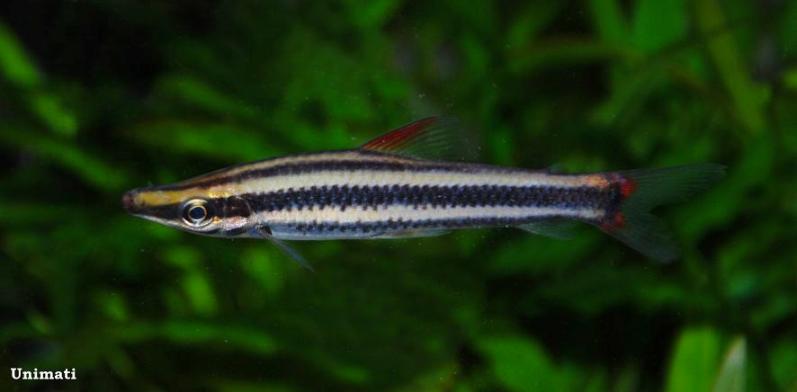
Anostomus anostomusStriped Headstander
Linnaeus, 1758
Matched on the common name Striped Headstander
Max length200mm SL8in SLTank120 × 30cm48 × 12inTemp20–28°C68–82°FpH5.5–7.5A biotope-style set-up could consist of a sandy substrate, piles of smooth rocks and driftwood roots and branches, some of which should penetrate the water surface. Aquatic vegetation can be included if you wish but is likely to be eaten.
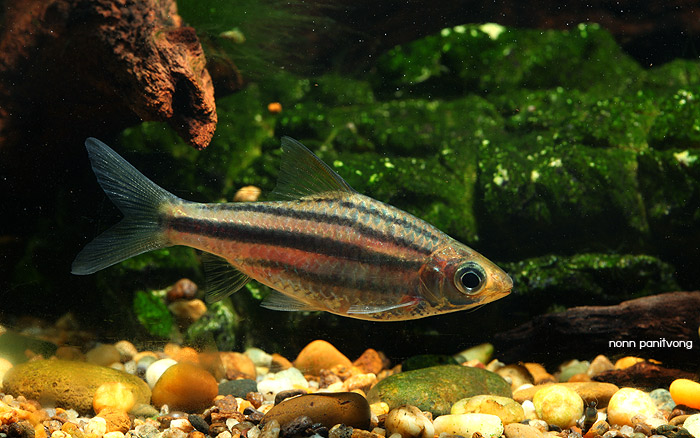
Desmopuntius johorensisStriped Barb
Duncker, 1904
Matched on the common name Striped Barb
Max length100mm SL3.9in SLTank120 × 45cm48 × 18inTemp20–25°C68–77°FpH5.0–7.0D. johorensis can be distinguished by the following combination of characters: 5-6 dark, lateral stripes on body in specimens larger than 40 mm; stripes immediately above and below the central stripe (stripes '+1' and '-1', respectively) located on scale rows +2 and -2, not touching dorsal and ventral midlines (except in some small specimens from Peninsular Malaysia); stripes broad, typically between 0.5-1 scale rows deep...
Chaetostoma formosaeStriped Bulldog Pleco
Ballen, 2011
Matched on the common name Striped Bulldog Pleco
Max length105mm SL4in SLTank120 × 30cm48 × 12inTemp20–24°C68–75°FpH6.5–7.8This species is traded under a number of English vernacular names, of which some others include 'blonde bulldog pleco', 'blonde rubber pleco', 'blonde rubbernose pleco', 'striped rubber pleco', and 'striped rubbernose pleco'. It may also be seen referred to as 'L146', 'L146a', or 'L187b', these codes having been used for it in the Aqualog series of books. It can be told apart from all congeners except C. anale and C. jegui by...
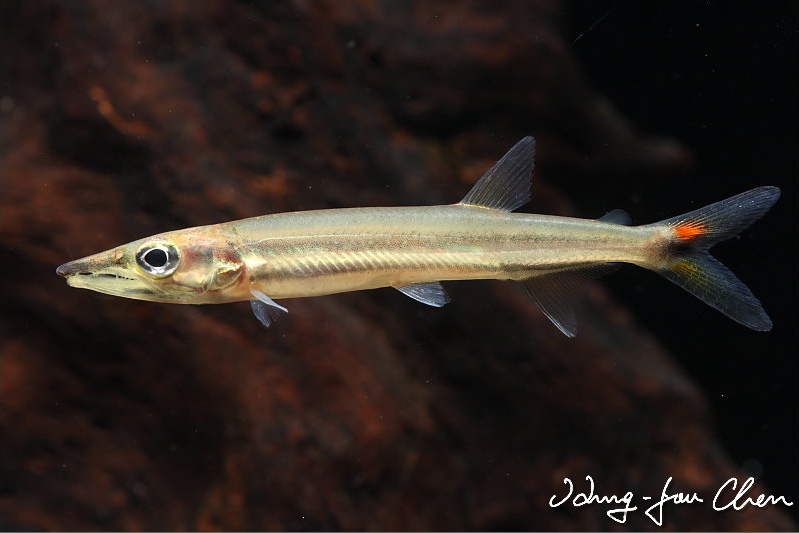
Acestrorhynchus isalineaeStriped Barracuda Tetra
Menezes & Géry, 1983
Matched on the common name Striped Barracuda Tetra
Max length105mm SL4in SLTank120 × 45cm48 × 18inTemp24–28°C75–82°FpH6.0–7.5This species is a member of the putative A. nasutus group of closely-related species within the genus alongside A. nasutus, A. maculipinna and A. isalineae. These are all characterised by possession of two dark, longitudinal stripes, one running from the tip of the snout to the base and the other from the posterior edge of the lower maxilla to the underside of the caudal peduncle.
Pareutropius buffeiThree Striped African Glass Catfish
authority not recorded
Matched on the common name Three Striped African Glass Catfish
Max length80mm SL3.1in SLTank75 × 30cm30 × 12inTemp24–28°C75–82°FpH6.0–7.5Formerly known as Eutropiellus buffei, this midwater swimming, diurnal catfish is very often sold as "Debauwi catfish". Pareutropius debauwi is a closely related species which is, in fact, seldom imported. Adults of the two species can be distinguished by several characteristics. In buffei there are three lateral stripes along the body, whilst debauwi possesses only one. Buffei also has black spots in the upper and lower parts of the caudal fin, and the fin itself has rounded lobes. Th...
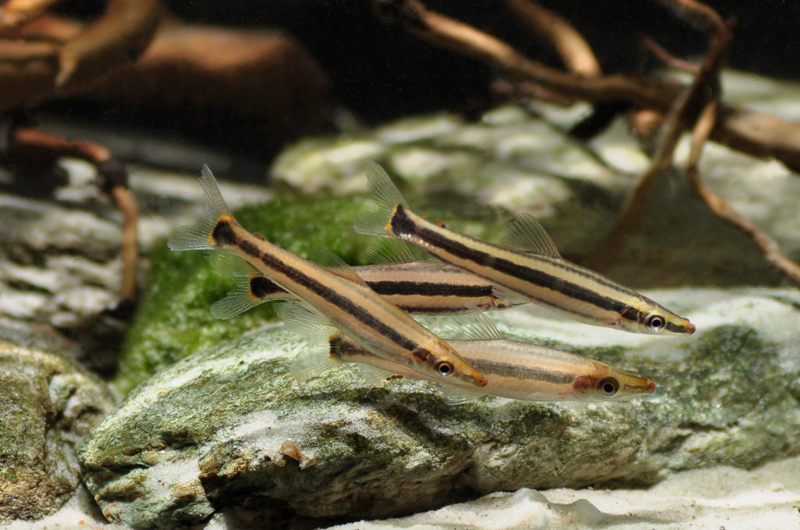
Anostomus ternetziGold-Striped Headstander
Fernández-Yépez, 1949
Matched on the common name Gold-Striped Headstander
Max length125mm SL5in SLTank120 × 30cm48 × 12inTemp20–28°C68–82°FpH5.5–7.5This species is widely-distributed in the Río Orinoco system in Brazil, Colombia and Venezuela plus coastal drainages in Guyana, Suriname and French Guiana including the Essequibo and Mazaruni. Type locality is 'Palital, Estado Guárico, Venezuela' which appears to correspond to a wetland called Esteros de Palital in the Aguaro-Guariquito National Park of Guárico state, northern Venezuela.
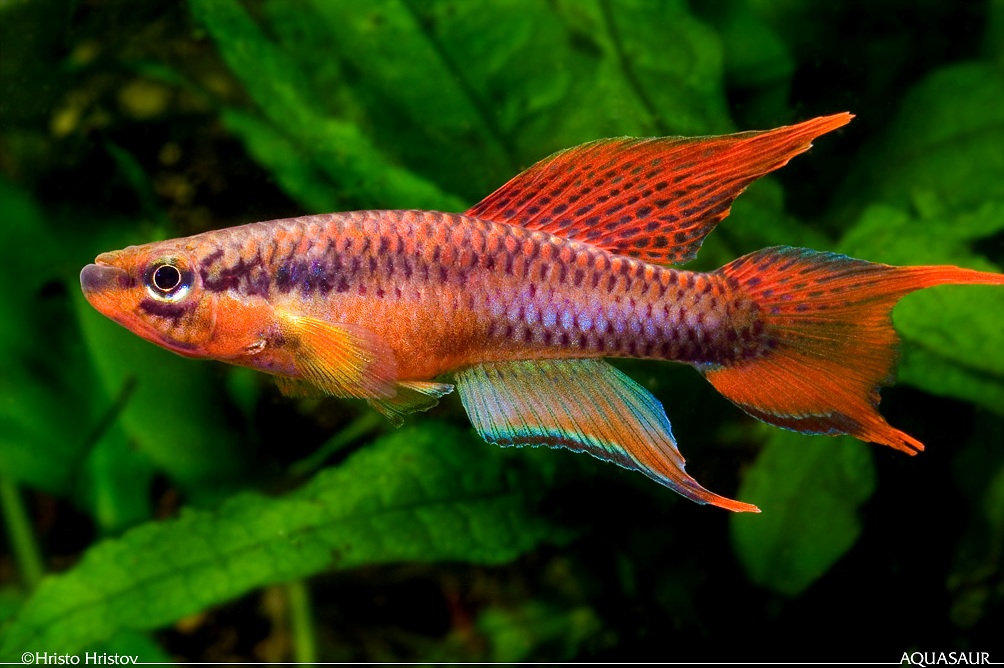
Aphyosemion bitaeniatumTwo-Striped Lyretail
Ahl, 1924
Matched on the common name Two-Striped Lyretail
Max length45mm SL1.8in SLTanknot recordedTemp24–30°C75–86°FpH5.0–6.5This species is widely-distributed in lowland, coastal regions of Togo, Benin and Nigeria as far as the Cross River delta, and occurs at some inland localities along the lower Niger River. Populations in Cameroon, Equatorial Guinea and Gabon are now considered to represent other species.
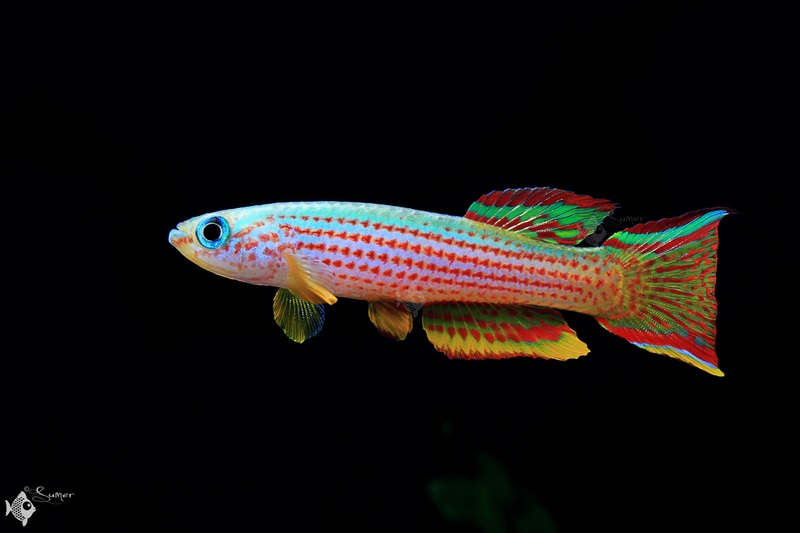
Aphyosemion striatumRed-Striped Lyretail
Boulenger, 1911
Matched on the common name Red-Striped Lyretail
Max length50mm SL2.0in SLTank45 × 30cm18 × 12inTemp20–26°C68–79°FpH6.5–7.5Appears restricted to the area between the lower Mitmele River, Equatorial Guinea and the lower Ogooué basin in Gabon, including coastal drainages such as the Mbei, Komo and Gabon watersheds in between. Type locality is 'Abanga River, between first and second rapids, Ogowe River system, Gabon', corresponding to the Abanga River bas...
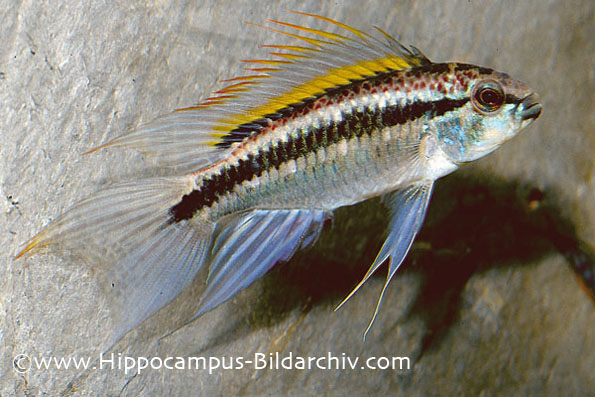
Apistogramma bitaeniataTwo-Striped Dwarf Cichlid
Pellegrin, 1936
Matched on the common name Two-Striped Dwarf Cichlid
Max length♂ 75 · ♀ 55mm SL♂ 3.0 · ♀ 2.2in SLTank60 × 30cm24 × 12inTemp22–29°C72–84°FpH4.5–7.0Localities known in the hobby include 'Pastaza', 'Putumayo', 'Requena', 'Río Nanay', 'Rio Napo', 'Maniti', 'Momón', 'Río Tigre', 'Río Ampiyacu', 'Shishita', 'Shushupi', 'Yavari', 'Tefé', 'Manaquiri', 'Lago do Januari', 'Mamori' (often misspelled 'Mamuri'), 'Careiro', 'Manacapuru', 'Juruá', 'Curuaí', and 'Purutu' though we've been unable to find anywhere matching the latter name within the species' known distribution, and in fact several of these names are applied incorrectly on a regular basis.
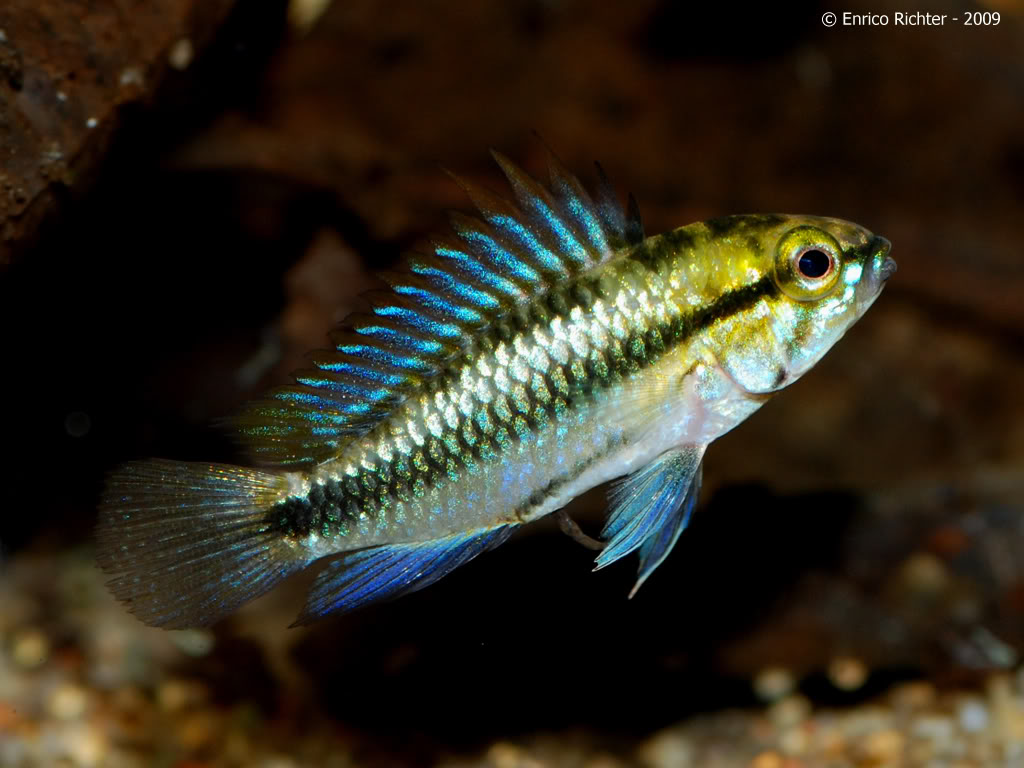
Apistogramma trifasciataThree-striped Apisto
Eigenmann & Kennedy, 1903
Matched on the common name Three-striped Apisto
Max length♂ 55 · ♀ 40mm SL♂ 2.2 · ♀ 1.6in SLTank45 × 30cm18 × 12inTemp20–25°C68–77°FpH5.0–7.0This species is assigned the 'A' number A204 under the DATZ system with possibly conspecific, related forms coded A205 or A206 depending on collection locality and representing populations from Argentina and the rio Guaporé, respectively. The genus Apistogramma is among the most speciose of South American cichlid genera with around 70 species valid at present but many more awaiting description.
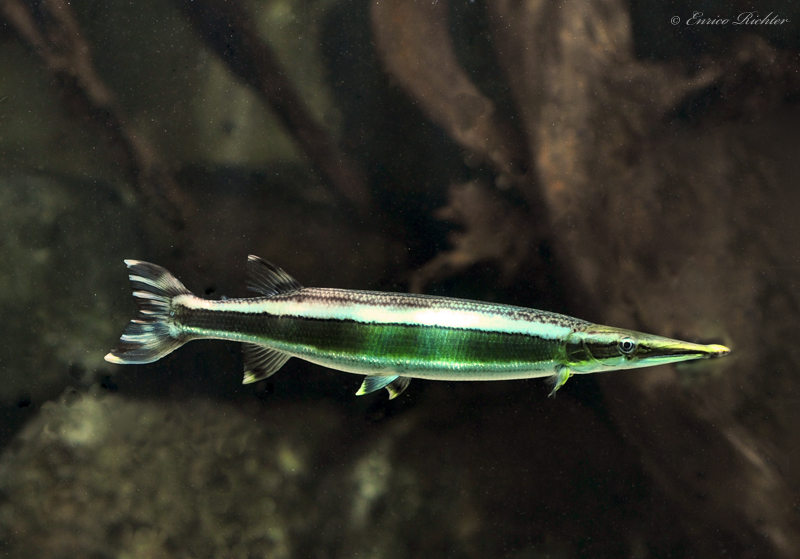
Boulengerella lateristrigaStriped Pike 'Characin'
Boulenger, 1895
Matched on the common name Striped Pike 'Characin'
Max length258mm SL10in SLTank240 × 90cm96 × 36inTemp22–28°C72–82°FpH4.0–7.0Boulengerella differs from Ctenolucia, the only other genus currently contained in the family Ctenolucidae, by a series of derived features including possession of 87-124 (vs. 45-50) lateral line scales, presence of a strongly (vs. weakly) developed fleshy appendage at the tip of the snout and absence (vs. presence) of fleshy flaps on the lower jaw. Within the order Characiformes the family Ctenoluciidae is also distinguished by a set o...
Buccochromis nototaeniaStripeback Hap
authority not recorded
Matched on the common name Stripeback Hap
Max length225mm SL9in SLTank120 × 45cm48 × 18inTemp24–27°C75–81°FpH7.5–8.8Rarely seen in the trade, as it is quite difficult to collect in nature. It retreats at great speed into deeper water at the first sign of threat. As with other members of its genus, it is a hunter, feeding mainly on smaller cichlids.
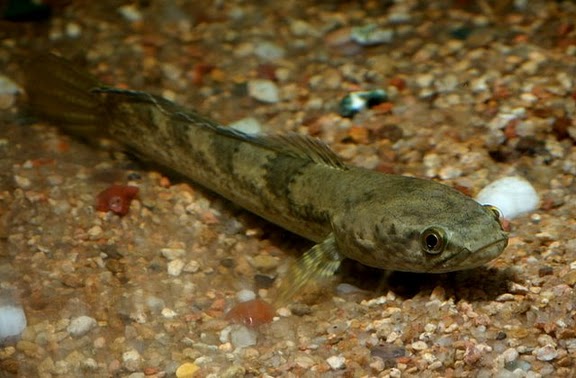
Channa sp. 'five stripe'
authority not recorded
Max lengthnot recordedTank90 × 30cm36 × 12inTemp15–28°C59–82°FpH6.0–8.0Based on its colour pattern and limited details regarding its natural habitat this species may be adapted to dwelling between and under rocks. Alipurduar lies in the moist tropical region of floodplains and foothills of the eastern Himalayas commonly referred to as the Dooars or Duars, traditionally considered the gateway to Bhutan.
Crenicichla strigataStriped Pike Cichlid
authority not recorded
Matched on the common name Striped Pike Cichlid
Max length400mm SL16in SLTank180 × 60cm72 × 24inTemp23–27°C73–81°FpH6.0–7.0One of the more commonly available pike cichlids in the UK, c. strigata is often bought by fishkeepers unaware of the adult size of these fish. Are reported to be susceptible to hole in the head disease, more commonly seen in discus and oscars....
Eretmodus cyanostictusStriped Goby Cichlid
authority not recorded
Matched on the common name Striped Goby Cichlid
Max length80mm SL3.1in SLTank90 × 30cm36 × 12inTemp24–28°C75–82°FpH8.0–9.0Also known as the Tanganyikan Clown, this is one of the so-called Tanganyikan goby cichlids. They occur only in the upper few feet of water around rocky shores, also known as the surge zone, where they scrape algae from the rocks with their specialised teeth. This habitat is typified by breaking waves and strong currents. They have a few adaptations allowing them to inhabit such an environment. The swim bladder is rendered useless to reduce their buoyancy. They also have a longand a laterally co...
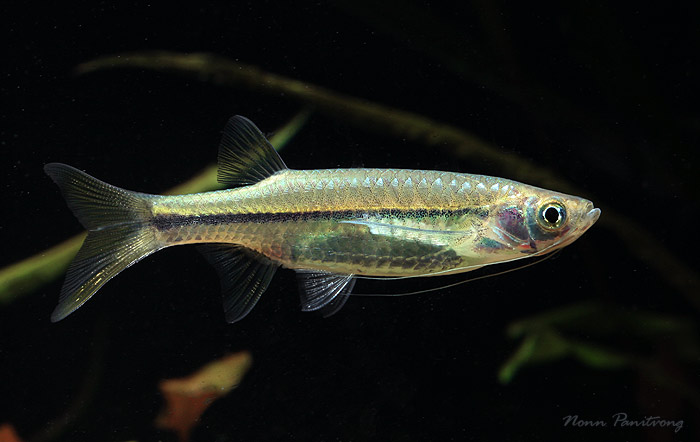
Esomus metallicusStriped Flying Barb
Ahl, 1923
Matched on the common name Striped Flying Barb
Max length75mm SL3.0in SLTank120 × 30cm48 × 12inTemp20–26°C68–79°FpH6.0–7.0There currently exist a dozen described Esomus spp. alhough few are seen in the aquarium trade and none are especially popular. Most are commonplace in their native countries and also quite plainly-patterned so generally overlooked by collectors. Their most common use in some areas is actually as a feeder fish in the aquaculture of larger species. They're characterised by greatly-enlarged pectoral fins and two pairs of barbels, of which the maxillary pair are extremely long and usually reach the pectoral fins.
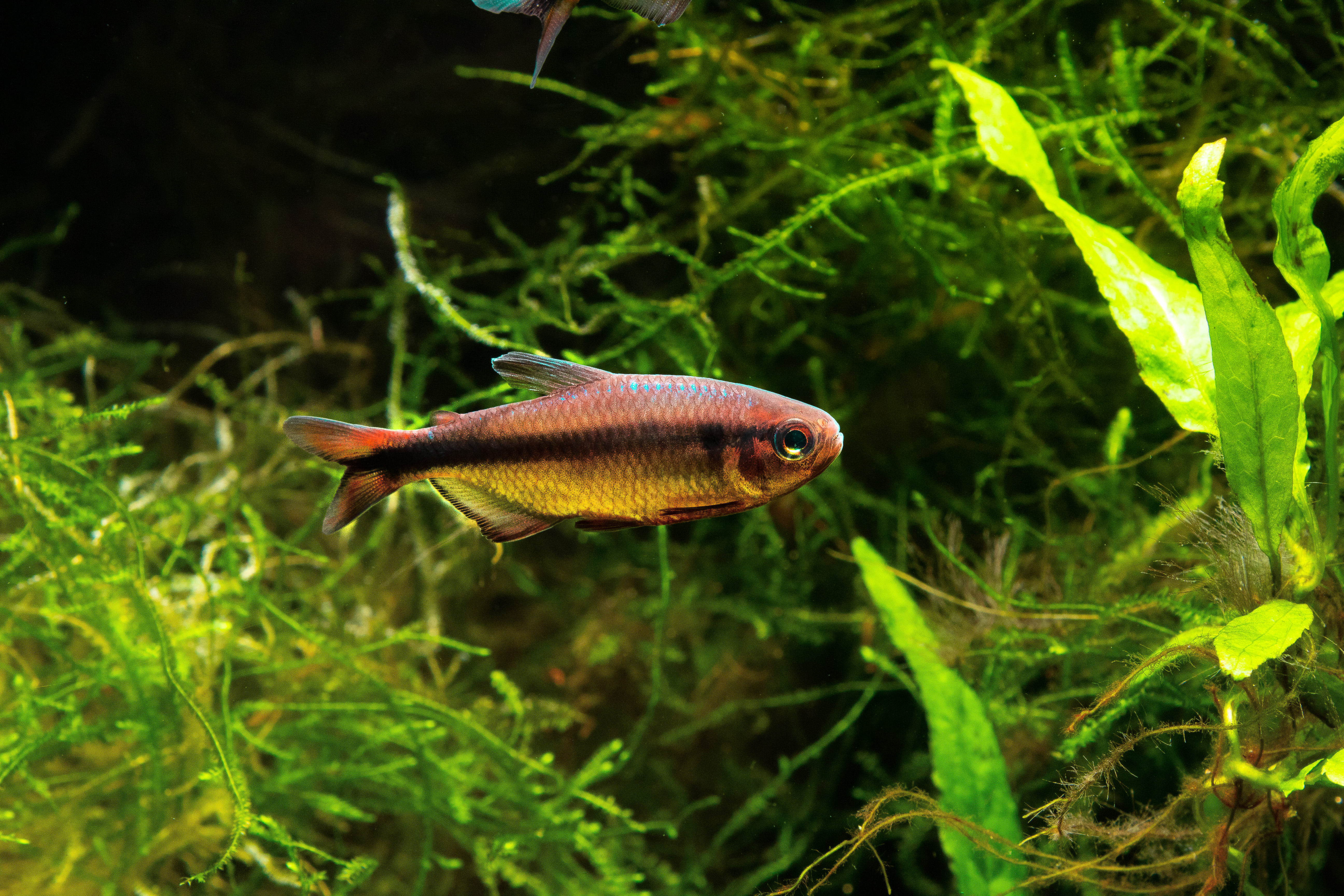
Hyphessobrycon melanostichosBlack Stripe Tetra
Carvalho & Bertaco, 2006
Matched on the common name Black Stripe Tetra
Max length25mm SL1.0in SLTank60 × 30cm24 × 12inTemp23–28°C73–82°FpH5.5–7.5Hyphessobrycon melanostichos shares a number of similarities with Hyphessobrycon sp. Blue Ribbon. The former can be differentiated from the latter by a lighter set, more streamlined body , smaller humeral spot and also red colouring, which is not present on the Blue Ribbon tetra. Care and maintenance of the two species is however, virtually the same.
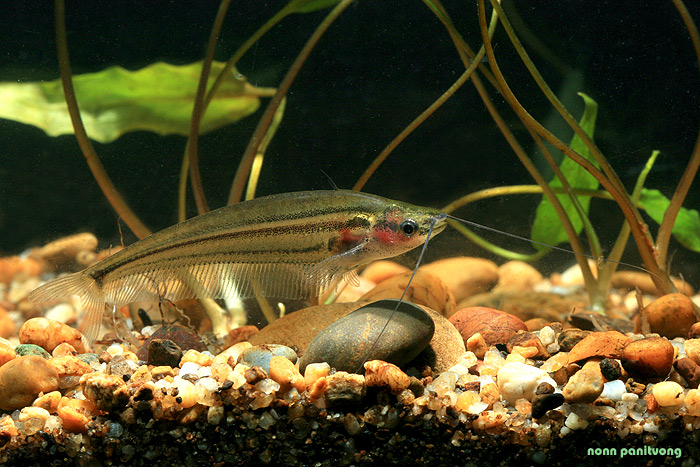
Kryptopterus macrocephalusStriped Glass Catfish
Bleeker, 1858
Matched on the common name Striped Glass Catfish
Max length100mm SL3.9in SLTank120 × 30cm48 × 12inTemp20–26°C68–79°FpH4.0–7.0Has been recorded in fast-flowing environments but most commonly associated with peat swamp forests and associated blackwater streams. Many such habitats have suffered degradation of some kind but in unaltered cases the dense canopy of branches above means very little light penetrates the surface of such environments, and riparian vegetation also tends to grow thickly.
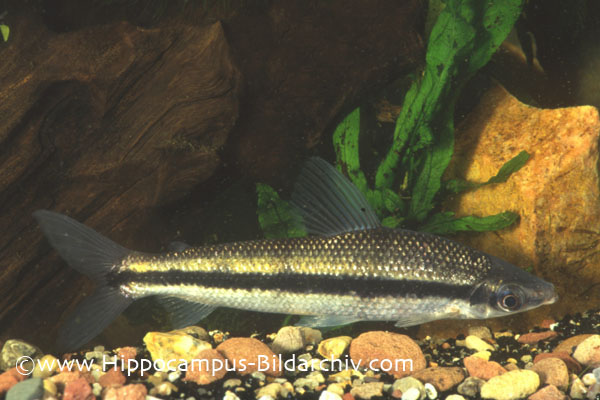
Laemolyta taeniataStriped Headstander
Kner, 1858
Matched on the common name Striped Headstander
Max length288mm SL11in SLTank120 × 60cm48 × 24inTemp20–28°C68–82°FpH4.0–7.5L. taeniata is the largest-growing and second most widely-distributed member of the genus although it's a rarely-seen in the aquarium trade. It can be distinguished from all congeners since it uniquely possesses 5 lateral scale rows between the lateral line and dorsal-fin origin (vs. 4 or 6–8 in the remaining species).
Melanotaenia splendida rubrostriataRed-striped Rainbowfish
authority not recorded
Matched on the common name Red-striped Rainbowfish
Max length125mm SL5in SLTank120 × 30cm48 × 12inTemp24–30°C75–86°FpHnot recordedThere are currently 4 described subspecies of Melanotaenia splendida, of which this species is one of the most colourful. The principle differences are generally in colour, pattern and fin counts, although even these vary depending on the locality of the fish. The different forms and subspecies should not be mixed in the aquarium, as they may hybridise. Adult specimens are rarely seen for sale, and it's the much drabber juvenile fish that are almost always offered in dealers tanks. However,...