Results for “suborbital”
Type a name: scientific, common, or one a species used to go by. Or narrow the catalogue with the filters.
Filters
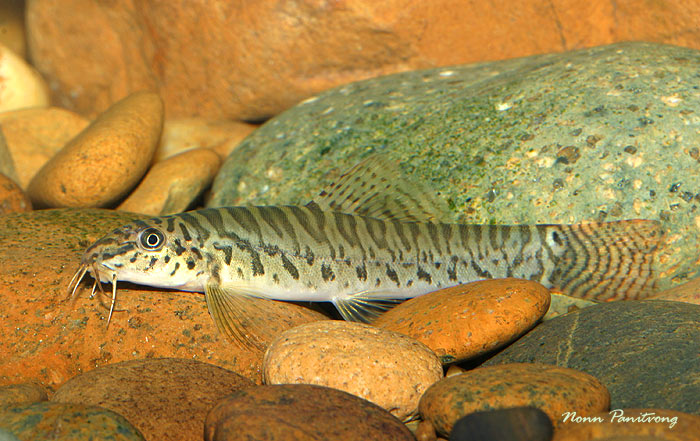
Paracanthocobitis pictilisCherry-fin Loach
Kottelat, 2012
Max length91mm SL3.6in SLTank90 × 30cm36 × 12inTemp21–26°C70–79°FpH6.5–7.5Prior to description this species was considered to represent, and traded as, A. rubidipinnis, but that species is apparently endemic to the lower Irrawaddy basin in Myanmar and unknown in the aquarium hobby. Male individuals of A. pictilis, A. botia and A. mandalaysensis possess a suborbital slit rather than suborbital flap which immediately distinguishes...
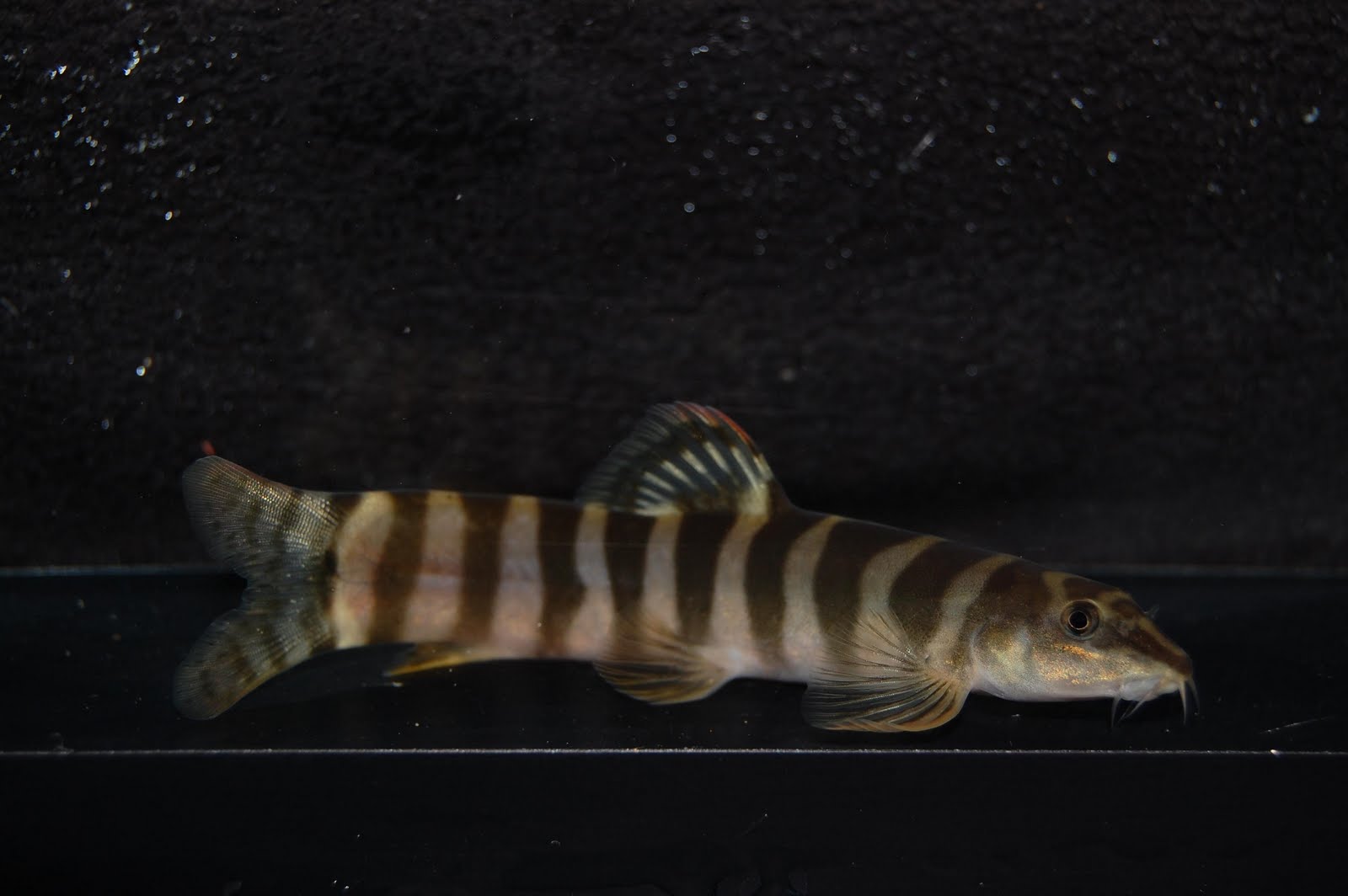
Schistura hypsiuraSuper Convict Loach
Bohlen, Ŝlechtová & Udomritthiruj, 2014
Max length73mm SL2.9in SLTank80 × 30cm31 × 12inTemp18–24°C64–75°FpH6.0–7.5It can be distinguished from congeners by the following combination of characters: caudal peduncle deep, ≥ the deepest part of the remainder of the body; no dorsal or ventral skin crests along the caudal peduncle; caudal-fin deeply forked, the outermost principal rays in the upper and lower lobes more than twice the length of the innermost: suborbital flap in males present; a well-developed suborbital groove in females; 6–8 very regular bars along the flank.
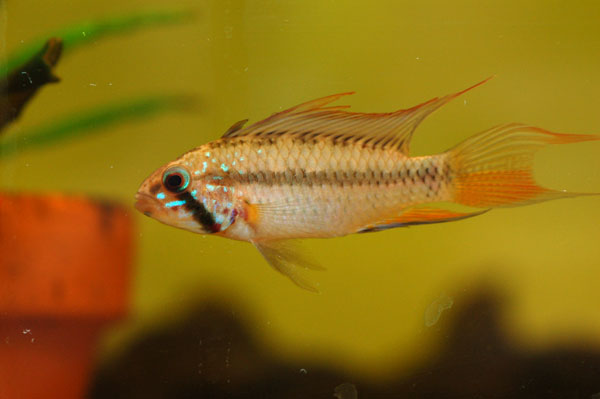
Apistogramma sp. 'breitbinden'A164
authority not recorded
Max length♂ 70 · ♀ 50mm SL♂ 2.8 · ♀ 2.0in SLTank60 × 30cm24 × 12inTemp22–29°C72–84°FpH4.0–6.5The German term 'breitbinden' translates literally as "broad-banded" and refers to the uniformly broad suborbital stripe seen in males of this 'species' which remains undescribed despite being known in the aquarium hobby for several decades. It's often imported as bycatch among shipments of wild-collected A. iniridae. Some of the populations have also been assigned th...
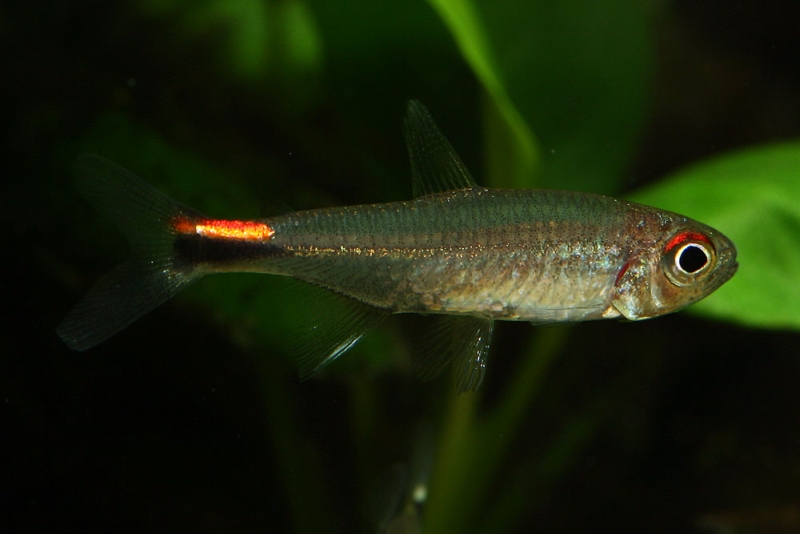
Axelrodia stigmatias
Fowler, 1913
Max length20mm SL0.8in SLTank60 × 30cm24 × 12inTemp20–28°C68–82°FpH4.0–6.5It's most similar to A. riesei but can be told apart by its more-elongate body (depth 4-5 times, vs. 3.1-3.5 times, in SL), live body colour (silvery yellow, vs. red) and suborbital bone structure (almost complete, vs. reduced). The third species, A. lindeae, is quite different posses...
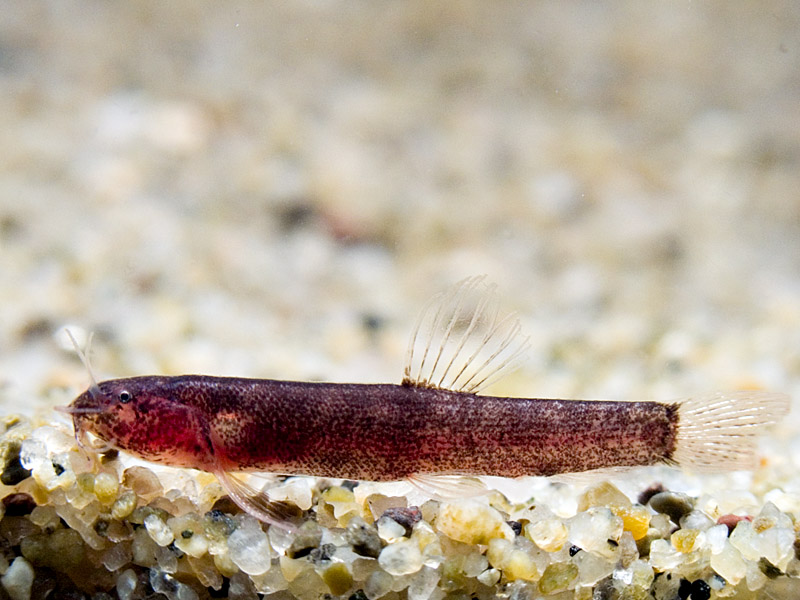
Kottelatlimia katik
Kottelat & Lim, 1992
Max length14mm SL0.6in SLTank45 × 30cm18 × 12inTemp23–26°C73–79°FpH3.5–6.5We're unaware of this species having yet appeared in the aquarium trade although a few private collectors have experience with it. Among congeners it uniquely possesses a simple suborbital spine and further differs from K. pristes by: smaller adult size (13.5 mm SL vs. 40); presence of a long nasal barbel (vs. absence); anatomy of the modified second pectoral ray in males (6-7 fine, narrow serrae vs. 8-11 pointed, anteriorly-orientated serrae). In K. hipporhynchos the serrae on the second pectoral ray in males form a broad, contiguous blade-like structure but other differences are the same as for K. pristes.