Results for “synapomorphy”
Type a name: scientific, common, or one a species used to go by. Or narrow the catalogue with the filters.
Filters
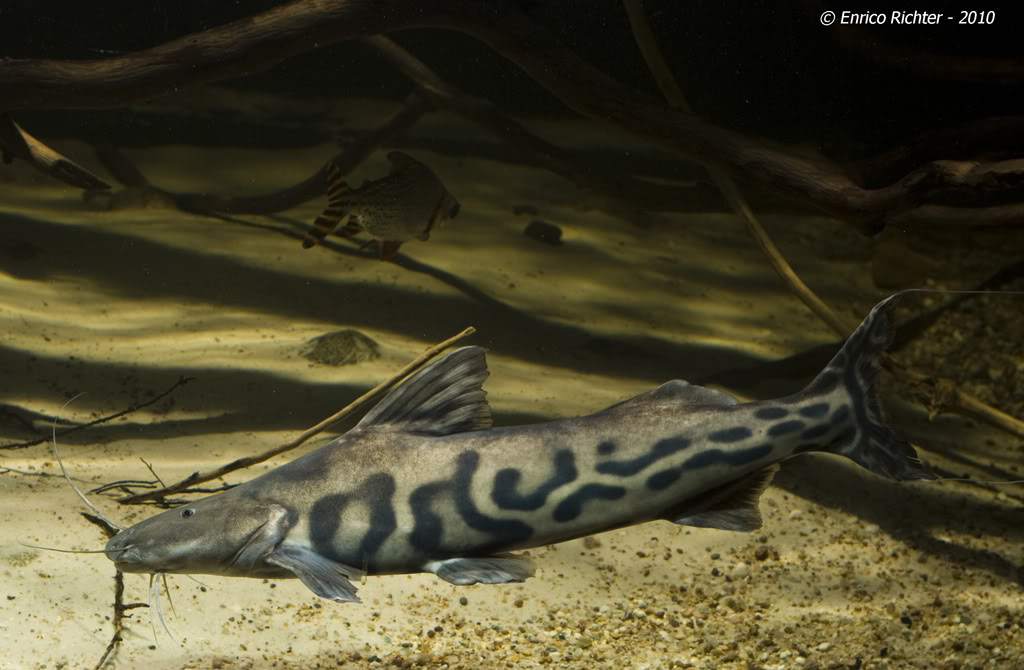
Brachyplatystoma juruenseGold Zebra Catfish
Boulenger, 1898
Max length600mm SL24in SLTanknot recordedTemp22–27°C72–81°FpH6.0–7.5Brachyplatystoma spp. are distinguished from all other catfishes by two synapomorphies. The first comprises several morphological characters relating to the skull, specifically that the mandibular suspensorium (that which connects the lower jaw bone to the skull) is greatly expanded mediodorsally to form a large plate approaching the parasphenoid bone, with the hyomandibula and metapterygoid similarly enlarged.
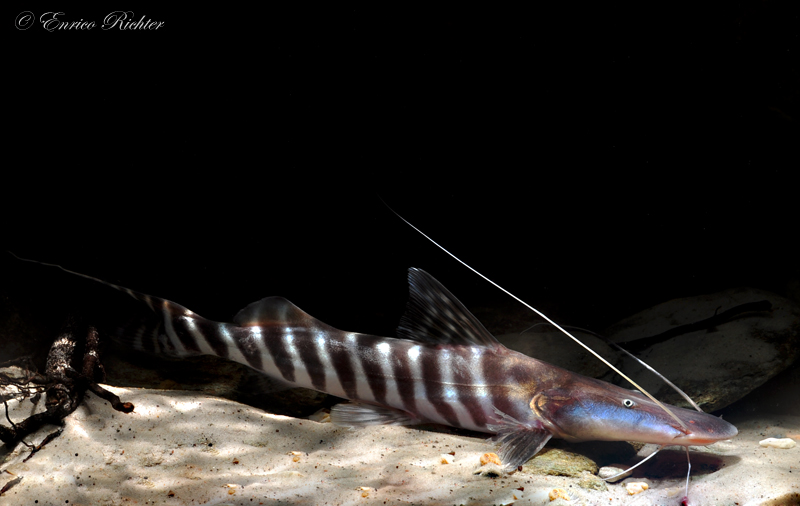
Brachyplatystoma tigrinumZebra Shovelnose
Britski, 1981
Max length500mm SL20in SLTank1000 × 400cm394 × 157inTemp22–32°C72–90°FpH6.0–7.6This species is sometimes confused with B. juruense, especially when juvenile, but can be told apart quite easily by it's more well-defined colour pattern, relatively slender body shape and longer barbels. It was described in the genus Meredontotus, but is currently included in Brachyplatystoma based on a pair of synapomorphies shared by memb...