Results for “terminal”
Type a name: scientific, common, or one a species used to go by. Or narrow the catalogue with the filters.
Filters
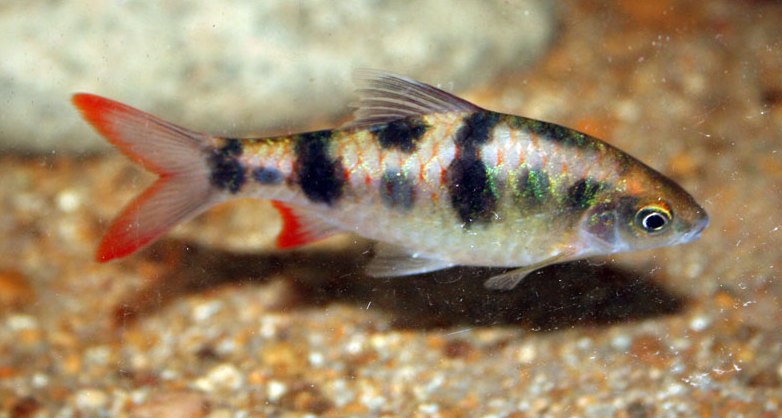
Dawkinsia tambraparniei'Arulius' Barb
Silas, 1954
Max length130mm SL5in SLTank120 × 45cm48 × 18inTemp18–25°C64–77°FpH6.0–8.0D. exclamatio should also have a sub-terminal mouth and lack dorsal-fin filaments but some specimens possess a terminal mouth and/or possess dorsal filaments, and one specimen also had black caudal-fin tips as typically seen in D. filamentosa, whereas the description states that the fin tips are only dusky and lack distinctive markings.
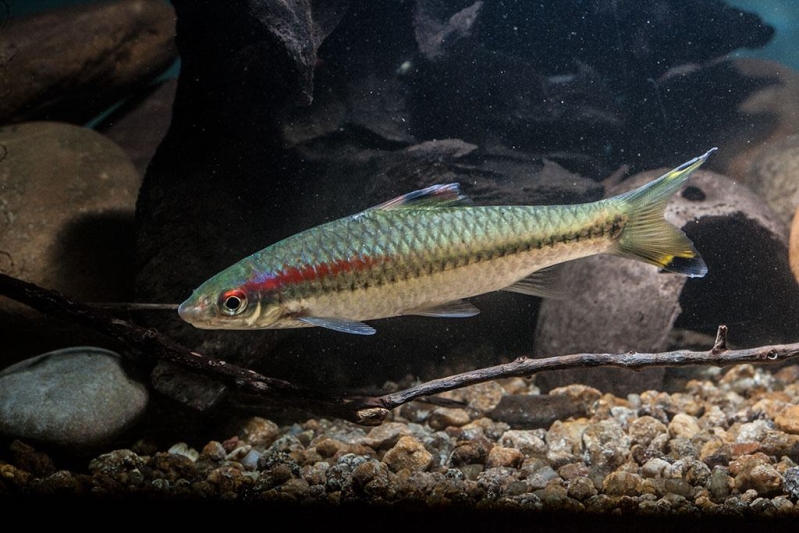
Sahyadria chalakkudiensis
Menon, Rema Devi & Thobias, 1999
Max length125mm SL5in SLTank120 × 45cm48 × 18inTemp15–25°C59–77°FpH6.5–7.5S. chalakkudiensis can be told apart from S. denisonii by possession of an inferior mouth (vs. subterminal) and presence of a black marking in the dorsal-fin (vs. absence), and the scarlet body stripe being duller and terminating beneath or anterior to the dorsal-fin origin (vs. brighter and terminating beneath the centre of the dorsal-fin).
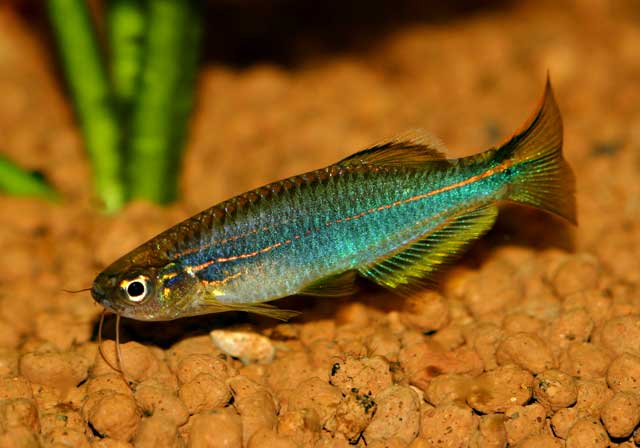
Brachydanio sp. 'hikari'Hikari 'Danio'
authority not recorded
Max length65mm SL2.6in SLTank120 × 30cm48 × 12inTemp18–26°C64–79°FpH6.5–7.5This potentially-undescribed species first became available in 2002, and males and females were marketed as 'Danio sp. hikari yellow' and 'D. sp. hikari blue', respectively. Subsequent DNA testing in the United States revealed them to be the same species and genetically distinct from the very similar B. kerri. It can be told apart as the central body (P) stripe always extends into the caudal fin whereas in B. kerri it terminates at the caudal peduncle. Only a single population of B. kerri was sampled in the stu...
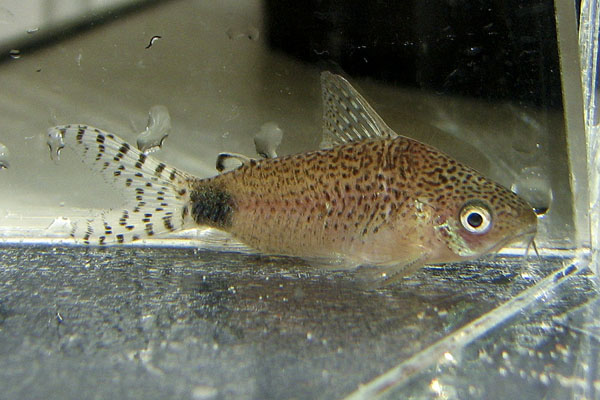
Corydoras guaporeGuaporé Cory
Knaack, 1961
Max length50mm SL2.0in SLTank90 × 30cm36 × 12inTemp22–28°C72–82°FpH5.0–7.0C. guapore is a sought after aquarium fish although it is not often traded. It exhibits slightly different behaviour to the majority of congeners in that it tends to form aggregations in midwater and spends a large proportion of its time away from the substrate. Its morphology exhibits corresponding adaptations towards a pelagic existence with a relatively large eye, a more terminal mouth position, more strongly-forked caudal-fin, and more symmetrical body shape than most other Corydoras species.
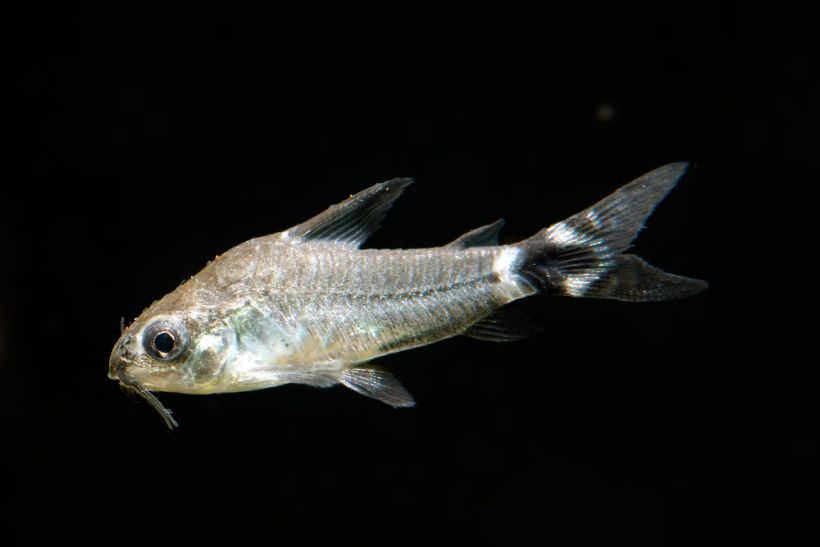
Corydoras hastatusTail-spot Pygmy Cory
Eigenmann & Eigenmann, 1888
Max length32mm SL1.3in SLTank60 × 30cm24 × 12inTemp20–26°C68–79°FpH6.0–7.5It exhibits slightly different behaviour to the majority of congeners in that it tends to swim in midwater and spends a large proportion of its time away from the substrate. Its morphology exhibits corresponding adaptations towards a pelagic existence with a relatively large eye, a more terminal mouth position, more strongly-forked caudal-fin, and more symmetrical body shape than most other Corydoras species.
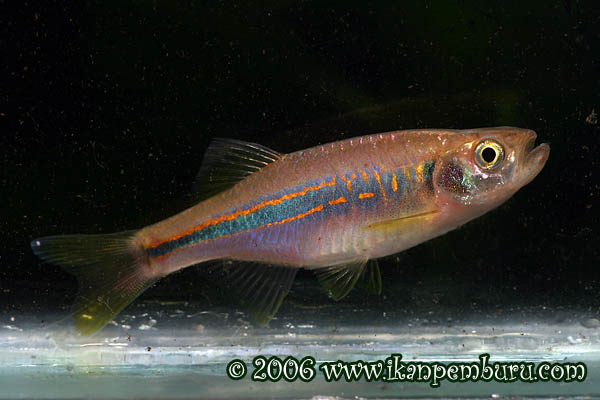
Devario laoensis
Pellegrin & Fang, 1940
Max length65mm SL2.6in SLTank90 × 30cm36 × 12inTemp23–26°C73–79°FpH6.0–7.5It can be further distinguished from other species in the genus by colour pattern consisting of a dark, horizontal P stripe originating around mid-body, where it's relatively faint, this becoming thicker and darker in the posterior portion of the body and terminating at the base of the caudal-fin. Among congeners it's most similar to D. chrysotaeniatus but that species lacks the infraorbital process, has three rows of pharyngeal teeth and the P stripe extends to the end of the caudal-fin rays.
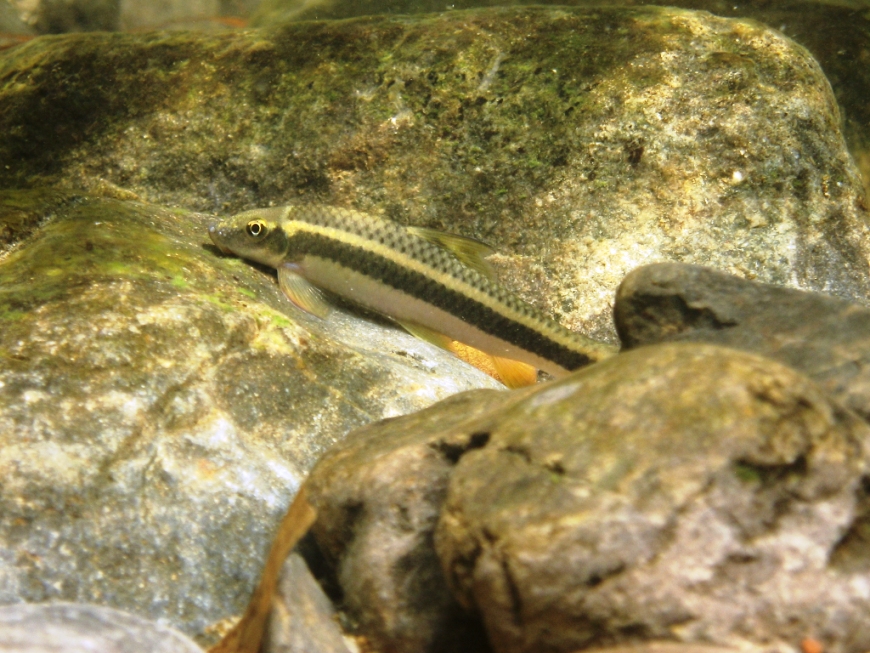
Garra cambodgiensisFalse SAE
Tirant, 1883
Max length150mm SL6in SLTank120 × 45cm48 × 18inTemp20–27°C68–81°FpH6.0–7.5Also known by the vernacular names ''black band garra', 'stone-lapping minnow' or 'false flying fox' and continues to be traded as Garra taeniata, an invalid name synonymous with G. cambodgiensis. It is often confused with those laterally-striped members of the genus Crossocheilus sold as 'Siamese algae eater' or 'Siamese flying fox', but in those species the dark lateral body stripe continues into the caudal-fin whereas in G. cambodgiensis it terminates...
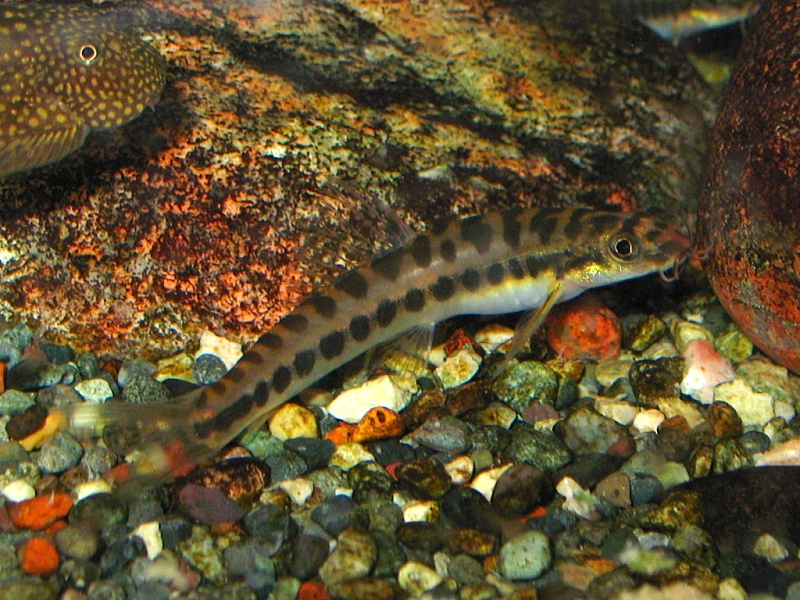
Nemacheilus masyaeArrow Loach
Smith, 1933
Max length70mm SL2.8in SLTank60 × 30cm24 × 12inTemp23–26°C73–79°FpH6.0–7.5This species was originally named Nemacheilus masyae but following ICZN rules the spelling was later corrected to N. masyai because it's named after a man. It can be distinguished from the majority of congeners by body patterning comprising 14-18 short, dark vertical bars on each flank, 12-17 saddle-like markings running along the dorsal surface, a dark spot on the caudal peduncle at the termination of the lateral line and a dark blotch in the lower half of the first few dorsal-fin rays.
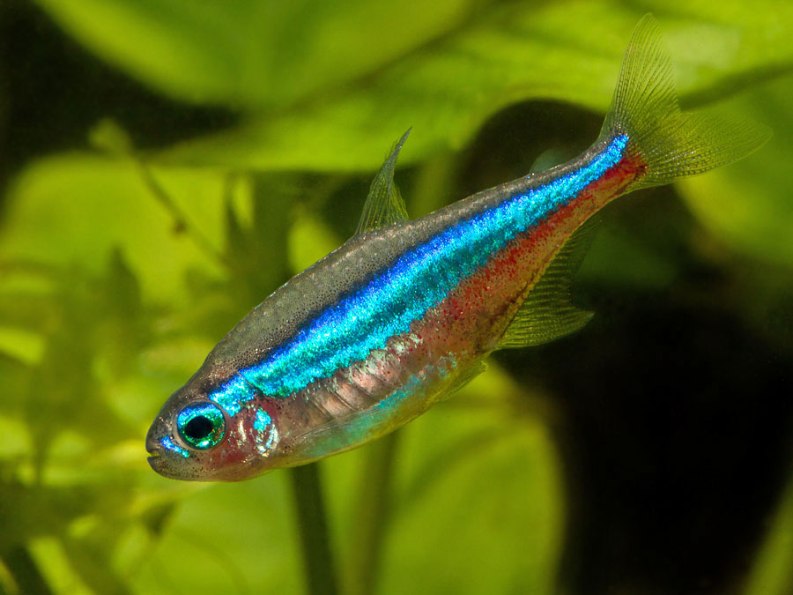
Paracheirodon simulansGreen Neon Tetra
Géry, 1963
Max length25mm SL1.0in SLTank45 × 30cm18 × 12inTemp21–35°C70–95°FpH3.0–6.5For aquarists perhaps more useful are the subtle differences in colour pattern with P. simulans differing from both P. innesi and P. axelrodi in possessing a greener (vs. bluer) lateral stripe which covers more (vs. less) of the eye/head and extends to the caudal-fin base (vs. terminating anterior to caudal-fin base), a lesser (vs. greater) amount of relatively duller (vs. brighter) red pigmentation on the flanks. The taxonomic history of all three species is complicated with earlier authors such as Géry (1960, 1977) ten...