Results for “trait”
Type a name: scientific, common, or one a species used to go by. Or narrow the catalogue with the filters.
Filters
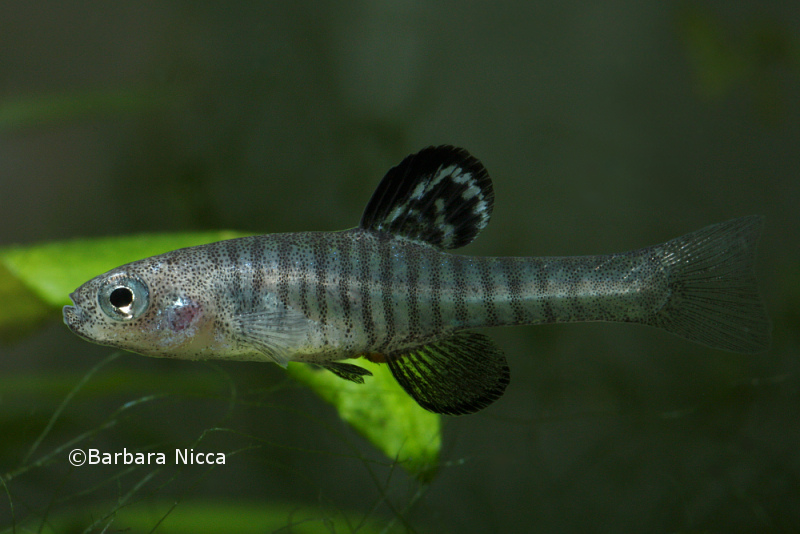
Kosswigichthys asquamatusHazar Toothcarp
Sözer, 1942
Max length40mm SL1.6in SLTank120 × 30cm48 × 12inTemp12–28°C54–82°FpHnot recordedThis little-known, relict species possesses some unique morphological and behavioural traits when compared with its congeners and the genus Kosswigichthys was erected for it in the original description. It has a much more elongate body profile than other Aphanius spp., almost total absence of scalation on the body and three rows of conical (as opposed to tricuspid in all other species) teeth which set it apart. Work by Franz and Villwock in the 1970s revealed it to be a member of Aphanius and showed ...
Mchenga flavimanus
authority not recorded
Max length120mm SL5in SLTank120 × 45cm48 × 18inTemp25–29°C77–84°FpH7.5–8.5The genus Mchenga was erected in 2006 by Stauffer and Konings and currently numbers half a dozen species, all of which are previous members of Copadichromis. The reclassification was based on various morphological and behavioural traits, including habitat preference and breeding strategy. Together with Copadichromis, Mchenga spp. form an exclusive group of Malawian cichlids commonly referred to as "Utaka" (prounounced "ooh-taw-kuh"). They're specialised to a pelagic l...
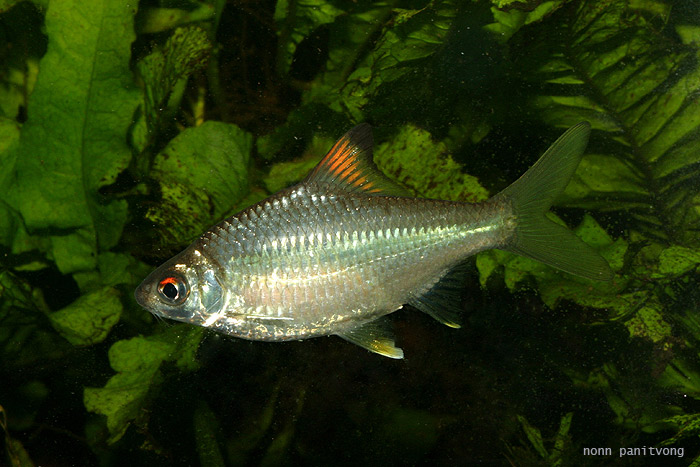
Mystacoleucus argenteus
Day, 1888
Max length140mm SL6in SLTank120 × 45cm48 × 18inTemp20–27°C68–81°FpH6.0–7.5All Mystacoleucus species possess a procumbent predorsal spine orientated towards the head, though it can be difficult to spot with the naked eye. This can become entangled in an aquarium net so care must be taken when handling the fish. The trait is shared by members of Tor, Spinibarbus and Paraspinibarbus although there exists no strong evidence to suggest that these genera form a monophyletic lineage and it is...
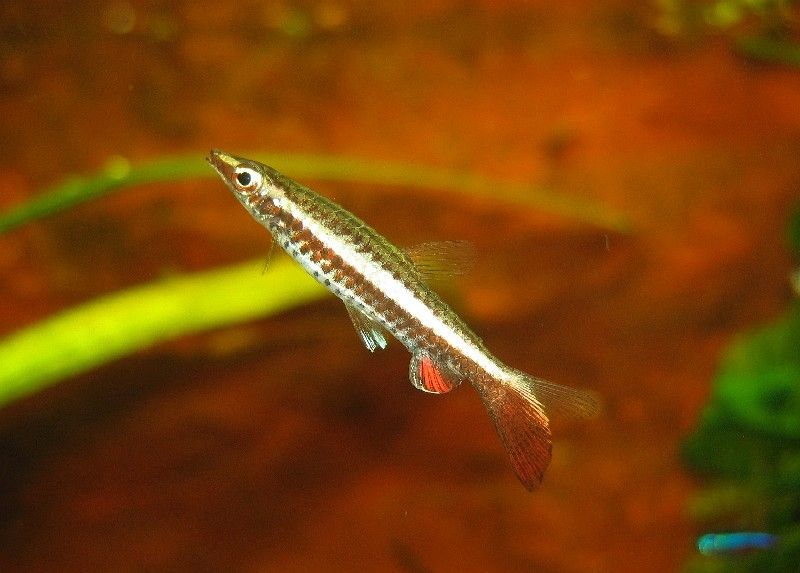
Nannostomus equesHockeystick Pencilfish
Steindachner, 1876
Max length35mm SL1.4in SLTank60 × 30cm24 × 12inTemp22–28°C72–82°FpH4.5–7.5This species has been referred to the genera Poecilobrycon and Nannobrycon in the past and in the aquarium hobby is also known as 'rocket', 'brown', 'brown-tailed', 'diptail', or 'tubemouth' pencilfish.It's a popular aquarium fish and has an interesting oblique swimming-style, a behavioural trait shared only with N. unifasciatus among congeners. In the original description the colour pattern is given by Steindachner as a brown lateral stripe exte...
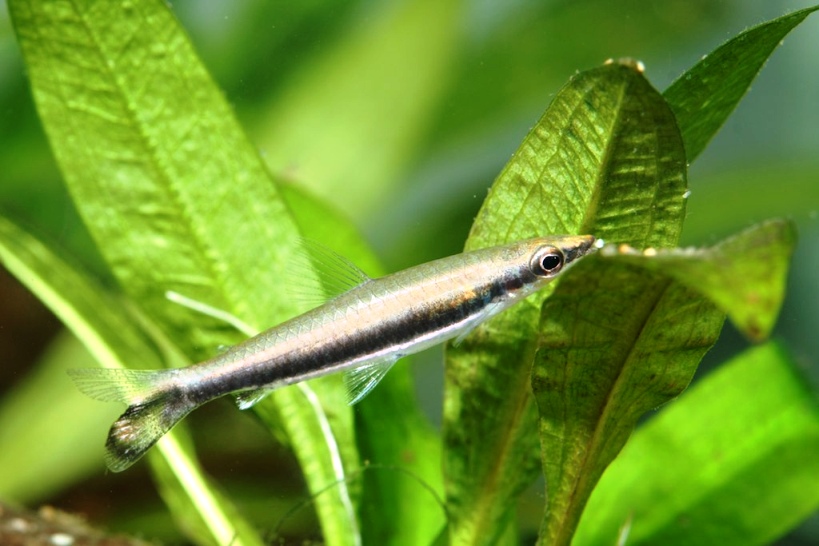
Nannostomus unifasciatusOne-lined Pencilfish
Steindachner, 1876
Max length40mm SL1.6in SLTank75 × 30cm30 × 12inTemp23–28°C73–82°FpH4.0–7.0This species has been referred to the genera Poecilobrycon and Nannobrycon in the past and in the aquarium hobby is also known as 'oneline' or 'red fin' pencilfish. It's a popular aquarium fish and has an interesting oblique swimming-style, a behavioural trait shared only with N. eques among congeners. The most recent diagnosis of the species appears to be that giv...
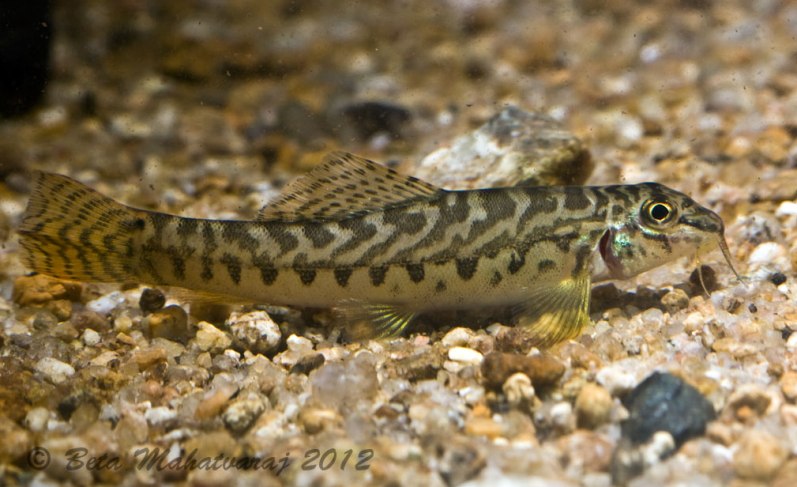
Paracanthocobitis botiaZipper Loach
Hamilton, 1822
Max length152mm SL6in SLTank75 × 30cm30 × 12inTemp21–26°C70–79°FpH6.0–7.5Traded under various names including 'mottled', 'eyepot', 'sand' and 'striped' loach. It's perhaps one of the better choices for those new to keeping nemacheilids being relatively hardy, peaceful and exhibiting some quirky behavioural traits. The characteristic ocellus, a dark marking at the top of the caudal peduncle that resembles an eye, is thought to have some function in predator distraction and is normally more intense in younger specimens.
Pseudotropheus demasoni
authority not recorded
Max length75mm SL3.0in SLTank120 × 45cm48 × 18inTemp24–28°C75–82°FpH7.6–8.8This dwarf mbuna is one of the more recent introductions into the hobby, being described only in 1994. It is not recommended for the beginner due to its pugnacious nature, but does make a good aquarium subject for the advanced aquarist. It exhibits some very entertaining behavioural traits, preferring to hug the rock surfaces much more than most mbuna. It will often be seen swimming on its side or upside down as it explores caves and crevices. As with other members of the genus, it possesses fla...